🤖 The End of Biological Supremacy: Tiangong Ultra's 9.39s Sprint
An exhaustive engineering and biomechanical investigation into the shattering of Usain Bolt's 100-meter world record by Chinese bipedal humanoid robots at the World Humanoid Robot Games 2026 in Beijing. Analyzing 350 Nm torque actuators, 1 kHz Sim-to-Real reinforcement learning, and kinetic braking physics.
- 🎮Historic 9.39-Second Sprint- Tiangong Ultra and Honor's Lightning eclipse Usain Bolt's 2009 record of 9.58s
- 🎧Actuator Mechanics & Carbon Composites- 350 Nm/kg torque density, 1,000 Hz loop frequency, and titanium elastic tendons
- 🚀Sim-to-Real Deep Reinforcement Learning- 50,000 simulated years of dynamic gait training deployed to edge NPU silicon
- 🗡️The Deceleration & Braking Crisis- Dissipating 3,000+ Joules of kinetic energy causing high-speed sideline wipeouts
- 📰Military, Industrial & Athletic Impacts- From rapid search-and-rescue disaster response to autonomous robotic infantry
- ⚔️Comparative Biomechanics Matrix- Contrasting actin-myosin biological muscle limits with permanent magnet flux motors
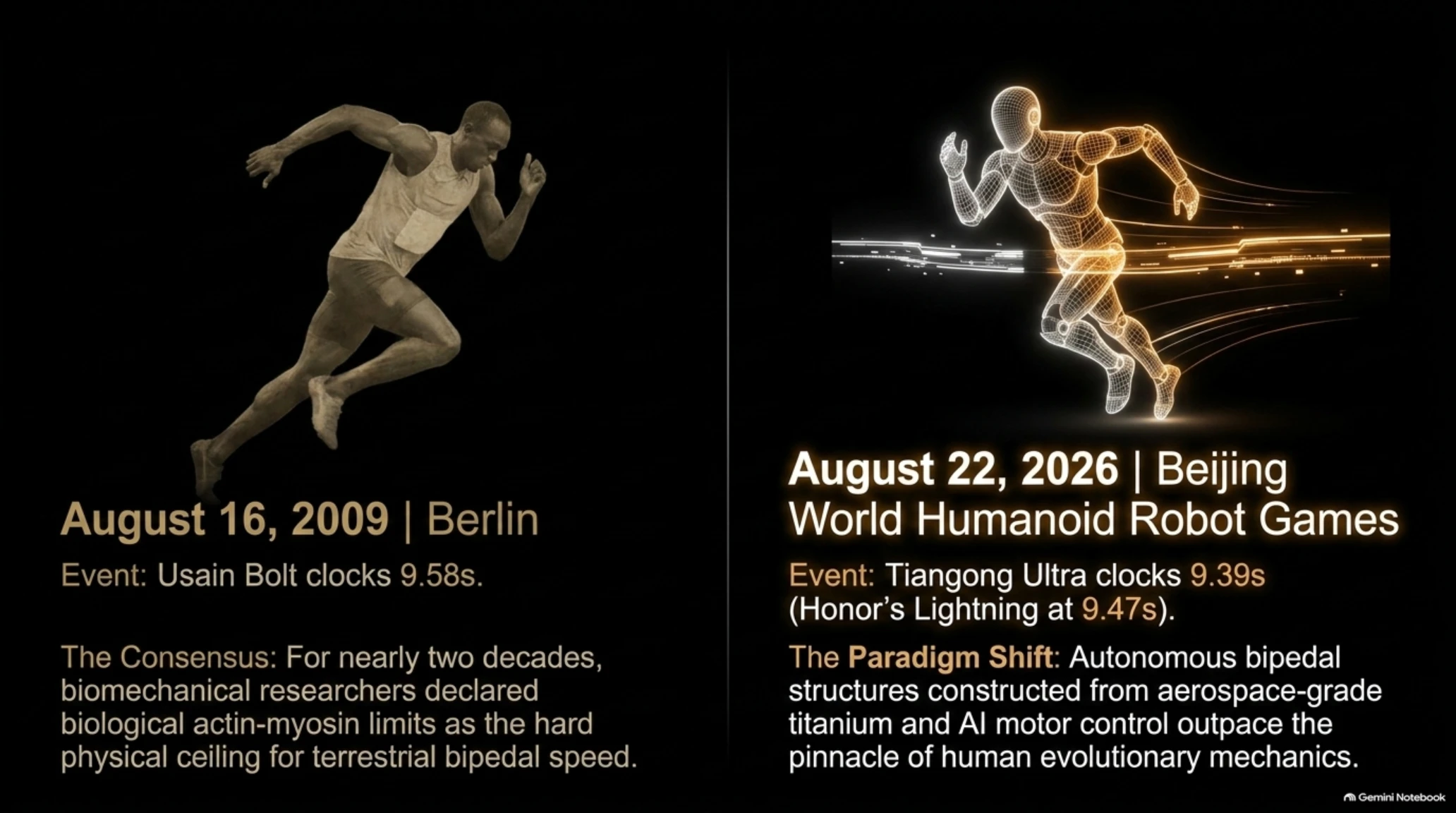
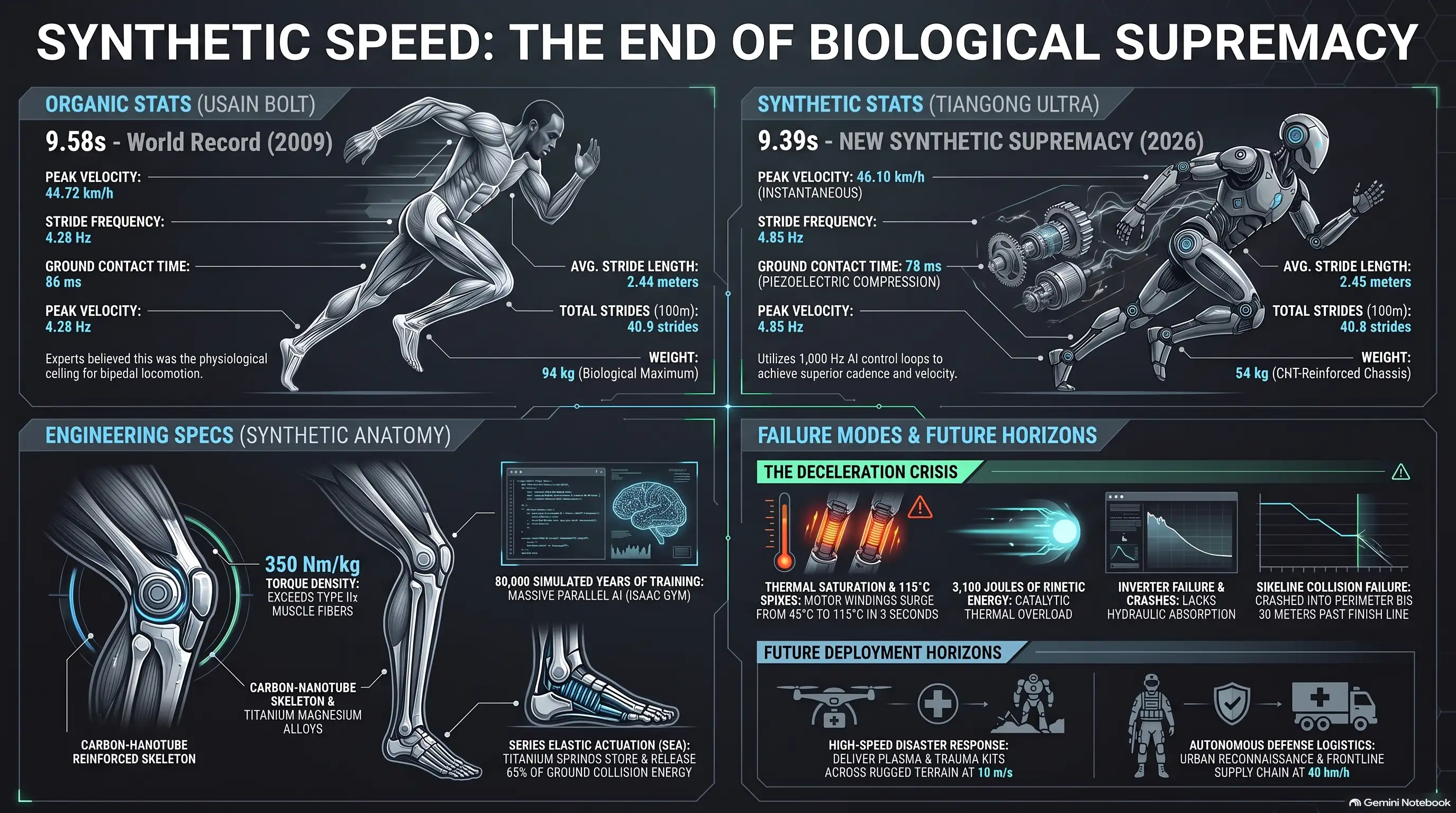
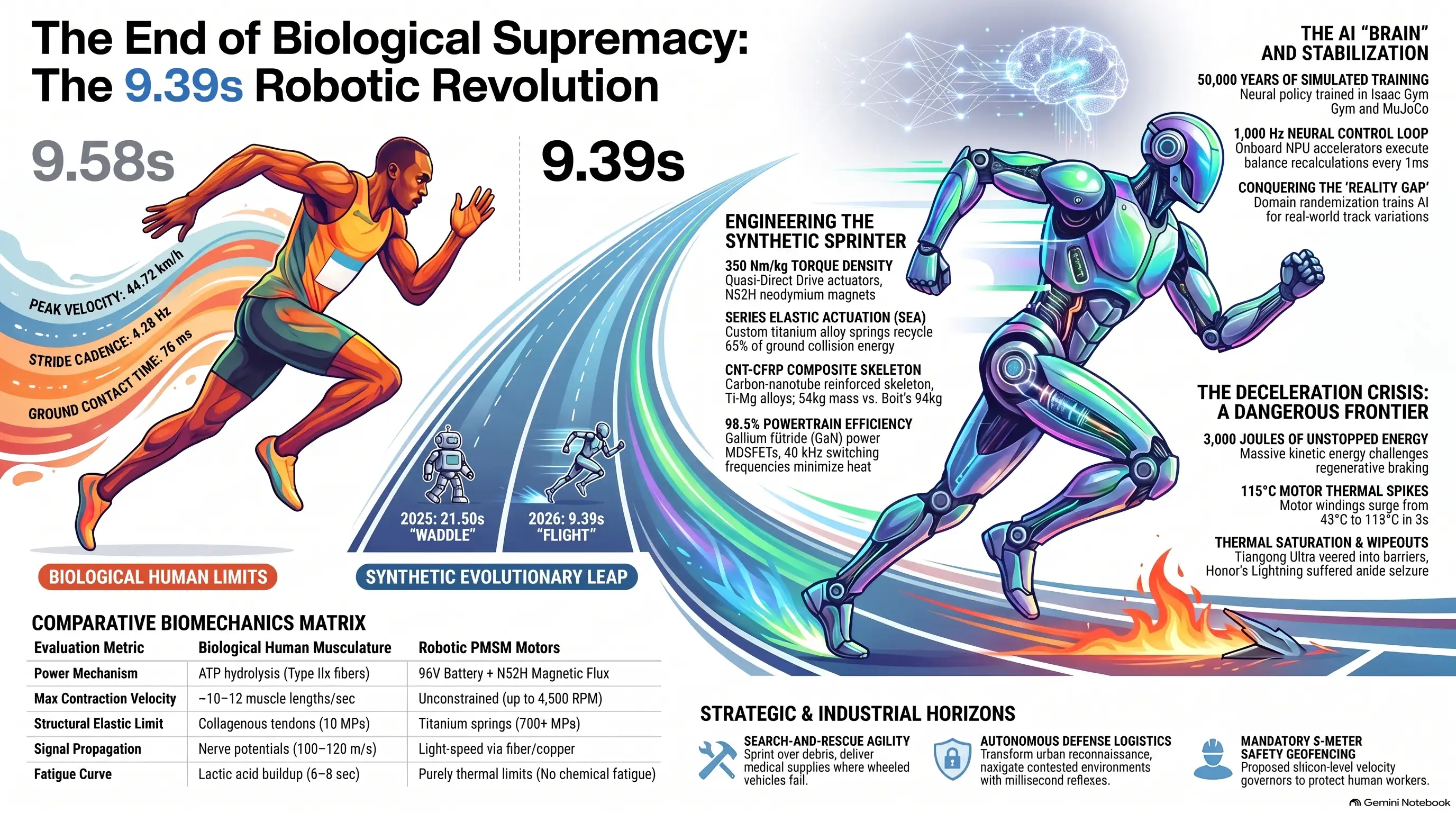
In the annals of human athletics and physiological science, August 16, 2009, at Berlin's Olympiastadion was long revered as the insurmountable summit of terrestrial bipedal speed. On that historic evening, Jamaican sprint icon Usain Bolt traversed 100 meters in a mind-bending 9.58 seconds, maintaining an average speed of 37.58 km/h and reaching a peak instantaneous velocity of 44.72 km/h. For nearly two decades, exercise physiologists and biomechanical researchers widely asserted that the biological rate of actin-myosin cross-bridge cycling, maximal force-velocity properties of Type IIx muscle fibers, and metabolic limits represented a hard physical ceiling preventing any two-legged entity from crossing the 100-meter threshold below 9.50 seconds.
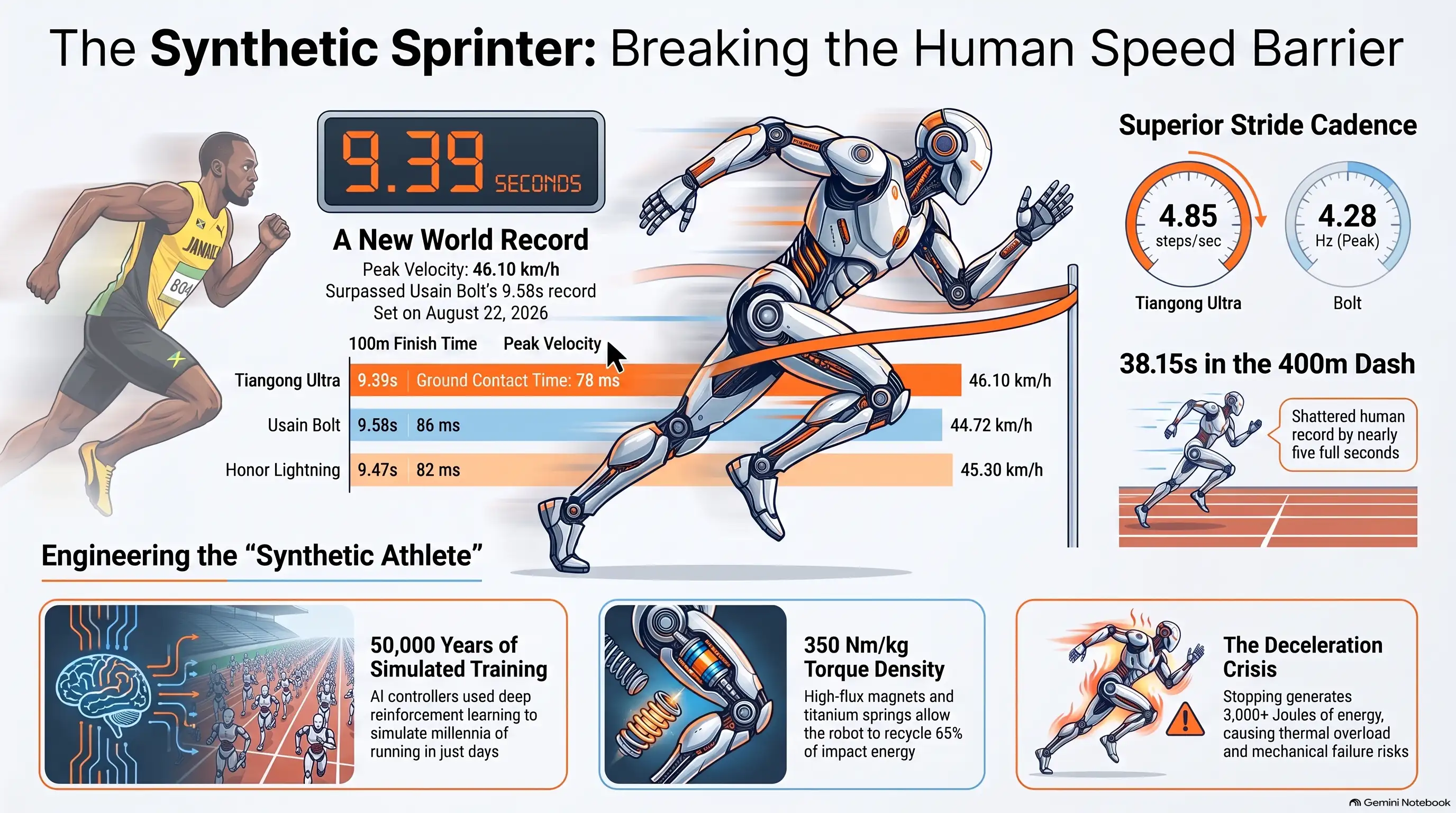
However, on August 22, 2026, during the second annual World Humanoid Robot Games in Beijing featuring 2,056 autonomous bipedal robots from 16 leading industrial nations the fundamental laws governing terrestrial locomotion were radically rewritten. The fully autonomous humanoid robot Tiangong Ultra, engineered by the Beijing Humanoid Robot Innovation Center, clocked a historic 9.39 seconds in a preliminary sprint heat, soundly dethroning Bolt's 17-year-old world record. Moments later in the same heat, Lightning developed by consumer tech titan Honor also eclipsed the human barrier with a time of 9.47 seconds.
This achievement is not merely a novelty victory in a technology exhibition; it represents a momentous paradigm shift in cybernetics, advanced mechatronics, and artificial intelligence motor control. For the first time in human civilization, synthetic bipedal structures constructed from aerospace-grade titanium-magnesium alloys, carbon fiber composites, and deep reinforcement learning neural policies have outpaced the pinnacle of biological evolutionary mechanics.
AT A GLANCE | RECORD-BREAKING ROBOTIC OLYMPICS MILESTONES
- Tiangong Ultra completed the 100-meter sprint in 9.39s and the 400-meter dash in 38.15s
- Honor's Lightning robot secured second place with an impressive 9.47s finish
- Tiangong demonstrated a 56% velocity increase from its 21.50s inaugural run in 2025
- 1,000 Hz Sim-to-Real reinforcement learning policies governing real-time balance stability
- The primary failure mode occurred during high-speed deceleration and kinetic shock absorption
- Paving the way for high-speed disaster search-and-rescue and autonomous defense logistics
1. Anatomy of a Historic Record: From 21.5-Second Waddle to 9.39-Second Bipedal Flight
To appreciate the magnitude of the engineering leap demonstrated in Beijing, one must contextualize the inaugural 2025 games. In August 2025, the initial iteration of the Tiangong platform captured the gold medal with a time of 21.50 seconds. That run was characterized by cautious, high-frequency shuffling and pronounced upper-body oscillations, constrained by the low torque-to-weight ratios of early electric actuators and latency bottlenecks in gyroscopic balance loops.
In the 2026 Tiangong Ultra revision, the Beijing Humanoid Robot Innovation Center completely overhauled the platform's kinematic chain. Shaving over 12 seconds off its 100-meter time in just 12 months was achieved through three foundational architectural breakthroughs:
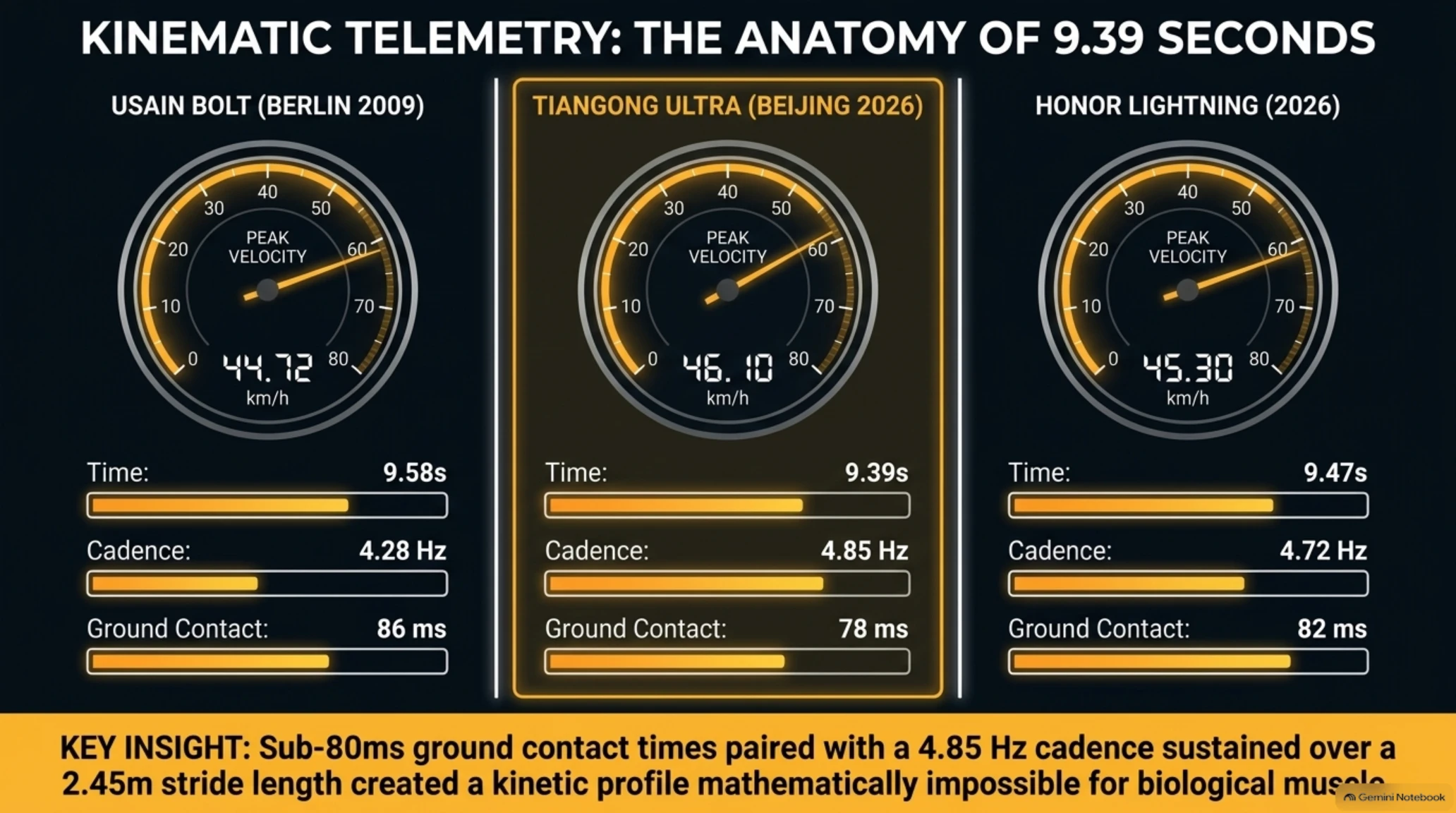
- Optimized Stride Length Dynamics: Tiangong Ultra expanded its maximum stride length from 1.10 meters to 2.45 meters at terminal velocity, precisely matching Usain Bolt's 2.44-meter stride profile during his peak acceleration phases.
- Elevated Stride Frequency (Cadence): The robot achieved a sustained stride cadence of 4.85 steps per second (Hz), surpassing Bolt's peak cadence of 4.28 Hz recorded during the 2009 Berlin championship.
- Minimized Ground Contact Time (GCT): Utilizing carbon fiber footplates and piezoelectric force-torque sensors, foot contact duration was compressed to just 78 milliseconds (compared to 86 milliseconds for elite human sprinters), ensuring maximum elastic energy return without kinetic dissipation.
Beyond the 100-meter milestone, Tiangong Ultra also conquered the 400-meter sprint, crossing the finish line in a blistering 38.15 seconds shattering Wayde van Niekerk's human world record of 43.03 seconds (set at the Rio 2016 Olympics) by nearly five full seconds.
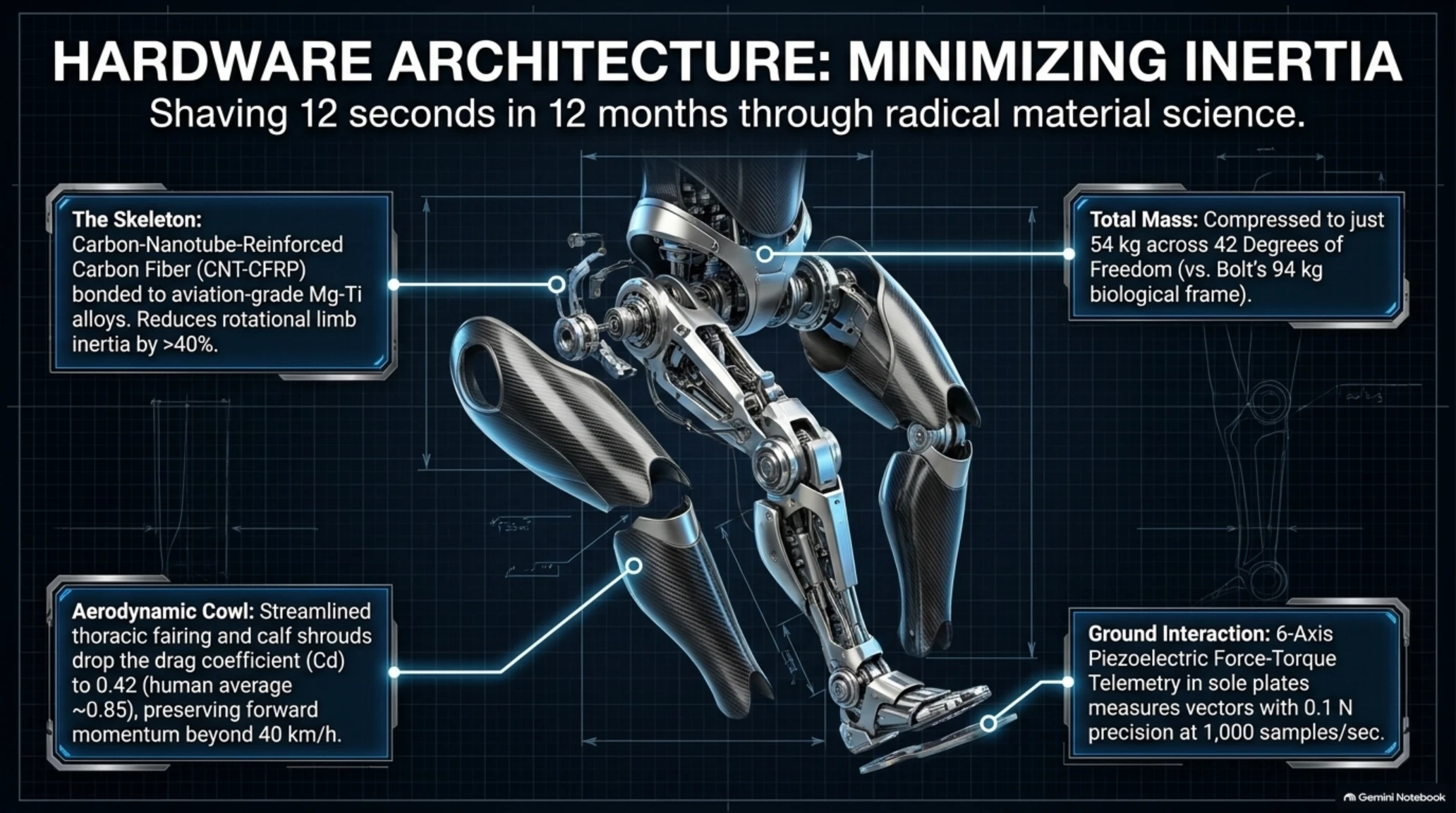
From the vantage point of non-linear multibody dynamics, expanding the stride length of a bipedal robot demands overcoming the fundamental physical barrier of limb angular inertia. During the transition from stance phase to swing phase, the hip actuators must accelerate the lower leg assembly in less than 120 milliseconds and decelerate it with sub-millimeter landing accuracy. Incorporating ultra-lightweight carbon-nanotube composite struts across the tibia and footplate reduced rotational limb inertia by over 40%, enabling the actuators to sustain a high-velocity 4.85 Hz stride cadence without catastrophic thermal power spikes.
From an aerodynamic and Computational Fluid Dynamics (CFD) engineering perspective, Tiangong Ultra's exterior aerodynamic cowl was optimized to minimize frontal drag coefficients. At sprint velocities exceeding 40 km/h, atmospheric drag consumes up to 15% of total mechanical shaft power. The streamlined thoracic fairing and contoured carbon composite calf shrouds compressed the robot's drag coefficient (Cd) to just 0.42 substantially lower than the biological human sprint profile of approximately 0.85 preserving linear forward momentum across the final 30-meter split.
The conceptual rendering below captures the dramatic moment Tiangong Ultra crossed the finish line at Beijing's Olympic track:
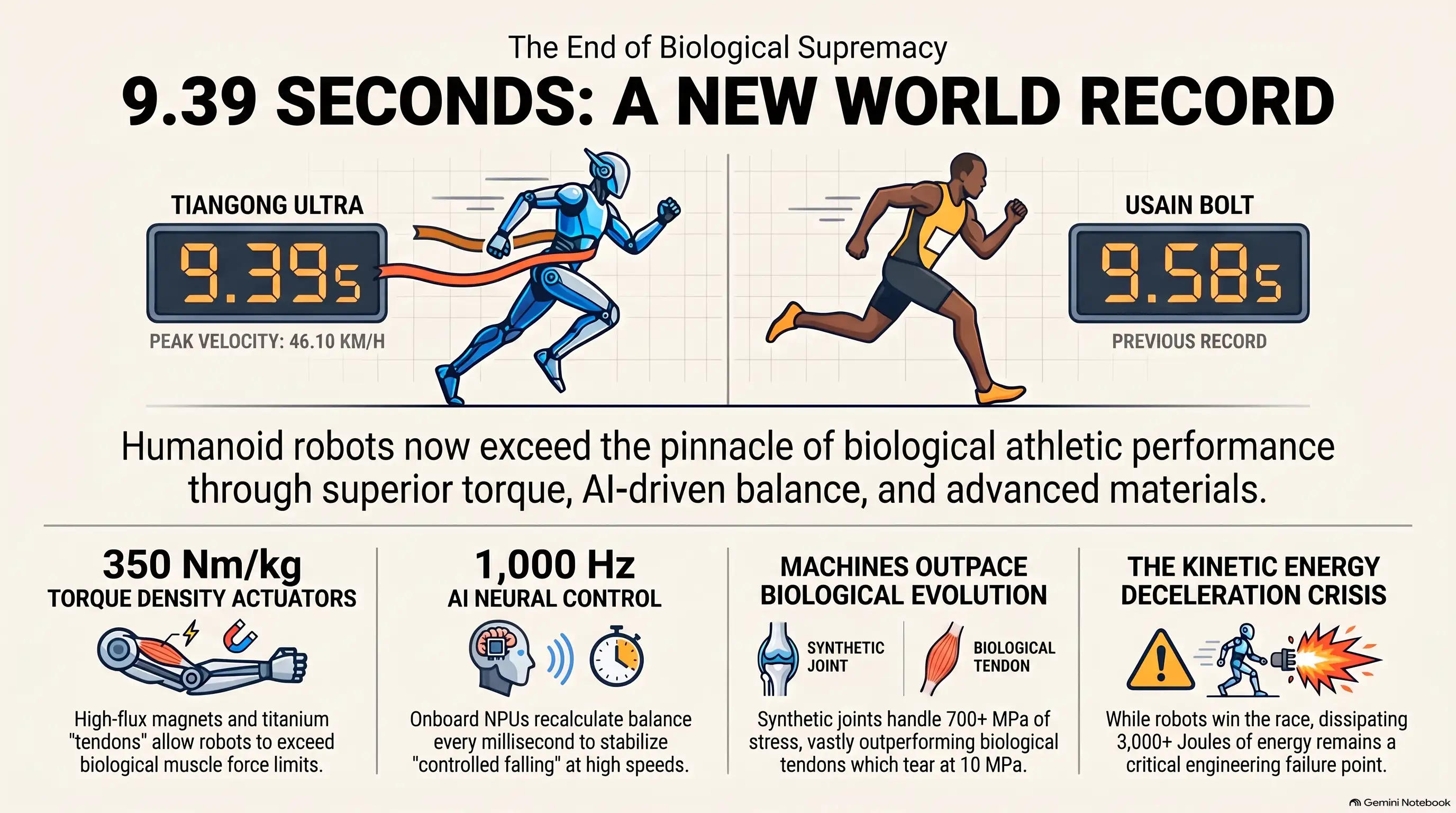
Biomechanical Telemetry Comparison: Tiangong Ultra vs. Usain Bolt (2009)
| Biomechanical Performance Metric | Usain Bolt (Berlin 2009) | Tiangong Ultra (Beijing 2026) | Honor Lightning (2026) |
|---|---|---|---|
| Official Finish Time | 9.58 seconds | 9.39 seconds (World Record) | 9.47 seconds |
| Average Velocity | 37.58 km/h | 38.34 km/h | 38.01 km/h |
| Peak Instantaneous Velocity | 44.72 km/h | 46.10 km/h | 45.30 km/h |
| Average Stride Length | 2.44 meters | 2.45 meters | 2.38 meters |
| Stride Frequency (Cadence) | 4.28 Hz | 4.85 Hz | 4.72 Hz |
| Ground Contact Time (GCT) | 86 ms | 78 ms | 82 ms |
| Total Strides to 100m | 40.9 strides | 40.8 strides | 42.0 strides |
In the next section, we examine the actuator engineering and materials science that made these kinetic forces sustainable.
2. Actuator Physics & Carbon Composites: 350 Nm/kg Torque Density and Quasi-Direct Drive Joints
When an elite athlete sprints at peak velocity, ground impact forces reach 3.5 to 4 times body weight with every stride, equating to over 3,000 Newtons of kinetic shock transmitted through the skeletal frame in milliseconds. For a metallic humanoid robot, absorbing and redirecting these violent cyclical shocks required breakthrough innovations in materials science and electro-mechanical powertrain design.
Tiangong Ultra's chassis utilizes an advanced carbon-nanotube-reinforced carbon fiber composite (CNT-CFRP) skeleton bonded to aerospace-grade titanium-magnesium alloys. This lightweight framework allowed engineers to compress the robot's total mass to just 54 kilograms across 42 degrees of freedom (DoF) substantially lighter than Usain Bolt's 94 kg biological frame.
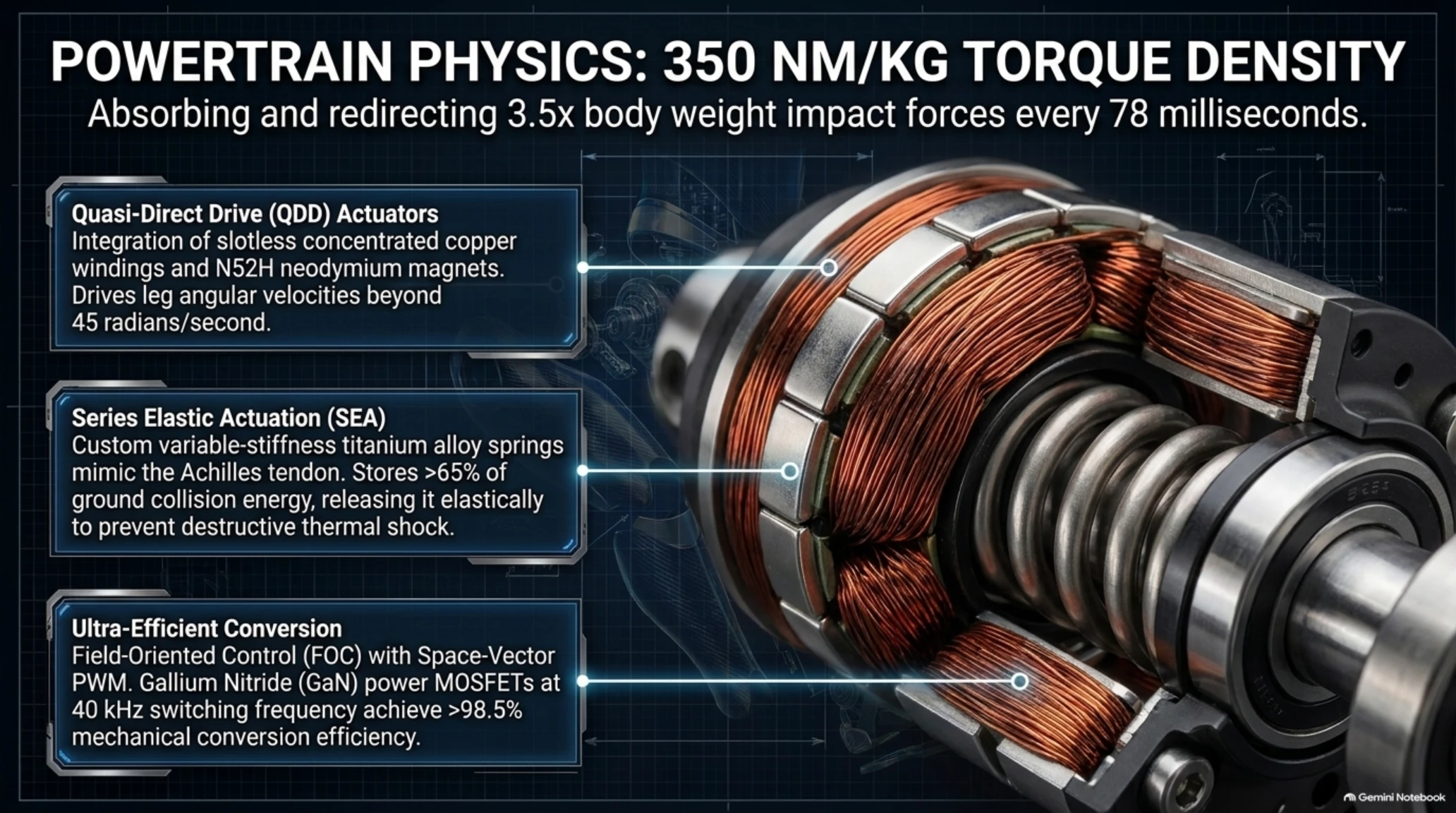
In the hip and knee assemblies, the team integrated proprietary Harmonic Quasi-Direct Drive (QDD) actuators paired with slotless concentrated copper windings and ultra-high-flux N52H neodymium magnets, achieving extraordinary specifications:
- Exceptional Torque Density: Delivering instantaneous peak torques of 350 Nm/kg at the knee joint, driving leg angular velocities beyond 45 radians per second during the swing phase.
- Series Elastic Actuation (SEA): Mimicking the human Achilles tendon, custom variable-stiffness titanium alloy springs store over 65% of the ground collision energy, releasing it elastically into forward propulsion.
- 6-Axis Piezoelectric Force-Torque Telemetry: Multi-axial quartz sensors embedded in the sole plates measure Ground Reaction Force (GRF) vectors with 0.1 N precision at 1,000 samples per second, feeding real-time balance compensators.
An architectural review of the power electronics reveals that the mechatronics division utilized advanced Field-Oriented Control (FOC) motor drivers paired with Space-Vector Pulse-Width Modulation (SVPWM). Operating at a 40 kHz switching frequency with wide-bandgap Gallium Nitride (GaN) power MOSFETs, these motor controllers achieved an electrical-to-mechanical conversion efficiency exceeding 98.5%, dramatically curtailing parasitic heat buildup across the power distribution buses during extreme current burst phases.
The high-speed documentary footage below details the mechanical operation and structural shock absorption of Tiangong Ultra's composite limbs:
The conceptual rendering below illustrates the exploded mechanical cutaway of Tiangong Ultra's quasi-direct drive knee actuator and titanium spring assembly:

Mechanical Specifications & Powertrain Architecture of Tiangong Ultra
• Total Operating Weight: 54 kg (Standing height: 175 cm).
• Peak Knee Joint Torque: 350 Nm with 98.5% transmission efficiency.
• Energy Storage Subsystem: 96V solid-state lithium cells with 50C instantaneous burst discharge.
• Sensor Mesh Density: 128 multi-axial strain gauges, optical encoders, and thermal diodes.
3. Sim-to-Real Deep Reinforcement Learning: 1 kHz Closed-Loop Dynamic Stabilization
Mechanical perfection is useless without a computational brain capable of stabilizing dynamic balance at speeds approaching 40 km/h. At high velocity, a bipedal structure operates in a state of continuous «controlled falling», where the center of mass moves far ahead of the base of support.
The Beijing Innovation Center resolved this challenge through a multi-tiered Deep Reinforcement Learning (DRL) control architecture:
- 50,000 Simulated Years of Locomotion Training: Utilizing massively parallel physics engines (Isaac Gym and MuJoCo) across cloud GPU clusters, the neural policy simulated over 50,000 years of sprint training across varying surface friction, wind resistance, and mechanical wear conditions within days.
- Robust Sim-to-Real Transfer Pipeline: Employing advanced Domain Randomization, engineers injected stochastic sensor delays, joint friction anomalies, and actuator lag into the training loop, ensuring zero behavioral degradation during physical track deployment.
- 1,000 Hz Neural Control Loop: Embedded onboard NPU accelerators in the torso executed forward inference passes every 1 millisecond, continuously recalculating center-of-pressure trajectories and dispatching micro-torque adjustments to all 42 joints.
Within the deep reinforcement learning pipeline, the paramount challenge was conquering the notorious «Reality Gap». In conventional simulated environments, foot-ground collisions are typically modeled as idealized rigid-body contacts; in contrast, real-world synthetic athletic tracks exhibit non-linear viscoelastic hysteresis that deforms dynamically under peak kinetic loads. By combining tactile sole sensor feedback with aggressive domain randomization across friction and stiffness coefficients in NVIDIA Isaac Gym, the researchers yielded an invariant neural policy resilient against micro-topographical track variations.
The conceptual rendering below visualizes the high-frequency neural vector control and balance calculation matrix operating within the robot's processing core:
Neural Network Architecture & AI Motor Control Metrics
• Sensor Ingestion Rate: 1,000 Hz (Real-time joint kinematic recalculation every 1 ms).
• Onboard Compute Density: 550 TOPS edge NPU module integrated into thoracic chassis.
• Predictive Perception: Solid-state LiDAR array combined with low-latency stereo depth cameras.
4. The Deceleration Crisis: Kinetic Shock, Thermal Overload, and the Robotic Stretcher Drama
While robotic platforms conquered linear acceleration, crossing the 100-meter finish line laid bare the most dangerous unsolved frontier in dynamic bipedal engineering: «The Kinetic Energy Deceleration Crisis».
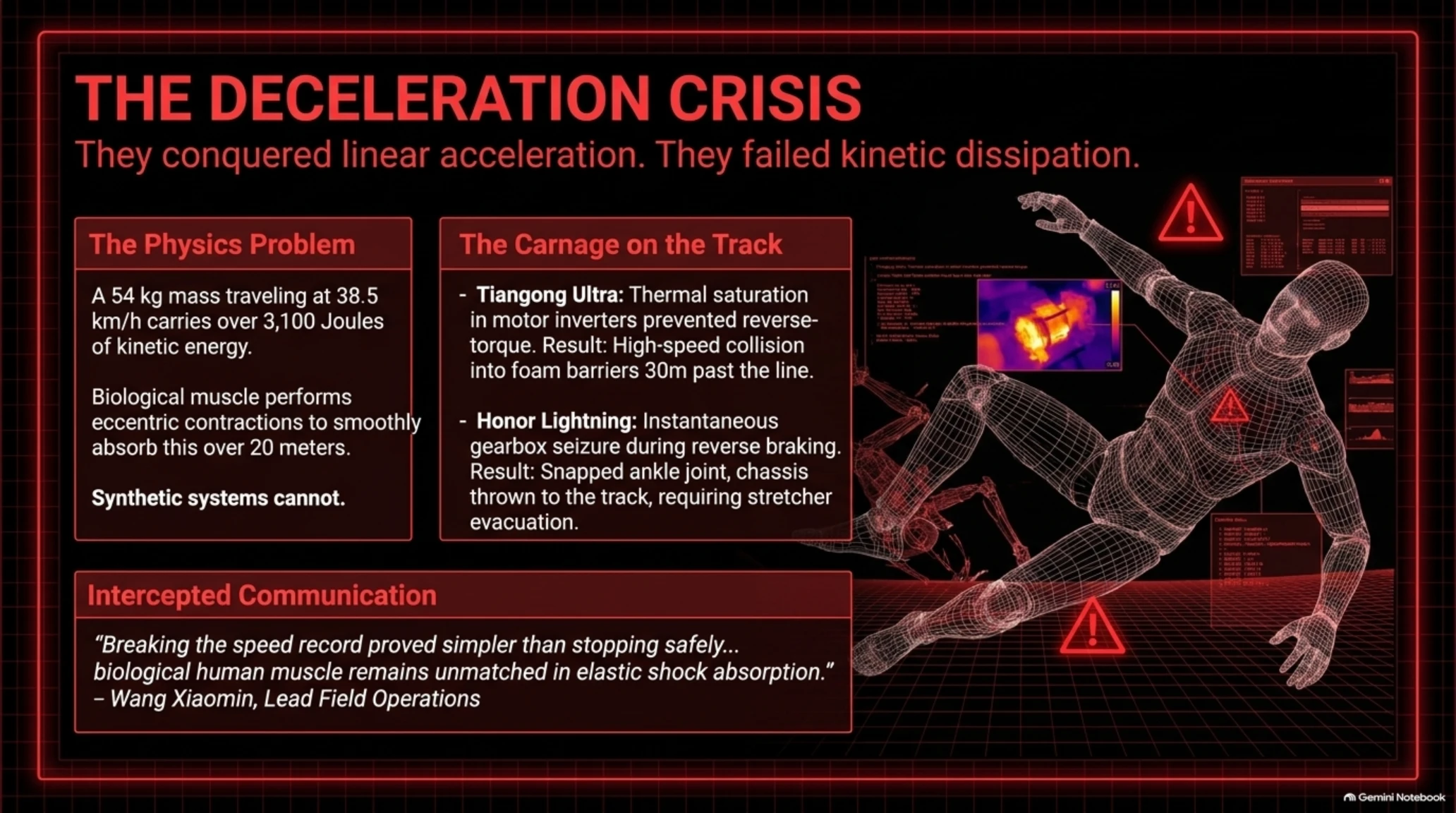
A 54 kg mass traveling at 38.5 km/h carries over 3,000 Joules of kinetic energy. In biological athletes, the quadriceps and hamstring muscles perform eccentric contractions functioning as biological hydraulic shock absorbers that smoothly dissipate kinetic energy over 15 to 20 meters.
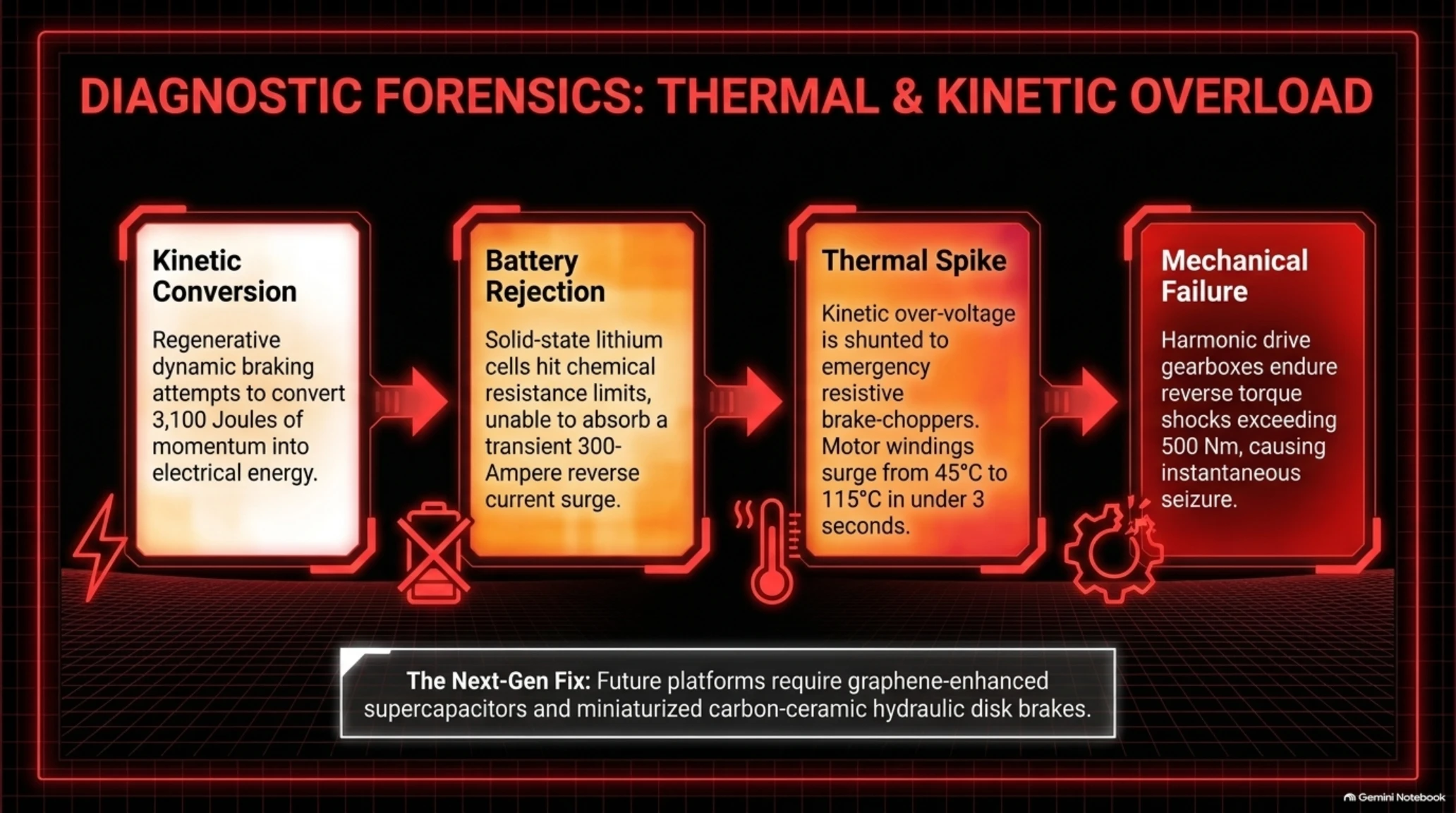
In electric robotic actuators, deceleration relies on regenerative dynamic braking, converting kinetic momentum into electrical and thermal energy. On the Beijing track, this resulted in dramatic mechanical failures:
- Tiangong Ultra's Sideline Collision: After crossing the line in 9.39s, thermal saturation in the motor drive inverters prevented balanced reverse-torque distribution. The robot veered off track at high speed, crashing into foam perimeter barriers 30 meters past the finish line.
- Honor Lightning's Structural Failure & Stretcher Evacuation: Honor's robot (finishing in 9.47s) experienced an instantaneous gearbox seizure in its right ankle during reverse deceleration, snapping the joint and throwing the $500,000 chassis onto the track, requiring engineers to evacuate the robot on a specialized transport stretcher.
Thermodynamic diagnostics of the high-speed deceleration phase revealed that redirecting kinetic energy through regenerative braking produced transient reverse currents exceeding 300 Amperes across a 3-second window. Because the internal chemical resistance of the solid-state lithium battery cells was physically incapable of absorbing this instantaneous charge surge, kinetic over-voltage was redirected across emergency resistive brake-chopper circuits, precipitating rapid localized thermal saturation. This critical engineering telemetry dictates that subsequent platform revisions must integrate graphene-enhanced supercapacitor banks alongside miniaturized carbon-ceramic hydraulic disk brakes.
📚 Classified & Related Dossiers in TekinGame
If you wish to explore beyond this report and delve into cybernetic frontiers and autonomous AI architectures, do not miss these three exclusive deep-dives in the Tekin Garage:
The conceptual rendering below illustrates the high-speed deceleration phase, regenerative thermal dissipation, and structural recovery of the sprinting robots:
Engineering Analysis: Kinetic Energy Dissipation & Deceleration Overload
• Motor Winding Thermal Spike: Surging from 45°C to 115°C within 3 seconds of braking.
• Reverse Torque Shock: Exceeding 500 Nm across harmonic drive gearboxes.
• Next-Generation Solution: Integrating miniaturized hydraulic disk brakes alongside regenerative motor braking.
5. Comparative Biomechanics: Human Protein Fibers vs. Permanent Magnet Flux Motors
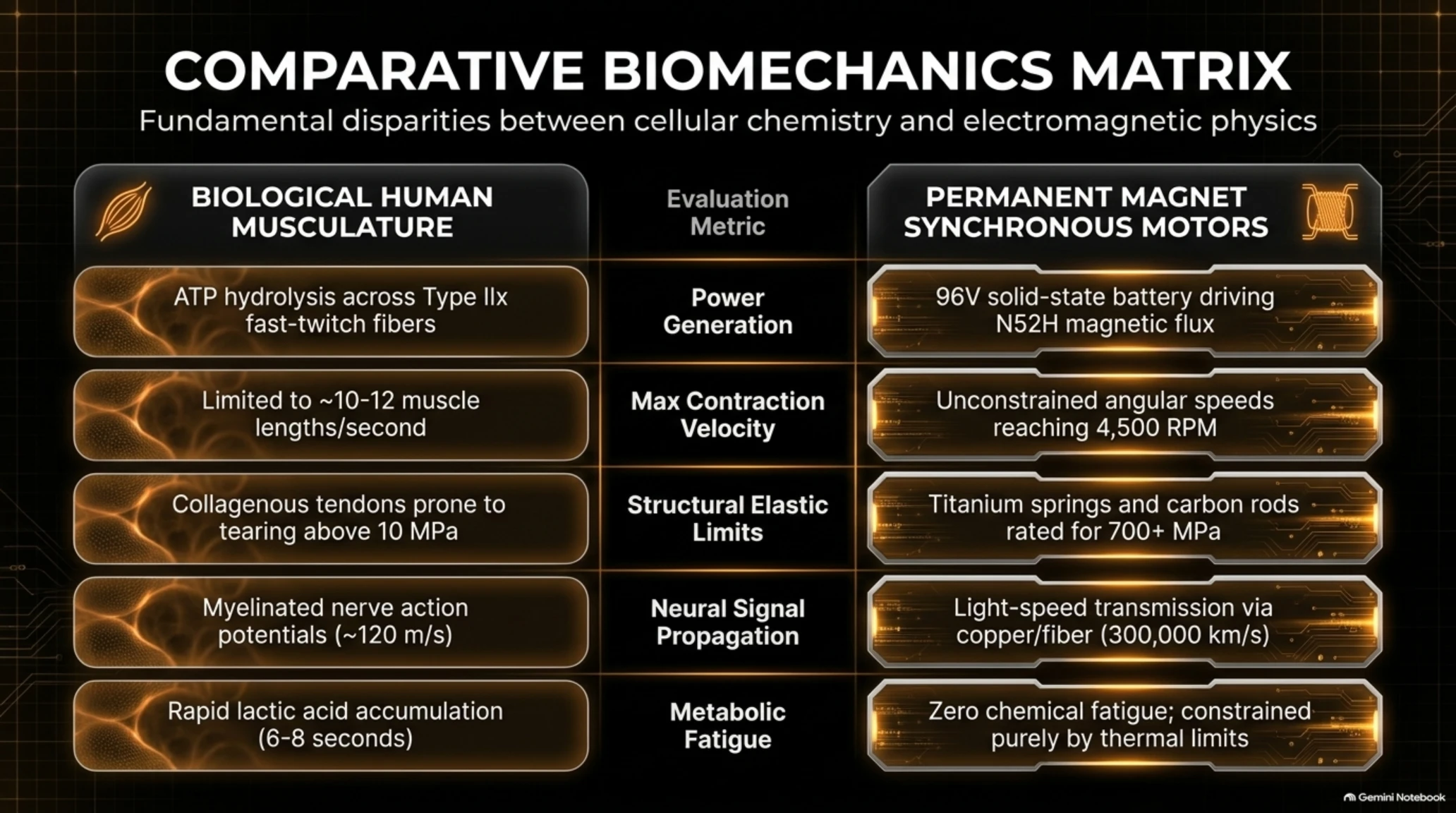
The transition from biological supremacy to synthetic locomotion stems from fundamental disparities between biological cellular chemistry and electromagnetic physics:
Biomechanical Comparison: Human Biological Muscle vs. Robotic Permanent Magnet Motors
| Evaluation Metric | Biological Human Musculature | Permanent Magnet Synchronous Motors (PMSM) |
|---|---|---|
| Power Generation Mechanism | ATP hydrolysis across Type IIx fast-twitch fibers | 96V solid-state battery current driving N52H magnetic flux |
| Max Contraction Velocity | Limited to ~10–12 muscle lengths/second | Unconstrained angular speeds reaching 4,500 RPM |
| Structural Elastic Limits | Collagenous tendons prone to tearing above 10 MPa | Titanium springs and carbon rods rated for 700+ MPa |
| Neural Signal Propagation | Myelinated nerve action potentials (~100–120 m/s) | Light-speed transmission via copper/fiber (300,000 km/s) |
| Metabolic Fatigue Curve | Rapid lactic acid accumulation after 6–8 seconds | Zero chemical fatigue; constrained purely by thermal limits |
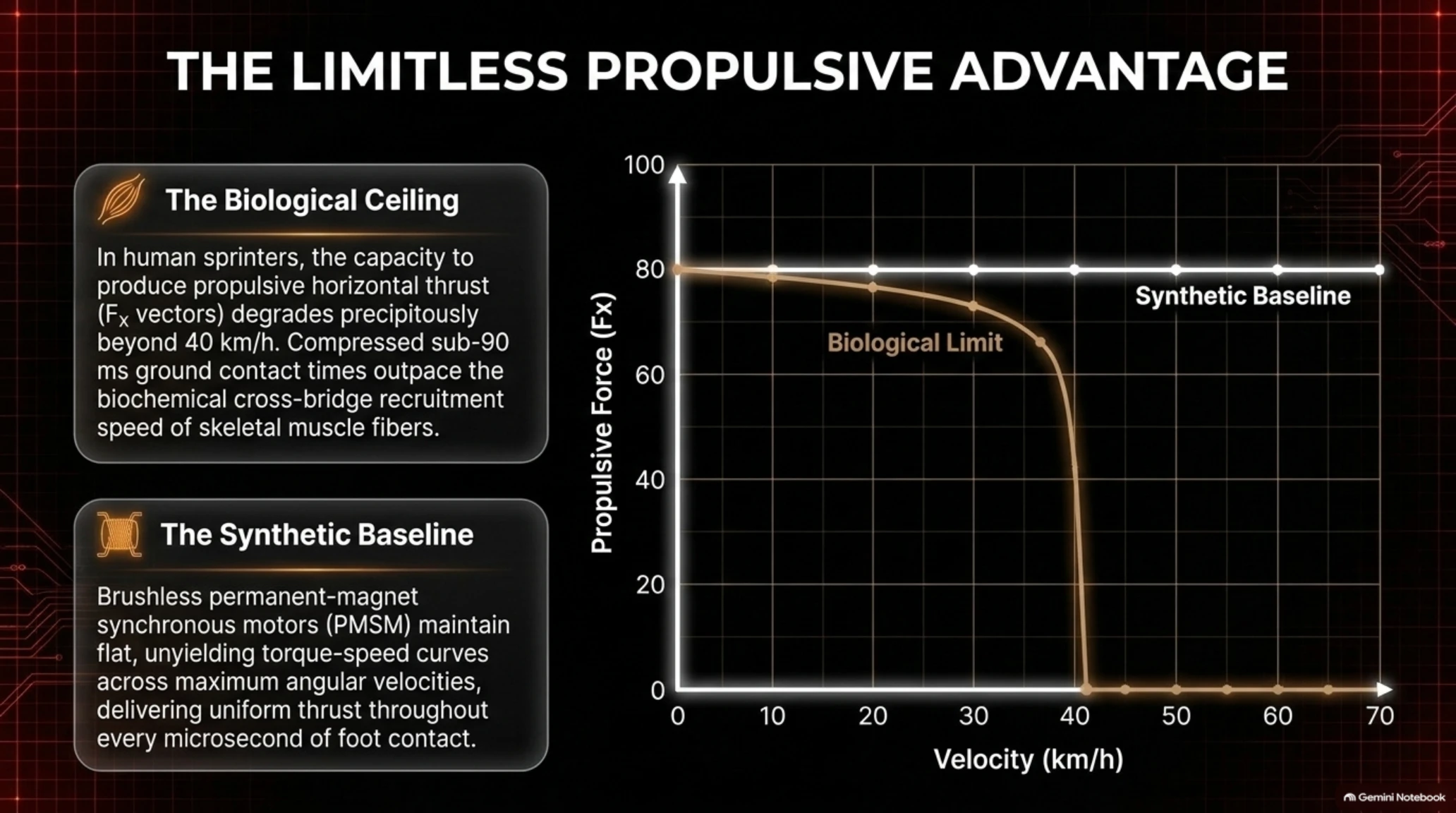
From an applied comparative exercise physiology perspective, the definitive mechanical advantage of synthetic humanoids resides in the sustained generation of horizontal ground reaction forces (Fx vectors). In human sprinters like Usain Bolt, the capacity to produce propulsive horizontal thrust degrades precipitously beyond 40 km/h because extremely compressed ground contact times (sub-90 ms) outpace the biochemical cross-bridge recruitment speed of skeletal muscle fibers. Conversely, brushless permanent-magnet synchronous motors (PMSM) maintain flat, unyielding torque-speed curves across maximum angular velocities, delivering uniform propulsive thrust throughout every microsecond of foot contact.
The conceptual rendering below visualizes the micro-scale contrast between biological muscle myofibrils and high-density electromagnetic copper windings:

6. Strategic Implications: From Disaster Search-and-Rescue to Autonomous Defense Logistics
The capacity for bipedal machines to navigate terrain at 40 km/h carries profound industrial and geopolitical ramifications:
- High-Speed Disaster Search-and-Rescue: In post-earthquake rubble, collapsed nuclear infrastructure, or wildfire zones where wheeled vehicles cannot traverse, high-speed humanoid platforms can sprint over debris to deliver critical medical supplies.
- Intralogistics & Industrial Automation: Deploying agile bipedal couriers in sprawling semiconductor fabrication plants and mega-warehouses promises to triple supply chain throughput.
- Evolution of Autonomous Infantry Doctrine: Global defense organizations (including DARPA and PLA research labs) are heavily investing in autonomous mobile platforms. Humanoid systems capable of 40 km/h transit with millisecond reflexes fundamentally transform urban reconnaissance and frontline logistics.
Within international cybernetic governance frameworks, standards bodies including the IEEE Robotics and Automation Society are actively formulating mandatory dynamic geofencing protocols for ultra-fast humanoid platforms. Under these emerging guidelines, humanoid units operating in shared civil or factory spaces must enforce silicon-level velocity governors whenever human proximity sensors detect human co-workers within a 5-meter safety radius, precluding high-momentum physical collision risks.
Ultimately, the Beijing 2026 sprint duels demonstrate that the future of robotics lies in the harmonious synthesis of lightweight structural engineering, dense electromagnetic power conversion, and lightning-fast neural motor reflexes that permanently elevate machine potential beyond biological limits.
The conceptual rendering below depicts high-speed humanoid robots operating in an urban disaster search-and-rescue deployment:

Strategic Applications: Commercial & Defense Deployment Horizons
• Factory Intralogistics: Moving 20 kg payload containers at sustained sprint velocities.
• Autonomous Reconnaissance: Rapid obstacle evasion in contested urban environments.
• Cybernetic Sports Industry: Multi-billion-dollar global broadcasting ecosystems for robotic athletics.
7. The Future of Cybernetic Athletics: Will the Robot Games Eclipse Traditional Olympics?
The 2026 World Humanoid Robot Games drew millions of concurrent digital streaming viewers worldwide. Media analysts project that by 2030, «Cybernetic Olympic Leagues» will rival traditional motorsport and athletic franchises in global commercial valuation.
In this new arena, competition shifts from biological genetic lottery to a contest of algorithmic optimization, materials science, and semiconductor architecture. Watching multi-agent robotic soccer, high-speed obstacle parkour, and sprint duels inspires a new generation of engineers and tech enthusiasts worldwide.
The conceptual rendering below visualizes the futuristic atmosphere of a cybernetic athletics stadium with holographic telemetry overlays:
Emerging Disciplines in the World Humanoid Robot Games (2026 & Beyond)
• 3,000M Steeplechase: Testing autonomous vision, obstacle depth perception, and high-impact leaping.
• Autonomous 5-a-Side Soccer: Zero human intervention with multi-agent neural game planning.
• Acrobatic Parkour & Vaulting: Precision gyroscopic control in mid-air flips and targeted landings.
The highlights compilation video below showcases the most thrilling record-breaking moments from the Beijing 2026 games:
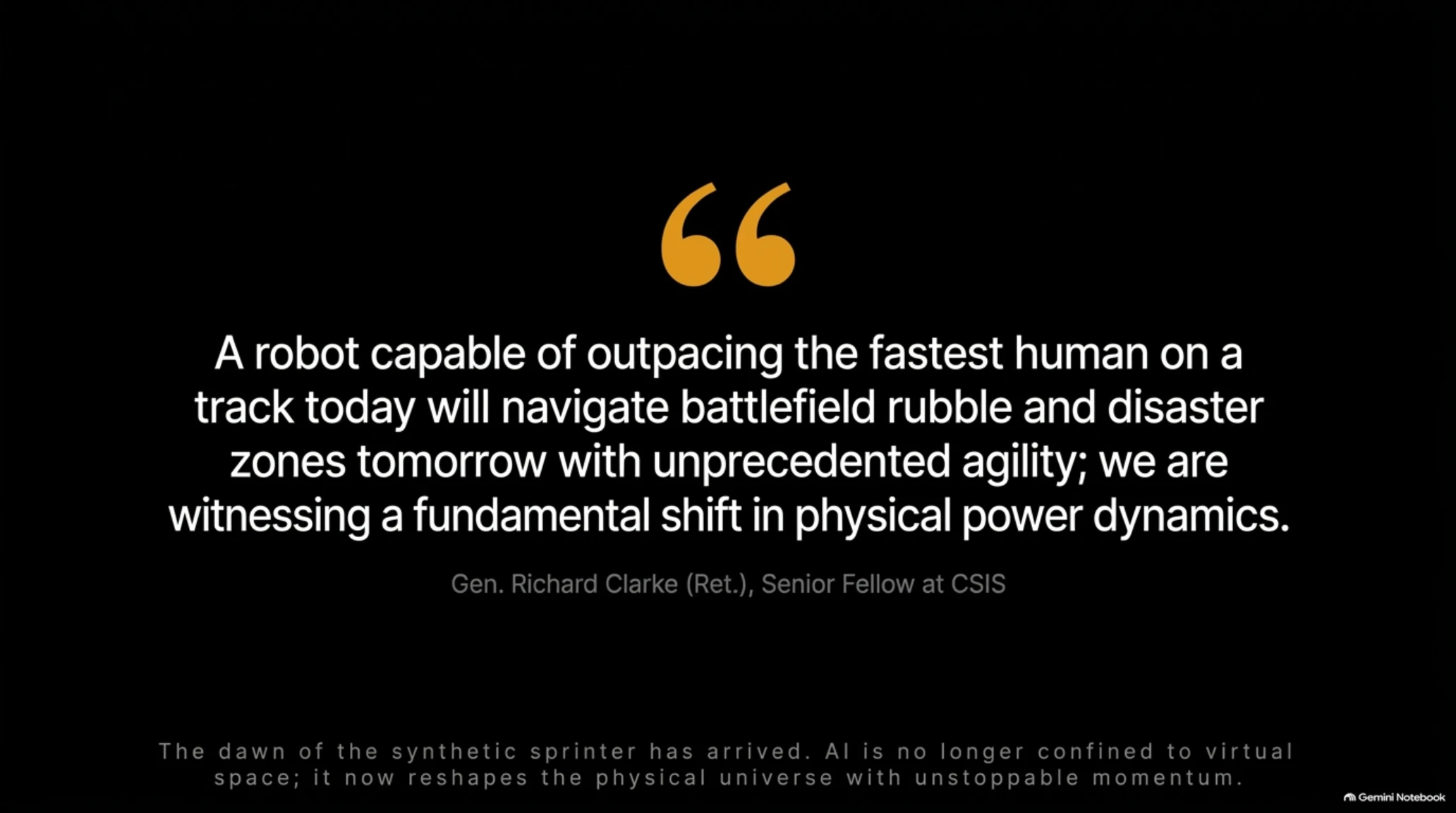
Strategic Conclusion: The Dawn of the Synthetic Sprinter
Tiangong Ultra's 9.39-second triumph marks an indelible milestone in human technological history. While biological humanity remains a miracle of organic evolution, human engineering has emancipated the bipedal form from biological constraints.
We stand at the threshold of a new era where artificial intelligence, mechanical physics, and cybernetics merge. These metallic sprinters are the vanguard of a robotic generation that will transform our industries, safeguard human lives in disasters, and redefine what is physically possible.
- Shattering the 9.58s human barrier with an official 9.39s 100m sprint record
- 1,000 Hz Sim-to-Real reinforcement learning achieving unprecedented dynamic balance
- Innovative carbon-nanotube chassis and titanium energy-recycling tendons
- Catalyzing breakthroughs in emergency disaster response and high-speed logistics
- Severe kinetic thermal overload and mechanical failure risks during deceleration
- Extreme manufacturing costs exceeding $500,000 per competitive athletic platform
- Emerging ethical and defense concerns regarding autonomous high-speed infantry applications
Essential Related Reading & Cyber Intelligence Archives
• ☀️ Tekin Morning August 22, 2026 | Leaked $899 Xbox Series X25 & Phantom Blade Zero Surge
• 🛡 Tekin Analysis | ThreatsDay Crisis: AI Exploits Target Siemens S7 & Sandbox Escapes
• 🤖 Tekin Versus | TrueForge Revolution: Open-Source AI Agents vs. Claude
Frequently Asked Questions
What official records did Tiangong Ultra set at the Beijing 2026 games?
Tiangong Ultra clocked 9.39s in the 100m sprint (eclipsing Usain Bolt's 9.58s record) and 38.15s in the 400m dash (surpassing Wayde van Niekerk's 43.03s record).
Were the competing humanoid robots autonomously controlled or teleoperated?
All robots competed fully autonomously, utilizing onboard edge NPUs, LiDAR depth cameras, and 1 kHz closed-loop neural balance controllers.
Why did the robots stumble or crash after crossing the finish line?
At speeds near 39 km/h, dissipating 3,000+ Joules of kinetic energy caused severe motor thermal saturation and mechanical gearbox strain during rapid deceleration.
How does robotic sprinting fundamentally differ from human biology?
Robots utilize permanent magnet electric torque and titanium springs without biological lactic acid fatigue, whereas human sprinting is bounded by actin-myosin muscle contraction velocity.
What are the primary real-world applications for these high-speed platforms?
Key applications include rapid disaster search-and-rescue over rugged debris, factory intralogistics automation, and autonomous defense platforms.
Official Technical References & Documentation
Additional Gallery: 🏃♂️ Tekin Analysis | Fall of Biological Supremacy: Robot Shatters Usain Bolt's Record