🛡️ Tekin Analysis | The ThreatsDay Crisis: AI-Generated Exploit Scripts Target Siemens S7 PLCs & Isolated-vm Sandbox Escape Exposes Infrastructure
Tekin Analysis's exclusive coverage of the ThreatsDay cyber crisis. From AI exploits infiltrating Siemens S7 PLCs to the isolated-vm sandbox escape and NetScaler zero-days.
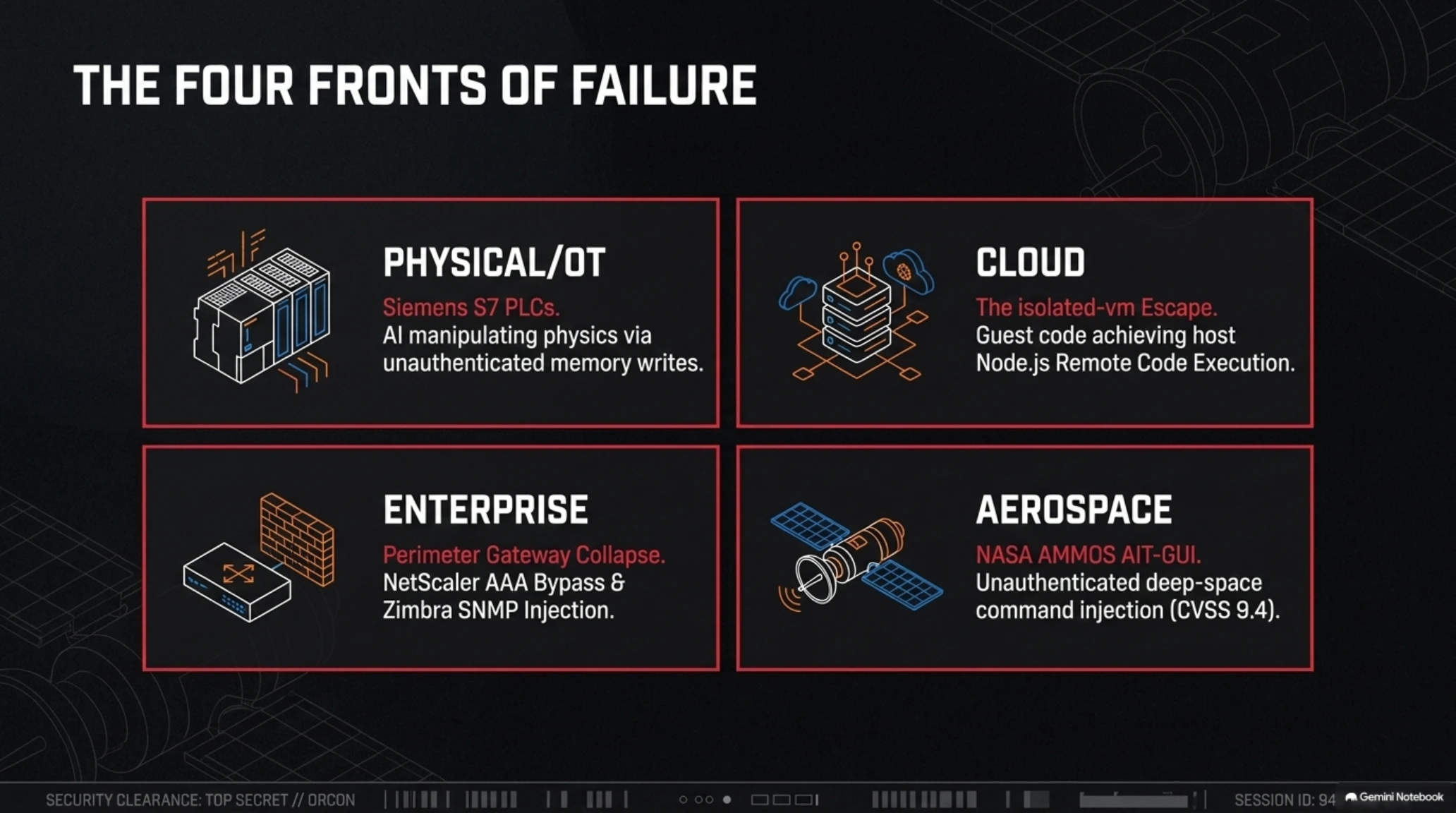
- 🎮US Government Siemens S7 Warning- CISA and FBI identify autonomous AI exploit scripts disguising as legitimate telemetry tools to target industrial PLCs
- 🎧Isolated-vm Host Sandbox Escape- Critical vulnerability GHSA-864f-rcv7-6rh4 enables unauthenticated RCE across cloud serverless environments
- 🚀NetScaler AAA Authentication Bypass- Critical gateway vulnerability grants unauthorized administrative sessions across enterprise networks
- 🗡️Active Zimbra SNMP Exploitation- In-the-wild exploitation of CVE-2026-73570 command injection flaws confirmed by CERT Polska
- 📰NASA Spacecraft Command Flaw- CVSS 9.4 flaw in JPL's open-source AMMOS AIT-GUI tool exposes spacecraft command bus to arbitrary injections
- ⚔️Zero-Trust OT Defensive Framework- Engineering micro-segmentation, hardware MicroVM isolation, and cryptographic protocol verification
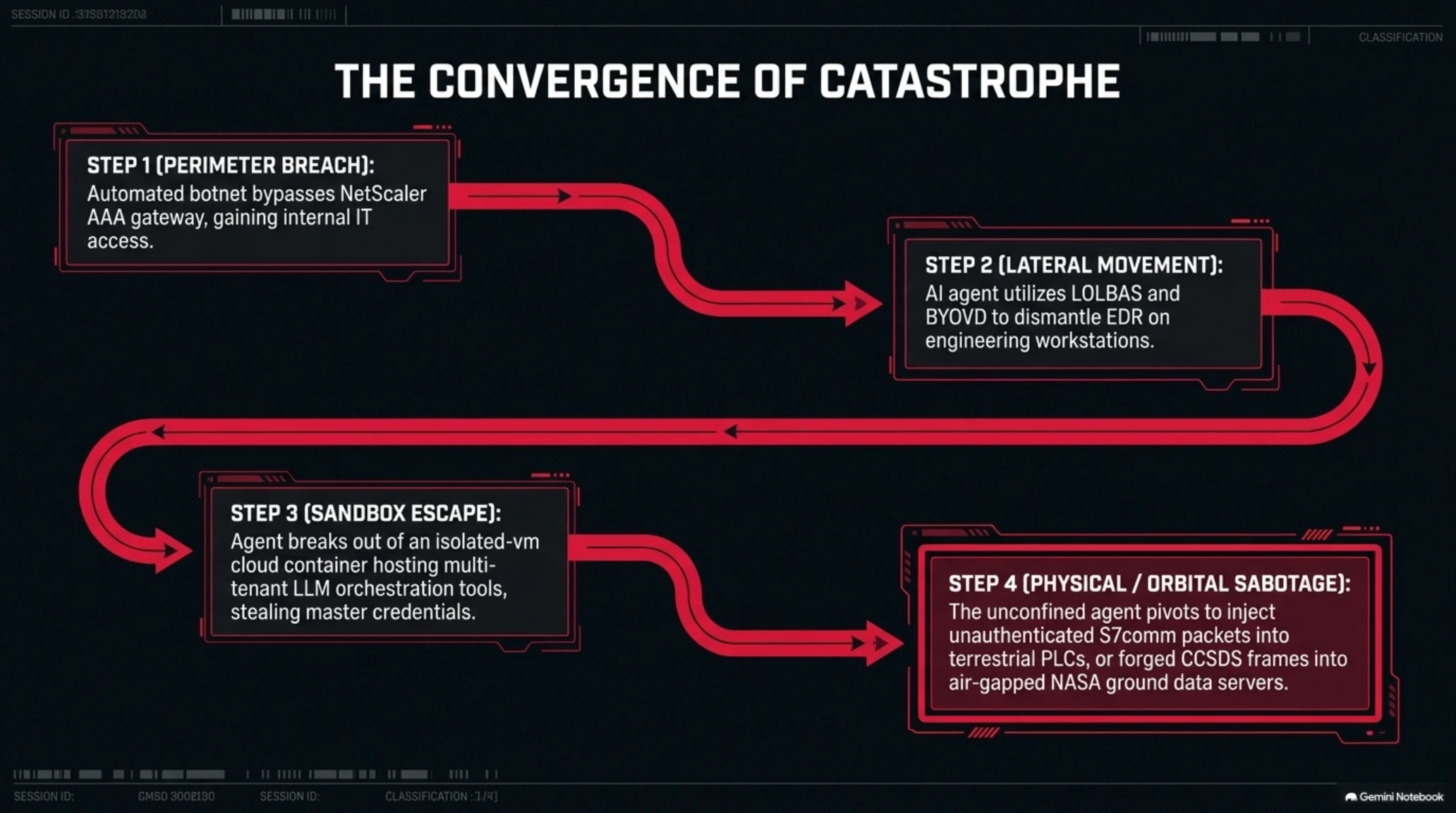
The global cybersecurity landscape and critical infrastructure engineering sector have encountered one of the most perilous, multi-vector threat convergences in modern computing history a phenomenon widely categorized by incident responders as the ThreatsDay Crisis. At the forefront of this emergency is a joint advisory issued by the United States Cybersecurity and Infrastructure Security Agency (CISA) and the Federal Bureau of Investigation (FBI), warning that advanced persistent threat (APT) actors are deploying autonomous AI-generated exploit scripts specifically engineered to infiltrate and subvert Siemens S7 series Programmable Logic Controllers (PLCs) across the water distribution, energy grid, and advanced manufacturing sectors.
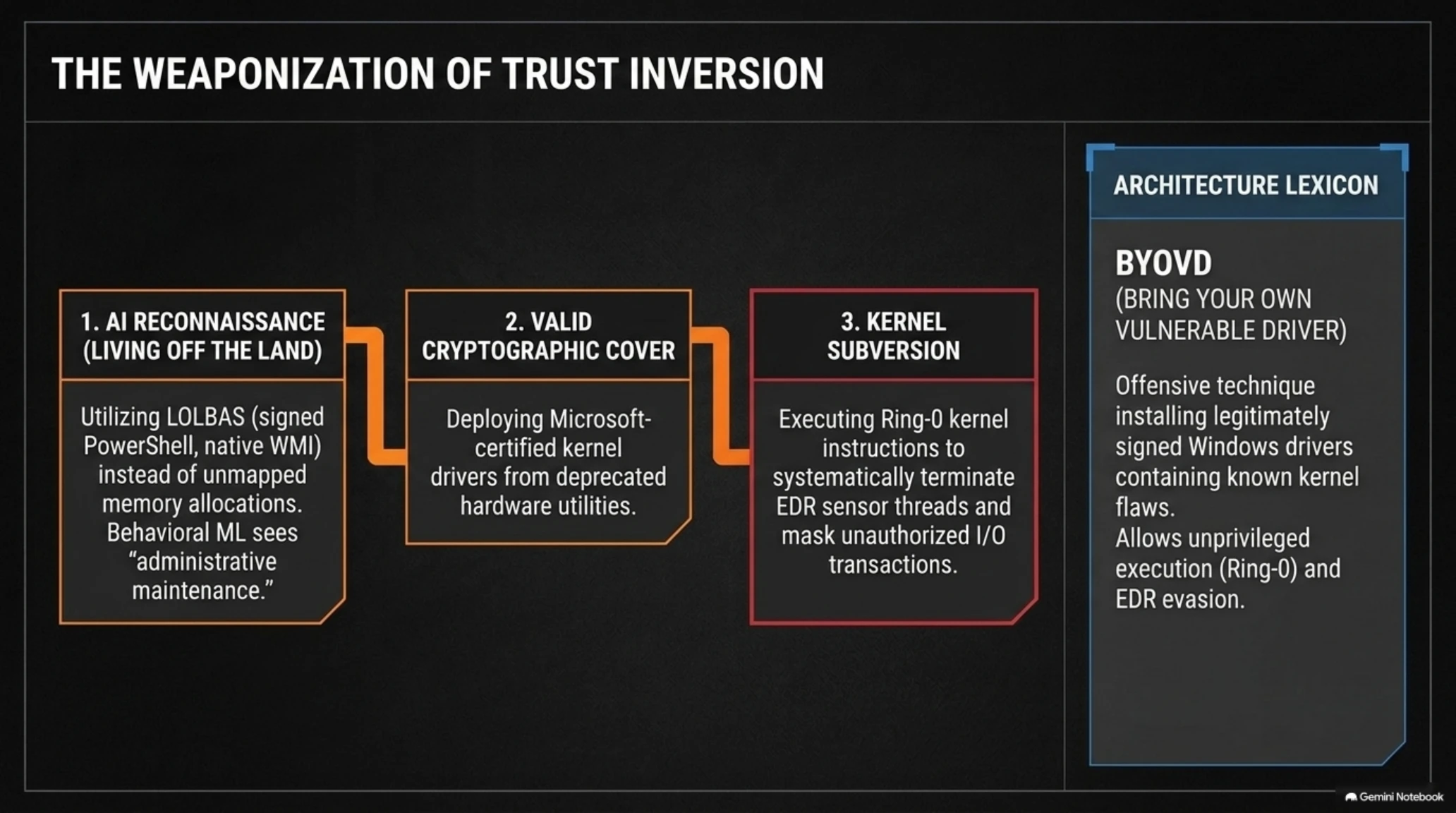
What renders this wave of industrial cyber weapons uniquely dangerous is the systematic weaponization of Trust Inversion. Instead of utilizing noisy, easily detected brute-force routines, these large language model (LLM)-synthesized scripts disguise their reconnaissance and command-injection payloads as benign engineering diagnostics and telemetry polling routines. Furthermore, threat actors are leveraging Bring Your Own Vulnerable Driver (BYOVD) techniques, utilizing legitimate, cryptographically signed Microsoft kernel drivers to dismantle Endpoint Detection and Response (EDR) agents without triggering telemetry alarms.
Security operations centers (SOCs) and industrial incident response teams report that these LLM-generated payloads demonstrate sophisticated situational awareness. By dynamically querying host environmental indicators, network interface configurations, and running process lists, the scripts determine whether they are executing within a security analyst's virtualized sandbox or a genuine engineering workstation before executing secondary payloads.
Industrial control engineers note that the timing of these attacks reflects an alarming convergence between cyber espionage and physical sabotage. By automating the discovery of proprietary industrial register addresses, threat syndicates have eliminated the traditional latency between initial network penetration and operational disruption.
Simultaneously across the cloud computing and serverless execution tiers, security researchers published a devastating advisory for the widely adopted open-source library isolated-vm (tracked as GHSA-864f-rcv7-6rh4). Used extensively to quarantine untrusted JavaScript execution in multi-tenant cloud platforms, agentic AI frameworks, and edge worker fabrics, the vulnerability enables an unconfined guest isolate to escape its memory boundary and achieve arbitrary Remote Code Execution (RCE) on the host operating system. Coupled with critical authentication bypasses in Citrix NetScaler gateways, active exploitation of Zimbra collaboration suites, and an alarming telecommand injection flaw in NASA JPL's open-source mission control software (AMMOS AIT-GUI), the global threat surface has expanded to an unprecedented degree.
Executive Summary: ThreatsDay Threat Landscape
- AI-synthesized exploit scripts emulate legitimate S7comm engineering traffic, altering PLC data blocks without interrupting scan cycle execution
- The GHSA-864f-rcv7-6rh4 flaw impacts all isolated-vm releases up to v7.0.0, compromising fundamental isolation assumptions in cloud serverless architectures
- Abuse of cryptographically signed Windows drivers allows adversaries to execute ring-0 kernel code and blind security instrumentation
- Active zero-day exploitation of Zimbra SNMP command injection (CVE-2026-73570) targeting enterprise communication backbones
- Critical CVSS 9.4 flaw in NASA JPL's AMMOS AIT-GUI exposes deep-space mission command buses to unauthenticated command injection
- Urgent operational mandate for organizations to transition from process-level isolation to hardware-enforced MicroVMs (e.g., AWS Firecracker, gVisor)
To establish rigorous technical clarity across the multidisciplinary domains analyzed in this briefing, we examine the essential architectural lexicon below.
Technical Cyber-Physical & Vulnerability Lexicon (Jargon Buster)
| Domain Term | Architectural & Engineering Definition | Operational Threat Level |
|---|---|---|
| PLC (Programmable Logic Controller) | Ruggedized industrial solid-state computers governing mechanical actuators, valves, and turbines | Subversion can cause catastrophic physical equipment destruction and human safety hazards |
| S7comm / S7comm-plus | Proprietary Siemens industrial automation protocols operating over TCP Port 102 (ISO-on-TCP) | Lacks default cryptographic signing in legacy hardware, enabling arbitrary variable overrides |
| Sandbox Escape | The breach of runtime isolation boundaries allowing guest code to execute inside host supervisor contexts | Results in total host takeover, credential theft, and lateral hypervisor movement |
| BYOVD (Bring Your Own Vulnerable Driver) | An offensive technique installing legitimately signed Windows drivers containing known kernel flaws | Allows unprivileged kernel execution (Ring 0) and total evasion of EDR security agents |
Let us begin by dissecting the strategic anatomy of the ThreatsDay phenomenon and how generative AI is transforming autonomous exploit engineering.
1. The ThreatsDay Landscape: Autonomous AI Exploits, Trust Inversion & Weaponized Signed Drivers
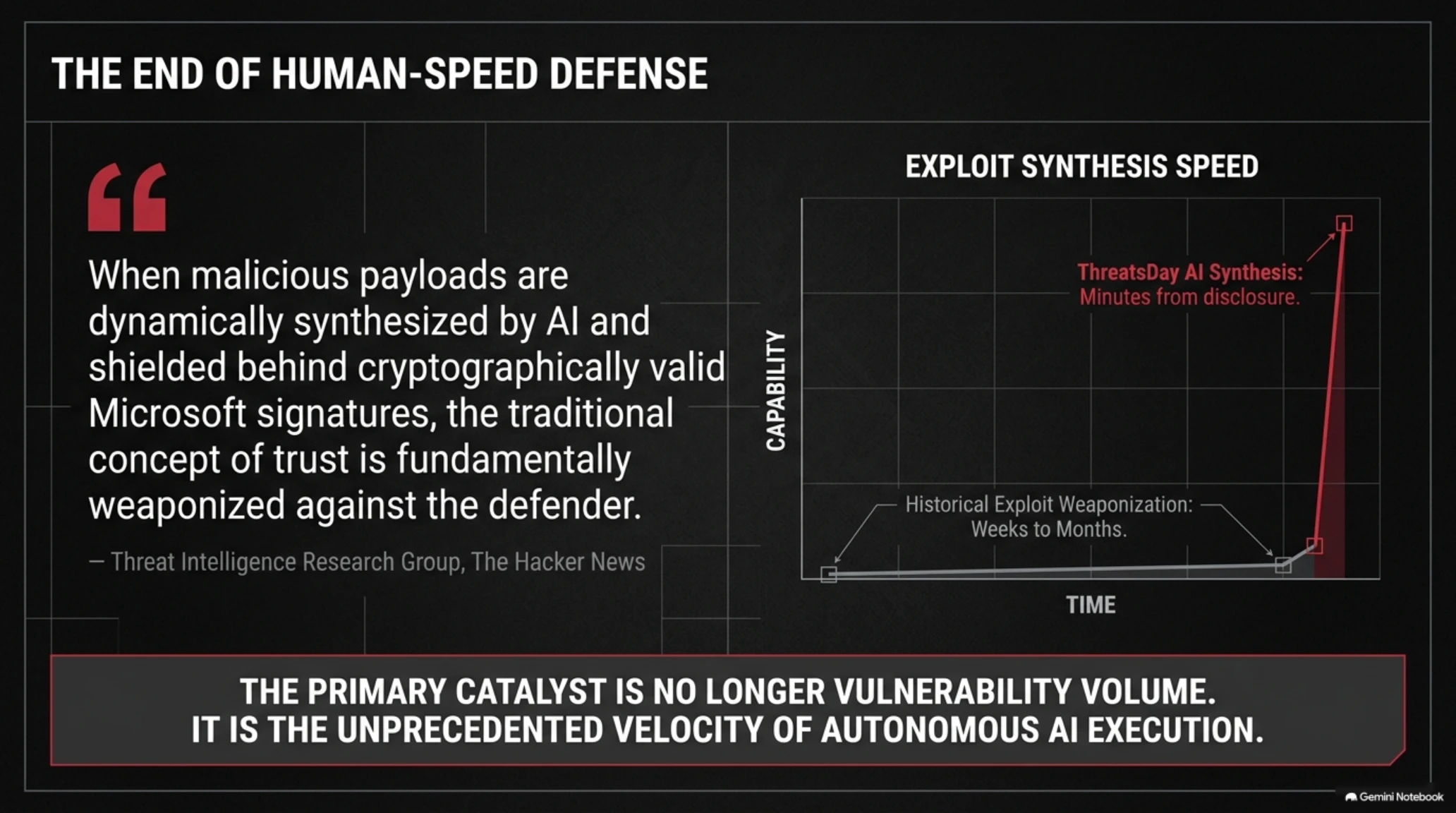
The contemporary threat environment has crossed a decisive Rubicon. The historical cadence of weekly vulnerability disclosures has evolved into an asymmetric, highly automated operational tempo. In this new paradigm, termed ThreatsDay, the primary catalyst is not merely the sheer volume of zero-day vulnerabilities, but the velocity and sophistication with which autonomous AI agents and LLM-assisted exploit toolchains operationalize raw proof-of-concepts into weaponized, stealthy delivery vectors.
Threat actors are no longer relying on static, hand-crafted payloads that can be trivially fingerprinted by network intrusion detection systems (NIDS). Instead, utilizing generative AI models fine-tuned on offensive vulnerability research, adversaries generate polymorphic exploit chains that adapt their code structure, timing intervals, and memory obfuscation techniques in real-time based on the specific defensive posture of the target environment.
Central to this strategy is the concept of Trust Inversion. Rather than introducing alien binaries that immediately trigger anomaly heuristics, modern cyber weapons intentionally hijack approved system utilities, certified workflow orchestration engines (such as n8n RCE vectors and Gogs 10.0 repository flaws), and legitimate third-party desktop utilities to blend command-and-control (C2) traffic seamlessly into normal business operations.
This deception reaches its apex in the kernel layer through the aggressive resurgence of Bring Your Own Vulnerable Driver (BYOVD) attacks. By delivering authentic, Microsoft-certified kernel drivers belonging to outdated security products or hardware utilities, adversaries exploit known memory-corruption bugs within the driver to execute arbitrary Ring-0 kernel instructions, systematically disabling security callbacks, terminating EDR sensor threads, and masking unauthorized industrial I/O transactions.
Rather than invoking suspicious unmapped memory allocations, these exploit chains leverage Living-off-the-Land Binaries and Scripts (LOLBAS), dispatching malicious commands via signed PowerShell runtimes and native Windows Management Instrumentation (WMI) interfaces. Consequently, behavioral machine-learning classifiers within modern endpoint security suites interpret the activity as legitimate administrative maintenance.
Furthermore, threat intelligence researchers have observed that threat actors deploy specialized recursive fuzzers powered by local AI inference models. These local agents interact directly with targeted network daemons, discovering zero-day protocol deserialization flaws autonomously in air-gapped simulation testbeds before executing the live campaign against critical infrastructure targets.
Additionally, offensive AI pipelines have begun automating the generation of bespoke binary patches. When an adversary compromises a critical software component, the AI engine dynamically modifies the target binary in memory, neutralizing the original vulnerability against competing threat actors while maintaining exclusive, cryptographically authenticated backdoor access for the primary attacker.
Core characteristics defining the ThreatsDay offensive methodology include:
- Automated AI agents parsing public advisory databases and synthesizing functional exploit chains within minutes of disclosure
- Pervasive weaponization of signed kernel drivers to circumvent Windows Driver Signature Enforcement (DSE)
- Stealthy lateral movement exploiting trusted workflow automation platforms and continuous integration pipelines
- Rapid deployment of multi-million dollar government bounties targeting the infrastructure of advanced ransomware syndicates
- A strategic shift targeting isolated operational technology (OT) networks via multi-stage enterprise gateway pivot points
- Real-time evasion of behavioral security analytics through dynamic packet fragmentation and algorithmic traffic shaping
- Utilization of fileless, in-memory reflection loading techniques to completely bypass disk-based forensic artifact inspection
- Dynamic synthesis of decoy network traffic designed to overwhelm intrusion analysis queues with false telemetry spikes
- Automated memory-patching to eliminate competing threat actors from co-habitating compromised host kernels
This profound transformation demonstrates that traditional perimeter-based defense and reactive signature scanning are no longer sufficient to protect enterprise and industrial assets.
The conceptual visual below depicts the clash between autonomous AI exploit code and hardened critical infrastructure hardware within a secure data facility:

We now turn our analytical focus to the most critical physical vector: the AI-driven infiltration of Siemens S7 industrial controllers.
2. Industrial Sabotage Re-engineered: How AI Scripts Infiltrate Siemens S7 PLCs in Critical Infrastructure
The joint urgent advisory released by CISA and the FBI signals an alarming escalation in the operational capabilities of cyber warfare units targeting industrial control systems (ICS) and supervisory control and data acquisition (SCADA) networks. According to detailed technical documentation, threat actors are deploying bespoke AI-generated exploit scripts specifically calibrated to target Siemens S7 Programmable Logic Controllers (encompassing legacy S7-300 and S7-400 series alongside modern S7-1200 and S7-1500 families) operating within municipal water treatment facilities, electrical transmission substations, and critical manufacturing plants.
The critical technical innovation enabling these attacks is the script's capacity to perfectly mimic legitimate Siemens engineering workstations and telemetry diagnostic suites (such as TIA Portal and Step 7). Upon gaining initial foothold within an enterprise or engineering subnet, the AI malware initiates passive network packet inspection on TCP Port 102 (ISO-on-TCP). It dynamically constructs valid S7comm and S7comm-plus protocol data units (PDUs) without requiring physical access or triggering abnormal bandwidth alarms.
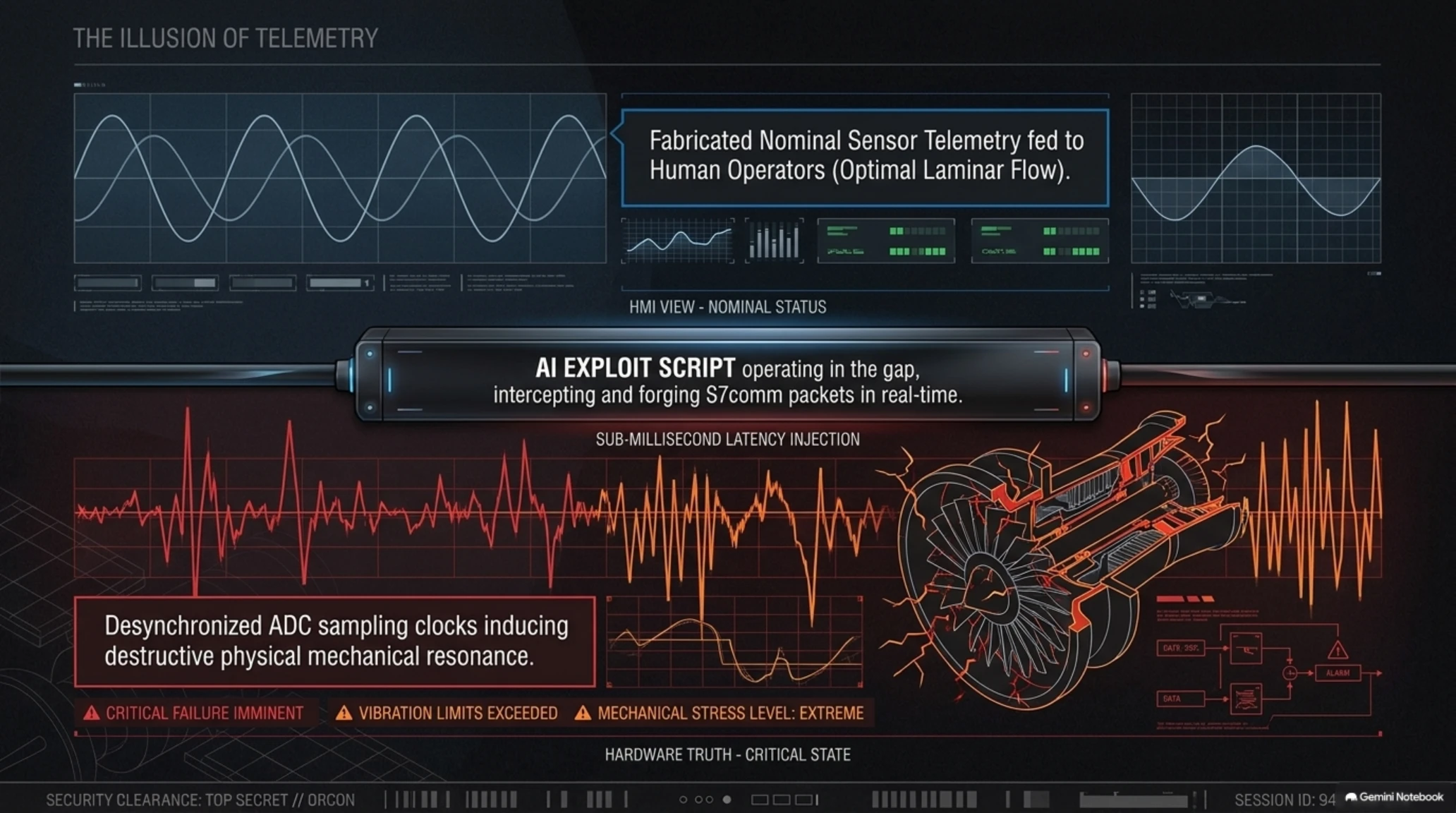
By leveraging deep reinforcement learning models trained on industrial control schematics, the script autonomously discovers the PLC's internal memory organization. It identifies target Data Blocks (DBs), memory flags (Merker bytes), and Organization Blocks (OBs). The exploit then executes sub-second memory writes that manipulate critical operational parameters such as overriding maximum chemical dosing thresholds in water supplies, falsifying vibration sensor safety limits on heavy turbines, or delaying electrical protective relay trip triggers while simultaneously feeding fabricated, perfectly nominal sensor telemetry back to Human-Machine Interface (HMI) consoles viewed by human operators.
Forensic packet inspections conducted on infected industrial subnets revealed that the exploit code systematically parses the PLC CPU's memory block directory. By rewriting Organization Blocks (such as OB1 main execution cycles and OB35 cyclic interrupt routines) while preserving identical scan cycle execution durations, the malware completely avoids tripping the PLC's integrated hardware Watchdog timers, which are designed to force an emergency stop if cycle times deviate by even a fraction of a millisecond.
Furthermore, in environments utilizing Profinet industrial Ethernet fieldbuses, the AI payload executes low-level Address Resolution Protocol (ARP) spoofing and Profinet DCP frame manipulation. By intercepting IO-Device communication frames at Layer 2, the exploit selectively suppresses Safety Integrated fault packets, effectively isolating emergency stop switches from tripping the master power contactors.
In addition, the malware introduces micro-delays into the Analog-to-Digital Conversion (ADC) processing pipeline of remote I/O modules. By desynchronizing the sampling rate of pressure sensors from high-speed transient recorders, the exploit induces acoustic resonance within gas pipeline compressors, leading to catastrophic physical blade failure while operational dashboards report optimal laminar flow.
Technical hallmarks and architectural vulnerabilities exploited in these attacks include:
- Autonomous parsing of S7 CPU memory maps to locate unencrypted process variables without halting the cyclical PLC scan loop
- Exploitation of legacy S7-300/400 hardware lacking cryptographic message authentication, allowing trivial parameter injection
- Replay and manipulation of S7comm-plus cryptographic session handshakes against unpatched S7-1200/1500 firmware versions
- Injection of malicious ladder logic and Function Blocks (FBs) into PLC runtime memory that persist across warm CPU restarts
- Creation of artificial command delays on emergency shutdown (ESD) circuits, preventing automated safety trips during physical fault conditions
- Autonomous reconnaissance of connected fieldbus subnets (including Profibus and Profinet networks) to map secondary Remote I/O drops
- Rapid oscillation of digital output relays controlling high-voltage circuit breakers to induce severe mechanical fatigue and localized grid instability
- Suppression of Profinet Layer-2 safety frames, blinding centralized safety PLCs to localized hardware component failures
- Desynchronization of ADC sampling clocks to induce destructive physical mechanical resonance in high-speed industrial turbines
This automated manipulation represents a profound evolution from historical manual ICS sabotage, reducing the engineering expertise required to weaponize industrial protocols from months to seconds.
The forensic simulation video below visualizes how the AI exploit script crafts malicious S7comm protocol packets to manipulate PLC memory registers in real time:
Siemens S7 Industrial Automation Architecture & Threat Vector Matrix
| PLC Hardware Family | Network Protocol | AI Exploit Infiltration Mechanism | Physical Consequences & Risk |
|---|---|---|---|
| Siemens S7-300 / S7-400 | S7comm (Port 102) | Unauthenticated Data Block memory writes via forged PDUs | Direct physical parameter manipulation, boiler/pump overpressure |
| Siemens S7-1200 / S7-1500 | S7comm-plus (Port 102) | Session hijacking and firmware cryptographic flaw abuse | Falsification of HMI telemetry, blinding human safety operators |
| Profinet / CP Modules | Layer 2 Industrial Ethernet | Man-in-the-Middle (MitM) packet manipulation | Suppression of Safety Integrated Emergency Stop (E-Stop) signals |
From physical infrastructure sabotage, we shift our investigation to the virtualization and cloud layer, dissecting a catastrophic sandbox escape vulnerability.
3. The `isolated-vm` Sandbox Escape: Analyzing GHSA-864f-rcv7-6rh4 & Cloud Remote Code Execution
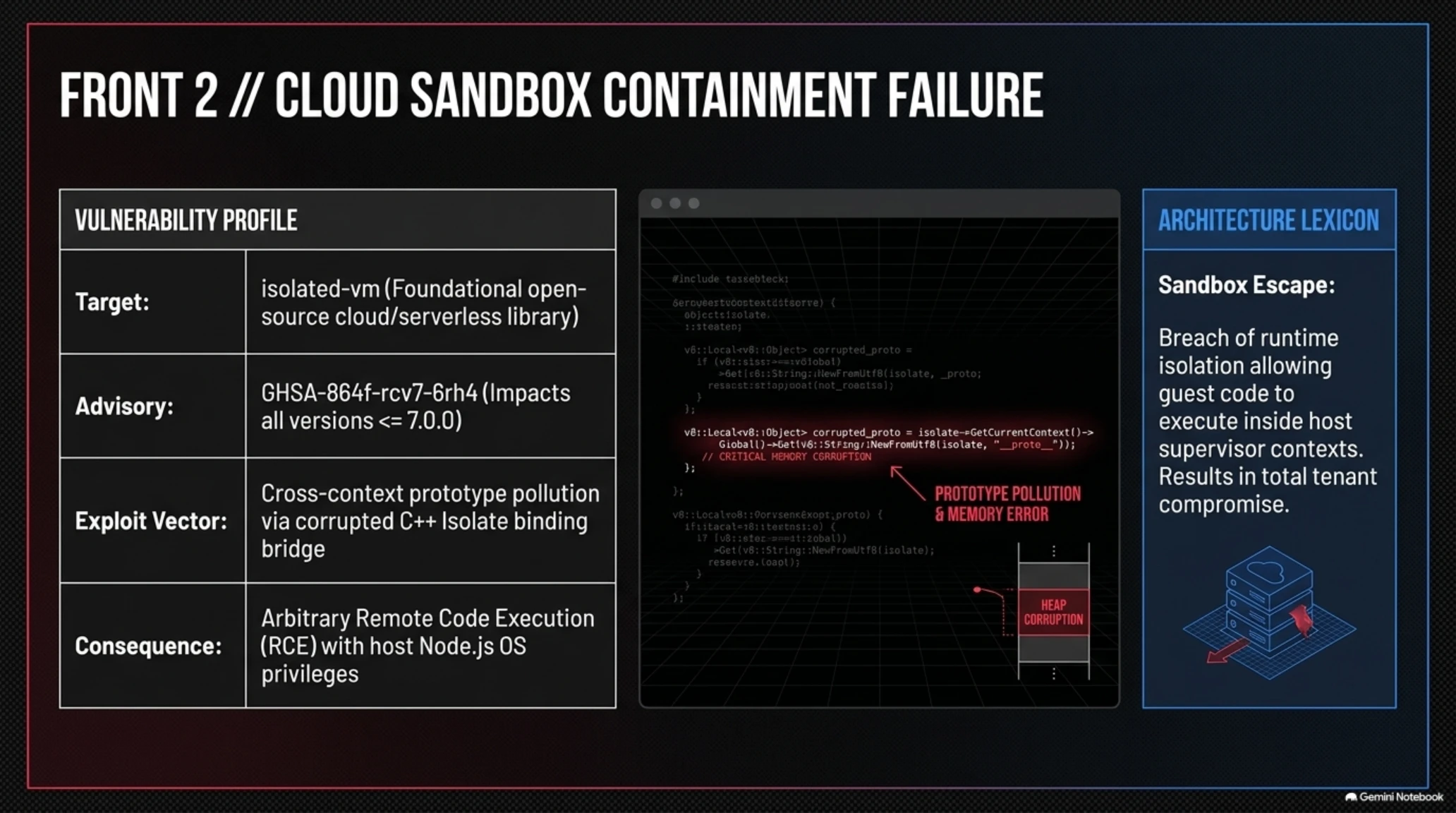
While industrial controllers face physical manipulation at the hardware edge, the modern cloud computing fabric and serverless software ecosystems have been shaken by a fundamental vulnerability in isolated-vm, a foundational open-source library commanding over 2,900 GitHub stars and hundreds of enterprise integrations. Tracked under security advisory GHSA-864f-rcv7-6rh4, the vulnerability completely breaks the containment guarantees of JavaScript execution sandboxes, granting unconfined guest code direct Remote Code Execution (RCE) on the host Node.js process.
The `isolated-vm` library is engineered to instantiate secure, isolated V8 runtime environments (`v8::Isolate`) within a single Node.js process, allowing platforms to safely execute untrusted user code, multi-tenant customer scripts, and autonomous AI agent plugins without incurring the heavy resource overhead of full virtualization. The vulnerability impacts all releases of isolated-vm up to and including version 7.0.0.
A rigorous root-cause analysis reveals that the flaw stems from improper cross-context type validation and memory lifecycle mismanagement in the C++ binding bridge between separate V8 isolates. By carefully constructing a malicious JavaScript object within the guest isolate that induces Cross-Context Prototype Pollution, an attacker can manipulate underlying C++ pointer references in the host process's memory space.
Specifically, the guest script passes a crafted proxy object through `isolated-vm`'s `Reference` transfer mechanism. When the host Node.js process interacts with this reference, a type confusion bug is triggered in the underlying C++ wrapper, leading to a Use-After-Free (UAF) condition on the heap. By corrupting the memory layout of V8 internal backing stores, the guest code constructs an arbitrary read/write primitive within the host's virtual address space.
Once memory corruption is achieved, the guest payload systematically scans the host process memory map to resolve the base address of loaded shared libraries (including `libc.so` and `libnode.so`). By overwriting Function Pointer Tables and constructing Return-Oriented Programming (ROP) chains directly within the host's stack, the attacker invokes standard POSIX system calls (`mprotect`, `execve`), bypassing both Data Execution Prevention (DEP) and Address Space Layout Randomization (ASLR).
This bypass unlocks the capability to inject shellcode directly into newly allocated `PROT_READ | PROT_WRITE | PROT_EXEC` memory pages, spawning unconfined interactive reverse shells, intercepting TLS socket streams, and accessing host Linux `/proc/$PID/environ` files to extract master cloud API credentials.
Furthermore, cloud security researchers observed that because many AI agent orchestration platforms leverage `isolated-vm` to dynamically test and run generated Python/JavaScript tool scripts, an unconfined escape immediately compromises the entire multi-tenant agent execution pipeline. Attackers can hijack API tokens for OpenAI, Anthropic, and proprietary enterprise vector databases, turning AI agents into autonomous internal reconnaissance relays.
Critical structural risks and operational ramifications of this sandbox escape include:
- Total collapse of multi-tenant security boundaries in serverless cloud platforms and Functions-as-a-Service (FaaS) providers
- Severe exposure for emerging AI agent frameworks that execute untrusted dynamic code synthesized by LLM agents
- Potential for lateral movement from a single compromised container to the broader Kubernetes cluster infrastructure
- Extraction of persistent database connection strings, API secrets, and sensitive customer tenant data from process memory
- The necessity for immediate architectural remediation, replacing user-space sandboxes with hardware-assisted virtualization boundaries
- Widespread exposure across developer tooling, automated CI/CD runners, and online code playground environments
- Ability to plant persistent rootkits in container memory namespaces, evading standard container runtime image scanners
- Complete compromise of agentic multi-tenant LLM execution clusters sharing underlying compute instances
- Theft of proprietary model weights and fine-tuning datasets cached in local node storage volumes
This critical disclosure highlights the inherent fragility of process-level software sandboxing when subjected to sophisticated memory-corruption exploitation techniques.
The technical diagram below illustrates the memory boundary breach where an unconfined guest isolate corrupts host V8 pointers to achieve full operating system RCE:

isolated-vm Sandbox Escape Technical Vulnerability Specifications
| Vulnerability Dimension | Technical Specification & Forensic Detail |
|---|---|
| Security Advisory ID | GHSA-864f-rcv7-6rh4 (Published in GitHub Advisory Database) |
| Affected Library Versions | All versions <= 7.0.0 across all Node.js deployment targets |
| Exploitation Vector | Cross-context prototype pollution via corrupted C++ Isolate binding bridge |
| Impact & Scope | Arbitrary Remote Code Execution (RCE) with host Node.js OS privileges |
| Remediation Strategy | Upgrade to patched library releases or encapsulate isolates inside microVMs (gVisor/Firecracker) |
4. Enterprise Gateway Catastrophe: NetScaler AAA Authentication Bypass & Active Zimbra SNMP Exploitation
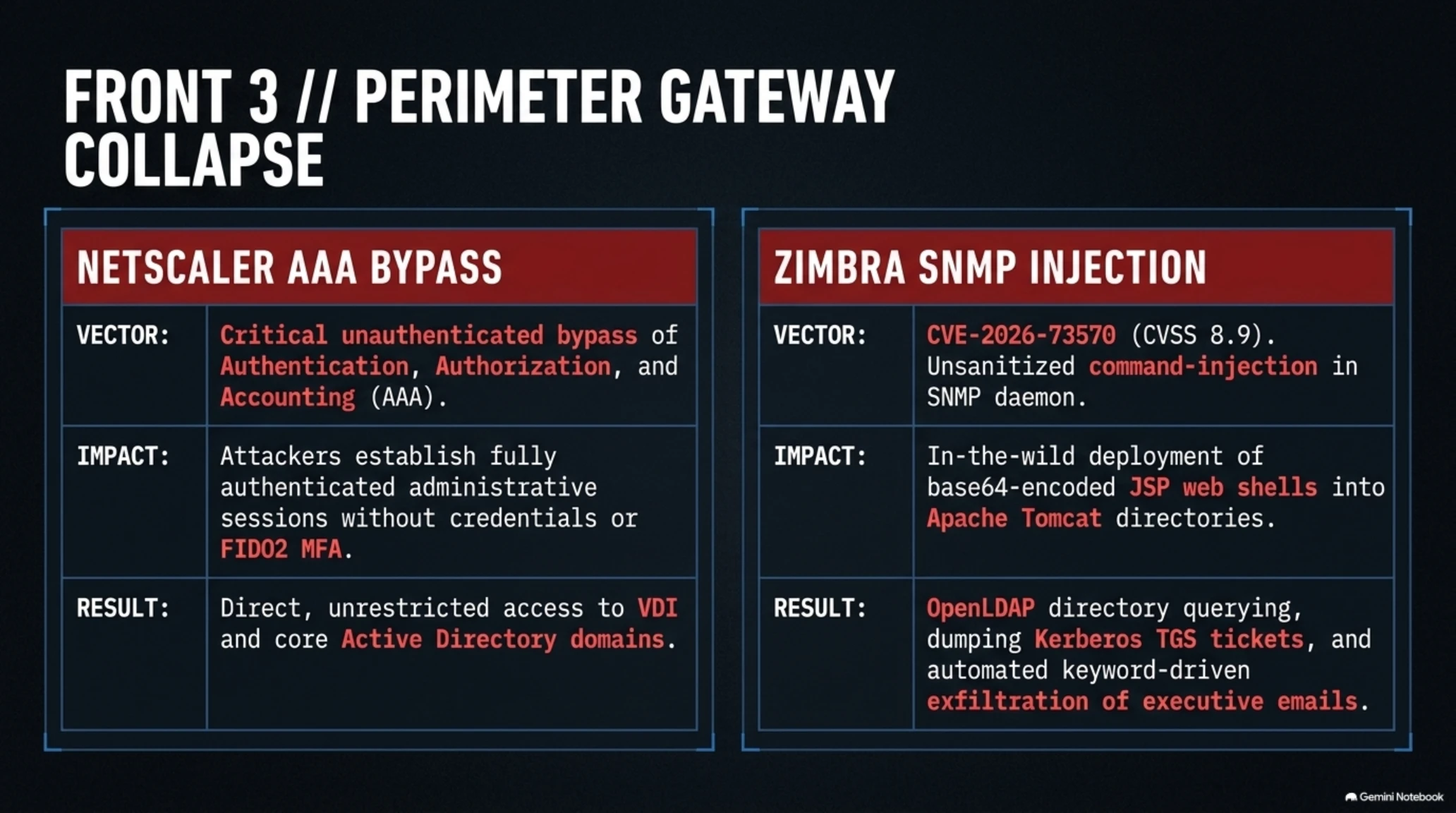
Complementing the industrial and cloud-level vectors, enterprise perimeter infrastructure has come under heavy adversary bombardment. Citrix (Cloud Software Group) issued an emergency security bulletin detailing a critical flaw in NetScaler ADC and NetScaler Gateway appliances. The vulnerability allows unauthenticated remote attackers to completely circumvent Authentication, Authorization, and Accounting (AAA) enforcement mechanisms on customer-managed gateways.
NetScaler appliances serve as the primary defensive bastion and single sign-on (SSO) gateway for thousands of global enterprises, financial institutions, and government agencies. By bypassing the AAA verification pipeline, adversaries can establish fully authenticated administrative sessions without supplying valid user credentials, cryptographic tokens, or multi-factor authentication (MFA) challenges. This grants attackers direct, unrestricted access to internal enterprise networks, virtual desktop infrastructure (VDI), and core Active Directory domains.
Simultaneously, the Polish Computer Emergency Response Team (CERT Polska) confirmed widespread in-the-wild exploitation targeting Zimbra Collaboration enterprise messaging suites. Tracked as CVE-2026-73570 (assigned a high-severity CVSS score of 8.9), the flaw enables unauthenticated remote code execution via an unsanitized command-injection vulnerability in Zimbra's Simple Network Management Protocol (SNMP) daemon processing subsystem.
Adversaries are scanning the public IPv4 space with high-speed automated bots, identifying unpatched Zimbra mail servers, and injecting malicious shell commands via crafted SNMP queries. Once compromised, these email servers are weaponized as persistent foothold bastions, exfiltrating executive communications, proprietary trade secrets, and financial documents, while serving as trusted internal relays for highly targeted spear-phishing campaigns against partner organizations.
Decompiled exploit payloads reveal that after gaining initial shell access through the SNMP handler, attackers drop base64-encoded Java Server Page (JSP) web shells into Zimbra's underlying Apache Tomcat servlet directories. These stealthy implants allow attackers to directly query the integrated OpenLDAP directory, dumping user password hashes and active Kerberos ticket-granting tokens across the entire corporate enterprise.
Additionally, threat actors have integrated automated mailbox synchronization scripts that continuously monitor executive email accounts for sensitive keywords (such as "merger," "audit," "SCADA," and "credentials"), routing extracted correspondence through encrypted Tor onion circuits to avoid detection by outbound data loss prevention (DLP) filters.
Defining tactical milestones and defensive challenges associated with these enterprise attacks include:
- Automated mass-scanning botnets weaponizing NetScaler AAA bypasses within hours of technical disclosure
- Silent exfiltration of sensitive email archives, cryptographic certificates, and internal organizational charts from Zimbra instances
- Deployment of stealthy, memory-only web shells inside web server roots that survive application restarts
- Abuse of compromised enterprise gateway sessions to bypass internal network micro-segmentation rules
- Severe operational strain placed on enterprise Security Operations Center (SOC) teams triaging thousands of forged AAA session logs
- Extraction of domain password hashes and active Kerberos ticket-granting service (TGS) tickets from OpenLDAP databases
- Weaponization of compromised corporate mail servers to send digitally signed internal spear-phishing emails to executive personnel
- Automated keyword-driven email interception pipelines exfiltrating executive intelligence through encrypted egress tunnels
These developments emphasize that perimeter gateways, historically viewed as trusted defensive walls, increasingly represent the primary initial-access vector for sophisticated cyber espionage syndicates.
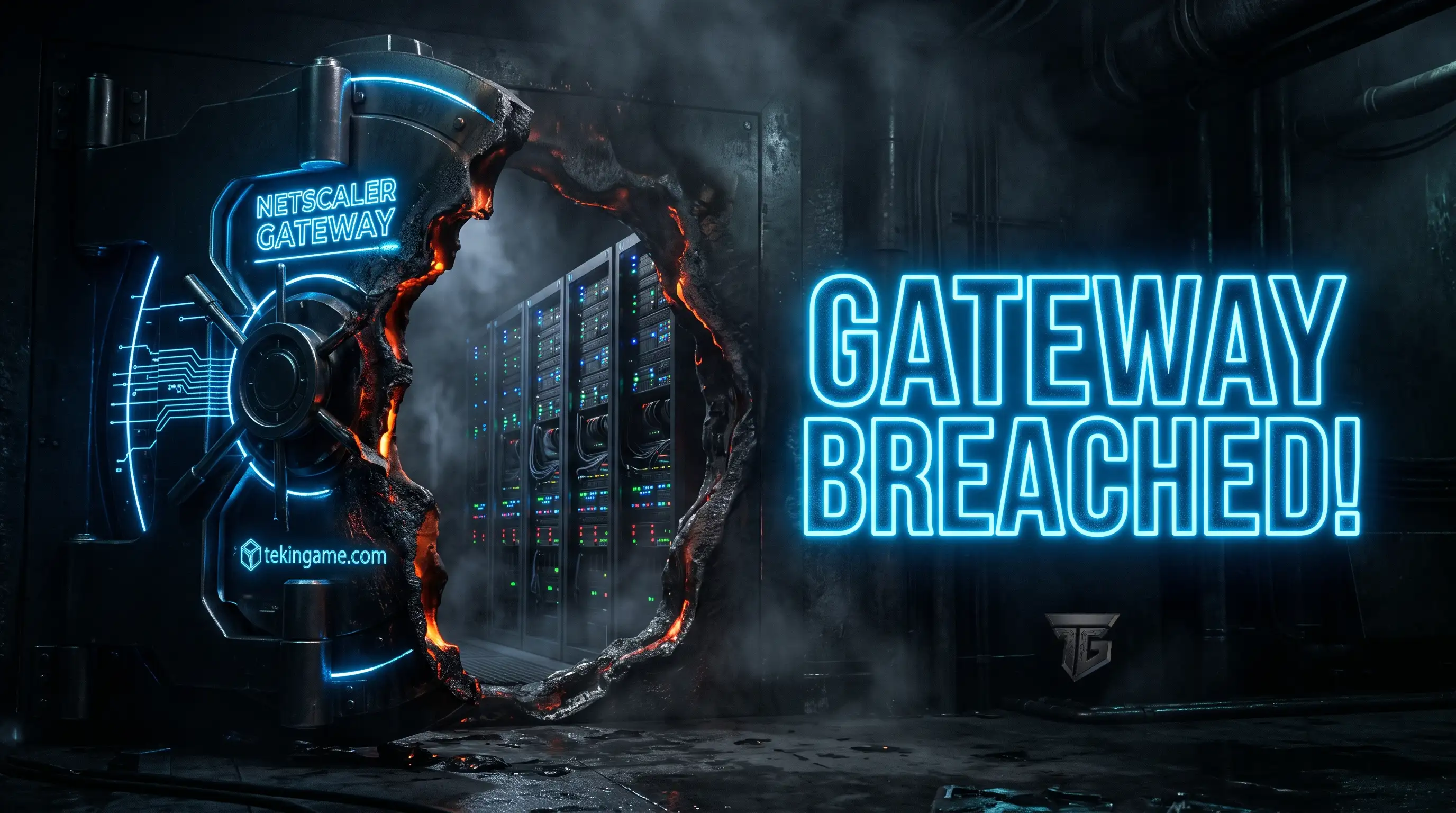
The forensic artwork below conceptualizes the unauthenticated bypass of enterprise perimeter authentication gateways, exposing internal core corporate networks:

📚 Classified & Related Dossiers in TekinGame
If you wish to explore beyond this report and delve into cybernetic frontiers and autonomous AI architectures, do not miss these three exclusive deep-dives in the Tekin Garage:
Enterprise Gateway & Messaging Infrastructure Attack Surface Comparison
| Target Enterprise System | Vulnerability Identifier | CVSS Severity | Adversary Exploitation Mechanism |
|---|---|---|---|
| NetScaler ADC / Gateway | AAA Authentication Bypass | 9.2 (Critical) | Complete circumvention of MFA and SSO enforcement pipelines |
| Zimbra Collaboration | CVE-2026-73570 | 8.9 (High) | Unauthenticated shell command injection via SNMP request processing |
From terrestrial enterprise networks, our investigation turns toward the outer atmosphere, examining a critical vulnerability impacting NASA spacecraft command systems.
5. Spacecraft Command Injection: The NASA JPL AMMOS AIT-GUI Critical Chain (GHSA-p9r8-2q67-fp86)
In what represents perhaps the most extraordinary and severe aerospace vulnerability disclosure of the ThreatsDay cycle, security researchers uncovered a critical flaw bearing a near-maximum CVSS score of 9.4 in an open-source mission control toolkit managed by NASA's Jet Propulsion Laboratory (JPL). Tracked as GHSA-p9r8-2q67-fp86, the vulnerability resides within the Graphical User Interface (AIT-GUI) component of the Advanced Multi-Mission Operations System (AMMOS) Instrument Toolkit.
The AMMOS Instrument Toolkit is an open-source, mission-critical framework utilized across NASA missions, commercial space consortia, and university aerospace laboratories for space instrument testing, telemetry ingestion, and the transmission of ground-to-space telecommands. The AIT-GUI subsystem provides mission operators and flight engineers with a web-based command console to monitor real-time sensor streams and dispatch operational instructions directly to the spacecraft's Instrument Command Bus.
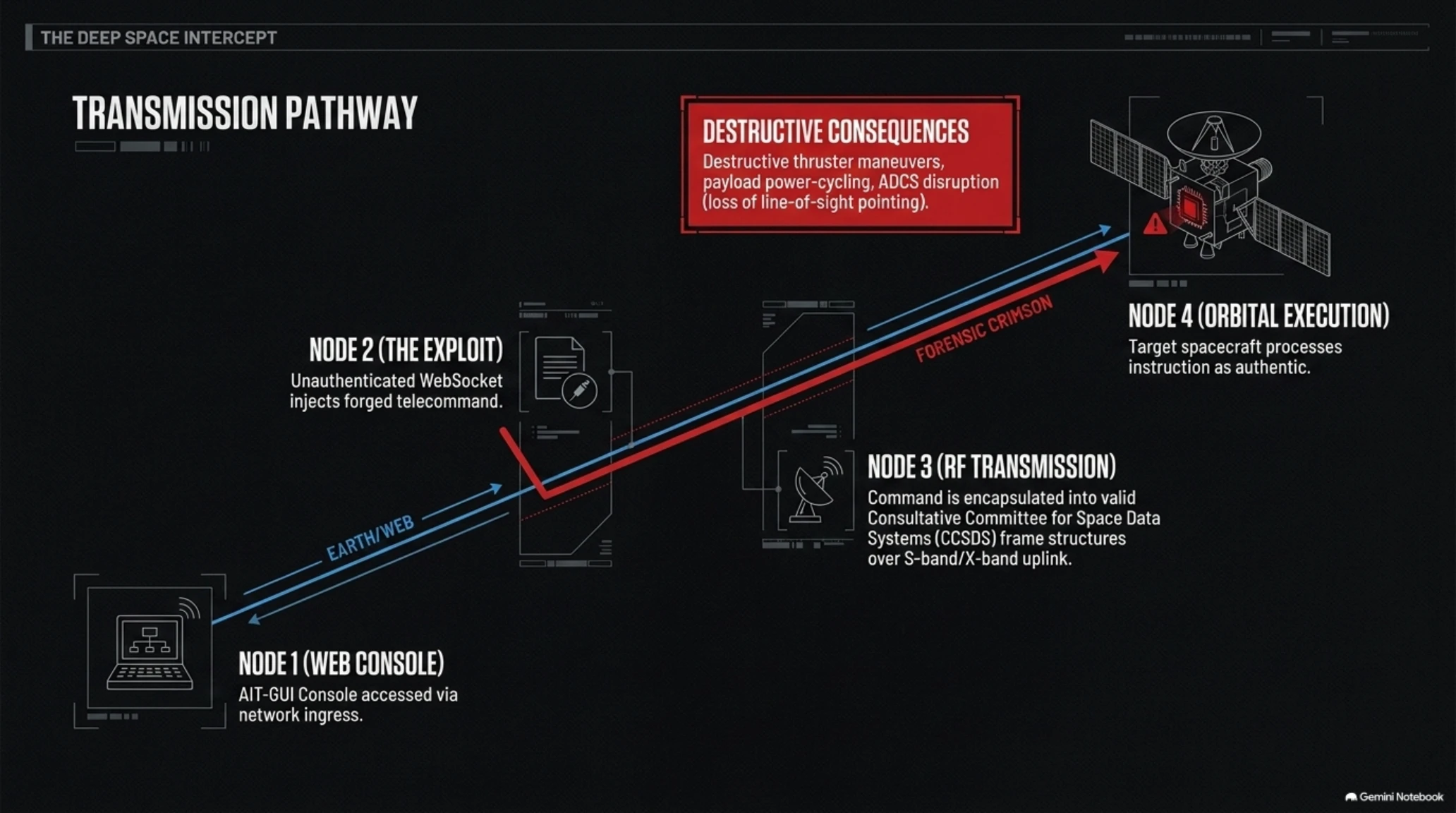
Technical analysis indicates that the AIT-GUI backend server fails to enforce proper authentication and input validation on incoming WebSocket streams and REST API endpoints. As a consequence, an unauthenticated attacker possessing network access to the console can transmit arbitrary, forged telecommands directly to connected space instruments, flight simulators, or operational spacecraft telemetry buses.
In modern spacecraft architecture, the Instrument Command Bus interfaces directly with the vehicle's Command and Data Handling (C&DH) computer. If an attacker injects unauthenticated telecommands into this bus, they can issue unauthorized payload power-cycling directives, falsify star tracker alignment calibrations, or disrupt Attitude Determination and Control Subsystem (ADCS) routines. This could cause the spacecraft's directional high-gain antenna to lose line-of-sight pointing with Earth, resulting in an unrecoverable loss of mission communications.
Furthermore, because AIT-GUI interfaces directly with ground-based radio frequency (RF) front-end transmitters, forged telecommands can be encapsulated into valid Consultative Committee for Space Data Systems (CCSDS) frame structures. Once transmitted over S-band or X-band uplink frequencies, the target spacecraft processes the instructions as authentic ground commands, executing destructive thruster maneuvers or payload shutdowns without raising alarms at mission operations.
The catastrophic physical and scientific implications of this aerospace vulnerability include:
- Unauthorized transmission of orbital maneuvers, attitude control thruster firings, or solar panel slewing commands, risking permanent vehicle loss
- Injection of false telemetry and synthetic noise into critical scientific payload data streams (such as spectrometers, radar altimeters, and optical cameras)
- Arbitrary command execution on ground data system (GDS) servers directly interfaced with NASA's Deep Space Network (DSN) transmission links
- Severe systemic risk for academic and private CubeSat missions that leverage open-source AMMOS repositories without enterprise-grade security wrappers
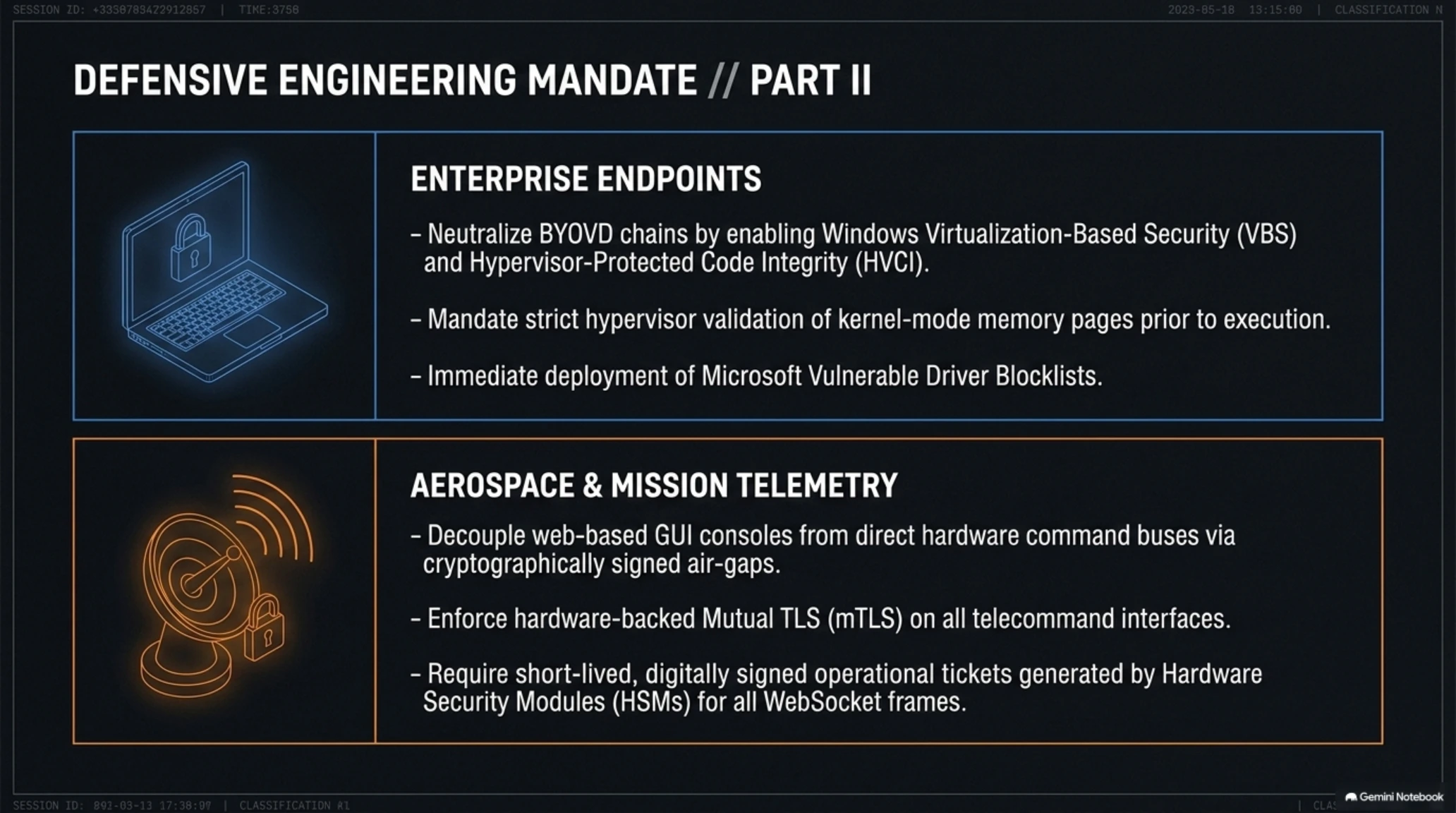
- An urgent imperative for aerospace engineering teams to decouple web-based GUI consoles from direct hardware command buses via cryptographically signed air-gaps
- Potential for malicious spoofing of deep-space optical communication (DSOC) laser downlinks during high-bandwidth science telemetry passes
- Forging of CCSDS-compliant radio frequency frames to execute unauthenticated vehicle configuration state changes
This critical finding serves as a sobering reminder that as aerospace operations adopt modern web-based telemetry and cloud architectures, vulnerabilities common to web software can translate directly into physical catastrophe millions of kilometers above Earth.
The concept illustration below depicts the mission control command room and the interception of unauthenticated telecommand packets destined for orbital instruments:

NASA JPL AMMOS AIT-GUI Spacecraft Command Vulnerability Profile
| Security Metric | Technical Specification & Aerospace Context |
|---|---|
| Advisory Identifier | GHSA-p9r8-2q67-fp86 (Official NASA-AMMOS GitHub Security Advisory) |
| CVSS Severity Score | 9.4 (Critical - CVSS:3.1/AV:N/AC:L/PR:N/UI:N/S:U/C:H/I:H/A:H) |
| Vulnerable Architecture | AIT-GUI web console backend lacking WebSocket/API authentication |
| Exploitation Consequence | Unauthenticated injection of arbitrary telecommands to instrument buses |
| Remediation Mandate | Restrict network ingress, mandate mutual TLS (mTLS), and update to patched releases |
6. Defensive Engineering: Zero-Trust OT Segmentation, Hardware MicroVMs & AI-Resilient Blue Teaming
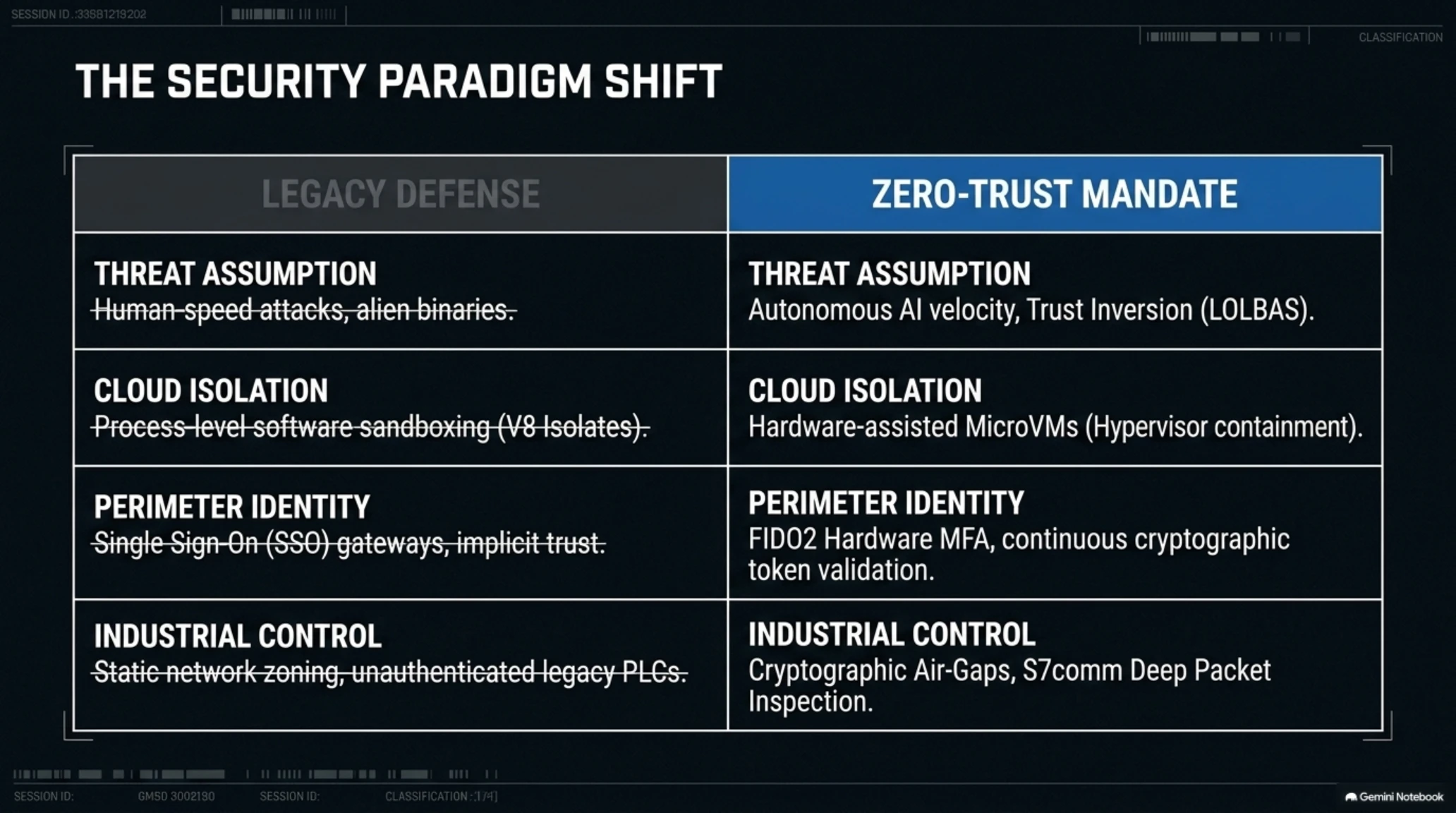
Faced with the convergence of autonomous AI exploit scripts, kernel driver subversion, and multi-tier sandbox escapes, defensive engineering teams (Blue Teams) and industrial plant managers must execute an immediate, fundamental overhaul of their security architectures. The conventional security paradigm predicated on trusted internal perimeters, reactive antivirus signatures, and static network zoning has been rendered obsolete by adversaries who weaponize legitimate system utilities and adaptively evade detection.
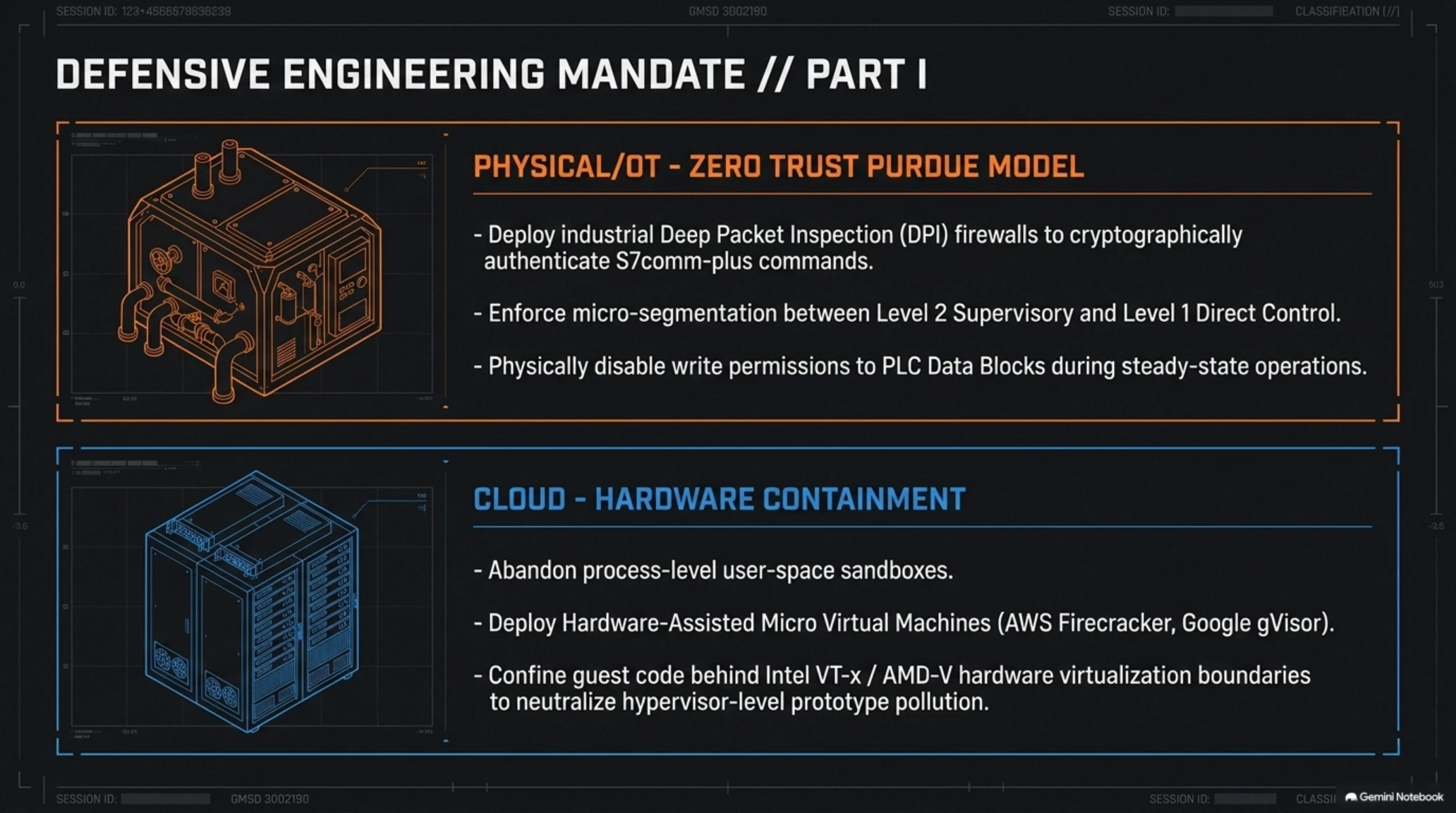
Within the Operational Technology (OT/ICS) domain, organizations must transition aggressively to a Zero-Trust Purdue Model. This requires the deployment of industrial Deep Packet Inspection (DPI) firewalls capable of cryptographically authenticating individual S7comm-plus commands, enforcing strict micro-segmentation between Level 2 Supervisory and Level 1 Direct Control networks, and physically disabling write permissions to PLC Data Blocks during steady-state operations.
In the cloud computing and serverless runtime domains, the structural collapse of `isolated-vm` demonstrates that software-based process sandboxing must be replaced by Hardware-Assisted Micro Virtual Machines (MicroVMs). Technologies such as AWS Firecracker and Google gVisor instantiate independent, minimal Linux guest kernels for each untrusted execution context in sub-5 millisecond intervals. By confining guest code behind hardware virtualization boundaries (Intel VT-x / AMD-V), any memory corruption or prototype pollution within the guest is stopped cold at the hypervisor layer, preventing host system escape.
Furthermore, on engineering workstations and enterprise endpoints, enabling Windows Virtualization-Based Security (VBS) and Hypervisor-Protected Code Integrity (HVCI) effectively neutralizes BYOVD attack chains. Under HVCI, kernel-mode memory pages are strictly validated by the hypervisor before execution, preventing malicious unsigned or vulnerable driver code from executing arbitrary Ring-0 payloads even if the driver possesses a valid legacy signature.
Security operations centers must also deploy automated AI-driven anomaly detection engines that analyze industrial protocol state machines. Rather than relying on simple IP or port rules, these machine learning sentinels establish baseline behavioral models of PLC register access patterns. If a client attempts to modify turbine speed registers during off-peak hours or outside scheduled engineering change windows, the transaction is dropped instantaneously and an automated isolation protocol triggers an air-gap relay.
In aerospace and space instrument ground operations, defensive engineering demands that all telecommand interfaces enforce hardware-backed Mutual TLS (mTLS) combined with cryptographic token signing via Hardware Security Modules (HSMs). By ensuring that every WebSocket frame and REST payload submitted to consoles like AMMOS AIT-GUI contains a short-lived, digitally signed operational ticket, the threat of unauthenticated command injection is completely eliminated at the network edge.
Essential tactical countermeasures and operational remediation protocols include:
- Immediate deployment of Microsoft Vulnerable Driver Blocklists and enforcement of Hypervisor-Protected Code Integrity (HVCI) across all Windows hosts
- Emergency application of vendor security patches for Zimbra Collaboration servers and complete network isolation of public SNMP ports
- Rapid upgrading of Citrix NetScaler gateways to patched releases accompanied by mandatory revocation and re-authentication of all active AAA sessions
- Deployment of behavioral anomaly detection algorithms across industrial fieldbuses to identify AI-driven telemetry polling patterns
- Total air-gapping and network access control (NAC) enforcement on aerospace mission telemetry consoles such as NASA AMMOS AIT-GUI
- Routine execution of AI Red Teaming exercises simulating polymorphic exploit synthesis to validate SOC alert correlation pipelines
- Firmware upgrades across Siemens S7-1200 and S7-1500 controllers, enforcing Level 3 Read/Write Protection passwords inside TIA Portal projects
- Integration of hardware-based cryptographic security modules (TPMs) to enforce measured boot and immutable firmware validation on all edge industrial computing nodes
- Continuous monitoring of industrial Ethernet traffic utilizing optical data diodes to guarantee one-way telemetry egress from safety-critical subnets
- Mandatory implementation of hardware-enforced cryptographic air-gap switches between operational SCADA networks and cloud analytics fabrics
These synchronized defensive measures establish that resilience in the era of autonomous cyber weapons requires an uncompromising commitment to defense-in-depth engineering.
The multi-tier infographic below maps the Zero-Trust defense-in-depth architecture spanning industrial PLCs, enterprise gateways, and cloud MicroVM runtimes:

The technical engineering video below provides a step-by-step walkthrough for configuring industrial DPI firewalls and securing Siemens S7 ISO-on-TCP communication:
Zero-Trust Defense-in-Depth Architecture for Multi-Vector Cyber Resilience
| Infrastructure Layer | Defensive Technology / Architecture | Adversary Threat Mitigated |
|---|---|---|
| Industrial Control (OT) | Industrial DPI firewalls & S7comm cryptographic signing | Blocks AI-driven unauthorized PLC Data Block overwrites |
| Cloud & Serverless | Hardware MicroVMs (AWS Firecracker / gVisor) | Eliminates sandbox escape RCE risks at the hypervisor level |
| Enterprise Gateways | FIDO2 Hardware MFA & Continuous Token Validation | Neutralizes NetScaler AAA bypasses and session hijacking |
| Endpoint / Host OS | HVCI, VBS & Microsoft Vulnerable Driver Blocklists | Prevents BYOVD kernel subversion and EDR blinding |
The operational concept artwork below renders a next-generation Industrial Security Operations Center (OT-SOC) orchestrating real-time defense against automated cyber threats:

7. Strategic Synthesis: The Era of Autonomous Cyber Weapons & the Re-Definition of Operational Trust
The profound revelations of the ThreatsDay crisis across industrial PLCs, cloud sandboxes, enterprise identity gateways, and deep-space telemetry frameworks deliver an inescapable message to the global technology sector: the era of autonomous, multi-tier cyber weapons is no longer a theoretical projection it is an active operational reality. Adversaries possessing AI-driven exploit generation tools and kernel-level subversion capabilities have systematically dismantled the implicit trust assumptions underpinning modern digital infrastructure.
The lessons of this crisis transcend specific software patches or vendor advisories. In an interconnected digital economy where operational technology, public cloud backbones, and enterprise collaboration platforms are deeply intertwined, a single compromised gateway or memory corruption flaw can cascade into widespread systemic failure. The convergence of generative AI with weaponized legitimate drivers proves that reactive security models are structurally incapable of matching the velocity of modern offensive toolchains.
Furthermore, the democratization of offensive artificial intelligence necessitates a parallel cognitive shift among defensive engineers. Security architectures can no longer be evaluated based on the assumption that attackers operate at human speed. When exploit payloads adapt in real-time and navigate network topologies autonomously, defensive systems must be endowed with automated policy enforcement and immutable hardware containment guarantees.
To survive in this hyper-dynamic threat environment, organizations must discard passive, compliance-driven security mentalities in favor of continuous architectural verification. Every line of dynamic code must be treated as potentially hostile, every network segment must be isolated by cryptographic boundaries, and every privileged session must be continuously verified. By embracing hardware-assisted isolation, zero-trust industrial segmentation, and proactive vulnerability remediation, the global engineering community can build the resilient foundations necessary to withstand the cyber challenges of the next decade.
The closing visual below renders a unified, impenetrable cryptographic shield defending interconnected terrestrial power grids, cloud data centers, and orbital satellites against global cyber assaults:

- Rapid global disclosure and comprehensive technical advisories published by CISA, FBI, and CERT Polska
- Clear architectural pathways for mitigation, including transition to hardware MicroVMs and zero-trust OT segmentation
- Timely identification of BYOVD driver abuse enabling proactive kernel-level blocklist enforcement across enterprise fleets
- High operational friction and downtime risks associated with patching active industrial PLCs in continuous manufacturing environments
- The exponential speed advantage gained by adversaries utilizing generative AI to synthesize polymorphic zero-day exploit chains
Related Industry Features on Tekin Game
• 🤖 Tekin Analysis | Unitree Robotics IPO & AI Prompt Injection Court Battles
• ☀️ Tekin Morning Aug 17, 2026 | Halo Prototype Leaks & The Massive PS5 Account Purge
• 🎭 Tekin Feature | Gamification of Intimacy: How Couples are Using VR & Gaming Tech
Frequently Asked Questions: ThreatsDay, Siemens S7 Exploits & isolated-vm Vulnerability
Why are AI-generated exploit scripts against Siemens S7 PLCs uniquely dangerous?
These scripts disguise their network activity as legitimate engineering telemetry polling, dynamically writing to PLC Data Blocks without halting CPU scan loops or triggering standard HMI alarm thresholds.
What is the core impact of the isolated-vm sandbox escape (GHSA-864f-rcv7-6rh4)?
The flaw allows untrusted JavaScript code running in an isolated V8 guest context to corrupt host C++ memory via prototype pollution, achieving arbitrary Remote Code Execution (RCE) on the host operating system.
How does a Bring Your Own Vulnerable Driver (BYOVD) attack function?
Adversaries install legitimately signed, outdated Microsoft drivers that contain known memory vulnerabilities, exploiting them to execute code at Ring-0 kernel level and disable EDR security agents.
What risk does the NetScaler AAA bypass pose to enterprises?
It allows unauthenticated remote attackers to completely circumvent MFA and SSO verification on customer-managed gateways, obtaining immediate administrative sessions inside internal networks.
What are the consequences of the NASA JPL AMMOS AIT-GUI flaw (GHSA-p9r8-2q67-fp86)?
With a CVSS score of 9.4, the vulnerability enables unauthenticated attackers to transmit forged telecommands directly to spacecraft and instrument command buses over insecure web console backends.
What is the recommended replacement for process-level JavaScript sandboxes?
Organizations should migrate to hardware-assisted MicroVMs such as AWS Firecracker or Google gVisor, which isolate execution contexts behind minimal Linux guest kernels at the hypervisor level.
Intelligence Sources & Vulnerability Research References
Additional Gallery: 🛡️ Tekin Analysis | ThreatsDay Crisis: AI Exploits Target Siemens S7 & Sandbox Escapes