Tekin Analysis | Securitize Brings Apple, Nvidia & Tesla Stocks to Solana
Wall Street Unleashed: Securitize Deploys Tokenized Equities on Solana
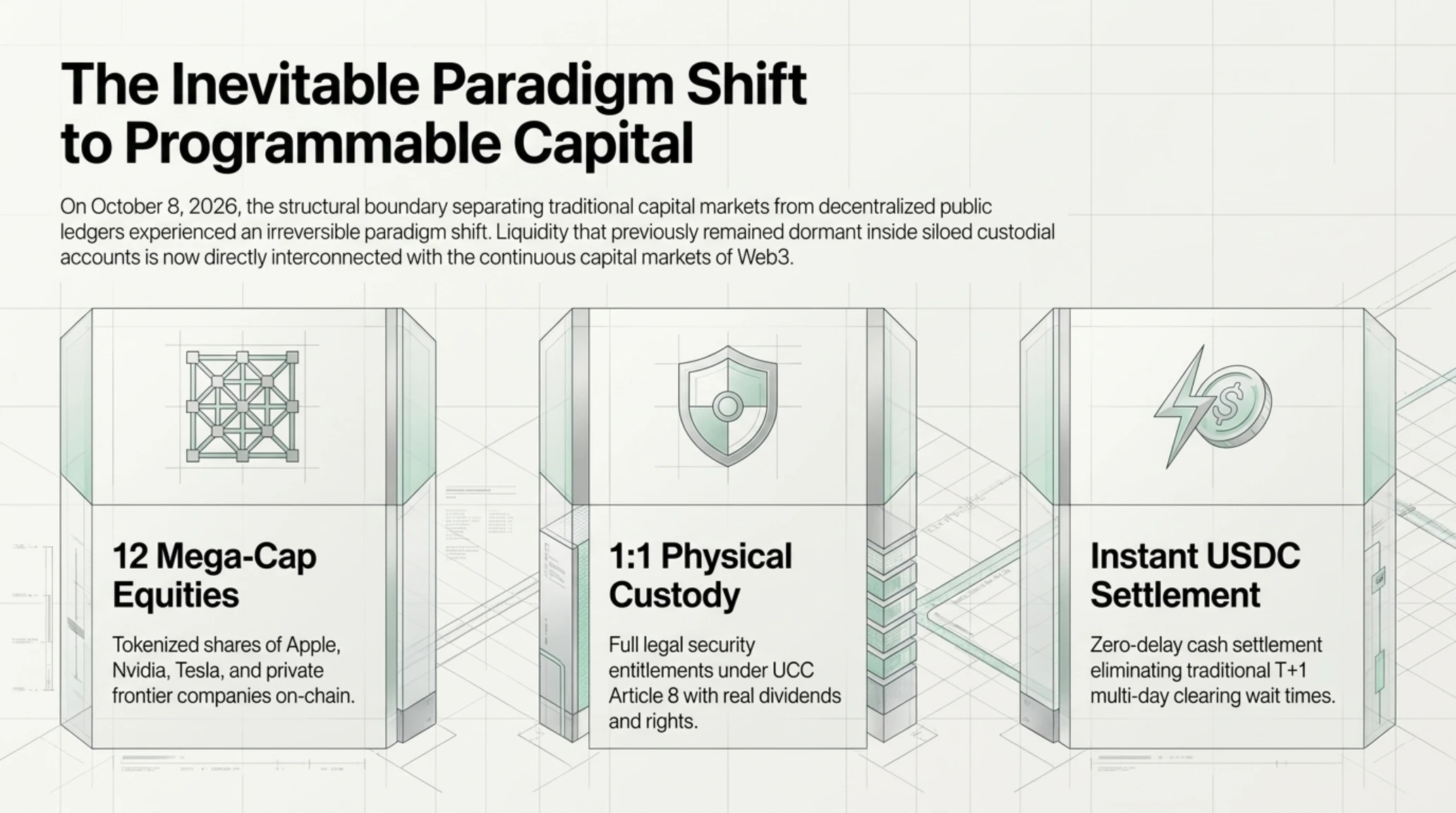
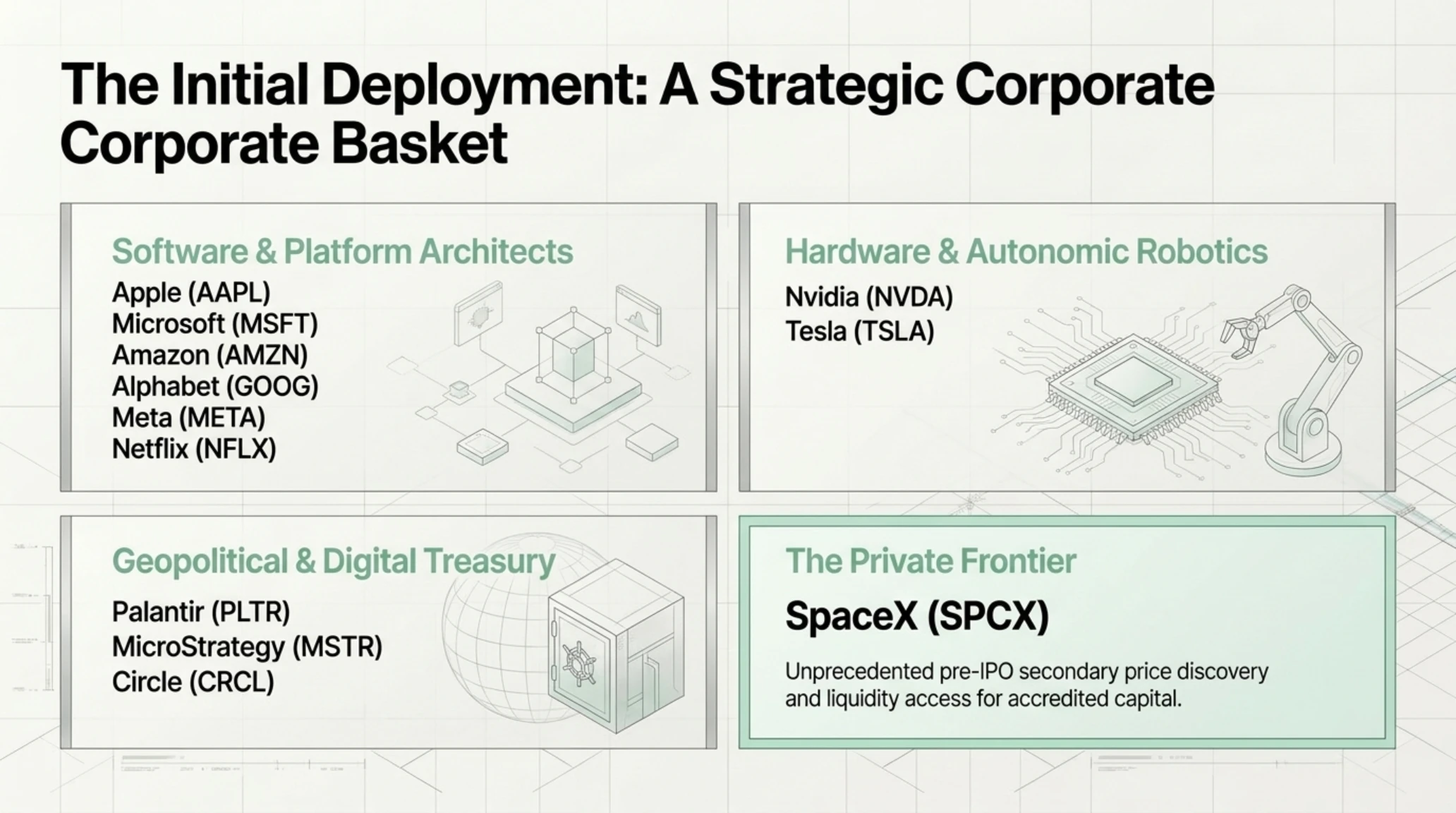
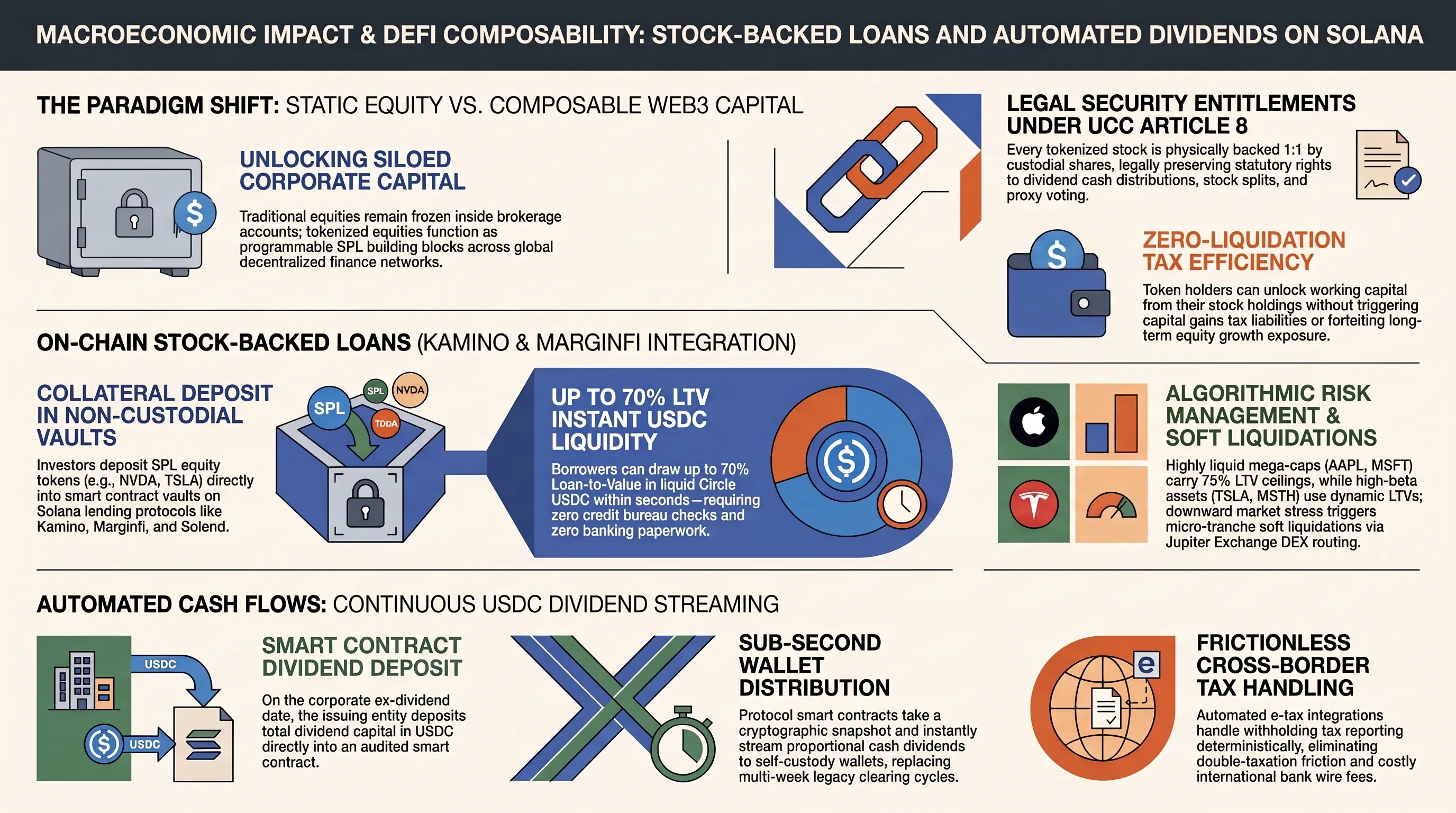
On October 8, 2026, the structural boundary separating traditional capital markets from decentralized public ledgers experienced an irreversible paradigm shift. Securitize the industry-leading digital asset securities firm and primary tokenization partner of BlackRock in the multi-billion-dollar BUIDL fund formally deployed its tokenized equity trading ecosystem directly on the Solana blockchain. This monumental deployment inaugurates 24/7/365 continuous trading for 12 iconic mega-cap U.S. corporate equities: Apple (AAPL), Nvidia (NVDA), Tesla (TSLA), Microsoft (MSFT), Amazon (AMZN), Alphabet (GOOG), Meta (META), Netflix (NFLX), Palantir (PLTR), MicroStrategy (MSTR), Circle (CRCL), and privately held aerospace pioneer SpaceX (SPCX).
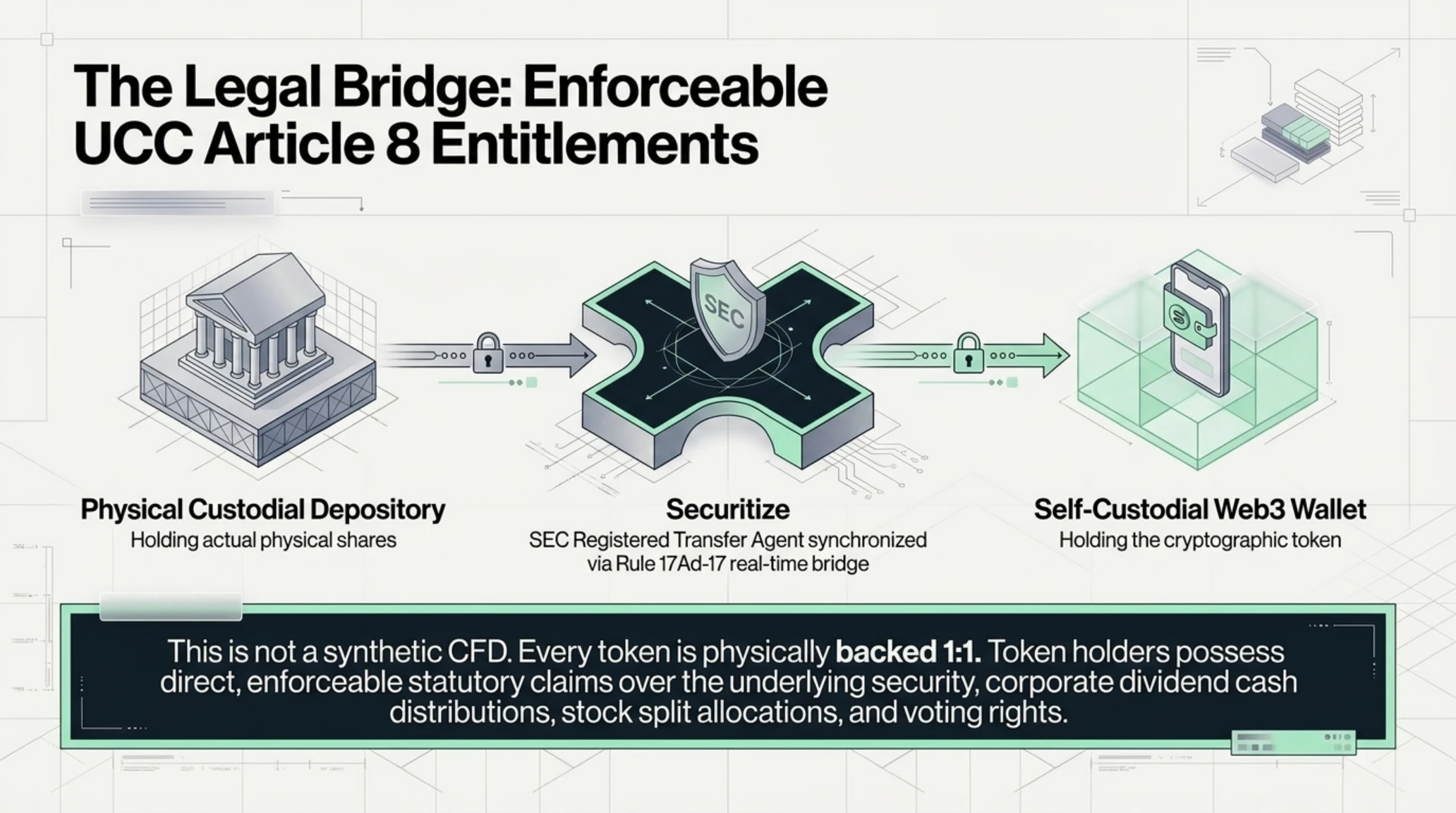
Unlike previous ill-fated crypto attempts at synthetic stock tracking such as contract-for-difference (CFD) wrappers or the catastrophic centralized simulations witnessed on failed platforms like FTX in 2022 Securitize’s framework is rigorously rooted in enforceable securities law. Every token issued on Solana is physically backed 1:1 by real, custodial shares deposited in registered depository institutions. From an international corporate law perspective, these digital assets are classified as formal Security Entitlements governed by Article 8 of the Uniform Commercial Code (UCC Article 8). This rigorous statutory framework guarantees that token holders do not merely track synthetic price volatility; they hold direct, enforceable rights to corporate dividend cash distributions, stock split allocations, and corporate governance actions.
Strategic Vectors at a Glance | Intelligence Dashboard
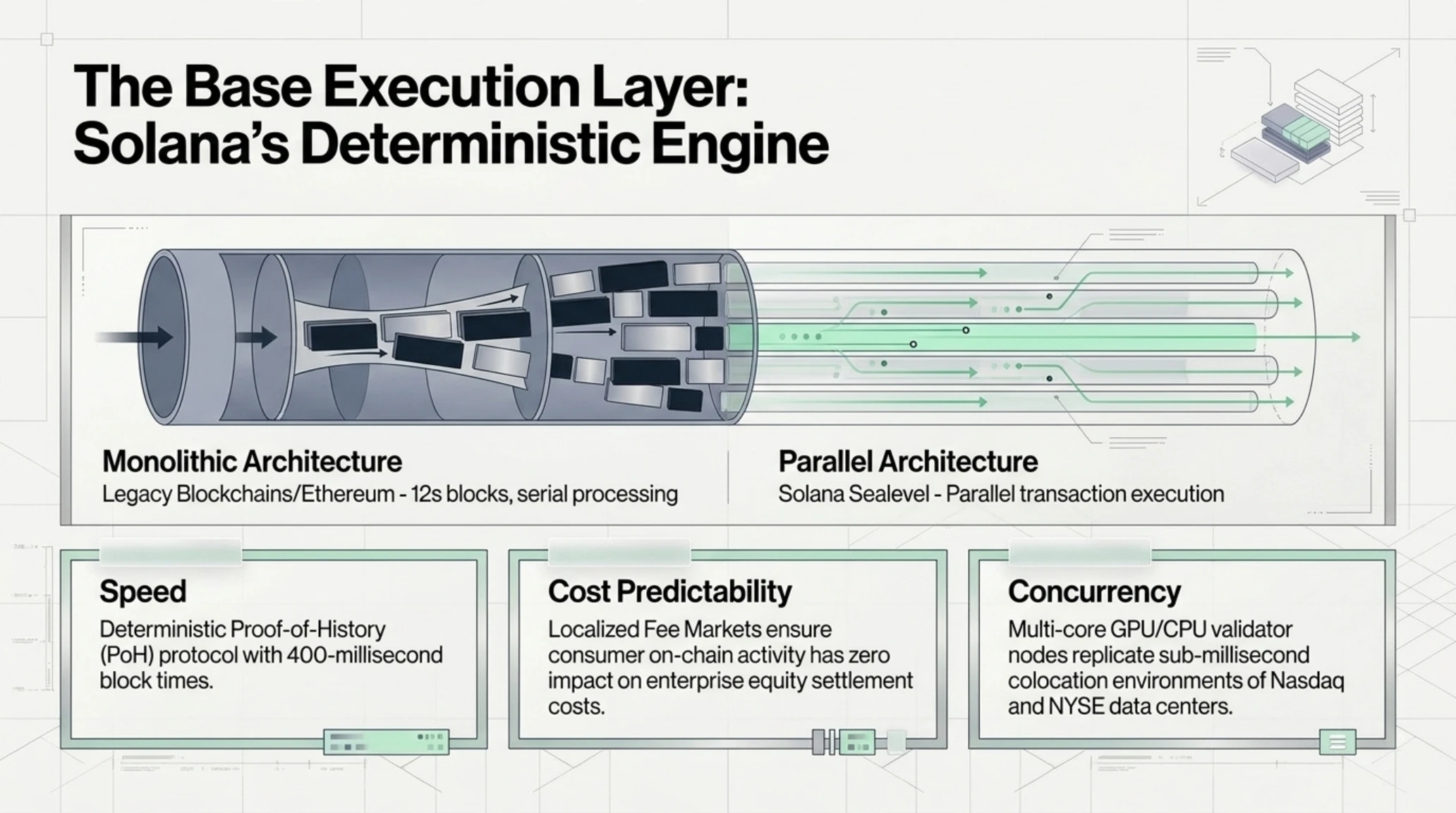
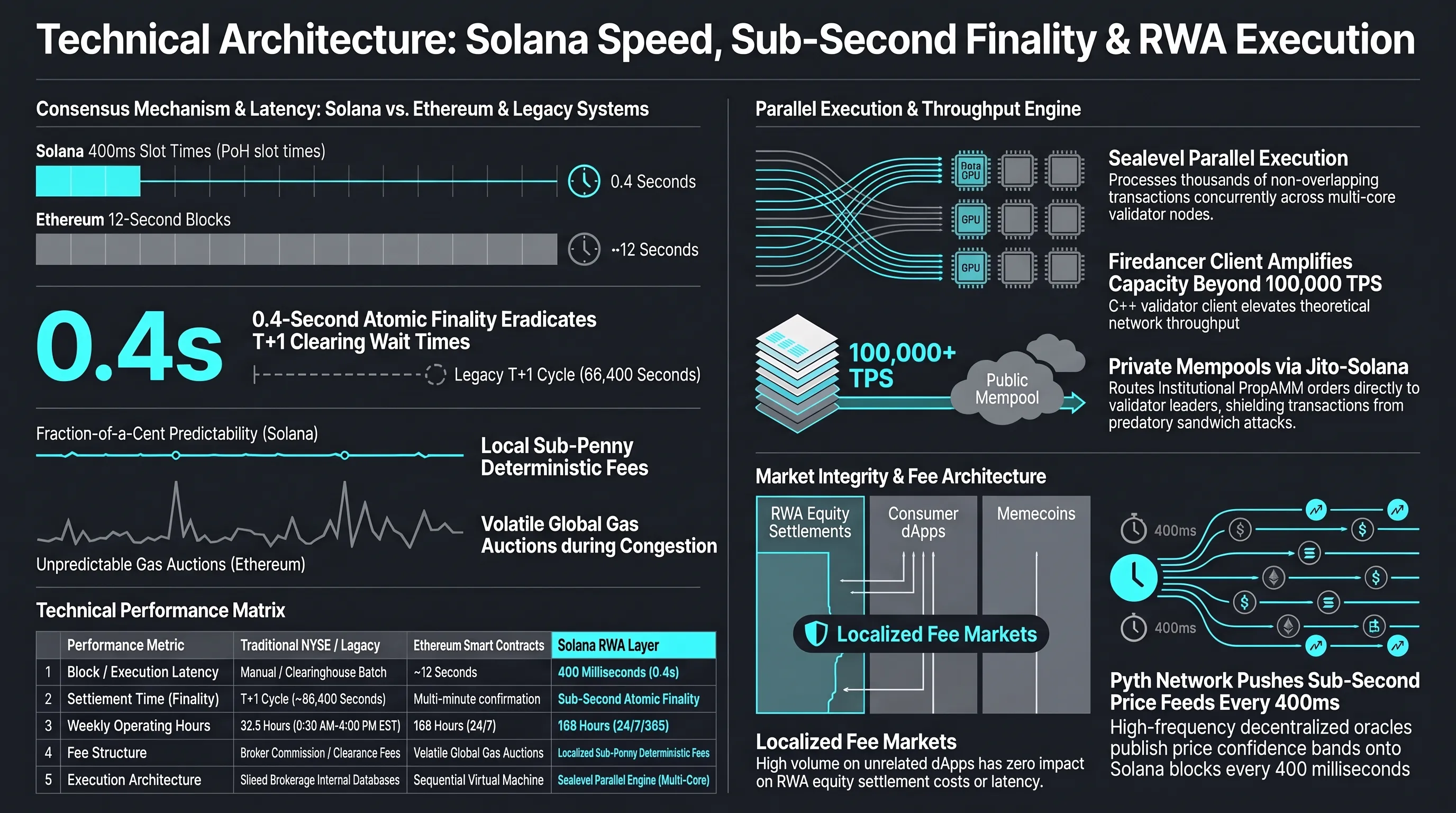
The strategic selection of the Solana blockchain as the base execution layer for Wall Street equities was driven by rigorous quantitative systems engineering. Legacy smart contract platforms like Ethereum suffer from structural block constraints (12-second block intervals) and volatile, unpredictable gas fee auctions that render high-frequency micro-trading financially impossible. Solana’s deterministic Proof-of-History (PoH) protocol, sub-second 400-millisecond slot times, and predictable fractions-of-a-cent transaction fees provide the raw throughput required to match institutional matching engines. This mirrors the high-performance computational efficiency examined in our deep technical investigation of the Surface Laptop Ultra & NVIDIA RTX Spark Architectural Teardown, where raw processing capability unlocks next-generation utility.
Qualified investors across North America, Europe, and international jurisdictions who complete regulatory Know-Your-Customer (KYC) and Anti-Money Laundering (AML) verifications through Securitize’s broker-dealer portal can now trade tokenized U.S. equities around the clock using Circle’s USDC stablecoin. Global investors are no longer subject to the arbitrary constraints of the New York Stock Exchange opening bell at 9:30 AM Eastern Time or forced to endure entire weekend trading freezes. Liquidity that previously remained dormant inside siloed custodial accounts is now directly interconnected with the global, continuous capital markets of Web3.
Why It Matters: The Transformation of Global Capital Liquidity
The global public equities market represents over $100 trillion in aggregate valuation, yet for decades it remained paralyzed by regional banking borders, restrictive trading desks, and settlement latencies. Moving mega-cap technology equities onto Solana converts Wall Street into an always-on, borderless financial machine where equities act as composable, programmable building blocks for international collateral networks.
This technical deployment redefines the very nature of equity ownership. Under traditional depository infrastructure operated by the Depository Trust & Clearing Corporation (DTCC), retail shareholders merely hold an indirect contractual claim registered on their retail broker’s internal database. Transferring shares between brokerages requires multiple days of bureaucratic clearance and verification. On Solana, the investor exercises direct cryptographic self-custody over tokenized shares within hardware-secured Web3 wallets. The shareholder possesses the sovereign ability to transfer, liquidate, or collateralize corporate equity instantly, at any hour of the night, across sovereign borders without intermediary delays.
Crucially, this architecture satisfies SEC Rule 17Ad-17 transfer agent recordkeeping mandates through automated programmatic reconciliation. Securitize operates as an officially registered SEC transfer agent, maintaining a synchronized real-time bridge between the on-chain Solana ledger and corporate capitalization tables. Every mint, burn, or secondary transfer event executed on the blockchain automatically triggers an immutable audit log entry in the primary transfer registry, ensuring that corporate investor relations departments maintain mathematically precise records of total outstanding beneficial shares at all times.
The strategic composition of the initial twelve tokenized corporate assets reflects a deliberate focus on high-beta technology titans and transformative artificial intelligence infrastructure. Anchored by hardware monopoly Nvidia (NVDA), software platform architects Apple (AAPL) and Microsoft (MSFT), and autonomic robotics leader Tesla (TSLA), the basket directly captures the primary value drivers of modern enterprise productivity. Furthermore, the inclusion of defense intelligence leader Palantir (PLTR) and digital asset treasury pioneer MicroStrategy (MSTR) establishes high-velocity trading instruments whose valuations fluctuate intensely in response to global geopolitical and monetary shifts volatility that previously sat frozen and inaccessible during overnight hours.
Particularly revolutionary is the inclusion of SpaceX (SPCX) alongside Circle (CRCL). Historically, private pre-IPO technology giants remained strictly confined to exclusive institutional tender offers, secondary broker desks, and exorbitant carried-interest private equity syndicates with multi-year capital lockups. By tokenizing verified custodial ownership interests in private market equities under regulated ATS protocols, Securitize effectively pioneers transparent secondary price discovery for pre-IPO aerospace and fintech infrastructure, granting global accredited capital unprecedented liquidity access.
Institutional RWA & Securities Regulatory Jargon Buster
- Real World Assets (RWA): The tokenization of tangible, physical, and traditional financial instruments such as corporate equities, treasury bills, and real estate into smart contract tokens living on public blockchains.
- Security Entitlements (UCC Article 8): A standardized legal property interest recognized under the Uniform Commercial Code giving the asset holder enforceable statutory claims over the underlying security, cash dividends, and corporate voting rights.
- Alternative Trading System (ATS): A specialized U.S. securities trading venue regulated by the Securities and Exchange Commission (SEC) and FINRA that matches buy and sell orders outside traditional stock exchanges.
Technical Architecture and Order Execution: PropAMM and Jump Trading Integration
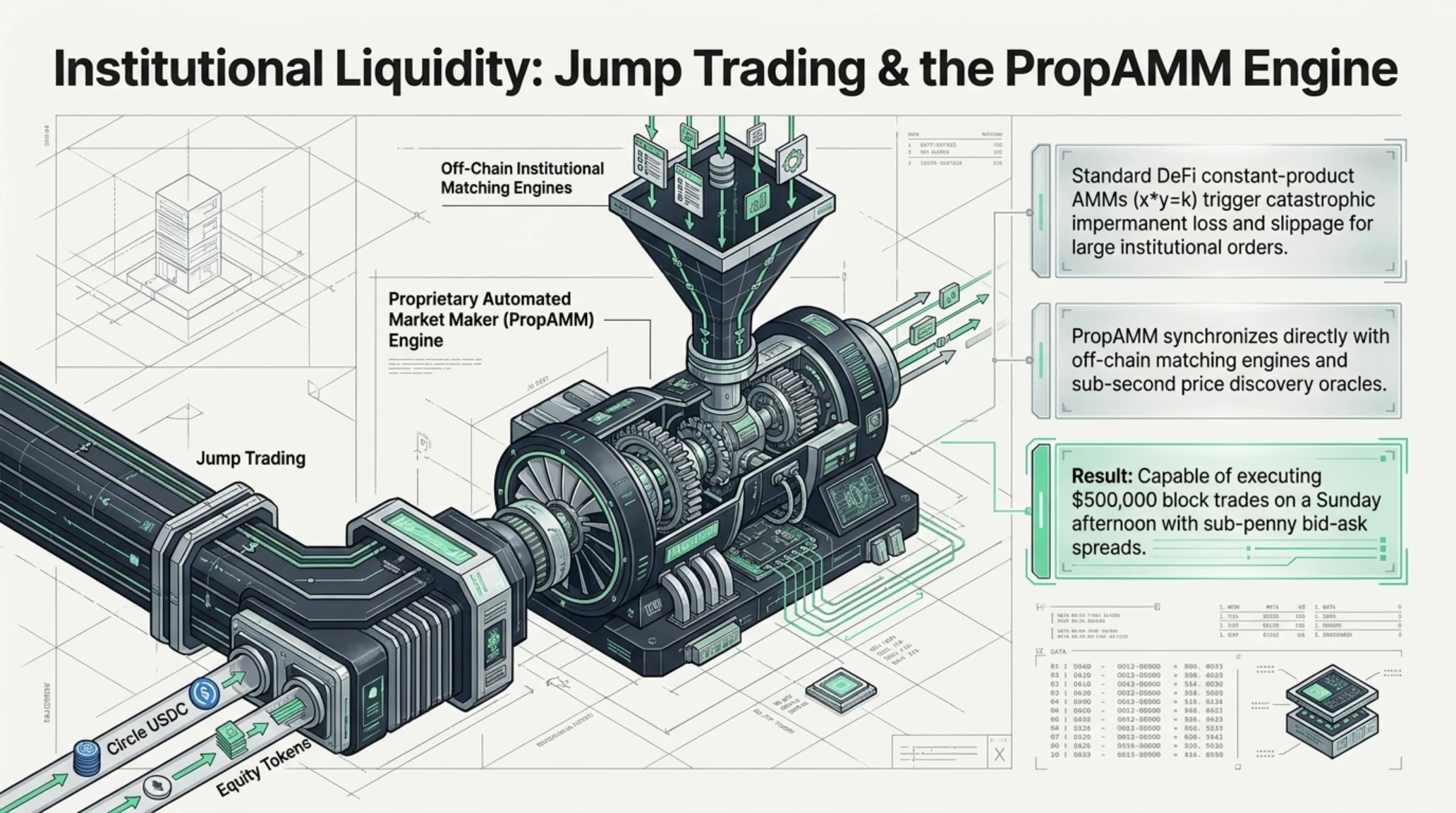
Executing continuous, legally compliant equity transactions on a public distributed ledger demands solving three core financial engineering bottlenecks: slippage under heavy volume, continuous off-hours market depth, and atomic trade finality. Securitize resolved these operational obstacles by constructing an institutional-grade liquidity architecture anchored by its Proprietary Automated Market Maker (PropAMM). Standard DeFi automated market makers rely on rudimentary constant-product invariants (x*y=k) that trigger disastrous impermanent loss and severe slippage during volatile price swings. In stark contrast, Securitize’s PropAMM operates in direct synchronization with off-chain institutional order matching engines and sub-second price discovery oracles.
At the core of this liquidity network stands algorithmic trading titan Jump Trading, serving as the designated primary market maker. Jump Trading injects continuous institutional liquidity across both sides of the tokenized equity order books against Circle’s USDC stablecoin, compressing bid-ask spreads down to fractions of a single cent. This immense depth ensures that institutional asset managers or retail participants can execute a $500,000 block trade on Nvidia or Tesla equity tokens on a Sunday afternoon without suffering catastrophic price deviation away from the latest consolidated market quotes.
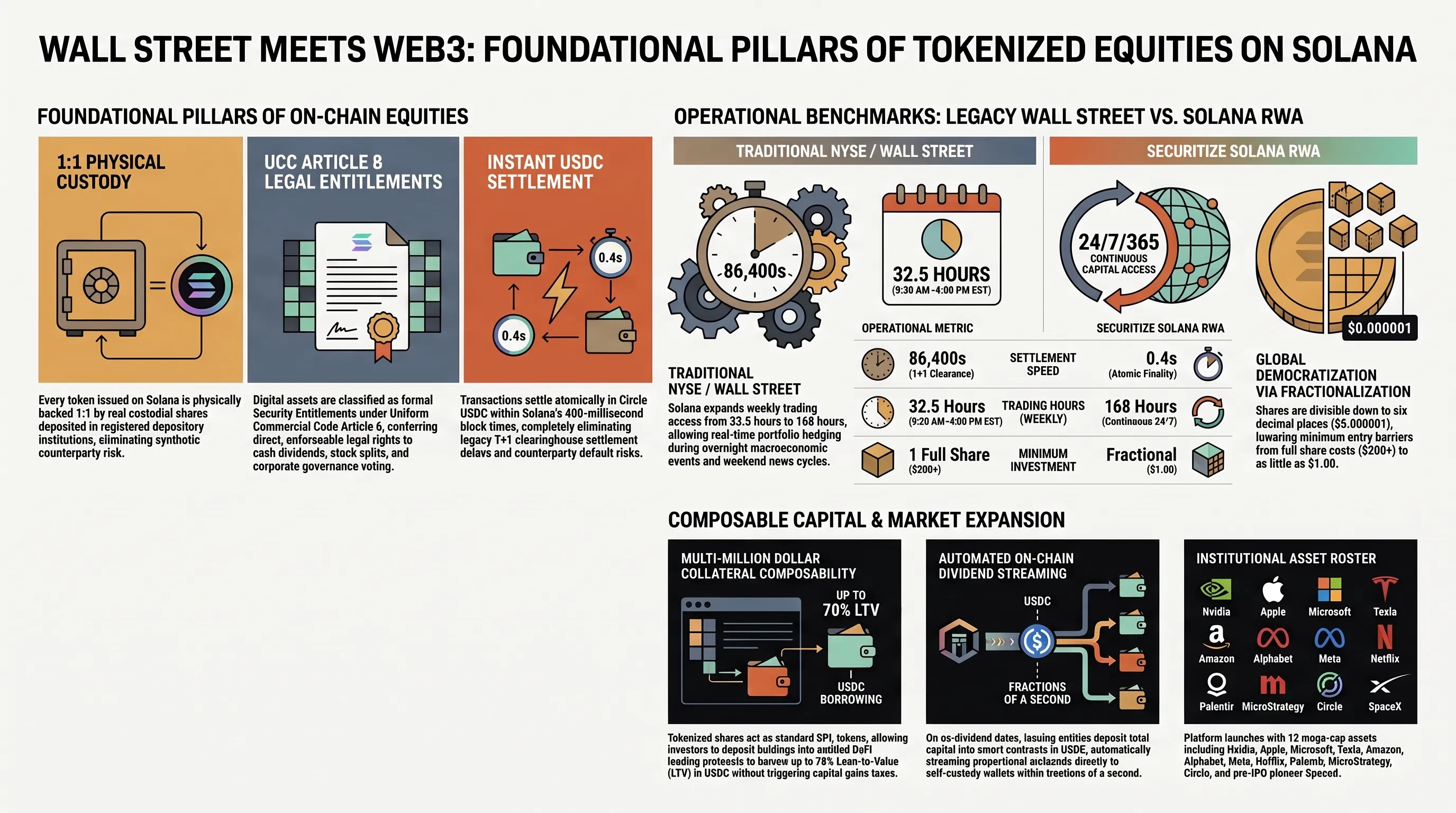
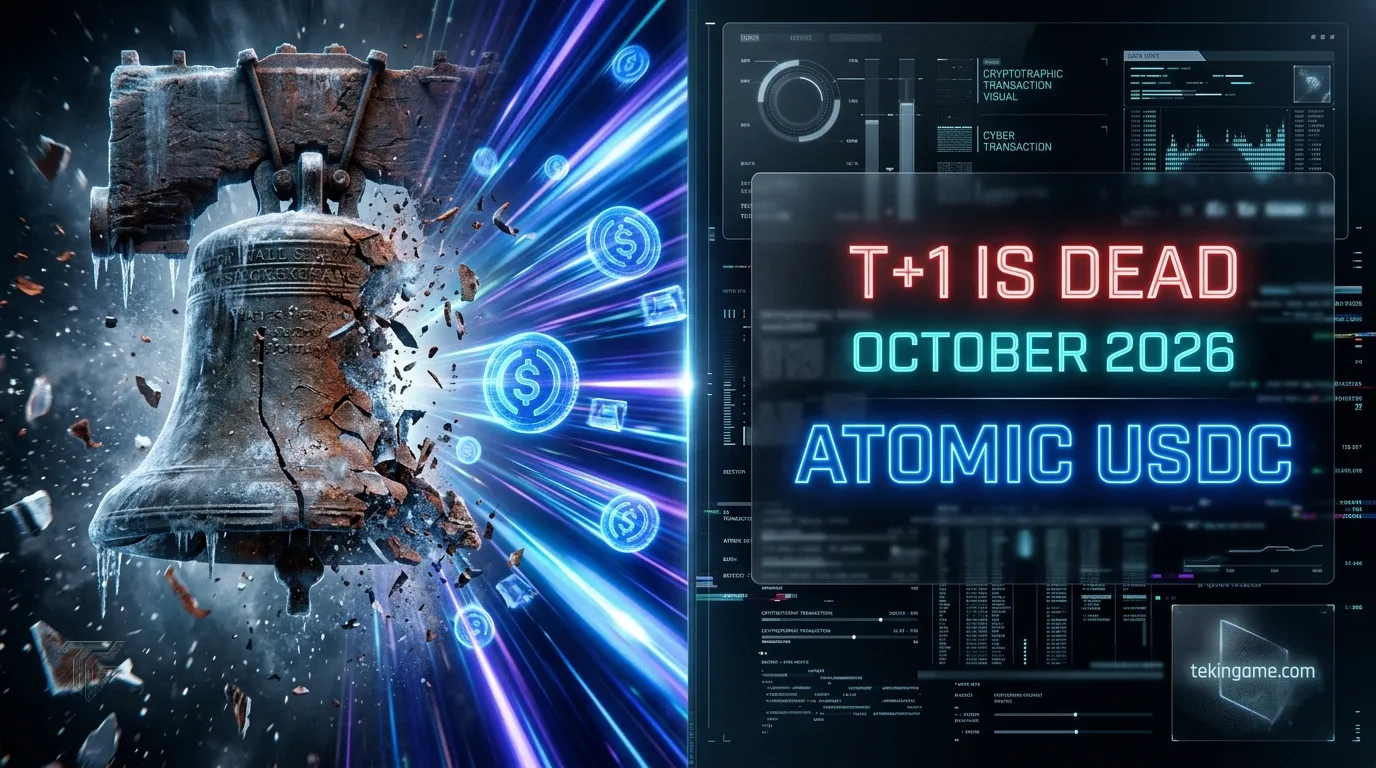
A transformative advantage of this architectural stack is atomic settlement denominated in digital dollars (USDC). In legacy capital markets, the Federal Reserve banking system and the Depository Trust & Clearing Corporation (DTCC) enforce a T+1 settlement mandate. Even after recent regulatory accelerations from T+2, selling a share of stock on Friday still means capital remains inaccessible until the subsequent business day. On Solana, the moment an order executes within a 400-millisecond block, the equity token transfers out of the seller's wallet and liquid USDC instantly arrives in their account. This sub-second finality completely eradicates clearinghouse counterparty default risk.
This organizational and infrastructure consolidation mirrors the systemic digital shifts observed in tech conglomerates like Microsoft; as chronicled in our investigative feature on Microsoft Xbox XP Strategic Corporate Transformation, multi-trillion-dollar enterprises are aggressively dismantling siloed architectures to establish unified, cross-platform distribution networks.
By leveraging Solana’s parallel transaction execution engine (Sealevel), the Securitize platform effectively replicates the sub-millisecond execution colocation environments historically restricted to high-frequency trading firms with servers colocated inside the New Jersey data centers of Nasdaq and NYSE. Sealevel processes thousands of non-overlapping transactions concurrently across modern multi-core GPU and CPU validator nodes. This high-density concurrency ensures that rapid buy and sell order bursts across twelve different mega-cap tech stocks execute simultaneously without creating serial pipeline bottlenecks or memory buffer stalls.
Event Timeline | Historical Evolution of Securities Tokenization
| Year | Historical Milestone | Impact on Capital Markets |
|---|---|---|
| 2021 | Unregulated Synthetic Stock Tokens | Market collapse due to complete absence of regulatory backing and opaque offshore custody. |
| 2024 | Inception of BlackRock BUIDL Fund | Institutional validation powered by Securitize, onboarding over $500M in tokenized U.S. Treasuries. |
| 2025 | DTCC Transitions to T+1 Settlement | Modest latency reduction while preserving restrictive exchange hours and weekend closures. |
| Oct 2026 | Securitize Deploys 12 Equities on Solana | Instant 24/7 USDC atomic settlement with Jump Trading liquidity and UCC Article 8 dividend rights. |
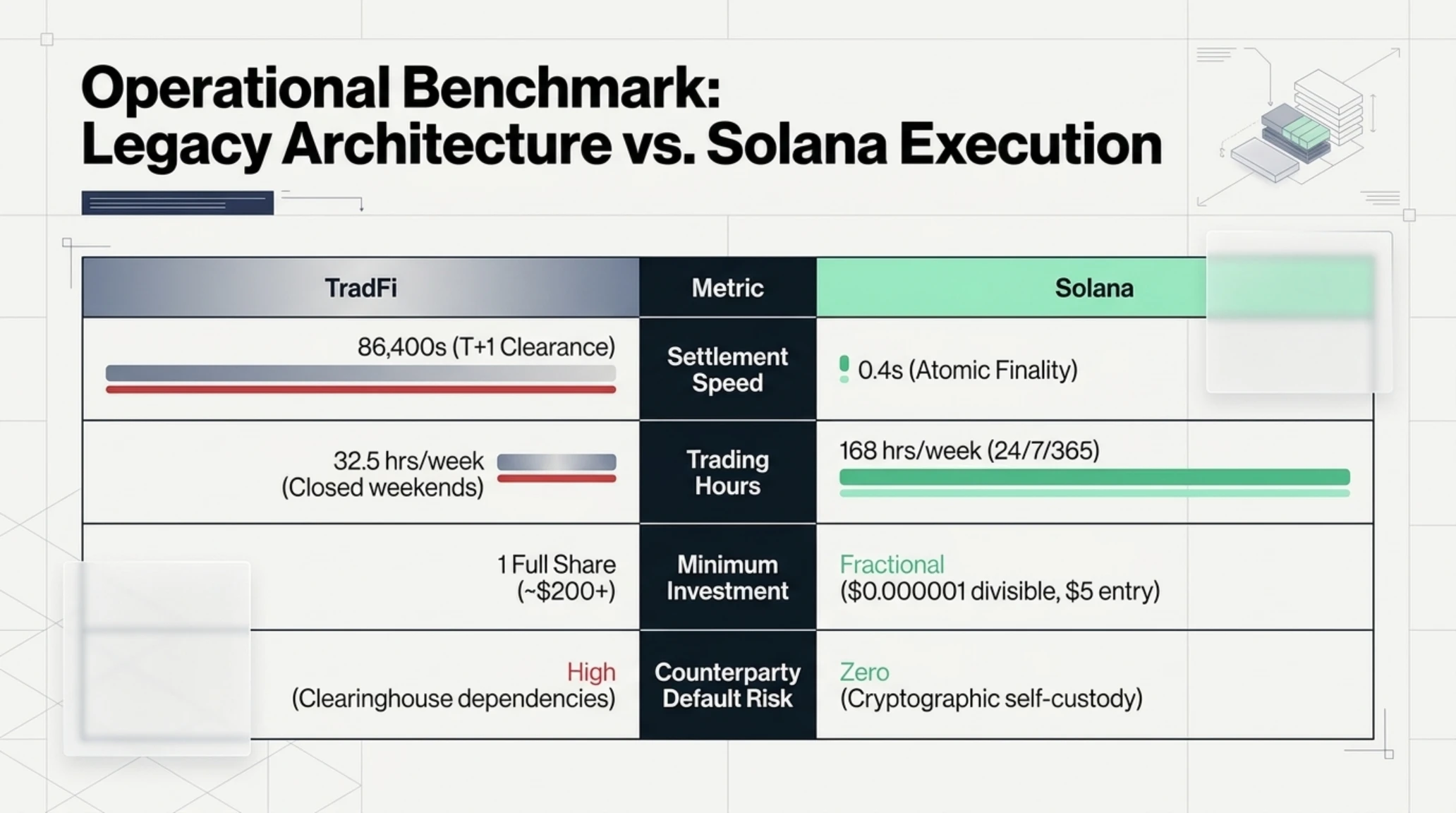
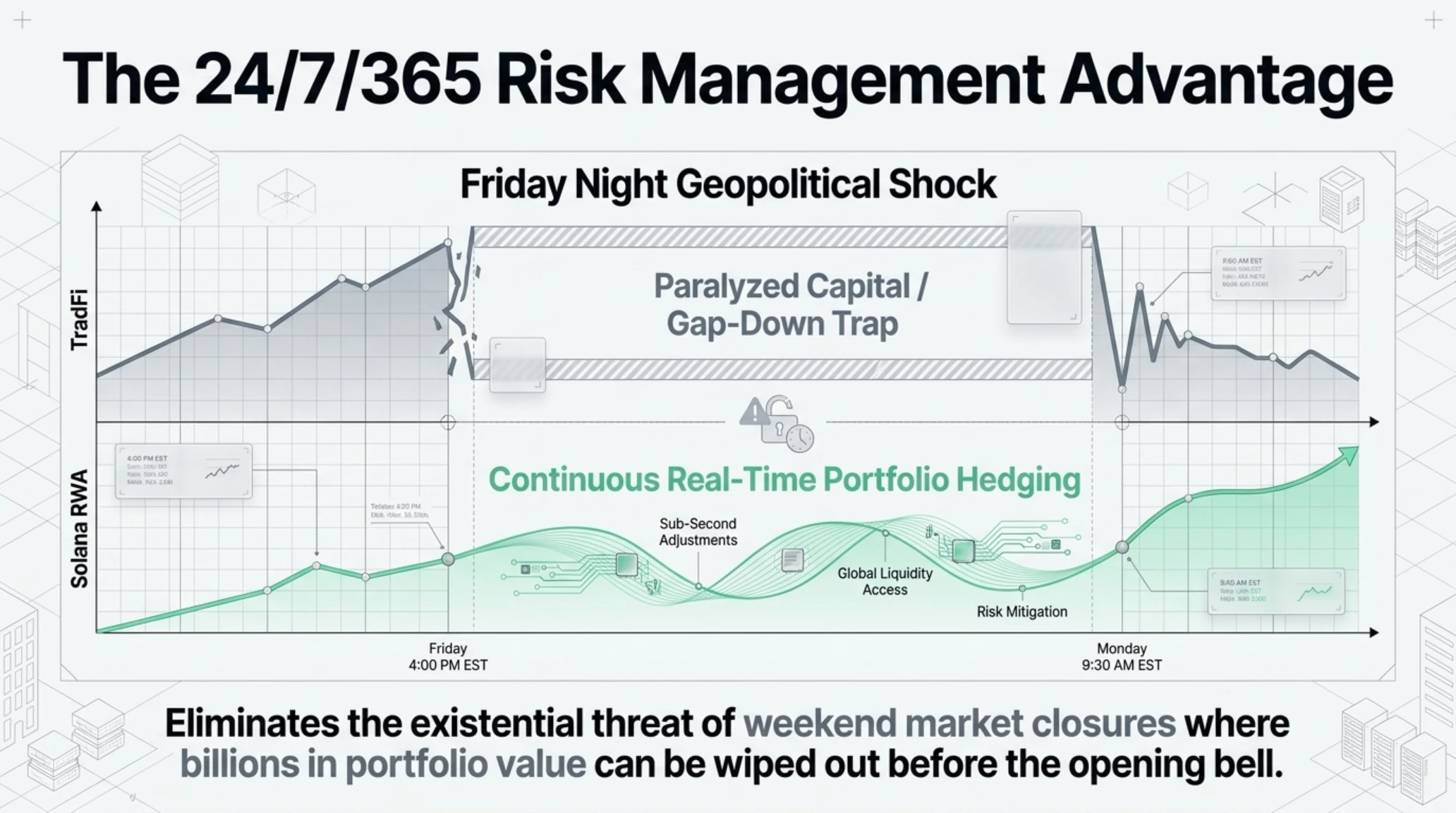
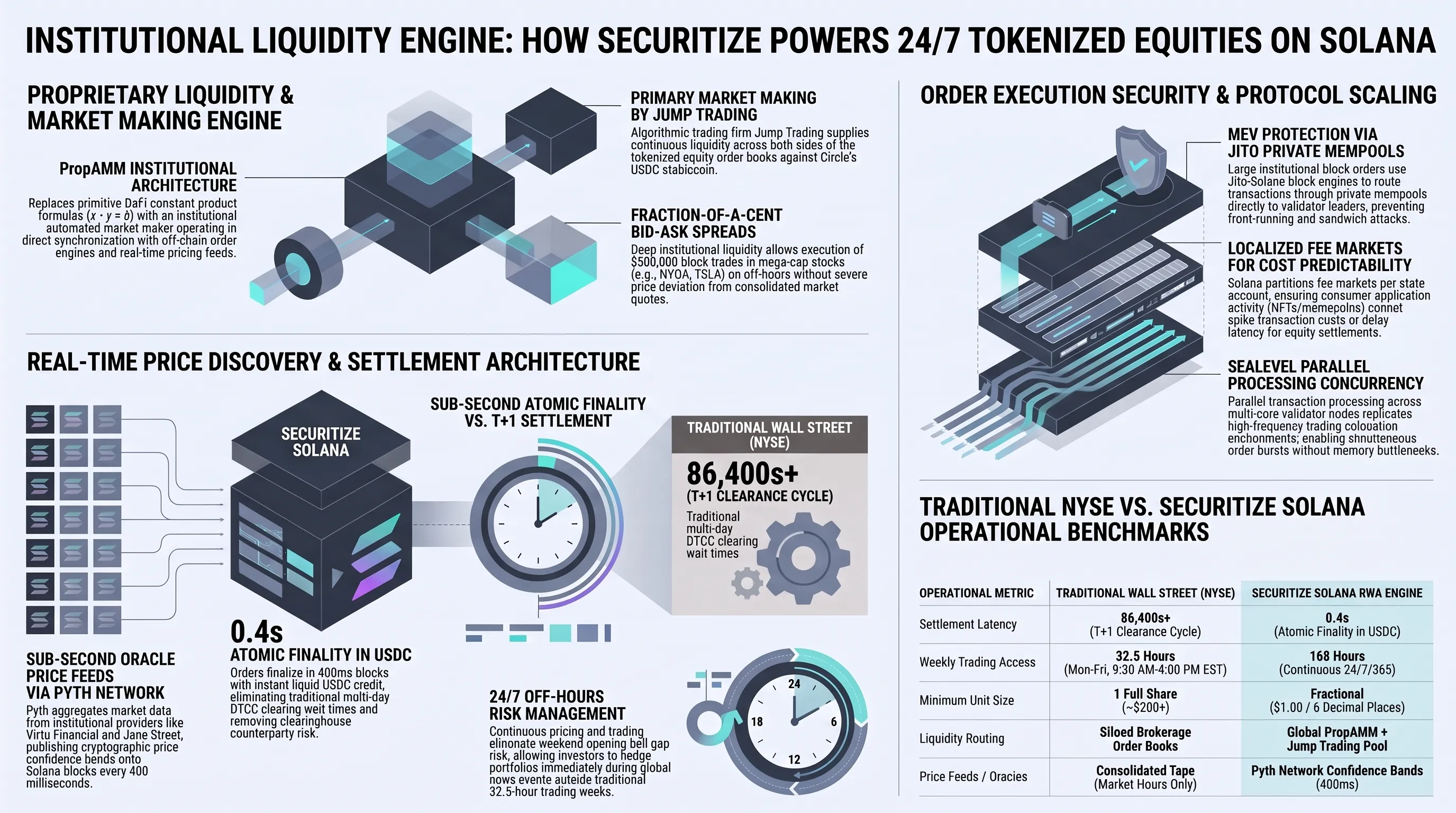
Dismantling the archaic construct of limited market operating hours constitutes an existential breakthrough for portfolio risk management. Traditional equity exchanges operate for merely 6.5 hours per business day (9:30 AM to 4:00 PM EST), remaining shuttered on weekends and federal holidays amounting to only 32.5 active hours out of a 168-hour week. When geopolitical shocks, breaking macroeconomic news, or surprise earnings announcements emerge late Friday evening, traditional equity holders are completely paralyzed until Monday morning. Markets frequently reopen with severe negative gap-down price drops, wiping out billions in portfolio value. Solana’s 24/7 continuous trading enables real-time portfolio hedging and risk adjustment at every second of the week.
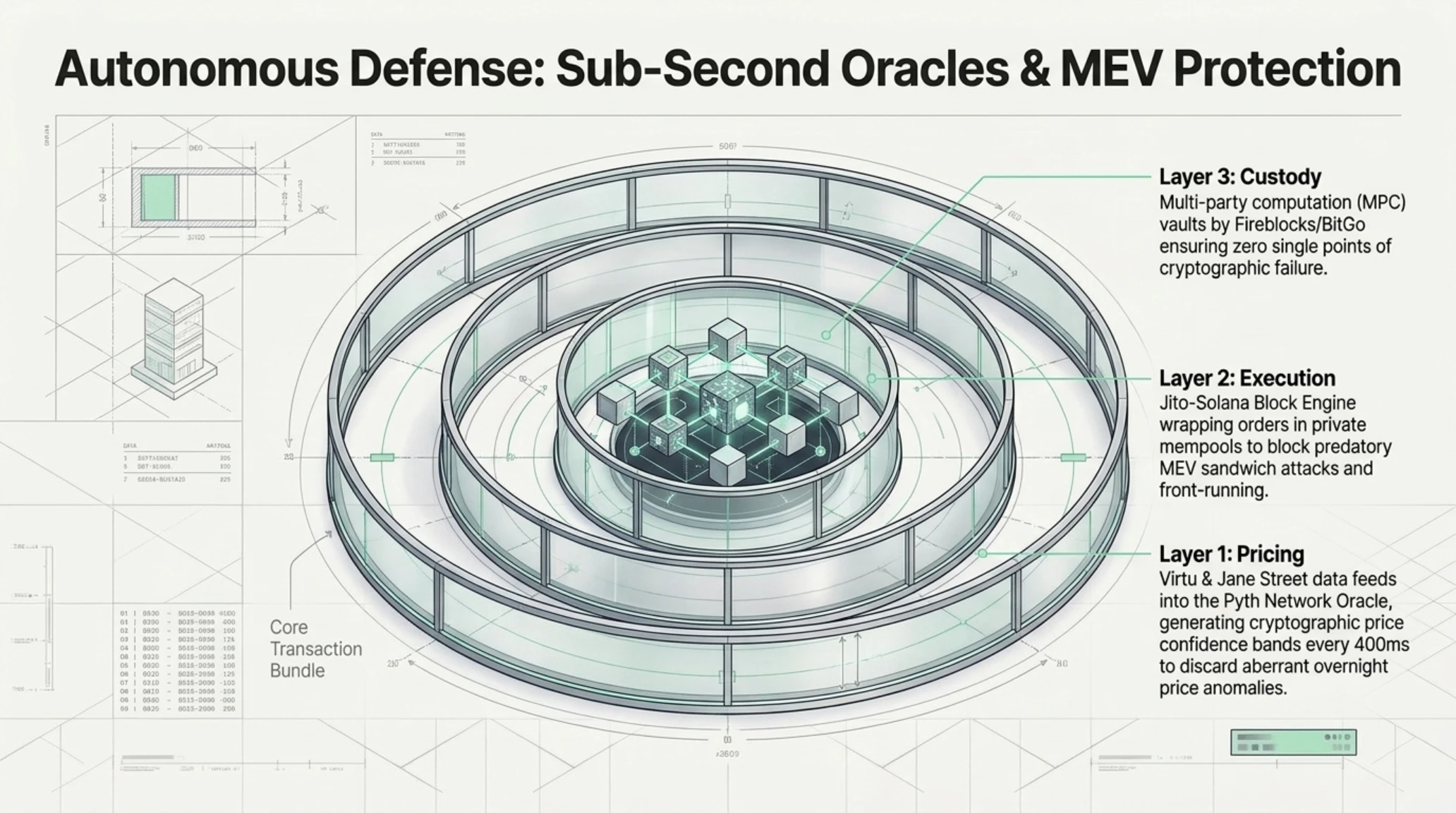
Off-hours price discovery is continuously anchored by high-frequency decentralized oracle feeds supplied by Pyth Network. Aggregating sub-second market data directly from premier institutional liquidity providers such as Virtu Financial and Jane Street, Pyth publishes cryptographic price confidence bands directly onto Solana blocks every 400 milliseconds. This ensures that even when physical trading floors in Manhattan are closed, tokenized equity valuations dynamically incorporate real-time global news sentiment, foreign exchange fluctuations, and overnight derivatives movement while autonomously discarding aberrant price anomalies.
To shield institutional order execution from predatory Maximum Extractable Value (MEV) arbitrageurs and front-running sandwich attacks, the PropAMM order pipeline utilizes specialized block-engine transaction bundles powered by Jito-Solana. Large institutional orders are routed through private mempools directly to validator leaders, guaranteeing atomic order execution without public mempool leakage. Furthermore, physical custody is fortified through multi-party computation (MPC) vaults operated in partnership with enterprise custodians including Fireblocks and BitGo, guaranteeing institutional-grade key management with zero single points of cryptographic failure.
Another decisive technological moat is Solana's implementation of Localized Fee Markets. In monolithic blockchain networks where a single global fee market dictates gas pricing, an unexpected surge in consumer NFT mints or memecoin trading routinely spikes transaction costs across the entire ledger, rendering enterprise financial settlements economically unviable. On Solana, fee markets are partitioned per state account. High traffic on an unrelated decentralized consumer application has zero mathematical impact on the cost or inclusion latency of Securitize equity settlement transactions, ensuring that Wall Street institutions enjoy deterministic, sub-penny cost predictability under all network conditions.
Operational Performance Benchmarks: Legacy NYSE vs. Securitize Solana
| Operational Metric | Legacy Wall Street (NYSE / DTCC) | Securitize Solana RWA Equities |
|---|---|---|
| Settlement Finality | T+1 Clearing Cycle (24 to 72 hours) | 0.4-Second Atomic Finality in Circle USDC |
| Market Operating Window | 32.5 Hours/Week (Closed nights & weekends) | 168 Hours/Week (Continuous 24/7/365 access) |
| Minimum Entry & Utility | Full Share (~$200+) / Siloed in brokerage | $1.00 Fractional / Composable DeFi collateral |
📚 Classified & Related Dossiers in TekinGame
If you wish to explore beyond this report and delve into cybernetic frontiers and autonomous AI architectures, do not miss these three exclusive deep-dives in the Tekin Garage:
Macroeconomic Impact, DeFi Composability, and Enforceable Shareholder Rights
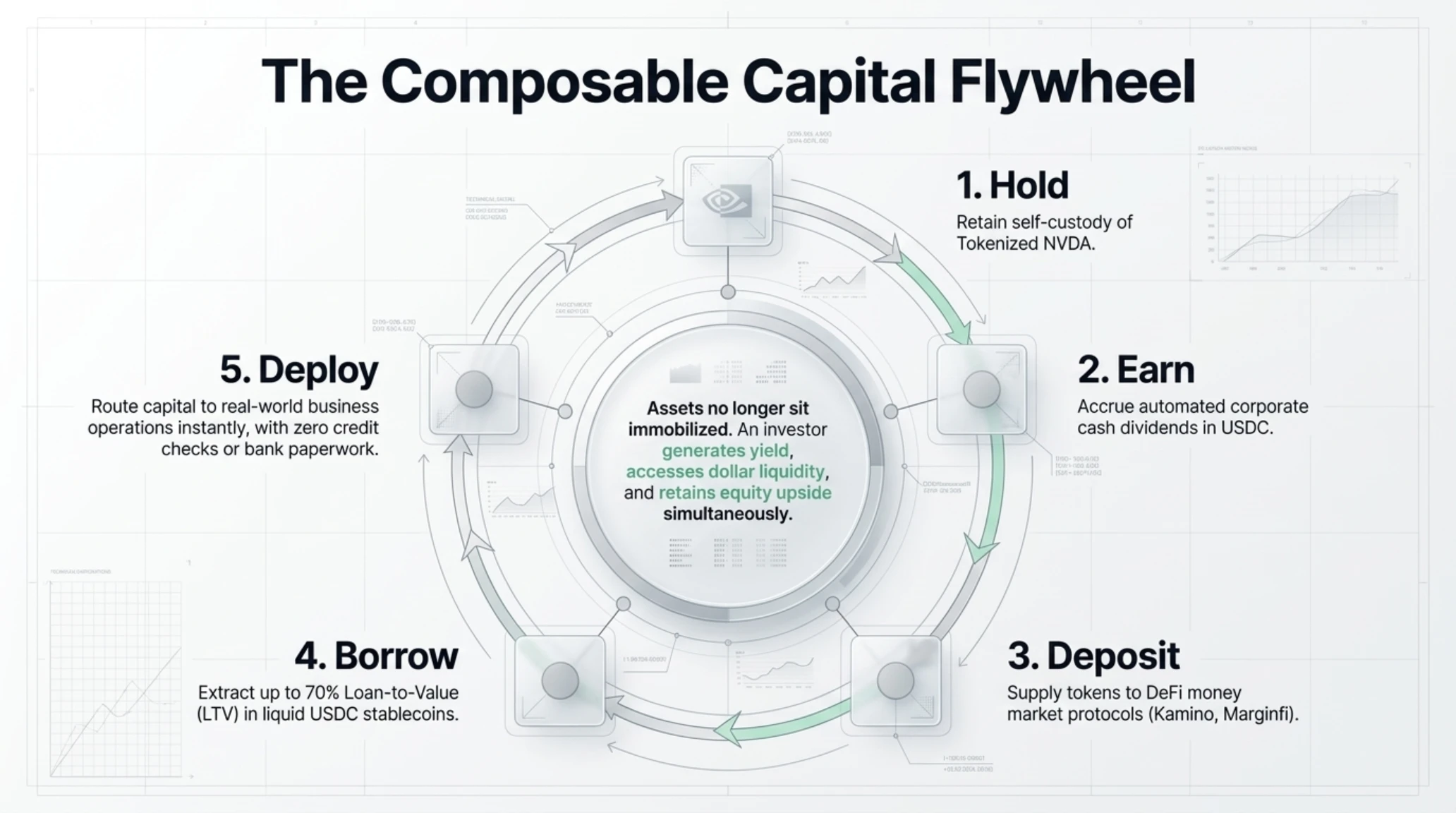
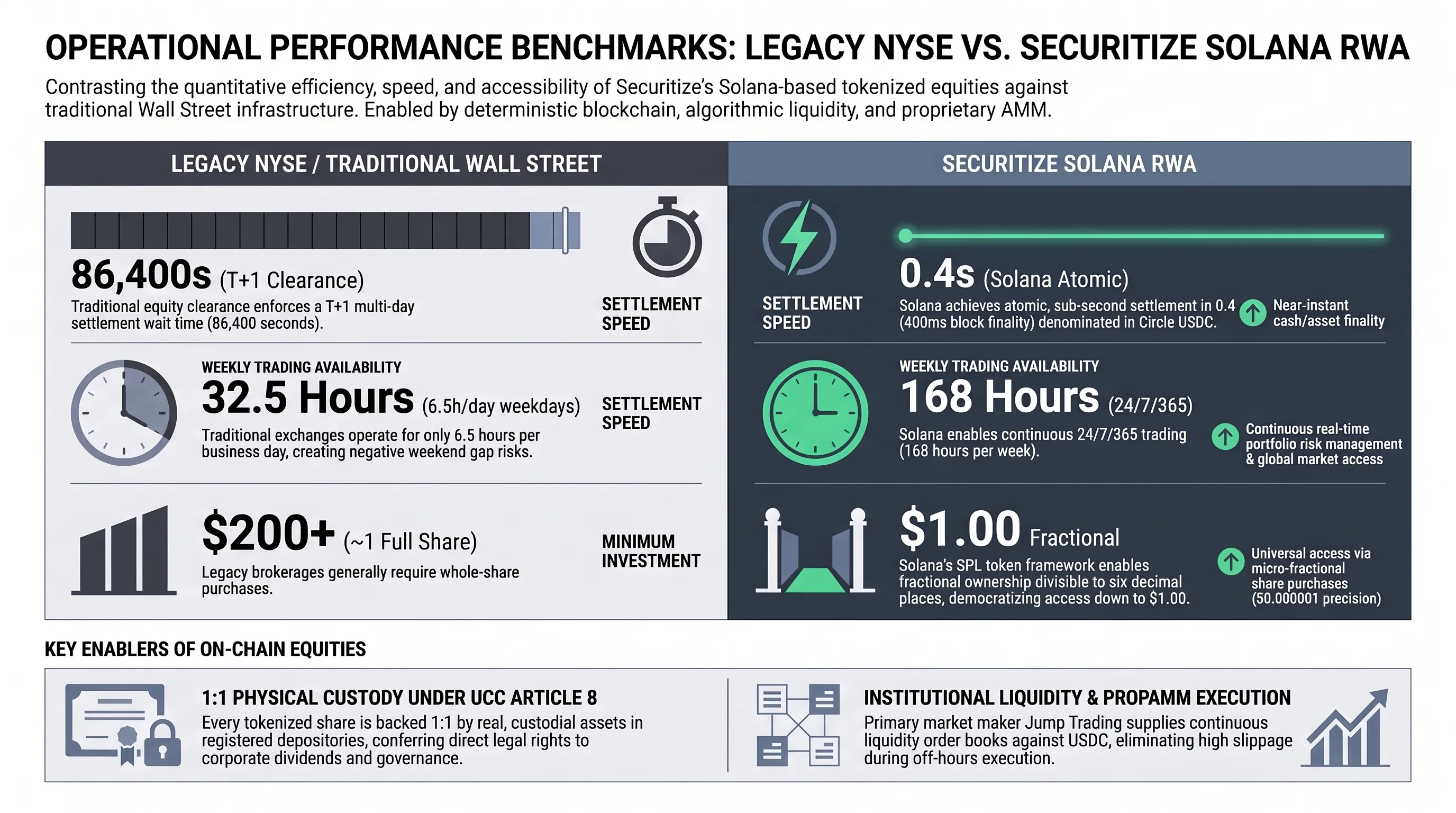
The establishment of regulated, tokenized public equities transcends mere trading convenience; it builds the architectural foundation for a new macroeconomic era of programmable, composable capital. In traditional financial systems, when an investor acquires equity in companies like Nvidia, Apple, or Microsoft, those assets remain effectively frozen within a closed brokerage silo. If the shareholder requires liquidity for business operations or real-world investments, their only viable recourse is to sell the stock triggering punitive capital gains tax liabilities, incurring transaction slippage, and completely sacrificing exposure to future corporate enterprise growth. Within Solana’s Real World Asset ecosystem, that structural dilemma is permanently dismantled.
Because tokenized shares are minted as standard Solana Program Library (SPL) tokens with embedded compliance logic, they can seamlessly integrate into audited decentralized finance (DeFi) money market protocols such as Kamino, Marginfi, and Solend. An enterprise or private investor can deposit their tokenized Nvidia or Tesla holdings into a non-custodial smart contract vault, borrow up to 70% Loan-to-Value (LTV) in liquid USDC stablecoins, and deploy that capital into real-world business operations. Crucially, the investor retains continuous legal ownership of the underlying equities and continues to accrue all regular dividend disbursements. This process requires zero credit bureau checks, involves zero bank paperwork, and completes within seconds under cryptographic certainty.
Financial Telemetry of Real World Assets: Market Share & Projected Volume
| Tokenized Asset Class (RWA) | Market Share | Institutional Yield & Web3 Utility |
|---|---|---|
| U.S. Treasury Bills (BUIDL / Ondo) | 50% Share | Risk-free sovereign dollar yield for DAO treasuries and stablecoin reserves |
| Corporate Equities (Securitize Solana) | 29% Share | 24/7 trading, automated USDC dividends, and up to 70% LTV DeFi borrowing |
| Private Credit & Real Estate | 21% Share | Disintermediating commercial banking syndicates with on-chain credit pools |
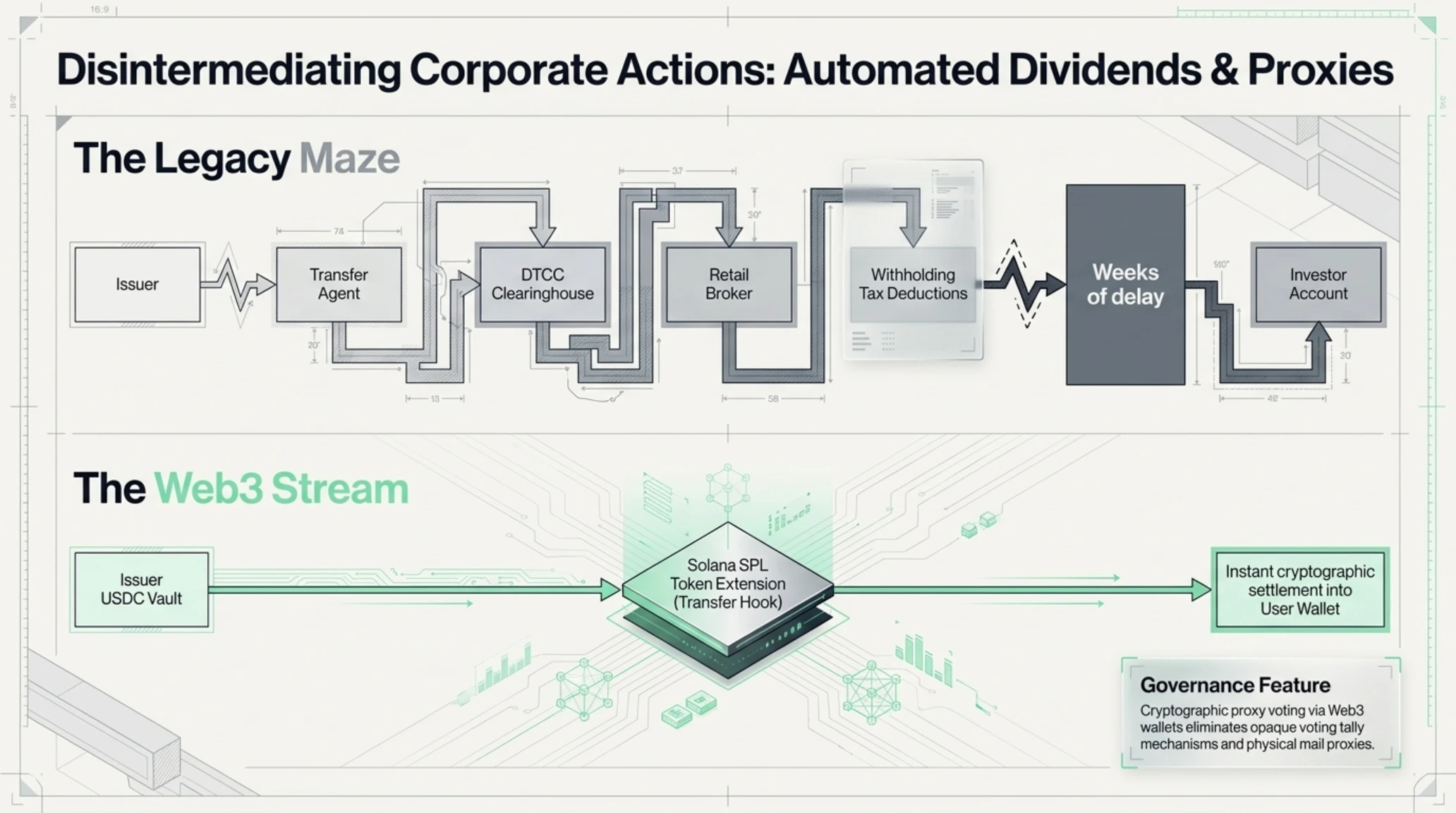
Automated dividend distribution represents another immense technological leap forward engineered into Securitize’s smart contracts. In the archaic administrative machinery of traditional finance, corporate dividends journey through multiple layers of intermediary transfer agents, clearinghouses, and retail brokerages taking weeks to settle and often losing significant percentage points to cross-border wire fees for international investors. Under Securitize’s on-chain architecture, on the corporate ex-dividend date, the issuing entity deposits total dividend capital into an audited smart contract in USDC. The protocol takes a cryptographic ledger snapshot and automatically streams proportional cash dividends directly to token holders’ self-custody wallets within fractions of a second.
This collapse of artificial walled gardens across sovereign financial ecosystems closely parallels the transformative structural unification occurring throughout the interactive gaming industry; a reality we explored in our comprehensive breakdown of the Forza Horizon 6 PS5 Cross-Platform Expansion Analysis, where legacy platform exclusivity yields to unconstrained cross-network distribution.
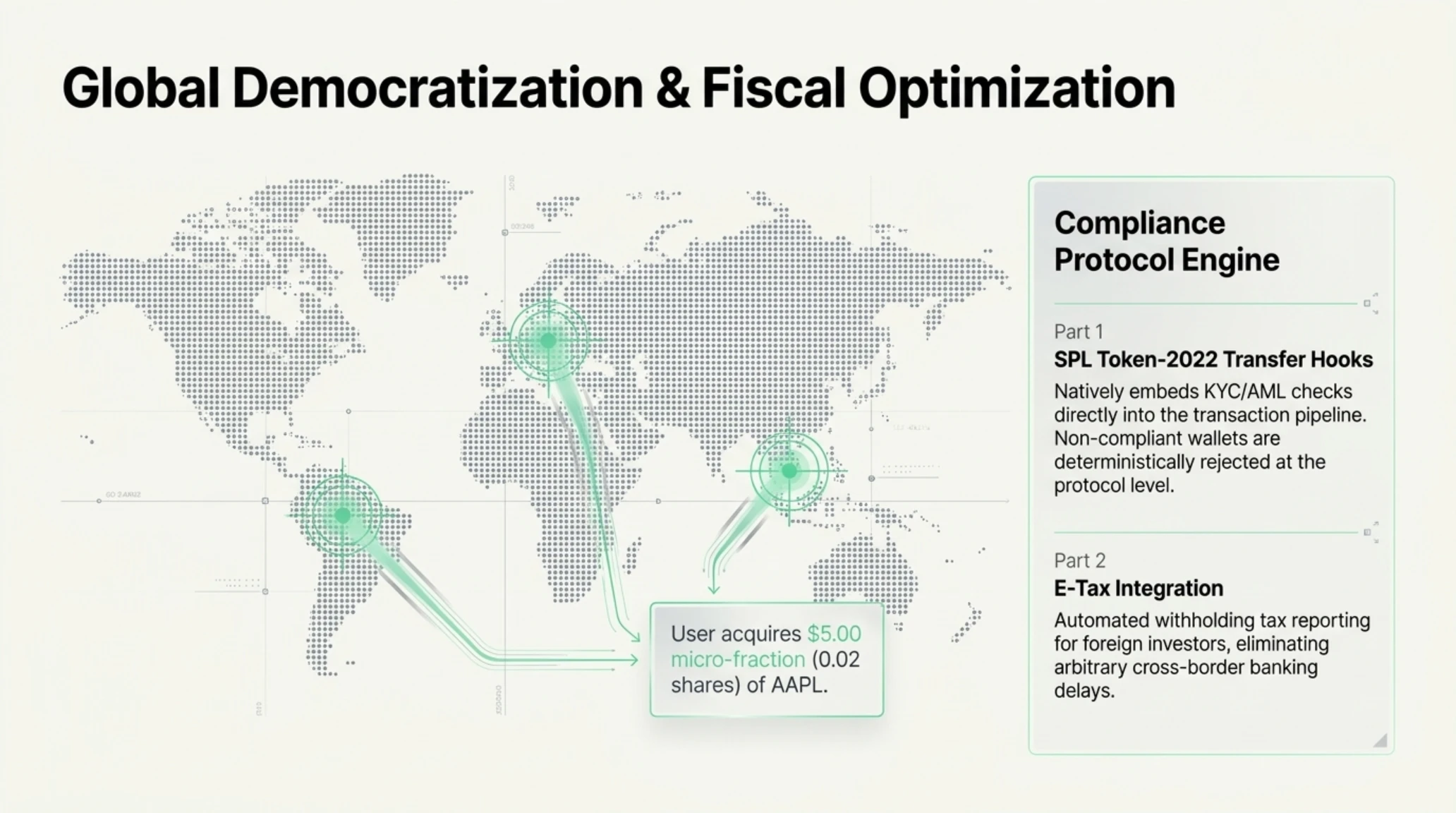
The technical foundation powering these sophisticated compliance rules is Solana's advanced Token-2022 standard (SPL Token Extensions). Utilizing native Transfer Hooks, Securitize embeds regulatory checks directly into the base transaction pipeline without relying on external smart contract wrappers. Every secondary transfer automatically verifies whether the receiving wallet address holds an active, verified institutional identity credential. If a non-compliant or sanctioned wallet attempts to receive tokenized equity, the transfer hook deterministically rejects the transaction at the protocol level, ensuring absolute compliance with global securities regulations while maintaining composability with permissioned DeFi protocols.
Furthermore, the systemic implementation of fractional ownership establishes true global financial democratization. High-performing equities such as Nvidia, Meta, or MicroStrategy regularly trade at several hundred to several thousand dollars per individual share, erecting steep financial barriers for retail investors throughout Latin America, Southeast Asia, and Eastern Europe. On Solana, each equity token is divisible down to six decimal places ($0.000001). A retail participant anywhere on Earth can seamlessly invest $5 or $10 into an authentic slice of Nvidia or Apple, instantly enjoying identical proportional price appreciation and automated dividend rights as a multi-million-dollar institutional fund.
Equally transformative is the implementation of cryptographic proxy voting. In legacy shareholder voting systems, foreign retail shareholders rarely participate in corporate governance due to onerous physical mail proxies, institutional apathy, and opaque voting tally mechanisms. Under Securitize’s on-chain architecture, corporate proxy ballot items are published as cryptographic proposals. Token holders cast cryptographically signed governance votes directly from their Web3 wallets without incurring transaction fees, with their votes aggregated programmatically by the transfer agent and officially submitted at corporate annual general meetings.
From a fiscal optimization perspective, holding tokenized equities in self-custody wallets unlocks unprecedented tax efficiency and cross-border capital velocity. Traditional international investors face punitive double-taxation regimes and withholding tax deductions that often slice away 30% or more of foreign dividend payments before funds even reach local banking accounts. With automated smart contract dividend streaming in USDC, withholding tax reporting is handled deterministically through automated e-tax integration, providing auditable digital documentation for local revenue authorities while eliminating arbitrary banking processing delays.
To preserve systemic solvency within decentralized lending markets, risk engines implement algorithmic collateral haircuts tailored to equity volatility profiles. Highly liquid mega-caps such as Apple and Microsoft command conservative collateral factors with 75% loan-to-value ceilings and isolated debt caps, whereas higher-beta assets like MicroStrategy or Tesla feature dynamic LTV adjustments linked to realized 30-day implied volatility metrics. If equity valuations undergo sharp downward corrections, automated liquidation bots execute soft liquidations in small micro-tranches via Solana's high-speed DEX routing layer (Jupiter Exchange), preventing cascading market insolvencies and safeguarding protocol lenders.
The Strategic Frontier: NYSE Direct Pipeline, OKXICE Integration, and the Road Ahead
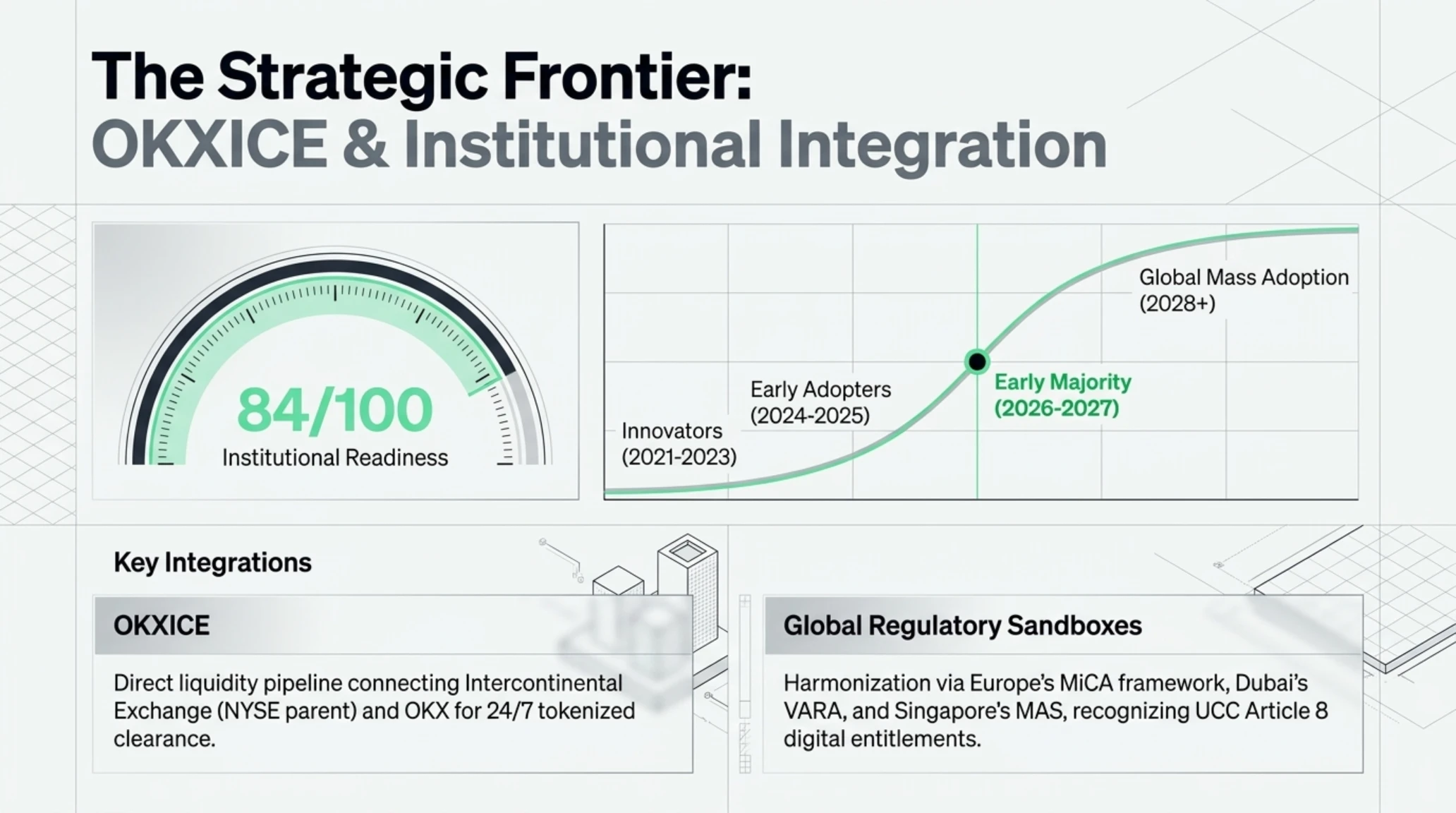
The definitive phase in Securitize’s long-term master roadmap is the native integration of tokenized equities into premier global financial exchanges and institutional trading terminals. Intercontinental Exchange (ICE), the parent conglomerate of the New York Stock Exchange, in partnership with cryptocurrency exchange OKX, is aggressively finalizing the launch of «OKXICE» a revolutionary institutional gateway dedicated to continuous tokenized securities trading. Securitize’s Solana-minted equity tokens are engineered specifically to serve as standard settlement instruments within this multi-billion-dollar clearing venue, providing seamless liquidity piping between high-frequency hedge funds, global family offices, and decentralized liquidity providers.
This institutional integration marks the beginning of an era where traditional financial institutions abandon archaic clearing networks in favor of high-throughput public blockchains. Asset management conglomerates across Switzerland, Singapore, and the United Arab Emirates no longer need to manage complex multi-day foreign currency conversions through legacy SWIFT banking rails simply to acquire exposure to premier American technology companies. By utilizing licensed institutional on-ramps and verifiable digital identity standards, these funds can convert digital cash reserves into a diversified portfolio of tokenized mega-cap equities in a single atomic transaction.
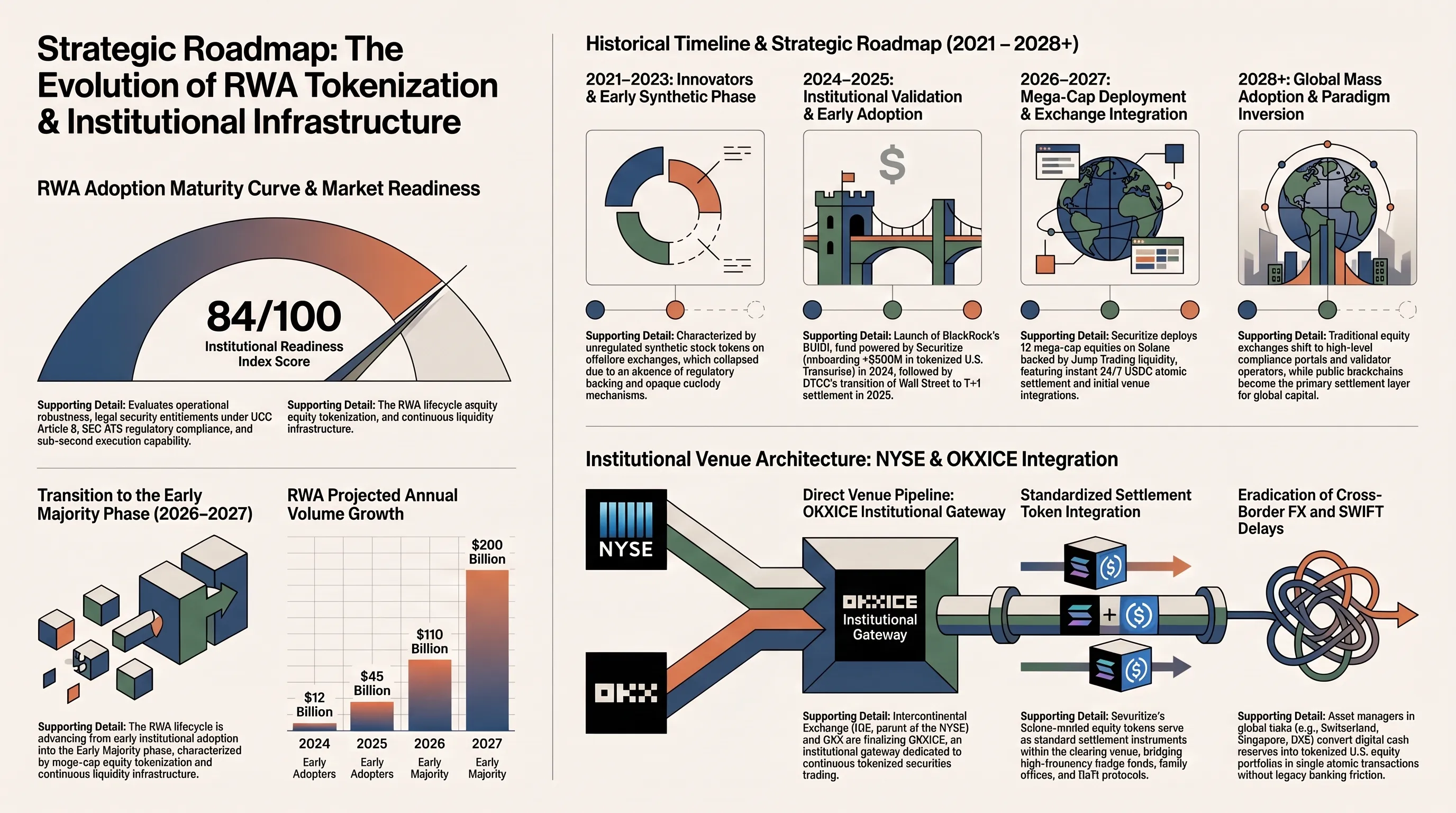
Institutional Adoption Maturity Curve: Real World Assets (Gauge & S-Curve)
S-Curve & Institutional Readiness Analysis: Institutional readiness for on-chain transferable securities registers at 84 out of 100. Bolstered by the Firedancer validator client and upcoming NYSE OKXICE integration, global capital markets have crossed the chasm into Early Majority adoption.
Naturally, this radical evolution introduces critical risk factors that institutional market participants must actively monitor. Primary among these is blockchain infrastructure resilience under catastrophic market volatility. While the production deployment of the Firedancer independent validator client engineered in C++ by Jump Crypto has dramatically amplified Solana’s theoretical throughput to over 100,000 transactions per second and eliminated historic network restarts, financial regulators continue to mandate automated on-chain circuit breakers to halt trading during extreme systemic shocks. Furthermore, token holders remain fundamentally reliant on the solvency and operational integrity of licensed custodial trust companies, necessitating continuous, real-time cryptographic proof-of-reserves audits verified by independent accounting firms.
From an international regulatory standpoint, cross-border jurisdictional harmonization is accelerating rapidly. In Europe, the Markets in Crypto-Assets (MiCA) framework alongside the EU DLT Pilot Regime provides an established regulatory bridge for tokenized transferable securities, enabling European asset managers to trade Securitize-issued Solana tokens without violating local UCITS fund mandates. Concurrently, progressive financial hubs such as Dubai’s Virtual Assets Regulatory Authority (VARA) and Singapore’s Monetary Authority of Singapore (MAS) are establishing specialized regulatory sandboxes that recognize UCC Article 8 digital entitlements as direct legal property, paving the way for multi-jurisdictional liquidity aggregation.
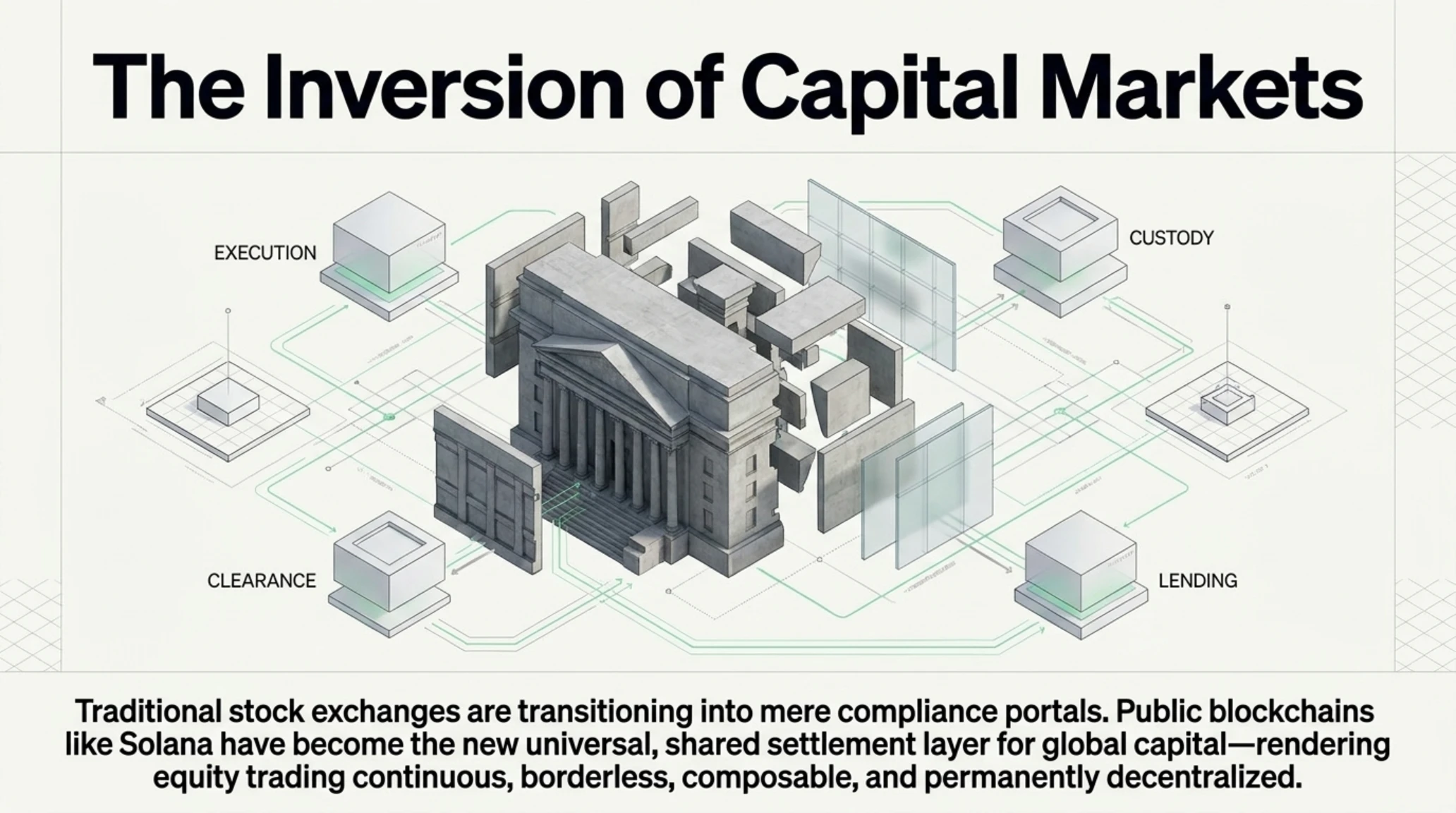
The ultimate macroeconomic endgame of this transformation points toward a profound inversion of capital market roles. Traditional stock exchanges once the undisputed gatekeepers and monopolistic matchmakers of corporate equity are transitioning into high-level compliance portals and validator operators. In this emerging paradigm, public decentralized blockchains like Solana serve as the universal, shared settlement layer for global capital, permanently unbundling the functions of execution, custody, clearance, and lending into open, interoperable cryptographic primitives.
For enterprise chief financial officers and corporate treasury directors, holding tokenized equities directly on-chain redefines balance sheet liquidity management. Corporate cash reserves that traditionally languished in low-yielding money market deposits or short-term certificates of deposit can now be dynamically reallocated into high-grade tokenized technology equities during intraday market dips, while maintaining the instantaneous flexibility to sweep funds back into yield-bearing USDC or tokenized U.S. Treasuries within seconds. This real-time capital agility eliminates multi-day bank float periods and dramatically optimizes working capital efficiency across multinational corporate balance sheets.
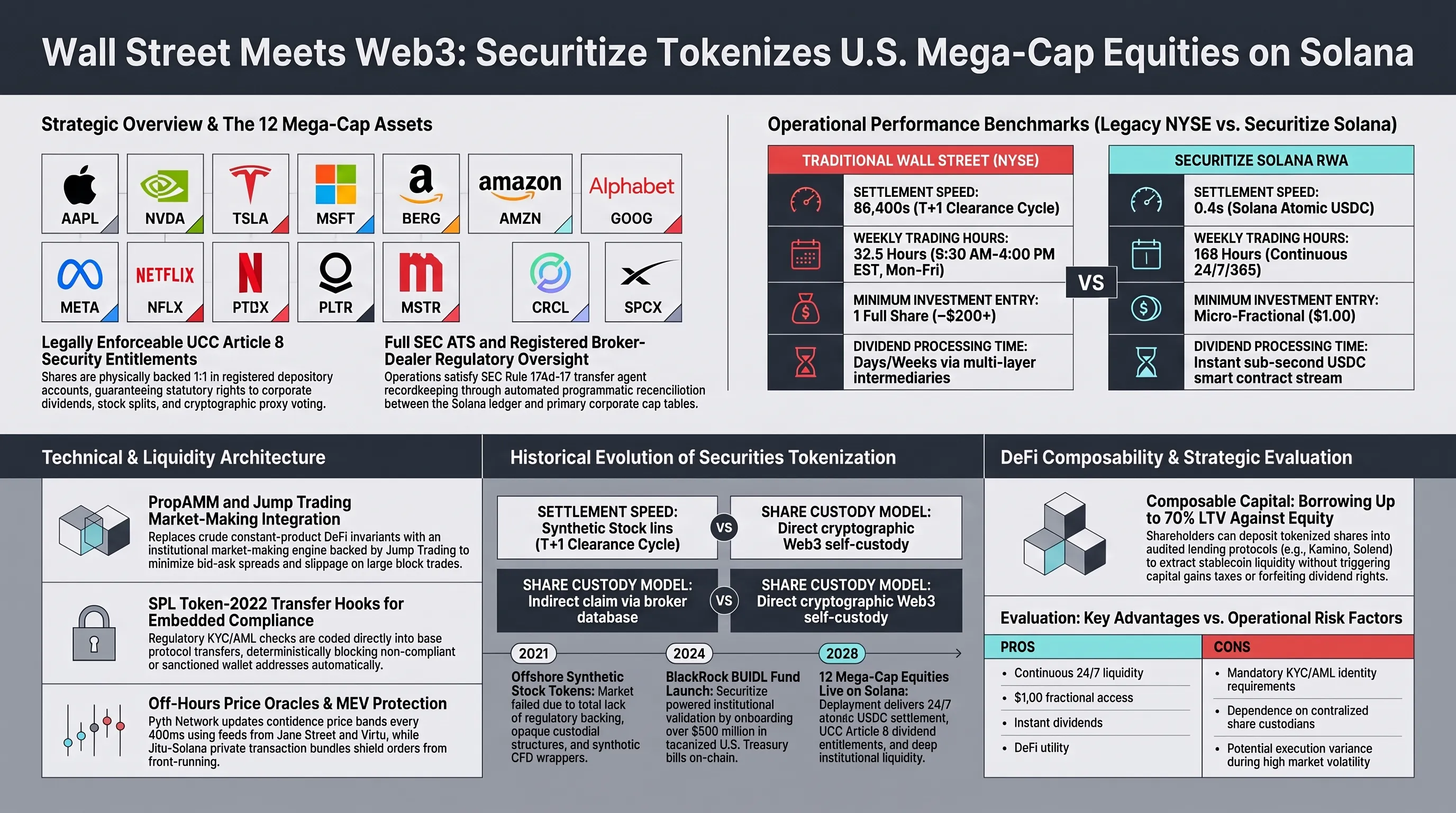
- Sub-second atomic settlement in Circle USDC eliminating archaic T+1 clearance latencies.
- Continuous 24/7/365 trading access eliminating weekend market closures and opening bell gap risk.
- Enforceable 1:1 physical custodial backing conferring full statutory dividend entitlements under UCC Article 8.
- High financial composability allowing tokenized mega-cap stocks to serve as DeFi borrowing collateral.
- Micro-fractional investment capabilities lowering individual corporate equity entry barriers to just $1.00.
- Mandatory regulatory KYC/AML verification protocols restricting fully anonymous DeFi participation.
- Fundamental counterparty dependency on centralized custodian depositories for underlying physical shares.
- Temporary jurisdiction-specific regulatory exclusions across certain restricted national legal boundaries.
- Potential infrastructure strain and execution variance during catastrophic systemic market turbulence.
In ultimate synthesis, the deployment of tokenized equities representing America’s twelve most influential corporate giants on the Solana blockchain represents the irreversible fusion of traditional capital markets with the programmable efficiency of Web3. By replacing century-old clearinghouses with sub-second cryptographic consensus, Securitize and its institutional partners have proven that the future of global equity trading is continuous, borderless, composable, and permanently decentralized.
Research Sources & Official Documentation
- Securitize: Securitize Official Announcement: Tokenized U.S. Equities Launch on Solana
- Solana Foundation: Solana Institutional Real World Assets & High-Speed Equity Settlement
- Bloomberg: Bloomberg Markets: Wall Street Titans Tokenized for 24/7 Continuous Trading
- CoinDesk: CoinDesk Research: Jump Trading and PropAMM Infrastructure Powering Tokenized Equities
- Reuters: Reuters Tech: Institutional Convergence of Traditional Exchanges and On-Chain Securities
Frequently Asked Questions Regarding Tokenized Equities on Solana
What are tokenized equities on Solana and how do they differ from traditional stocks?
Tokenized equities are legally enforceable digital tokens backed 1:1 by real corporate shares held in regulated custody. Unlike legacy shares, they trade 24/7, settle instantly in USDC within 400 milliseconds, and can be held in self-custody Web3 wallets.
Do holders of tokenized equity tokens receive real cash dividends?
Yes. Governed by UCC Article 8 Security Entitlements, holders possess full statutory rights to corporate distributions. Dividends are automatically deposited into token holders' wallets in liquid USDC stablecoins upon payment dates.
How is the 1:1 physical backing and legal ownership of tokenized shares guaranteed?
Each token is backed 1:1 by physical shares deposited with SEC-registered depository custodians. Independent auditors regularly publish cryptographic Proof of Reserves confirming full asset backing.
Can tokenized equities be traded during weekends and exchange holidays?
Yes. The market operates 24 hours a day, 7 days a week, 365 days a year without holiday shutdowns, eliminating overnight and weekend market gap risks.
What are the typical transaction fees and execution costs on Solana?
Solana network transaction fees are fractions of a cent (typically under $0.001 per trade), virtually eliminating the punitive brokerage commissions associated with international wire trading.
How can investors utilize tokenized equities as collateral in decentralized finance?
Because the tokens follow standard SPL specifications, investors can deposit their equity tokens into audited Solana lending markets to borrow USDC stablecoins without triggering taxable equity sales.
Additional Gallery: Tekin Analysis | Securitize Brings Apple, Nvidia & Tesla Stocks to Solana