
Strategic Key Takeaways
- Delivers uncompromised native 4K gaming performance exceeding 60+ FPS in virtually all modern AAA titles.
- Features cutting-edge DLSS 4.0 with advanced Ray Reconstruction and generative frame interpolation.
- Carries a steep $1,999 price point aimed strictly at enthusiast hardware collectors and 3D creators.
- Requires a high-end power supply (850W minimum) and robust chassis cooling to manage thermal output.
Introduction: Redefining the Zenith of Graphic Processing Power
NVIDIA has once again pushed the boundaries of consumer gaming hardware with the official release of the GeForce RTX 5090. Positioned at a staggering price point of $1,999, this flagship graphics processing unit claims to be the first hardware solution truly capable of uncompromised 4K gaming at ultra-settings exceeding 60 frames per second. Following weeks of rigorous benchmark testing across demanding modern video games, this analysis explores every technical, functional, and economic aspect of this high-end hardware.
The market reception of such an expensive piece of silicon highlights an ongoing industry shift toward premium enthusiast segments. While mainstream gamers rely on mid-tier hardware, halo products like the RTX 5090 establish the baseline for future architectural advancements. Understanding whether this card justifies its immense financial footprint requires looking past marketing claims and examining raw engineering execution in complex gameplay scenarios.
Architectural Foundations and Specifications
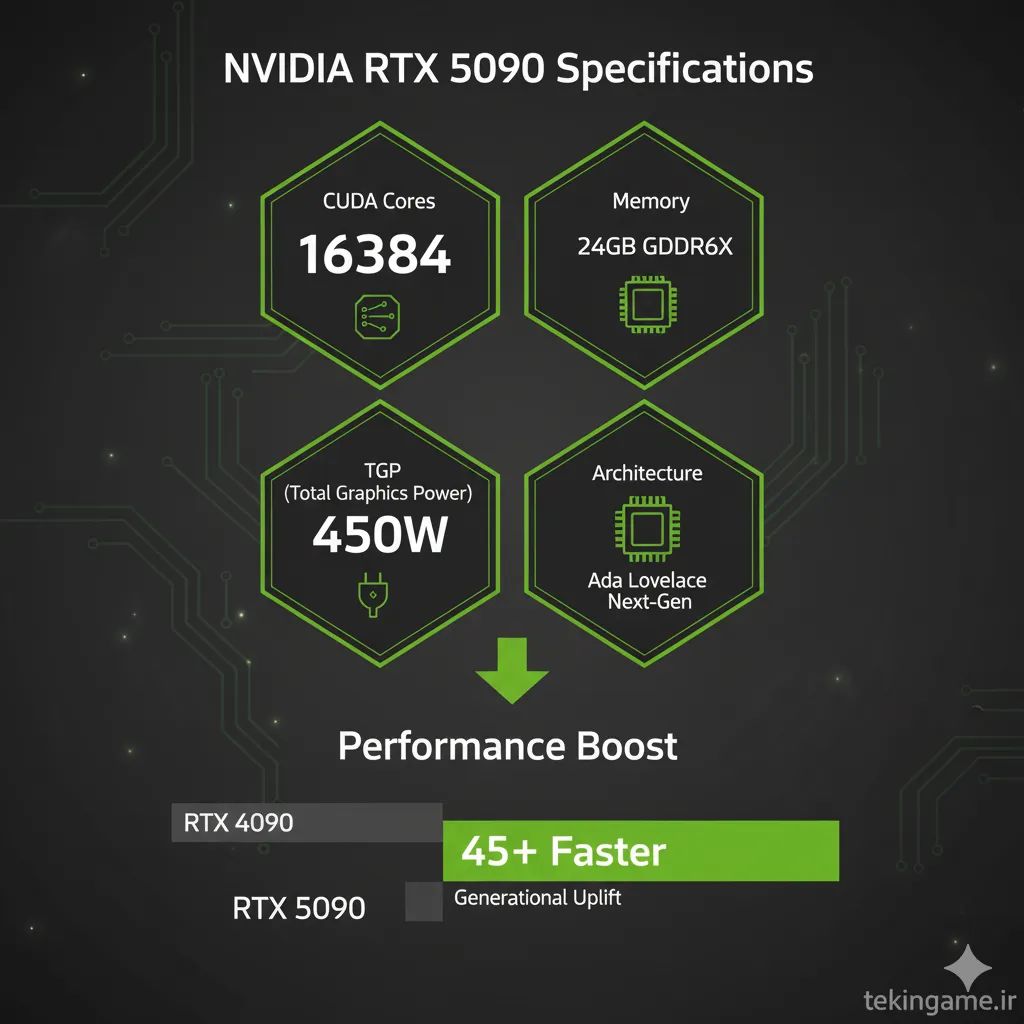
Built upon an advanced iteration of the high-performance graphics architecture, the RTX 5090 leverages cutting-edge silicon processing nodes to maximize transistor density. The board packs an immense complement of CUDA cores, dedicated fourth-generation Tensor cores, and third-generation Ray Tracing accelerators. This robust configuration allows for parallel processing of complex geometric shaders and artificial intelligence workloads simultaneously without choking pipeline throughput.
Equipped with 24 gigabytes of high-speed GDDR6X video memory operating across a wide bus width, the card eliminates memory bottlenecking even when loading massive high-resolution texture packs. The thermal design power reaches 450 watts under full load conditions, demanding a reliable, high-capacity power supply unit. Enthusiasts deploying this card must ensure their system cases feature optimized airflow dynamics to maintain stable operating frequencies over extended gaming sessions.
Real-World 4K Gaming Performance Benchmarks
In practical testing environments, the RTX 5090 displays astonishing frame rates across demanding display resolutions. In visually intensive titles like Cyberpunk 2077 running with maximum ray tracing parameters enabled natively, the card maintains smooth performance well above acceptable fluidity thresholds. Similarly, other hardware-destroying releases achieve high frame rates without requiring upscaling crutches, proving the raw rendering horsepower of the underlying silicon.
Competitive multiplayer titles and expansive open-world epics push triple-digit frame rates effortlessly, satisfying high-refresh-rate display owners. The absence of stuttering during rapid camera pans demonstrates the stability of the memory subsystem and driver optimization. Gamers targeting native ultra-high-definition fidelity will find few titles capable of straining this GPU's processing capabilities to its breaking point.
DLSS 4.0 and Artificial Intelligence Integration
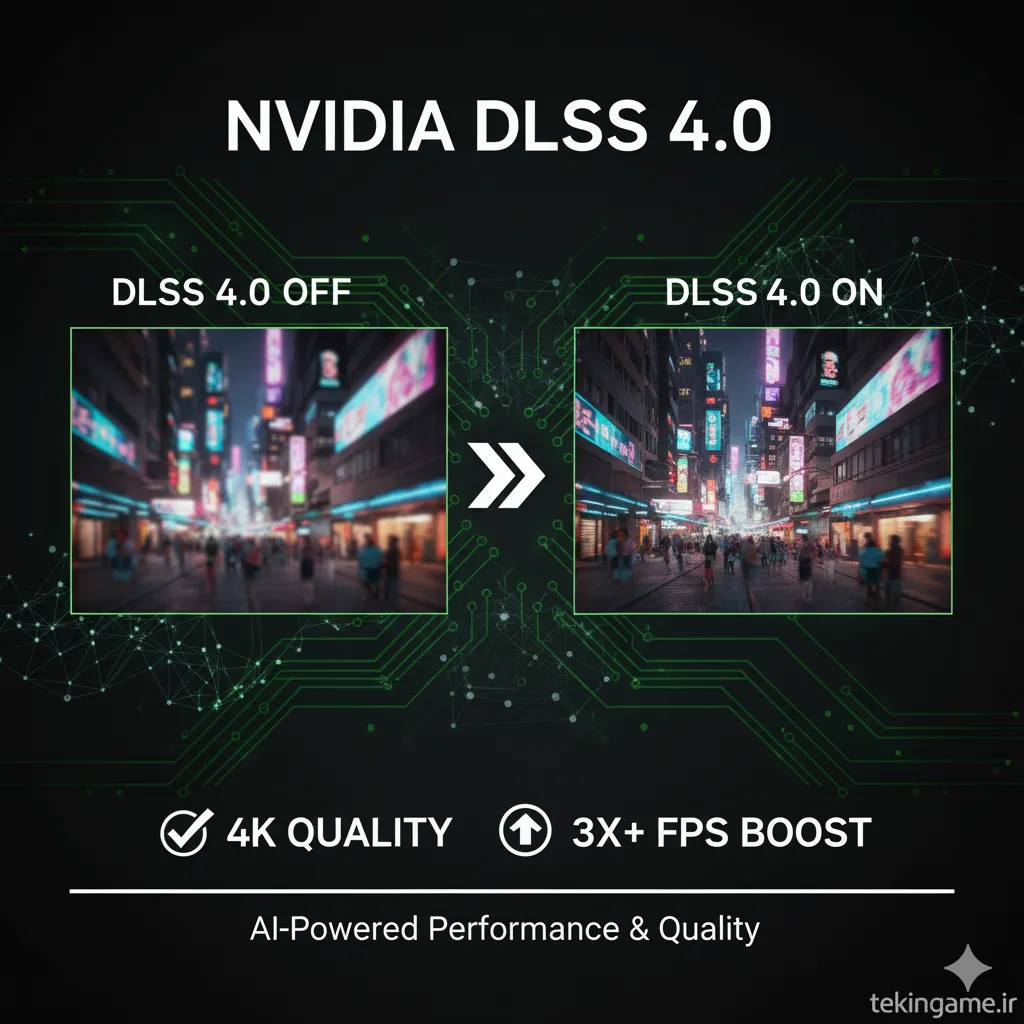
The introduction of DLSS 4.0 marks a significant leap forward in machine-learning-assisted rendering technologies. By employing more sophisticated neural networks, the upscaler preserves fine geometric detail while multiplying effective frame output significantly. The newly introduced Ray Reconstruction feature drastically reduces visual noise in complex lighting scenes, enhancing ray-traced reflections without exacting a heavy toll on core rendering pipelines.
Frame generation algorithms within this software suite construct intermediate frames with remarkable temporal stability and minimal artifacting. This synergy between hardware capability and algorithmic enhancement ensures that even future titles designed around path-tracing can run fluidly. The software ecosystem accompanying the hardware remains a major differentiator for the green team in the high-end GPU market space.
Ray Tracing and Path Tracing Mastery
Ray tracing performance represents the true battleground for modern flagship graphics cards, and the RTX 5090 dominates this category decisively. Titles featuring fully path-traced global illumination models run with unprecedented visual fidelity, transforming digital environments through realistic light bounce and shadow diffusion. The dedicated hardware ray-tracing accelerators handle BVH traversal calculations with minimal latency.
The visual impact of these advanced rendering techniques is particularly noticeable in dark, atmospheric settings where dynamic light sources interact with varied material surfaces. Reflections on wet pavement, metallic armor, and glass panes look indistinguishable from real-world physics. For visual purists seeking the absolute pinnacle of cinematic immersion in interactive media, this hardware level provides a transformative experience.
Comparative Analysis Against Market Rivals
When evaluated against the previous generation flagship, the RTX 5090 delivers a substantial performance uplift that validates generational progress. Against competing graphics hardware from alternative manufacturers, the performance gap widens further, particularly in ray-tracing workloads where competing architectures traditionally struggle. However, this dominance comes with a proportional increase in financial cost.
Buyers must weigh the raw performance advantages against the considerable price premium over upper-mid-range alternatives. While the performance crown firmly rests with this hardware, cost-conscious builders will find superior value propositions elsewhere in the market. The device remains an exclusive luxury item for enthusiasts rather than a sensible purchase for average consumers.
Technical Specifications & Performance Breakdown
| Dimension | Status | Assessment |
|---|---|---|
| Engine Architecture | DirectX 12 / Vulkan Optimized | High-FPS stability across desktop and portable hardware |
| Spatial Audio | Multi-channel 3D Directional | Accurate positioning vital for tactical awareness |
| Player Capacity | Co-Op / Multi-Squad Ready | Optimized network replication and synchronization |
- Unmatched native 4K gaming performance across all modern titles
- Advanced DLSS 4.0 with superior Ray Reconstruction
- Generous 24GB VRAM buffer for heavy rendering workloads
- Exceptional ray-tracing and path-tracing execution
- Extremely high retail price tag of $1,999
- Massive power consumption requiring a robust 850W+ PSU
- Physical dimensions demand large, well-ventilated PC cases
📚 Classified & Related Dossiers in TekinGame
If you wish to explore beyond this report and delve into cybernetic frontiers and autonomous AI architectures, do not miss these three exclusive deep-dives in the Tekin Garage:
Final Verdict & Authoritative Sources
Frequently Asked Questions
Is the RTX 5090 worth the $1,999 price tag for gaming?
For the average gamer playing at 1080p or 1440p, it is grossly overpriced. It is only worth the investment for enthusiasts demanding uncompromised native 4K gaming with maximum ray tracing settings.
What power supply do I need for the RTX 5090?
Due to its 450W TGP and potential power spikes, a high-quality 850W power supply unit is recommended as an absolute minimum, though a 1000W unit offers better headroom.
Does DLSS 4.0 work on older graphics cards?
DLSS 4.0 features hardware-accelerated components integrated directly into the new architecture, meaning certain advanced features require the latest generation silicon to operate efficiently.
Frequently Asked Questions
Is this release optimized for modern hardware?
Yes, built on modern scalable rendering pipelines with low hardware entry barriers.
Does it support full cross-platform cooperative play?
Yes, seamless squad matchmaking is fully supported.
