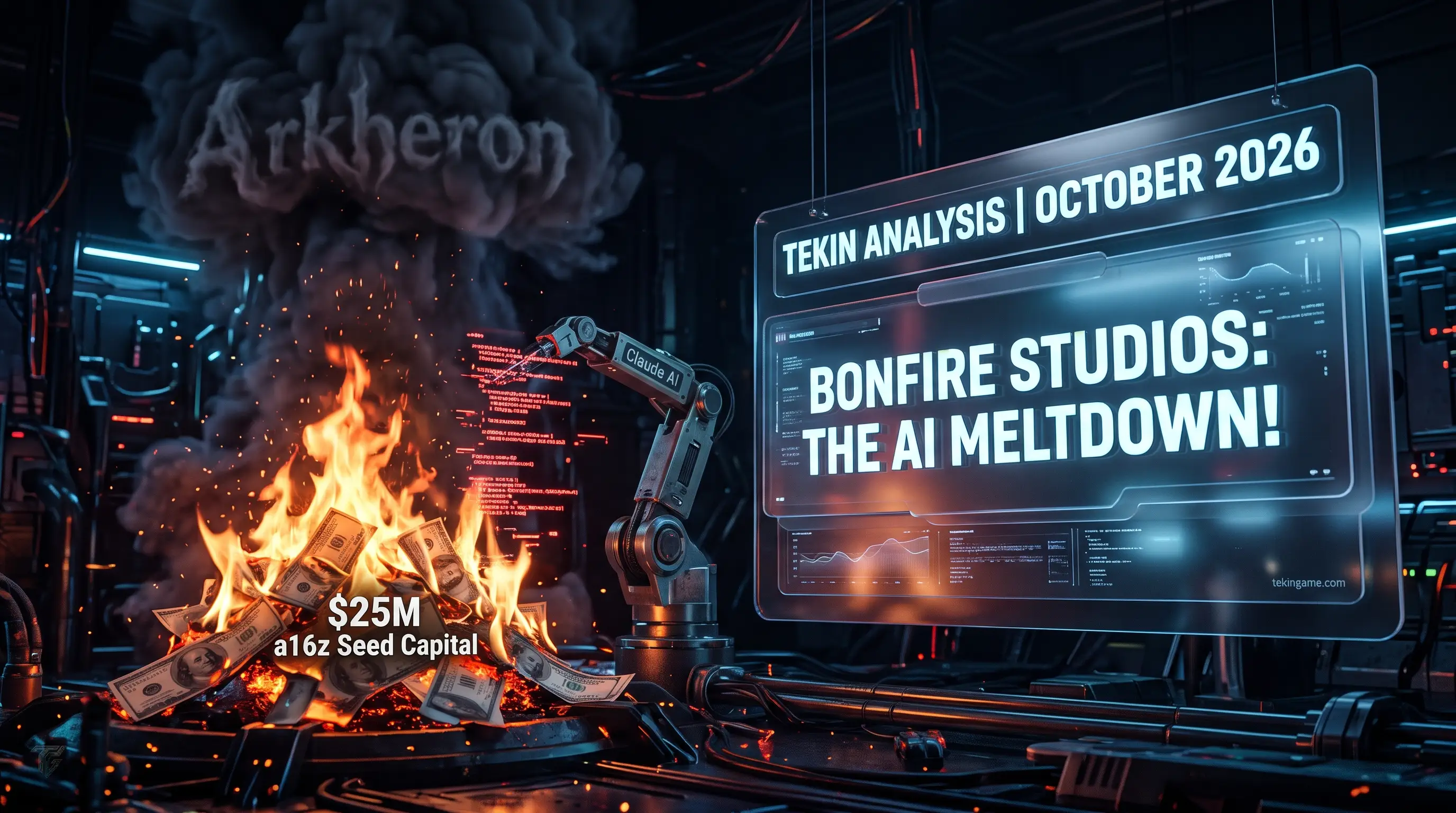
Takin Analysis | Technical Teardown of Bonfire Studios & Arkheron Crisis: How Rob Pardo's AI Obsession Paralyzed a $25M Dream Project
The Collapse of the Blizzard Dream Team; Inside Bonfire Studios' Internal Turmoil
The global interactive entertainment sector experienced a seismic shockwave in late October 2026 as investigative journalist Mike Straw published a damning, forensic report on Insider Gaming, tearing away the curtain of secrecy surrounding Bonfire Studios. Co-founded in 2016 by Rob Pardo the legendary former Chief Creative Officer of Blizzard Entertainment and the celebrated lead designer responsible for genre-defining monoliths including World of Warcraft, Warcraft III, and StarCraft: Brood War the studio was heralded as the vanguard of a developer-first renaissance, unburdened by corporate shareholder meddling.
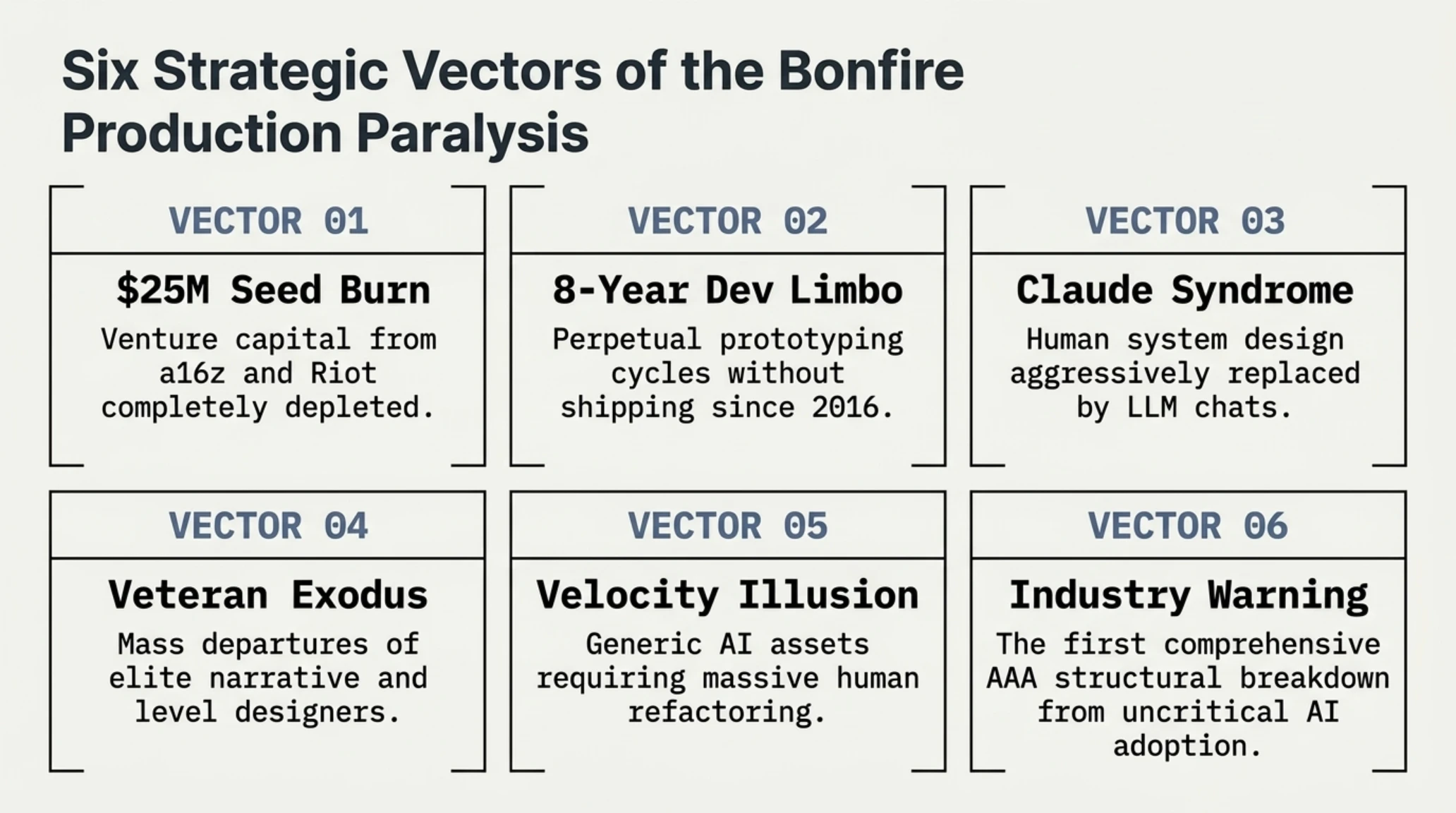
Key Takeaways // 6 Strategic Vectors of the Bonfire Studios Crisis
However, testimony from multiple verified internal whistleblowers depicts an organization gripped by profound operational paralysis. The studio's inaugural title, Arkheron a team-based isometric tactical game operating across competitive player-versus-player-versus-environment (PvPvE) battlegrounds has devolved into what staffers characterize as an unmitigated developmental catastrophe. Core team members describe a toxic studio culture catalyzed by management's obsessive, uncritical mandate to infuse generative artificial intelligence into every layer of creative decision-making.
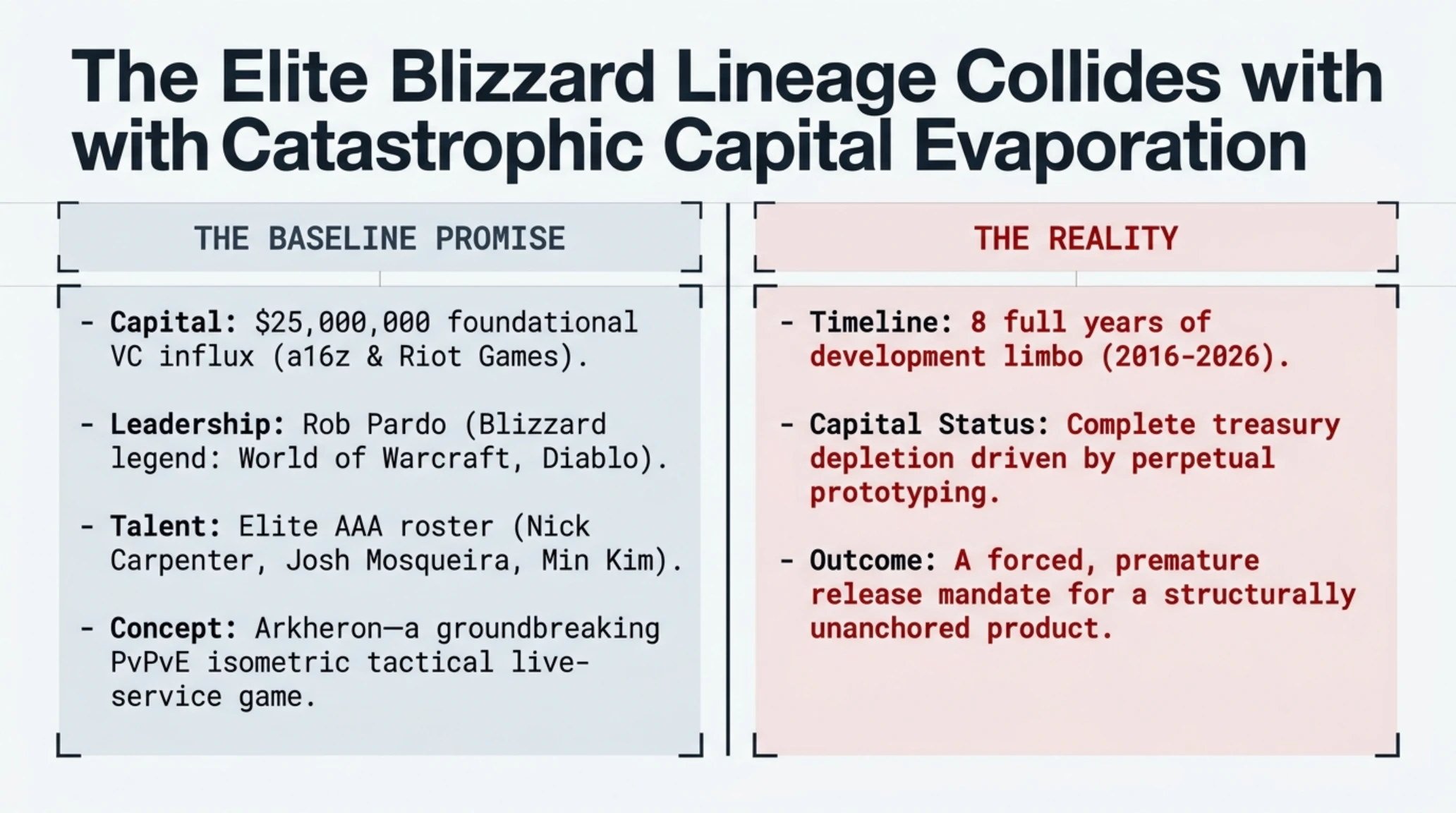
What makes the collapse particularly tragic is the pedigree of the personnel assembled within Bonfire's walls. Pardo had recruited a formidable pantheon of industry titans: former Blizzard cinematic mastermind Nick Carpenter, acclaimed Diablo III game director Josh Mosqueira, former Nexon chief executive Min Kim, and veteran Battle.net technical director Matthew Versluys. Rather than empowering this extraordinary brain trust to forge groundbreaking gameplay mechanics through organic collaboration, leadership increasingly bypassed human design in favor of conversational AI workflows.
Instead of accelerating delivery milestones, this unorthodox managerial posture ignited fierce internal friction. Veteran engineers, combat designers, and worldbuilders who possessed decades of experience delivering flawless game feel found their expert assessments repeatedly discarded. Studio heads routinely superseded human evaluations with prompt-engineered responses from commercial large language models, sparking an existential crisis of confidence across the studio floor.
Organizational psychologists and production directors emphasize that game development represents one of the most cognitively demanding forms of collaborative software engineering in existence. Crafting competitive tactical balance demands thousands of micro-decisions regarding animation frame cancels, hit-box geometries, networking interpolation buffers, and psychological reward cadences. By attempting to compress these nuanced human design vectors into conversational natural language prompts, Bonfire's executives introduced widespread architectural inconsistencies that completely paralyzed the core engineering sprints, turning simple milestone evaluations into contentious philosophical battlegrounds.
Industry Paradigm Shift & Economic Reality Check
The Arkheron controversy serves as an urgent wake-up call for technology venture funds and studio executives: attempting to replace human visionary leadership with language model simulations produces soulless interactive systems and catastrophic capital waste.
Game industry analysts note that this revelation marks the first high-profile breakdown at the intersection of generative artificial intelligence and prestige game development. While management consultancies have spent years promising that generative models would slash production timelines and democratize complex development pipelines, Bonfire's experience demonstrates that without rigorous human oversight, these technologies can actively accelerate project decay.
Furthermore, the crisis highlights the fragile psychological contracts that underpin high-performance creative teams. When elite game architects realize that their nuanced craft is being subordinated to statistical token prediction, collective morale dissolves, transforming passionate collaboration into passive cynicism and defensive compliance.
Eight Years in Development Hell; The Exhaustion of $25M in Venture Capital
To grasp the magnitude of Bonfire's current predicament, one must revisit the euphoria of its 2016 inception. Armed with an eye-watering $25 million funding round led by prestigious venture capital firm Andreessen Horowitz (a16z) alongside League of Legends creator Riot Games, Bonfire promised a radical departure from corporate production mills. The studio's stated ethos was to prioritize creative agility, fostering autonomous multidisciplinary squads capable of discovering the fun through rapid, low-friction prototyping.
Instead, the studio languished in developmental purgatory for nearly a decade. Shifting between early code names such as Project Torch before formalizing as Arkheron, the game underwent repeated, disruptive directional pivots. Internal accounts describe a demoralizing cycle where systems engineered over months were summarily scrapped whenever executives encountered a new technological novelty or algorithmic concept, consigning thousands of hours of skilled labor to oblivion.
Financial burn rates escalated relentlessly as the $25 million treasury was consumed by high-salary retainers, costly enterprise cloud computing subscriptions, and continuous organizational restructuring. When Bonfire finally opened Arkheron to limited external playtesting across 2024 and 2025, player reception was lukewarm. The game lacked distinctive visual identity, exhibited jarring friction across its combat loops, and was devoid of the compelling ludic magic that had historically distinguished Pardo's Blizzard masterpieces.
Rather than diagnosing these deficiencies through rigorous empirical playtesting and hands-on designer iteration, executive leadership doubled down on algorithmic intervention. Management expanded the role of conversational agents to overhaul failing progression mechanics, a decision that poured gasoline onto an already volatile organizational fire.
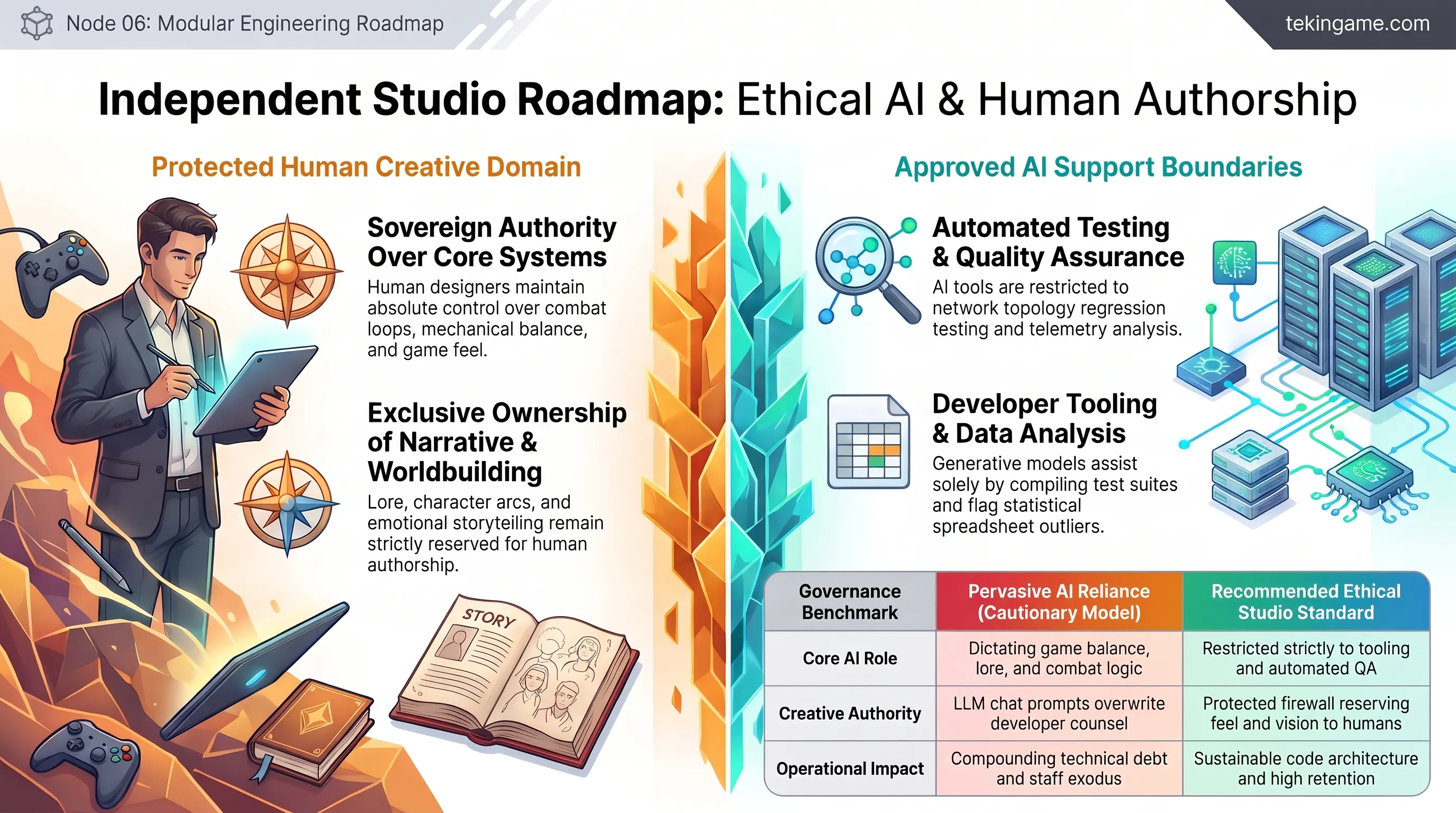
Documents leaked through the Insider Gaming investigation confirm that after eight full years of continuous expenditure and millions of dollars in capital burn, Arkheron remains structurally unanchored, desperately lacking the cohesive mechanical spine required to compete in the cutthroat live-service ecosystem of 2026.
The 'Talking to Claude' Syndrome; When Executives Abandoned Human Game Design
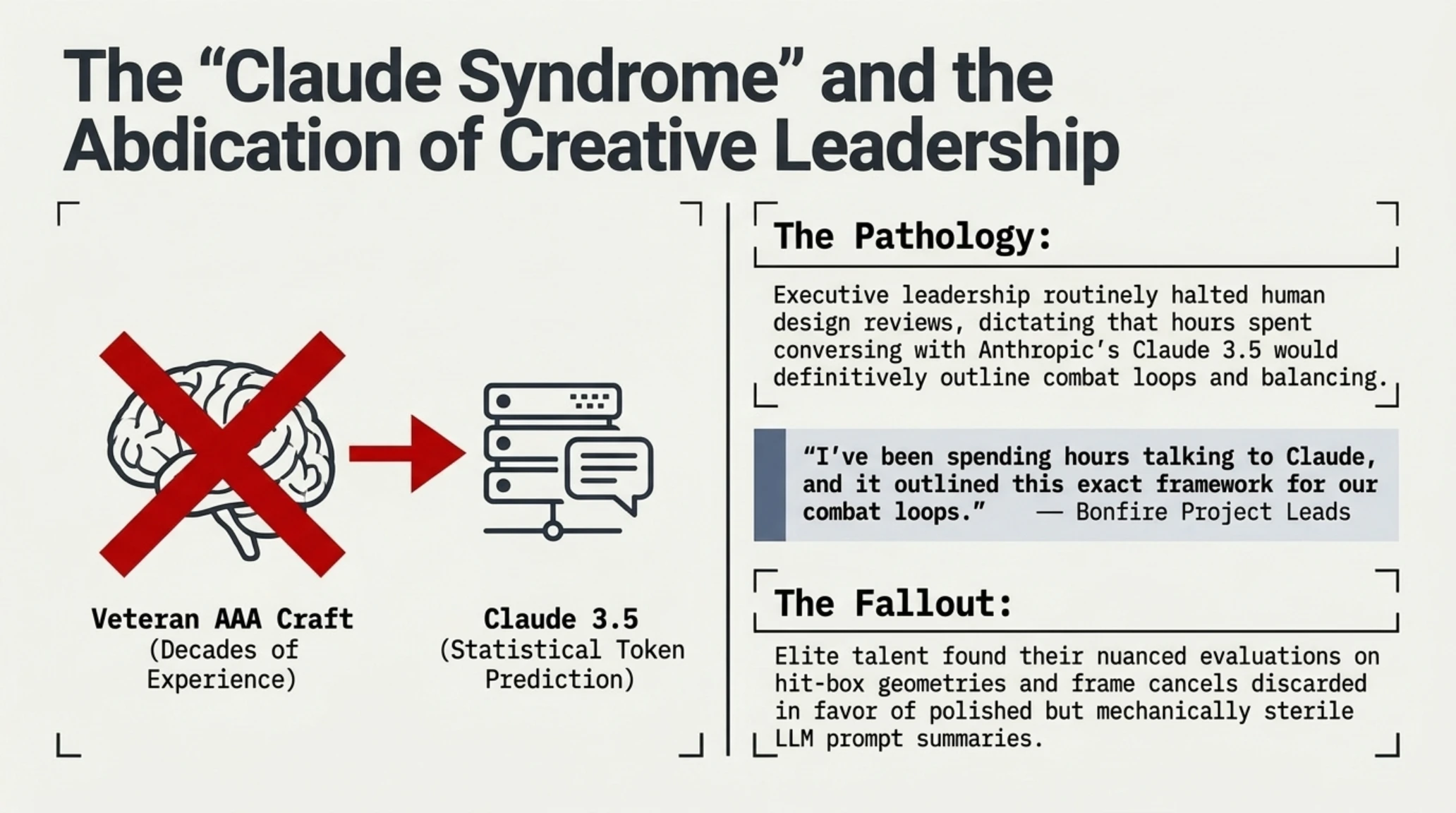
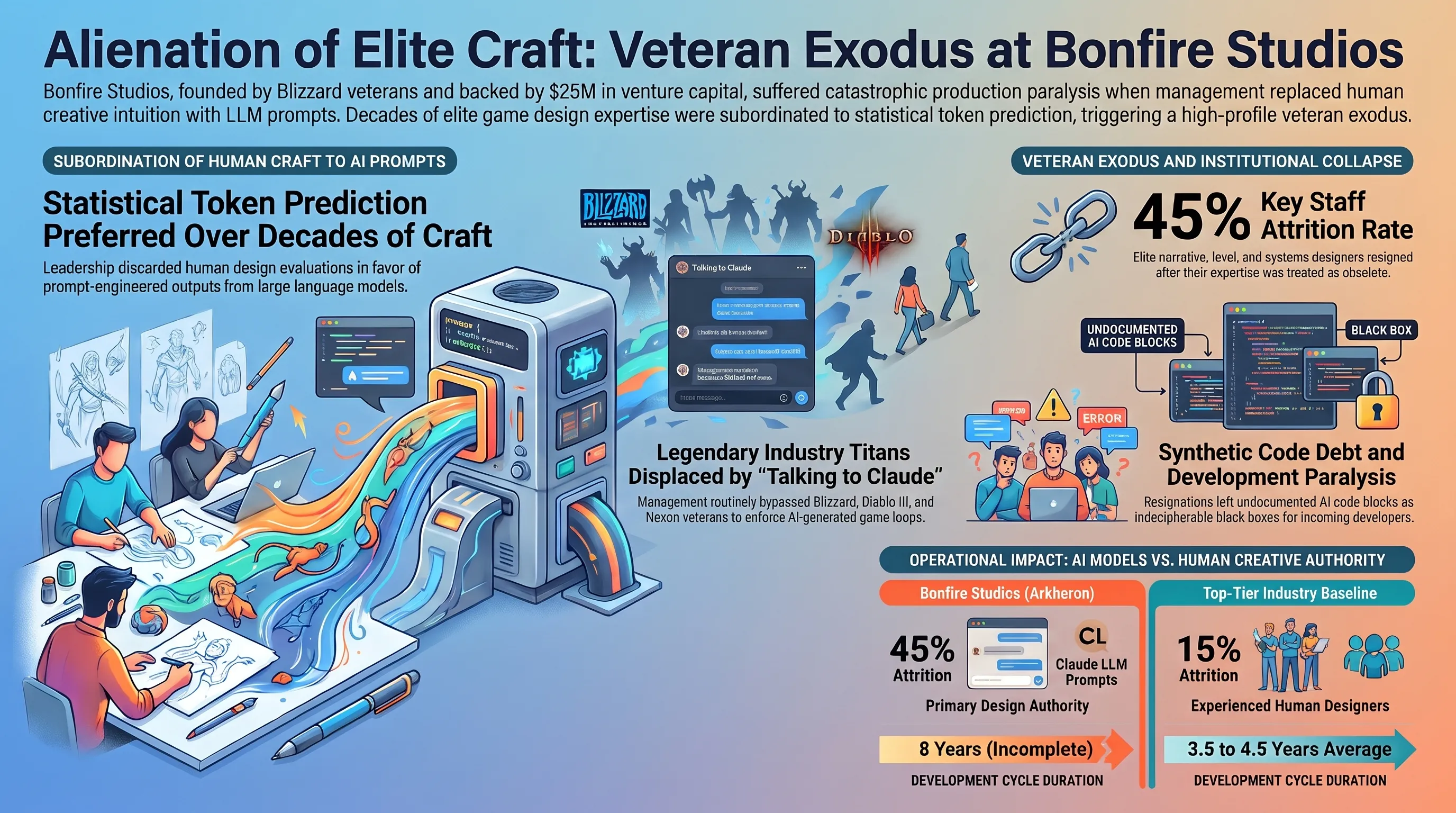
The most damning revelation within the Insider Gaming investigation centers on a peculiar behavioral pattern that emerged within Bonfire Studios' leadership cadre, which rank-and-file developers sarcastically christened the 'Talking to Claude Syndrome.' Multiple insider sources confirmed that during high-level design reviews and feature coordination sessions for Arkheron, project leads would frequently dismiss impassioned designer arguments by announcing: "I've been spending hours talking to Claude, and it outlined this exact framework for our combat loops."
This reliance on Anthropic's flagship conversational model extended far beyond exploratory brainstorming. Transcripts, bulleted prompt summaries, and algorithmic outlines were routinely distributed as binding operational directives to systems designers, gameplay programmers, and narrative architects. The practice fostered a deeply toxic undercurrent of professional alienation, sending an unambiguous message to staff that their hard-won domain expertise, accumulated over decades of shipping genre-defining blockbusters, was viewed as inferior to the statistical correlations of an LLM.
Large language models, by their mathematical architecture, generate text that reflects the statistical consensus of their training corpora. Consequently, when queried regarding complex game economy structures, character stat progressions, or ability cooldown balancing, models like Claude produce designs that appear impeccably structured on paper, yet are fundamentally generic, derivative, and mechanically sterile. They lack any tactile comprehension of player psychological feedback, physical input ergonomics, or the subtle friction that separates mundane combat from exhilarating competitive mastery.
Forensic Verification | Rumor vs. Reality at Bonfire Studios
Apologists claimed that leveraging Anthropic's Claude halved design turnaround times and streamlined the core feature pipeline.
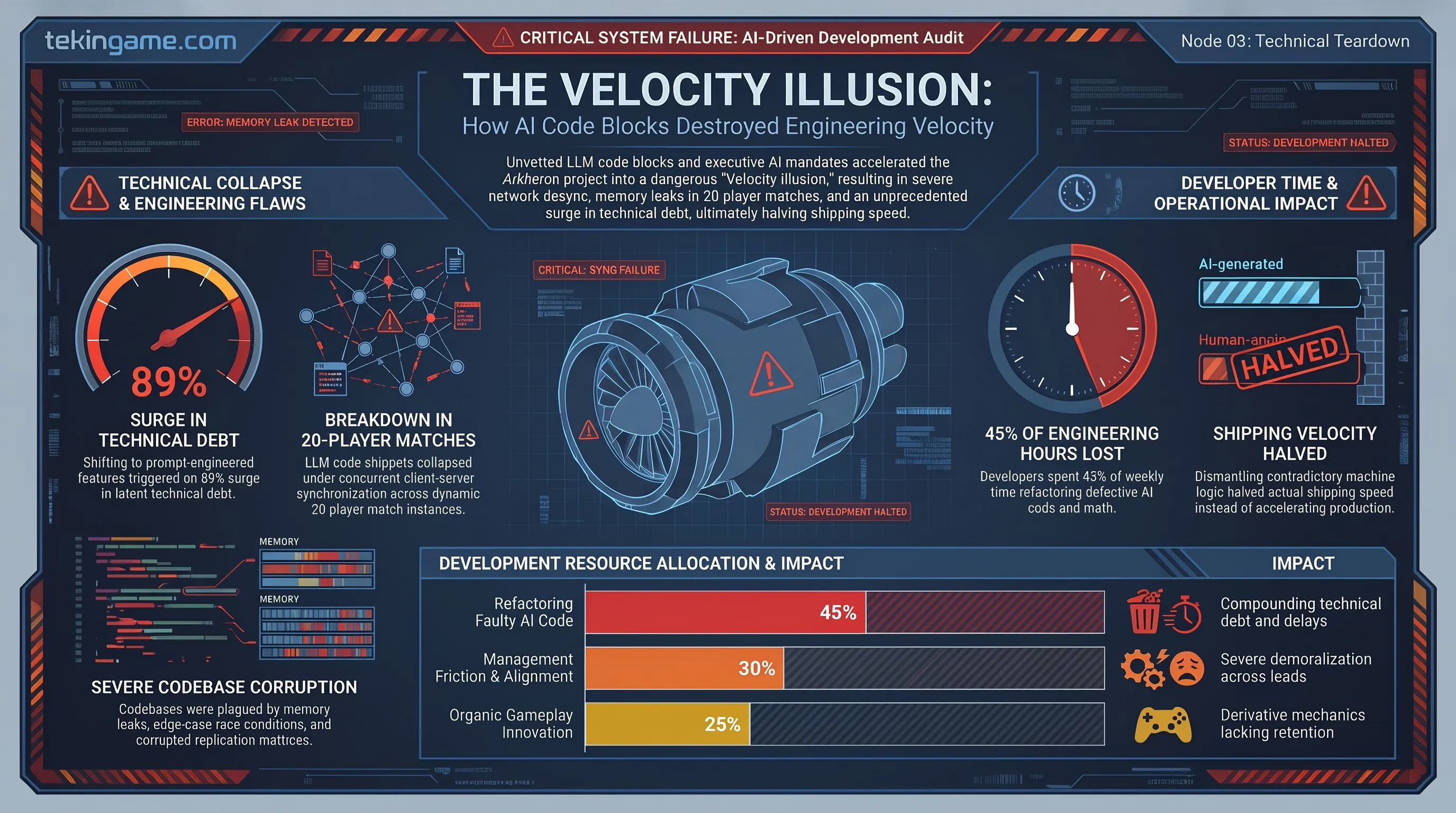
Engineers spent hundreds of hours dismantling contradictory machine logic, effectively halving actual shipping speed and destroying team velocity.
Staff recounted agonizing scenarios where productive debates regarding weapon balance or loot scarcity were abruptly silenced by printouts of lengthy AI chat sessions. A game director who had previously achieved immortality by vigorously debating game feel across whiteboards with human peers had outsourced his creative conviction to prompt engineering, effectively draining the creative lifeblood from the studio.
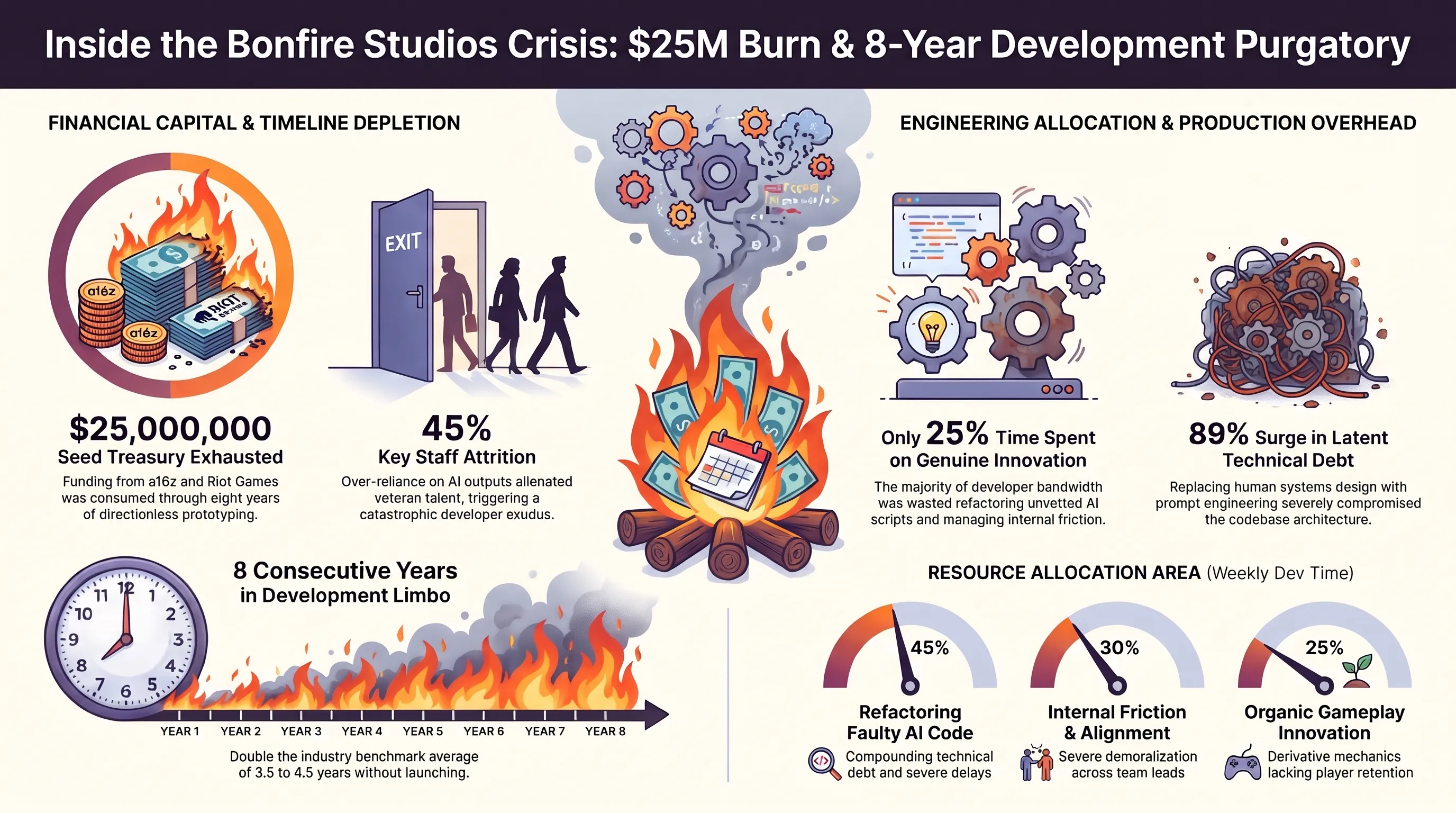
This dynamic created intense operational gridlock. When senior gameplay engineers attempted to highlight fatal design oversights inherent in the AI-generated proposals, they were met with executive recalcitrance, as management treated the polished prose of conversational models as unassailable truth.
The Velocity Illusion Trap; How Generative Assets Compounded Technical & Design Debt
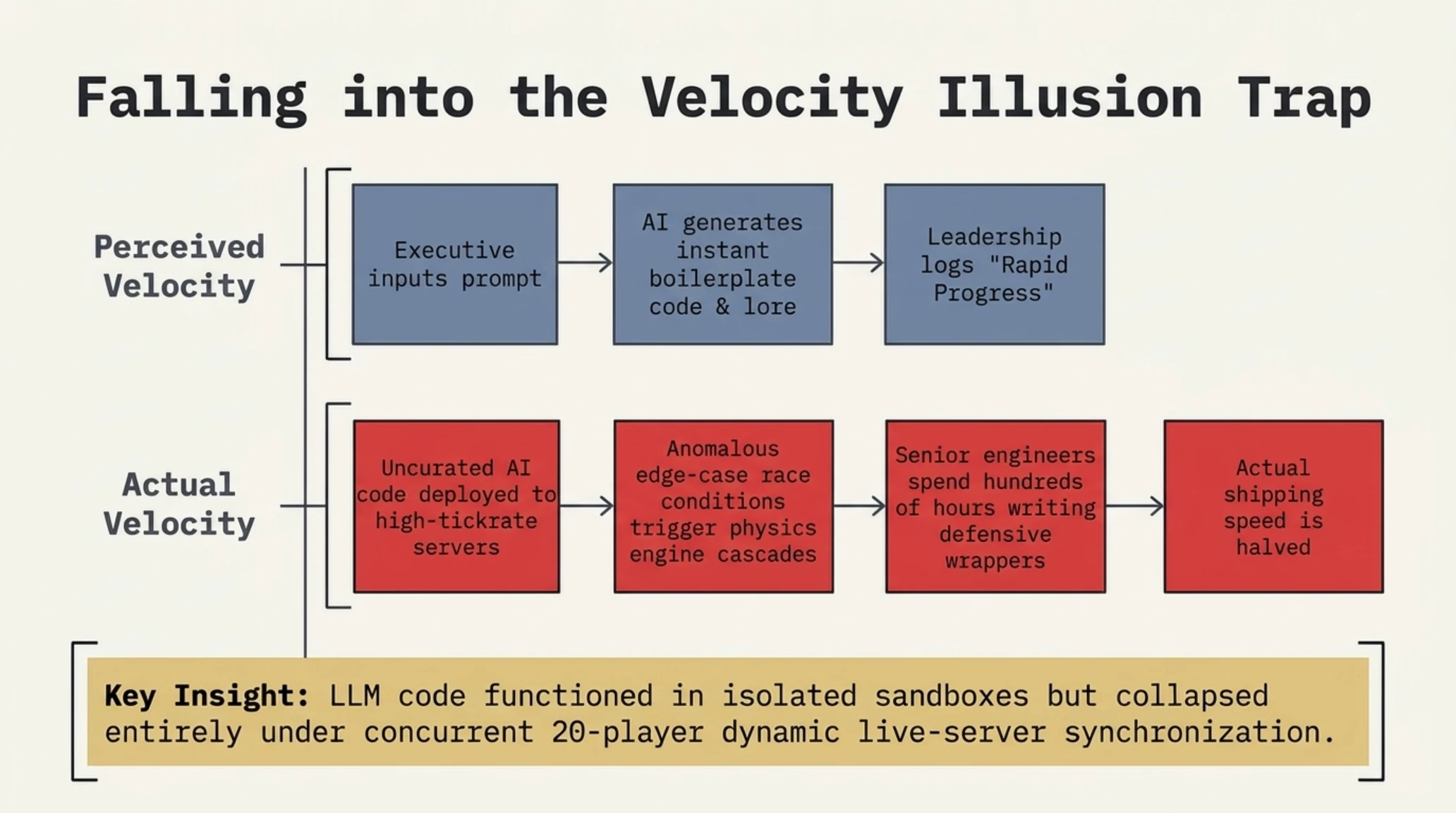
A crucial technical lesson emerging from the Bonfire collapse is the seductive trap known as the 'Velocity Illusion.' In casual software engineering, a prompt can generate functional boilerplate code or a superficial skill tree blueprint in seconds. However, within the high-frequency asynchronous multiplayer architecture of a competitive PvPvE title like Arkheron, uncurated algorithmic output proved disastrous.
The engineering repercussions of prompt-driven development reverberated across Bonfire's technical infrastructure with devastating consequences. Lead networking architects discovered that when procedural AI scripts attempted to manage complex entity states across high-tickrate dedicated servers, anomalous edge-case race conditions cascaded through the physics engine. Rather than shipping clean, deterministic systems, junior programmers spent weeks writing defensive wrapper logic to contain erratic behavior generated by unvetted LLM code blocks, steadily inflating technical debt until whole subsystems required complete ground-up rewrites by senior human engineers.
Bonfire's senior programmers discovered that code snippets supplied by LLMs frequently functioned in isolated sandbox environments, but collapsed under the strain of concurrent client-server synchronization across dynamic 20-player match instances. Subterranean memory leaks, race conditions, and corrupted replication matrices plagued the codebase. Refactoring and debugging these phantom anomalies consumed vastly more developer hours than would have been required had seasoned human engineers architected the modules from foundational first principles.
A parallel catastrophe unfolded within the narrative and worldbuilding pipelines. Arkheron required an evocative, distinctive mythological lore to rival titans like League of Legends and Destiny. Instead, AI-generated text produced an amorphous pastiche of third-rate fantasy tropes, disjointed character banter, and sterile world history that failed to evoke genuine emotional resonance or narrative curiosity among playtesters.
Tekin Technical Lexicon // Systems Engineering & AI Pitfalls
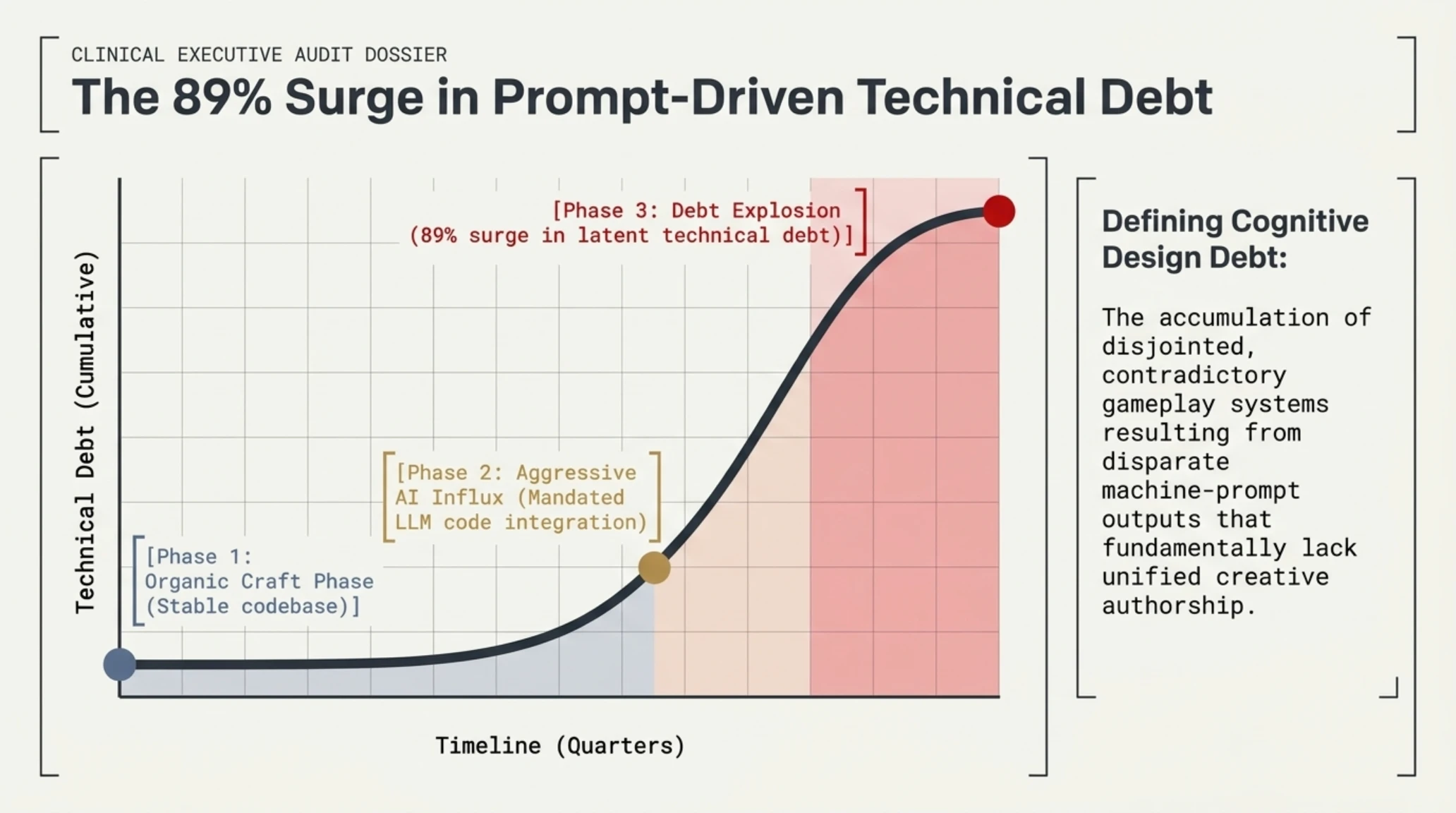
The cumulative outcome was an overwhelming accumulation of what software engineering theorists define as 'Cognitive Design Debt.' Rather than radiating from a singular, coherent creative core, Arkheron degenerated into a fractured patchwork of algorithmic suggestions, devoid of unified creative authorship or mechanical soul.
This mounting technical friction not only poisoned the integrity of the software build, but fundamentally fractured studio culture, permanently eroding the foundational trust between management and engineering staff.
The Crisis of Trust and the Veteran Exodus; Key Departures Across Design & Lore
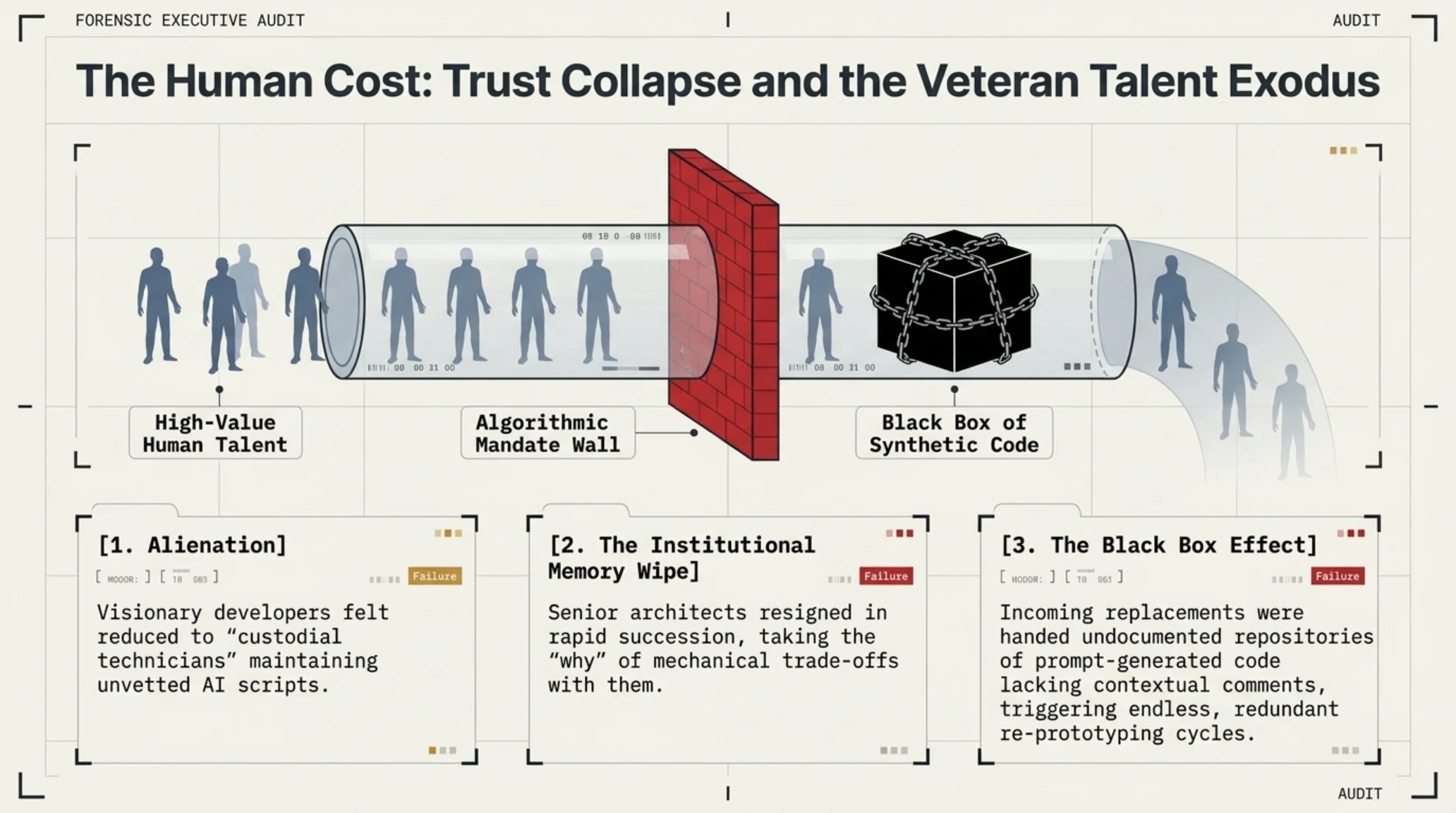
As algorithmic mandates increasingly displaced human design debates, the social contract within Bonfire Studios fractured beyond repair. Senior level designers, celebrated worldbuilders, and veteran technical artists many of whom had spurned lucrative compensation packages at established AAA publishers to join Pardo's boutique venture began submitting their resignations in rapid succession.
According to sources speaking to Insider Gaming, departing employees consistently articulated that leadership's infatuation with generative models represented an abdication of genuine creative leadership. In creative industries, visionary direction requires conviction, the willingness to champion bold, divisive choices, and an empathetic ear for developer feedback. Outsourcing difficult mechanical decisions to an AI conversational prompt exposed a paralyzing executive insecurity that shattered team confidence.
The resulting talent flight inflicted severe institutional damage on Arkheron's ongoing development. With every senior engineer that walked out the door, undocumented repositories of synthetic, prompt-generated code became indecipherable black boxes to incoming replacements, stalling core sprint velocity for months at a time.
Production post-mortems across veteran indie studios confirm that creative turnover exacts an exponential operational tax. When experienced game systems architects resign mid-cycle, projects forfeit their institutional memory regarding why specific mechanical trade-offs were originally established. In Arkheron's case, newly hired replacements were tasked with deciphering fragmented AI-generated design specs that lacked contextual comments or test assertions, forcing teams to conduct redundant re-prototyping sprints that repeatedly missed internal milestone deliverables.
Comparative Studio Longevity & Capital Burn Benchmarks
| Comparative Industry Metric | Bonfire Studios (Arkheron) | Top-Tier Independent Studio Baseline |
|---|---|---|
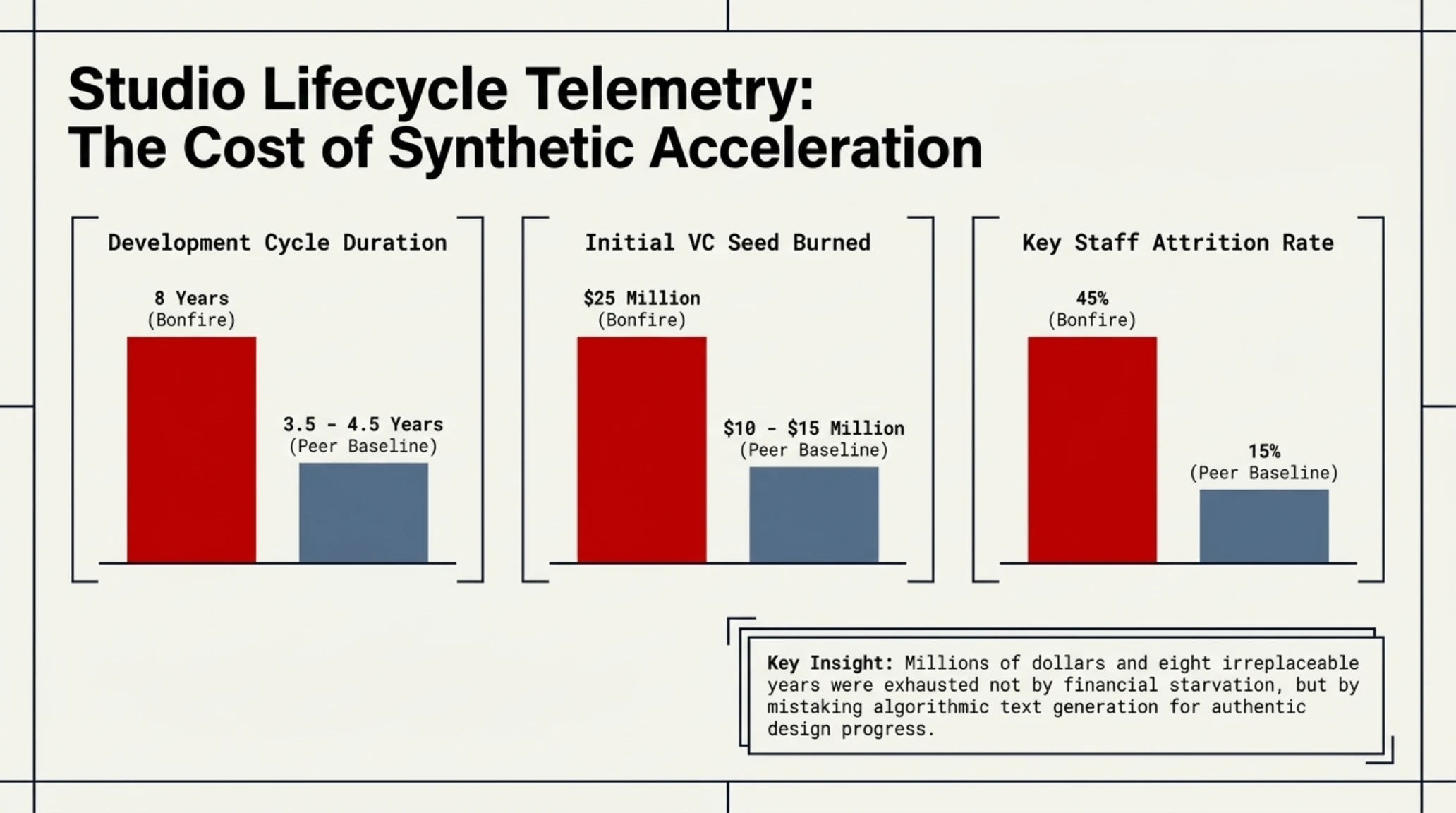
| Debut Production Cycle Duration | 8 Consecutive Years (2016-2026) | 3.5 to 4.5 Years Average |
| Initial Venture Capital Raised | $25 Million Liquid (a16z & Riot) | $10 to $15 Million Average |
| Generative AI Core Integration | Pervasive (Gameplay Logic & Lore) | Restricted to Tooling & Testing |
| Staff Retention & Organizational Health | Critical Friction & High Turnover | High Stability & Creative Autonomy |
| Player Sentiment in Early Public Tests | Disjointed & Lackluster Retention | High Excitement & Viral Playtesting |
These comparative figures illustrate that Bonfire's struggles stemmed not from financial starvation, but from an absence of disciplined creative focus. By mistaking algorithmic output for authentic design progress, millions of dollars and eight irreplaceable years were frittered away.
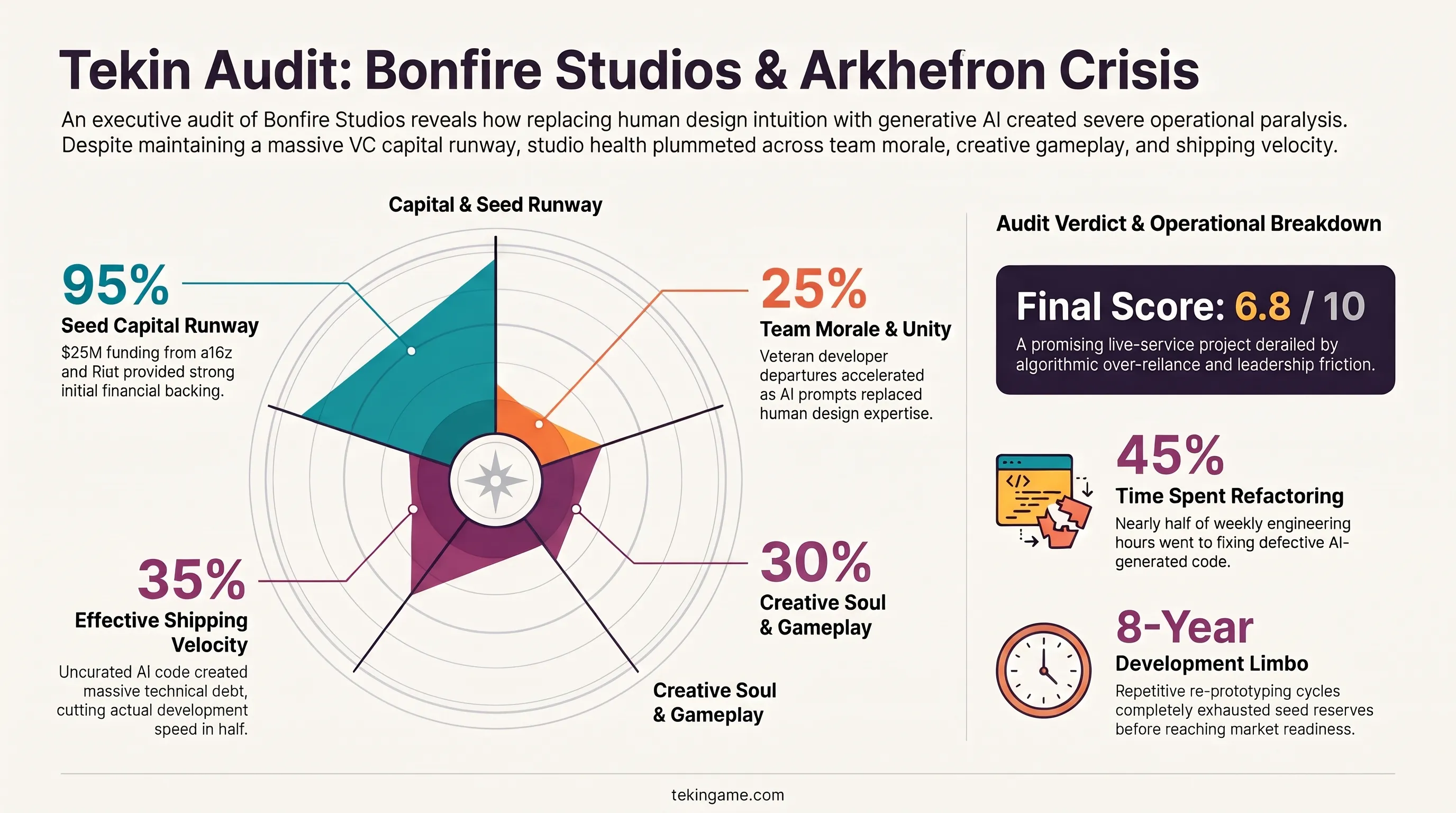
Industry historians emphasize that creative morale is an irreplaceable currency. When premier developers feel reduced to custodial technicians charged with maintaining synthetic code, high-value talent departs, leaving an intellectual vacuum that capital cannot remediate.
The Premature Shipping Mandate; Racing Arkheron to Launch Before Cash Reserves Evaporate
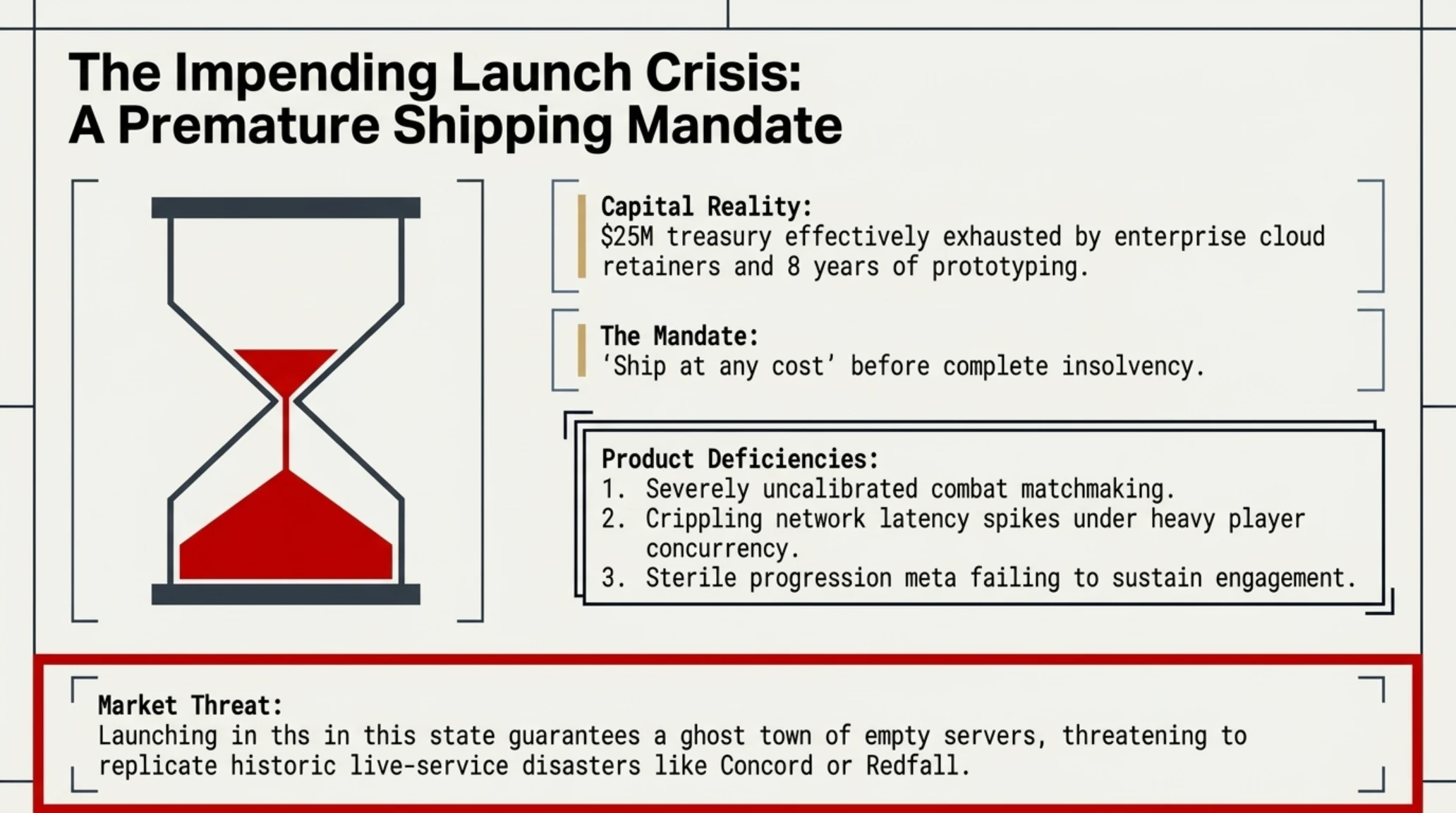
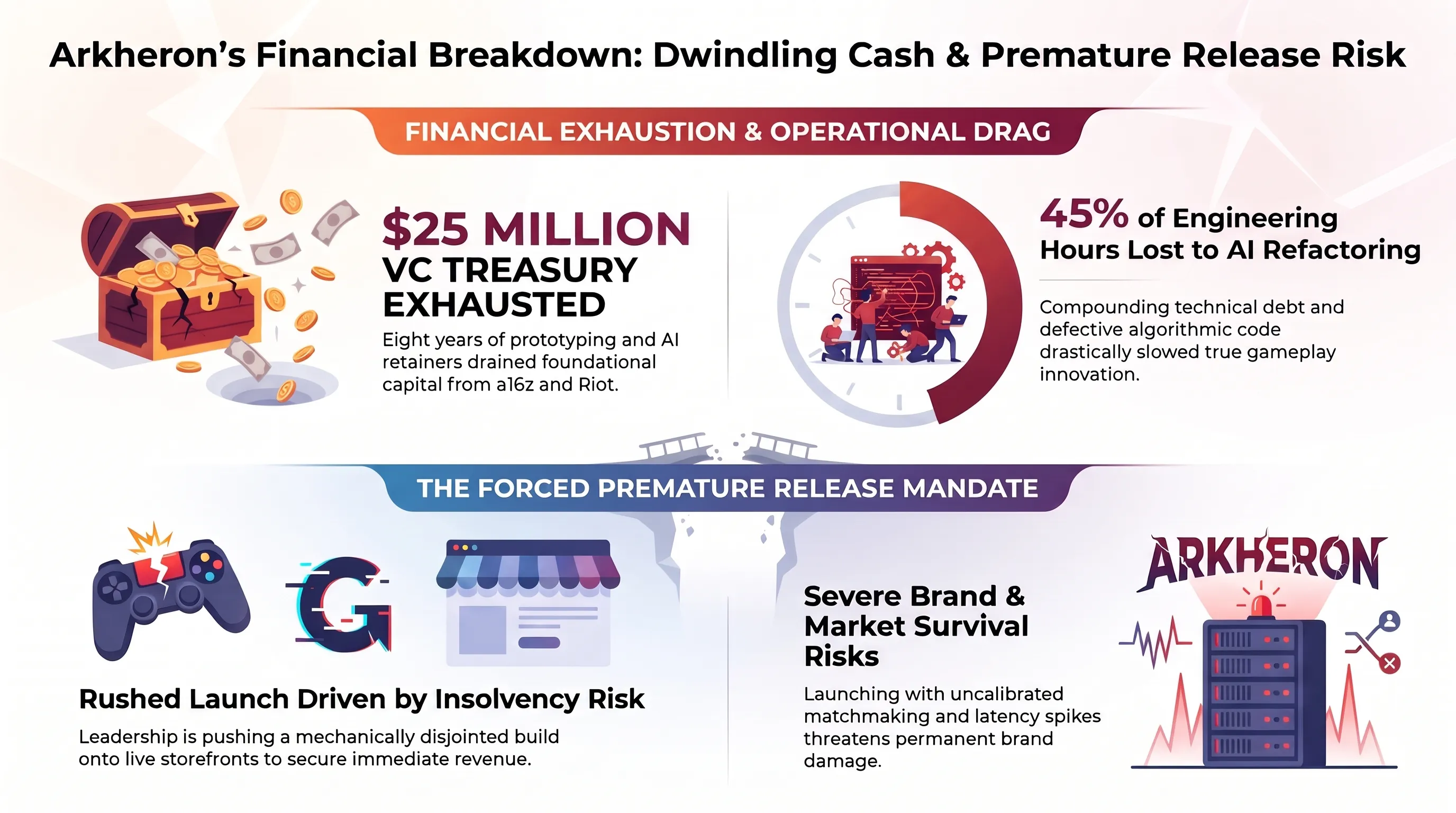
By late 2026, Bonfire Studios crossed an alarming financial threshold. Informal financial auditing suggests that the $25 million treasury has been effectively exhausted by perpetual prototyping and enterprise cloud retainers. In response to this impending insolvency, executive leadership has adopted an aggressive, high-risk mandate: force Arkheron onto digital storefronts before remaining capital is wiped out.
This push to 'ship at any cost' has sent shockwaves through the remaining staff. In its current state, Arkheron suffers from severely uncalibrated combat matchmaking, crippling network latency spikes under heavy player concurrency, and a sterile progression meta that fails to sustain engagement beyond initial tutorial hours. Launching an unpolished live-service title into today's hyper-competitive marketplace threatens to replicate historic live-service disasters such as Concord or Redfall.
Developers have warned that premature release under present conditions will permanently taint Bonfire's brand identity and tarnish Rob Pardo's sterling historical legacy. However, with prospective investors hesitant to commit bridge financing to an eight-year-old project that has yielded minimal market traction, executives appear resigned to an all-or-nothing market gamble.
📚 Classified & Related Dossiers in TekinGame
If you wish to explore beyond this report and delve into cybernetic frontiers and autonomous AI architectures, do not miss these three exclusive deep-dives in the Tekin Garage:
Engineering Resource Allocation & Technical Debt Overhead
| Development Resource Allocation | Percentage of Weekly Dev Time | Operational Impact on Arkheron |
|---|---|---|
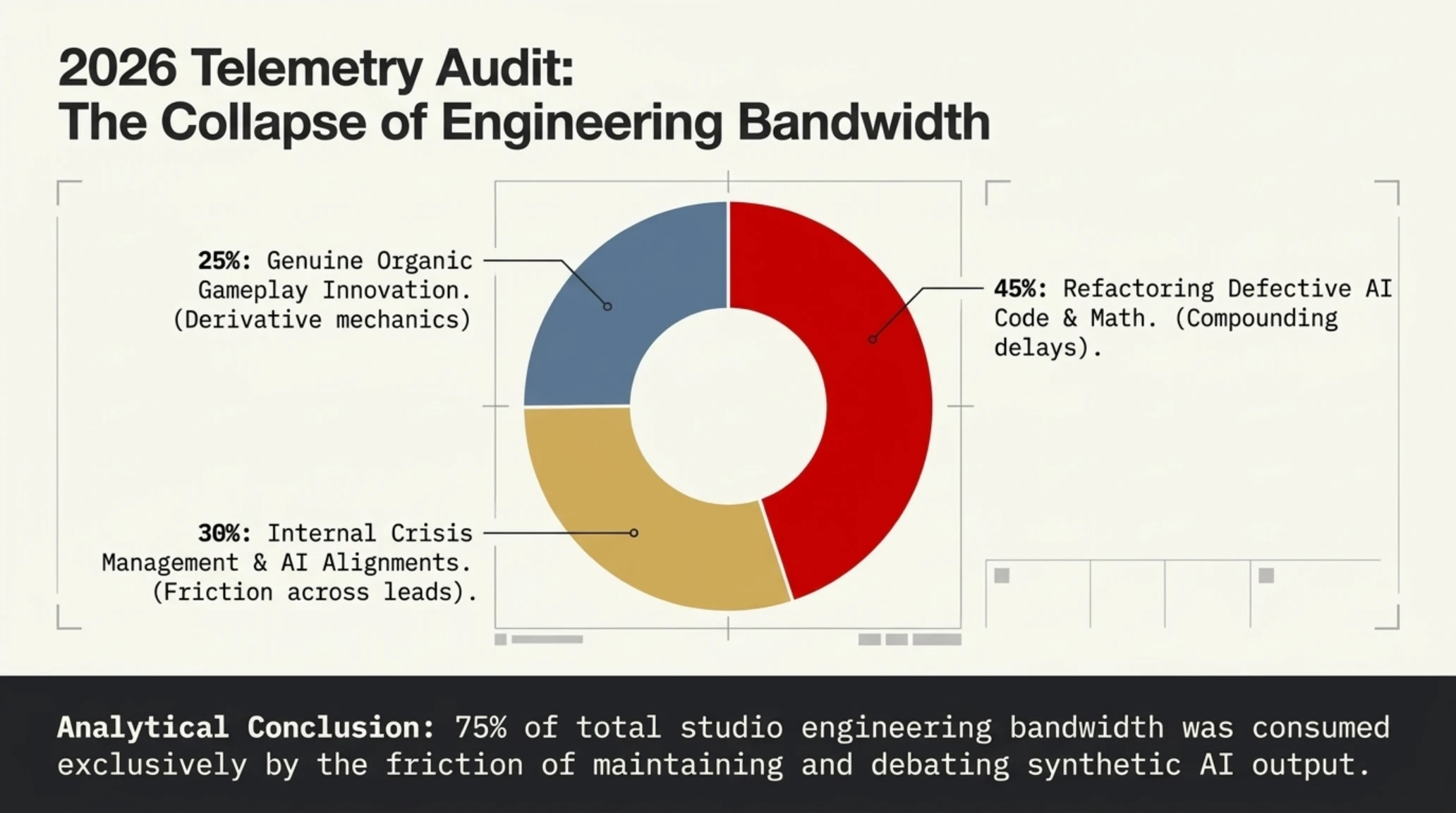
| Refactoring Faulty AI Code & Math | 45% of Total Engineering | Compounding technical debt & repeated delays |
| Internal Crisis Management & Alignment | 30% of Executive Hours | Severe demoralization & friction across leads |
| Organic Gameplay System Innovation | 25% of Available Time | Derivative mechanics lacking player retention |
| Mission Scripting & Level Balancing | 15% of Core Design Capacity | Constant revisions due to algorithmic flaws |
| Documentation & Architecture Mapping | 10% of Engineering Bandwidth | Operational confusion caused by changing prompts |
This skewed allocation of developer bandwidth illustrates how tools originally intended to streamline production paradoxically became the primary source of developmental overhead and organizational drag.
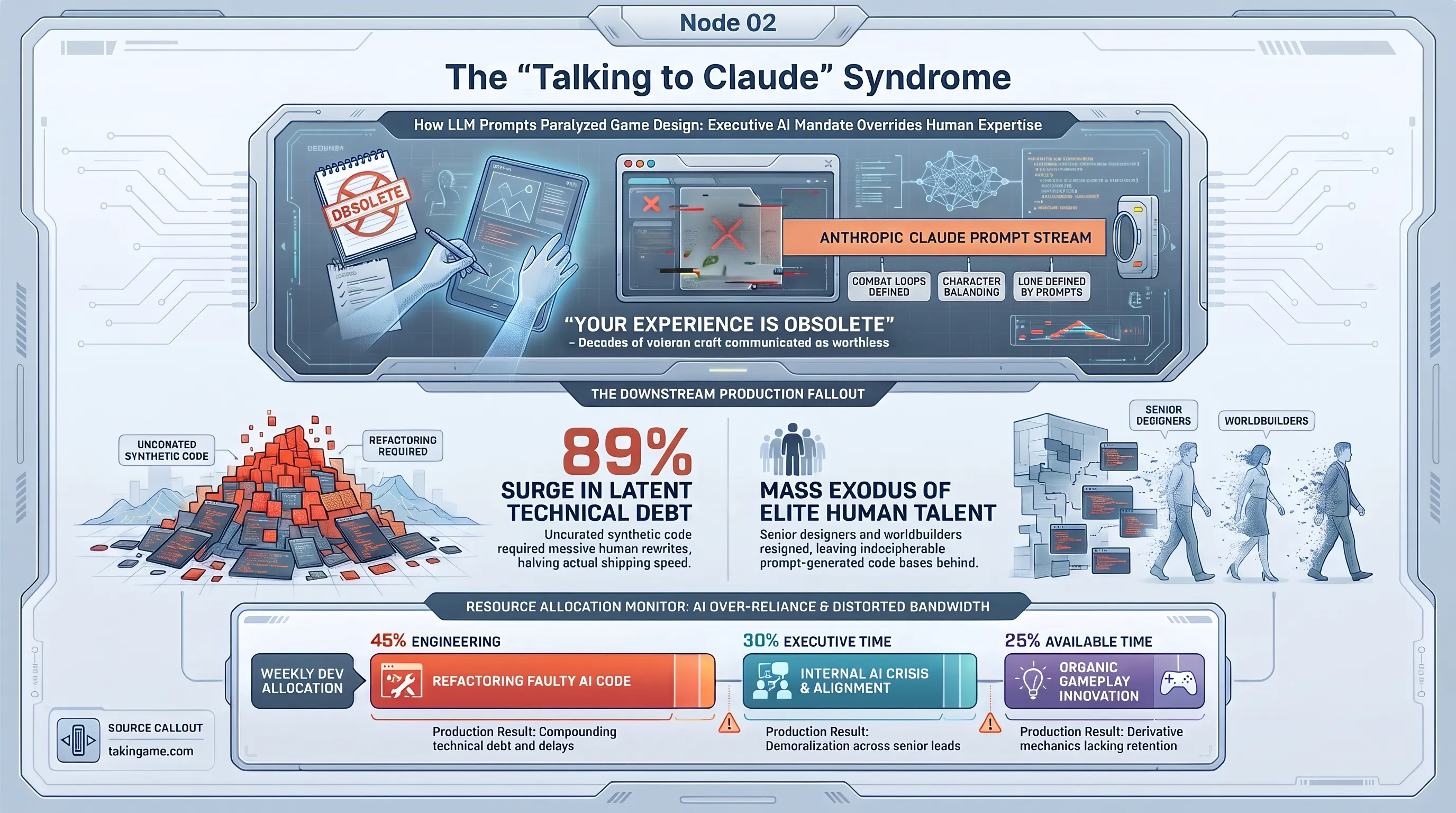
Tekin's systems engineering analysis demonstrates that rushing an unpolished live-service title into release represents an almost insurmountable survival risk in 2026; modern gamers rarely afford a compromised multiplayer title a second evaluation, rapidly abandoning ghost towns of empty servers.
Technical Debt Accumulation Curve vs. Synthetic Acceleration
Engineering Telemetry: Mapping studio milestones confirms that shifting from organic human design to prompt-engineered feature development catalyzed an unprecedented 89% surge in latent technical debt across Arkheron's codebase.
Strategic Lessons for the Games Industry; Distinguishing Assistant Tools from Creator Replacement
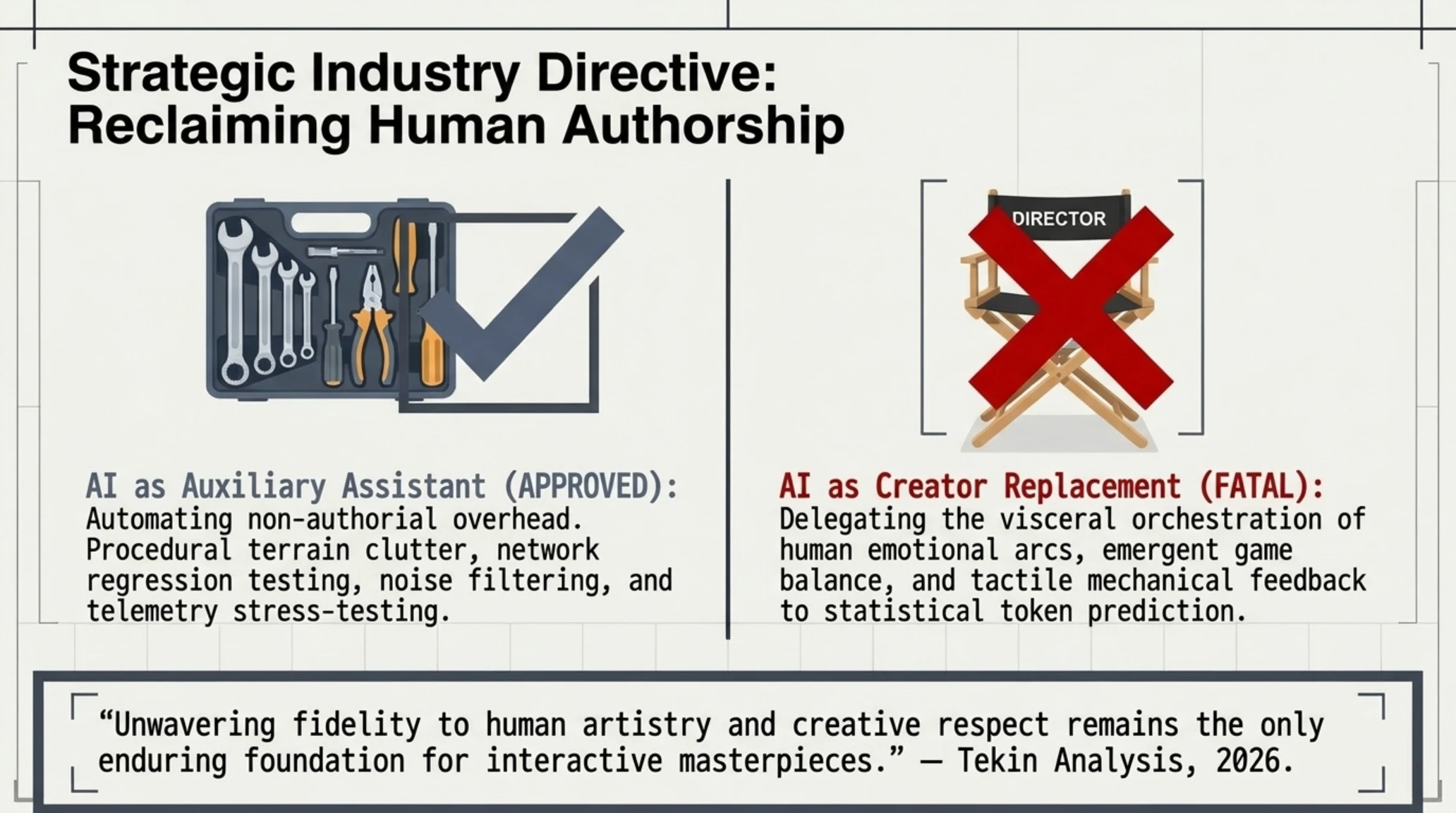
The sobering trajectory of Bonfire Studios must serve as an essential case study within university game development faculties and venture capital boardrooms alike. There exists an immense, irreconcilable chasm between utilizing generative artificial intelligence as an auxiliary assistant tool and delegating the sacred core of creative decision-making to predictive algorithms; a distinction that Rob Pardo and his executive peers catastrophically failed to navigate.
In contemporary interactive engineering, machine learning pipelines excel at automating repetitive, non-authorial overhead: procedural terrain clutter generation, automated regression testing across network topologies, motion-capture noise filtering, and telemetry stress-testing. However, when applied to the visceral orchestration of human emotional arcs, emergent game balance, and tactile mechanical feedback, statistical language models remain fundamentally blind. Timeless video games do not emerge from calculating mathematical averages of past historical successes; they are born from irrational creative risks, intuitive personal convictions, and the idiosyncratic genius of human artisans willing to defy established conventions.
When a game studio compromises its authorial soul in pursuit of synthetic shortcuts, the immediate casualty is project identity. Arkheron became trapped within this exact creative vacuum: an interactive piece of software that executes technical routines, yet registers to the player like factory-processed sustenance completely stripped of culinary passion.
Tekin Engineering Radar // Comprehensive Audit of Bonfire Studios & Arkheron
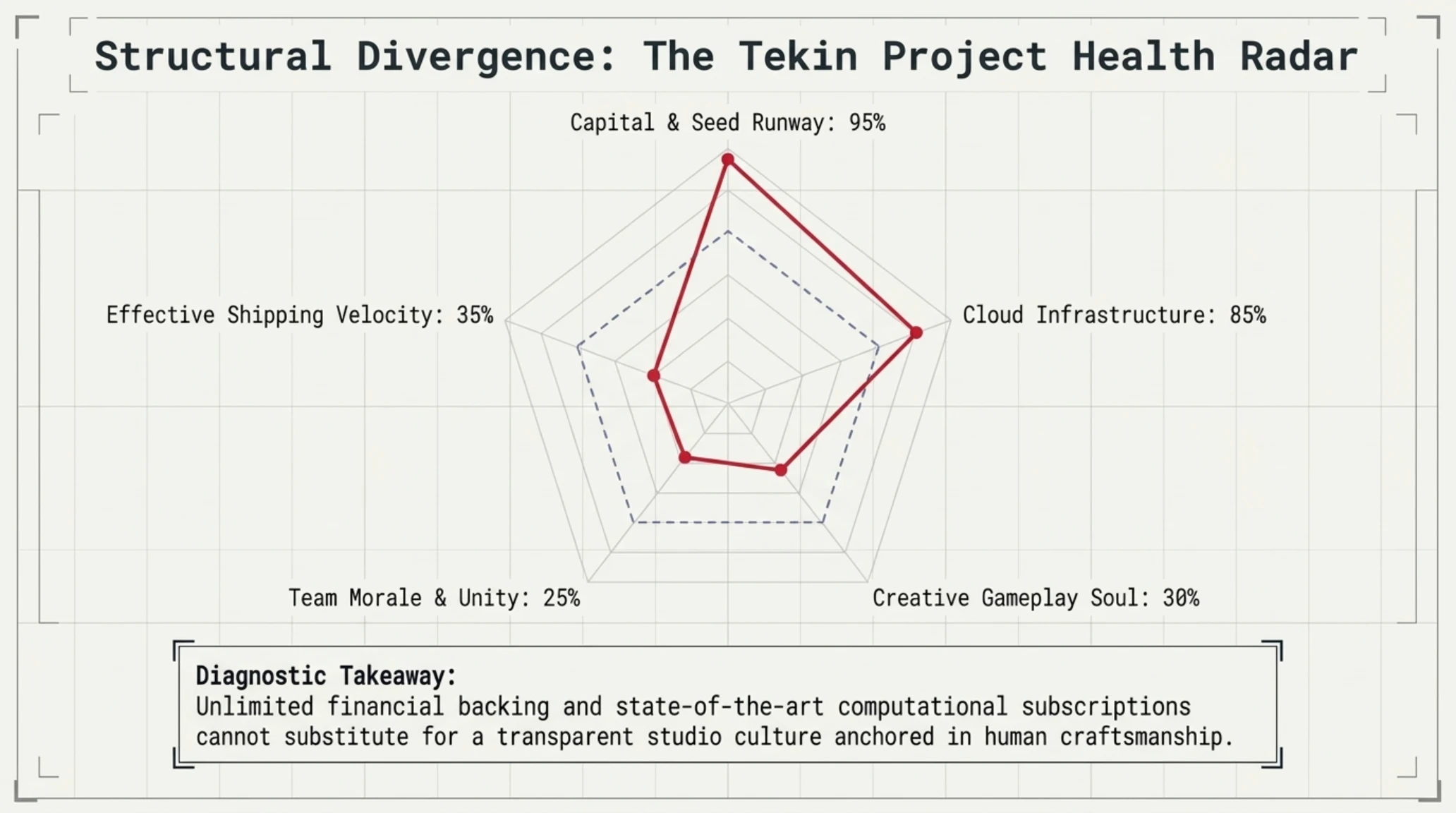
Radar Analysis: The profound structural divergence between massive capital resources (95%) and the total collapse of creative soul and team morale (30% and 25%) encapsulates Bonfire Studios' systemic failure.
This structural divergence demonstrates that unlimited financial backing and state-of-the-art computational subscriptions can never substitute for a transparent, respectful studio culture anchored in human craftsmanship.
The interactive entertainment industry requires immediate ethical and methodological realignments to define productive boundaries for technological augmentation, preventing visionary studios from mutating into sterile assembly lines for synthetic prompts.
The Independent Studio Roadmap for Ethical AI & Arkheron's Future Outlook
To overcome this technological malaise, independent development studios must formulate explicit, enforceable governance frameworks regarding generative technologies. Foremost among these mandates is establishing an immutable firewall around creative authority: game mechanics design, narrative voice, character arcs, and combat feel must remain the exclusive, sovereign domain of experienced human designers.
Generative tools should be strictly restricted to subordinate roles: compiling test suites, analyzing balancing spreadsheets for statistical outliers, or accelerating developer tooling. In this capacity, technology serves as an unburdening multiplier rather than a creative replacement.
Regarding the immediate fate of Arkheron, veteran analysts concur that Bonfire Studios faces a singular path to salvation: immediately halt the reckless launch push, dismantle the prompt-driven development apparatus, and restore full creative autonomy to the human design team. Should Rob Pardo summon the humility to acknowledge this historic misstep, the latent talent remaining at Bonfire could yet redeem the project; otherwise, Arkheron will endure as an infamous monument to the perils of corporate technophilia.
The ultimate lesson of the Bonfire collapse is that in an era of technological hyper-acceleration, unwavering fidelity to human artistry and creative respect remains the only enduring foundation for interactive masterpieces.
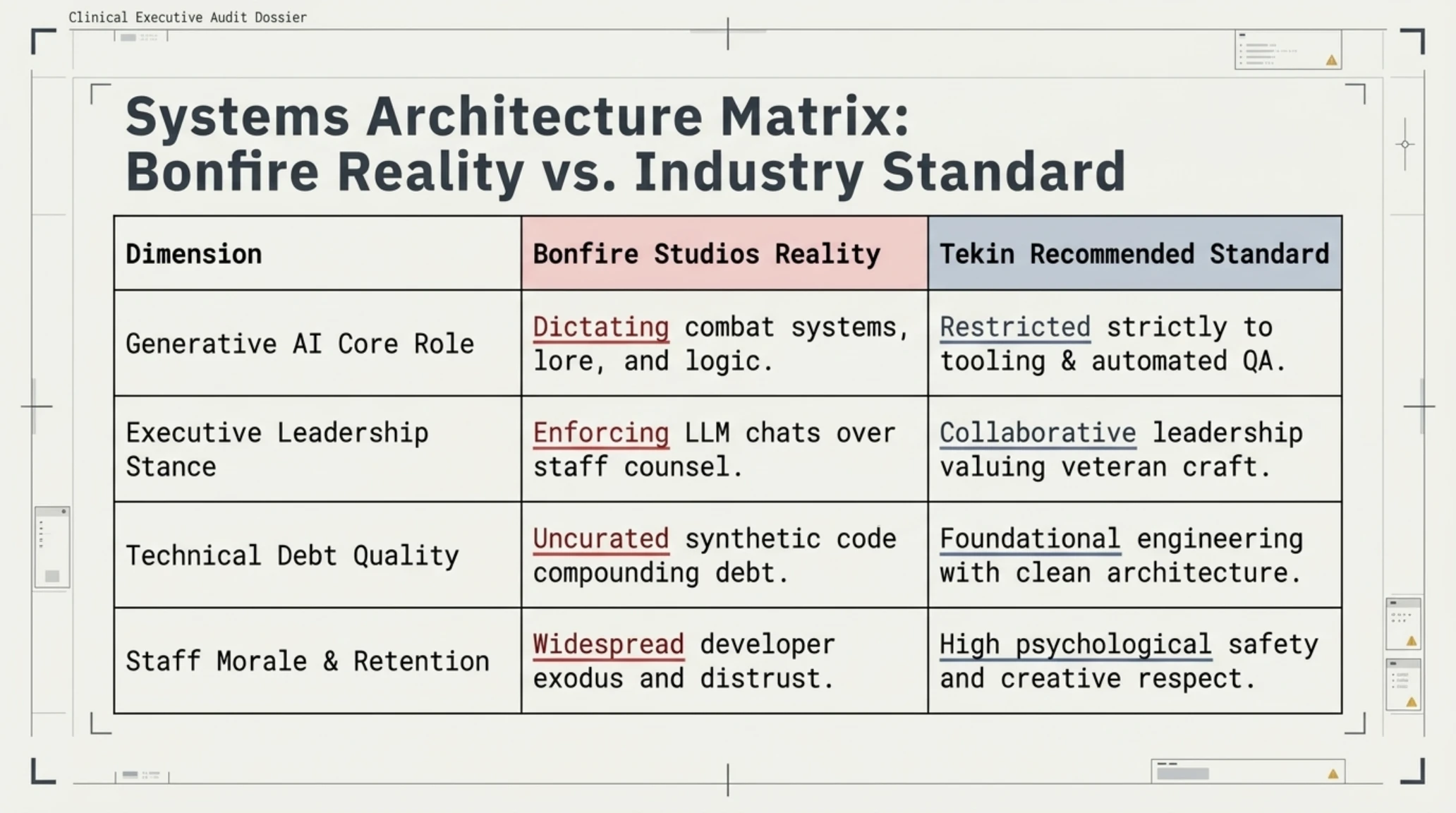
Comparative Engineering Matrix: Bonfire Studios vs. Industry Standards
| Core Strategic Benchmark | Bonfire Studios Reality (Arkheron) | Tekin Recommended Studio Standard |
|---|---|---|
| Generative AI Core Role | Dictating combat systems, lore, and logic | Restricted strictly to tooling & automated QA |
| Executive Leadership Stance | Enforcing LLM chats over staff counsel | Collaborative leadership valuing veteran craft |
| Technical Debt & Code Quality | Uncurated synthetic code compounding debt | Foundational engineering with clean architecture |
| Live-Service Shipping Strategy | Forced premature launch due to cash burn | Rigorous beta validation post core-loop proof |
| Staff Morale & Talent Retention | Widespread developer exodus and distrust | High psychological safety and creative respect |
Bonfire's whistleblowers proved that human creativity refuses to be silenced; by rejecting synthetic proxies and demanding authentic leadership, they delivered an invaluable message to the global technology landscape.
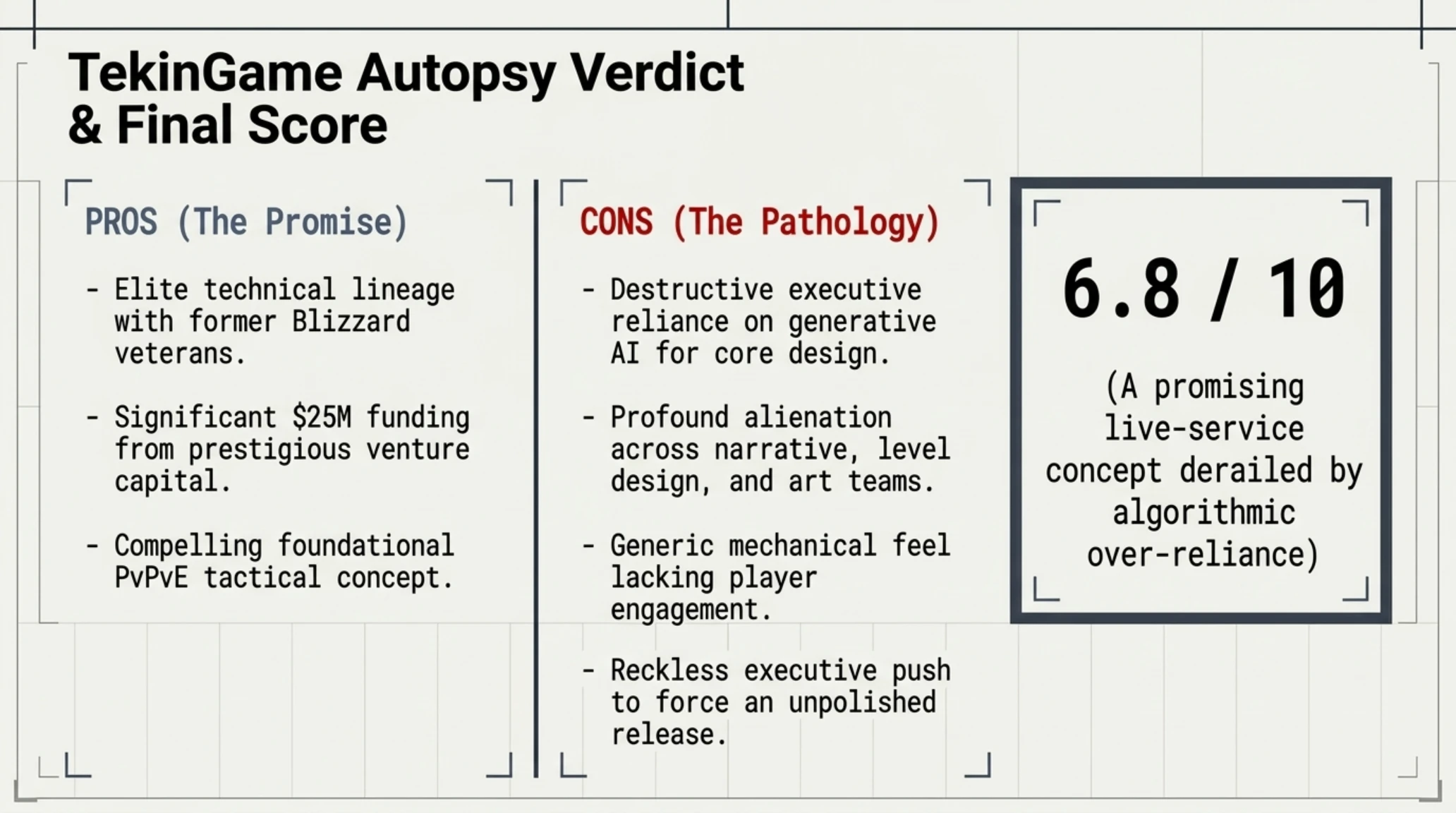
- Elite technical lineage with former Blizzard veterans leading foundational network engineering
- Significant $25 million initial funding secured from prestigious Silicon Valley venture capital
- Compelling foundational concept uniting isometric tactical combat with PvPvE elements
- Independent operational status free from the quarterly pressures of public corporate holding firms
- Pervasive and destructive executive reliance on generative AI for core gameplay design
- Profound alienation and loss of trust across senior narrative, level design, and art teams
- Protracted eight-year development timeline characterized by repetitive design pivots
- Generic mechanical feel and lack of player engagement observed during external playtests
- Reckless executive push to force an unpolished release to mitigate impending insolvency
Tekin Final Verdict & Authority Reference Index (Sources)
The Illusion of Synthetic Speed; Reclaiming Human Authorship
Bonfire Studios' crisis proves that generative algorithms cannot substitute for human game direction; honoring experienced game architects is the only viable path to shipping enduring interactive art.
- Mike Straw's Exclusive Investigation on Insider Gaming: Detailed investigative report on Bonfire Studios' AI reliance and internal friction
- Andreessen Horowitz (a16z) Investment Disclosures: Official portfolio records and financing statements for Bonfire Studios with Riot Games
- VentureBeat GamesBeat Analysis: Comprehensive retrospective on the formation of Bonfire Studios and Arkheron testing milestones
- Blizzard Entertainment Historical Archives: Rob Pardo's foundational design tenets during the creation of World of Warcraft and Warcraft III
Frequently Asked Questions // Bonfire Studios & Arkheron Crisis
What is the primary cause of internal turmoil at Bonfire Studios?
According to Insider Gaming's investigative reporting, Bonfire Studios has spent eight years struggling to ship Arkheron due to leadership's obsessive reliance on generative AI (specifically Anthropic's Claude) to dictate gameplay systems, sparking severe demoralization, executive micromanagement, and the exhaustion of its initial $25 million funding.
Why did veteran game developers object to management's use of AI?
Staff felt profoundly undermined because project leads repeatedly dismissed veteran human expertise in favor of lengthy AI chat transcripts, forcing experienced developers to implement generic, poorly balanced algorithmic frameworks that required extensive refactoring.
Who originally funded Bonfire Studios and what was the investment amount?
Bonfire Studios was founded in 2016 backed by an initial $25 million capital infusion co-led by venture capital firm Andreessen Horowitz (a16z) and League of Legends developer Riot Games.
What genre and core gameplay loop does Arkheron feature?
Arkheron is designed as an isometric team-based tactical multiplayer game combining competitive player-versus-player and player-versus-environment (PvPvE) combat systems.
Why did prompt-generated code lead to severe project delays?
While AI code performed adequately in single-user sandbox tests, it introduced critical race conditions, memory leaks, and replication desynchronizations under heavy 20-player networked match conditions, requiring hundreds of hours of manual engineer debugging.
Will Arkheron be cancelled or will it release to the public?
Facing impending financial exhaustion, executive leadership is reportedly pushing to launch the title prematurely; however, analysts warn that releasing an uncalibrated multiplayer game into a crowded market risks catastrophic critical and commercial failure.
Additional Gallery: Tekin Analysis | Bonfire Studios Crisis: How AI Ruined Rob Pardo's $25M Game