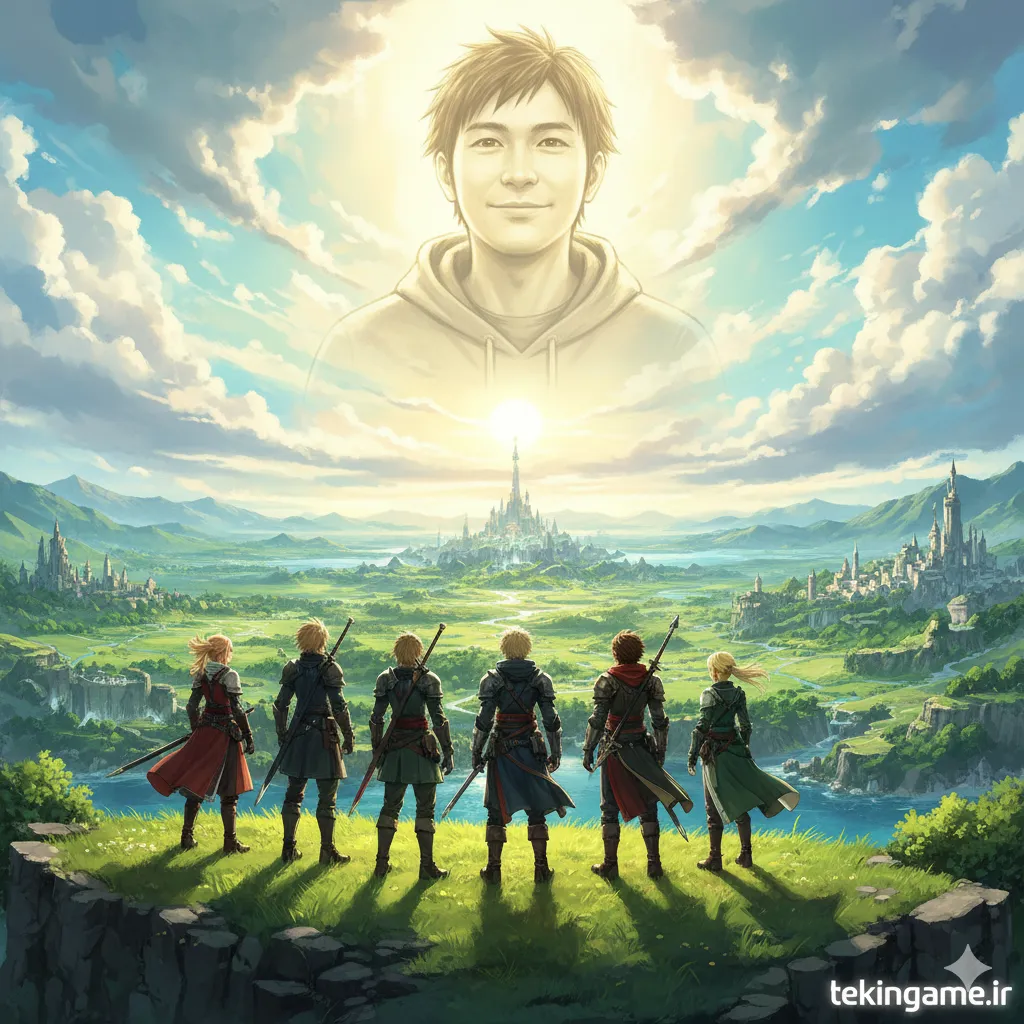
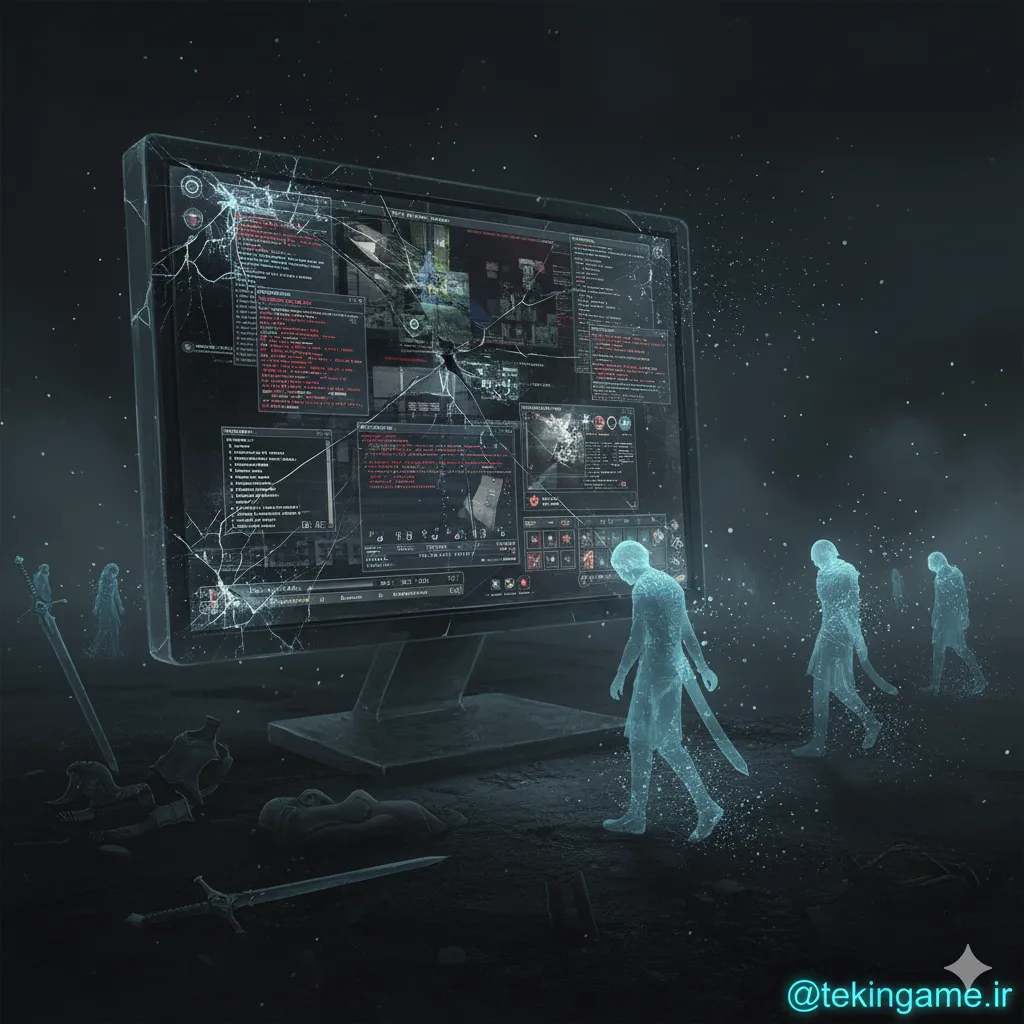
In the annals of interactive entertainment and software engineering, no event matches the catastrophic implosion and miraculous resurrection of Final Fantasy XIV. When version 1.0 launched in September 2010, it was not merely an operational failure; it was an existential disaster that brought Square Enix—one of the world's most storied video game publishers—to the brink of reputational and financial ruin. Crippled by an unyielding graphical engine that rendered a single ornamental flowerpot with the polygon budget of an entire character model, paralyzed by lag-ridden server infrastructure, and devoid of foundational modern MMORPG mechanics, the title scored an abysmal 49 on Metacritic. Yet, the appointment of an obscure Dragon Quest director named Naoki Yoshida (affectionately known as Yoshi-P) catalyzed the single greatest project turnaround in digital history. In this comprehensive technical and managerial dissection conducted at the
TekinGame Technical Media Laboratory, we unpack how Yoshida transformed an apocalyptic failure into the most critically acclaimed and profitable MMORPG on Earth.
The resurrection of Final Fantasy XIV is widely studied across Ivy League MBA programs and Silicon Valley engineering departments as the quintessential masterclass in crisis triage, technical debt remediation, and radically transparent leadership. Yoshida did not retreat behind defensive corporate public relations; instead, he knelt before his players, acknowledged systemic incompetence, and engineered the unprecedented miracle of parallel dual-track software development—patching a burning live service while secretly building an entirely new game from scratch.
⚡Final Fantasy XIV Crisis & Resurrection Executive Metrics
TEKIN HUD◈ Version 1.0 Critical Reception (2010)
Catastrophic 49 Metascore; near-universal condemnation from players and international press
◈ Dual-Track Development Turnaround Time
Under 2.5 years to engineer an entirely new bespoke engine, server fabric, and narrative
◈ Active Cumulative Registered Players
Exceeded 30 million accounts, becoming the most financially lucrative title in Square Enix history
◈ Endwalker Peak Digital Sell-Out
Square Enix temporarily suspended digital sales due to unprecedented server congestion in late 2021
TekinGame Sovereign Media honors the resurrection of Final Fantasy XIV as the gold standard of executive accountability, technical courage, and communal stewardship.
## Section 1: Anatomy of the 2010 Disaster: Corporate Hubris and Crystal Tools
To fully grasp the magnitude of the resurrection, one must first comprehend the systemic wreckage of version 1.0. Following the triumphant multi-year profitability of Final Fantasy XI in the early 2000s, Square Enix executives succumbed to severe institutional arrogance. The prevailing executive assumption was that slapping the prestigious 'Final Fantasy' brand onto a box, accompanied by photorealistic visuals, guaranteed commercial supremacy. Blinded by isolationism, the production team neglected the monumental ergonomic and design revolutions pioneered by Blizzard Entertainment's World of Warcraft.
The most fatal technical failure was the dogmatic enforcement of the proprietary Crystal Tools engine. Originally architected specifically for linear, pre-rendered single-player experiences like Final Fantasy XIII, Crystal Tools was fundamentally incapable of orchestrating hundreds of concurrent dynamic players within a persistent shared topology. In one notorious post-mortem revelation, a decorative flowerpot in the desert capital of Ul'dah consumed over a thousand polygons and multiple specialized texture passes—demanding equivalent computational overhead to a fully armored player avatar! This pathological obsession with static visual fidelity crippled hardware frame rates and collapsed network servers.
From an ergonomic standpoint, the game felt hostile to human interaction. The client lacked a basic jump function, navigation was hindered by artificial physical invisible walls, the player-to-player market wards lacked text-based keyword search functionality, and most egregiously, the 'Surplus System' imposed severe experiential exhaustion caps that throttled player progression to zero after merely a few hours of play to enforce artificial playtime limits.
Furthermore, the underlying network topology operated on an archaic client-authoritative framework fraught with packet serialization latency. Basic combat commands required multiple server round-trips to register, producing a laggy, disconnected kinesthetic experience that alienated players accustomed to responsive action. The user interface was sluggish, reliant on nested client menus that froze the player in place during combat calculations. The game was an architectural monument to misallocated resources, where aesthetic perfectionism suffocated interactive utility.
"
The fundamental pathology of version 1.0 was not a mere software glitch; it was institutional arrogance. We assumed that because we were Square Enix, players would gratefully consume whatever we produced. We forgot that a game must, above all, be joyful to experience.
Naoki Yoshida - Director & Producer of Final Fantasy XIV in the Noclip Documentary
## Section 2: Enter Naoki Yoshida: A Hardcore Player Ascends to Command
In December 2010, with Square Enix's share price tumbling and furious fans physically burning game discs, CEO Yoichi Wada took an unprecedented gamble. He summarily stripped the original executive leadership of their duties and entrusted the entire enterprise to Naoki Yoshida—a relatively junior figure within the corporate hierarchy who had previously directed Dragon Quest: Monster Battle Road.
Yoshida possessed an asset that traditional Japanese corporate executives lacked: he was a hardcore MMORPG veteran. Having spent thousands of hours in the brutal sandboxes of Ultima Online, EverQuest, and Dark Age of Camelot, Yoshida understood the psychology, frustrations, and communal expectations of online gamers at an instinctual level. Upon assuming command, his first executive order shocked the engineering division: he ordered development halted and mandated that every designer and engineer spend two full months playing World of Warcraft to understand how modern MMO ergonomics functioned.
His subsequent diagnostic to the board of directors was brutally clinical: the foundational codebase was beyond salvation. The server topology, database architecture, and user interface were so thoroughly entangled in technical debt that continued patching represented throwing capital into a bottomless abyss. Yoshida presented a high-stakes ultimatum: either terminate the project immediately and accept the permanent demise of the Final Fantasy brand, or grant him autocratic authority to construct a completely new game from the ground up while simultaneously maintaining the live disaster.
⭐The Four Pillars of Naoki Yoshida's Sovereign Recovery Doctrine
TEKIN HUD◈ Parallel Dual-Track Engineering
A triage squad patched version 1.0 while the primary engineering core secretly built version 2.0
◈ Radical Communication Transparency
Abolishing corporate PR opacity via candid, multi-hour 'Letter from the Producer LIVE' broadcasts
◈ Respect for Player Autonomy and Time
Eradicating punitive mechanics, streamlining onboarding, and instituting seamless matchmaking via the Duty Finder
◈ Narrative Inversion of Catastrophe
Canonizing technical collapse into an apocalyptic cosmic cataclysm within the living fictional lore
Yoshida transformed crisis management from defensive bureaucratic damage control into an enduring covenant of trust with the global gaming community.
## Section 3: The Dual-Track Miracle: Engineering 2.0 in Thirty Months
The engineering timeline of A Realm Reborn remains one of the most astonishing operational feats in software history. Constructing a world-class AAA MMORPG typically requires between five and seven years of dedicated pre-production and asset generation. Yoshida was constrained to merely two and a half years; prolonging the development cycle would have inflicted terminal fiscal insolvency on Square Enix.
Under Yoshida's relentless operational cadence, the studio executed a daring split. A tactical maintenance team deployed critical quality-of-life patches to version 1.0 to preserve subscriber goodwill, while the central development engine designed an entirely bespoke game engine, authored tens of thousands of modular assets, rewrote network protocols, and sculpted an entirely revamped world topology. Yoshida personally audited an exhaustive spreadsheet of over 400 daily operational milestones.
This grueling sprint was propelled by Yoshida's philosophy of servant leadership. He eschewed executive aloofness, sleeping on office floors alongside system programmers, ordering meals for exhausted teams, and directly bearing the psychological weight of public scrutiny. He demonstrated that engineering velocity is ultimately governed not by financial capitalization, but by shared philosophical conviction.
At the core of the engine overhaul was the replacement of the unmanageable Crystal Tools pipeline with a lean, custom rendering engine engineered to sustain massive player concurrency within memory-constrained environments, most notably the PlayStation 3 platform with its strictly partitioned 256MB of main system RAM and 256MB of video RAM. Yoshida's lead programmers implemented strict polygon and bone budgets, deterministic animation instancing, and predictive client-side interpolation that reconciled network updates smoothly. The server architecture was entirely re-architected from the ground up: replacing the synchronous, lag-vulnerable database loops with an asynchronous messaging backbone operating on standardized 300ms server tick intervals for positional snapshotting. This engineering triumph ensured that even during chaotic 24-player Alliance Raids featuring screen-filling particle effects and overlapping area-of-effect telegraphs, frame pacing remained buttery smooth and packet loss was minimized to statistical insignificance.
🎧
شورای نظارت فنی و محتوایی تکین گیم // TekinGame Sovereign Council
نکته تحریریه تکین پلاس // Tekin Plus Editorial Note
TekinGame Architectural Audit: Executing dual-track development on a live MMORPG is analogous to replacing the jet turbines of a passenger airliner mid-flight at thirty thousand feet. The miracle of A Realm Reborn proves that modular technical clarity triumphs over bloated operational headcount.
## Section 4: The Fall of Dalamud: Transforming Technical Failure into Living Myth
The pinnacle of Yoshida's narrative genius materialized in the method chosen to permanently terminate version 1.0. In conventional industry practice, canceled or failing live-service games are terminated with a sterile corporate press release and a silent server shutdown at midnight. Yoshida chose an audacious, poetic alternative: he transformed the real-world death of the servers into an in-game apocalyptic event experienced live by every subscriber.
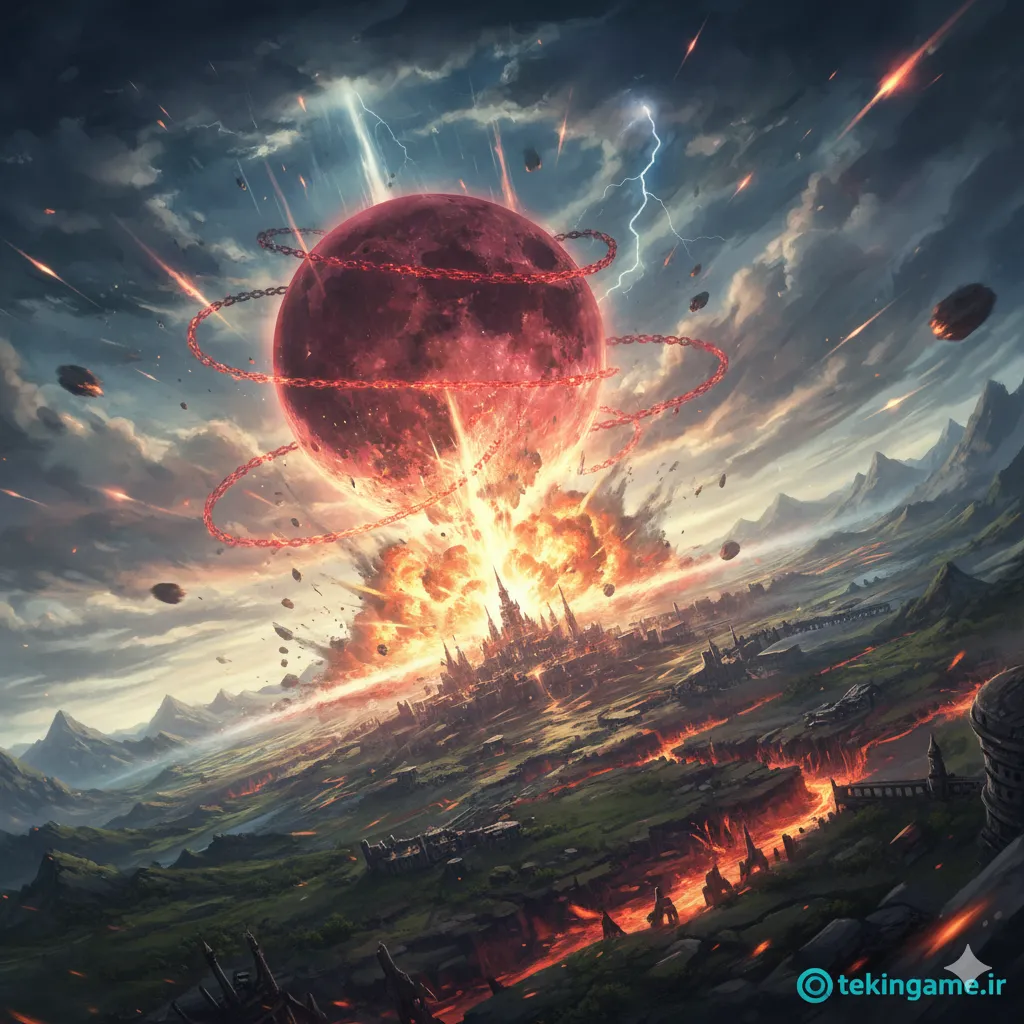
Throughout the closing months of 2012, players noticed a faint crimson celestial body known as Dalamud expanding ominously in the skies of Eorzea. With each successive patch, Dalamud drew closer, casting a blood-red pall over the continents. Civic music warped into despairing choral chants, mutated monstrosities besieged the major city gates, and an atmosphere of impending cosmic doom enveloped the population. On November 11, 2012, tens of thousands of players gathered on the Plains of Carteneau to witness the final seconds of their world.
As the servers severed connections, players were seamlessly redirected to the breathtaking cinematic masterwork 'End of an Era.' In this legendary sequence, Dalamud fractured in the atmosphere, unleashing the primordial Elder Primal Bahamut. Bahamut rained apocalyptic hellfire across the continent, annihilating the flawed landscapes of version 1.0, while the Archon Louisoix expended his mortal soul to cast the surviving players five years into the future. It was the birth of A Realm Reborn: the defective game was literally incinerated in canonical fire so the phoenix could arise from its ashes.
⚡The Narrative & Psychological Impact of the Dalamud Apocalypse
TEKIN HUD◈ Symbiotic Narrative Canonization
Directly justifying engine refactors and topographic overhauls through Bahamut's planetary terraforming
◈ Reverence for Legacy Supporters
Permanently engraving the names of original version 1.0 subscribers into the game credits and bestowing unique in-game avatar marks
◈ Communal Catharsis and Shared Trauma
Converting a humiliating commercial disaster into an elite badge of honor for veteran players who survived the end
◈ Unprecedented Organic Viral Hype
Generating massive mainstream anticipation as non-players witnessed the artistic audacity of destroying a game on purpose
TekinGame Ludology classifies the Fall of Dalamud as the most daring dramatic gambit in the history of multiplayer virtual worlds.
## Section 5: The Renaissance of Eorzea: Foundational Mechanics of 2.0
When Final Fantasy XIV: A Realm Reborn launched in August 2013, the global gaming sphere was stunned. The sluggish, broken disaster had vanished, replaced by an extraordinarily fluid, visually radiant, and mechanistically polished masterpiece. Combat centered around a deliberate 2.5-second Global Cooldown (GCD), striking an elegant balance between tactical foresight, positioning mechanics, and high-intensity execution.
The cornerstone ludic triumph was the revolutionary Armoury System. Unlike competing MMORPGs that forced players to manage dozens of disparate alternate characters to experience different playstyles, Eorzea empowered a single avatar to master every single combat class, crafting discipline, and gathering profession simply by swapping their equipped weapon. Your stalwart Paladin could seamlessly transition into a Black Mage, an Alchemist, or an ocean Fisher on a whim.
Furthermore, the introduction of the Duty Finder automated party matchmaking across server clusters. Solo players, previously locked out of complex endgame instanced content due to exclusionary social gatekeeping, could queue with a single keystroke and conquer monumental dungeons alongside companions worldwide. This ergonomic democratization instantly opened the game to millions of casual participants.
"
The greatest lesson I learned from watching Yoshida resurrect Final Fantasy XIV is that to save an artistic masterpiece, one must never remain sentimental about obsolete code. The courage to destroy and rebuild is the true soul of creation.
Hironobu Sakaguchi - Legendary Creator of the Final Fantasy Franchise
## Section 6: Letter from the Producer LIVE: Rewriting Studio-Player Diplomacy
Simultaneously with technical reconstruction, Yoshida shattered the archaic barrier separating game developers from their audience through the 'Letter from the Producer LIVE' broadcasts. Historically, Japanese video game conglomerates operated behind opaque corporate PR filters, treating player feedback with condescending distance. Yoshida discarded this paradigm.
Appearing on live camera alongside his trusted translation directors, Yoshida would spend six to eight consecutive hours casually drinking tea, laughing, presenting unpolished design mockups, and fielding uncensored, difficult questions directly from the chat feed. When technical delays occurred or balance missteps manifested, Yoshida offered no excuses; he bowed, apologized sincerely, and forensically outlined the corrective roadmap.
This unprecedented vulnerability cultivated a profound emotional bond between the community and the development team. Players recognized that Eorzea was not guided by faceless corporate accountants attempting to optimize engagement algorithms, but by a passionate fellow player who lived in the same virtual trenches. That relational trust became an impenetrable shield against industry cynicism.
9.5
Architectural & Structural Paradigm: Version 1.0 vs. Version 2.0PROS
- High-throughput network engine delivering rock-solid 60 FPS performance across diverse hardware configurations
- Universal Armoury System allowing limitless class mastery on a single avatar without progress fragmentation
- Deeply emotional, character-driven cinematic main scenario that revitalized traditional JRPG storytelling
- Strict anti-toxicity community governance cultivating the most welcoming social ecosystem in gaming
CONS
- Pacing bottlenecks in the early Seventh Astral Era post-launch questline preceding the first expansion
- Persistent subscription paywall structure creating friction for budget-conscious gamers in developing economies
## Section 7: The Expansion Masterclasses: From Heavensward to Endwalker
The launch of A Realm Reborn was merely the foundational baseline. With each subsequent expansion, Creative Business Unit III elevated the artistic, musical, and narrative boundaries of interactive storytelling. In 2015, Heavensward delivered a grim, Shakespearean epic chronicling the thousand-year Dragonsong War, exploring themes of religious dogma, class warfare, and generational grief in the frozen skies of Ishgard.
In 2019, the release of Shadowbringers achieved unanimous critical acclaim, frequently hailed as not merely the greatest MMORPG narrative ever penned, but one of the finest role-playing stories in history. Transporting players to the dying world of the First, the expansion challenged conventional tropes of light and dark, introducing Emet-Selch—a tragic, philosophically compelling antagonist whose sorrow resonated deeply with millions. Mainstream publications, including IGN and PC Gamer, bestowed near-perfect scores.
The crowning achievement arrived with Endwalker in late 2021, providing a cathartic, emotionally overwhelming resolution to the ten-year saga of Hydaelyn and Zodiark. The worldwide influx of players was so staggering that servers buckled under queue times exceeding four hours, prompting Square Enix to take the unheard-of step of halting all digital sales of the game to safeguard service stability.
🎧
شورای نظارت فنی و محتوایی تکین گیم // TekinGame Sovereign Council
نکته تحریریه تکین پلاس // Tekin Plus Editorial Note
Tekin Plus Critical Assessment: Where Western live-service competitors treat narrative as disposable scaffolding for perpetual loot hamster wheels, Final Fantasy XIV treats its story as a multi-volume epic novel. It is an uncompromised artistic journey where mechanics serve the emotion, not the reverse.
📚 Classified & Related Dossiers in TekinGame
If you wish to explore beyond this report and delve into cybernetic frontiers and autonomous AI architectures, do not miss these three exclusive deep-dives in the Tekin Garage:
## Section 8: The Great Blizzard Exodus: When Eorzea Inherited the Earth
In the summer of 2021, a monumental geopolitical realignment occurred in the MMO landscape. Plagued by consecutive disappointing expansions in World of Warcraft, predatory player-retention mechanics, and sweeping workplace controversies at Activision Blizzard, the gaming world's most influential content creators—led by streaming titan Asmongold—migrated en masse to Final Fantasy XIV. This exodus triggered an unprecedented wave of hundreds of thousands of concurrent players streaming into Eorzea.
These migrating veterans were astonished to discover a development ethos that fundamentally respected their finite human lifespan. Yoshida had famously declared in interviews: 'If you run out of things to do, simply cancel your subscription, play other games, and return when the next patch drops!' This radical refusal to weaponize toxic Fear of Missing Out (FOMO) contrasted sharply with the exhausting daily engagement chores of contemporary live services, turning FFXIV into a liberating sanctuary.
"
We do not design this game to hold your life hostage. We want you to feel that Eorzea is your home away from home, a sanctuary you can always return to throughout your lifetime.
Naoki Yoshida in Famitsu Magazine
🛡️Strategic Differentiators Driving FFXIV's Supremacy over Western Rivals
TEKIN HUD◈ Absolute Rejection of Coercive Retention (Zero FOMO)
No mandatory daily chore quotas required to remain competitive; players progress entirely at their own cadence
◈ Masayoshi Soken's Magnum Opus Musical Score
Over 800 bespoke orchestral, rock, and electronic compositions dynamically amplifying narrative gravitas
◈ Flourishing Non-Combat Civil Society
The Gold Saucer casino, Chocobo racing, ocean fishing, deep housing decoration, and Island Sanctuaries
◈ Institutional Mentorship Architecture
The Novice Network and Sprout status incentivizing veteran players to nurture newcomers with patience
TekinGame Sovereign Intelligence identifies FFXIV as the undisputed benchmark for sustainable, humane live-service design.
## Section 9: The Yoshi-P Doctrine: Essential Axioms for Modern Live-Service Directors
In an era littered with the corporate corpses of half-baked live-service ventures—such as Anthem, Babylon's Fall, Redfall, and Suicide Squad: Kill the Justice League—the management philosophy of Naoki Yoshida represents urgent, indispensable study. Modern publishers repeatedly fall into the trap of shipping compromised, uninspired minimum viable products accompanied by glossy roadmaps, only to shutter servers and lay off development teams at the first sign of headwinds.
The Yoshi-P doctrine outlines three immutable prerequisites for engineering a successful turnaround: first, fearless institutional honesty that strips away corporate spin; second, absolute executive empowerment granted to a technical leader who genuinely plays the game; and third, the capitalization required to eliminate deep structural debt rather than applying cosmetic bandages. Without these foundational commitments, modern live services remain doomed to repeat the graveyard of 2010.
💎The Triple Pillar Framework of Live-Service Longevity
TEKIN HUD◈ Player-Level Technical Stewardship
Leadership must possess intimate mechanical mastery of high-tier gameplay and network engineering
◈ Architectural Resilience Over Quick Wins
Prioritizing modular, scalable engine foundations that guarantee a decade of painless content additions
◈ Covenantal Communal Transparency
Treating subscribers as sovereign collaborators rather than monetization data points to be exploited
Games devoid of genuine soul cannot be salvaged by marketing capital. True resilience is forged through moral conviction and craftsmanship.
## Section 10: The Eorzean Social Contract: The Internet's Warmest Virtual Haven
Beyond its narrative brilliance and mechanical polish, the crowning achievement of Final Fantasy XIV is the unprecedented benevolence of its community. In a digital gaming landscape frequently poisoned by toxic harassment and competitive elitism, Eorzea has cultivated a culture of active compassion. Veteran players who spot the distinctive green 'Sprout' icon above a novice's head routinely pause their activities to offer guidance, craft equipment, or assist with instanced duties.
This remarkable social harmony is the product of deliberate architectural choices: third-party damage meters are strictly prohibited from being utilized to harass underperforming teammates, the Player Commendation system rewards helpful conduct, and community moderators enforce zero-tolerance standards against harassment. For millions isolated during the global pandemic, Eorzea functioned not merely as leisure, but as an essential psychological sanctuary.
🎧
شورای نظارت فنی و محتوایی تکین گیم // TekinGame Sovereign Council
نکته تحریریه تکین پلاس // Tekin Plus Editorial Note
TekinGame Sociological Synthesis: Yoshida did not merely program a fantasy world; he engineered an enlightened digital civilization where empathy is rewarded and individual triumph is bound to collective flourishing.
## Section 11: Middle East Onboarding: Latency, Localization, and the Free Trial
For gamers in the Middle East, North Africa, and regional hubs like Dubai, venturing into Final Fantasy XIV has historically raised practical questions regarding server connectivity, regional pricing, and language barriers. Thanks to the deliberate pacing of the 2.5-second Global Cooldown, the game remains completely playable and enjoyable even on regional ping ranges of 110 to 140 milliseconds to European datacenters.
Moreover, the famous 'Free Trial' offer stands as one of the most generous propositions in corporate gaming history. Prospective adventurers can experience the entirety of A Realm Reborn, along with the award-winning Heavensward and Stormblood expansions up to level 70, with zero time limitations and zero financial commitment—providing over 250 hours of world-class JRPG storytelling completely free.
🛡️TekinGame Field Manual for Embarking on the Eorzean Pilgrimage
TEKIN HUD◈ Unrestricted Free Trial Activation
Play through the base game and first two monumental expansions up to Level 70 with zero subscription cost
◈ Optimal Datacenter Selection
Select European logical datacenters (Chaos or Light) for the lowest latency and optimal regional connectivity
◈ Embrace the Pacing of a Literature Masterpiece
Do not rush to endgame; treat the Main Scenario Quest (MSQ) as an unhurried, multi-season cinematic epic
◈ Join Regional Free Companies
Integrate with dedicated Middle Eastern guilds for localized community raiding and social camaraderie
TekinGame is your steadfast beacon across the grand landscapes of Eorzea and the modern gaming frontier.
9.5
Critical Evaluation of the Modern Final Fantasy XIV Experience in 2025PROS
- Incomparable Free Trial delivering hundreds of hours of critically acclaimed narrative at zero cost
- Full Duty Support implementation enabling solo completion of almost every storyline dungeon alongside AI allies
- Peerless narrative crescendo through Shadowbringers and Endwalker that redefines emotional storytelling
CONS
- Slow initial worldbuilding pacing across early levels before the story reaches its full momentum
- Legacy account management portal (Mog Station) possessing convoluted regional checkout pathways
Do I need prior experience with earlier Final Fantasy games to understand the story?
Absolutely not; Final Fantasy XIV is a completely standalone universe set in the original realm of Eorzea with an independent mythology.
What restrictions apply to the Free Trial?
Free Trial players face localized social and economic limits (no trading, market board access, or player guilds), but the entire narrative up to level 70 is fully playable.
Can I experience the game entirely as a solo player without interacting with strangers?
Yes; the expanded Duty Support system allows players to clear narrative dungeons alongside story-relevant AI companions at their own leisure.
🛡️Chronological Milestones of the Great Final Fantasy XIV Renaissance
TEKIN HUD◈ September 2010: The Cataclysmic Launch
Version 1.0 releases to historic critical failure, scoring 49 on Metacritic and shaking Square Enix to its core
◈ December 2010: Yoshida's Ascension
Naoki Yoshida assumes dual leadership as Producer and Director, initiating the secret parallel rebuild
◈ November 2012: The Fall of Dalamud
Version 1.0 servers terminate with the iconic 'End of an Era' cinematic, canonizing technical destruction
◈ August 2013: A Realm Reborn Launches
Version 2.0 launches to global critical acclaim, achieving immediate financial viability and critical redemption
◈ 2019-2021: The Shadowbringers & Endwalker Zenith
FFXIV achieves unanimous global mastery, eclipsing all competitors as the definitive MMORPG of the modern era
An immortal testament to human resilience, artistic integrity, and the transformational power of executive honesty.
What technological upgrades were instituted in the 7.0 Dawntrail graphics update?
Dawntrail deployed an exhaustive overhaul of character shaders, high-resolution textures, ambient occlusion, and dynamic environmental lighting.
Why have rival publishers failed to replicate Naoki Yoshida's turnaround success?
Because rival executives lack Yoshida's technical gamer fluency, absolute corporate empowerment, and the moral courage to tear down defective systems rather than monetizing failure.