The End of the Disc Era: Sony Goes All-Digital
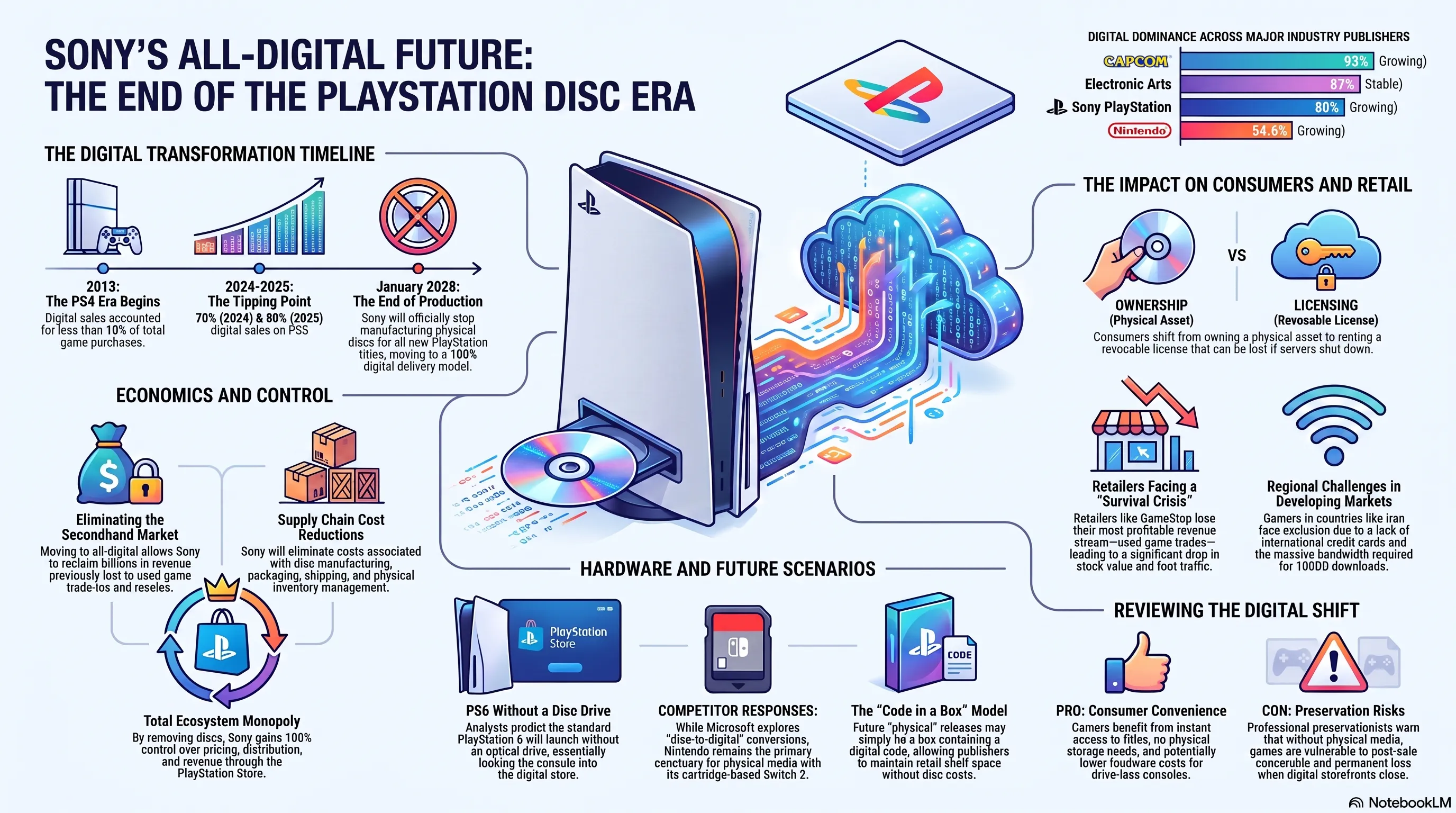
- 🎮Disc Production Ends- Sony will stop producing physical discs for all new PlayStation games in January 2028
- 🎧PS6 Without Drive- Analysts confirm the next console will launch without an optical drive
- 🚀80% Digital Now- Current PS5 game sales are already 80% digital
- 🗡️GameStop at Risk- Physical retailers face their biggest crisis ever
July 2026 became a historic day for the gaming industry. Sony, in an announcement that sent shockwaves around the world, confirmed that production of physical discs for all new PlayStation games will cease in January 2028. This decision is not just the end of an era—it marks the beginning of a new one where the concept of game ownership fundamentally changes.
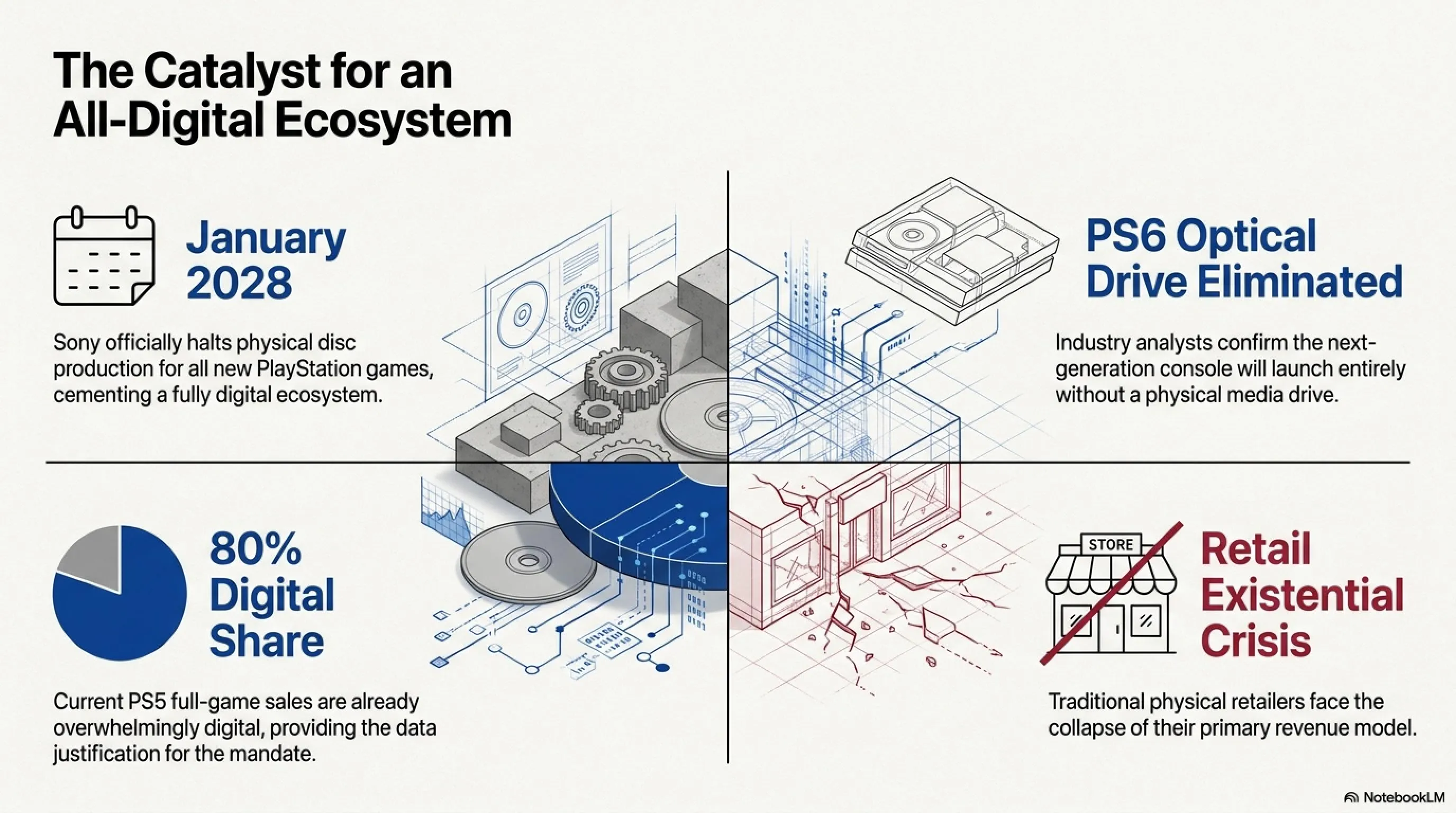
Sid Shuman, senior director of global content communications at PlayStation, wrote in an official blog post that physical disc production for all new games releasing on PlayStation consoles will be discontinued starting January 2028. After that date, new games will only be available through the PlayStation Store and retailers in digital formats.
Why Did Sony Kill the Disc? The Story Behind the Numbers
Sony offered a straightforward explanation: this decision is a response to shifting consumer preference trends. But the actual numbers tell a deeper story—one about economics, technology, and changing consumer behavior.
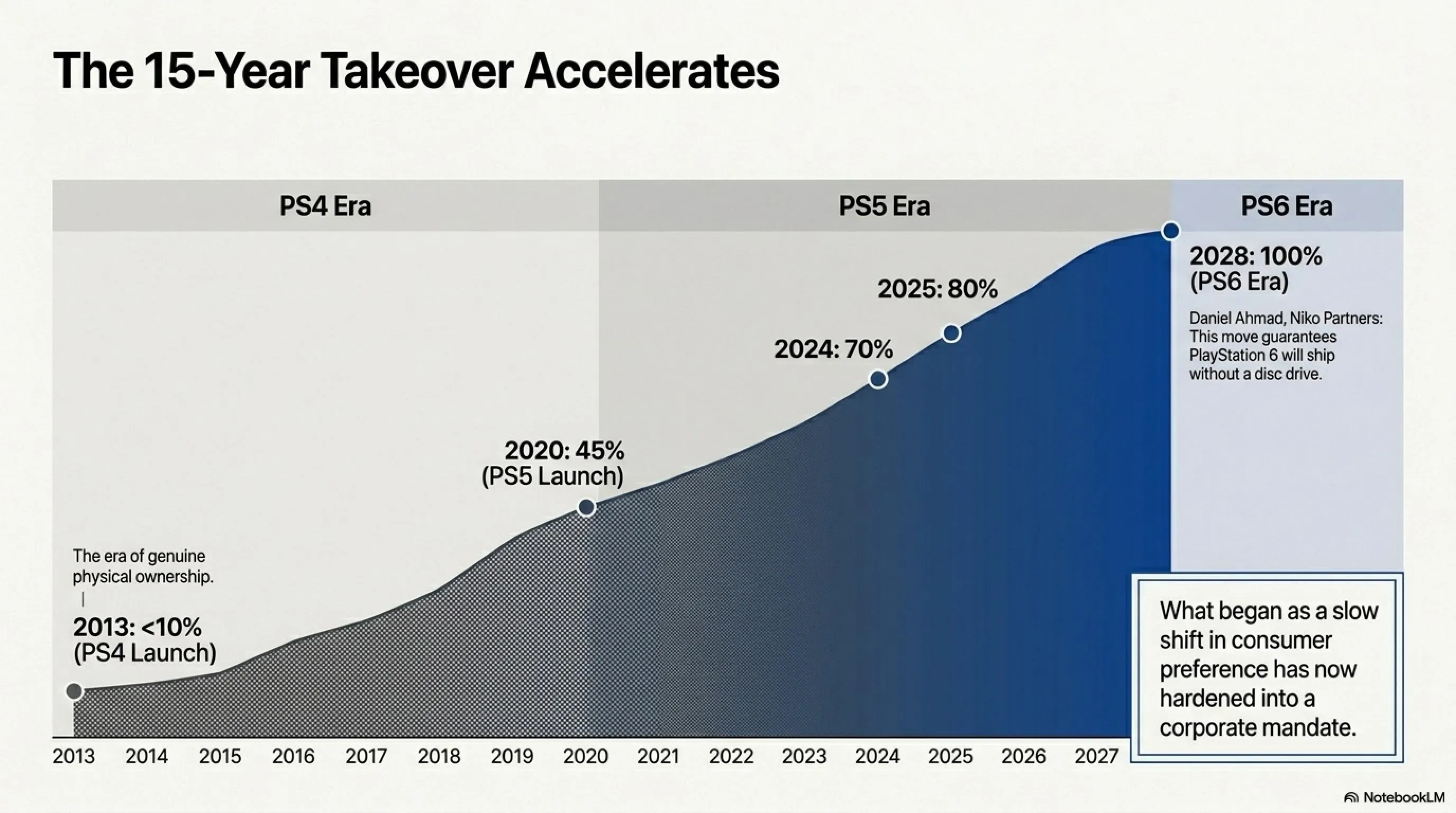
When PlayStation 4 launched in November 2013, less than ten percent of game sales were digital. Gamers still visited physical retailers, held discs in their hands, and felt genuine ownership. But over the past 13 years, this trend has dramatically shifted.
Digital Transformation in Numbers
- 2013 (PS4 Launch): Less than 10% digital sales
- 2020 (PS5 Launch): Approximately 45% digital sales
- 2024: 70% digital sales
- 2025 (Latest fiscal year): 80% digital sales
- 2028 (Mandatory): 100% digital
In the most recent fiscal year, approximately 80 percent of full game sales on PS5 were digital. Daniel Ahmad, director of research and insights at Niko Partners, tweeted: This move guarantees that PlayStation 6 will ship without a disc drive and Sony is embracing an all-digital future.
The Economics Behind the Decision
For Sony, this is simply a rational economic decision. Physical disc production carries significant costs: manufacturing discs, packaging, shipping to retailers, and inventory management. Additionally, the secondhand market—where gamers sell or trade their discs—siphons billions of dollars in potential revenue annually from Sony and publishers.
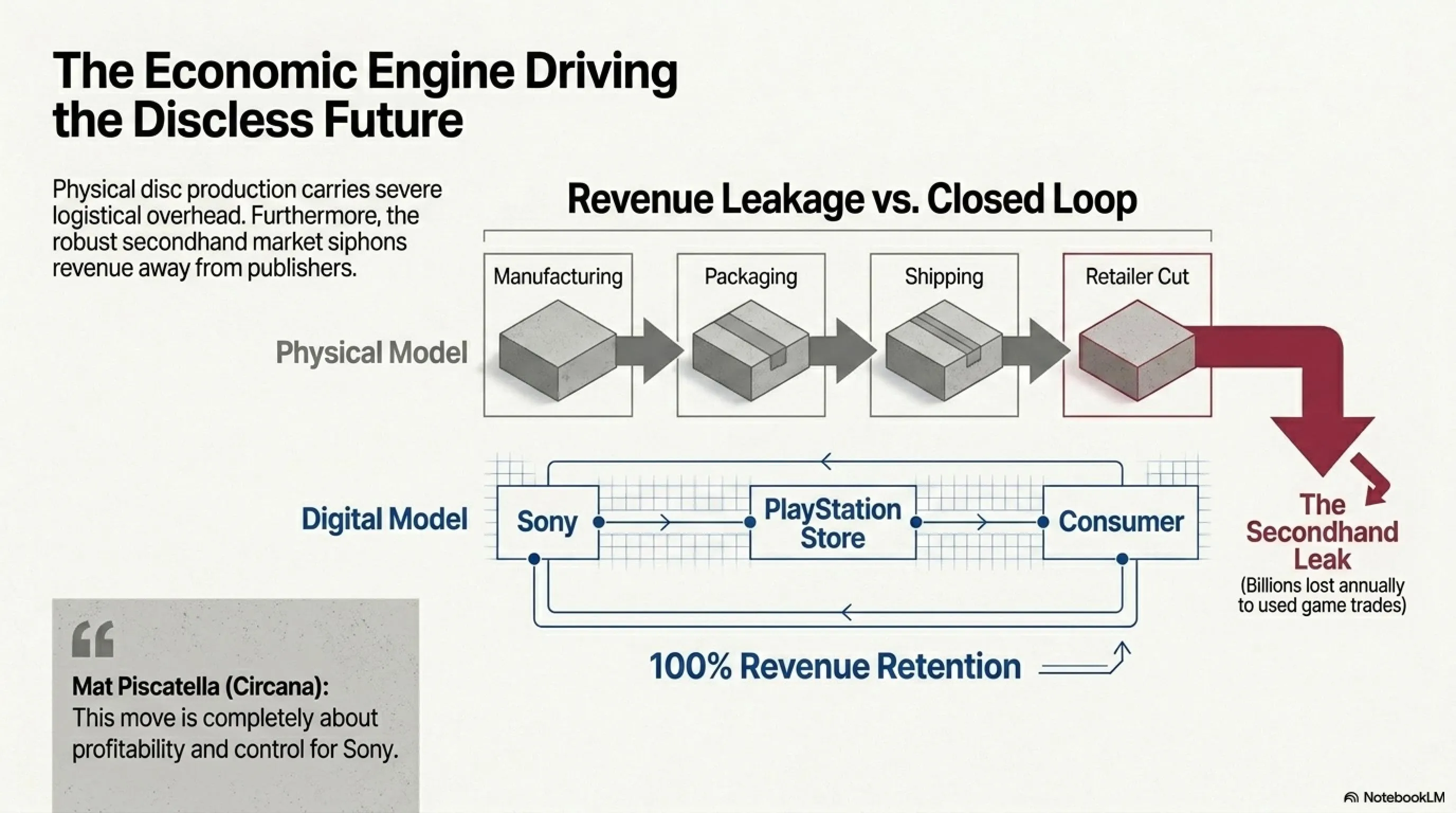
Mat Piscatella, video game industry advisor at Circana, told Game File that the base version of a PS6 will not include a physical media drive. He added that this move is completely about profitability and control for Sony.
Community Reaction: From Shock to Anger
Sony's announcement was met with a wave of negative reactions across the internet. Gamers, retailers, and even companies dependent on the gaming industry expressed deep concerns.
iam8bit, a company famous for producing physical gaming collectibles, stated: We are profoundly disappointed. Physical games are vital to games preservation, ownership, and consumer choice—values that have guided iam8bit since our first physical release in 2016. They ended their statement with the slogan: Long live physical media.
GameFly, the game rental service, also expressed disappointment and used the opportunity to promote a subscriber return offer at $2.50. They wrote: We are disappointed in the news today about the future of PlayStation video games. GameFly is run by people who believe physical products still matter.
Game Preservation Concerns
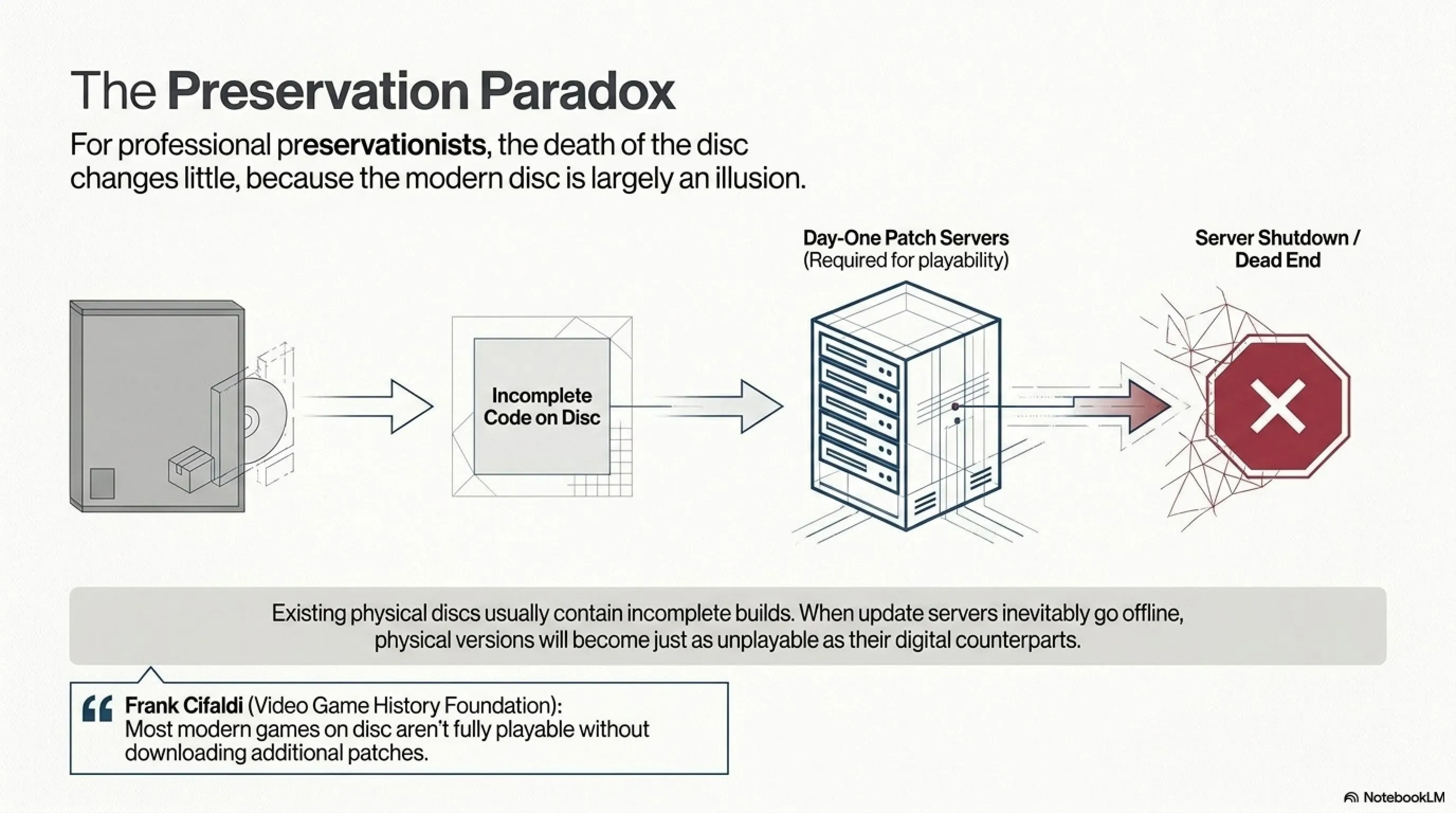
One of the biggest concerns about ending physical media is its impact on game preservation. Frank Cifaldi, director of the Video Game History Foundation, posted on Bluesky that this is unfortunate news, but for professional preservationists, this doesn't have as much of an impact as you might expect.
However, he acknowledged that this move creates serious problems for consumer rights. When games are only available digitally, you don't actually buy them—you only rent a license to play. If Sony decides to shut down servers or revoke your access, the game disappears forever.
Impact on Retailers: GameStop and the Survival Crisis
Perhaps the biggest losers in this decision are physical retailers like GameStop. GameStop has spent years generating revenue from selling new and used games. With physical discs disappearing, a major portion of their business model collapses.
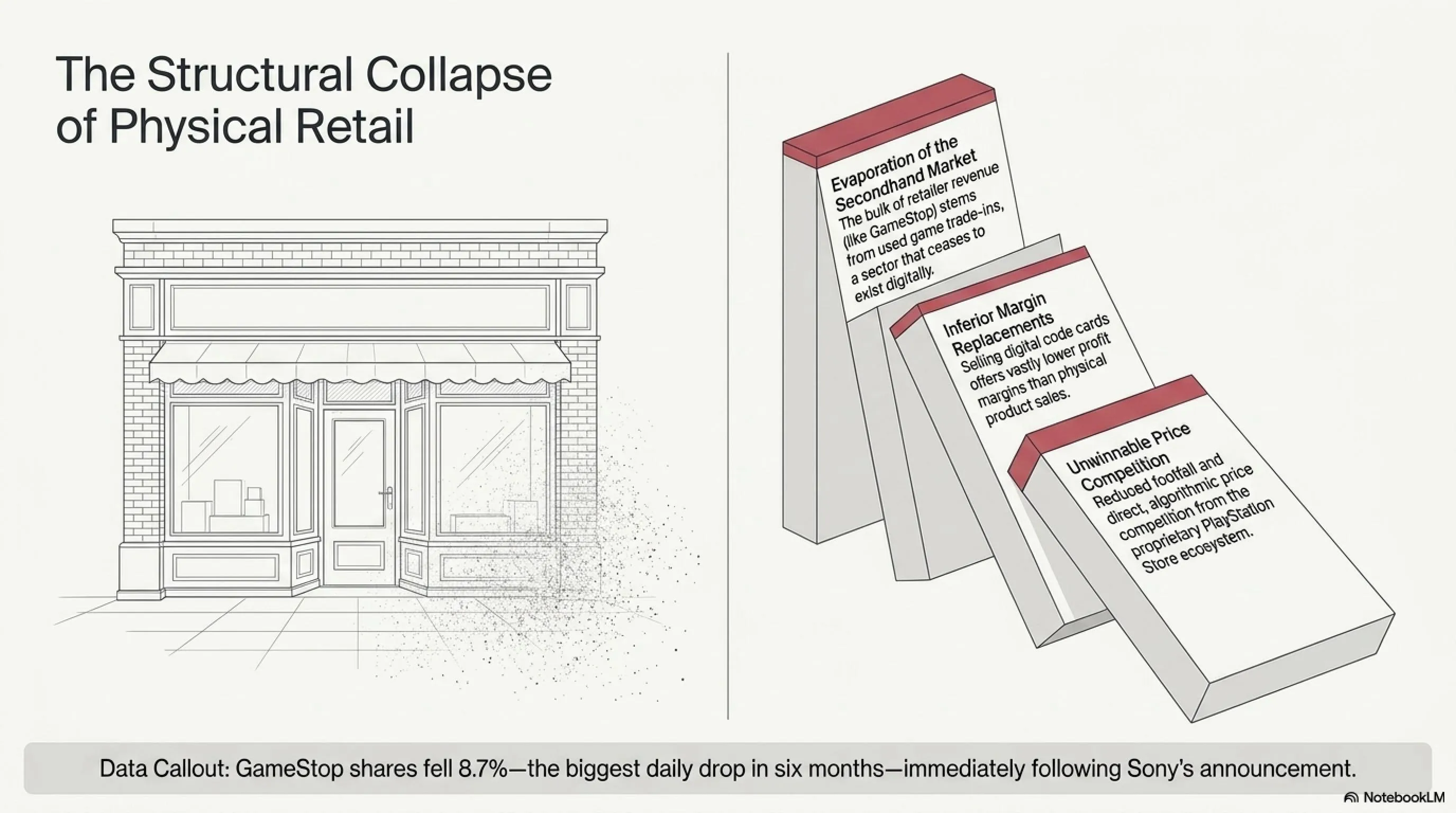
While Sony has said retailers can still sell digital versions of games—presumably in the form of digital code cards—this is a model that yields much lower profit margins for retailers. The bulk of GameStop's revenue has come from used game trade-ins, something that simply doesn't exist in the digital world.
Retail Challenges in the Digital Age
Ahmad wrote in his analysis: Having a retail presence is still important for many publishers, but it's clear that doesn't always need a disc, and won't be going forward. He continued that the decision to stop physical disc production at this point is entirely a platform-led decision designed to cut costs for Sony, eliminate resale and used markets, and drive 100 percent of revenue through the PlayStation Store.
Retailer Challenges
- Loss of secondhand market and trade-in deals
- Much lower profit margins on digital code sales
- Decreased foot traffic to physical stores
- Direct competition with PlayStation Store and its better prices
- Reduced customer incentive for in-person visits
Publisher Comparison: A Global Trend
Sony isn't the only company experiencing high digital sales. Throughout the industry, other major publishers are witnessing similar transformations.
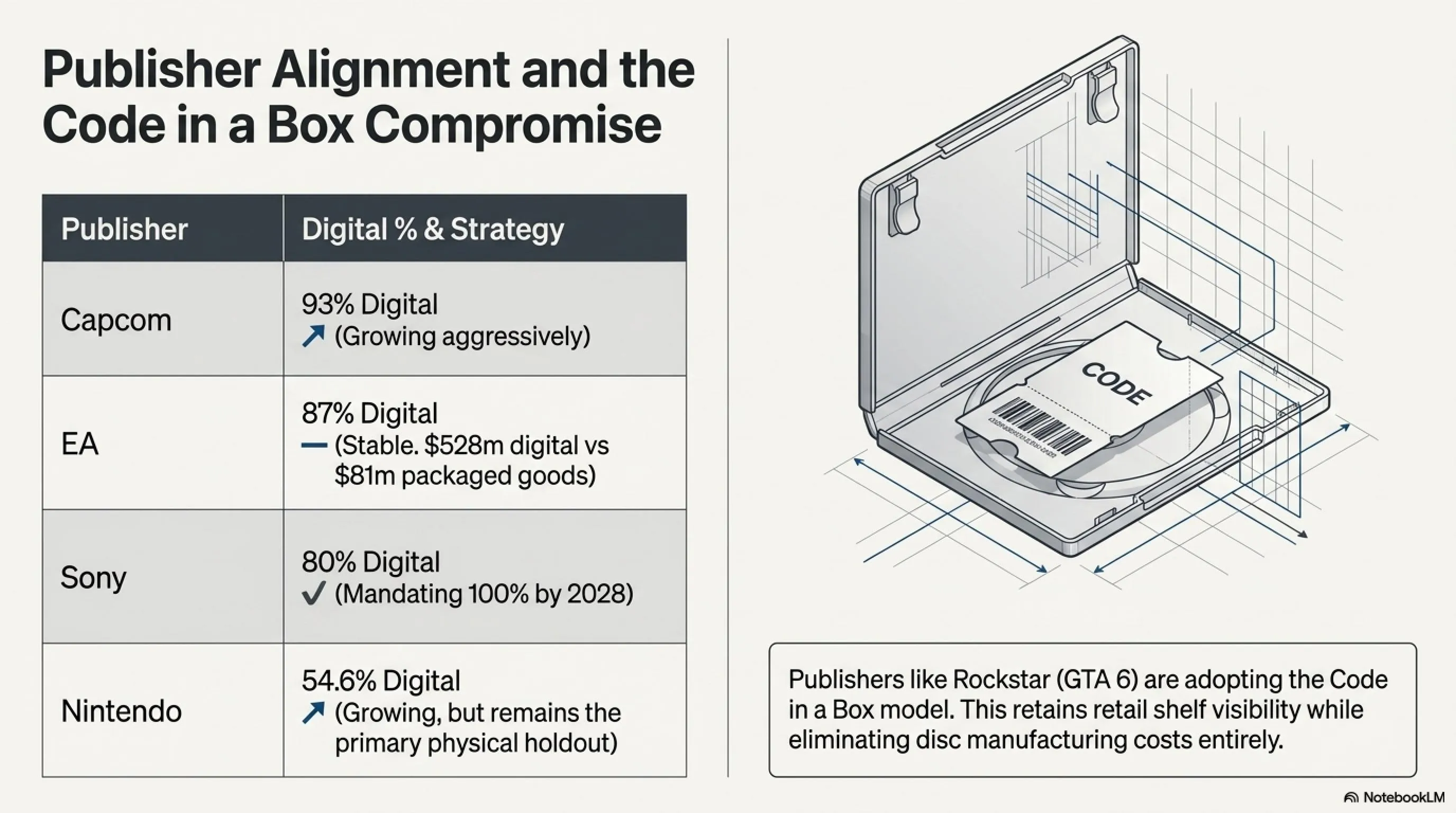
Capcom: 93 Percent Digital
Earlier this year, Japanese publisher Capcom—known for Resident Evil and Monster Hunter—reported that 93 percent of its game sales were digital. This compares to 75 percent just a few years prior. Capcom predicted that its digital sales percentage will grow next year.
Electronic Arts: Digital Dominance
Electronic Arts, one of the world's biggest game publishers, is also seeing increased digital share compared to physical. For EA's latest reporting period, full-game downloads amounted to $528 million, compared to $81 million for packaged goods.
Nintendo: Even the Holdout Surrenders
For Nintendo's latest fiscal year, the company said digital game sales were up 25 percent year-over-year, mainly due to an increase in sales of downloadable versions of packaged software. Digital sales grew by 1.1 points to make up 54.6 percent of total software sales for the fiscal year.
Major Publisher Digital Sales Comparison
| Publisher | Digital Sales Percentage | Trend |
|---|---|---|
| Capcom | 93% | Growing |
| Sony PlayStation | 80% | Growing |
| EA (Full Downloads) | 87% (of digital) | Stable |
| Nintendo | 54.6% | Growing |
GTA 6 and the New Wave: Code in a Box
Sony's decision gains additional significance when you consider that Rockstar Games recently confirmed GTA 6 won't ship with a physical disc. The internet wasn't happy about this news, and some retailers said they're now refusing to carry physical copies of the game.
This trend will likely continue. More publishers will turn to the code in a box model—where you buy a physical box but inside there's only a digital download code, not an actual disc. This allows publishers to maintain a retail presence while eliminating disc manufacturing costs.
Reactions from Physical Media Supporters
Aeternum Game Studios, an indie game developer, also took a stance in response to Sony's announcement. They wrote: We pledge to work urgently to bring every game we create—and those already on the way—tangibly to your shelves before that fateful early 2028 deadline.
They added: The industry may try to change its course but we will not let go of your hand. Your shelves will keep being filled with stories.
PS6: What to Expect
Sony's announcement virtually guarantees that PlayStation 6 will launch without a disc drive. Industry analysts have confirmed this, and the January 2028 date for ending disc production is a strong signal of PS6's launch timing.
Piscatella predicted: The base version of a PS6 will not include a physical media drive. This means gamers who want to use their physical disc collections will need to stick with their PS5s or turn to other options like Xbox or PC—if those platforms don't follow the same path.
PS6 Predictions
- No Disc Drive: Standard PS6 version will have no optical drive
- Launch Date: Likely late 2027 or early 2028
- Pricing: Sony has already warned it won't sell hardware at significant loss
- Game Sharing: Limited or impossible in fully digital environment
- Secondhand Market: Completely eliminated
Will Xbox Follow the Same Path?
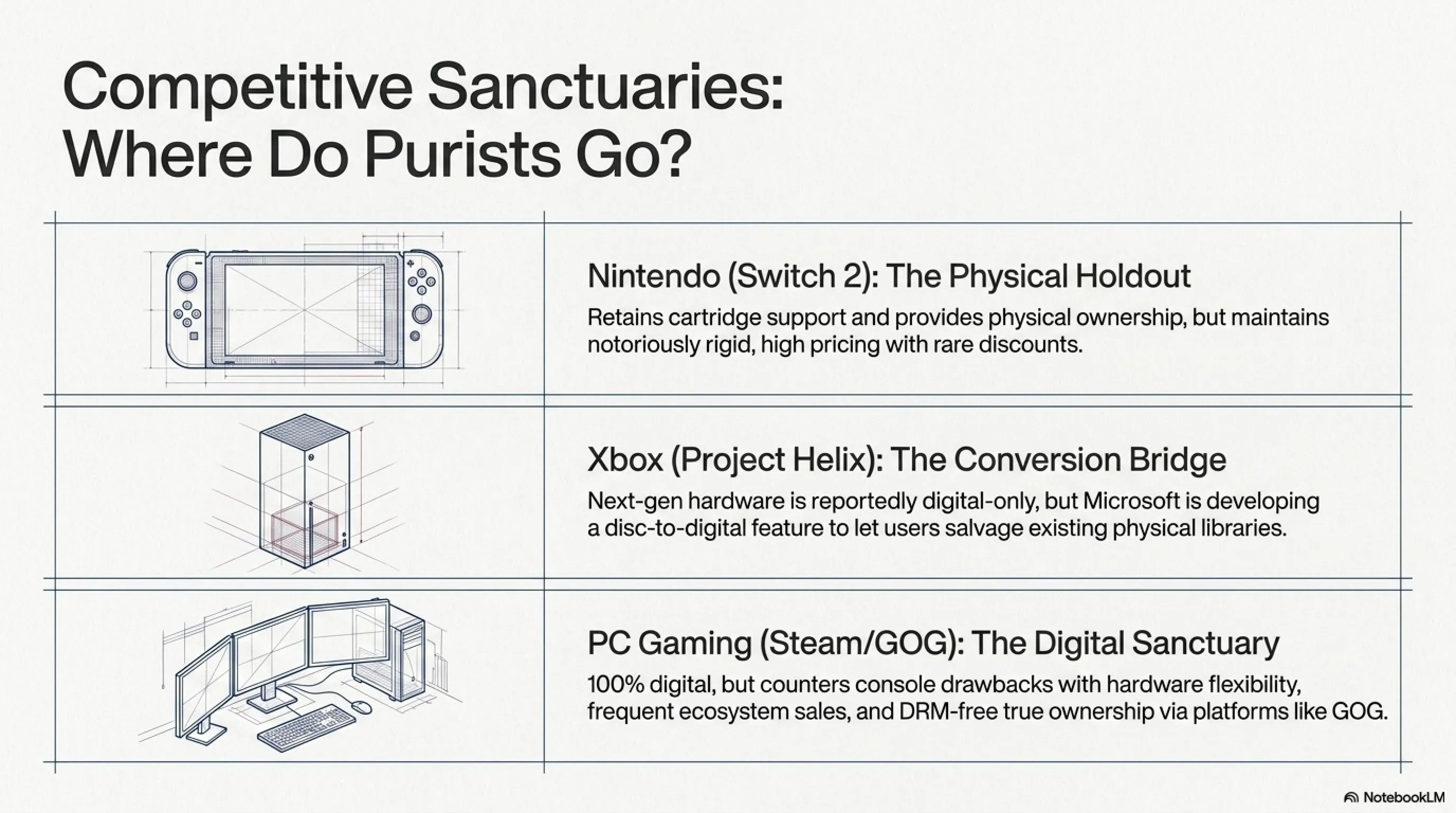
Reports indicate that the next-generation Xbox console, codenamed Project Helix, will likely be without a disc drive. The Verge reported that Microsoft hasn't decided yet, but is working on a disc-to-digital feature that will allow users to convert their physical discs to digital versions.
If both console giants go digital, Nintendo will be the only major player still supporting physical media—at least for a while.
Game Preservation Concerns: Is Gaming History at Risk?
One of the most contentious aspects of ending physical discs is its impact on video game history preservation. When games are only available digitally, what happens to them when servers shut down?
Frank Cifaldi explained in his post that existing games on disc are usually incomplete versions requiring day-one patches and online updates. He said: Most modern games on disc aren't fully playable without downloading additional patches. This means even if you have the physical disc, you might not be able to run the game in the future if update servers are no longer active.
The Digital Ownership Problem
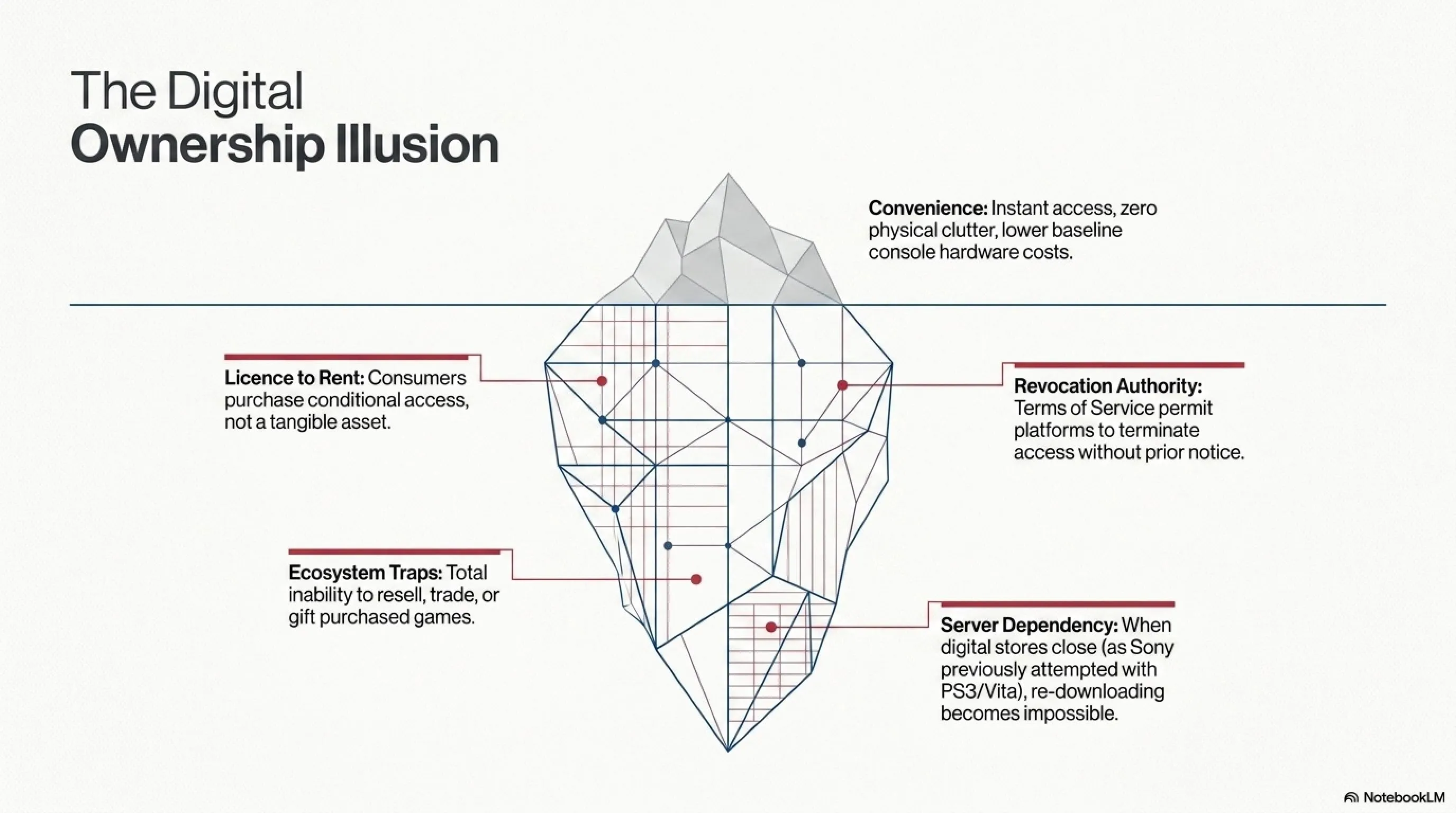
In the digital world, you don't actually own the game—you only purchase a license to access it. This license can be revoked at any time. Sony, Microsoft, Nintendo, and other platforms all state in their terms of service that they have the right to terminate your access without prior notice.
Several years ago, Sony decided to permanently close the PS3, PSP, and PS Vita digital stores. After severe community backlash, they reversed their decision—but it showed just how vulnerable digital content is. If Sony decides to close the PS5 store in the future, all your digital games could be lost forever.
Digital Ownership Risks
- License Revocation: Platform can terminate your access at any time
- Server Shutdowns: When stores close, re-downloading becomes impossible
- Bankruptcy: If a publisher goes bankrupt, their games may disappear
- Post-Sale Censorship: Game content can change without your permission
- No Resale or Gifting: You cannot sell or give away your digital games
Impact on Developing Countries: Access and Pricing
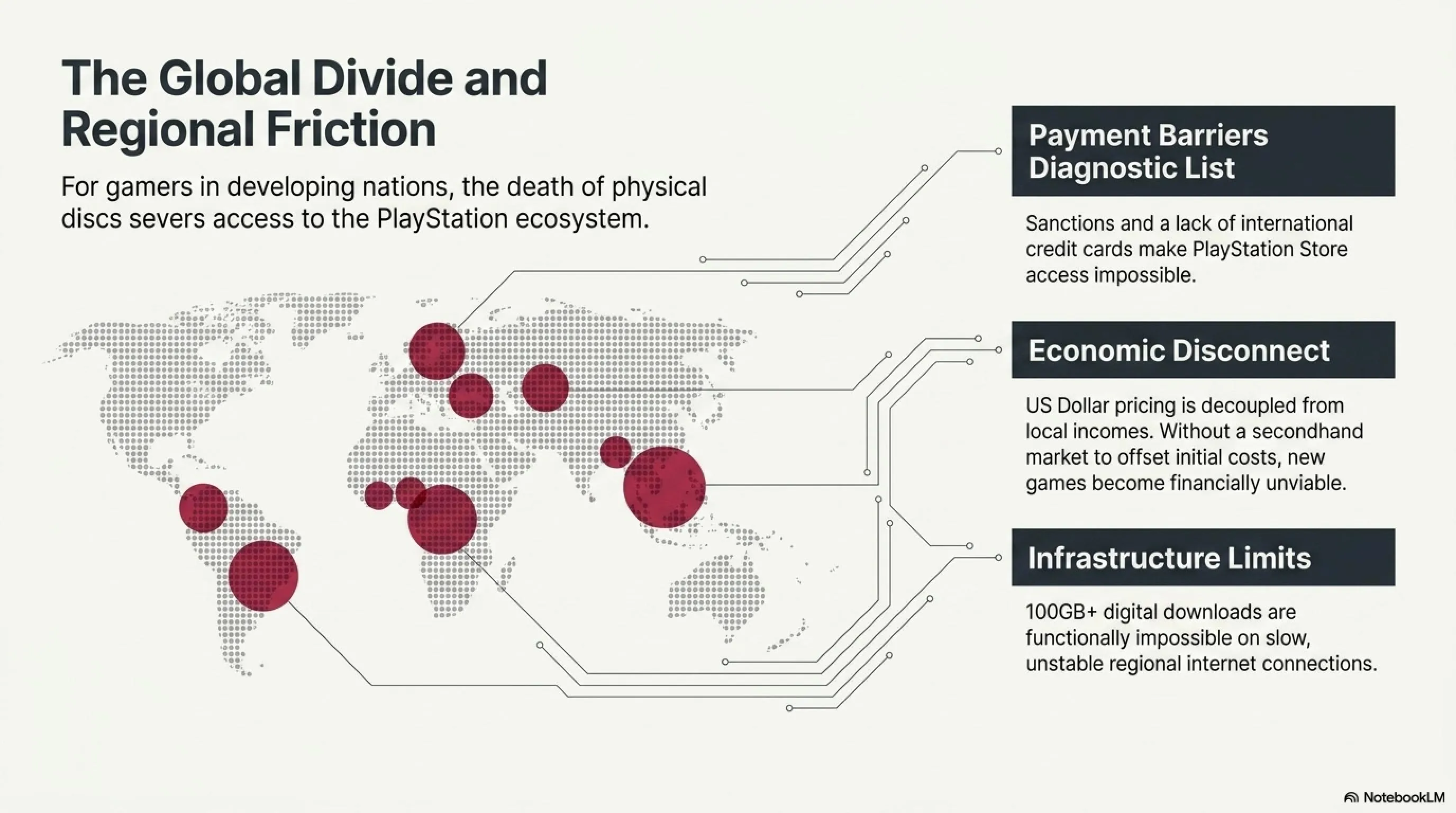
For many Iranian gamers and those in other developing nations, the end of physical discs could mean the end of access to new games. Digital purchasing requires international credit cards and unrestricted access to PlayStation Store—something that's difficult or impossible for millions of people.
Regional Challenges
In many countries, digital game prices are in US dollars while local income is much lower. Physical discs allowed gamers to buy secondhand games or share them with friends. In a fully digital world, these options don't exist.
Furthermore, fast and stable internet isn't available everywhere in the world. Downloading a 100GB game can take days—or be completely impossible—for those with slow or limited internet.
📚 Classified & Related Dossiers in TekinGame
If you wish to explore beyond this report and delve into cybernetic frontiers and autonomous AI architectures, do not miss these three exclusive deep-dives in the Tekin Garage:
Developing Market Challenges
- International payment restrictions and sanctions
- Dollar pricing without proportionality to local income
- Slow and limited internet for downloading massive games
- No access to affordable secondhand market
- Stricter region locking on digital storefronts
- No ability to share games among friends and family
Collector Community Reaction: The Last Stand
For game collectors, this news is devastating. Physical discs, art boxes, and instruction manuals have been part of gaming culture. Many gamers love having shelves full of their favorite games—something that doesn't exist in the digital world.
Limited Run Games, one of the largest producers of limited physical editions, hasn't announced their official response yet but reports indicate they're evaluating their options to continue producing physical editions even after January 2028.
Will Collector's Editions Survive?
Some companies like iam8bit and Aeternum Game Studios have announced they'll continue producing physical editions, even if it means using the code in a box model. These editions typically include art books, figurines, and other collectibles along with a digital download code.
However, the fundamental question remains: Is a box without an actual disc still worth collecting? For many collectors, the answer is no.
Comparison with Other Industries: Music and Film
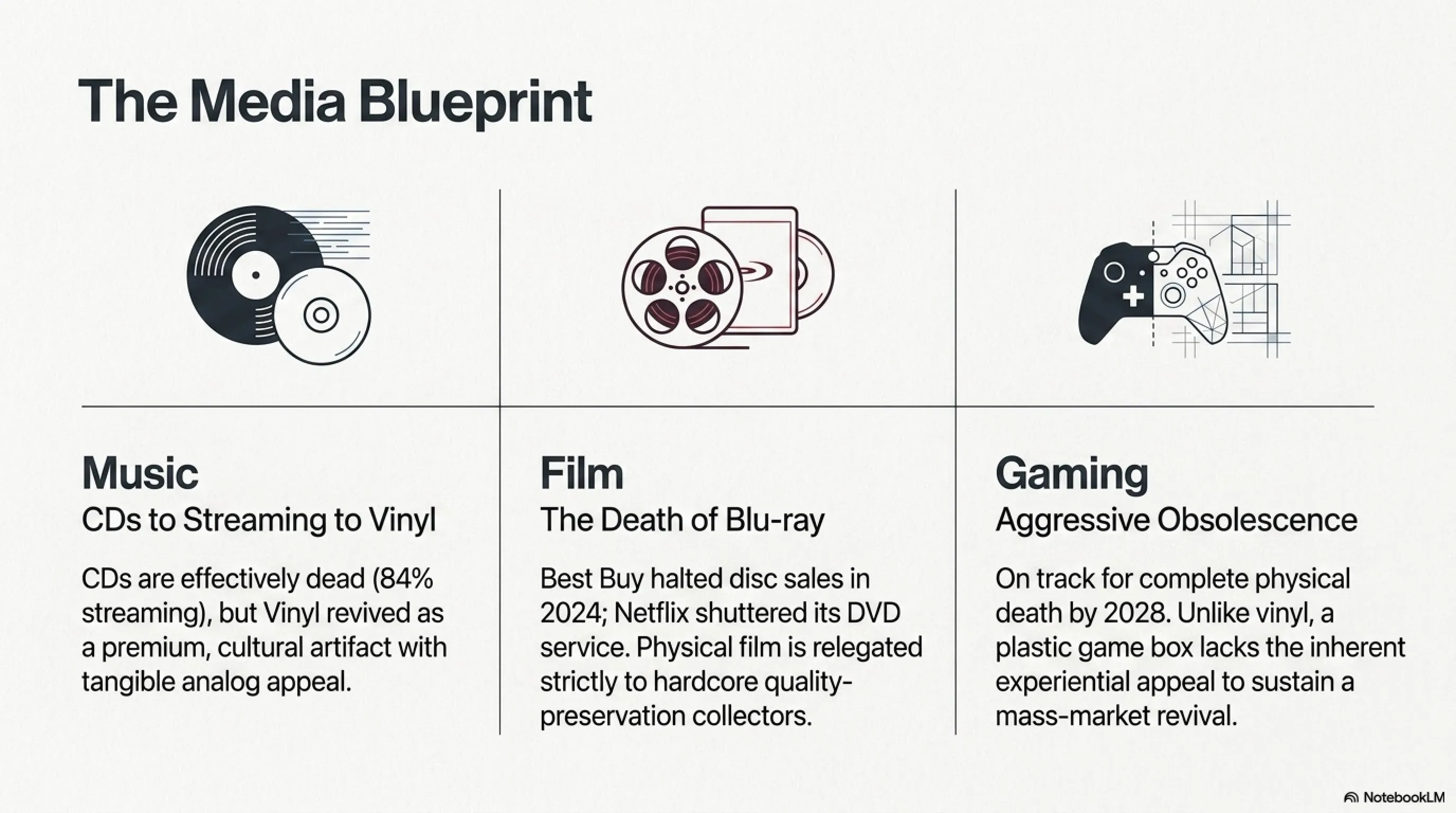
The gaming industry isn't the only one moving toward digital. Music and film made this transition years ago—with varying results.
Music Industry: CDs Died, Vinyl Lived
In the early 2000s, CD sales plummeted rapidly with the emergence of digital downloads and then streaming. But something interesting happened: vinyl records came back. In 2023, vinyl sales surpassed CDs—the first time in 35 years.
The reason? Vinyl is more than just media—it's an experience, a piece of art, and a cultural symbol. Some analysts believe game discs could have a similar fate: the majority goes digital but a small loyal market for physical editions remains.
Film Industry: Blu-ray is Dying
Blu-ray and DVD are also dying. Best Buy stopped selling physical discs in 2024 and Netflix closed their DVD service years ago. Now, streaming has total dominance—but at a cost: films are removed from platforms without notice and streaming compression quality never matches 4K Blu-ray.
Physical Media Fate Comparison
| Industry | Physical Status | Digital Percentage | Future |
|---|---|---|---|
| Music (CD) | Nearly dead | 84% (streaming) | Replaced by vinyl |
| Music (Vinyl) | Growing | — | Niche market |
| Film (Blu-ray) | Dying | 80%+ streaming | Collectors only |
| Gaming (PlayStation) | Ends 2028 | 80% and growing | Likely complete death |
Tekin Analysis: Is This the Right Decision?
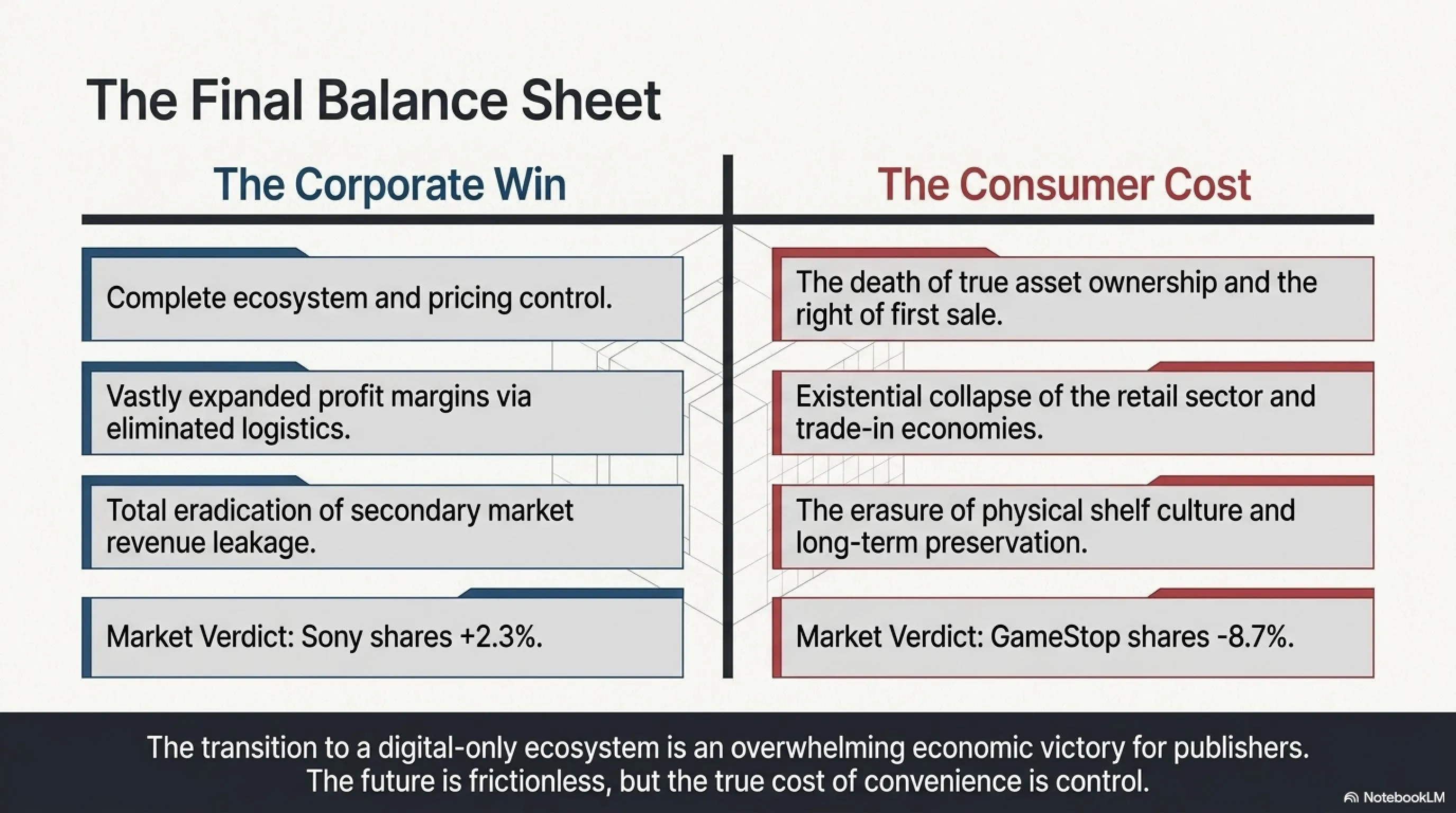
From a pure economic perspective, Sony's decision makes sense. Production, distribution, and inventory management costs for physical discs are high, and revenue from the secondhand market doesn't go to Sony. By eliminating discs, Sony gains complete control over pricing, distribution, and revenue.
But from a consumer perspective, this is a heavy blow to gamer rights. Choice, real ownership, and the secondhand market—all disappear. Gamers can no longer:
- Sell their game after finishing it
- Share games with friends
- Benefit from competitive pricing across different retailers
- Be certain their game will always be accessible
- Install games without internet
For developing markets like Iran, this decision could mean complete separation from the PlayStation ecosystem. Without easy access to digital purchasing and with dollar pricing, many gamers will be forced to turn to other options—like PC gaming or Nintendo consoles that still support discs.
- Reduced production and distribution costs for Sony
- Elimination of need for physical storage space
- Instant access to games without needing discs
- Lower console price without optical drive
- Better control over pricing and sales
- Loss of real game ownership
- End of secondhand market and ability to resell games
- Complete dependence on Sony servers
- Problems for countries with slow internet
- Increased PlayStation Store monopoly power
- End of physical collection and shelf culture
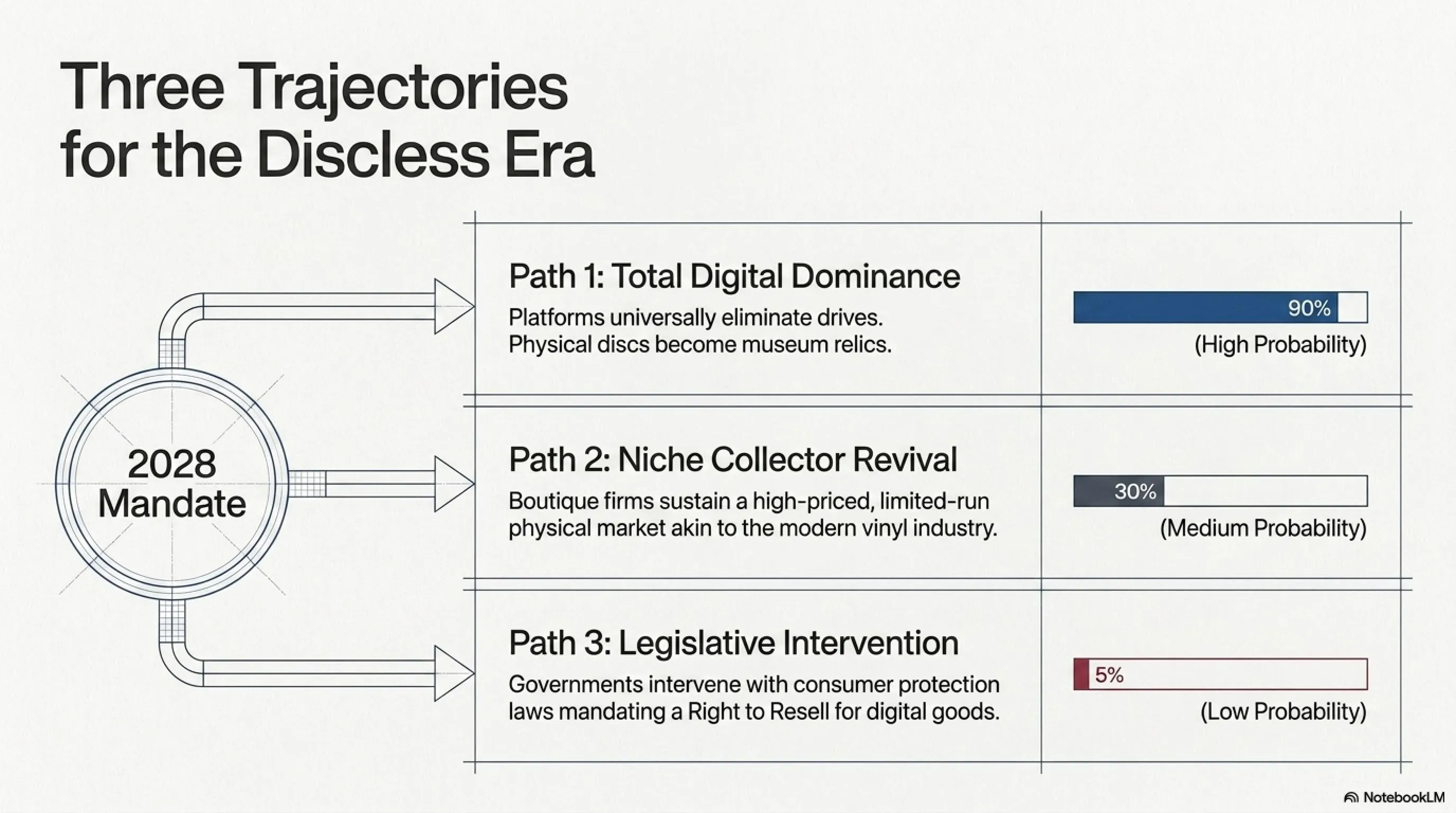
Future Scenarios
Several possible scenarios exist for the industry's future:
Scenario 1: Digital achieves total dominance. All platforms go digital and physical discs only remain in museums. This is the most likely scenario.
Scenario 2: Niche physical market returns. Like vinyl in the music industry, a small but profitable market for physical editions remains—but with higher prices and for collectors.
Scenario 3: Consumer legislation intervenes. Governments pass laws requiring companies to give consumers the right to resell digital games—similar to Right to Repair initiatives.
For now, scenario one has the highest probability.
Alternative Options: Who Wins?
With PlayStation ending disc support, some competitors might capitalize on this situation.
Nintendo: Physical Sanctuary?
Nintendo remains strongly committed to physical media. Nintendo Switch 2, expected to launch in 2025, is reported to support physical cartridges. For gamers who value physical ownership, Nintendo might become the primary choice.
However, Nintendo has its own pricing policy—Nintendo games rarely go on sale, whether digital or physical. This may not be attractive to consumers looking for deals.
Xbox and Disc-to-Digital Feature
Microsoft is working on a solution that might be middle-ground: the disc-to-digital feature. This allows gamers to convert their physical discs to digital versions. Details aren't clear yet, but if Microsoft implements this capability correctly, it could address many gamer concerns.
The Verge reported that the next-generation Xbox, Project Helix, will likely be without a disc drive but this disc-to-digital feature could make a big difference.
PC Gaming: Freedom and Flexibility
For many, PC gaming has always been the best option for control and flexibility. Steam, Epic Games Store, GOG, and other platforms offer regular sales, wide selection, and—in GOG's case—DRM-free games that truly belong to you.
With console discs ending, more gamers might turn to PC—especially with the advancement of Steam Deck and other PC handhelds.
Alternative Options Comparison
| Platform | Physical Support | Advantages | Disadvantages |
|---|---|---|---|
| Nintendo Switch 2 | Yes (cartridge) | Physical ownership, exclusive games | Lower processing power, fixed pricing |
| Xbox Series (future) | No (with disc-to-digital) | Game Pass, disc conversion feature | Details still unclear |
| PC Gaming | Limited | Flexibility, sales, GOG DRM-free | High hardware costs |
| PlayStation 6 | No | Strong exclusives | No physical option, Store monopoly |
Stock Market Reaction: What Investors Say
The stock market showed positive reaction to Sony's announcement. Sony shares rose 2.3 percent on announcement day as financial analysts evaluated this move as a smart economic decision.
Pelham Smithers, senior gaming market analyst, said: This move will significantly increase Sony's profit margin. Eliminating physical production costs and complete control over the distribution channel means more revenue for Sony.
In contrast, GameStop shares fell 8.7 percent—the biggest daily drop in six months. Analysts warned that GameStop's business model is seriously at risk.
Impact on Publishers
Game publishers also welcomed this decision. Capcom, Electronic Arts, and Ubisoft all released supportive statements. For publishers, eliminating discs means:
- Lower costs for production and logistics
- End of secondhand market that siphons revenue
- Better control over pricing and discounts
- More revenue from DLC and additional content sales
Conclusion: A New Era of Gaming
Sony's decision to end physical discs is a turning point in gaming industry history. This isn't just about technology—it's about power, control, and economics.
For Sony and publishers, this is a major economic win. They gain complete control over distribution, pricing, and revenue. But for consumers, especially in developing markets, this is a heavy blow.
Real ownership, secondhand market, sharing ability, and shelves full of games—everything that made gaming meaningful for a generation of players—are disappearing. The future is digital, but at a cost not yet fully apparent.
The big question is: Will the industry listen to consumer voices? Or will pure economics prevail over everything? Only time will answer—but given current trends, the answer is likely the latter.
Final Conclusion
For Sony and publishers: An economic victory with complete ecosystem control and higher profit margins.
For gamers: End of real ownership, more limited choice, and complete dependence on digital platforms.
For retailers: Existential crisis with loss of major revenue portion from physical games.
For game preservation: Risk of losing a large part of gaming history when servers shut down.
Frequently Asked Questions
Will my current PS5 disc games work on PS6?
Probably not, since PS6 is reported to launch without an optical drive. You'll need to purchase digital versions or stick with your PS5.
Can I still buy used PS5 games?
Yes, until January 2028 you can buy physical PS5 discs. After that, only digital games will be available.
What happens if Sony shuts down servers?
If Sony closes PlayStation Store, you likely won't be able to re-download your digital games. This is the risk with digital ownership.
Will Xbox do the same thing?
Probably yes. Reports indicate next-generation Xbox will also be without a disc drive, but Microsoft is working on a disc-to-digital feature.
Will Nintendo also eliminate discs?
Not currently. Nintendo Switch 2 is reported to support physical cartridges.
Can I still buy physical collector's editions?
Yes, companies like Limited Run Games, iam8bit, and Aeternum have announced they'll continue producing physical editions—but they may shift to code in a box model.
What impact does this have on Iran and sanctioned countries?
Very negative impact. Access to PlayStation Store and dollar payments are difficult for many. Physical discs were the only access method for many people.
Can I sell my digital game?
No. Digital games are tied to your account and you cannot sell or transfer them.
Sources
- PlayStation Official Blog - Sid Shuman's Announcement
- The Verge - PlayStation Disc Production Ending Coverage
- Game File - Mat Piscatella Interview
- Daniel Ahmad (Niko Partners) on X/Twitter
- Video Game History Foundation - Frank Cifaldi Statement
- iam8bit Official Statement
- Capcom Investor Relations - Digital Sales Data
- Electronic Arts Investor Relations
- Nintendo Investor Relations
Additional Gallery: 📀 The End of the Disc Era: Why Sony is Going All-Digital