
TEKIN ANALYSIS // EXECUTIVE BRIEF
The Renaissance of Toei Animation: How Egghead Redefined Weekly Shonen Production
For the better part of two decades, enthusiasts of the One Piece anime endured the structural compromises endemic to a perpetual, year-round weekly broadcast: dragging pacing, static pan shots, and noticeable visual inconsistency during transitional narrative arcs. Yet, beginning with the climactic raid on Onigashima in the Wano Country Arc, and exploding exponentially with the grand awakening of Gear 5 (Sun God Nika) in Episode 1071, Toei Animation executed one of the most radical institutional overhauls in anime history. No longer content with merely meeting weekly broadcast deadlines, the studio reconstituted its production pipeline into an international magnet for elite creative talent.
Under the visionary guidance of auteur directors such as Megumi Ishitani and Tatsuya Nagamine, Toei tore down traditional corporate barriers, aggressively scouting and empowering brilliant independent web-animators and international sakuga prodigies hailing from France, South America, and across East Asia. When the narrative transitioned into the retro-futuristic labyrinth of Egghead Island, Toei unveiled an entirely refreshed visual identity: ditching heavy compositing filters in favor of soft, expressive linework, vibrant pop-art color palettes, and cinematic aspect ratio experimentation. All of these artistic investments culminate in the monumental spectacle of Episode 1143.
Directed and key-animated by generational titans including Vincent Chansard and Akihiro Ota, Episode 1143 does not merely adapt chapters from Eiichiro Oda's magnum opus; it elevates the source material into a transcendent theatrical experience. Every cut pulses with kinetic vitality, volumetric lighting, and a profound understanding of visual storytelling that establishes an untouchable gold standard for television animation worldwide.
Tekin Strategic Command // 6 Defining Imperatives of Episode 1143
Why Does Episode 1143 Represent a Historic Milestone in Pop Culture?
Episode 1143 stands as the crowning achievement of One Piece's 26-year anime legacy; a breathtaking convergence where monumental lore revelations meet the absolute artistic pinnacle of modern 2D key animation.
The Sun vs The Photon: Gear 5's Toon Force Breaks the Laws of Physics
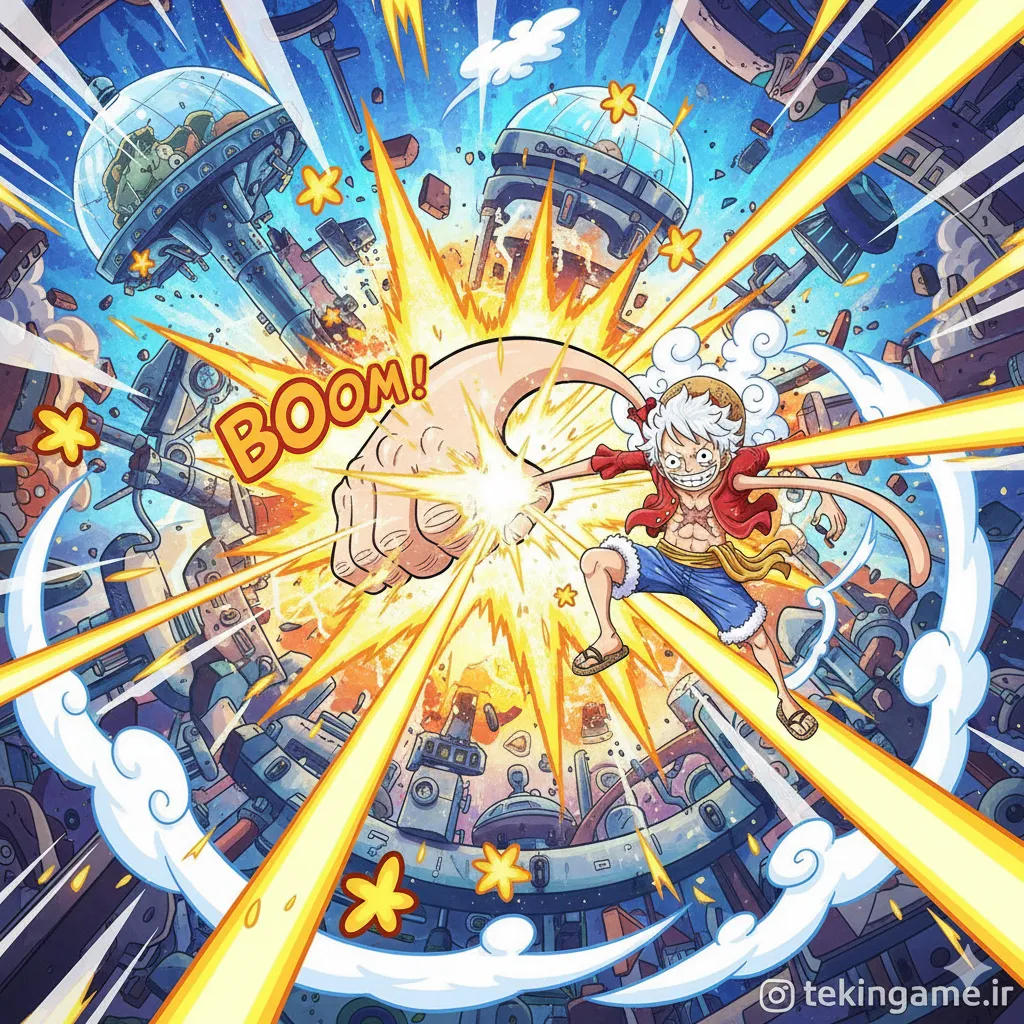
The titanic duel between Monkey D. Luffy and Admiral Borsalino (Kizaru) in Episode 1143 represents one of the most brilliant conceptual confrontations ever authored in manga history. For fifteen years, since the heartbreaking massacre of the Straw Hat crew at the Sabaody Archipelago prior to the two-year timeskip, Kizaru hovered over the narrative as an unreachable summit of sheer, terrifying inevitability. Wielding the logia-class Pika Pika no Mi (Glint-Glint Fruit), Kizaru is the physical avatar of light itself—capable of accelerating sub-atomic particles to 300,000 kilometers per second, discharging devastating laser barrages that vaporize entire city blocks, and delivering kicks with photonic kinetic mass that obliterate mountain ranges.
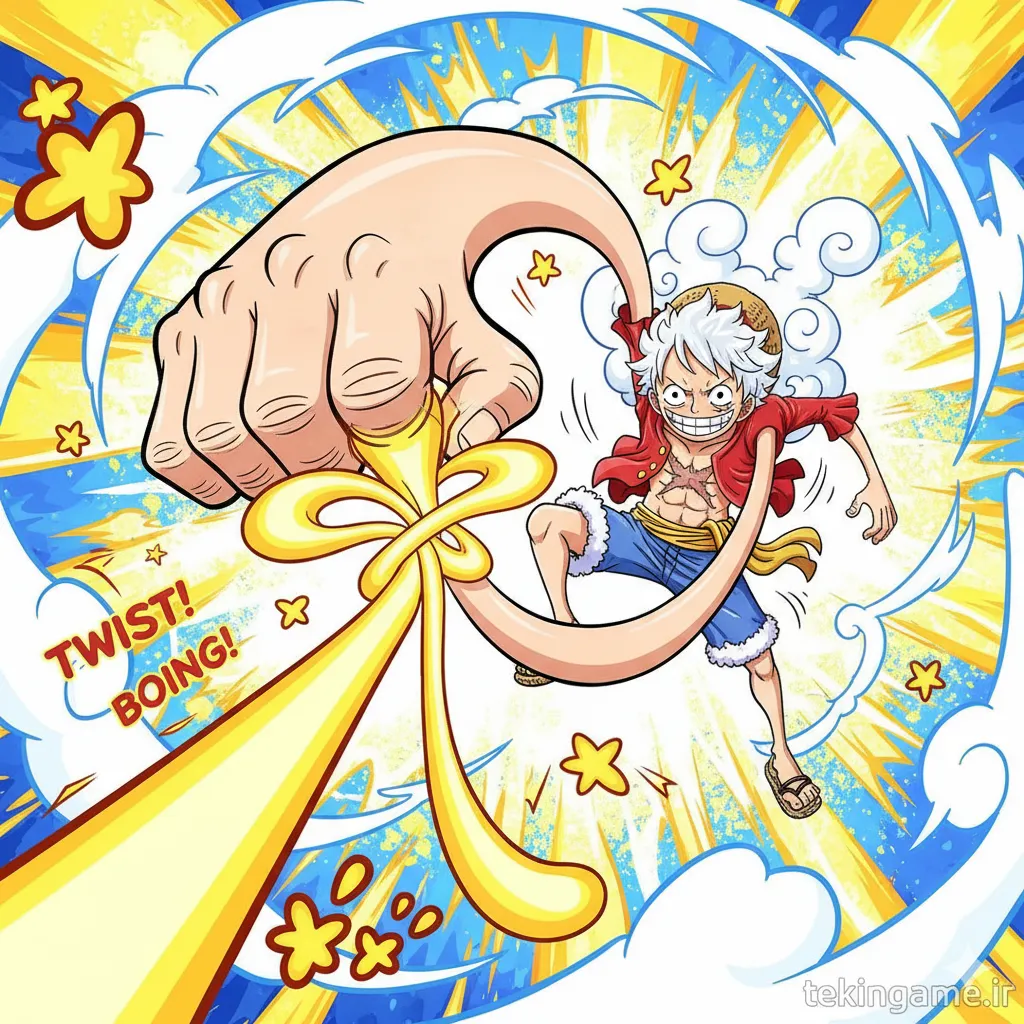
Yet on Egghead Island, Luffy meets this terrifying speed of light not with tense desperation, but with the boundless, irreverent joy of Sun God Nika. What makes Episode 1143 an absolute triumph of artistic direction is how Toei visualized this clash of physical doctrines. Luffy does not deflect Kizaru's beams through brute martial force; he manifests animated Looney Tunes physics directly inside a dark military sci-fi environment! Luffy summons cartoon sunglasses out of his cloud-like hair, his eyes violently detach from his skull in classic Tex Avery fashion, and he physically grabs Kizaru's laser beams with his bare rubberized hands, stretching light like a child's toy before hurling it back across the skyline.
This whimsical cartoon force is not frivolous parody; it is Eiichiro Oda's deepest philosophical thesis. In a world enslaved by the rigid, joyless tyranny of the World Government, ultimate power is not defined by brooding edge or lethal cruelty—it is defined by the absolute freedom to laugh in the face of despair. As the thundering Drums of Liberation echo through the clouds with the beating of Luffy's heart, Kizaru's stoic military professionalism begins to crack, realizing for the first time in his legendary career that sheer physics cannot govern an entity that commands pure imagination.
Separating Myth from Reality Across the Egghead Island Warzone
Grand Line Lexicon // Terminology of the Climax and Ancient Powers
Chronological Odyssey: From the Dawn of Gear 5 to the Egghead Cataclysm
The Demonic Manifestation of Saint Saturn: Cosmic Horror Pierces the Shonen Veil
While the heavens above Egghead ignite with Luffy and Kizaru's reality-bending duel, the ground below witnesses a terrifying rupture in the fabric of One Piece's universe: the arrival of Saint Jaygarcia Saturn. For over a quarter of a century, the Gorosei (Five Elders) were depicted as elderly, aristocratic bureaucrats sequestered inside the pristine marble sanctuaries of Pangaea Castle in Mary Geoise. The common consensus assumed they were physically frail statesmen dependent upon admirals and Cypher Pol assassins for security.
Episode 1143 dismantles that assumption with harrowing finality. Saturn does not step onto Egghead from a naval shuttle; he arrives through an ominous, pitch-black demonic summoning circle pulsating with unholy kanji runes and dark matter particle discharges. When the smoke clears, Saturn reveals his true form—not a conventional Zoan transformation, but a grotesque, nightmare incarnation of the mythological Japanese yokai Ushi-oni. Towering with the horned visage of an ancient demon and supported by six segmented, razor-sharp spider appendages, Saturn commands an aura of pure cosmic horror.
Toei's sound design and lighting composition pivot instantly from high-octane anime energy to suffocating gothic dread. Saturn's mere glare exerts an unseen psychic gravity that bursts the heads of low-ranking Marines like overripe fruit. Conventional steel blades shatter against his carapace, and catastrophic physical wounds regenerate instantaneously in puffs of foul black smoke without leaving a trace of scar tissue. For the first time in the franchise's history, audiences comprehend that Luffy's ultimate adversaries are not merely soldiers—they are immortal, ancient fiends that have held humanity in an iron grip of ignorance for eight centuries.
Comparative Tactical Matrix: The Three Sovereign Pillars of Episode 1143
Thematic & Narrative Layer Allocation in Episode 1143's Direction
The Global Broadcast: Dr. Vegapunk Pulls the Pin on the Void Century Grenade
The supreme narrative linchpin binding Episode 1143 into an unforgettable masterpiece is the ticking clock of Dr. Vegapunk's death. Aware that Saint Saturn's personal arrival on Egghead signed his inescapable death warrant, the world's most brilliant scientist engineered an ingenious dead-man's trigger: a clandestine broadcast transponder embedded within the island's central computer core, programmed to seize global Den Den Mushi frequencies the instant his vital signs flatline.
This imminent transmission transforms the battle from a tactical escape into a planetary inflection point. Vegapunk's message is not a plea for rescue; it is an apocalyptic truth bomb detonating across the four seas. As the countdown ticks down across screens in Foosha Village, Water 7, Dressrosa, and the deepest chambers of Mary Geoise, Vegapunk prepares to reveal the darkest secret of the Void Century: that the world of One Piece is actively sinking beneath rising oceanic tides caused by the activation of ancient planetary superweapons.
Toei's brilliant cinematic framing cuts across disparate civilizations, capturing the frozen disbelief on the faces of pirates, kings, and common laborers alike. Episode 1143 marks the definitive death of the status quo, permanently shifting the stakes from individual pirate rivalries into an apocalyptic struggle for the collective survival of the human race.
The Tragic Geometry of Borsalino, Kuma, and Jewelry Bonney
Beneath the thunderous sakuga choreography and geopolitical earthquakes, the emotional heart of Episode 1143 pulses with heartbreaking personal tragedy. Admiral Kizaru is not an unfeeling robotic villain; decades prior, in this very laboratory, Borsalino danced alongside Dr. Vegapunk, shared meals with Sentomaru, and watched the young child Jewelry Bonney laugh in the arms of her heroic father, Bartholomew Kuma.
Now, bound by the ruthless machinery of the World Government's chain of command, Kizaru is forced to aim lethal lasers at the child he once protected. Toei captures this psychological torture with exquisite subtlety: behind Kizaru's tinted sunglasses, microscopic frame adjustments reveal trembles of hesitation and suppressed sorrow. When Bonney gazes upward through tear-stained eyes to see Luffy dancing in the radiant silhouette of Sun God Nika—the exact mythical savior her father prayed for through years of brutal cybernetic enslavement—the narrative tapestry of One Piece locks together in emotional perfection.
📚 Classified & Related Dossiers in TekinGame
If you wish to explore beyond this report and delve into cybernetic frontiers and autonomous AI architectures, do not miss these three exclusive deep-dives in the Tekin Garage:
Global Anime Community Sentiment Index for Episode 1143
Toei Animation Capability Evaluation Matrix Across Egghead Production Pillars
Diagnostics Console // Toei Digital Rendering Pipeline & Impact Frame Telemetry
Technical Sakuga Breakdown: Impact Frames, Line Art, and Digital Lighting

From a purely technical perspective, Episode 1143 serves as a masterclass in modern digital 2D animation workflows. Lead animator Vincent Chansard utilizes aggressive smear frames, hyper-dynamic perspective warping, and anatomical elasticity to convey Luffy's uninhibited momentum. The camera does not remain stationary; it swoops, corkscrews, and dives alongside Luffy through exploded research towers with breathtaking volumetric presence.
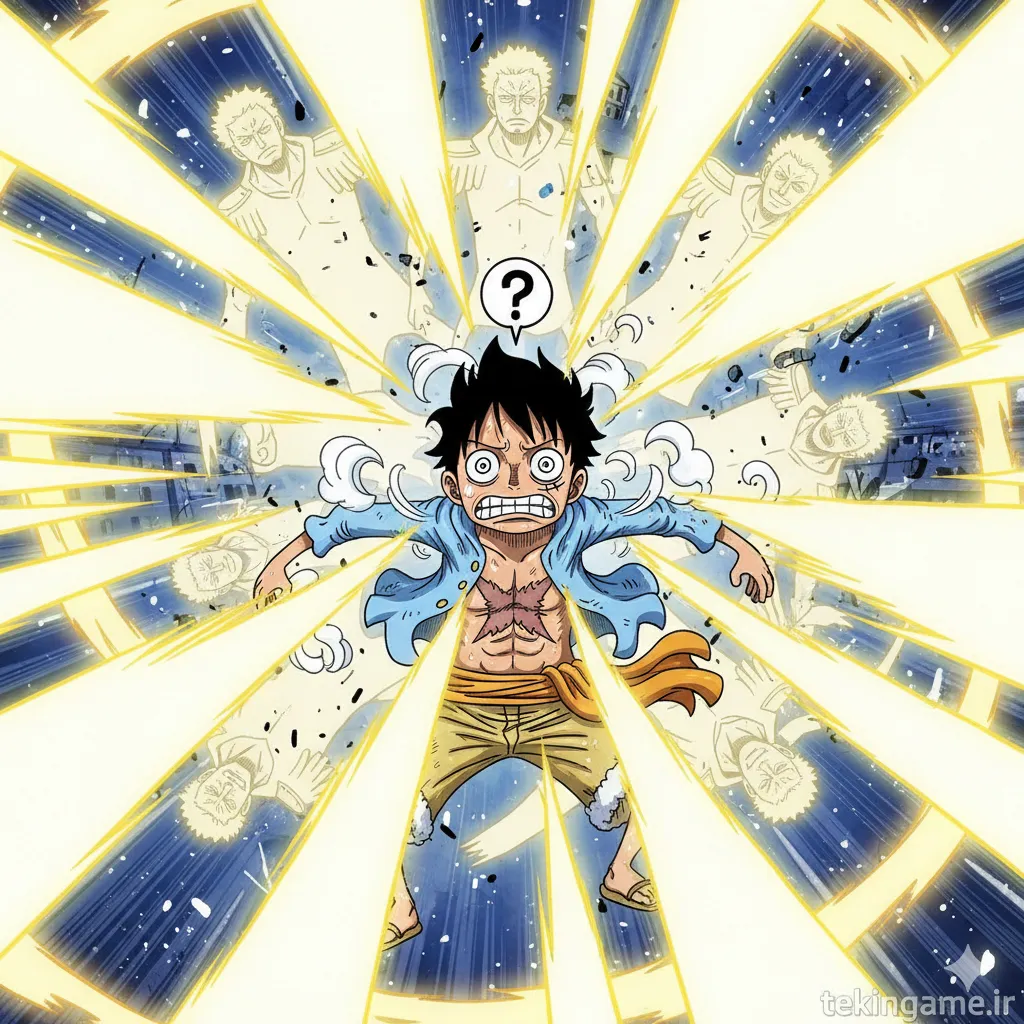
Equally mesmerizing is the deployment of monochrome impact frames during pivotal kinetic strikes. When Luffy lands a devastating coated blow against Kizaru, the entire visual field flashes into razor-sharp black-and-white ink drawings for two to three frames, burning the kinetic violence of the impact directly into the viewer's retina before expanding into radiant amber shockwaves. Harmonized with Kohei Tanaka's soaring symphonic score, Episode 1143 elevates anime from commercial entertainment into pure, unadulterated high art.
The auditory landscape crafted by composers Kohei Tanaka and Shiro Hamaguchi reaches operatic proportions throughout this episode. The iconic rhythmic triplet cadence of the Drums of Liberation reverberates with live orchestral timpani, layered alongside joyful Afro-Caribbean brass fanfares and euphoric vocal choirs. In contrast, every sequence framing Saint Saturn introduces oppressive, droning contrabass frequencies and discordant synthetic bass pulses, establishing an acoustic duality between the warm embrace of freedom and the cold vacuum of celestial tyranny.
The Void Century and the Mother Flame: Planetary Worldbuilding at Scale
Beyond kinetic combat, Episode 1143 functions as the intellectual apex of One Piece's mythos. The narrative connects the catastrophic events on Egghead directly to the erased history of the Void Century (800–900 years ago). For decades, readers theorized about the nature of the ancient kingdom and the mysterious energy source coveted by the World Government. In this climactic arc, that enigma is unmasked as the Mother Flame—a perpetual artificial fusion energy source created by Vegapunk that was co-opted by the sinister Imu to obliterate the entire Kingdom of Lulusia in seconds, leaving an unfillable hole in the ocean.
By contrasting the boundless, life-affirming spiritual energy of Sun God Nika with the sterile, genocidal weaponization of nuclear-like fusion in the Mother Flame, Eiichiro Oda weaves an intricate philosophical critique of industrial authoritarianism. The World Government does not merely suppress rebellion through military boots; it monopolizes scientific illumination to plunge civilian populations into perpetual intellectual darkness. Vegapunk's desperate broadcast shatters this monopoly, democratizing truth across all four oceans and turning every disenfranchised island into an incandescent spark of revolution.
The Revolutionary Front: Dragon and Sabo's Geopolitical Counter-Offensive
While Luffy wages war in the neon stratosphere of Egghead, the geopolitical reverberations of Episode 1143 ripple outward to the Revolutionary Army command at Kamabakka Queendom. Led by Monkey D. Dragon and Chief of Staff Sabo, the global insurgent network mobilizes to capitalize on the chaos. Having witnessed the monstrous phantom powers of the Gorosei inside the sacred Room of Flowers at Mary Geoise during the Levely, Sabo's firsthand intelligence aligns perfectly with Vegapunk's revelations.
The Revolutionary Army's strategy is not conventional naval warfare, but an economic and logistical stranglehold: cutting off commercial shipping grain convoys to the Holy Land of Mary Geoise, initiating popular uprisings across non-affiliated nations, and preparing the common populace for the catastrophic sea-level rise predicted by Vegapunk. As Kizaru struggles against the liberating rubber of Gear 5, the global hegemony of the Celestial Dragons fractures simultaneously across domestic, ideological, and militaristic fronts, proving that Episode 1143 is not merely an isolated shonen battle, but the opening salvo of a comprehensive planetary revolution.
Production Risk Matrix & Weekly Broadcast Sustainability in the Final Saga
Strategic Synthesis & Official Intelligence References
Episode 1143 of One Piece transcends the parameters of standard serialized television, representing a historic cultural landmark where twenty-six years of meticulous Eiichiro Oda myth-building converges with the absolute peak of modern sakuga animation. The glorious friction between Kizaru's golden photons and the unchained laughter of Sun God Nika, married to the cosmic horror of Saint Saturn's demonic descent, propels One Piece into its breathtaking Final Saga with unmatched cinematic power.
- • Toei Animation Official Production Diaries & Episode 1143 Staff Credits
- • Eiichiro Oda Official SBS Commentary & Weekly Shonen Jump Manga Archives (Egghead Arc)
- • Sakugabooru Key Animation Analysis of Vincent Chansard & Akihiro Ota Sequences
- • Crunchyroll Streaming Traffic & Global Server Load Analytics (Fall 2024 - 2025)
- • Anime News Network Technical Post-Mortem of Toei's Digital Compositing Pipeline
- Mind-boggling animation quality that rivals multi-million-dollar theatrical anime feature films within a weekly broadcast format.
- Profound thematic visual direction highlighting the clash between authoritarian dread and the radiant laughter of emancipation.
- Meticulous fidelity to Eiichiro Oda's manga framing while expanding combat encounters with breathtaking original choreography.
- Legendary musical direction by Kohei Tanaka, weaving the thundering Drums of Liberation to induce full-body goosebumps.
- Inherent structural pacing friction necessitated by the anime closely trailing Weekly Shonen Jump manga publication.
- Sheer visual density and ultra-high-velocity impact frames occasionally overwhelming casual viewers trying to track combat beats.
- Agonizing cliffhanger structure requiring prolonged patience to experience the full geopolitical fallout of Vegapunk's transmission.
Frequently Asked Questions Regarding One Piece Episode 1143 and the Egghead Climax
Why has Episode 1143 generated such unprecedented global hysteria across social media?
Episode 1143 marks the monumental collision between newly crowned Emperor Monkey D. Luffy and Admiral Kizaru, resolving a rivalry lingering since the tragic Sabaody Archipelago arc. Furthermore, Saint Saturn's physical battlefield descent and Vegapunk's apocalyptic transmission permanently alter the world order.
How does Luffy's Gear 5 physically counter Kizaru's speed-of-light attacks?
Gear 5 operates on reality-bending cartoon physics (Toon Force). Luffy does not merely block light; he treats Kizaru's laser beams as tangible rubber bands, catching photons with his bare hands, warping the surrounding atmosphere, and reflecting energy blasts back at the Marine fleet with playful irreverence.
What is the monumental narrative significance of Saint Saturn's appearance on Egghead?
For over two decades, the Gorosei were presumed to be fragile bureaucratic aristocrats hiding behind admirals. Saturn's horrifying transformation into the mythological Ushi-oni confirms that the Five Elders are immortal, monstrous cosmic entities directly participating in planetary warfare.
Who were the primary visionary animators responsible for this episode's sakuga sequences?
An elite cadre of international and Japanese animation prodigies led by Vincent Chansard and Akihiro Ota, working under Toei Animation's top directors, hand-crafted the breathtaking key sequences that defined this masterpiece.
