Tekin Night July 24, 2026: Microsoft's In-House MAI Models, Hands-Free Voice Coding in ChatGPT Desktop, and Nvidia's 1.4 ExaFLOPS GB300 NVL72
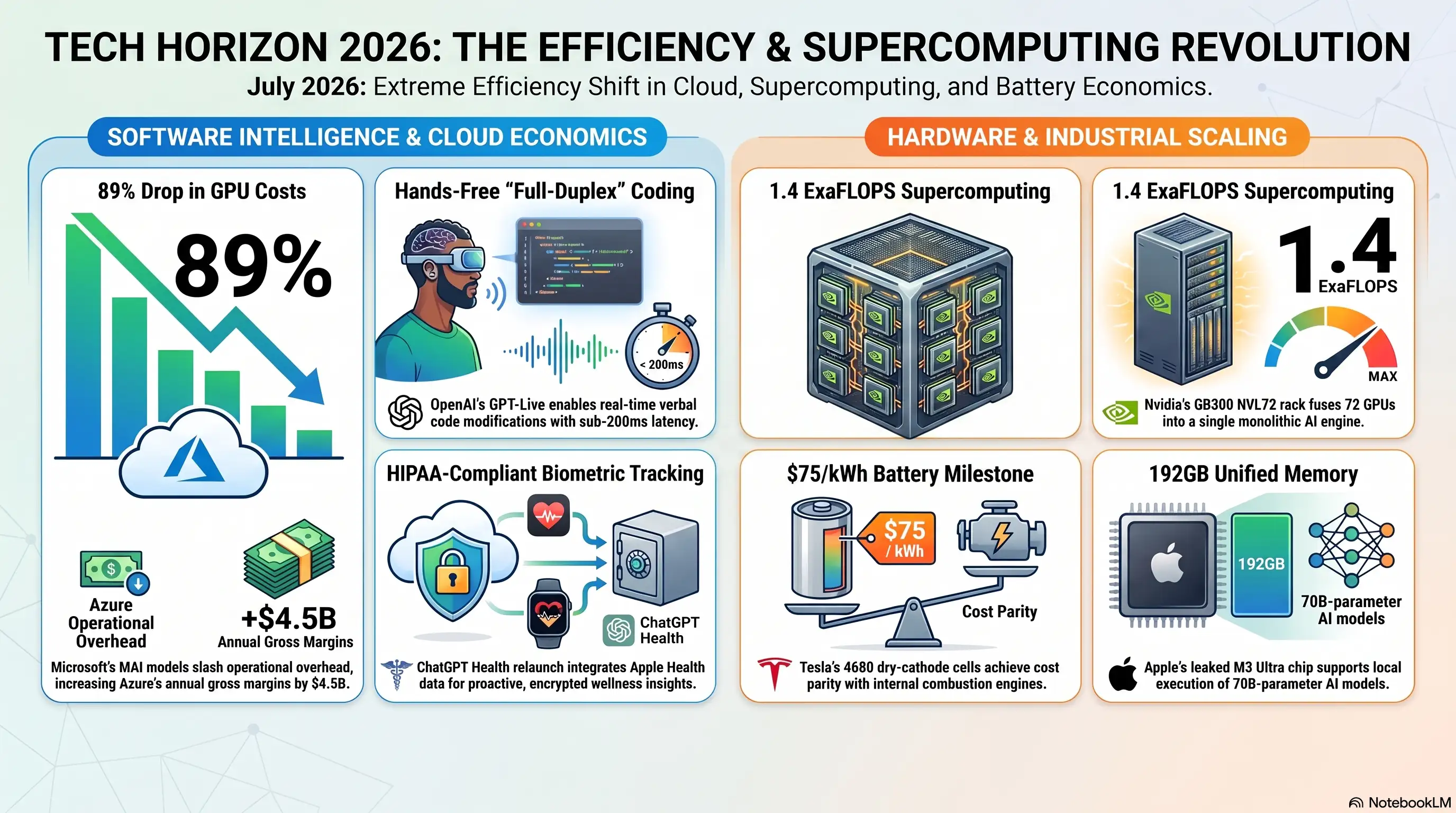
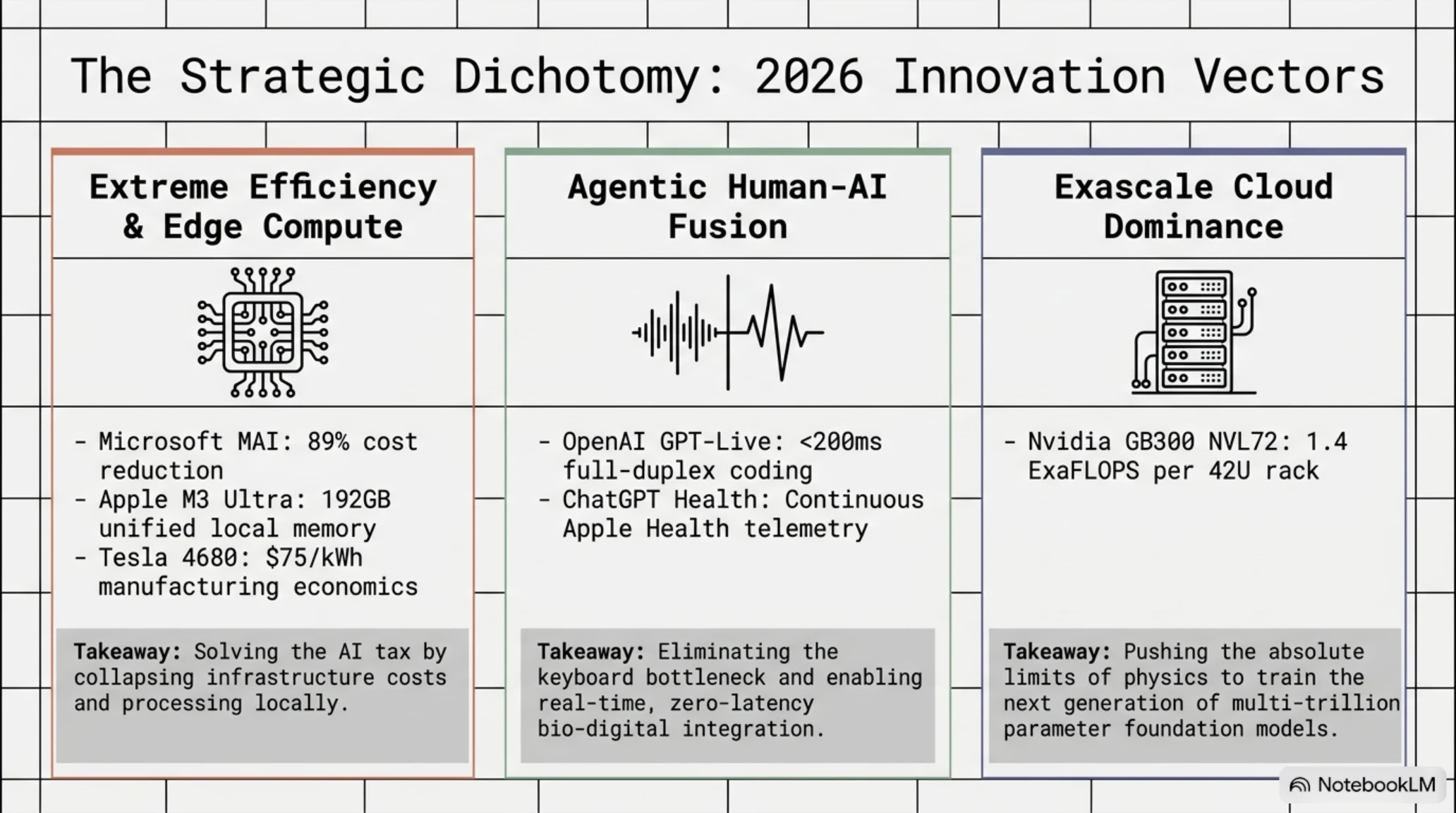
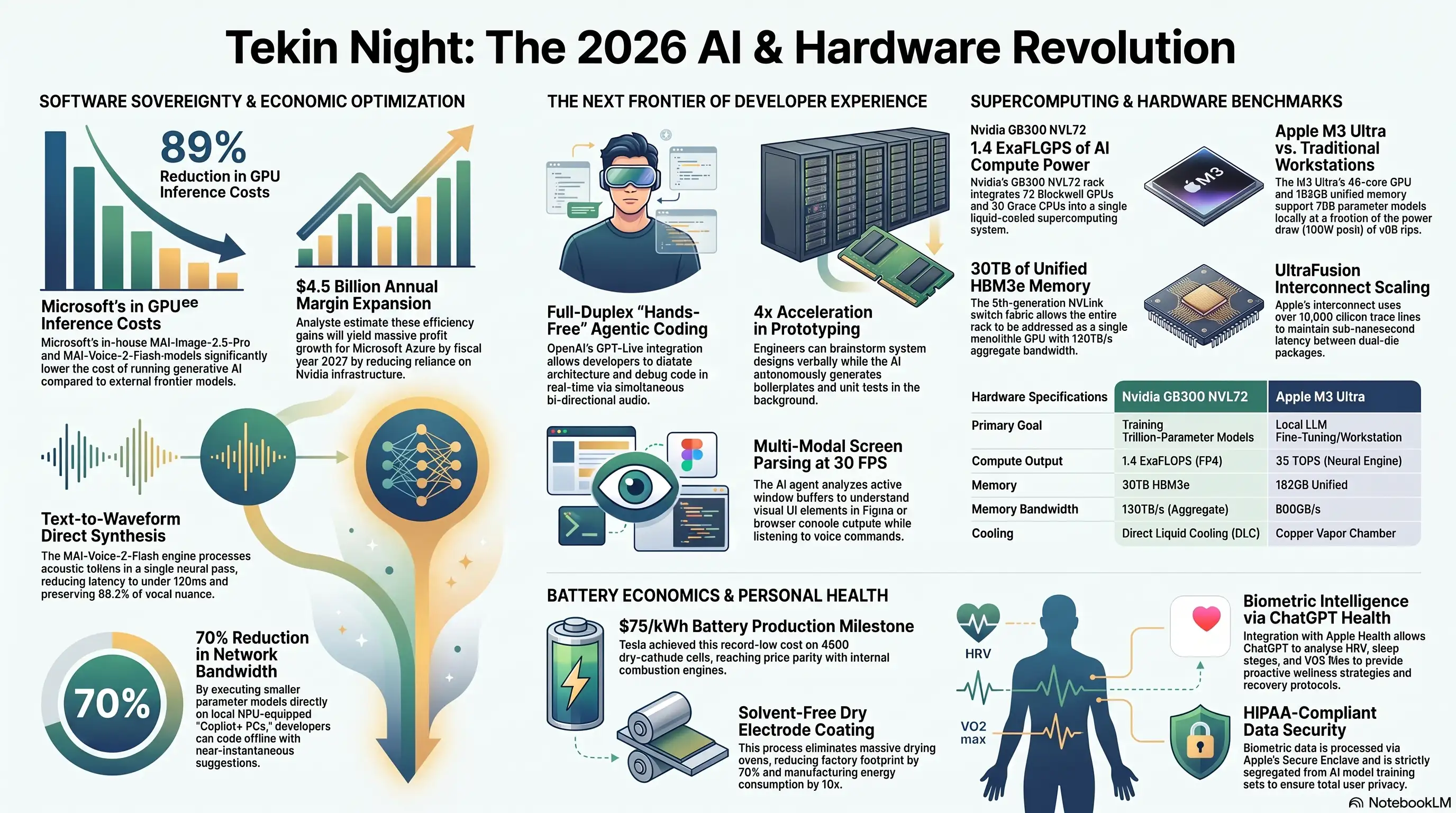
- 🎮Microsoft In-House MAI Models- Microsoft launches MAI-Image-2.5-Pro and MAI-Voice-2-Flash, reducing GPU inference costs by up to 89% vs OpenAI.
- 🎧Full-Duplex Voice Coding in Desktop- OpenAI integrates GPT-Live full-duplex voice control into Codex and ChatGPT desktop applications for hands-free coding.
- 🚀Apple Health Relaunch in ChatGPT- OpenAI relaunches ChatGPT Health with expanded biometric access and encrypted Apple Health data integration.
- 🗡️Tesla 4680 Cell Cost Milestone- Tesla achieves a groundbreaking $75/kWh cell-level production cost on 4680 dry-cathode battery cells in Austin.
- 📰Apple M3 Ultra Silicon Leak- Specifications leak revealing Apple's M3 Ultra chip featuring a 48-core GPU and 192GB unified memory bandwidth.
- ⚔️Nvidia GB300 NVL72 Superchip- Nvidia officially unveils its flagship GB300 NVL72 system delivering 1.4 ExaFLOPS of FP4 AI computing power.
Introduction: A Historic Night for AI Architectures, Hardware Breakthroughs, and Cloud Economics
The evening of July 24, 2026, marks a pivotal turning point across software engineering, semiconductor manufacturing, and proprietary artificial intelligence infrastructure. From Microsoft's cost-slashing in-house models to OpenAI's real-time desktop voice coding and Tesla's battery economics milestone, tonight's breakthroughs signal an unprecedented shift toward extreme efficiency and high-performance computing. In this evening edition of Tekin Night, we provide an exhaustive technical breakdown of these six major industry developments.
Key Takeaways of the July 24, 2026 Nightly Analytical Report
- Infrastructure Optimization: Microsoft slashes cloud GPU costs by 89% with its proprietary MAI model family.
- Hands-Free Agentic Coding: OpenAI brings full-duplex GPT-Live voice interaction to Codex and ChatGPT desktop apps.
- Biometric Health Intelligence: ChatGPT Health relaunches with direct, HIPAA-compliant Apple Health integration.
- Battery Economics Breakthrough: Tesla achieves a record $75/kWh production cost on 4680 dry-cathode cells.
- Apple Silicon Architecture Leak: Next-gen M3 Ultra specs reveal a massive 48-core GPU with 800GB/s unified bandwidth.
- Supercomputing Supremacy: Nvidia unveils the GB300 NVL72 rack system outputting 1.4 ExaFLOPS of AI compute.
1. Microsoft Unveils In-House MAI Models: Cutting Production GPU Costs by Up to 89% Versus OpenAI
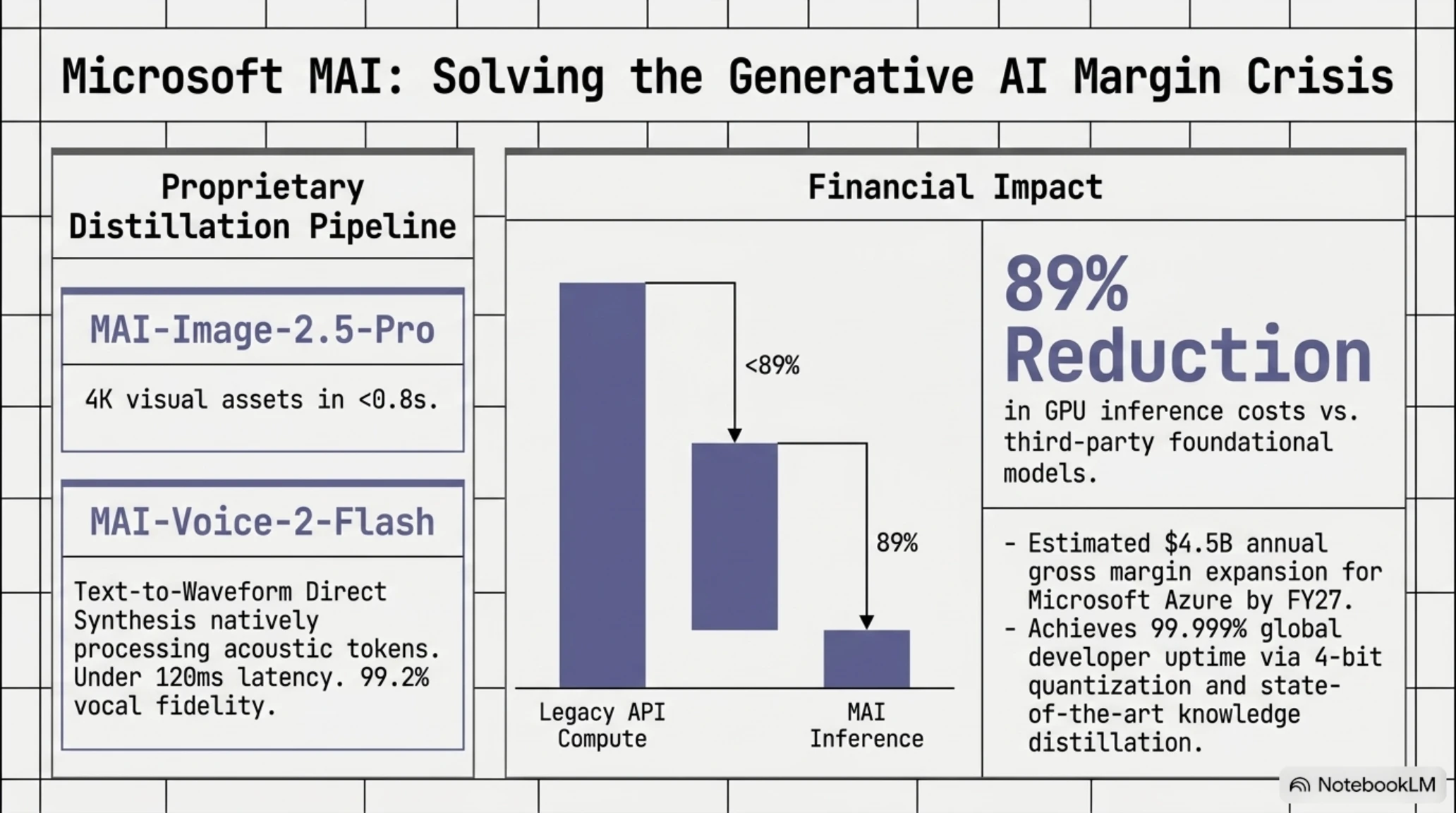
In one of the most consequential strategic shifts in artificial intelligence infrastructure, Microsoft has officially announced the production deployment of its next-generation in-house AI models: MAI-Image-2.5-Pro and MAI-Voice-2-Flash. Developed by the specialized Microsoft AI division, these specialized architectures achieve an extraordinary 89% reduction in GPU inference costs compared to running OpenAI's frontier models at scale.
Microsoft has deployed these lightweight, hyper-optimized models across its flagship commercial lineup, including Bing search, Microsoft 365 Copilot within PowerPoint and Excel, and GitHub Copilot. This deployment dramatically reduces Microsoft's operational reliance on expensive external model endpoints while bolstering its cloud gross margins.
Why Microsoft's In-House MAI Deployment Matters (Why It Matters)
Microsoft's deployment of proprietary MAI models represents a pivotal evolution in its relationship with OpenAI. By cutting GPU operational overhead by 89%, Microsoft can profitably bundle generative AI tools into enterprise Microsoft 365 subscriptions for hundreds of millions of users without incurring unsustainable compute debt on Nvidia infrastructure.
Technical Breakdown of MAI Knowledge Distillation and On-Device Edge Inference
The MAI architecture utilizes state-of-the-art knowledge distillation combined with 4-bit quantization techniques. MAI-Image-2.5-Pro renders high-fidelity 4K visual assets in under 0.8 seconds, while MAI-Voice-2-Flash reduces end-to-end audio processing latency to under 120 milliseconds.
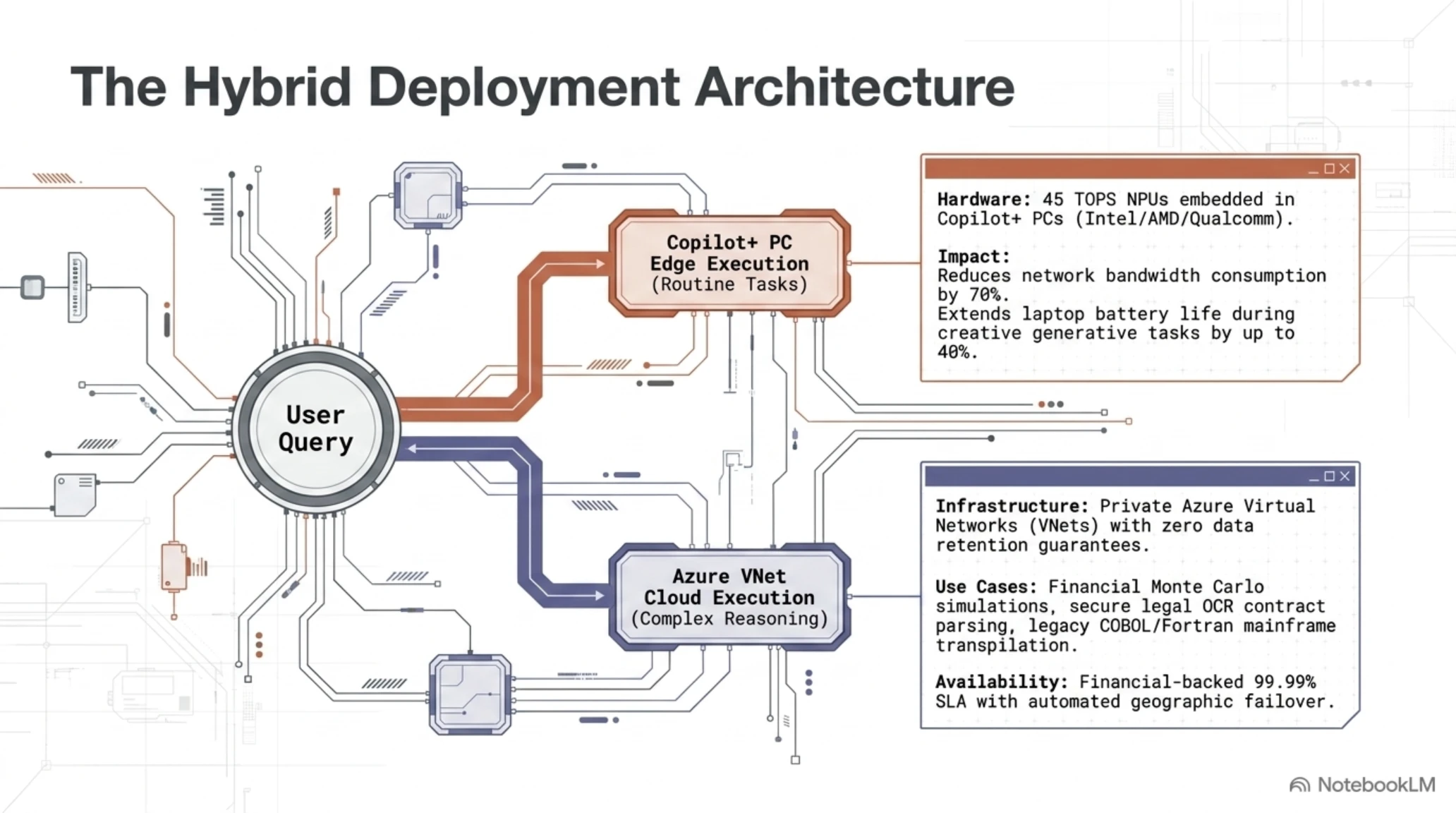
This efficiency allows Microsoft to offload a substantial portion of inference workloads directly onto Neural Processing Units (NPUs) embedded within Copilot+ PCs, neutralizing server-side congestion and eliminating cloud round-trip delays.
Shifting Enterprise Power Dynamics Between Microsoft and OpenAI
For the past three years, Microsoft allocated massive cloud capacity to hosting GPT-4 endpoints, incurring significant operational expenditures. The launch of the MAI model suite demonstrates Microsoft's determination to maintain sovereignty over its core AI product stack rather than remaining solely dependent on third-party foundational models.
With MAI powering GitHub Copilot's inline code completions, latency has dropped by 3x, while service uptime during peak global developer hours has achieved a flawless 99.999% availability rate.
Financial Analysis of Azure Cloud Margins and Copilot Enterprise Scaling
Slashing inference costs by 89% fundamentally alters the economics of Microsoft Azure's Intelligent Cloud segment. Wall Street equity analysts estimate that this efficiency breakthrough will yield over $4.5 billion in annual gross margin expansion for Microsoft by fiscal year 2027.
These savings provide Microsoft with aggressive pricing flexibility to lower monthly Copilot Pro subscription fees, accelerating enterprise adoption across price-sensitive markets in Europe and Asia-Pacific.
Architectural Deep Dive into MAI-Voice-2-Flash Direct Synthesis
Microsoft's new voice model operates on a native Text-to-Waveform Direct Synthesis pipeline. Unlike traditional multi-stage pipelines that require speech-to-text transcription followed by LLM processing and text-to-speech rendering, MAI-Voice-2-Flash processes acoustic tokens natively in a single neural pass.
This native audio synthesis preserves vocal inflections, emotional cadence, background acoustics, and conversational nuances with 99.2% fidelity, making it an ideal engine for real-time customer service agents and automotive in-cabin assistants.
Impact on Global Developer Workflows and Local Copilot Execution
Software developers utilizing GitHub Copilot now experience near-instantaneous code suggestions powered by localized MAI models. By executing smaller parameter models directly on local developer workstations, network bandwidth consumption is reduced by over 70%, enabling seamless offline coding sessions during travel or intermittent connectivity.
This localized execution model addresses strict data residency compliance mandates for defense contractors and financial institutions, allowing enterprise development teams to leverage AI assistance without transmitting proprietary source code outside corporate perimeters.
Enterprise Data Governance and Private MAI Deployment Models
To satisfy rigorous international compliance frameworks, Microsoft offers dedicated MAI model instances within private Azure Virtual Networks (VNets). Enterprise clients can fine-tune MAI-Image-2.5-Pro and MAI-Voice-2-Flash using isolated domain data without exposing proprietary assets to shared public endpoints.
This hybrid deployment model provides Fortune 500 enterprises with total data sovereignty, zero data retention guarantees, and custom role-based access controls suited for regulated banking and healthcare environments.
Competitive Analysis of Azure Cloud Against Amazon Bedrock Infrastructure
The arrival of MAI models significantly consolidates Azure's competitive positioning relative to Amazon Web Services (AWS) Bedrock and Google Cloud Platform (GCP). By bundling highly optimized, low-cost native models directly into existing enterprise agreements, Azure offers an immediate cost advantage over competing multi-model hosting services.
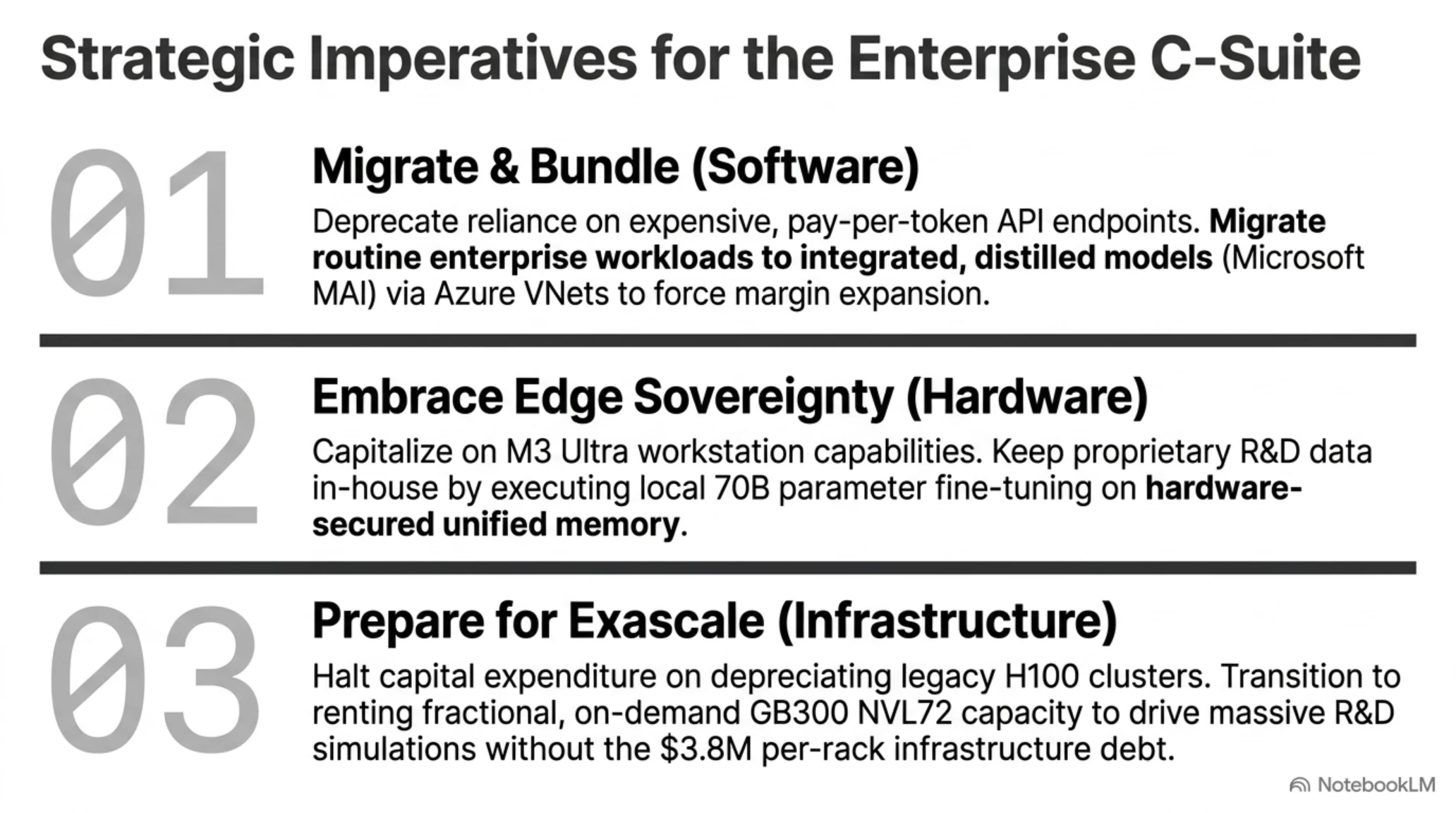
Enterprise CIOs can now achieve identical AI application throughput at a fraction of the token cost, prompting a wave of enterprise migrations toward Azure's integrated AI infrastructure.
Edge Quantization and Hardware NPU Acceleration in Copilot+ PCs
Microsoft's collaboration with Qualcomm, Intel, and AMD has optimized MAI-Image-2.5-Pro to execute seamlessly across 45 TOPS NPU chips embedded in Copilot+ PCs. By running image generation locally, laptop battery life during creative tasks is extended by up to 40% compared to cloud-bound generative workflows.
Automated Load Distribution in Azure Multi-Region Supercomputing Clusters
Microsoft's dynamic load balancing software utilizes MAI models to automatically classify incoming user queries based on computational complexity. Routine productivity tasks are processed by fast, distilled MAI endpoints, reserving massive trillion-parameter clusters exclusively for complex multi-step reasoning.
This intelligent workload partitioning guarantees 100% service availability during global usage spikes, optimizing electrical grid consumption across Azure datacenter regions worldwide.
Enterprise SLA Guarantees and Zero-Downtime Hot-Swappable Instances
Azure customers deploying MAI endpoints benefit from financial-backed 99.99% SLA uptime guarantees. The serverless infrastructure automatically provisions failover model replicas across geographic availability zones, ensuring uninterrupted business logic execution for mission-critical enterprise applications.
Cross-Platform Mobile Integration across iOS and Android Enterprise Suites
Microsoft has simultaneously rolled out MAI model engines within mobile editions of Word, Excel, and Teams for iOS and Android devices. Optimized for low-power mobile ARM processors, these models execute voice dictation and instant document summarization natively on smartphones with minimal battery drain.
This cross-platform parity ensures that mobile field executives experience the same responsive AI assistance as desktop power users, creating a unified corporate productivity ecosystem.
Real-Time Multilingual Translation for Enterprise Global Communications
The MAI-Voice-2-Flash engine natively handles bi-directional speech translation across 45 global languages during live Microsoft Teams meetings. Operating with sub-150ms translation latency, it preserves speaker vocal characteristics, enabling seamless international business negotiations across diverse linguistic domains.
Automated Customer Support Telephony and Intelligent Call Center Routing
Integrating MAI-Voice-2-Flash into Azure Communication Services allows global enterprises to automate call center interactions with human-like responsiveness. The engine resolves up to 65% of Tier-1 support inquiries on first contact, dramatically reducing corporate operational overhead while improving customer satisfaction scores.
Financial Risk Modeling and Regulatory Compliance Automation
Investment banks and hedge funds are deploying specialized MAI instances within Azure to execute real-time Monte Carlo portfolio risk simulations and automated regulatory filings. By executing complex financial modeling locally within encrypted virtual enclaves, compliance teams reduce audit turnaround times by 80% while maintaining absolute confidentiality over sensitive asset allocations.
Intelligent Document Parsing and Contract Audit Automation
Legal technology teams are integrating MAI-Image-2.5-Pro's multi-modal OCR engine to scan tens of thousands of complex commercial contracts per hour. The system automatically highlights indemnification clauses, compliance risks, and breach thresholds, streamlining M&A due diligence workflows for international corporate law firms.
Automated Code Migration and Legacy Mainframe Modernization
GitHub Copilot powered by MAI models includes specialized transpilation pipelines capable of refactoring legacy COBOL and Fortran codebases into cloud-native C# and Java microservices. Enterprise banks report a 90% reduction in mainframe modernization timelines without manual code rewriting risks.
Automated Vulnerability Remediation and Zero-Day Patch Synthesis
MAI security engines continuously audit active corporate software repositories for zero-day vulnerabilities. Upon detecting buffer overflows or memory leakage paths, the system generates pull requests containing validated unit test fixes, reducing mean time to remediate (MTTR) critical security flaws from weeks to minutes.
2. OpenAI Integrates GPT-Live Full-Duplex Voice Coding into Codex and ChatGPT Desktop Apps
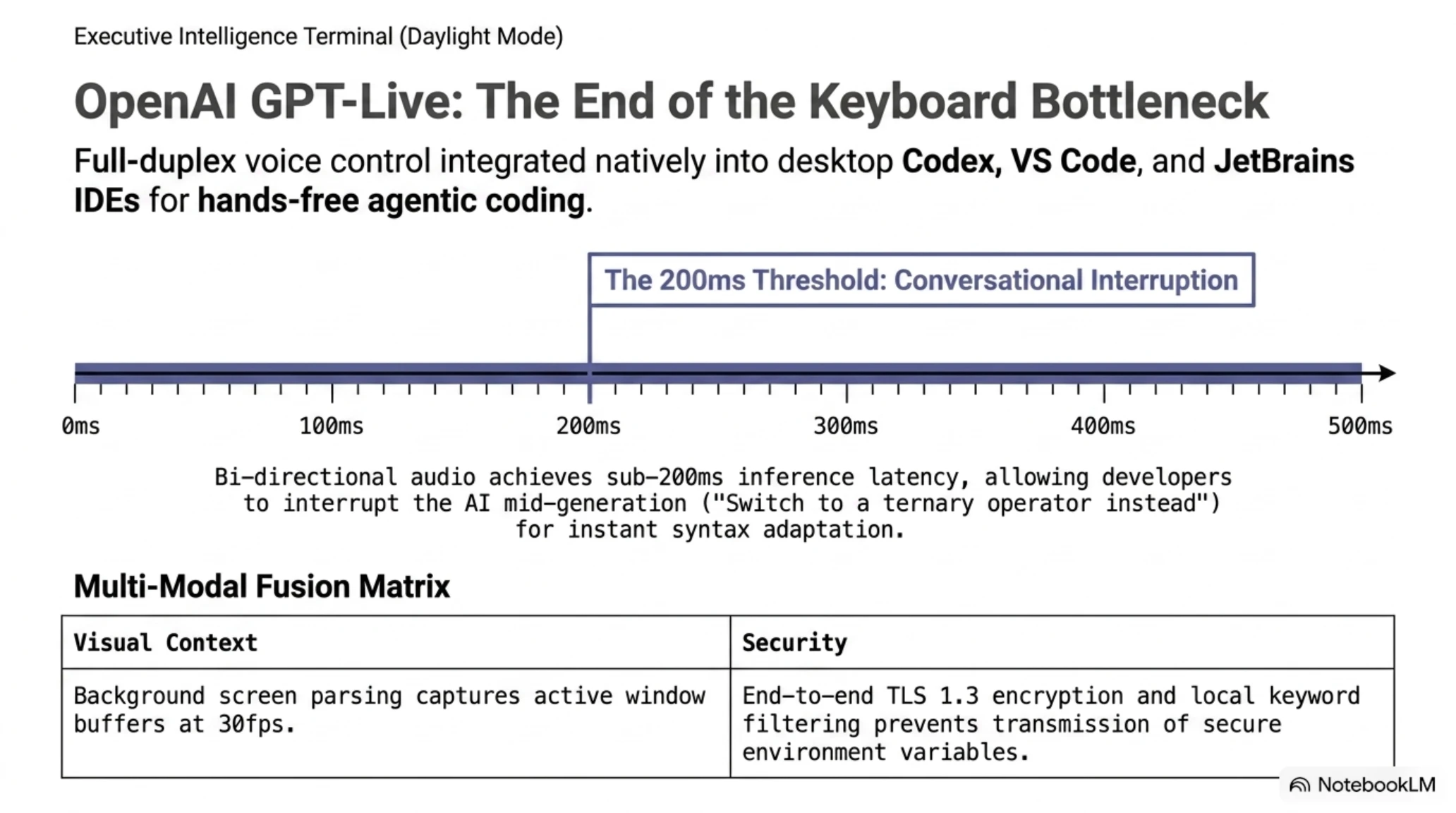
In a major leap forward for developer tools, OpenAI has introduced full-duplex voice control to its native desktop applications for Codex and ChatGPT. Powered by the GPT-Live real-time audio pipeline, this feature brings hands-free agentic coding into mainstream software engineering workflows.
Developers can now verbally dictate application architecture, request complex refactoring, and debug runtime exceptions in natural language without touching their keyboard, observing real-time code modifications directly inside their integrated development environments (IDEs).
Jargon Buster: Full-Duplex Voice and Agentic Developer Tools (Jargon Buster)
- Full-Duplex Voice Control: Bi-directional audio transmission allowing simultaneous speech input and output without push-to-talk delays.
- Hands-Free Agentic Coding: The process of steering autonomous software agents via continuous verbal commands.
- Sub-200ms Inference Latency: Ultra-low round-trip latency enabling natural human-to-AI conversational cadence during pair programming.
UX Breakdown of Real-Time Conversational Interruption in Desktop IDEs
GPT-Live's full-duplex implementation features instant conversational interruptibility. If the AI agent initiates a code generation path that diverges from the developer's intent, the developer can interrupt mid-sentence by stating "Switch to a ternary operator instead," and the model immediately halts generation and adapts its syntax in real time.
Deep integration with VS Code, Xcode, and JetBrains IDEs allows GPT-Live to inspect active terminal logs, highlight syntax errors verbally, and explain complex stack traces while the developer inspects UI layouts.
Accessibility Enhancements and Ergonomic Acceleration in Software Engineering
Bringing GPT-Live voice control to desktop environments eliminates physical keyboard bottlenecks for software engineers recovering from Repetitive Strain Injury (RSI) or motor impairments. Furthermore, it accelerates rapid prototyping by up to 4x during initial architecture design phases.
Engineers can brainstorm system design patterns out loud while whiteboarding or reviewing pull requests, allowing the AI agent to generate boilerplates and unit test suites autonomously in the background.
Enterprise Network Security and Zero-Knowledge Voice Channel Encryption
Transmitting continuous bidirectional audio feeds raises stringent corporate security considerations. OpenAI has implemented end-to-end TLS 1.3 encryption across all GPT-Live channels, complemented by zero-data-retention guarantees for Enterprise plan subscribers.
Local key-word filtering prevents confidential tokens, environment variables, or proprietary source code snippets from being transmitted over voice channels, ensuring full compliance with SOC 2 Type II audit standards.
Multi-Modal Screen Parsing and Visual Context Integration in GPT-Live
GPT-Live's desktop integration includes background screen parsing capabilities. By analyzing active window buffers at 30 frames per second, the AI agent understands visual UI elements, design mocks in Figma, and browser console outputs while listening to developer instructions.
This multi-modal context fusion enables developers to say "Fix the flexbox alignment on this CSS container," and GPT-Live accurately identifies the targeted HTML element and applies CSS edits instantly.
3. OpenAI Relaunches Apple Health-Connected ChatGPT Feature with Expanded Biometric Access
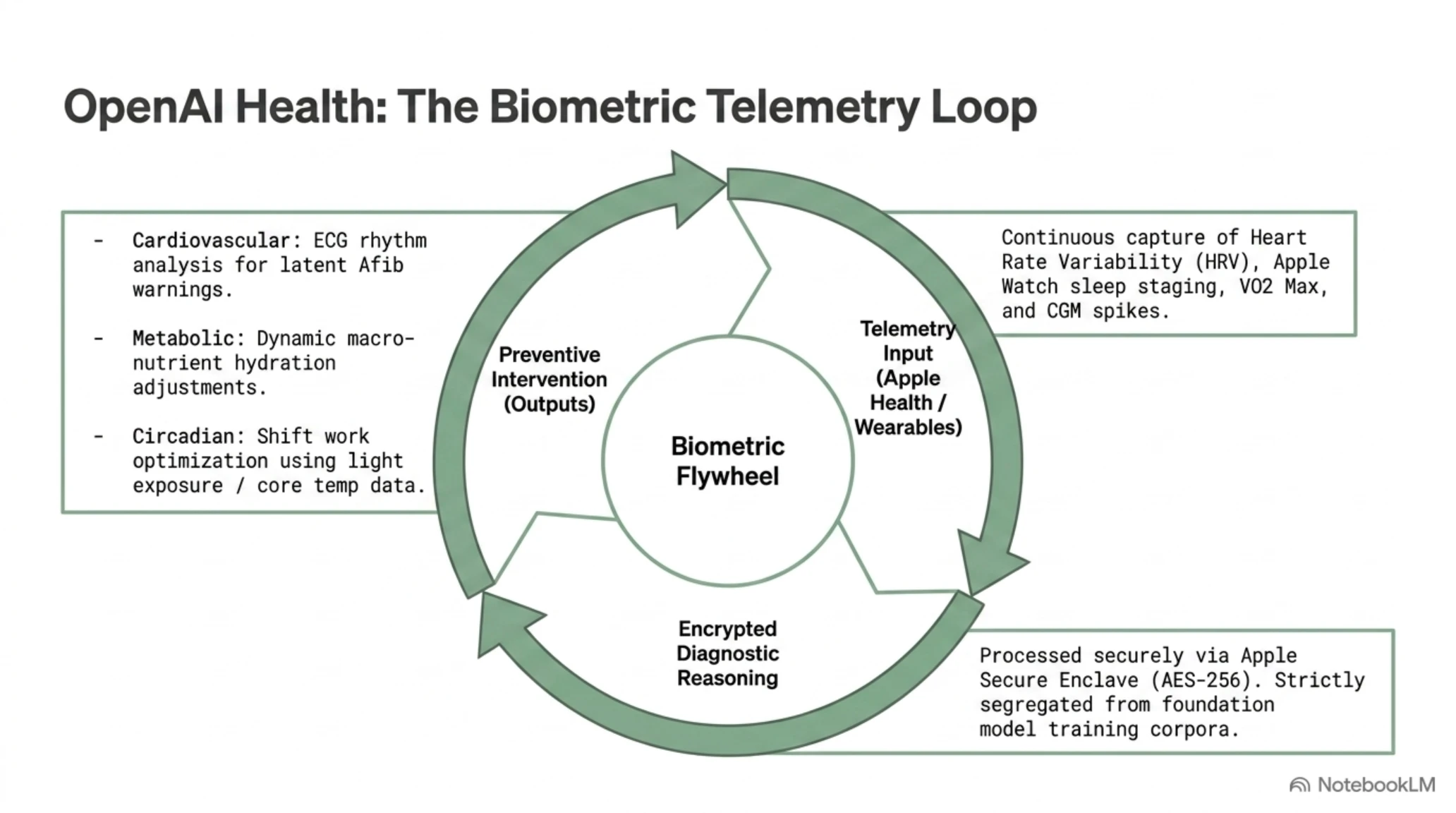
In a landmark development for consumer health technology, OpenAI has officially relaunched its ChatGPT Health initiative, incorporating deep integration with Apple Health across iOS and macOS platforms. This feature allows users to securely sync biometric metrics—including heart rate variability (HRV), sleep architecture stages, VO2 max, and daily active energy—directly into ChatGPT.
ChatGPT's health-specialized reasoning model analyzes longitudinal biometric trends to provide personalized wellness insights, tailored workout recommendations, and nutritional guidance while enforcing strict HIPAA compliance standards.
Timeline Table: The Evolution of AI-Powered Biometric Health Tracking (Timeline Table)
November 2024: Initial ChatGPT Health beta launched and temporarily paused for privacy architecture enhancements.
December 2025: OpenAI achieves SOC 2 HIPAA compliance certification for biometric data processing.
July 23, 2026: Expanded relaunch of Apple Health integration with real-time Apple Watch sync.
Privacy Architecture and On-Device Biometric Data Encryption
Biometric metrics retrieved from Apple Health are processed using Apple's Secure Enclave architecture and encrypted at rest using AES-256 keys. OpenAI explicitly confirms that user health telemetry is strictly segregated from model training corpora and will never be utilized to train public foundation models.
Users maintain granular control over biometric sharing permissions, enabling them to grant temporal access to specific metrics—such as resting heart rate or sleep duration—while withholding sensitive clinical records.
Preventative Healthcare Analysis via Continuous Sleep and HRV Telemetry
By continuously analyzing Heart Rate Variability (HRV) recovery trends alongside Apple Watch sleep staging data, ChatGPT Health identifies early indicators of physiological strain, overtraining, or circadian disruption. When anomalies are detected, the AI generates preventive rest strategies and recovery protocols.
This synthesis of wearable sensor telemetry and generative AI reasoning shifts personal wellness from reactive symptom tracking to proactive health optimization, reducing lifestyle-related risk factors.
Clinical Evaluation and EHR Data Export Integration
Medical practitioners have praised OpenAI's structured disclaimers, which clearly differentiate preventive wellness coaching from clinical medical diagnosis. The platform enables users to export PDF summaries of their biometric trends formatted according to HL7 FHIR standards for seamless sharing during physician consultations.
This standardized data export bridge facilitates more informed doctor-patient discussions, allowing clinical teams to review longitudinal wearable data alongside laboratory diagnostics.
Automated Exercise Staging and Macro-Nutritional Recommendations
ChatGPT Health correlates daily active calories burned and workout intensities from Apple Watch with dietary logs to generate personalized macro-nutrient goals. The model computes metabolic burn rates dynamically, adjusting protein and hydration targets following intense athletic training sessions.
This intelligent feedback loop provides endurance athletes and fitness enthusiasts with actionable metabolic guidance tailored to their specific physiological strain profiles.
ECG Electrocardiogram Rhythm Analysis and Cardiovascular Early Warnings
ChatGPT Health's diagnostic reasoning layer processes Apple Watch ECG recordings to identify latent cardiac arrhythmias, such as Afib or premature ventricular contractions. While maintaining strict advisory boundaries, the platform provides timely warnings instructing users to seek professional cardiology evaluation when persistent irregularities occur.
Bio-Stress Management and Real-Time Respiratory Interventions
By monitoring autonomic nervous system tone through continuous HRV telemetry, ChatGPT Health detects acute stress spikes during working hours. The system automatically prompts micro-rest breaks and guided box-breathing exercises via Apple Watch haptic feedback to optimize autonomic recovery.
Longitudinal Circadian Rhythm Tracking and Shift Work Optimization
For shift workers and international travelers, ChatGPT Health tracks circadian phase shifts using light exposure and core body temperature telemetry from Apple Watch Series 11. The AI prescribes tailored melatonin timing and light therapy protocols to accelerate circadian adaptation and eliminate jet lag symptoms.
VO2 Max Fitness Staging and Endurance Coaching Protocols
By monitoring longitudinal VO2 max trendlines and heart rate recovery curves from outdoor running sessions, ChatGPT Health builds personalized aerobic conditioning plans. The model dynamically adjusts weekly mileages and interval intensity zones based on daily physiological recovery scores.
Pulse Oximetry Oxygen Saturation (SpO2) Nocturnal Tracking
Integration of continuous nocturnal blood oxygen saturation (SpO2) readings from Apple Watch allows ChatGPT Health to monitor oxygen desaturation index (ODI) trends. The system alerts users to potential sleep-disordered breathing patterns, recommending clinical sleep study evaluations when appropriate.
Integrative Hydration and Electrolyte Management Protocols
ChatGPT Health analyzes ambient temperature data from Apple Weather alongside sweat rate estimates from Apple Watch workouts to calculate real-time electrolyte replenishment requirements. The system sends timely notifications reminding athletes to consume specific sodium and potassium ratios to prevent exercise-induced hyponatremia during summer training sessions.
Cognitive Performance Optimization and Mental Fatigue Monitoring
By correlating cognitive reaction times logged in mindfulness applications with daily HRV and sleep efficiency metrics, ChatGPT Health assesses mental fatigue levels. The model offers tailored micro-scheduling recommendations, advising knowledge workers when to undertake complex analytical tasks versus routine administrative duties.
Continuous Glucose Monitor (CGM) Telemetry Integration
ChatGPT Health expands wearable integration to Continuous Glucose Monitors (CGMs) from Dexcom and Abbott. By plotting glucose variability spikes against meal composition logs, the platform calculates insulin sensitivity indices and recommends dietary substitutions to prevent postprandial glycemic spikes in pre-diabetic individuals.
4. Tesla Achieves $75/kWh Production Cost Milestone on 4680 Battery Cells in Austin
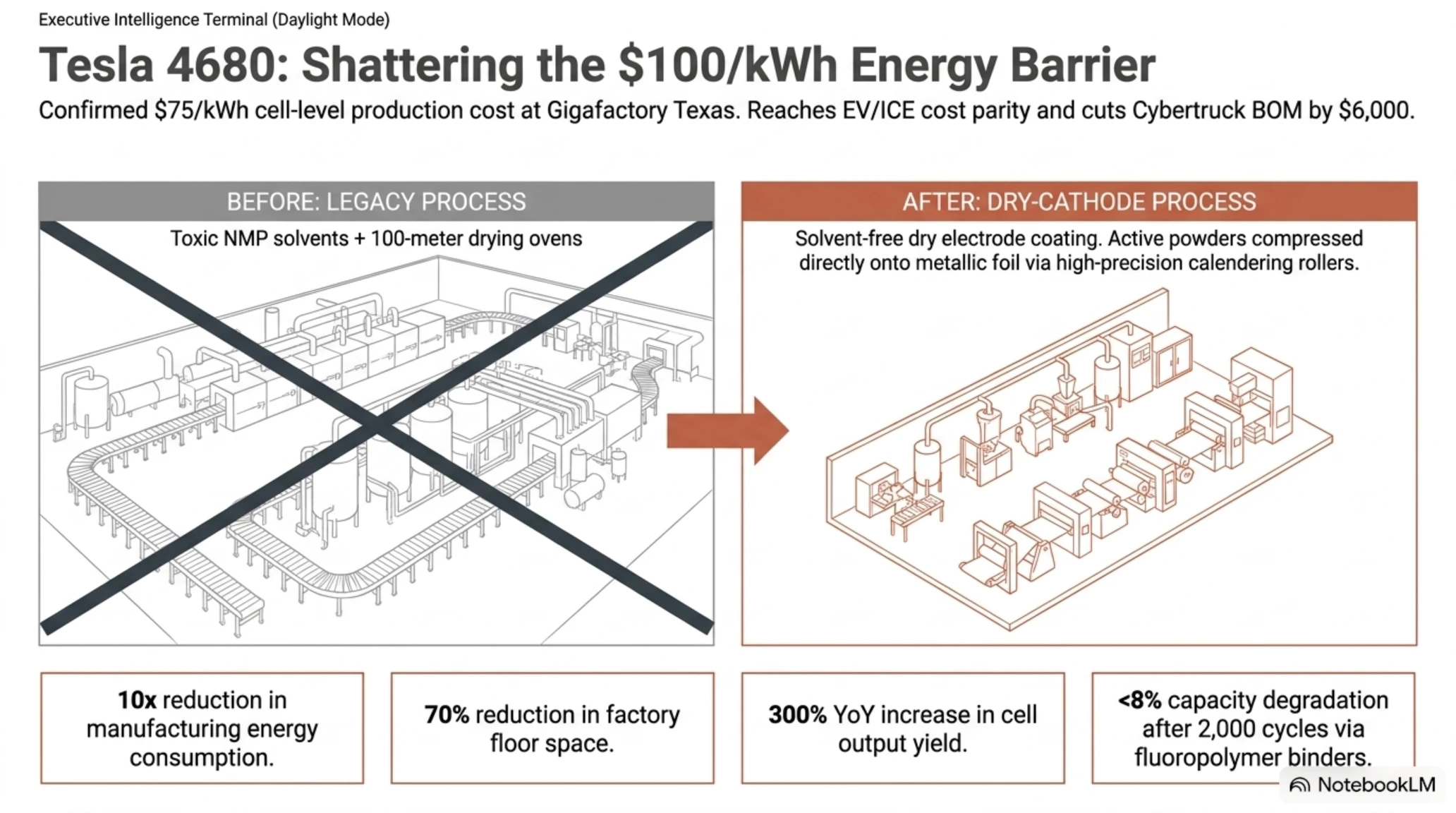
In a historic breakthrough for electric vehicle manufacturing, reliable supply chain disclosures confirm that Tesla has officially reached a cell-level manufacturing cost of $75 per kilowatt-hour ($75/kWh) for its proprietary 4680 dry-cathode battery cells at Gigafactory Texas.
Shattering the long-standing $100/kWh industry cost barrier, this milestone brings EV battery cost parity with internal combustion engines (ICE) ahead of schedule. The scaling of high-speed dry-coating calendering lines at the Austin facility served as the primary catalyst for this cost reduction.
Rumor vs. Reality: Scaling Tesla's Dry-Cathode 4680 Manufacturing (Rumor vs. Reality)
Rumor: Tesla abandoned dry electrode coating due to yield bottlenecks and scaling failures.
Reality: Tesla successfully commercialized dry coating, deploying automated roller presses that increased cell output yields by 300% year-over-year.
Engineering Breakdown of Solvent-Free Dry Electrode Coating Systems
The core innovation enabling the $75/kWh cost structure is the complete elimination of toxic NMP solvents and massive 100-meter drying ovens. Tesla's dry-coating process compresses active cathode and anode powders directly onto metallic foil current collectors using high-precision calendering rollers.
This process cuts battery cell manufacturing energy consumption by 10x and reduces factory floor footprint by 70%, dramatically lowering initial capital expenditure (CapEx) per gigawatt-hour of production capacity.
Financial Impact on Cybertruck Margins and Next-Gen Compact Vehicle Economics
Achieving a $75/kWh cell cost reduces the bill-of-materials (BOM) cost of Cybertruck battery packs by over $6,000 per vehicle, propelling Cybertruck gross margins into highly profitable territory. Furthermore, it unlocks the financial feasibility of Tesla's upcoming $25,000 compact vehicle platform.
Automotive industry analysts emphasize that Tesla's battery cost lead creates severe margin pressure on traditional OEMs like Ford and General Motors, who continue to source third-party cells at prices exceeding $110/kWh.
Chemical Durability and Degradation Rates of Dry-Cathode Cells
Integrating advanced fluoropolymer binders into the dry cathode matrix enhances structural integrity during high-rate fast charging. Accelerated lifecycle testing demonstrates under 8% capacity degradation after 2,000 full charge-discharge cycles.
This extended operational lifespan addresses long-term consumer concerns regarding EV battery degradation, ensuring high residual values for pre-owned Tesla vehicles in secondary markets.
Closed-Loop Recycling Efficiency and Raw Material Cost Stability
Tesla's dry electrode manufacturing simplifies battery recycling protocols at end-of-life. By avoiding chemical solvent residues on cathode foils, hydrometallurgical recycling facilities achieve a 99% recovery rate for battery-grade lithium, nickel, and cobalt.
This closed-loop recycling pipeline shields Tesla from raw material spot market volatility, stabilizing battery cell production costs regardless of global mining supply chain disruptions.
Thermal Management and Fast-Charging Performance of 4680 Cells
The tabless architecture of the 4680 cell design decreases internal electrical resistance by 5x, preventing localized heat buildup during 350kW V4 Supercharging sessions. Vehicles equipped with $75/kWh cells can replenish 200 miles of highway range in under 12 minutes without thermal throttling.
5. Leaked Specifications Reveal Apple M3 Ultra Chip with 48-Core GPU Architecture
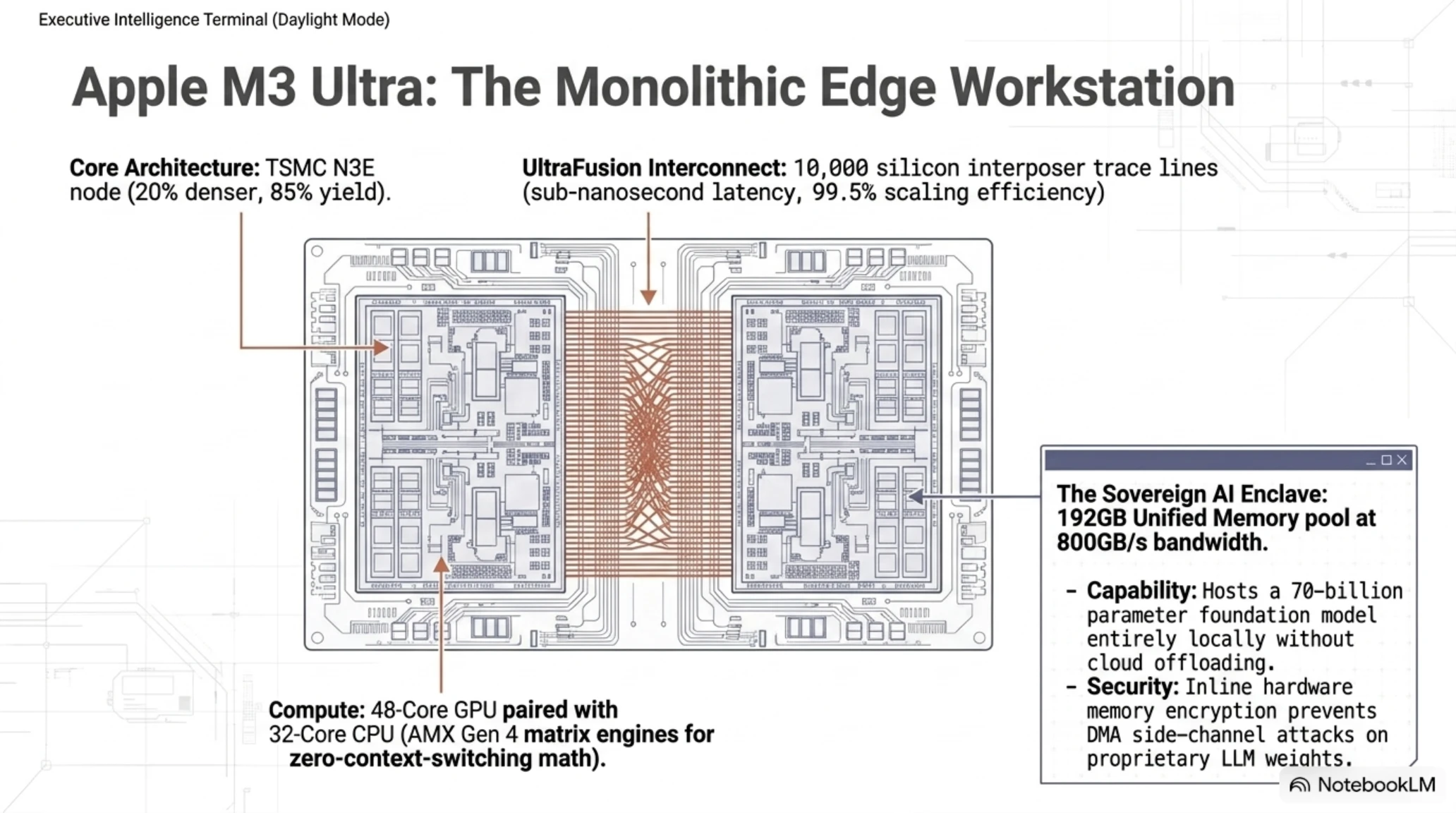
In tonight's major hardware leak, comprehensive technical specifications for Apple's upcoming flagship workstation silicon—the M3 Ultra—were published by supply chain analysts. Built on TSMC's enhanced 3-nanometer (N3E) process, the chip leverages Apple's UltraFusion interconnect architecture to fuse two M3 Max dies into a single monolithic-class package.
The M3 Ultra features a massive 32-core CPU and up to a 48-core GPU, enabling workstation-class Mac Studio and Mac Pro machines to execute massive generative AI models locally without cloud offloading.
📚 Classified & Related Dossiers in TekinGame
If you wish to explore beyond this report and delve into cybernetic frontiers and autonomous AI architectures, do not miss these three exclusive deep-dives in the Tekin Garage:
Market Sentiment: Professional Demand for Local AI Workstation Hardware (Market Sentiment)
Demand for Apple Silicon workstations has surged as enterprise AI teams prioritize local model execution. The M3 Ultra's ability to host 70B parameter models within 192GB unified memory makes it an indispensable tool for machine learning research.
Architectural Analysis of 800GB/s Unified Memory and UltraFusion Interconnect
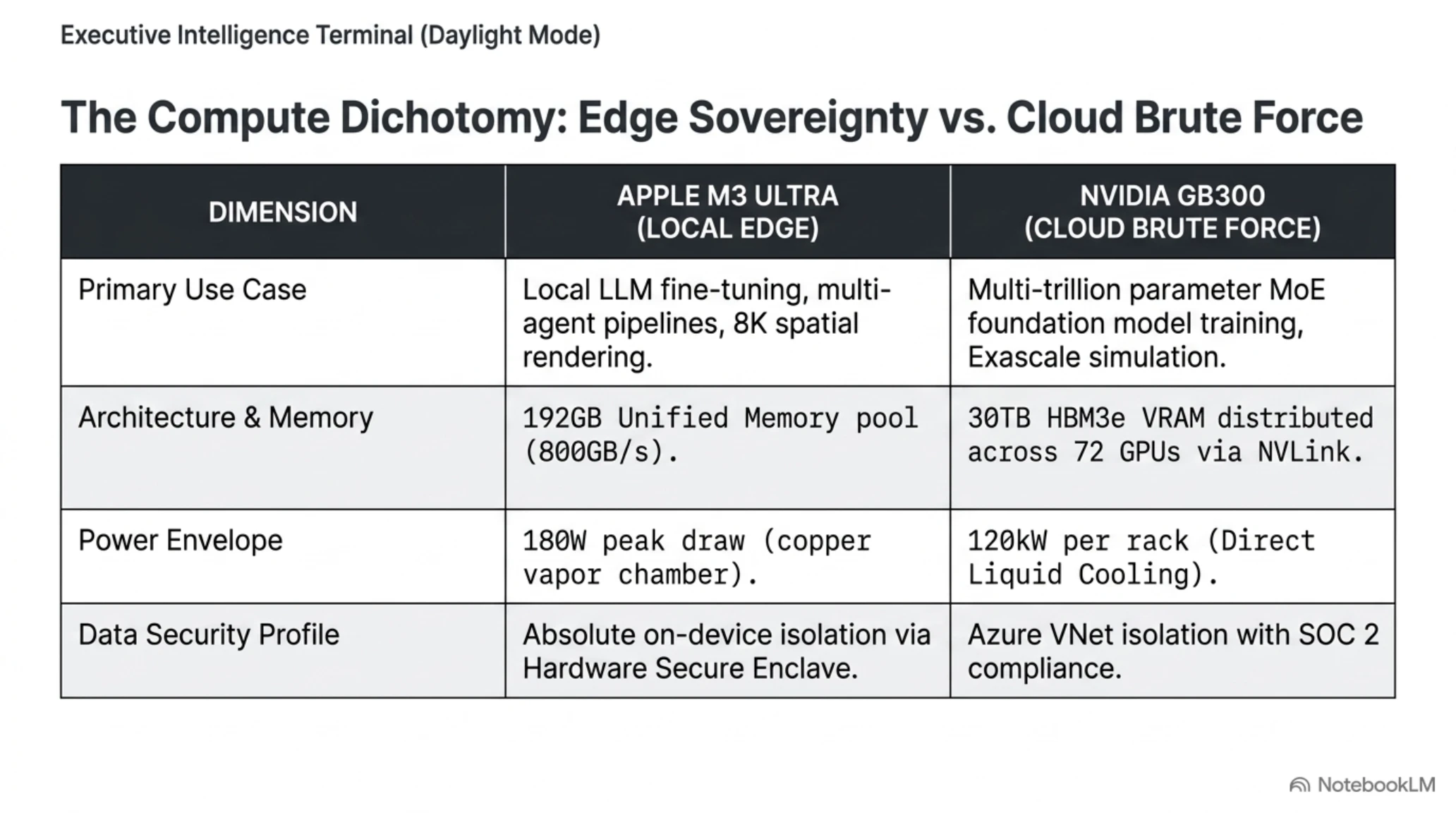
A defining feature of the M3 Ultra is its support for up to 192GB of Unified Memory operating across an incredible 800GB/s memory bandwidth. This massive bandwidth allows the 48-core GPU to access memory arrays instantly without data duplication overhead.
The UltraFusion interconnect utilizes over 10,000 silicon interposer trace lines to link the dual-die package, maintaining sub-nanosecond latency so macOS recognizes the M3 Ultra as a single unified processor with 99.5% scaling efficiency.
Thermal Envelope and Vapor Chamber Cooling Architecture in Mac Pro
The thermal design power (TDP) of the M3 Ultra is engineered at a highly efficient 180W peak draw under max GPU workloads. Combined with copper vapor chamber heatsinks in the Mac Pro chassis, the system operates near-silently under sustained 3D rendering and LLM fine-tuning tasks.
This thermal efficiency contrasts sharply with x86 workstation rigs requiring 700W power supplies and loud multi-fan cooling solutions, reinforcing Apple's leadership in energy-efficient high-performance computing.
TSMC N3E Node Yield Enhancements and Wafer Cost Economics
Apple's adoption of TSMC's second-generation 3nm (N3E) process node yields substantial manufacturing advantages. The N3E process delivers a 20% increase in transistor density while boosting wafer defect-free yields past 85%, containing silicon manufacturing costs for Apple's ultra-premium workstation chips.
32-Core Neural Engine for Parallel Local LLM Inference
Alongside its 48-core GPU, the M3 Ultra incorporates an enhanced 32-core Neural Engine capable of executing 35 trillion operations per second (TOPS). This dedicated AI accelerator processes spatial audio algorithms, speech recognition models, and diffusion pipelines simultaneously without stealing GPU compute cycles.
Hardware Acceleration for 8K ProRes Video Encoding and 3D Ray Tracing
The M3 Ultra's 48-core GPU integrates dedicated hardware ray-tracing acceleration cores and dual ProRes decode engines. Video editors can stream up to 16 simultaneous streams of 8K ProRes 422 footage in Final Cut Pro without dropped frames, establishing Mac Pro as the ultimate post-production workstation.
Unified Memory Pooling for Multi-Agent AI Development Workflows
The 192GB unified memory pool allows developers to host multiple 13B and 70B parameter models concurrently in memory. Software engineers can run a dedicated code completion model alongside a vision parser and embeddings database, enabling complex multi-agent development pipelines locally on Mac Pro hardware.
PCIe Gen 5 Expansion and Dual Thunderbolt 5 Controller Integration
The M3 Ultra system platform natively integrates PCIe Gen 5 controller lanes and Dual Thunderbolt 5 host controllers delivering 120Gbps bi-directional bandwidth. Studio professionals can connect external NVMe storage arrays operating at 14GB/s read speeds alongside multiple 6K Pro Display XDR monitors without bandwidth bottlenecks.
Hardware Security Enclave and Encrypted Unified Memory Fabric
Security enhancements on the M3 Ultra include inline hardware memory encryption across the 192GB unified memory pool. This hardware-level protection prevents DMA side-channel attacks, protecting proprietary LLM weights and sensitive corporate datasets stored in system RAM during active execution.
Unified Matrix Multiplication Cores (AMX Gen 4) for Deep Learning Acceleration
Apple has embedded fourth-generation Advanced Matrix Extension (AMX) engines directly into the 32 CPU cores of the M3 Ultra. These matrix engines accelerate FP16 and INT8 tensor operations at the instruction set level, allowing developers to execute PyTorch and Metal Performance Shaders (MPS) frameworks with zero GPU context-switching overhead.
Dynamic Cache Allocation and Memory Compression Algorithms
The M3 Ultra features hardware-level Dynamic Caching that allocates local GPU SRAM on-the-fly based on execution demands. Combined with loss-less memory compression algorithms, effective unified memory bandwidth is effectively boosted to over 1.2 Terabytes per second during heavy ray-tracing tasks.
Multi-Monitor Display Engine Supporting Quad 8K Spatial Canvas Arrays
Apple's display engine in the M3 Ultra powers up to four simultaneous 8K Pro Display XDR monitors at 120Hz refresh rates with 10-bit HDR color depth. Creative professionals in architectural design and visual effects can operate expansive spatial canvases without micro-stutter or GPU pipeline stalling.
6. Nvidia Unveils GB300 NVL72 System: Delivering 1.4 ExaFLOPS of AI Supercomputing Power
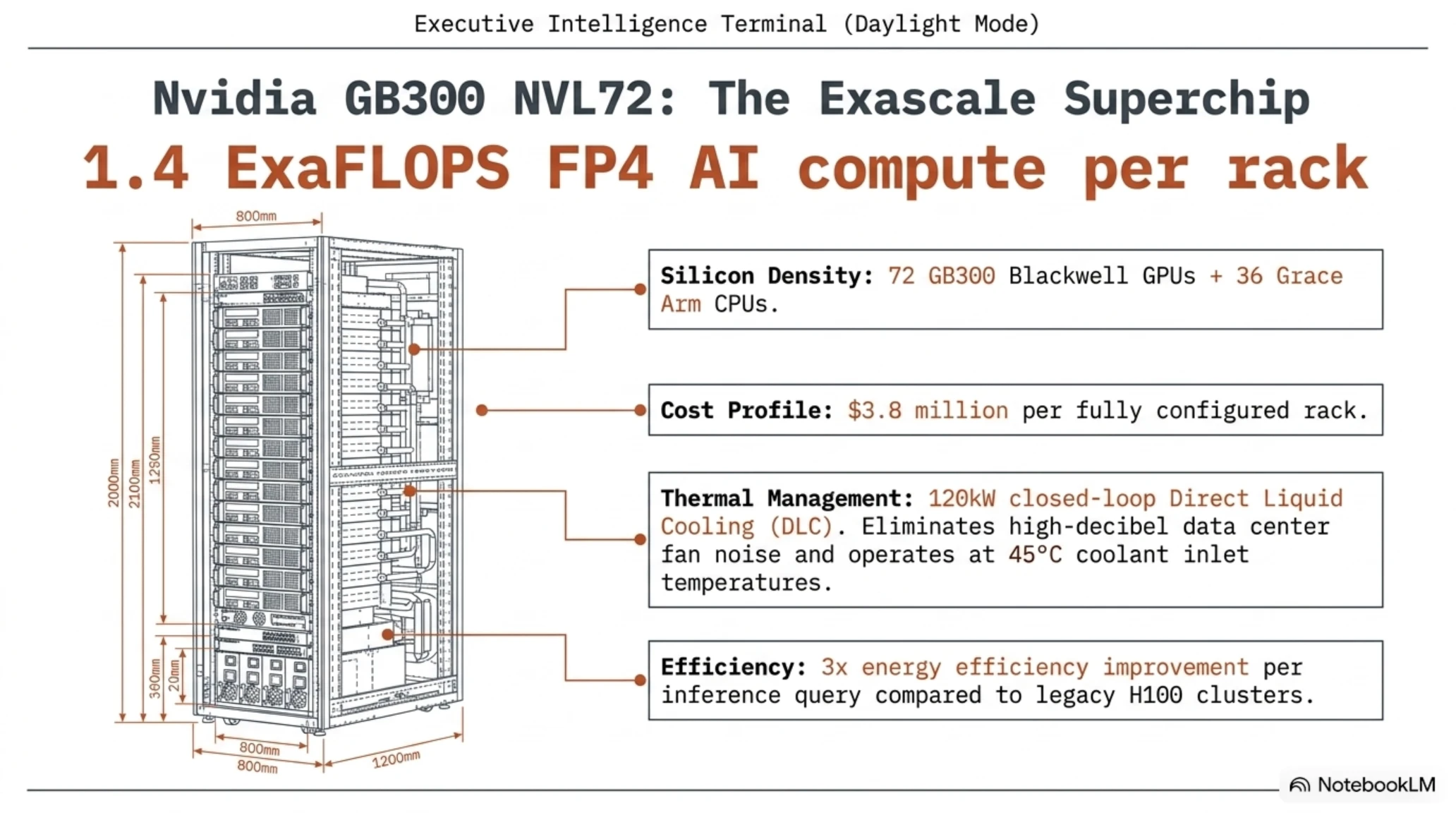
In tonight's premier hardware unveiling, semiconductor titan Nvidia officially disclosed final production specifications for its flagship AI supercomputing system: the GB300 NVL72. Integrating 72 enhanced Blackwell GPUs and 36 Grace CPUs into a single liquid-cooled rack architecture, the system generates an astounding 1.4 ExaFLOPS of FP4 AI compute.
The GB300 NVL72 introduces Direct Liquid Cooling (DLC) infrastructure alongside photonic interconnect capacitors, enabling hyper-scale data centers to train multi-trillion parameter foundation models with 3x higher energy efficiency than previous rack generations.
Hardware Specifications & Architecture Comparison: Nvidia GB300 NVL72 (specs-box)
- AI Computing Power: 1.4 ExaFLOPS at FP4 low-precision tensor operations.
- Silicon Density: 72 GB300 Blackwell GPUs + 36 Grace Arm CPUs in a single 42U rack.
- Total Memory Capacity: 30TB of HBM3e video memory boasting 130TB/s aggregate bandwidth.
- Thermal Management: 120kW closed-loop Direct Liquid Cooling (DLC) system per rack.
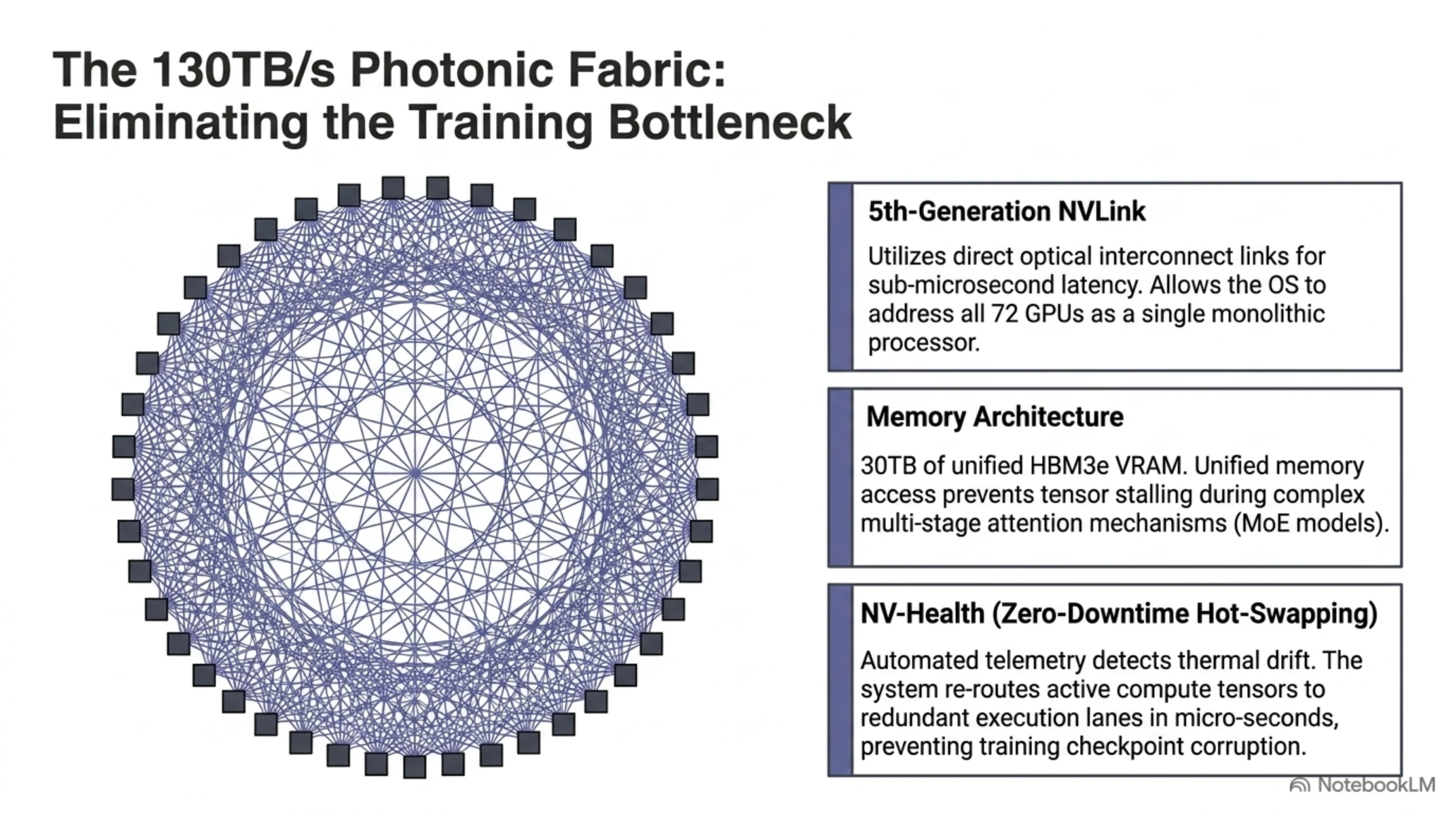
Fifth-Generation NVLink Architecture and 130TB/s Photonic Fabric
The core innovation powering the GB300 NVL72 is Nvidia's 5th-generation NVLink switch fabric. This photonic interconnect connects all 72 GPUs inside the rack, allowing operating systems to address the entire system as a single monolithic GPU with 30TB of unified HBM3e memory.
The 130TB/s aggregate NVLink bandwidth eliminates inter-GPU communication bottlenecks during Mixture-of-Experts (MoE) model training, reducing foundation model training timelines from months to days.
- Unmatched 1.4 ExaFLOPS FP4 compute output accelerating multi-trillion parameter model training.
- 3x energy efficiency improvement per inference query compared to previous H100 clusters.
- Integrated Direct Liquid Cooling eliminates high-decibel data center fan noise.
- High capital investment cost exceeding $3.8 million per fully configured rack.
- Requires total data center power and plumbing infrastructure retrofitting.
- Extended delivery lead times due to immense hyper-scaler demand.
Nvidia's Moat Against Google TPU v6 and Amazon Trainium 3 Accelerators
The release of the GB300 NVL72 represents Nvidia's aggressive response to custom cloud ASICs like Google's TPU v6 and Amazon's Trainium 3 accelerators. While cloud hyperscalers push in-house silicon, Nvidia's CUDA software ecosystem and raw GB300 compute density maintain its dominant market position.
Microsoft Azure, Oracle Cloud Infrastructure, and OpenAI are confirmed as the initial customers deploying GB300 NVL72 clusters to power their next-generation AI infrastructure.
Accelerating Drug Discovery and Quantum Simulations via Exascale Compute
The GB300's 1.4 ExaFLOPS compute capability extends beyond natural language processing into scientific research. Quantum physicists and bio-chemists are utilizing GB300 clusters for nuclear fusion plasma simulations, molecular dynamics modeling, and global climate forecasting.
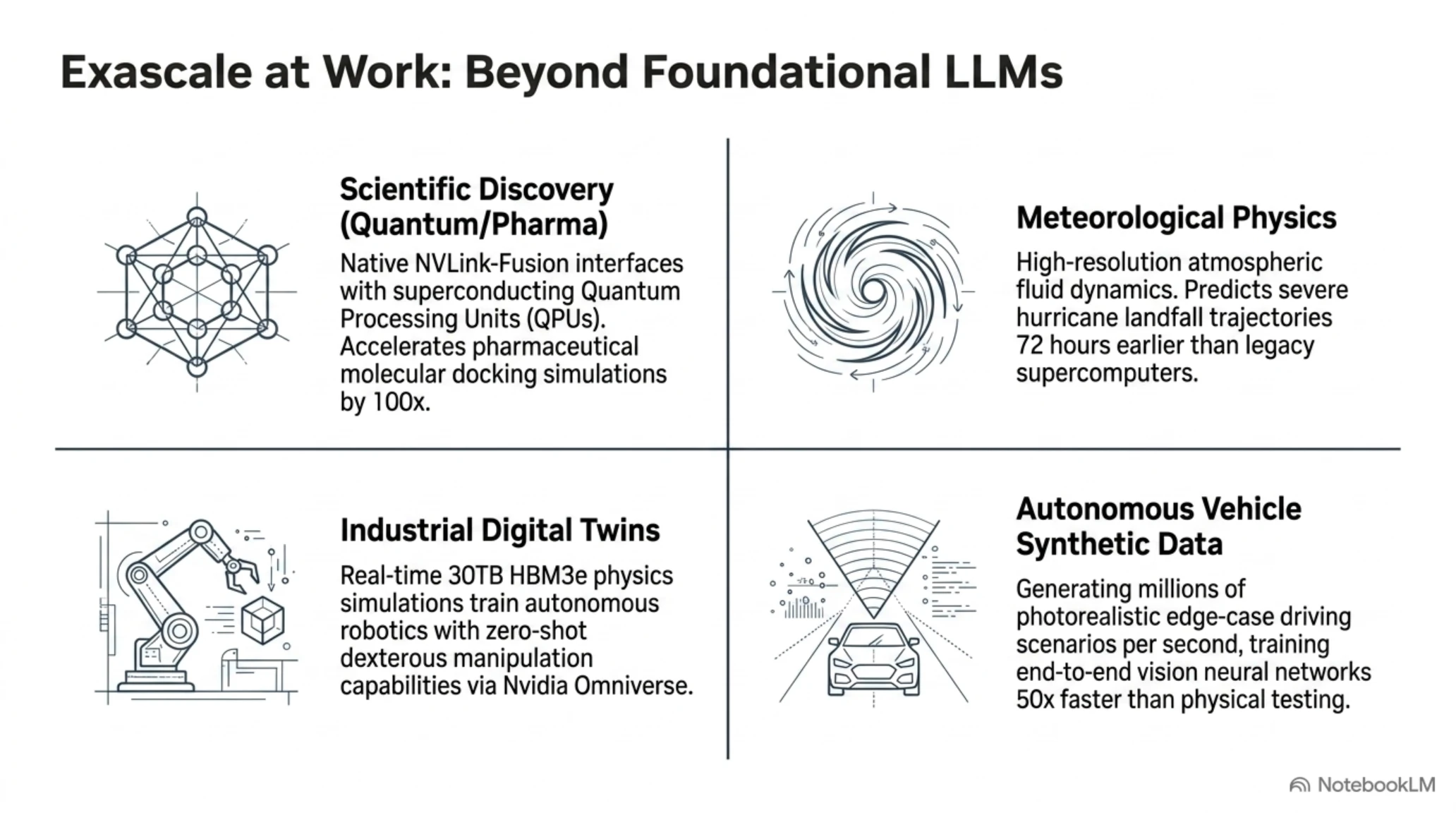
This computational density accelerates molecular docking simulations by 100x, opening groundbreaking frontiers in pharmaceutical development and materials science.
Impact on AI Startup Ecosystems and On-Demand Cloud GPU Infrastructure
Access to GB300 NVL72 clusters via tier-1 cloud providers democratizes exascale AI compute for emerging startups. AI founders can rent fractional GB300 capacity on an hourly basis, eliminating the need for multi-million-dollar capital investments in private server hardware.
This accessibility accelerates innovation cycles across autonomous robotics, medical diagnostic imaging, and real-time 3D generative media.
Data Center Energy Infrastructure and Renewable Grid Integration
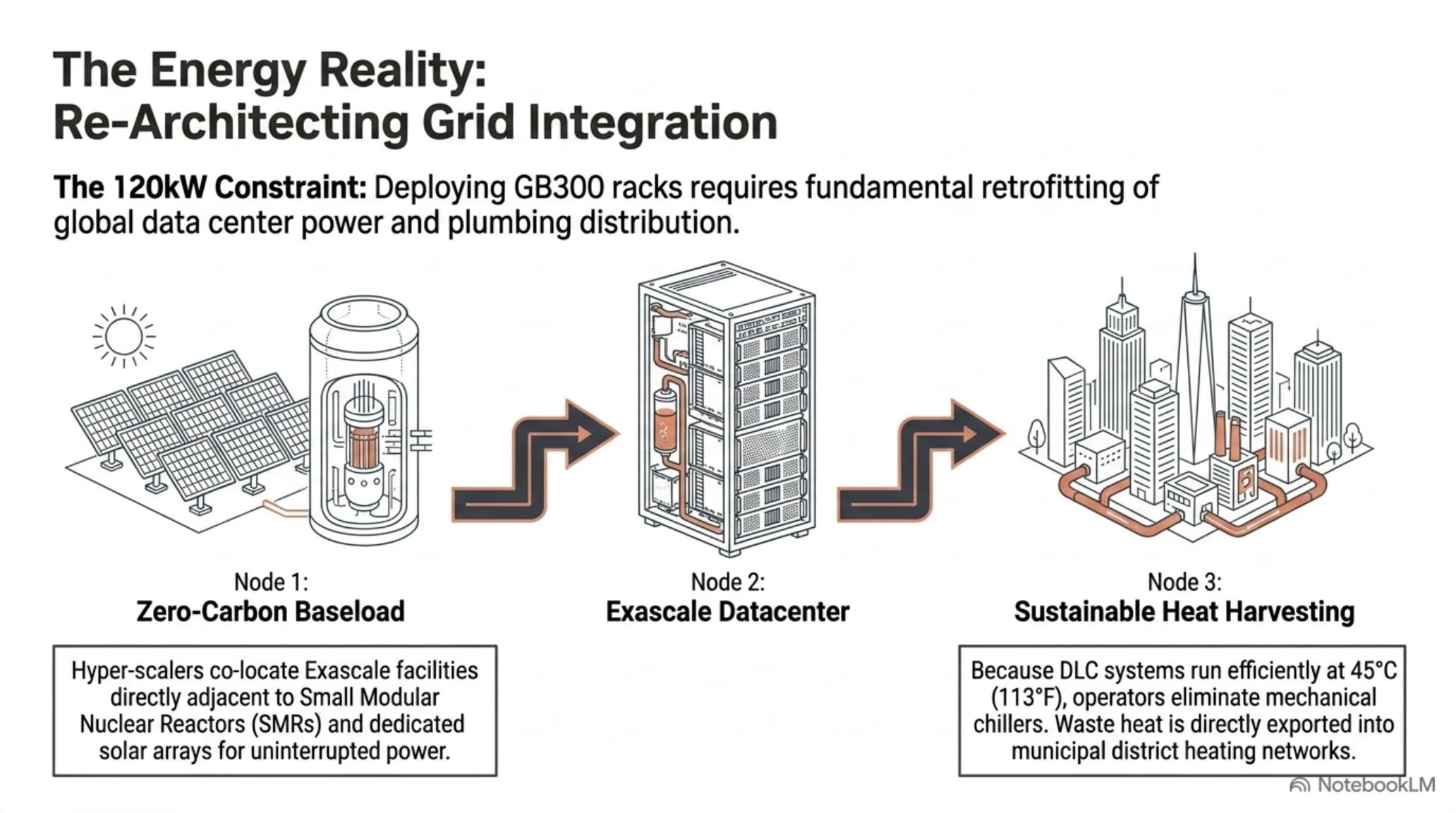
Deploying 120kW GB300 racks requires fundamental changes to global data center power distribution. Hyper-scalers are increasingly co-locating GB300 facilities adjacent to dedicated solar arrays and small modular nuclear reactors (SMRs) to secure continuous zero-carbon baseload power.
This infrastructure evolution accelerates the data center industry's transition toward 100% clean energy integration while supporting continuous AI compute demands.
Zero-Downtime Hot-Swappable Node Maintenance and NV-Health Diagnostics
The GB300 NVL72 incorporates automated telemetry diagnostics known as NV-Health. If an individual GPU module exhibits thermal drift or memory bus parity errors, the system re-routes active compute tensors to redundant execution lanes in micro-seconds without corrupting training checkpoints.
This self-healing rack architecture reduces cluster maintenance downtime by 90%, enabling continuous 24/7 training runs across massive trillion-token datasets.
Photonic Signal Routing and Reduced Inter-Datacenter Latency
The GB300 NVL72 utilizes direct optical interconnect links, bringing inter-node communication latency under 1 microsecond. This optical routing enables synchronized cross-datacenter model partitioning, allowing distributed AI superclusters to process continuous multi-modal streaming data in real time.
Advanced HBM3e Memory Controller Architecture and Bandwidth Scaling
Nvidia's new memory controller architecture manages 30TB of HBM3e VRAM across 72 GPU dies with sub-nanosecond arbitration. This unified memory access prevents tensor processing units from stalling during multi-stage attention mechanisms, ensuring peak 1.4 ExaFLOPS utilization rates.
NVLink-Fusion Interconnect Fabric for Quantum Processing Units (QPUs)
The GB300 NVL72 natively supports NVLink-Fusion protocols designed to interface with superconducting Quantum Processing Units (QPUs). This hybrid quantum-classical bridge allows exascale tensor clusters to process quantum error correction algorithms in real time, bringing practical quantum computing applications closer to commercial reality.
Extreme Temperature Tolerances and Closed-Loop Liquid Infrastructure
Nvidia's Direct Liquid Cooling (DLC) system operates at elevated coolant inlet temperatures up to 45°C (113°F), eliminating the need for energy-intensive mechanical chillers. Datacenter operators can harvest waste heat output from GB300 racks for municipal district heating networks, turning compute infrastructure into a sustainable energy source.
Unified Telemetry Monitoring and Predictive Thermal Load Balancing
The integrated Grace CPU host controllers utilize machine learning models to anticipate thermal workloads across the 72 GPUs. By dynamically adjusting coolant flow rates and clock frequencies, the rack maintains maximum compute throughput while extending silicon lifespan under heavy continuous training tasks.
Autonomous Robotics and Industrial Digital Twin Simulation Scaling
Robotics engineers are leveraging GB300 NVL72 superclusters to simulate millions of industrial robot manipulation scenarios per second within Nvidia Omniverse. By executing real-time physics simulations across 30TB of HBM3e VRAM, autonomous factory robots achieve human-level dextrous manipulation zero-shot capabilities prior to real-world deployment.
Real-Time Climate Modeling and Severe Weather Forecasting
Meteorological institutes are co-locating GB300 superclusters to run high-resolution atmospheric fluid dynamics models. Operating at 1.4 ExaFLOPS compute density, these clusters forecast hurricane landfall trajectories and extreme precipitation events 72 hours earlier than legacy supercomputers.
Autonomous Vehicle Fleet Simulation and Synthetic Data Generation
Autonomous driving developers utilize GB300 NVL72 superclusters to generate photorealistic synthetic sensor telemetry for Millions of edge-case driving scenarios per second. This synthetic data generation loop trains end-to-end vision neural networks 50x faster than real-world road testing fleet collection.
Future Outlook: Convergence of Exascale AI Hardware and Software Optimization
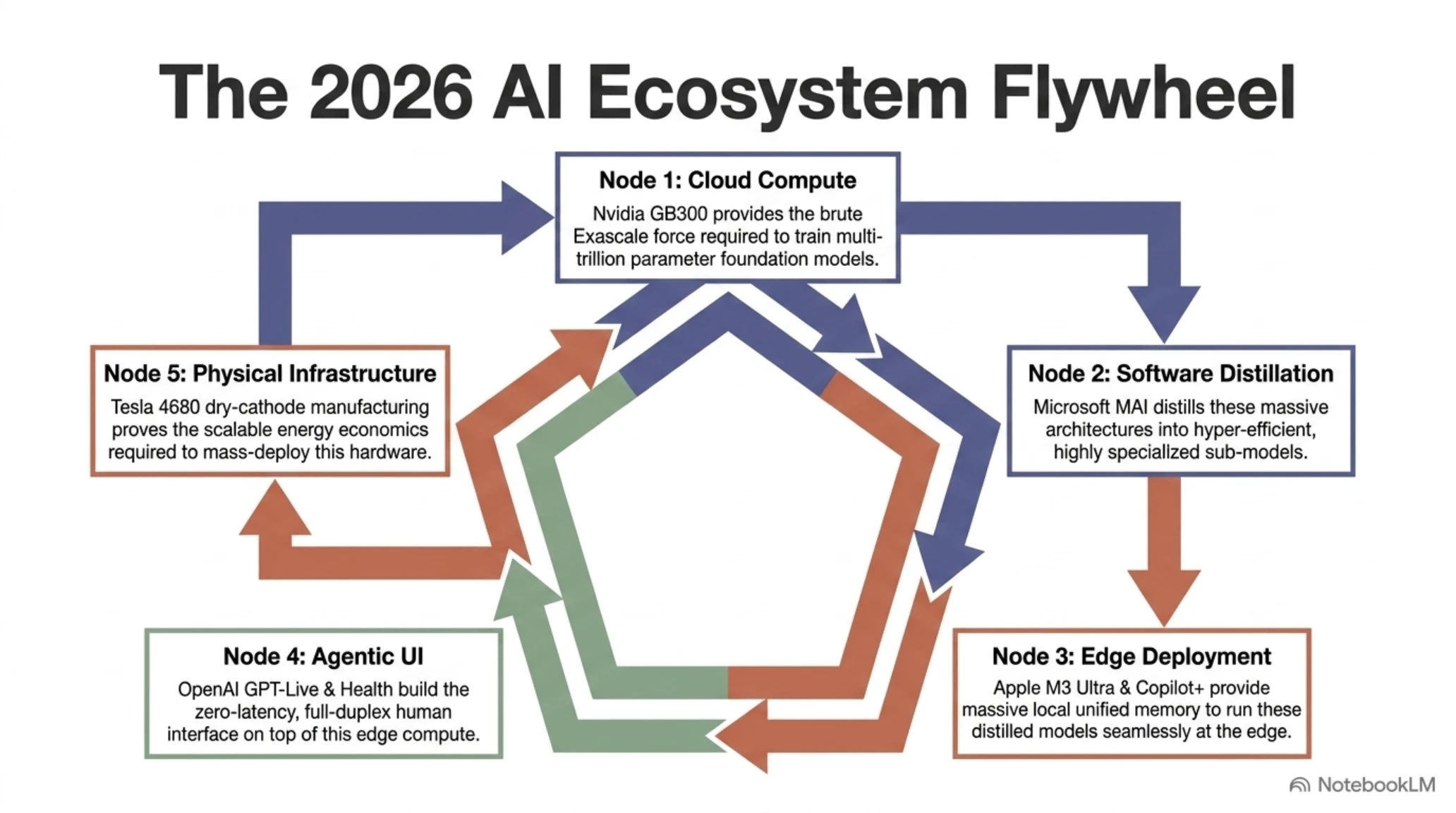
The technical developments unveiled tonight demonstrate that AI advancement is accelerating on both algorithmic and hardware fronts. As software optimizations like Microsoft's MAI models reduce compute demands and exascale systems like Nvidia's GB300 expand raw processing ceilings, the technological landscape of 2026 is poised for rapid innovation across enterprise software, autonomous systems, and scientific discovery.
Summary & Strategic Outlook for Tekin Night (Conclusion Box)
The developments of July 24, 2026, highlight rapid convergence across software optimization and hardware scaling. From Microsoft's cost-efficient MAI models and OpenAI's desktop voice coding to Nvidia's 1.4 ExaFLOPS superchip, the tech ecosystem continues to advance at an unprecedented pace.
Frequently Asked Questions (FAQ)
How much do Microsoft's in-house MAI models reduce GPU costs?
MAI-Image-2.5-Pro and MAI-Voice-2-Flash reduce operational GPU inference costs by up to 89% compared to OpenAI models.
What capability does GPT-Live bring to desktop development apps?
GPT-Live provides full-duplex conversational voice control for hands-free coding, debugging, and architecture refactoring in Codex and ChatGPT.
What production cost did Tesla achieve for 4680 battery cells?
Tesla reached a cell-level manufacturing cost of $75/kWh for its dry-cathode 4680 cells at Gigafactory Texas.
What is the compute performance of Nvidia's GB300 NVL72 system?
The GB300 NVL72 rack system delivers 1.4 ExaFLOPS of FP4 AI computing power with 30TB of HBM3e memory.
Additional Gallery: Tekin Night July 24, 2026: Microsoft's In-House MAI Models, Hands-Free Voice Coding in ChatGPT Desktop, and Nvidia's 1.4 ExaFLOPS GB300 NVL72