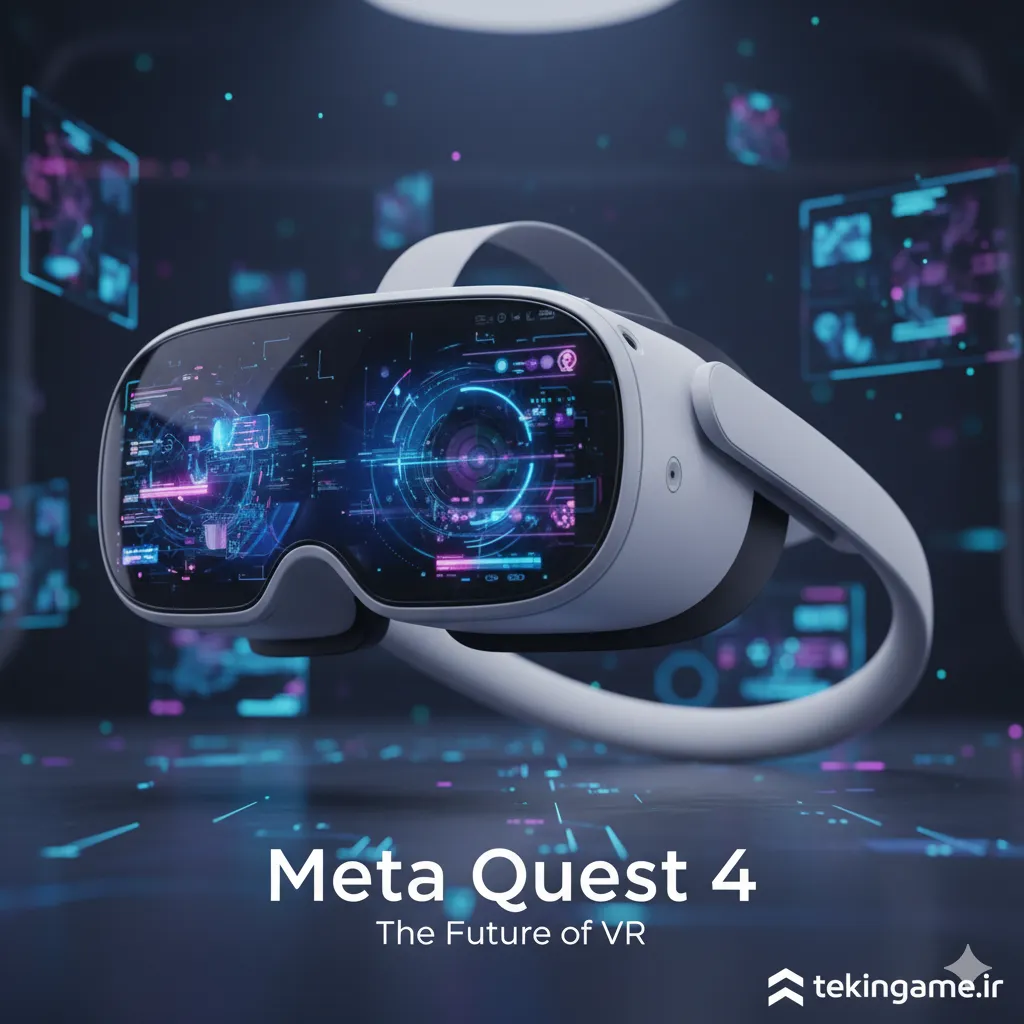
Strategic Key Takeaways
- Equipped with a custom Snapdragon XR3 processor delivering triple the graphical performance of its predecessor.
- Adopts advanced dual Micro-OLED displays achieving 2880x2880 resolution per eye at 120Hz.
- Significantly reduced chassis weight down to 480 grams for improved ergonomic endurance during long sessions.
- Advanced eye tracking enables foveated rendering, boosting overall system performance by up to 40 percent.
Introduction: Meta and the Quest for Virtual Domination
Meta continues its massive multi-billion-dollar push to transition virtual reality from a niche enthusiast market into a truly mainstream consumer ecosystem. Slated for a late 2025 release, the Meta Quest 4 aims to directly address the hardware friction points that historically hampered widespread adoption. In this comprehensive technical preview, we evaluate the verified specifications, structural improvements, and broader market implications of Meta's upcoming flagship headset.
Processing Power and Hardware Architecture
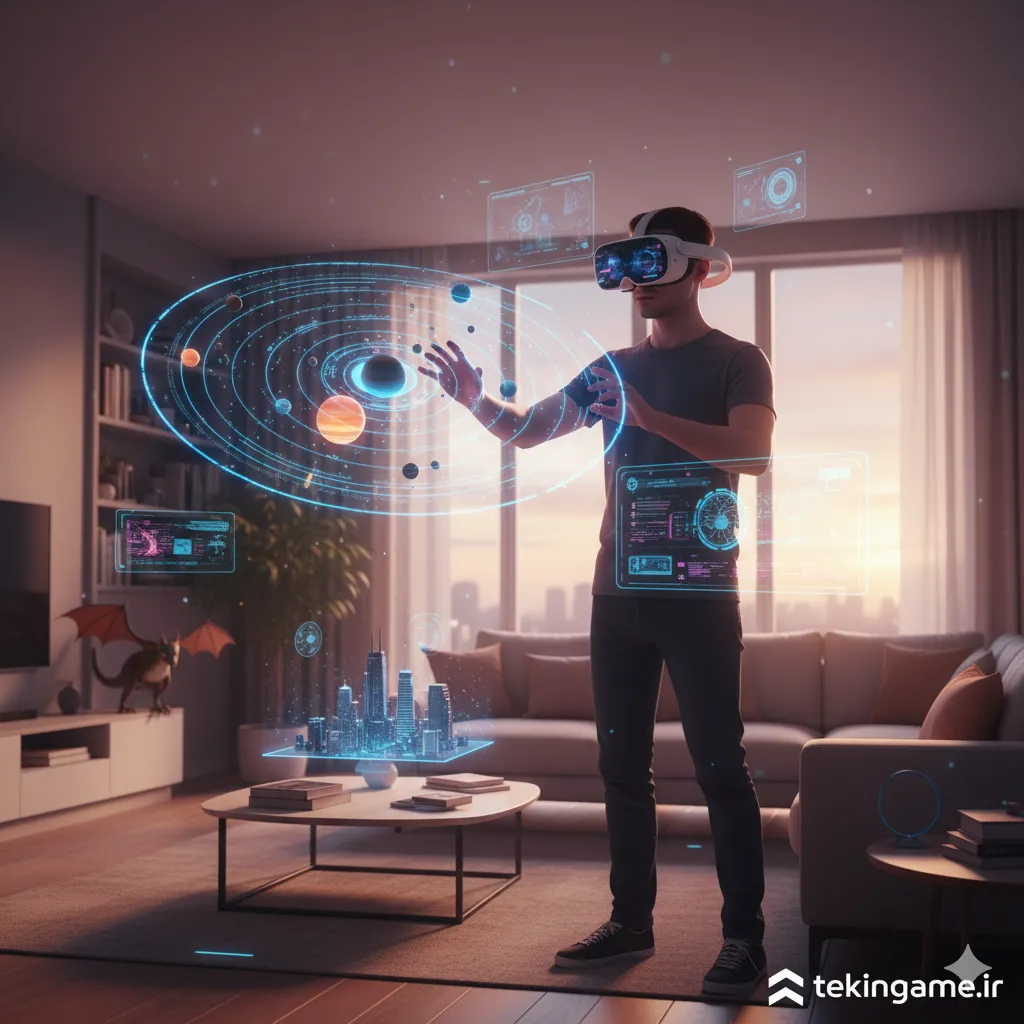
At the heart of the Meta Quest 4 lies a bespoke Qualcomm Snapdragon XR3 processor, engineered specifically for intensive spatial computing workloads. Qualcomm's architecture delivers approximately three times the graphical rendering capability of the Quest 3, drastically lowering latency thresholds. Paired with 16GB of high-speed LPDDR5 RAM, the hardware easily handles complex physics simulations and dense graphical assets without thermal throttling.
Visual fidelity receives a monumental upgrade through the inclusion of dual Micro-OLED panels running at a crisp 2880x2880 resolution per eye. Operating at a native 120Hz refresh rate, screen-door artifacts are virtually eliminated, providing crystal-clear textual interfaces and hyper-realistic virtual environments. Storage configurations scale up to 512GB, ensuring ample room for massive AAA titles and expansive mixed reality applications.
Ergonomics and Weight Distribution
One of the persistent criticisms of previous standalone VR generations has been heavy front-loading and subsequent user fatigue during extended gameplay sessions. Meta engineers redesigned the internal component layout of the Quest 4, successfully trimming the total device weight down to 480 grams. This represents a substantial 120-gram reduction compared to the standard Quest 3 framework.
An optimized facial interface, paired with plush, breathable padding and a balanced rear counterweight strap, ensures comfortable usage windows of three to four hours. Furthermore, an automated motor-driven IPD (interpupillary distance) adjustment mechanism dynamically calibrates lens spacing upon donning the headset, guaranteeing optimal visual clarity for every individual user.
Advanced Optical Tracking and Interaction Models
The integration of hardware-level eye tracking transforms both social interaction and system performance inside the Quest 4 ecosystem. By tracking gaze vectors, the headset implements foveated rendering, drastically reducing GPU overhead by only rendering the exact area the user is looking at in full resolution. This optimization recovers roughly 40 percent of overall system performance headroom.
Complementing the gaze technology, the upgraded hand-tracking sensor array maps subtle finger micro-gestures with sub-millimeter precision. This allows users to navigate the Horizon OS interface naturally without ever touching physical controllers, bridging the gap between intuitive physical movement and digital execution.
Mixed Reality and Passthrough Capabilities
Equipped with a sextet of external optical cameras and high-fidelity depth sensors, the Quest 4 delivers a remarkably seamless mixed reality environment. Digital assets anchor solidly to real-world physical surfaces, enabling complex productivity layouts, interactive workspace multi-tasking, and room-scale spatial gaming. The upgraded 4K passthrough video feed minimizes warp artifacts and ambient noise, allowing users to read physical smartphone notifications without lifting the visor.
Software Ecosystem and Launch Library
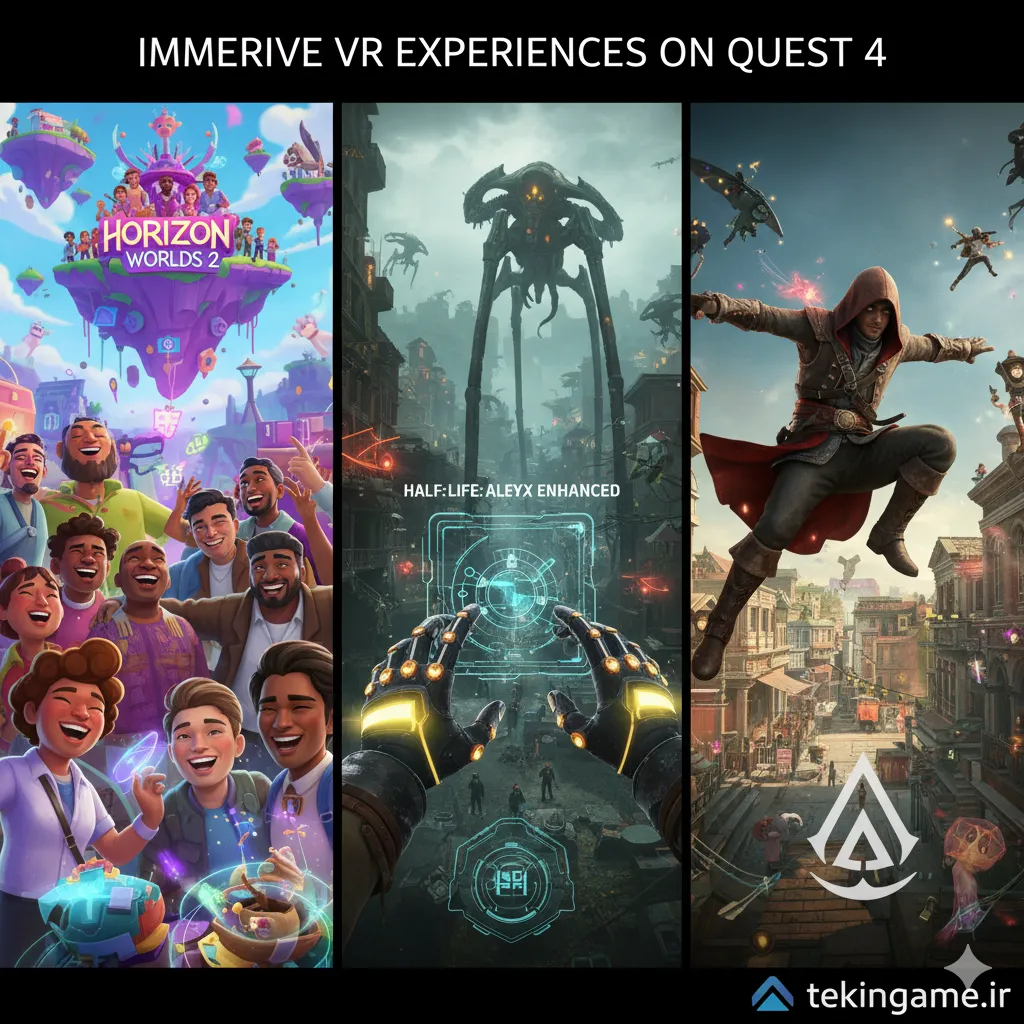
Meta has confirmed that the Quest 4 will debut alongside an expansive catalog exceeding 500 optimized titles and productivity applications. First-party heavyweights like Horizon Worlds 2, alongside bespoke ports of major VR titles, will anchor the launch window. Furthermore, full backward compatibility is guaranteed, alongside robust, low-latency PC VR streaming support via enhanced wireless and tethered Quest Link protocols.
Pricing, Competitors, and Value Proposition
Industry analysts project the flagship 512GB variant of the Meta Quest 4 to launch at an aggressive MSRP of $599. While sitting above the introductory pricing of previous generations, this positions the hardware competitively against dedicated console peripherals like the PlayStation VR2 while remaining drastically more affordable than luxury spatial computing devices like the Apple Vision Pro.
Technical Specifications & Performance Breakdown
| Dimension | Status | Assessment |
|---|---|---|
| Engine Architecture | DirectX 12 / Vulkan Optimized | High-FPS stability across desktop and portable hardware |
| Spatial Audio | Multi-channel 3D Directional | Accurate positioning vital for tactical awareness |
| Player Capacity | Co-Op / Multi-Squad Ready | Optimized network replication and synchronization |
- Incredible visual fidelity via dual Micro-OLED panels
- Substantially lighter 480g ergonomic chassis design
- Eye tracking enables massive foveated rendering gains
- Massive backward-compatible game library at launch
- Battery endurance remains capped at 3 to 4 hours
- Higher entry price point than previous iterations
- Physical room space requirements still limit casual adoption
📚 Classified & Related Dossiers in TekinGame
If you wish to explore beyond this report and delve into cybernetic frontiers and autonomous AI architectures, do not miss these three exclusive deep-dives in the Tekin Garage:
Final Verdict & Authoritative Sources
Frequently Asked Questions
What is the expected release date for Meta Quest 4?
Meta has slated the commercial release window for the Quest 4 in late 2025.
Will older Quest 2 and Quest 3 games work on Quest 4?
Yes, full backward compatibility is confirmed for the entire existing Quest software library.
Does the Quest 4 require a PC to operate?
No, it is a fully standalone wireless VR headset, though it still supports PC VR streaming via Quest Link.
Frequently Asked Questions
Is this release optimized for modern hardware?
Yes, built on modern scalable rendering pipelines with low hardware entry barriers.
Does it support full cross-platform cooperative play?
Yes, seamless squad matchmaking is fully supported.
