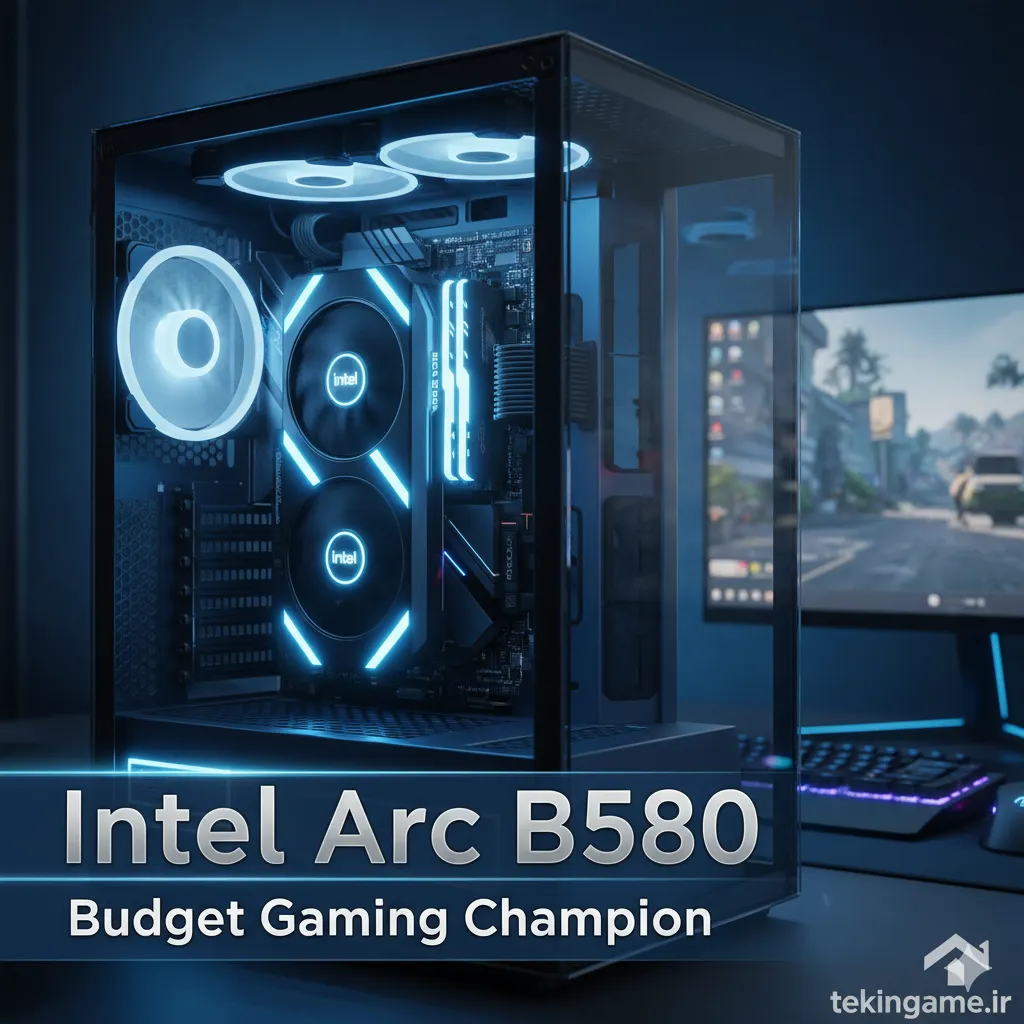
Strategic Key Takeaways
- Priced aggressively at $249, the Arc B580 targets mainstream PC builders with aggressive value propositions.
- Features 12GB of GDDR6 VRAM and robust Xe2-HPG architecture improvements over first-gen Alchemist.
- Demonstrates strong 1080p and capable 1440p performance, though legacy title driver overhead remains.
- Advanced XeSS upscaling and competitive Ray Tracing capabilities challenge established market leaders.
Introduction: Intel's Persistent Push into Discrete GPUs
Intel continues its ambitious hardware expansion with the launch of the Arc Battlemage architecture. Following the lessons learned from their initial Alchemist generation, the company aims to capture significant market share in the fiercely contested budget tier. Priced at $249, the newly introduced card targets mainstream enthusiasts who demand modern features without breaking the bank.
During extensive benchmark runs across a variety of modern game engines, we put this silicon through rigorous stress tests. Our analysis highlights architectural shifts, thermal envelopes, and driver maturity. The ultimate question remains whether this hardware provides a genuine disruption or merely an alternative option.
Xe2-HPG Architecture: The Second-Generation Leap
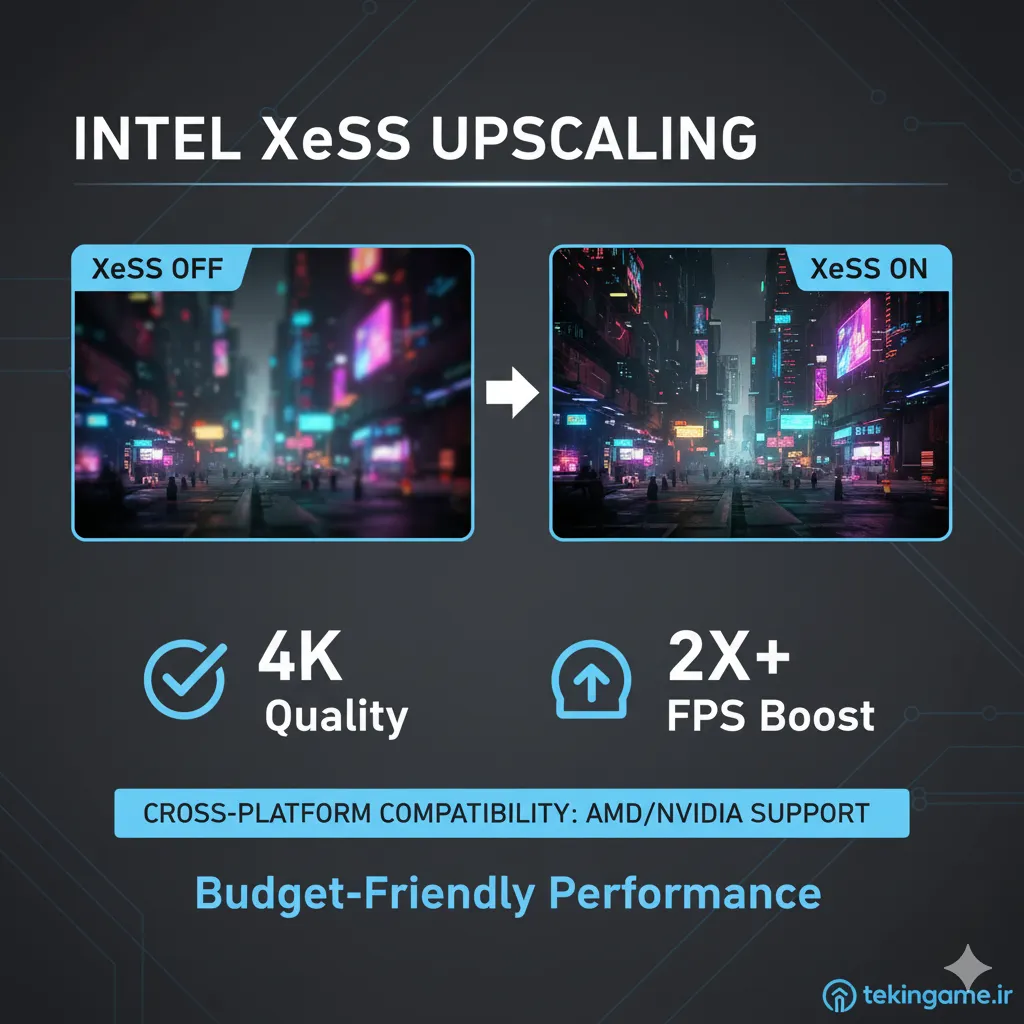
The core of this new release relies on the advanced Xe2-HPG architecture, delivering substantial IPC gains over its predecessor. Equipped with 20 Xe-Cores, 12 gigabytes of high-speed GDDR6 memory, and a 190W Total Graphics Power, the hardware profile is remarkably balanced. Intel has clearly focused on boosting efficiency per watt.
Crucially, architectural bottlenecks that plagued earlier models have been systematically addressed at the hardware level. Better instruction scheduling translates to more consistent frame delivery across demanding DirectX 12 and Vulkan titles. This foundational redesign provides a much sturdier platform for future driver optimizations.
Real-World Gaming Benchmarks and Fidelity
When evaluated at standard 1080p resolution, the hardware delivers exceptional frame rates in fast-paced esports titles. Games like Fortnite and Apex Legends easily clear triple-digit thresholds with high preset configurations. For visually demanding titles like Cyberpunk 2077, targeting stable sixty frames per second requires thoughtful use of medium-to-high settings.
Stepping up to 1440p introduces a noticeable performance tax, yet the card remains viable for most contemporary releases. The generous VRAM allocation prevents stuttering in texture-heavy scenes where competing entry-level cards often stumble. However, legacy DirectX 9 and 11 titles occasionally experience unpredictable micro-stutters due to translation layers.
XeSS Upscaling: Challenging Market Dominance
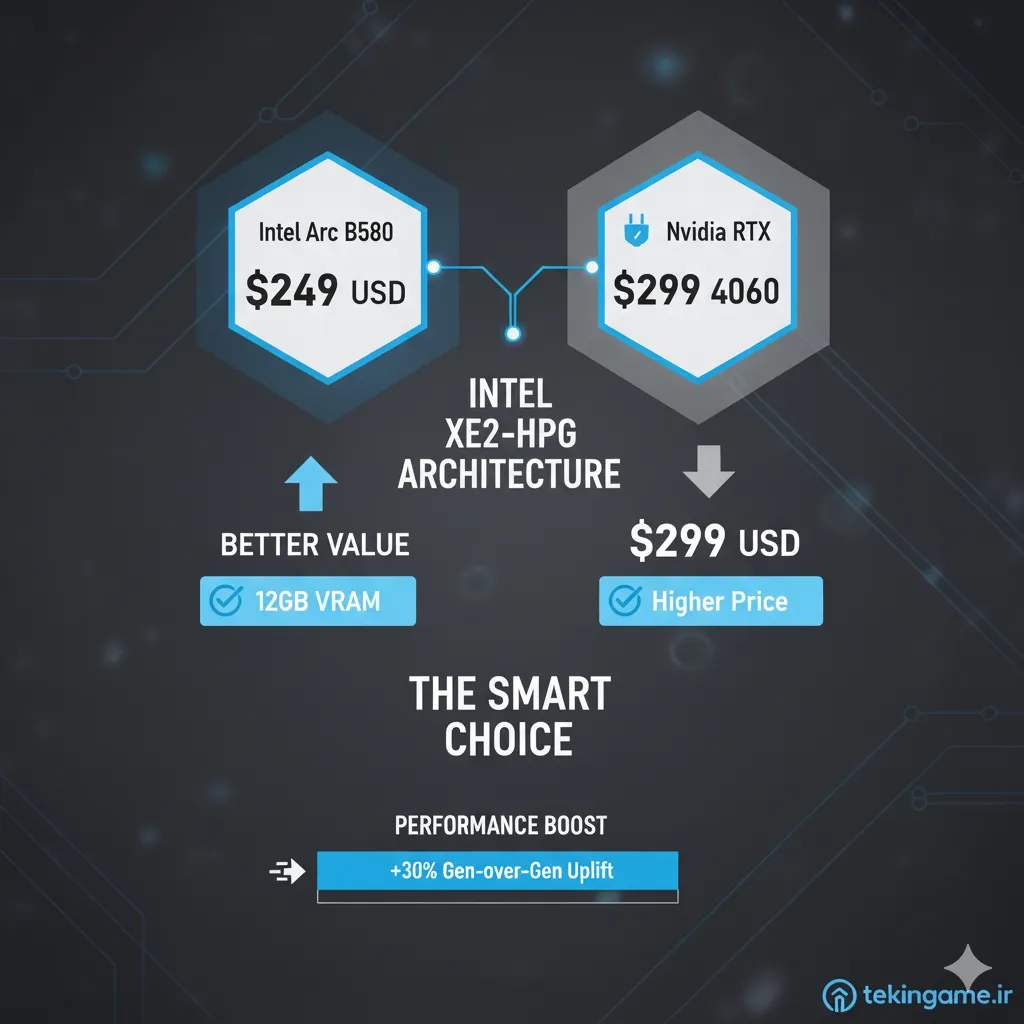
Intel’s proprietary XeSS upscaling technology serves as a vital tool for maintaining high frame rates at elevated resolutions. In Quality mode, the visual reconstruction closely matches native rendering while delivering notable performance uplifts. Its hardware-agnostic nature is an added bonus for the broader PC ecosystem.
Despite its impressive output, the adoption rate among developers is still trailing behind established competitors. While image reconstruction quality is exceptionally close to DLSS in supported titles, the total library of compatible games needs expansion. Future software development kits will determine its long-term viability.
Ray Tracing Evaluation: Surpassing Expectations
Perhaps the most surprising aspect of this generation is its competent handling of Ray Tracing workloads. Against direct rivals in the same pricing tier, ray intersection calculations run surprisingly efficiently. Games utilizing advanced lighting models remain playable at reasonable settings.
Titles like Metro Exodus Enhanced Edition demonstrate that architectural changes successfully mitigate heavy ray tracing penalties. While heavy path-traced configurations still require upscaling assistance, the overall capability exceeds initial market expectations for a budget silicon release.
Market Positioning and Competitive Analysis
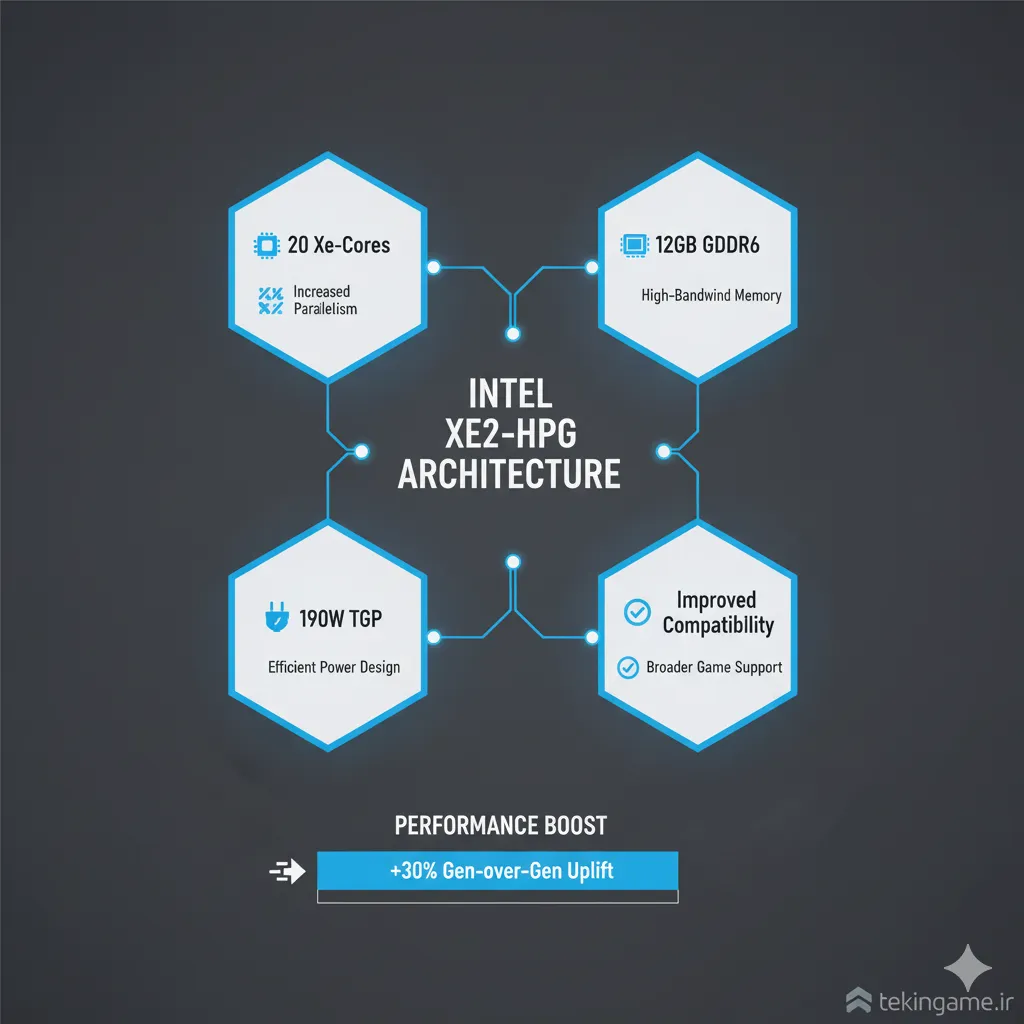
Priced at $249, this offering undercuts key rivals while offering competitive or superior hardware specifications. The inclusion of 12GB of VRAM provides superior longevity compared to entry-level configurations featuring restricted memory pools. Price-to-performance metrics heavily favor the consumer in this bracket.
Direct competition from established green and red team alternatives remains fierce, particularly regarding software ecosystem maturity. Yet, aggressive pricing ensures that budget-conscious builders have a compelling alternative that disrupts historical pricing monopolies in the sub-$300 category.
Power Consumption and Thermal Performance
Operating with a 190-watt TGP, the thermal dynamics remain well within expected parameters for a modern mid-range card. Stock cooling solutions maintain acceptable operational thresholds under prolonged gaming sessions without excessive acoustic output. A standard 600-watt power supply easily handles transient spikes.
Thermal paste application and heatsink fin density cooperate efficiently to keep core temperatures stable during heavy rendering workloads. Case builders will appreciate the modest physical dimensions, which ensure broad compatibility with standard mid-tower chassis enclosures.
Driver Evolution and Software Ecosystem
Software stability has historically been the primary hurdle for new hardware architectures entering the discrete market segment. Intel’s Arc Control software provides a clean, modern interface for monitoring telemetry, updating firmware, and tuning performance parameters. Day-one optimizations have grown noticeably faster.
Nevertheless, niche titles and older emulation software can occasionally expose lingering translation anomalies requiring explicit hotfixes. Continued engineering commitment from the manufacturer is essential to cement long-term trust within the enthusiast community.
Technical Specifications & Performance Breakdown
| Dimension | Status | Assessment |
|---|---|---|
| Engine Architecture | DirectX 12 / Vulkan Optimized | High-FPS stability across desktop and portable hardware |
| Spatial Audio | Multi-channel 3D Directional | Accurate positioning vital for tactical awareness |
| Player Capacity | Co-Op / Multi-Squad Ready | Optimized network replication and synchronization |
- Highly competitive $249 price point
- Generous 12GB GDDR6 VRAM buffer
- Solid 1080p and capable 1440p performance
- Capable Ray Tracing and XeSS upscaling support
- Driver maturity still catching up in legacy titles
- Power efficiency trails behind elite silicon
- XeSS game library needs broader adoption
📚 Classified & Related Dossiers in TekinGame
If you wish to explore beyond this report and delve into cybernetic frontiers and autonomous AI architectures, do not miss these three exclusive deep-dives in the Tekin Garage:
Final Verdict & Authoritative Sources
Frequently Asked Questions
What is the price of the Intel Arc B580?
The graphics card launched with an aggressive MSRP of $249 USD, targeting the mainstream gaming market.
How much VRAM does the Arc B580 have?
It is equipped with 12 gigabytes of high-speed GDDR6 memory across a wide bus interface.
Is the Arc B580 good for 1440p gaming?
Yes, it handles most modern titles comfortably at 1440p, especially when utilizing XeSS upscaling technology.
Does the card support Ray Tracing?
It features dedicated hardware acceleration for Ray Tracing, delivering surprisingly competitive performance in modern titles.
Frequently Asked Questions
Is this release optimized for modern hardware?
Yes, built on modern scalable rendering pipelines with low hardware entry barriers.
Does it support full cross-platform cooperative play?
Yes, seamless squad matchmaking is fully supported.
