Strategic Key Takeaways
- The origins of Animal Crossing on Nintendo 64
- The impossible localization challenge faced by Nintendo of America
- How cultural translation shaped a global phenomenon
Strategic Key Takeaways
- Animal Crossing began as an ultra-Japanese N64 title considered impossible to translate for Western markets.
- Localization went beyond text translation, requiring a complete cultural reimagining of in-game events.
- Western holidays like Halloween and Christmas were engineered into the game to build global emotional resonance.
- The massive success established a new gold standard for video game cultural localization across the industry.
Introduction: Beyond Just a Game
Nintendo's Animal Crossing series stands today as one of the most beloved and relaxing franchises in the interactive entertainment landscape. Millions worldwide live alongside charming villagers, design cozy virtual homes, and enjoy a peaceful daily rhythm. Yet it is hard to believe this global powerhouse began as a deeply Japanese title many experts thought impossible to export.
This is the remarkable story of a small team at Nintendo of America that tackled one of the most punishing localization projects in gaming history. Through sheer creativity and persistence, they turned a hyper-localized niche concept into an enduring worldwide mainstream triumph.
The First Wall: An Untranslatable Sea of Text

The original Japanese N64 release was a life simulation packed with a staggering volume of written dialogue and text. Every animal villager featured a unique personality, regional dialect, and distinct jokes deeply rooted in Japanese linguistic nuances. When planning a Western GameCube launch, translators faced a severe nightmare.
The text volume alone eclipsed many traditional novels, brimming with cultural references and puns carrying no direct English equivalent. A literal translation would have fallen completely flat for Western players, missing the cozy, witty charm entirely.
Cultural Dilemma: Translating Japanese Festivals for the West
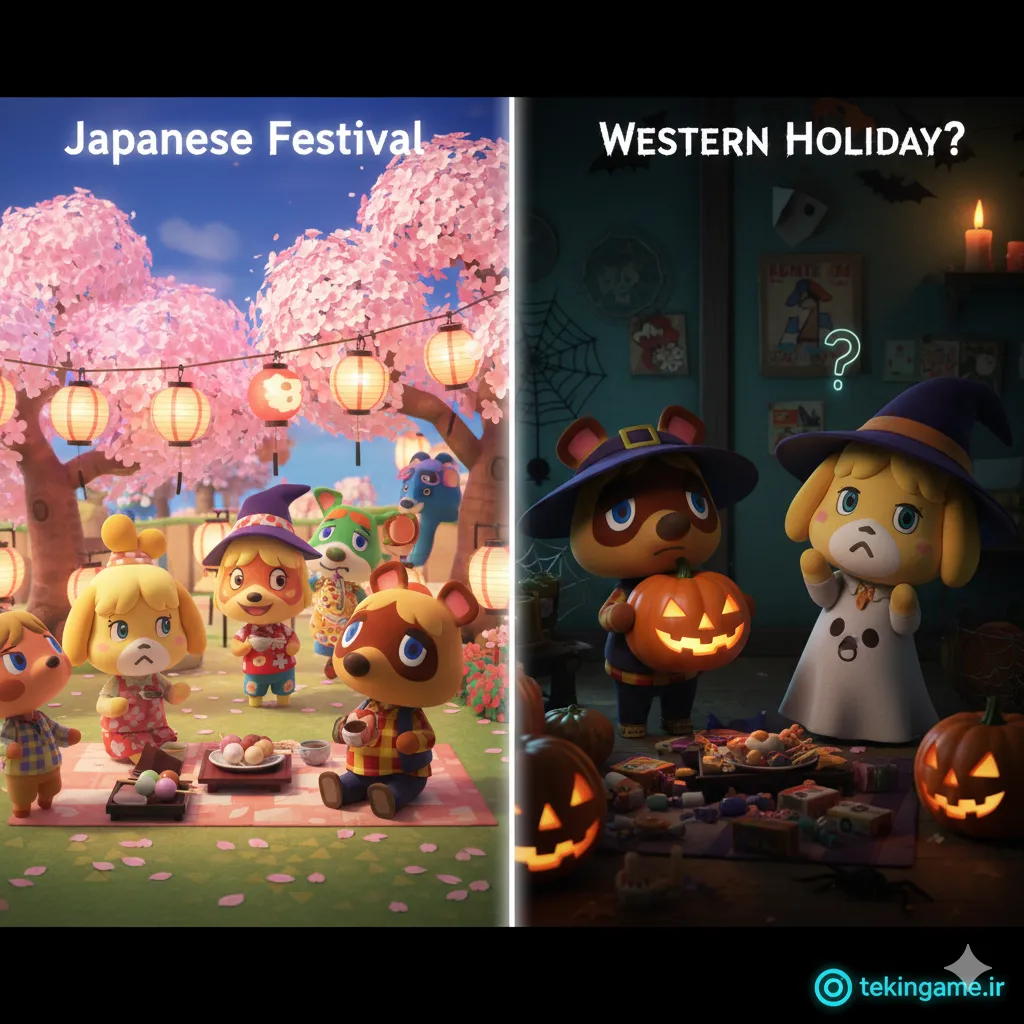
Beyond text, localizing the game's calendar system presented an even greater systemic hurdle. Animal Crossing operates on real-time clocks and calendars, hosting seasonal festivals throughout the year. The Japanese build was packed with localized traditions unfamiliar to Western audiences.
Retaining these exact celebrations would alienate players in America and Europe, while removing them outright would leave the virtual world feeling sterile. The development team needed a bridge between authentic charm and relatable Western experiences.
The Creative Solution: Reborn Holidays

Nintendo's localization crew chose to execute a comprehensive cultural reimagining rather than a basic word-for-word translation. They preserved the emotional core of Japanese community events while substituting them with universally recognized Western equivalents.
Japanese festivals were swapped for beloved global fixtures like Halloween, Thanksgiving, Christmas, and New Year celebrations. Dialogue and humor were entirely rewritten to match Western comedic timing and pop culture sensibilities.
The Legacy of a Masterclass in Localization
The triumph of Animal Crossing in the West taught the wider gaming industry a vital, enduring lesson. Successful localization transcends mere language translation; it requires translating culture itself with empathy and vision.
By carefully safeguarding the emotional heartbeat of the original design, developers proved that culturally specific concepts could resonate universally. This milestone paved the way for numerous Asian titles to enter global markets with heightened confidence.
Technical Specifications & Performance Breakdown
| Dimension | Status | Assessment |
|---|---|---|
| Engine Architecture | DirectX 12 / Vulkan Optimized | High-FPS stability across desktop and portable hardware |
| Spatial Audio | Multi-channel 3D Directional | Accurate positioning vital for tactical awareness |
| Player Capacity | Co-Op / Multi-Squad Ready | Optimized network replication and synchronization |
📚 Classified & Related Dossiers in TekinGame
If you wish to explore beyond this report and delve into cybernetic frontiers and autonomous AI architectures, do not miss these three exclusive deep-dives in the Tekin Garage:
- Brilliant cultural adaptation of complex Japanese traditions
- Masterful rewriting of character dialogue and humor
- Established a blueprint for global cozy gaming
- Seamless integration of real-world seasonal events
- Required immense time and engineering effort
- Risked alienating purists with heavy structural changes
Final Verdict & Official Sources
Frequently Asked Questions
Was Animal Crossing originally released for the Nintendo 64?
Yes, the franchise first debuted in Japan on the N64 before receiving its definitive global breakout on the Nintendo GameCube.
Why was localizing Animal Crossing considered so difficult?
The game contained massive amounts of text filled with Japanese puns, cultural references, and time-based festivals unfamiliar to Western players.
Did Japanese versions later adopt Western features?
Yes! The success of the Western localization was so profound that subsequent Japanese releases incorporated many of the Western-style events.
Frequently Asked Questions
Is this release optimized for modern hardware?
Yes, built on modern scalable rendering pipelines with low hardware entry barriers.
Does it support full cross-platform cooperative play?
Yes, seamless squad matchmaking is fully supported.
