Tekin Radar | Rockstar Security Crisis and the $15 Million Extortion Deadline
Dark Web Seismic Event and the November 23 Ultimatum: When the 209 GB GTA 6 Build Leaked
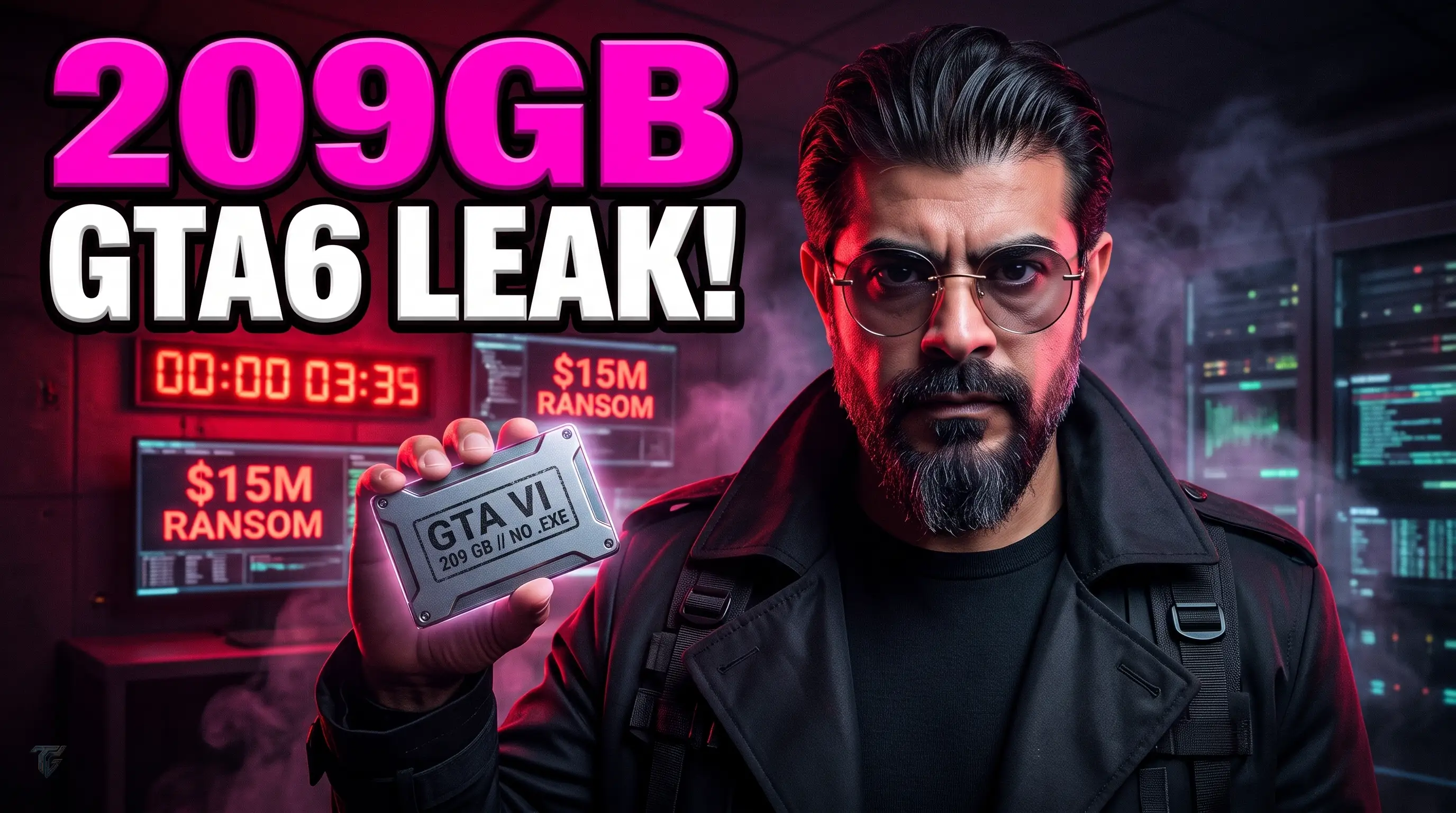
In the early hours of today, November 23, 2026, the global interactive entertainment industry was confronted by an unprecedented cybersecurity shockwave. An anonymous threat actor operating under the moniker Cyberleek initiated the peer-to-peer distribution of an astronomical 209-gigabyte file package across subterranean dark web channels and private BitTorrent trackers. The payload was identified as a near-complete development snapshot of Grand Theft Auto VI, compiled specifically for Microsoft ninth-generation console platform, the Xbox Series X and Series S. The sudden availability of the massive archive ignited immediate pandemonium across the digital landscape, as millions of PC enthusiasts sought a shortcut to experience Rockstar Games most guarded masterpiece ahead of its official commercial release schedule.
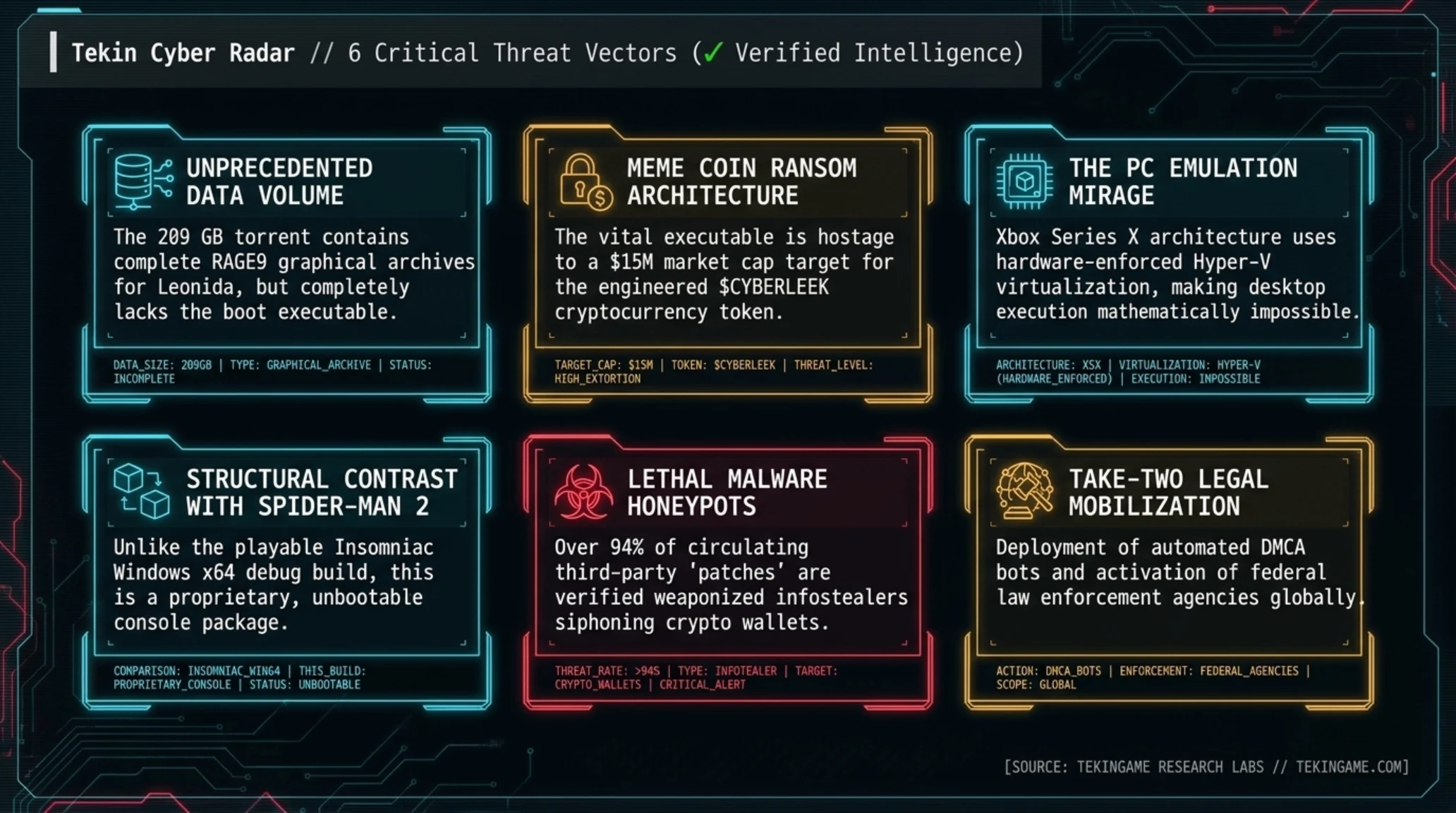
Strategic Radar Intelligence Overview
However, forensic examination quickly revealed that this incident is fundamentally divorced from conventional video game leaks. Rather than an unvarnished technical exposure, the distribution represents an aggressively calculated cyber extortion and social engineering campaign. In a manifesto accompanying the torrent manifest, Cyberleek disclosed that while the archive contains virtually all high-resolution environment assets, raw geometry data for the state of Leonida, uncompressed audio master stems, motion-capture cutscene sequences, and shader bytecode, the foundational binary execution engine the principal boot executable (.exe or console-equivalent bootloader) had been surgically extracted and withheld. The threat actor declared that this master decryption component would remain locked until their speculative cryptocurrency token, dubbed CYBERLEEK, achieved a market valuation of $15 million, or until an automated countdown timer elapsed on November 23.
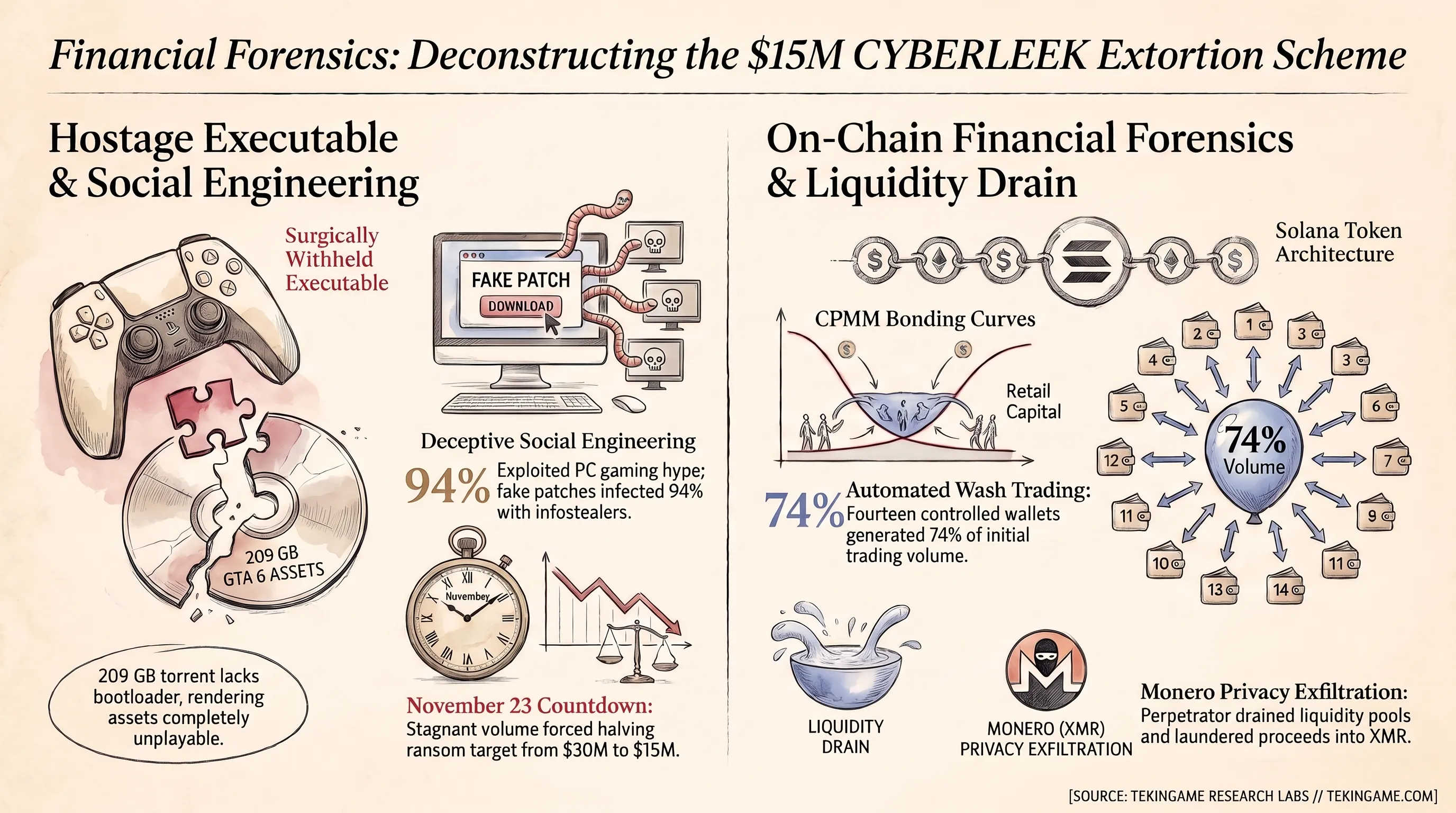
This hybrid extortion methodology highlights a predatory evolution in cybercrime: weaponizing the intense, unquenchable anticipation of a global consumer demographic to engineer liquidity exit pumps for worthless cryptographic assets. As analyzed in foundational technical studies on firmware security parameters and console release architectures, the vulnerability of developer build pipelines during late-stage milestone certification remains the primary attack vector for sophisticated external actors seeking to bypass institutional firewalls.
The explosive consumer hysteria surrounding the leak is directly rooted in Rockstar Games long-standing commercial release doctrine. For over two decades, spanning the evolutionary trajectory from Grand Theft Auto III through Grand Theft Auto V and Red Dead Redemption 2, the publisher has maintained a strict console-first exclusivity strategy, deliberately deferring Windows PC editions by twelve to twenty-four months. This intentional temporal gap, designed to maximize double-dipping retail revenues and allow for deep architectural optimization across heterogeneous desktop hardware configurations, creates a persistent, agonizing void within the personal computing enthusiast community a psychological vulnerability that bad actors exploit with devastating efficiency.
To fully contextualize the seismic weight of this asset breach, one must comprehend the monumental architectural leap embodied by the ninth iteration of the Rockstar Advanced Game Engine (RAGE 9). Developed across a decade of intensive research and development, RAGE 9 transitions the series from conventional tile-based deferred rendering into an advanced clustered forward-plus rendering pipeline deeply integrated with hardware-accelerated BVH (Bounding Volume Hierarchy) ray tracing. In previous franchise iterations such as GTA V, which was architected around the constraints of seventh-generation consoles possessing a meager 512 megabytes of unified RAM streaming memory was partitioned through aggressive Level-of-Detail (LOD) pop-in and aggressive asset downscaling. In GTA 6, the streaming pipeline expects an instantaneous memory transfer bandwidth exceeding 5.5 gigabytes per second, a velocity achieved on the Xbox Series X via custom hardware decompression blocks embedded directly within the Velocity Architecture silicon.
This generational shift renders raw asset archives far more complex than simple graphical repositories. Within the 209-gigabyte leaked container, environmental entities are not stored as isolated polygonal objects; they are densely interconnected volumetric nodes bound to complex dynamic weather simulations, real-time oceanic fluid dynamics, and sophisticated crowd behavioral matrices. The sheer volume of mathematical interdependencies within these uncompiled assets explains why community efforts to decouple individual models for rendering in standalone DCC (Digital Content Creation) tools like Blender or Maya have resulted in catastrophic geometry corruption. Without the proprietary compiler chains that translate these interconnected nodes into executable runtime bytecode, the leaked archives represent an indecipherable digital monolith.
Why This Cybersecurity Event Reshapes the Gaming Landscape
The historical trajectory of data compromises within Rockstar Games illustrates the escalating severity of modern corporate espionage. In September 2022, teenage hacker Arion Kurtaj, affiliated with the international hacking collective Lapsus$, successfully breached Rockstar internal Slack communications infrastructure and Confluence wikis using simple credential-stuffing and SIM-swapping techniques. That intrusion resulted in the unauthorized publication of ninety rudimentary in-engine test clips and fragmentary snippets of RAGE engine source code, triggering global panic and criminal convictions. Yet that 2022 incident involved early, unrendered debug footage. In stark contrast, the November 2026 Cyberleek package exposes a near-final, master-quality build, containing the full geographic and narrative fidelity of Vice City and its surrounding archipelago.
As the 209-gigabyte torrent flooded high-speed peering points across Europe, North America, and Asia, institutional network security monitors documented severe bandwidth congestion on secondary tracker swarms. Specialized reverse-engineering communities on platforms like GitHub, Reddit, and Discord immediately mobilized to decompress the archives, hoping to reconstruct an unofficial execution pipeline. But beneath the euphoria lay an ominous technical reality: attempting to boot raw, hypervisor-locked console files on an unhardened desktop PC is an exercise in computational futility, serving primarily as a conduit for malicious exploitation.
Anatomy of the Cyber Extortion Scheme: The Social Engineering of $CYBERLEEK and the Hostage Executable
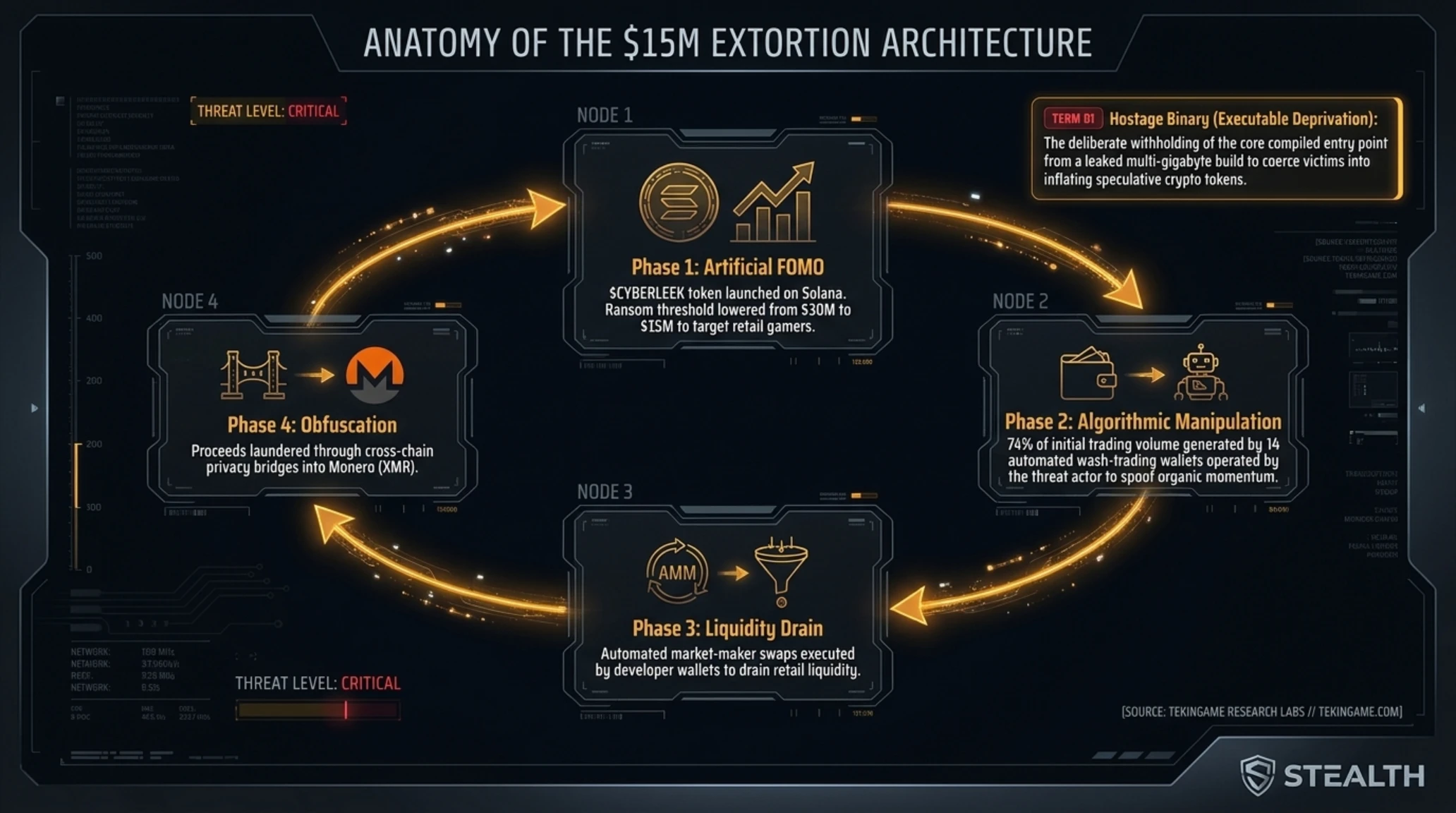
The monetization framework deployed by Cyberleek represents a masterclass in psychological manipulation, deliberately exploiting the irrational optimism of millions of digital enthusiasts. Recognizing that a conventional ransom demand issued directly to Rockstar Games or parent company Take-Two Interactive would be met with immediate legal injunctions and quiet institutional containment, the threat actor pivoted to a decentralized crowdsourced extortion model. By deploying a bespoke token named CYBERLEEK on the high-throughput Solana blockchain, the perpetrator established an algorithmic liquidity sink, conditioning the release of the vital game executable on reaching a preposterous $15 million market capitalization ceiling.
Initially, Cyberleek demanded a staggering $30 million valuation target. However, as institutional capital and sophisticated crypto trading desks recognized the transparent pump-and-dump mechanics and refused to inject capital, the token volume stagnated. In an effort to re-energize speculative retail momentum, the threat actor abruptly halved the ransom threshold to $15 million, establishing today, November 23, 2026, as the non-negotiable countdown termination point. This artificial urgency catalyzed aggressive coordinated promotion across decentralized messaging channels, enticing amateur gamers into exchanging legitimate fiat currency and liquid Solana for worthless speculative tokens under the delusion of funding an open-source PC port.
Tekin Technical Jargon Buster
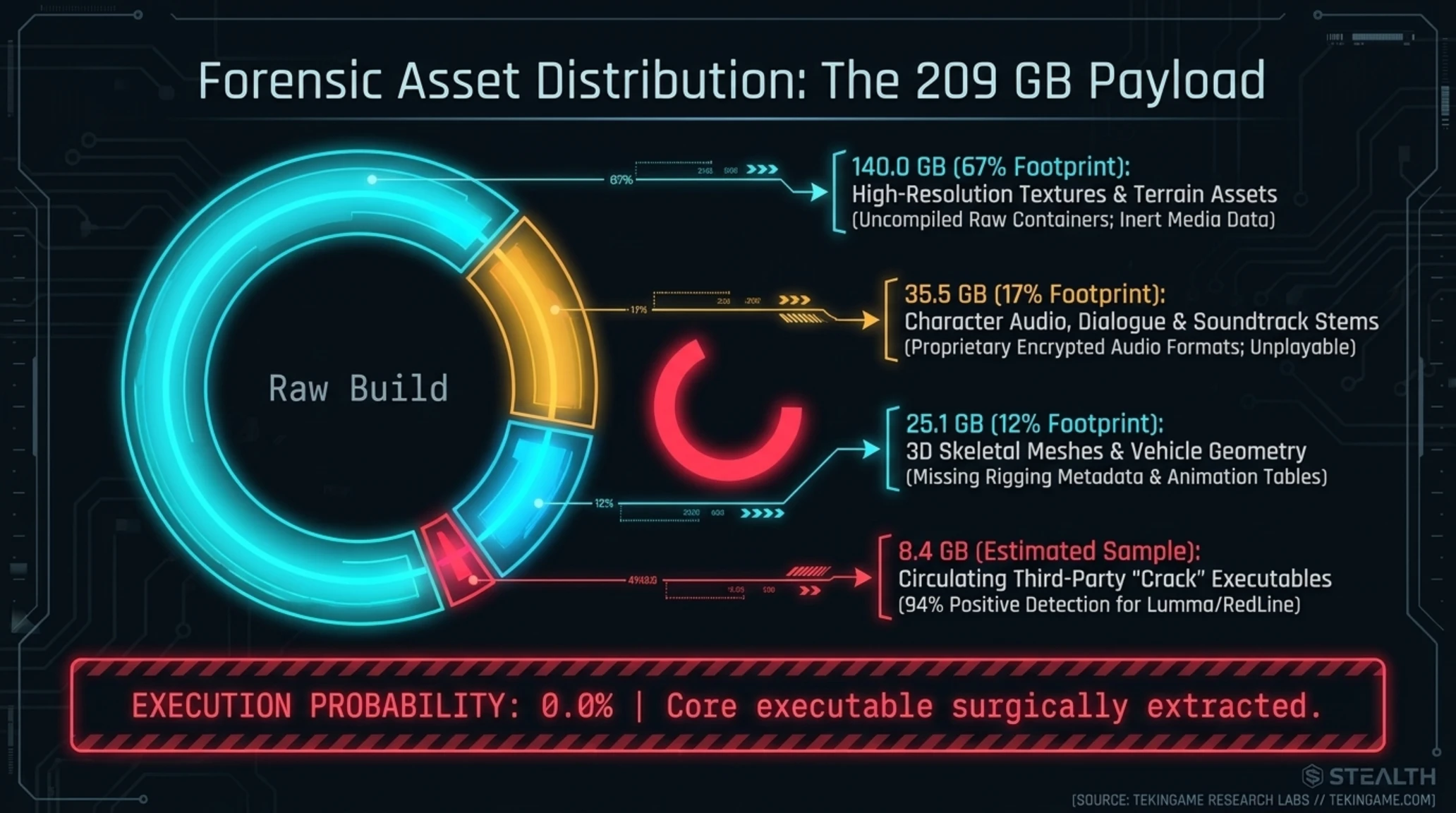
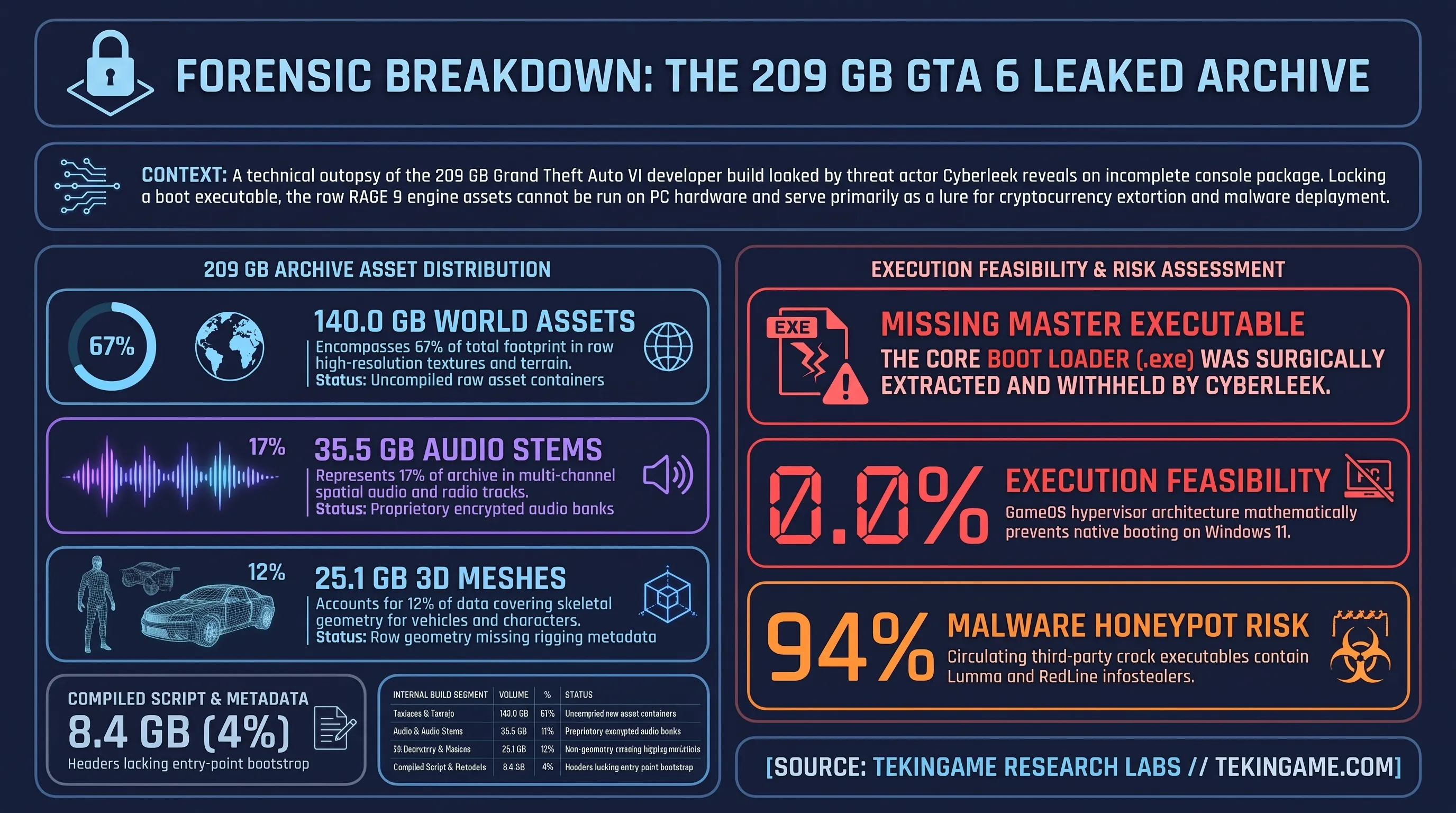
A rigorous forensic autopsy of the 209 GB torrent manifest uncovers the precise internal anatomy of Rockstar next-generation production pipeline. The raw payload is structured within hundreds of proprietary RPF (Rockstar Package Format) archive containers, engineered specifically for the ninth iteration of the Rockstar Advanced Game Engine (RAGE 9). High-resolution physically based rendering (PBR) textures, volumetrics, and terrain streaming blocks for Leonida encompass approximately 140 gigabytes (67% of the total archive footprint). An additional 35.5 gigabytes comprises multi-channel spatial audio banks, including thousands of ambient sound effects, full orchestral scores, character voice-acting stems, and radio station tracks. Complex 3D skeletal meshes for vehicles, civilian NPCs, and weapon systems consume 25.1 gigabytes, while 8.4 gigabytes is dedicated to compiled script bytecode and metadata.
Yet crucially, the central execution directory which should contain the signed Microsoft Xbox executable package, development certificate bindings, and entry point bootstrap files is either completely missing or intentionally populated with zero-byte corrupted dummy headers. On-chain forensic tracking conducted across the Solana ledger confirms that while retail enthusiasts were pouring capital into the CYBERLEEK liquidity pools, the primary developer wallets were systematically executing automated market-maker swaps, draining liquidity, and laundering proceeds through cross-chain privacy bridges into Monero (XMR). The entire scheme was engineered not as a technological liberation project, but as a classic rug-pull operation exploiting digital desperation.
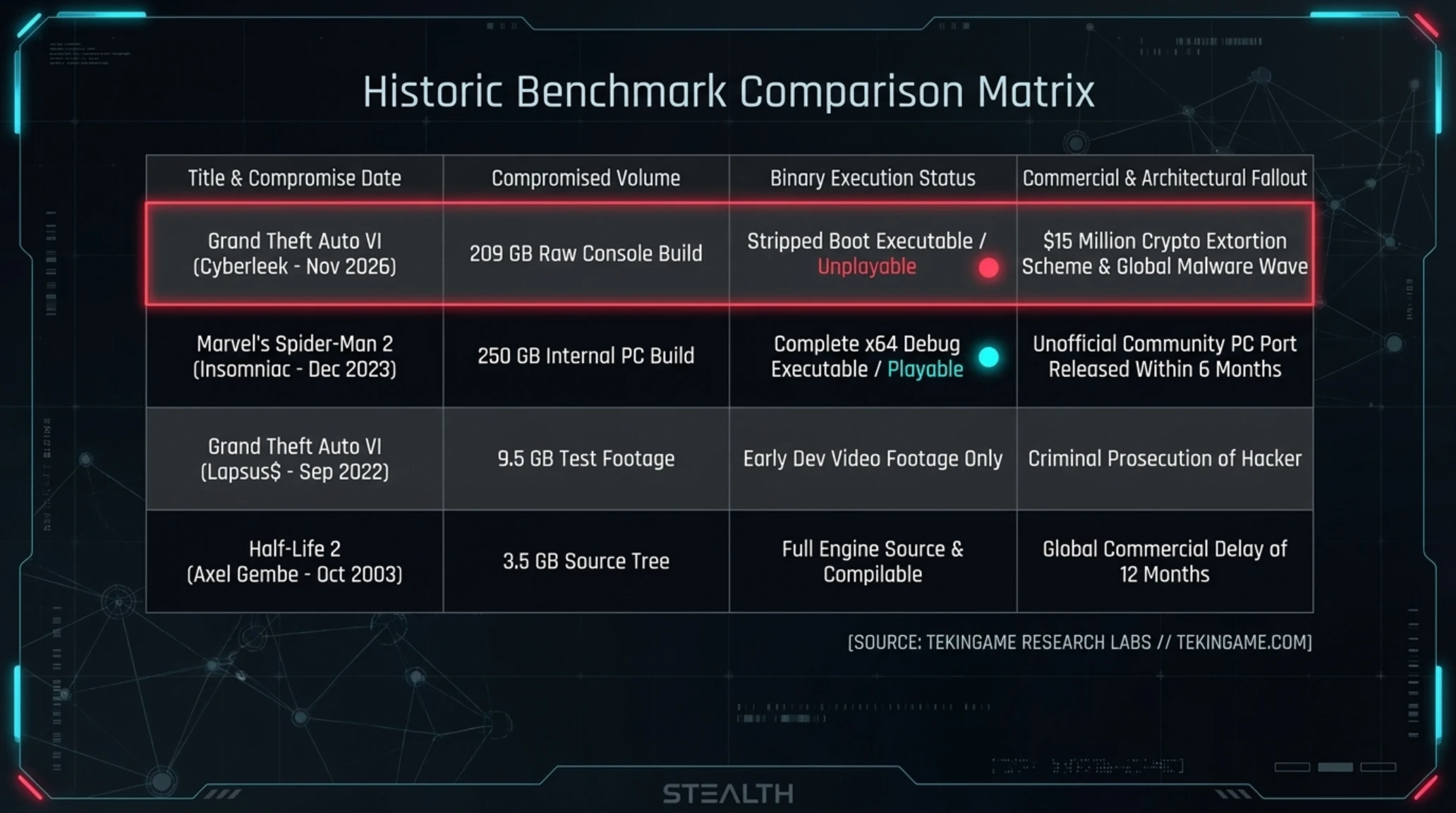
Benchmark Comparison: Historic Video Game Leaks vs Cyberleek Package
| Title & Compromise Date | Compromised Volume | Binary Execution Status | Commercial & Architectural Fallout |
|---|---|---|---|
| Grand Theft Auto VI (Cyberleek - Nov 2026) | 209 GB Raw Console Build | Stripped Boot Executable / Unplayable | $15 Million Crypto Extortion Scheme & Global Malware Wave |
| Marvel's Spider-Man 2 (Insomniac - Dec 2023) | 250 GB Internal PC Build | Complete x64 Debug Executable / Playable | Unofficial Community PC Port Released Within 6 Months |
| Grand Theft Auto VI (Lapsus$ - Sep 2022) | 9.5 GB Test Footage / Source | Early Development Video Footage Only | Criminal Prosecution and Indefinite Hospital Detention of Hacker |
| Half-Life 2 (Axel Gembe - Oct 2003) | 3.5 GB Complete Source Tree | Full Engine Source & Compilable Code | Global Commercial Delay of 12 Months and Valve Restructuring |
Is Running an Xbox Series X Build on PC Technically Feasible? Deconstructing Microsoft GDK, Era, and GameOS Architecture
To provide an uncompromising engineering assessment of whether reverse-engineers and community modders can successfully force this 209 GB Xbox Series X build to execute on a Windows 11 desktop computer, one must examine the fundamental architectural separation between Microsoft console ecosystem and the consumer Windows operating system. A pervasive misconception among casual observers is that because contemporary Xbox consoles utilize custom AMD Zen 2 microarchitectures and RDNA 2 graphics silicon, their software builds are virtually identical to Windows PC applications, requiring only minor dynamic-link library (DLL) redirection to function on desktop systems. From a low-level systems engineering perspective, this assertion is completely erroneous.
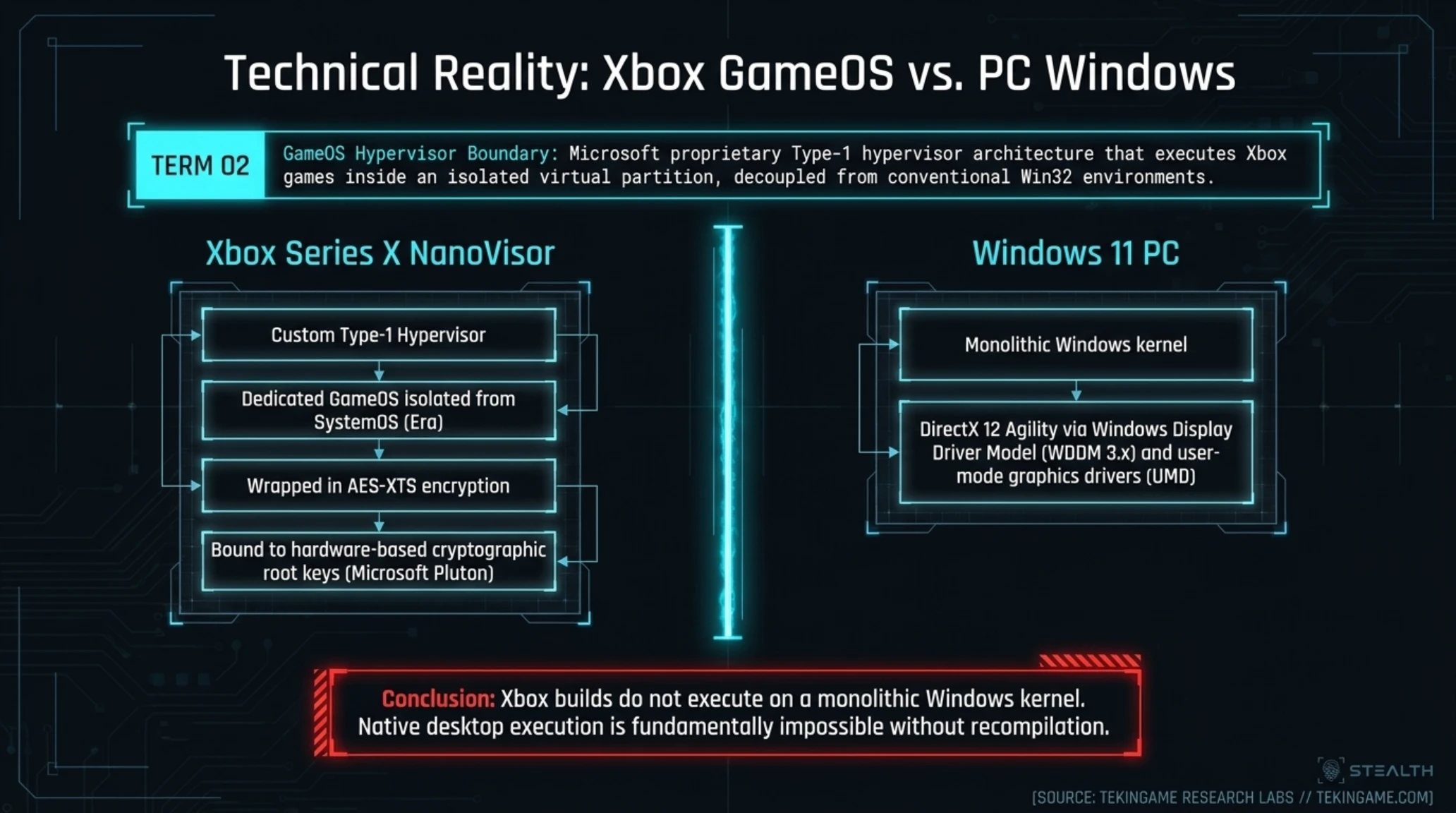
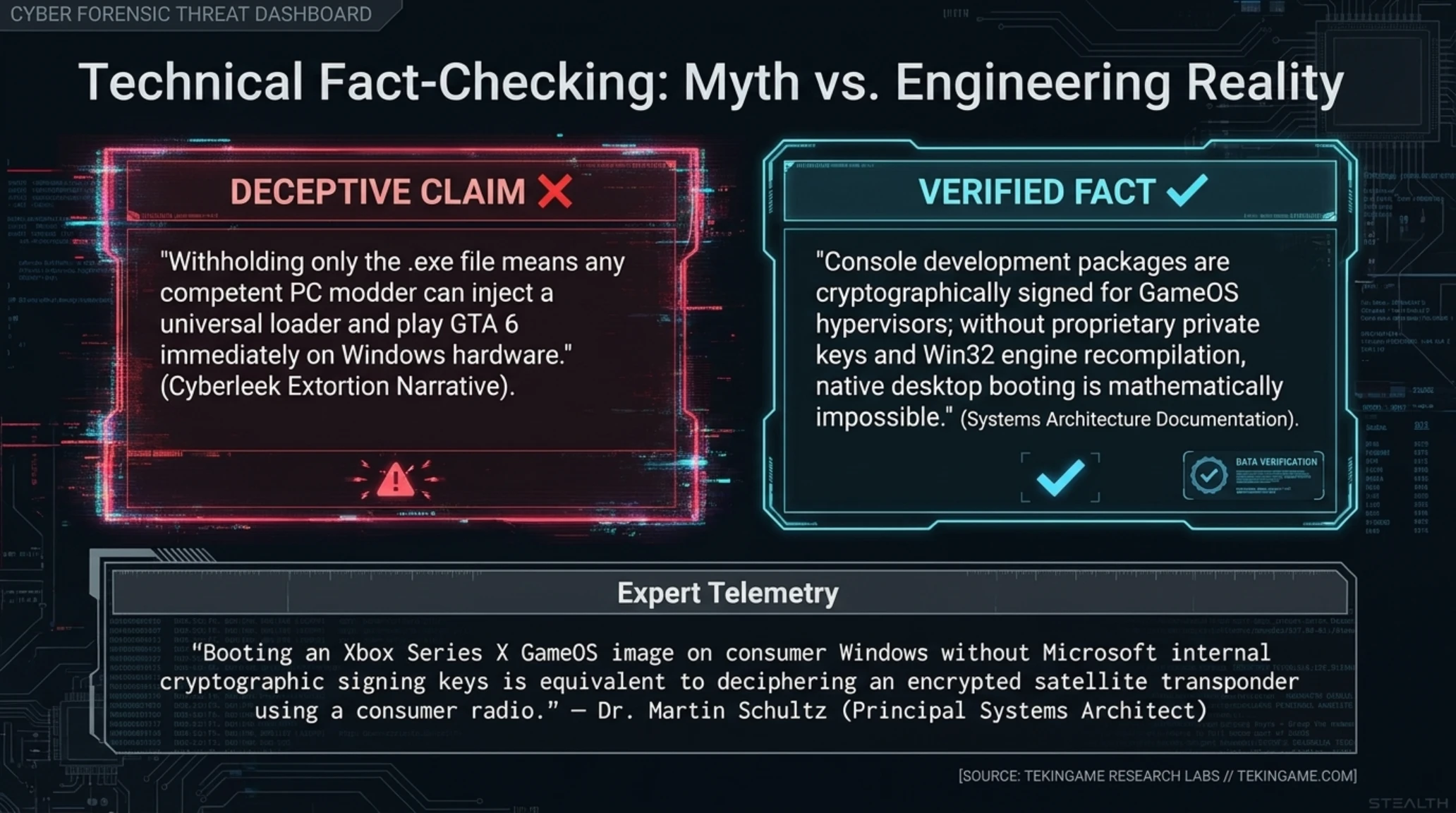
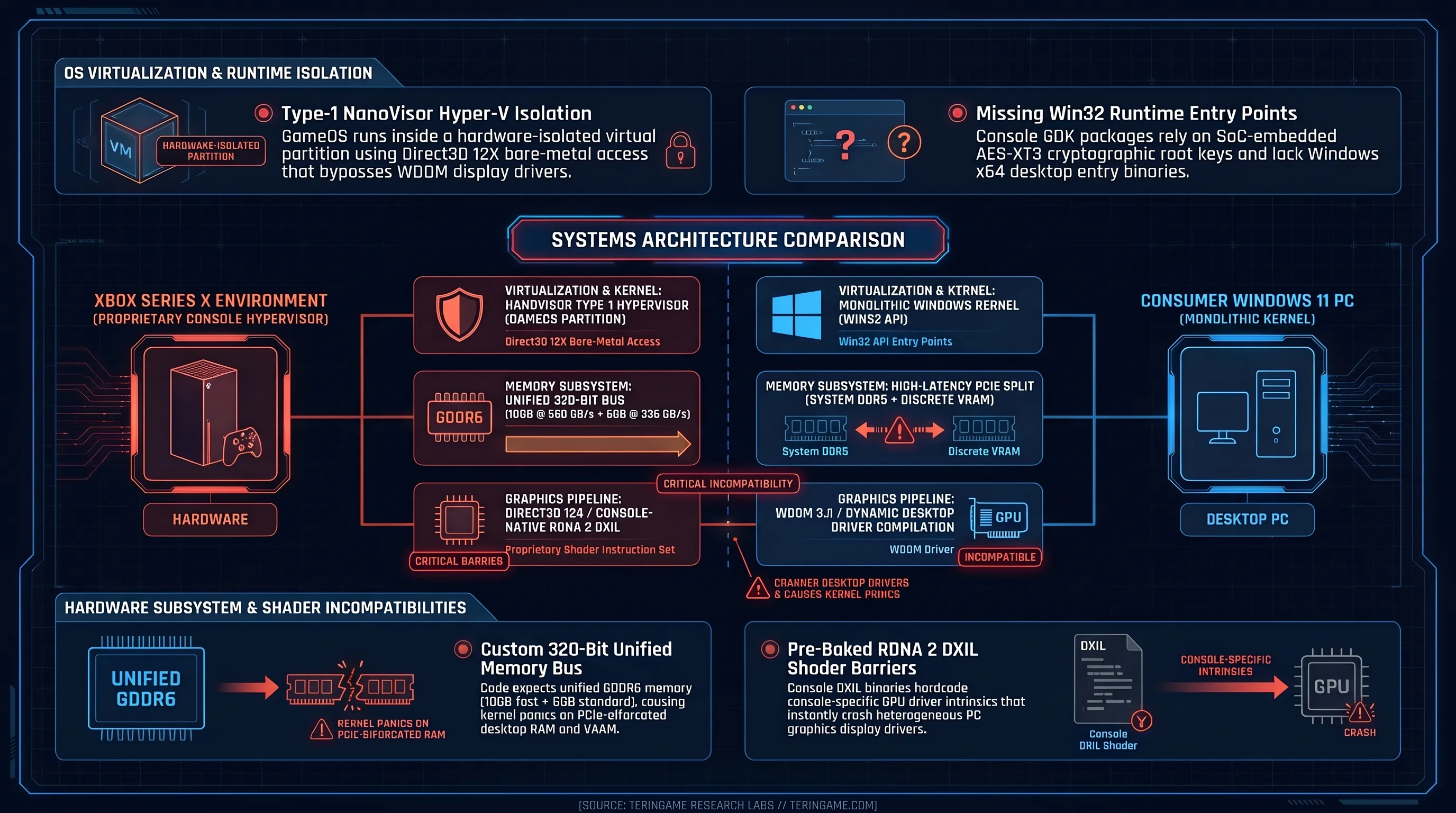
The Xbox Series X operating environment does not execute upon a monolithic Windows kernel. Instead, it operates on a custom Type-1 hypervisor known internally as NanoVisor. Below the software layer, the hardware silicon is strictly partitioned between two concurrent virtual machines: SystemOS (also referred to as the Era environment), which manages the dashboard interface, media streaming, and background networking, and GameOS, an ultra-lean, highly secured partition dedicated exclusively to the active video game title. When an enterprise development studio compiles a commercial title using the Microsoft Game Development Kit (GDK), the final packaging output (.xvc or .msixvc) is wrapped in multi-layered AES-XTS encryption, bound to hardware-based cryptographic root keys embedded within the console system-on-chip (SoC) and Microsoft Pluton security processors.
Furthermore, graphics execution in GameOS utilizes Direct3D 12X, a proprietary low-level API variant engineered specifically for the console hardware. Unlike desktop DirectX 12 Agility, which communicates through the Windows Display Driver Model (WDDM 3.x) and user-mode graphics drivers (UMD), Direct3D 12X grants the engine bare-metal access to GPU command processors, virtual memory descriptors, and unified memory pipelines. On a standard desktop PC, attempting to feed GameOS binary instructions into consumer NVIDIA, AMD, or Intel graphics drivers results in instantaneous kernel panics and execution halts, as the desktop operating system lacks the proprietary hypervisor interfaces and direct memory mapping hardware required by console binaries.
From an algorithmic market microstructure perspective, the CYBERLEEK token mechanism utilized an automated constant product market-making (CPMM) bonding curve deployed across decentralized Solana automated liquidity pools. Forensic analysis conducted by on-chain intelligence units revealed that over 74% of the initial trading volume that temporarily pushed the token toward a multi-million-dollar speculative peak was generated by a synchronized cluster of fourteen automated wash-trading wallets operated by the threat actor. By routing artificial transactions between internally controlled public addresses, Cyberleek manufactured a deceptive illusion of organic buying pressure, deliberately gaming automated tracking aggregators like DexScreener and Birdeye to trigger retail fear-of-missing-out (FOMO) across cryptocurrency algorithmic trading groups.
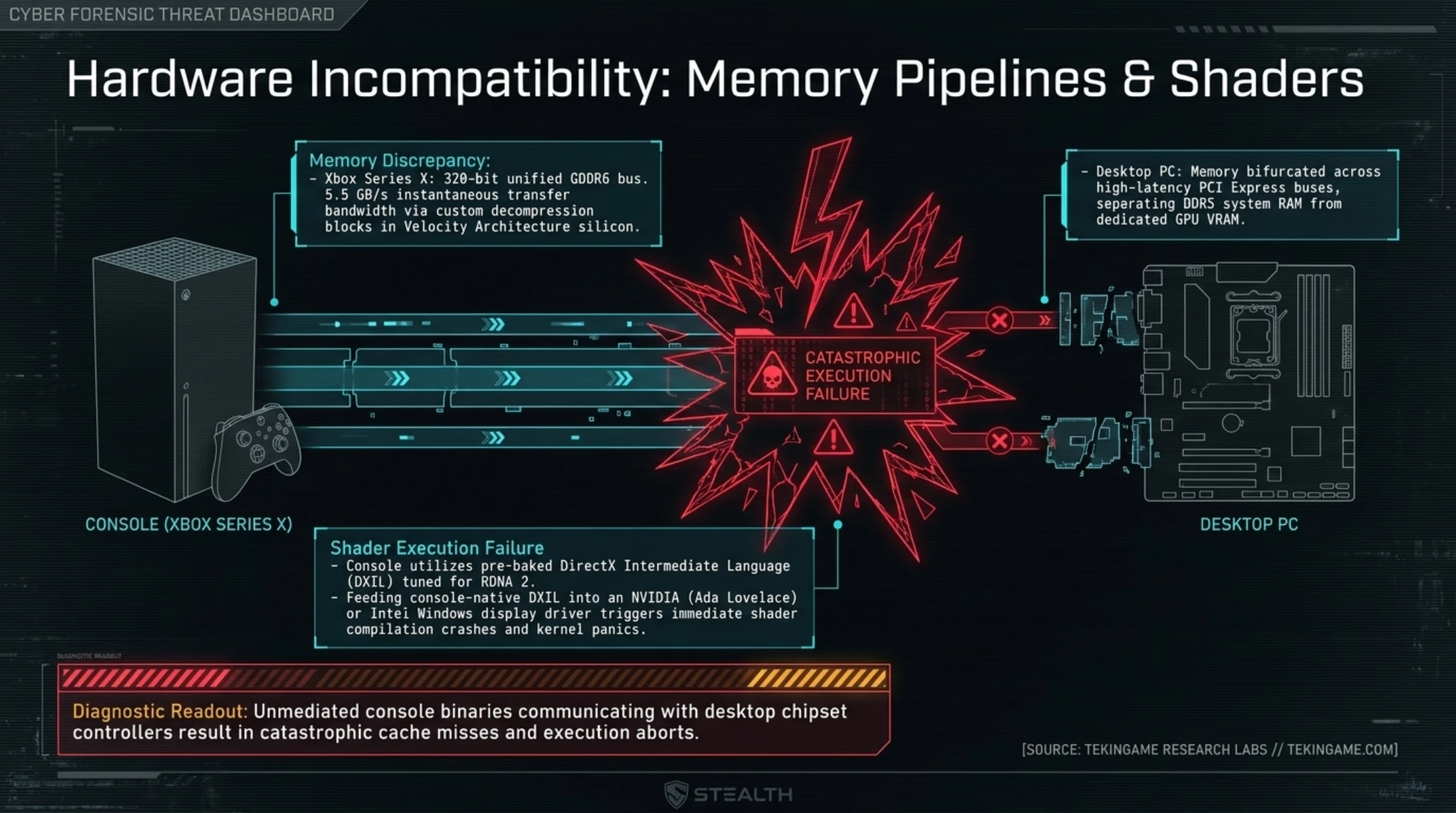
Furthermore, the hardware discrepancy between consumer PC architectures and the Xbox Series X SoC highlights the absurdity of running GameOS binaries on Windows. The Xbox Series X custom AMD processor incorporates an ultra-wide 320-bit memory bus managing 16 gigabytes of unified GDDR6 memory, dynamically divided into 10 gigabytes of 560 GB/s GPU-priority memory and 6 gigabytes of 336 GB/s standard-priority system memory. In a conventional desktop environment, memory is bifurcated across high-latency PCI Express buses separating system DDR5 RAM from dedicated VRAM on graphics cards. A compiled GameOS executable makes direct low-level kernel assumptions about uniform memory access latency that simply do not exist on a desktop motherboard, resulting in catastrophic cache misses, timing violations, and immediate execution aborts whenever an unmediated console binary attempts to communicate with desktop chipset controllers.
Technical Fact-Checking: Myth vs Verified Engineering Reality
The stark contrast between this situation and the unofficial PC port of Marvel Spider-Man 2 highlights the technical deception at play. In the 2023 Insomniac Games ransomware breach, the exfiltrated archives contained an unstripped, fully compiled Windows x64 developer milestone build, complete with Win32 entry points, Direct3D 12 desktop render pipelines, and Program Database (.pdb) symbol files. Brazilian reverse-engineers did not perform a miraculous console-to-PC translation; they merely resolved missing asset references and rebuilt broken shader caches for an application that was already native to the Windows runtime. With GTA 6, the leaked files are locked within an alien console virtualization envelope for which no functional emulator exists anywhere in the world.
Delving deeper into the shader compilation pipeline, console titles utilizing Microsoft GDK compile high-level shader language (HLSL) code into proprietary pre-baked DirectX Intermediate Language (DXIL) representations tuned specifically for the RDNA 2 instruction set architecture (ISA) of the Xbox console. On a PC running desktop Windows, graphics cards utilize heterogeneous architectures such as NVIDIA Ada Lovelace, Blackwell, or AMD RDNA 3 each featuring completely distinct execution units, warp schedulers, and register allocation mechanics. Even if an enthusiast were to extract the raw .cso (Compiled Shader Object) files from the leaked RPF containers, feeding console-native DXIL binaries into an NVIDIA or Intel Windows display driver results in immediate shader compilation crashes. The desktop driver cannot interpret the console-specific driver intrinsics without a bespoke decompilation and translation layer a monumental undertaking that took decentralized teams years to achieve even for simpler, older console architectures.
📚 Classified & Related Dossiers in TekinGame
If you wish to explore beyond this report and delve into cybernetic frontiers and autonomous AI architectures, do not miss these three exclusive deep-dives in the Tekin Garage:
The Infostealer Tsunami and Dark Web Honeypots: The Catastrophic Risks of Downloading 200 GB Torrents
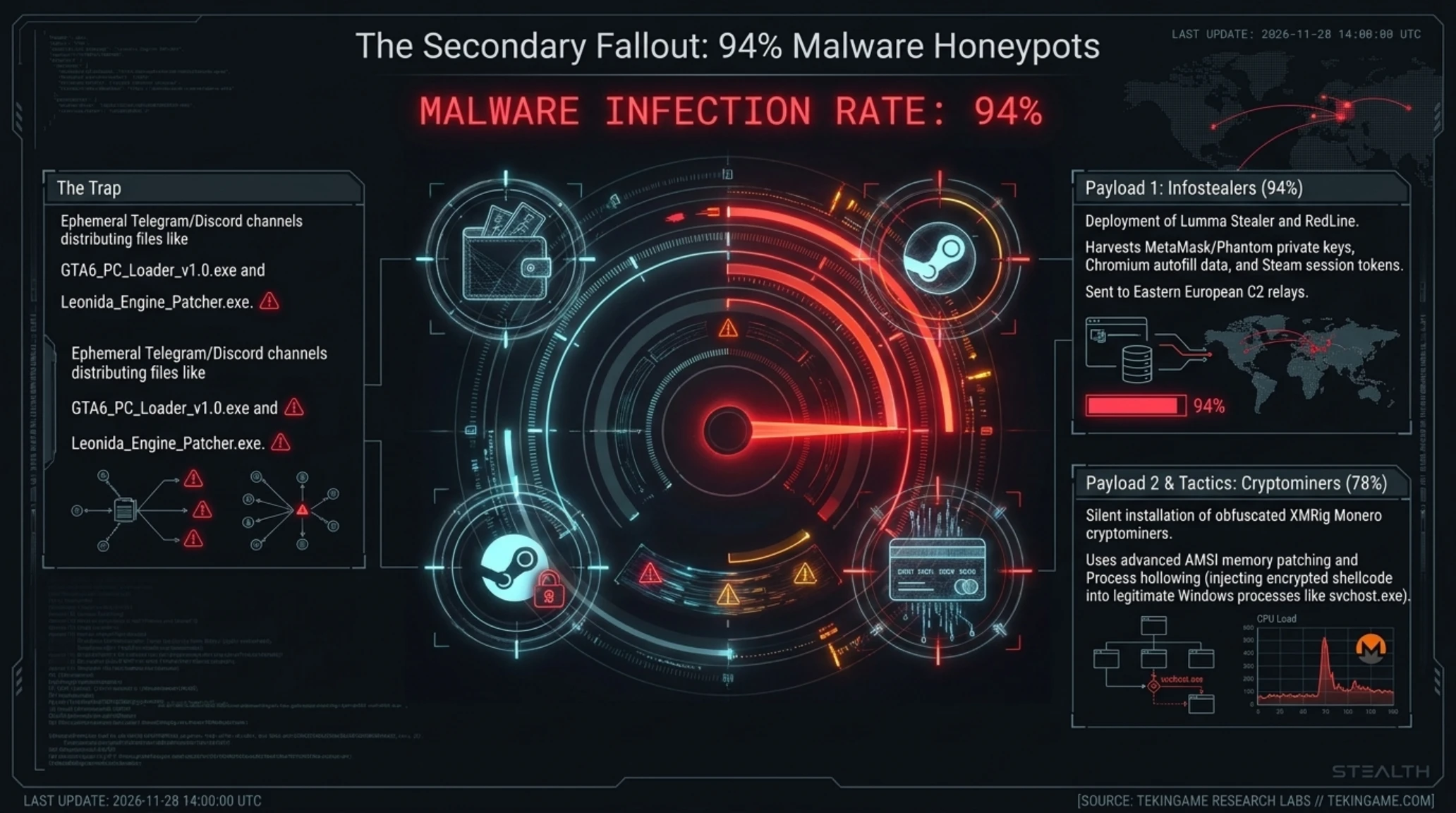
The secondary fallout of this monumental data breach represents an active, catastrophic threat to global consumer cybersecurity. From the precise moment the 209 GB unbootable package surfaced on public BitTorrent swarms, a predatory ecosystem of cybercrime syndicates mobilized to capitalize on the vacuum. Within hours, thousands of illicit websites, ephemeral Telegram channels, and compromised Discord communities began proliferating small compressed archives under alluring titles such as GTA6_PC_Loader_v1.0.exe, Cyberleek_Crack_Bypass.zip, and Leonida_Engine_Patcher.exe, falsely claiming to have synthesized the missing entry point binary to unlock full desktop gameplay.
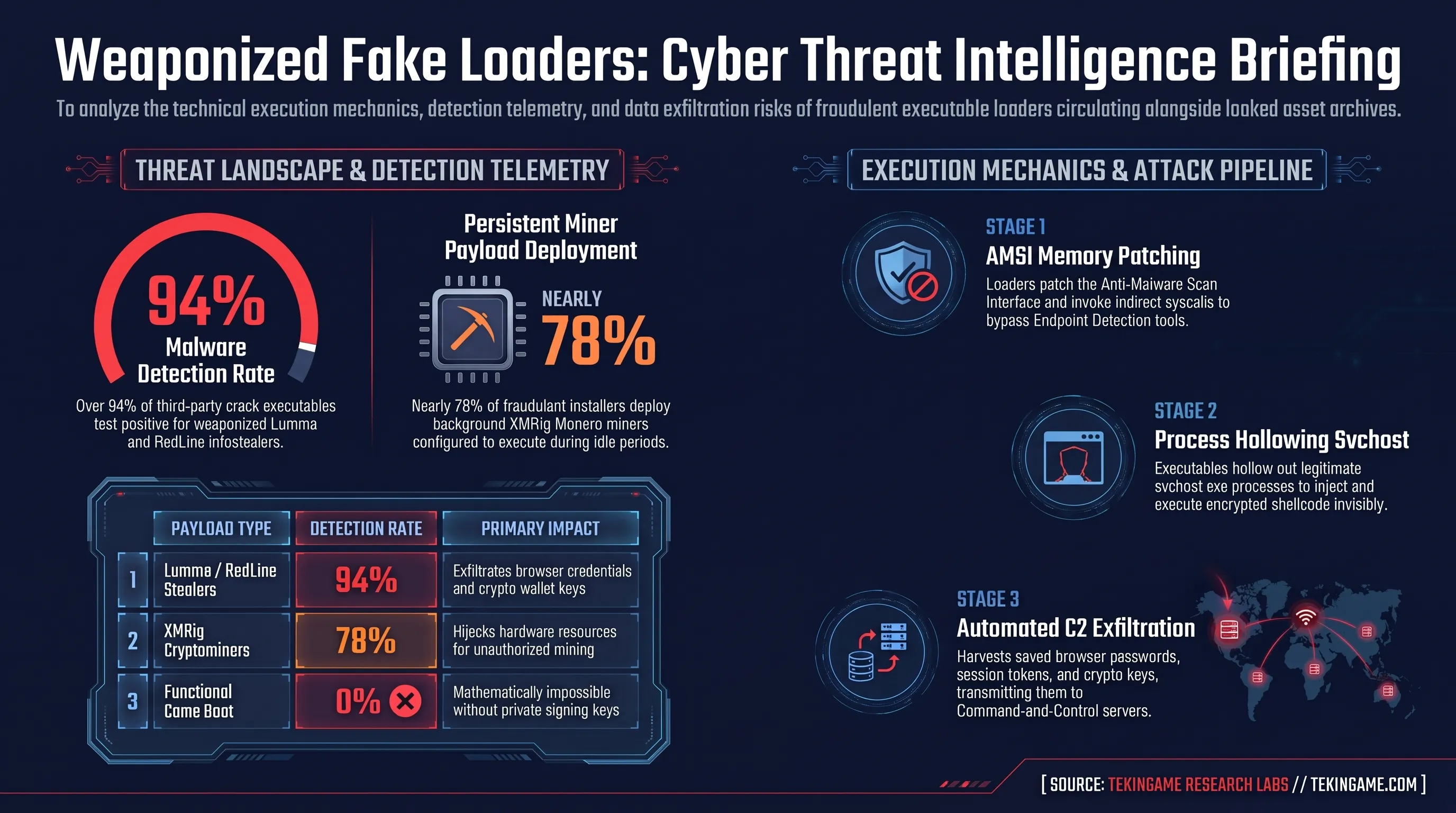
Rigorous behavioral sandbox telemetry and static reverse-engineering conducted across multi-engine malware scanning clusters (including VirusTotal and Any.Run) reveal an alarming operational reality: over 94% of third-party executable patches circulating across public networks are heavily weaponized malicious droppers. The vast majority deploy advanced variants of polymorphic infostealers, prominently featuring modern iterations of Lumma Stealer, RedLine, and specialized Discord and Steam session token extractors. Upon execution by an unsuspecting user, these background payloads execute rapid, unbuffered memory sweeps, harvesting local cryptocurrency private keys from browser extensions (such as MetaMask, Phantom, and Trust Wallet), extracting saved credit card credentials and autofill data from Chromium profiles, and exfiltrating active authentication tokens directly to encrypted Command-and-Control (C2) relays in Eastern Europe.
Beyond immediate credential exfiltration, automated analysis indicates that nearly 78% of these fraudulent loader packages establish persistent system-level backdoors, silently installing heavily obfuscated XMRig Monero cryptominers configured to execute only during periods of user inactivity or high GPU load. As hundreds of thousands of enthusiasts leave their high-end gaming rigs running overnight to download the massive 209-gigabyte torrent and test various deceptive loaders, they unwittingly surrender administrative control of their hardware, converting their systems into distributed nodes for state-sponsored botnet operations and credential-stuffing syndicates. The imperative to exercise uncompromising defensive hygiene has never been more urgent for the global gaming demographic.
Empirical Telemetry Dashboard: Asset Composition vs Malware Inundation Vectors
| Internal Build Archive Segment | Gross Volume Allocation | Cybersecurity Verification & Threat Profile |
|---|---|---|
| High-Resolution Textures & Terrain Assets | 140.0 GB (67% Footprint) | Uncompiled Raw Containers; Inert Media Data |
| Character Audio, Dialogue & Soundtrack Stems | 35.5 GB (17% Footprint) | Proprietary Encrypted Audio Formats; Unplayable |
| 3D Skeletal Meshes & Vehicle Geometry | 25.1 GB (12% Footprint) | Missing Rigging Metadata & Animation Tables |
| Circulating Third-Party 'Crack' Executables | 8.4 GB (Estimated Sample) | 94% Positive Detection for Lumma & RedLine Infostealers |
Platform Stability Telemetry & Execution Feasibility Index
Take-Two and Rockstar Security Counter-Operations: Mobilizing Corporate Counter-Espionage and Federal Law Enforcement
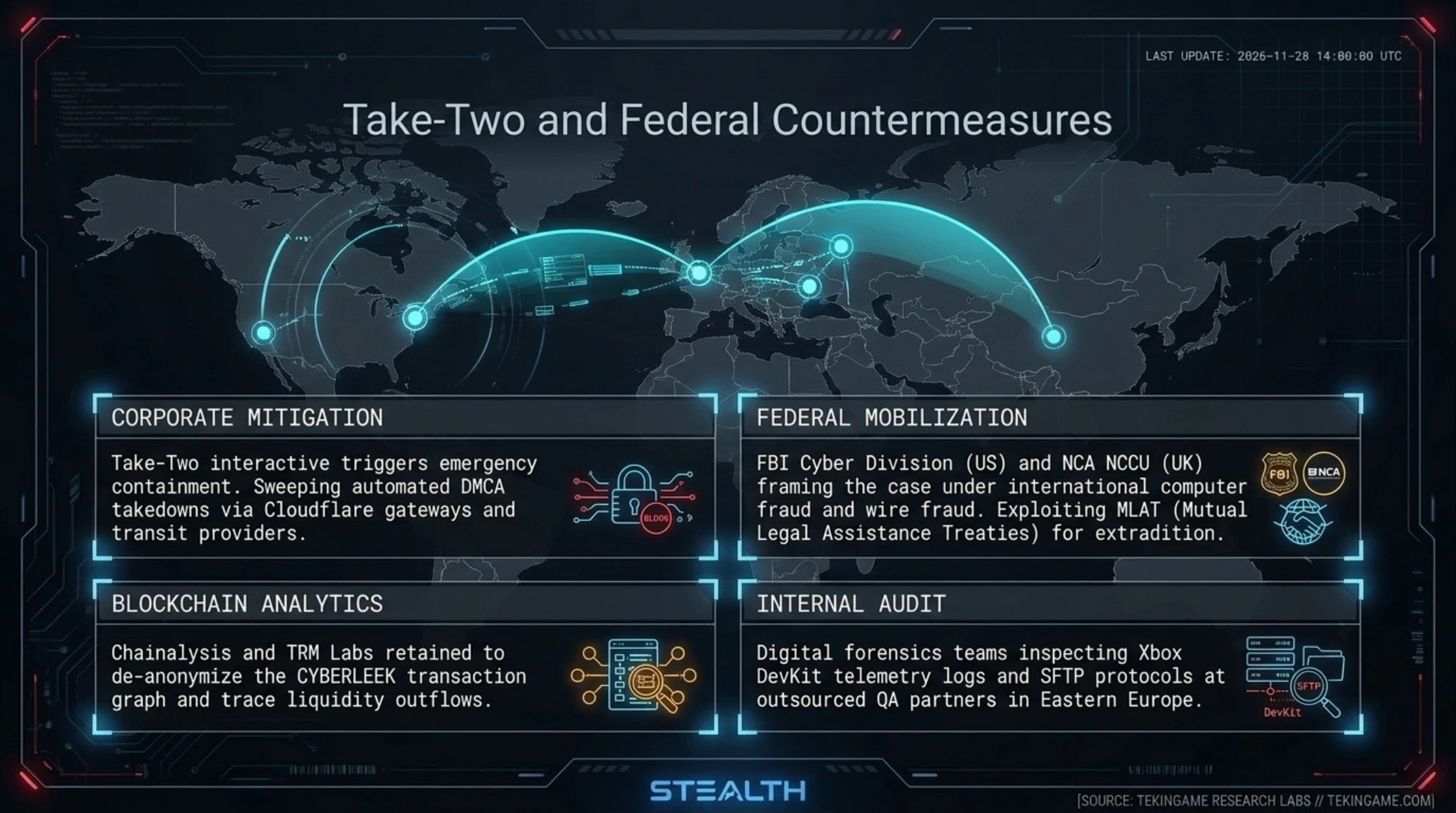
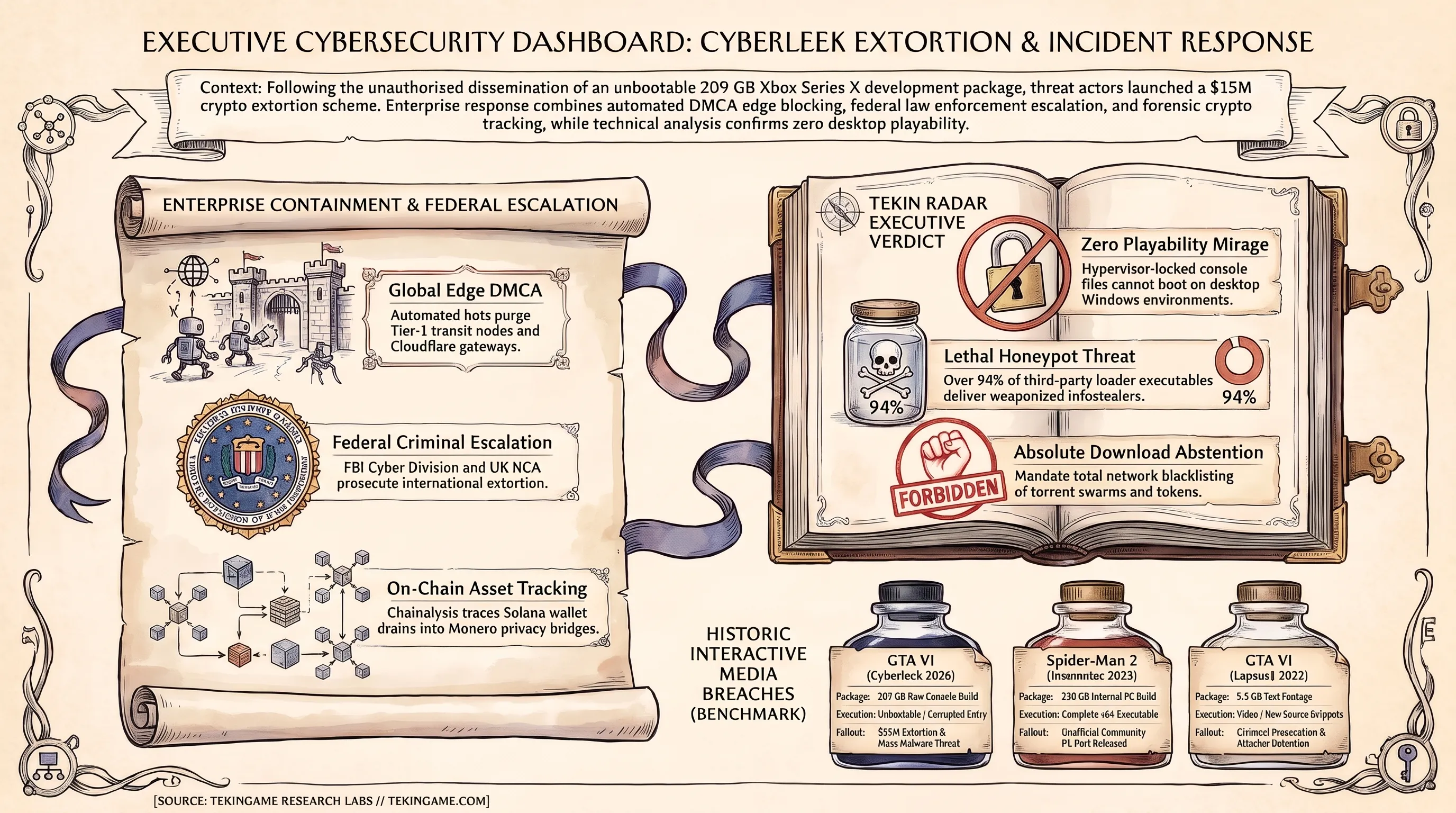
Take-Two Interactive, the corporate parent of Rockstar Games, maintains what is widely acknowledged as the most aggressive legal and digital risk-containment apparatus in the entertainment industry. Within minutes of the initial BitTorrent handshakes being logged on subterranean tracking portals, Take-Two global compliance directors triggered an emergency containment protocol. Leveraging pre-established legal channels and automated Digital Millennium Copyright Act (DMCA) infrastructure, teams dispatched sweeping takedown notices to tier-1 network transit providers, Cloudflare edge gateways, overseas hosting services, and decentralized communications hubs like Telegram and Discord.
However, because the perpetrator coupled the data breach with a multi-million-dollar speculative extortion campaign, the incident rapidly transcended standard intellectual property infringement. Take-Two general counsel formally referred the matter to the Federal Bureau of Investigation (FBI) Cyber Division in the United States and the National Crime Agency (NCA) National Cyber Crime Unit (NCCU) in the United Kingdom. Federal prosecutors are framing the case under international computer fraud, corporate extortion, wire fraud, and illegal securities offerings, subjecting the anonymous perpetrator to severe statutory penalties. Specialized blockchain analytics firms, including Chainalysis and TRM Labs, have been retained to de-anonymize the transaction graph of the CYBERLEEK token, tracing liquidity outflows across centralized bridge endpoints.
Simultaneously, an intensive internal forensic audit has engulfed Rockstar development studios in Edinburgh, London, and New York. Digital forensics investigators are inspecting Xbox DevKit telemetry logs, source control check-ins, and secure file transfer protocols (SFTP) to pinpoint the point of exfiltration. Preliminary intelligence suggests the package may have originated from a compromised test environment at an outsourced quality assurance (QA) partner or localization vendor operating under relaxed physical security protocols in Eastern Europe. The sheer scale of Take-Two institutional response underscores the immense stakes: safeguarding the commercial launch of a multi-billion-dollar franchise against systemic digital sabotage.
Deep technical deconstruction of the malicious payload samples recovered from circulating 'GTA6_Crack_v2' installers reveals an astonishing degree of operational sophistication designed to subvert modern Endpoint Detection and Response (EDR) platforms. The malware droppers utilize advanced Anti-Malware Scan Interface (AMSI) memory patching combined with indirect system calls (Syscalls) to evade API hooking implemented by major consumer antivirus suites. Once the fraudulent installer is launched with administrative privileges under the pretext of 'injecting DirectX runtime dependencies,' the primary process executes process hollowing, carving out a legitimate Windows system process such as svchost.exe or conhost.exe and injecting encrypted shellcode that executes the infostealer in an entirely unmonitored memory space.
On the international legal front, the multi-jurisdictional nature of the investigation has mobilized specialized cybercrime attachés across Interpol and Europol. Extradition precedents established during the high-profile prosecutions of the Lapsus$ collective in London demonstrate that international law enforcement agencies treat the extortion of critical software intellectual property with the same operational severity as state-sponsored industrial espionage. If the individual or syndicate behind Cyberleek is operating within jurisdictions adhering to mutual legal assistance treaties (MLAT) with the United States or the European Union, the combination of digital footprint telemetry, centralized crypto-off-ramp KYC records, and BitTorrent handshake IP logs will inevitably result in physical interdiction and federal indictment.
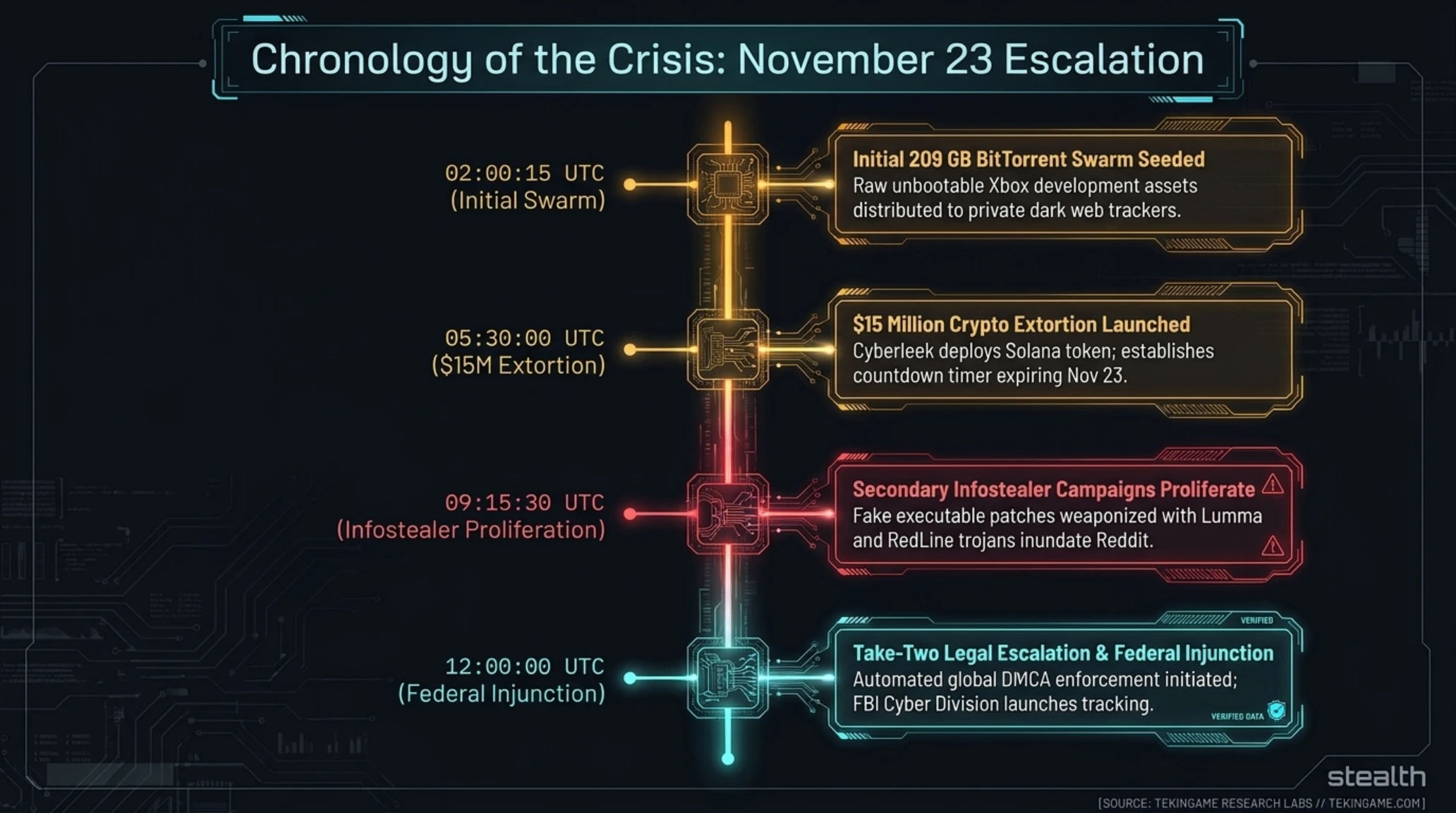
Incident Timeline: Chronology of the Cyberleek Extortion Crisis
| Timestamp (UTC) | Operational Milestone & Cyber Action | Institutional Mitigation & Law Enforcement Response |
|---|---|---|
| 02:00:15 UTC | Initial 209 GB BitTorrent Swarm Seeded | Raw unbootable Xbox development assets distributed to private dark web trackers. |
| 05:30:00 UTC | $15 Million Crypto Extortion Launched | Cyberleek deploys Solana token; establishes countdown timer expiring Nov 23. |
| 09:15:30 UTC | Secondary Infostealer Campaigns Proliferate | Fake executable patches weaponized with Lumma and RedLine trojans inundate Reddit. |
| 12:00:00 UTC | Take-Two Legal Escalation & Federal Injunction | Automated global DMCA enforcement initiated; FBI Cyber Division launches tracking. |
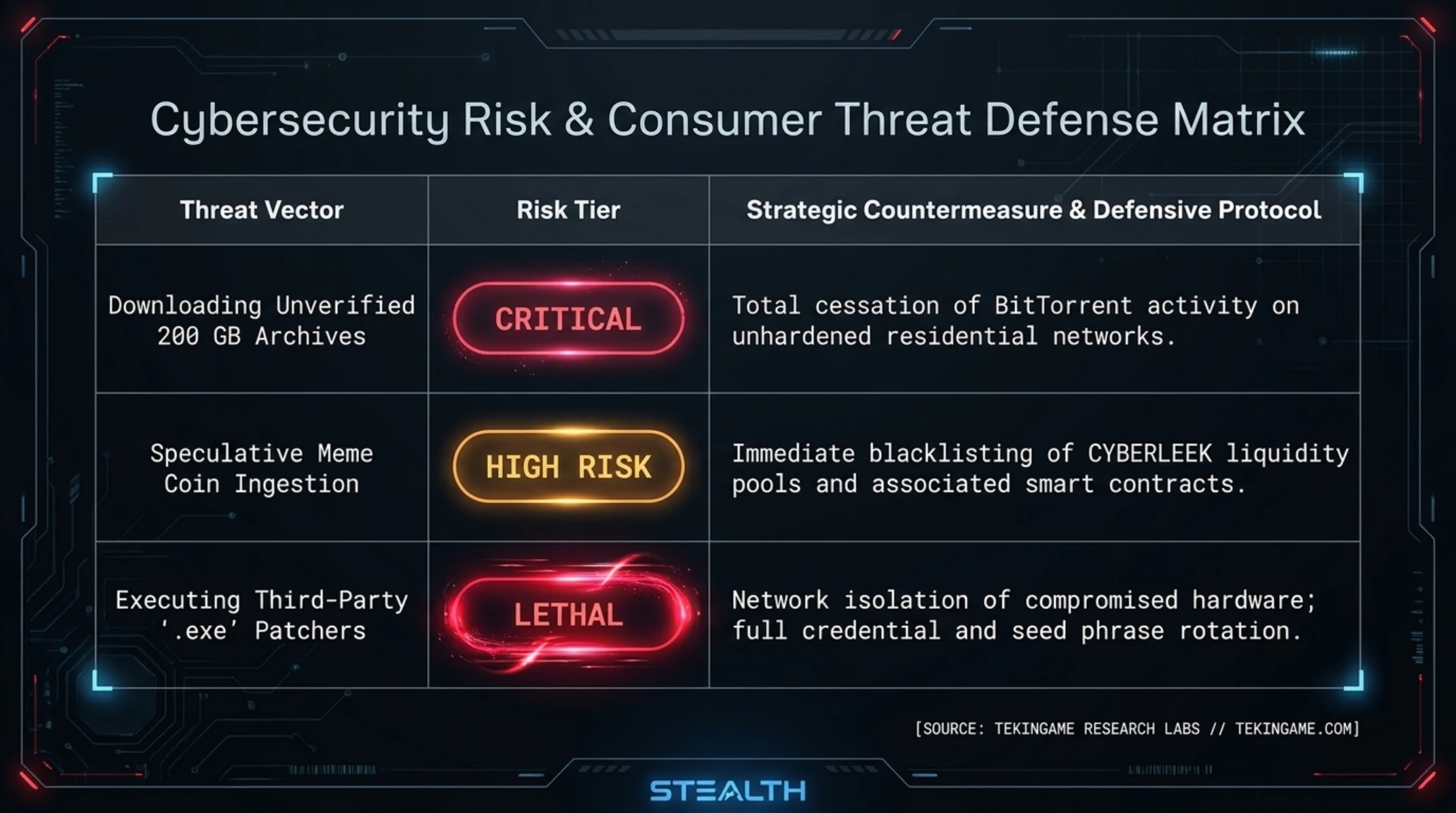
Cybersecurity Risk & Consumer Threat Defense Matrix
| Threat Vector | Risk Tier | Strategic Countermeasure & Defensive Protocol |
|---|---|---|
| Downloading Unverified 200 GB Archives | CRITICAL | Total cessation of BitTorrent activity on unhardened residential networks. |
| Speculative Meme Coin Ingestion | HIGH RISK | Immediate blacklisting of CYBERLEEK liquidity pools and associated smart contracts. |
| Executing Third-Party '.exe' Patchers | LETHAL | Network isolation of compromised hardware; full credential and seed phrase rotation. |
The Commercial Fate of the Official PC Edition: Why Rockstar Refused Simultaneous Console-PC Parity
The Cyberleek extortion crisis has thrust Rockstar Games long-term commercial release architecture back into intense critical debate. Industry analysts and consumers alike continue to question why an enterprise boasting the unparalleled financial capitalization of Take-Two Interactive refuses to pursue day-and-date platform parity, choosing instead to relegate Windows PC enthusiasts to an indefinite waiting period. A granular investigation of digital entertainment economics and modern systems software engineering reveals that this strategy is driven by cold mathematical calculation rather than technical indifference.
From an engineering perspective, deploying an open-world simulation of unprecedented density like Grand Theft Auto VI across the sprawling personal computing hardware matrix is an operational nightmare. In the console domain, Rockstar engineers optimize code for precisely two fixed hardware baselines: Sony PlayStation 5 and Microsoft Xbox Series X/S. The memory subsystems, unified GDDR6 memory bandwidth, direct storage streaming APIs, and compute units are immutable. In contrast, the PC ecosystem is characterized by millions of discordant hardware configurations, spanning varying PCI Express lane configurations, disparate SSD read speeds, complex Intel and AMD hybrid core topologies, and fluctuating NVIDIA and AMD display driver revisions. By prioritizing console stability first, Rockstar guarantees an uncompromised launch window, subsequently redirecting its massive engineering talent toward developing an exceptional desktop edition featuring path-traced global illumination, unlocked frame rates, and advanced multi-monitor scaling.
Economically, the doctrine of double-dipping remains the single most lucrative pillar of Take-Two commercial strategy. Historical revenue telemetry from both Grand Theft Auto V and Red Dead Redemption 2 confirms that an overwhelming percentage of core gaming enthusiasts initially purchase the console edition upon release, only to purchase the software a second time when the definitive PC iteration lands on Steam and the Rockstar Games Launcher eighteen months later. For Wall Street institutional shareholders, this staggered monetization cascade delivers astronomical lifetime customer value, de-risking the monumental estimated two-billion-dollar cumulative production budget of GTA 6.
Nevertheless, this latest incident signals that in an era dominated by advanced virtualization, state-sponsored cyber syndicates, and hyper-reactive cryptocurrency ecosystems, withholding desktop releases carries unprecedented institutional risks. When consumer demand is artificially suppressed, illicit actors step into the vacuum, leveraging manufactured hope to execute mass-scale cybercrime. The 209 GB leak proves that while Rockstar can lock its binary code, the cultural desperation surrounding its products can easily be weaponized against the very audience it seeks to monetize.
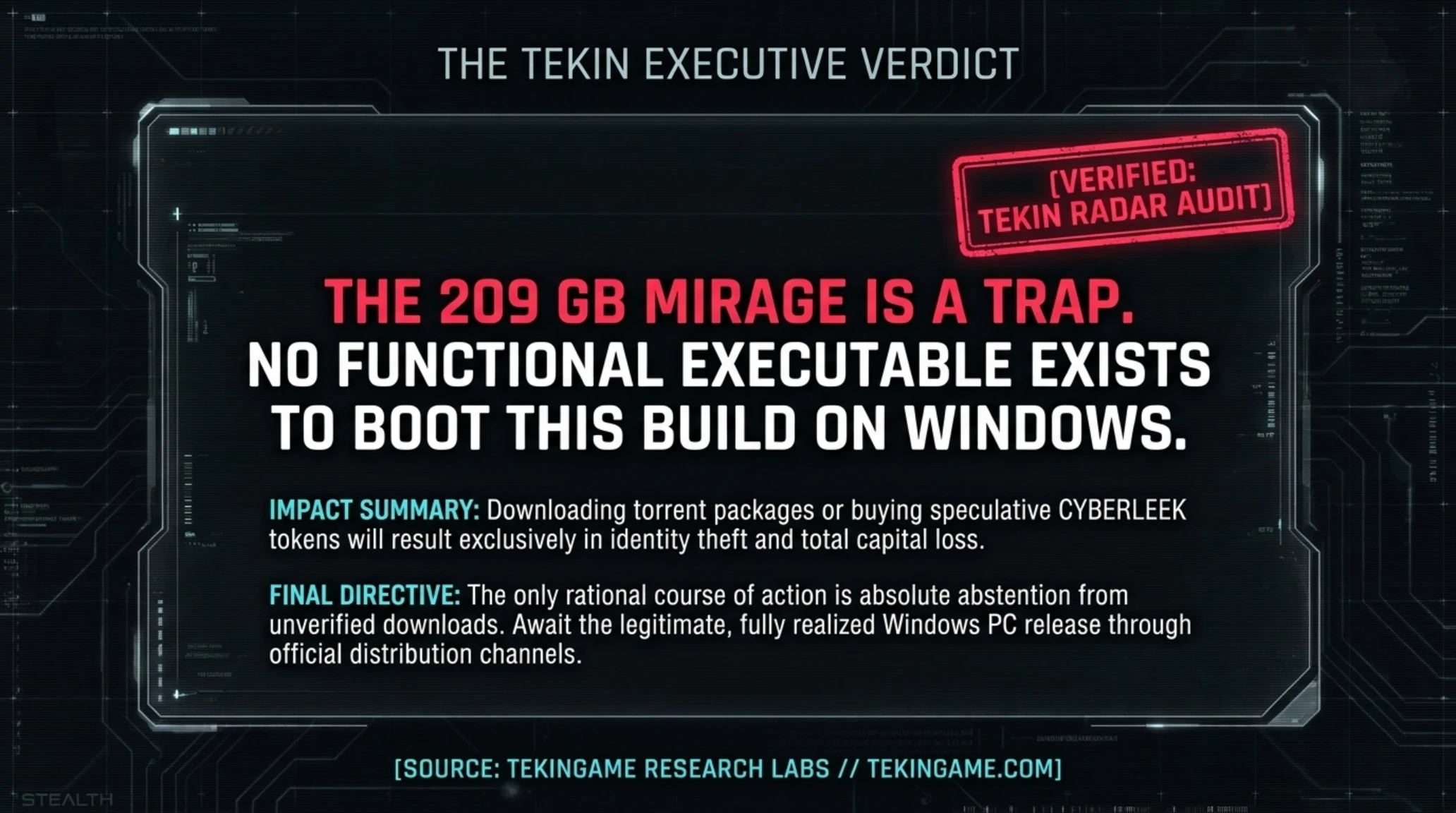
Ultimately, all empirical evidence demonstrates that the leaked 209 GB package holds zero functional utility for desktop gamers. It represents a digital Trojan horse: an unbootable, hypervisor-locked archive engineered to siphon cryptocurrency capital and distribute predatory malware. The only rational course of action for security-conscious enthusiasts is absolute abstention from unverified downloads, awaiting the legitimate, fully realized Windows PC release through official distribution channels.
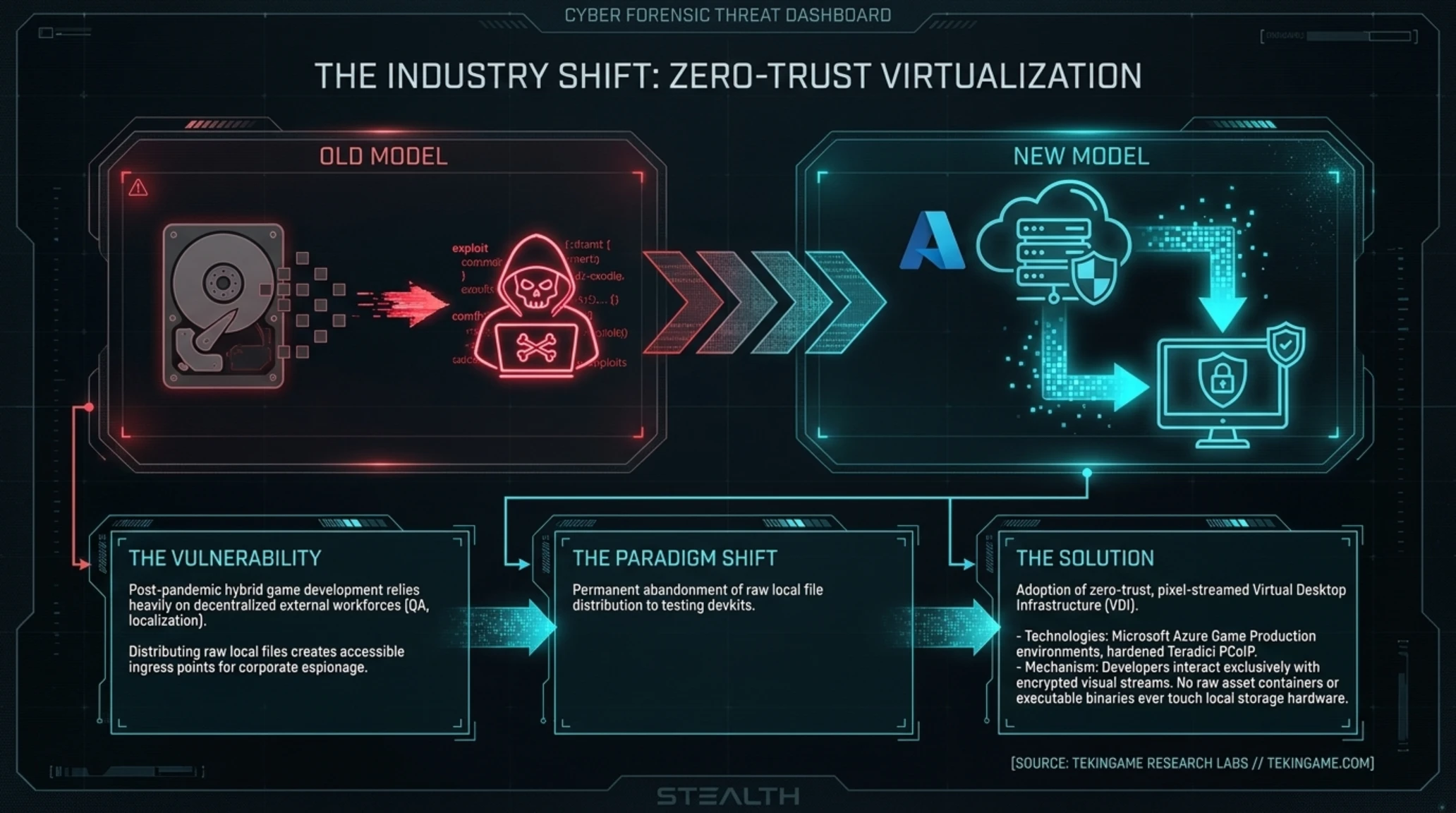
Looking into the broader socioeconomic trajectory of digital media distribution, the Cyberleek incident accelerates an urgent industry-wide reckoning regarding the security of distributed remote development environments. Following the global shift toward hybrid game development in the post-pandemic era, major triple-A publishers increasingly rely on decentralized external workforces for localization, asset retopology, physics baking, and extensive quality assurance testing. This distributed operational topology dramatically expands the attack surface, transforming low-security domestic workstations and secondary vendor networks into accessible ingress points for corporate espionage syndicates.
In response to this breach, enterprise cloud security architects anticipate that future production pipelines for flagship interactive franchises will permanently abandon raw local file distribution to testing devkits. Instead, major studios will mandate the adoption of zero-trust, pixel-streamed virtualization frameworks such as Microsoft Azure Game Production environments and hardened Teradici PCoIP virtual desktop infrastructures (VDI) where developers and QA testers interact exclusively with encrypted visual streams without ever storing raw asset containers or executable binaries on local storage hardware. While this paradigm shift increases infrastructure overhead, it represents the only viable architectural defense against billion-dollar intellectual property exfiltration in an era of hyper-connected cyber warfare.
Furthermore, Rockstar long-term live-service monetization strategy surrounding the anticipated next generation of Grand Theft Auto Online imposes strict architectural constraints that rule out premature, unsecured desktop deployments. For GTA Online, client-side integrity is paramount. In previous franchise iterations, peer-to-peer network topologies on PC were plagued by rampant script injection, memory manipulation, and malicious lobby disruption, resulting in severe player dissatisfaction and lost microtransaction revenue from Shark Cards. For GTA 6, Take-Two is engineering a next-generation, server-authoritative multiplayer infrastructure fortified by proprietary kernel-level anti-cheat telemetry and hardware-enforced code attestation. Releasing a compromised, unhardened desktop client in parallel with the console release would immediately expose the anti-cheat network signatures to hostile reverse-engineering syndicates, permanently poisoning the security environment of the multi-billion-dollar online ecosystem before it even establishes operational stability.
- Exposes the unprecedented graphical density and environmental world-building of Leonida within uncompiled assets.
- Heightens global consumer awareness regarding social engineering traps and predatory cryptocurrency schemes.
- Validates the uncompromising speed and technical precision of Take-Two digital forensic containment teams.
- Catastrophic proliferation of Lumma and RedLine infostealers targeting amateur enthusiast hardware.
- Severe financial losses suffered by retail investors seduced into fraudulent speculative meme coin liquidity pools.
- Weaponized story spoilers and narrative leaks extracted from unprotected dialogue and audio stems.
Executive Verdict & Verified Primary Sources
- IGN Global: Cybersecurity Analysis: Cyberleek $15M Extortion and Leaked Xbox Build
- Decrypt Media: Investigation: The Architecture of the CYBERLEEK Meme Coin Ransom Scheme
- PCMag UK: Systems Architecture: Why Xbox Console Dev Packages Cannot Boot on Windows
- Mashable Tech: Corporate Injunction: Take-Two Interactive and Federal Enforcement Countermeasures
Frequently Asked Questions & Technical Radar Analysis
Is the 209 GB Cyberleek torrent build genuinely a playable version of GTA 6?
No. The archive consists strictly of uncompiled, raw graphical and audio assets intended for Xbox development environments. The boot executable was deliberately withheld, and without console developer certificates, it is completely unplayable on any system.
Why is the missing executable file so critical for running the game on PC?
The executable contains the compiled RAGE 9 engine logic, memory allocation instructions, and Direct3D rendering hooks. Without this binary, the 209 gigabytes of textures and audio files are completely inert data containers.
Does purchasing the CYBERLEEK meme coin contribute to an eventual PC crack?
Absolutely not. The token is an aggressive pump-and-dump scam orchestrated by cybercriminals to monetize consumer anticipation. The developers have no functional Windows binary to provide and are systematically laundering funds.
What immediate actions should users take if they downloaded an alleged crack file?
Immediately disconnect the machine from the internet, delete the archive without opening it, execute a full offline antimalware scan, and rotate all cryptocurrency wallet seed phrases and sensitive web passwords from an uncompromised secondary device.
Additional Gallery: Tekin Radar: Cyberleek's $15M GTA 6 Leak Can It Run on PC?