The Legend Returns: Gothic 1 Remake and the Revival of a Generation
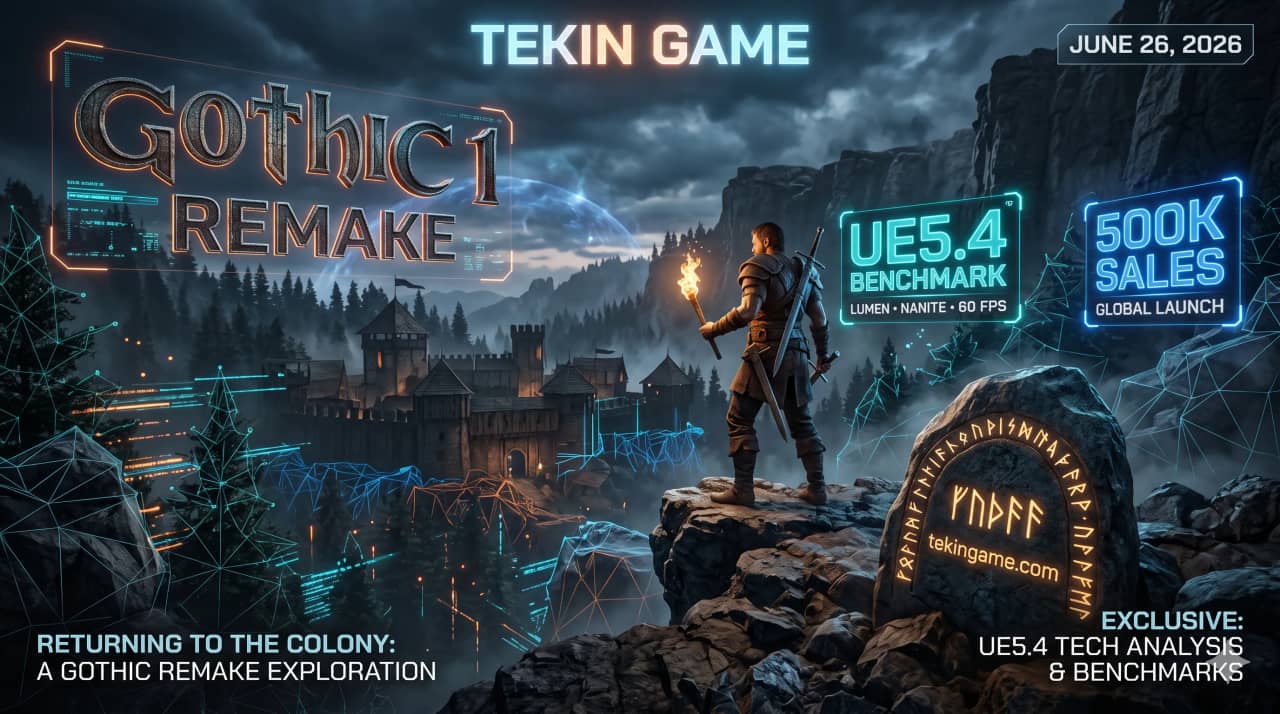
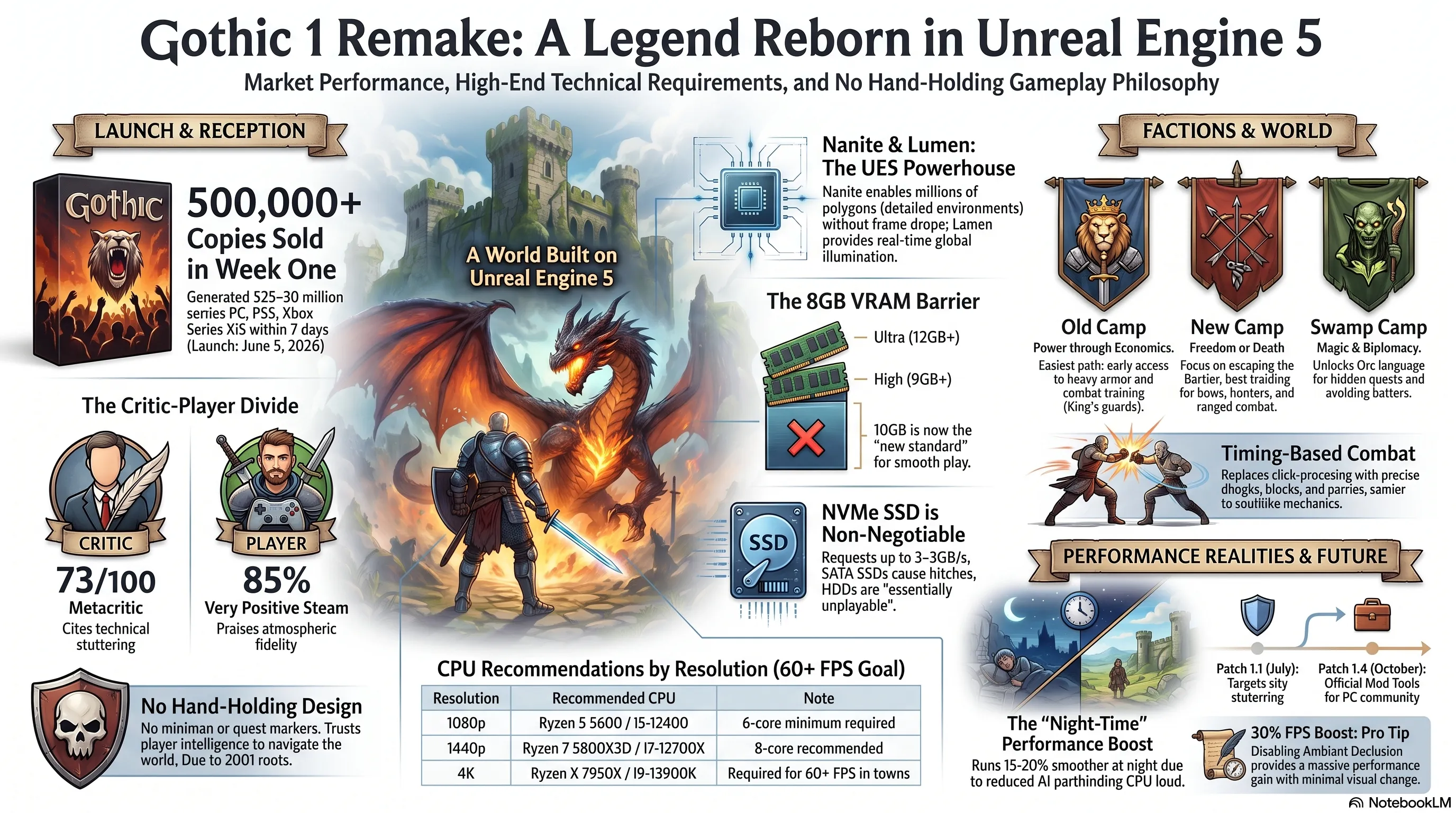
After 25 years of waiting, Gothic is back—not with 2001 graphics, but with Unreal Engine 5.4 power and half a million copies sold in week one.
- 🎮Official Release- June 5, 2026 for PC, PS5, Xbox Series X|S
- 🎧Commercial Success- +500,000 copies sold in first week
- 🚀Critical Reception- 73/100 Metacritic | 85% Steam Very Positive
- 🗡️Technology- UE5.4 with Nanite + Lumen | RTX 2070 minimum required
When a Legend Rises from the Ashes
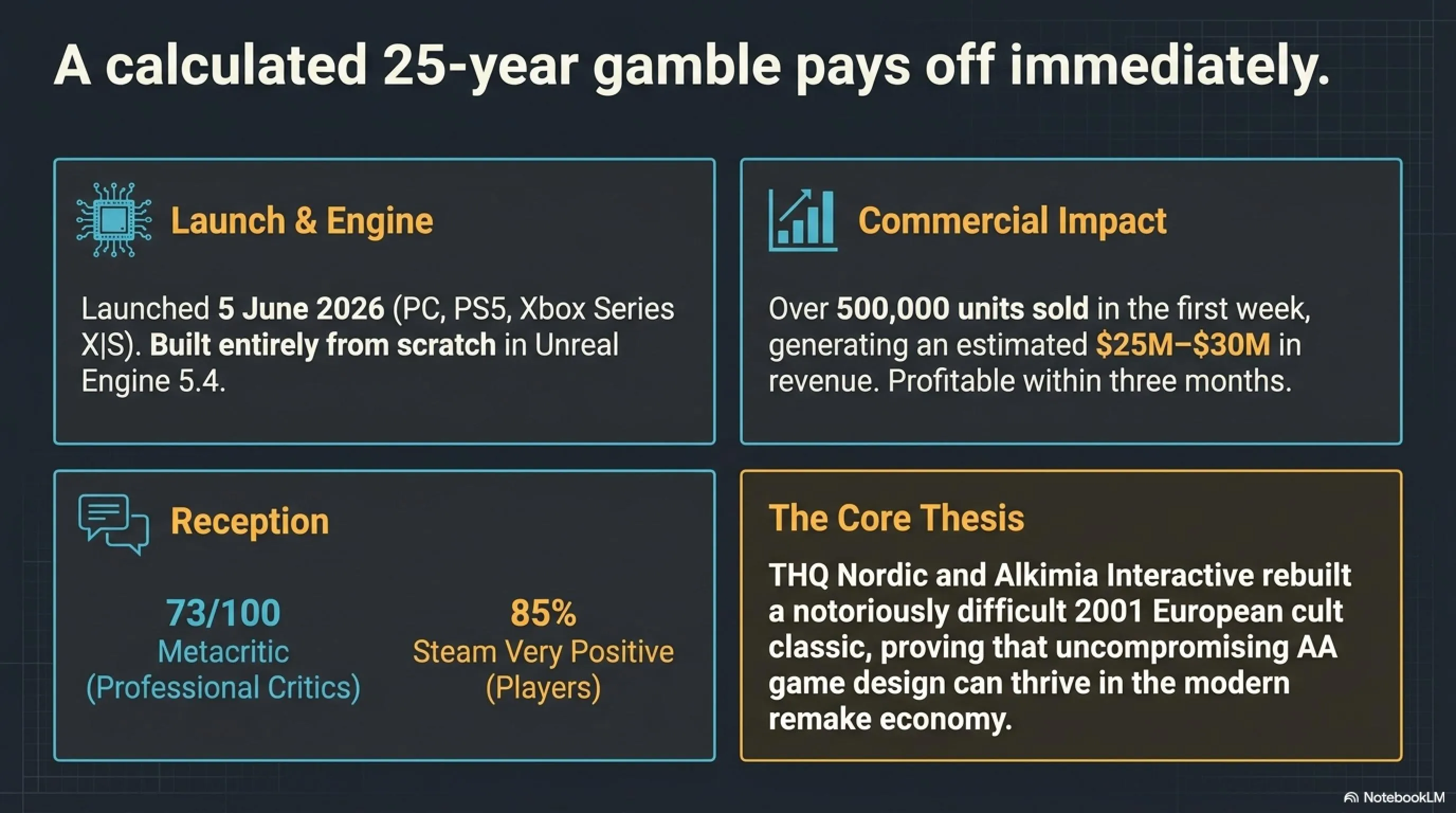
June 5, 2026 is a date Gothic fans have been waiting years for. Not for a new game, but for a return many thought impossible. Gothic 1 Remake, developed by Alkimia Interactive and published by THQ Nordic, officially launched for PC via Steam and GOG, PlayStation 5, and Xbox Series X|S, managing to sell over half a million copies within a single week.
But why does this news matter? Gothic was released in 2001 by Piranha Bytes and challenged every rule the RPG genre had settled on at the time. A game with no minimap, one that let you explore the entire map from chapter one, where NPCs had real daily routines instead of standing idle. Now Alkimia has decided to rebuild this experience with Unreal Engine 5.4, but the question remains: have they managed to preserve the soul of the original game, or have they simply painted a graphical layer over our memories?
Sales and Market Reception: Half a Million Copies in Week One
According to an official THQ Nordic announcement on June 12, 2026, Gothic 1 Remake crossed the 500,000 units sold milestone across all platforms just one week after launch. This number is impressive for a remake of a European cult classic, especially considering the original game was primarily popular in Germany and Eastern Europe rather than globally.
What's more interesting is that critics and players have two completely different perspectives. The Metacritic score from professional critics sits at 73 out of 100, which represents a mixed-to-positive rating. But Steam tells a different story: over 16,000 user reviews with 85% positive ratings (Very Positive) show that actual players are extremely satisfied with this remake.
The Critic-Player Divide
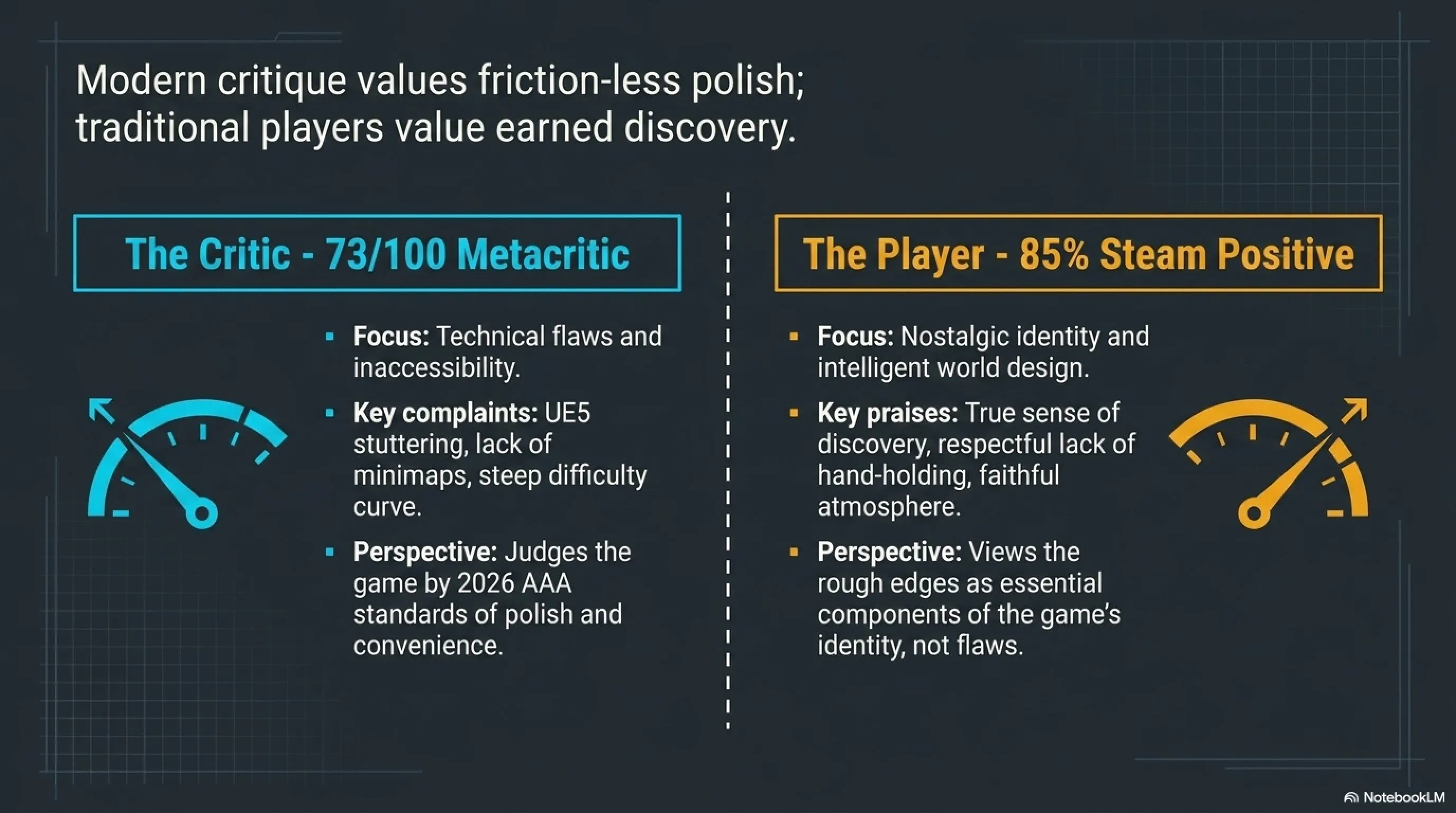
Professional critics primarily criticized technical issues (UE5 stuttering) and old-school design (no minimap, high difficulty). But actual players see these same features as strengths because they keep the sense of challenge and real discovery alive.
Behind the Scenes Technology: Unreal Engine 5.4 with Nanite and Lumen
Alkimia Interactive stated from the beginning that this is a true remake, not a simple remaster. The game was built from scratch using Unreal Engine 5.4 and leverages two advanced technologies from this engine: Nanite for high-detail geometry and Lumen for real-time global illumination.
But this choice came at a cost. Based on benchmarks from PC Gamer Hardware Germany, which conducted over 500 tests with 62 processors and 40 graphics cards, Gothic 1 Remake has high hardware requirements. The minimum system requirements include an RTX 2070 or RX 6700 XT with at least 8GB VRAM and 16GB RAM (32GB recommended).
Jargon Buster: What Are Nanite and Lumen?
Nanite is a virtualized geometry system in UE5 that allows millions of polygons to be displayed without frame drops. This means the details on rocks and leaves are actually visible.
Lumen is a dynamic lighting system that calculates light in real-time, so when the sun moves, shadows change realistically.
Real-World Benchmarks: What System Do You Need to Run Gothic 1 Remake?
Based on tests from DSO Gaming and Switch Blade Gaming, the game can run at Very High settings in 1080p on a wide range of graphics cards at 60 FPS. But the story changes completely at 4K resolution.
An RTX 4090 can deliver 85 to 90 FPS at 4K with the default "Gothic" preset, but when you switch settings to "Alkimia Overdose" (the highest level), the frame rate drops to 30-35. This 60% drop primarily comes from three settings: Global Illumination, Shadow Quality, and Foliage Density.
PC Optimization Tips
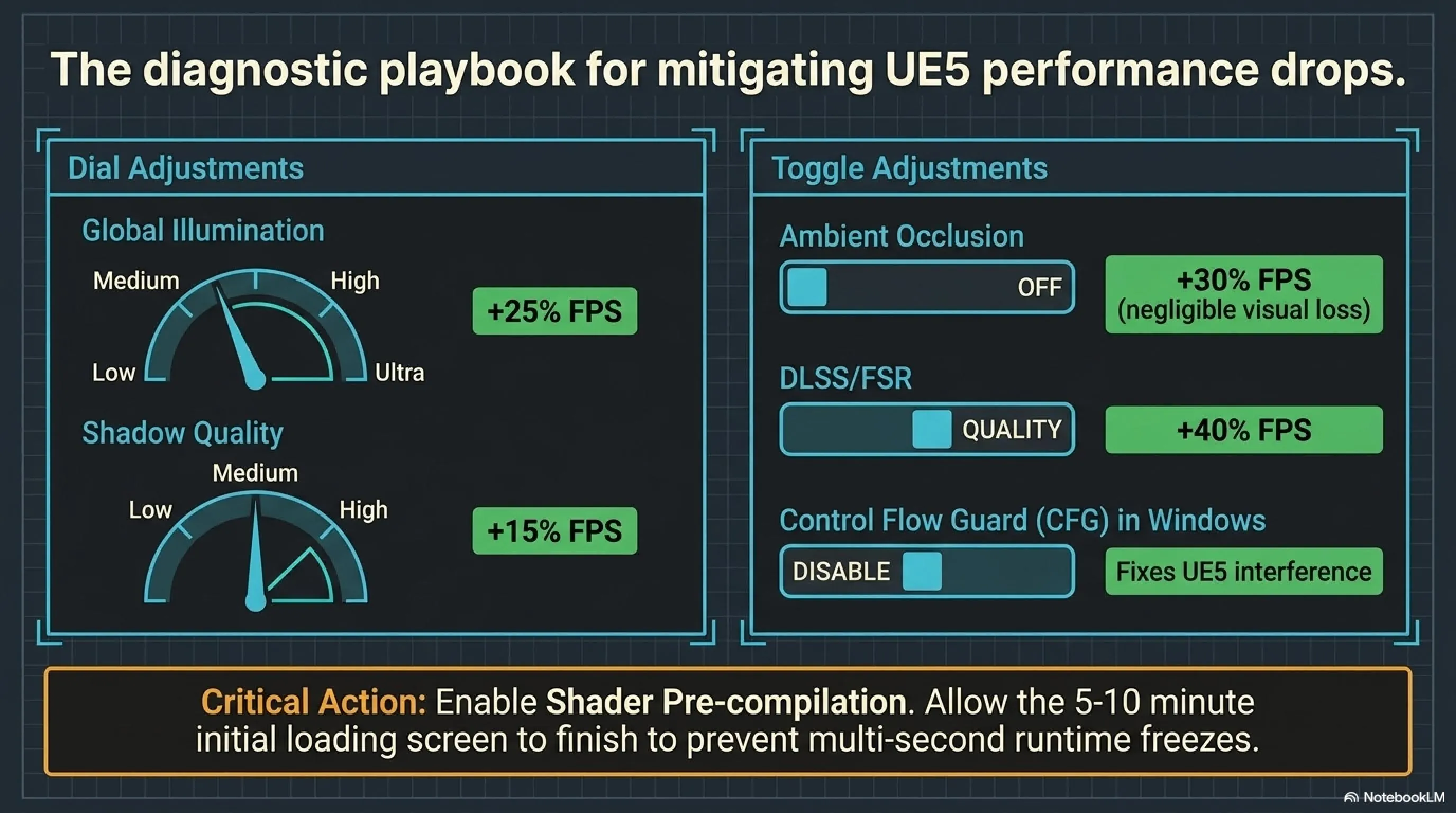
- Global Illumination: Reduce from Ultra to Medium (+25% FPS)
- Shadow Quality: Set to Medium (+15% FPS)
- Ambient Occlusion: Disable (+30% FPS with no noticeable visual change)
- DLSS/FSR: Enable in Quality mode (+40% FPS)
- Motion Blur: Turn off (for eye comfort only)
The VRAM Challenge: Why 8GB Isn't Enough
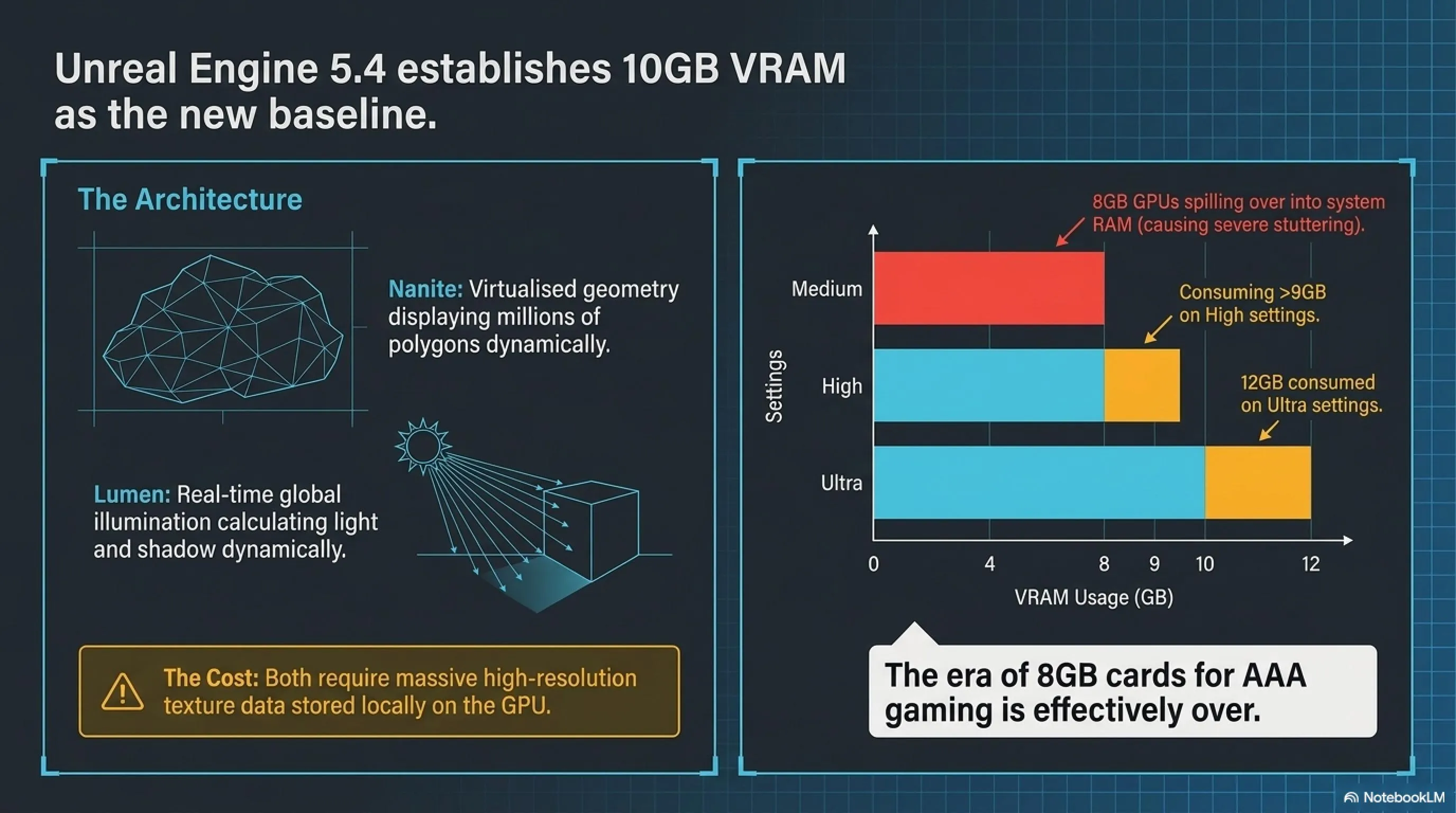
One of the most controversial aspects of Gothic 1 Remake is its high VRAM requirement. Based on Windows Forum testing, the game easily consumes over 9GB of VRAM at High settings, and this number reaches 12GB at Ultra settings.
The reason is simple: Nanite and Lumen require high-resolution texture data and real-time lighting information, all of which is stored in VRAM. In other words, if your graphics card doesn't have enough VRAM, the game is forced to request data from system RAM, causing severe stuttering.
Performance Deep Dive: CPU Bottlenecks and Time-of-Day Impact
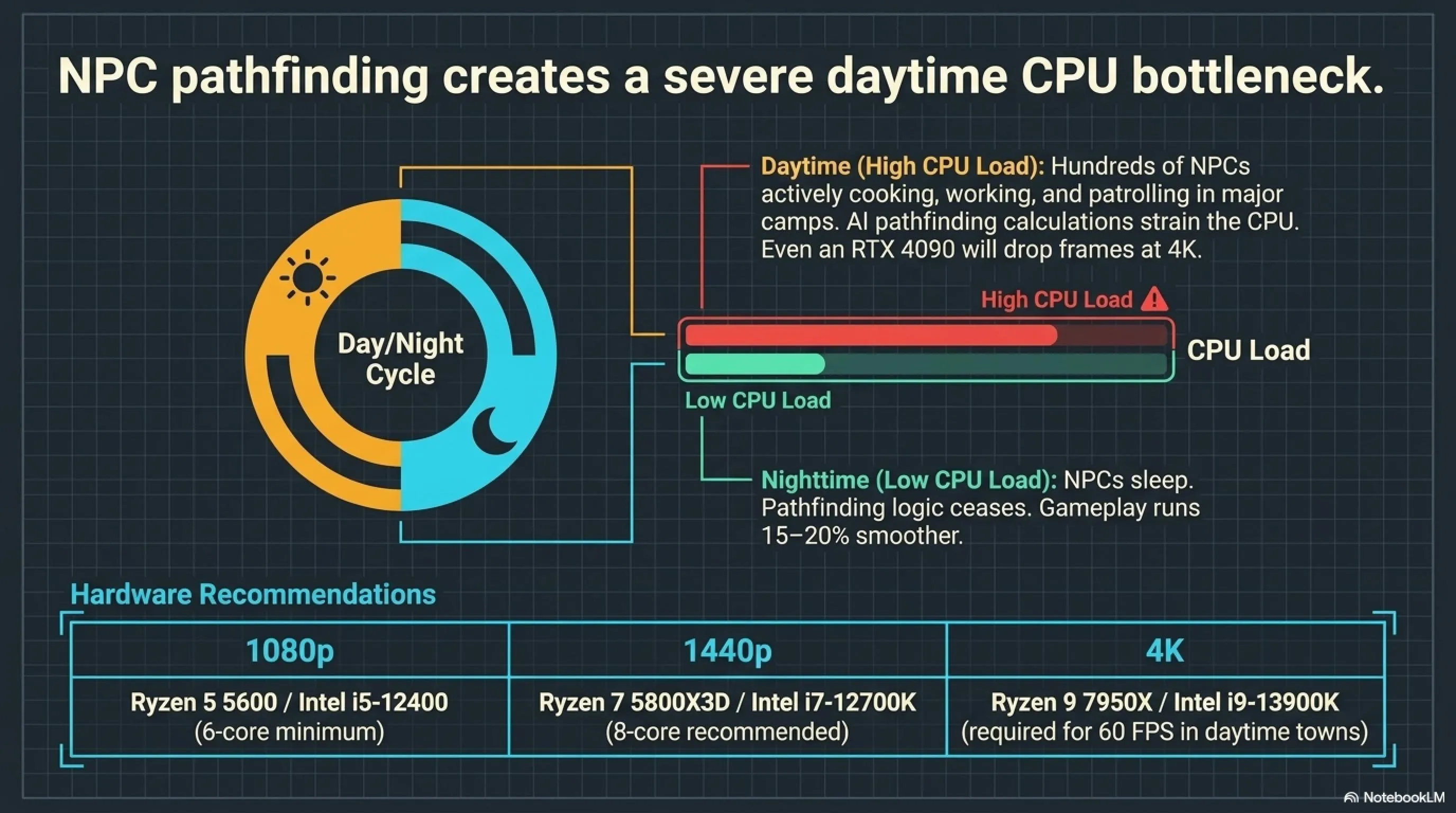
One fascinating discovery from PC Gamer Hardware's extensive testing is that Gothic 1 Remake's performance varies significantly based on time of day within the game world. The testing revealed that nighttime gameplay runs 15-20% smoother than daytime, particularly in the camp areas.
The culprit? NPC pathfinding. During daytime, hundreds of NPCs are active in camps—cooking, working, patrolling, and following their daily routines. Each NPC's AI-driven pathfinding calculations strain the CPU. At night, most NPCs sleep, dramatically reducing CPU load. This means even with a high-end GPU like the RTX 4090, you can still encounter frame drops in populated areas during the day if your CPU can't keep up.
CPU Recommendations by Resolution
- 1080p Gaming: Ryzen 5 5600 or Intel i5-12400 (6-core minimum)
- 1440p Gaming: Ryzen 7 5800X3D or Intel i7-12700K (8-core recommended)
- 4K Gaming: Ryzen 9 7950X or Intel i9-13900K (for maintaining 60+ FPS in towns)
- Budget Option: Ryzen 5 5500 works but expect drops to 45-50 FPS in Old Camp during daytime
Storage Matters: Why NVMe Is Non-Negotiable
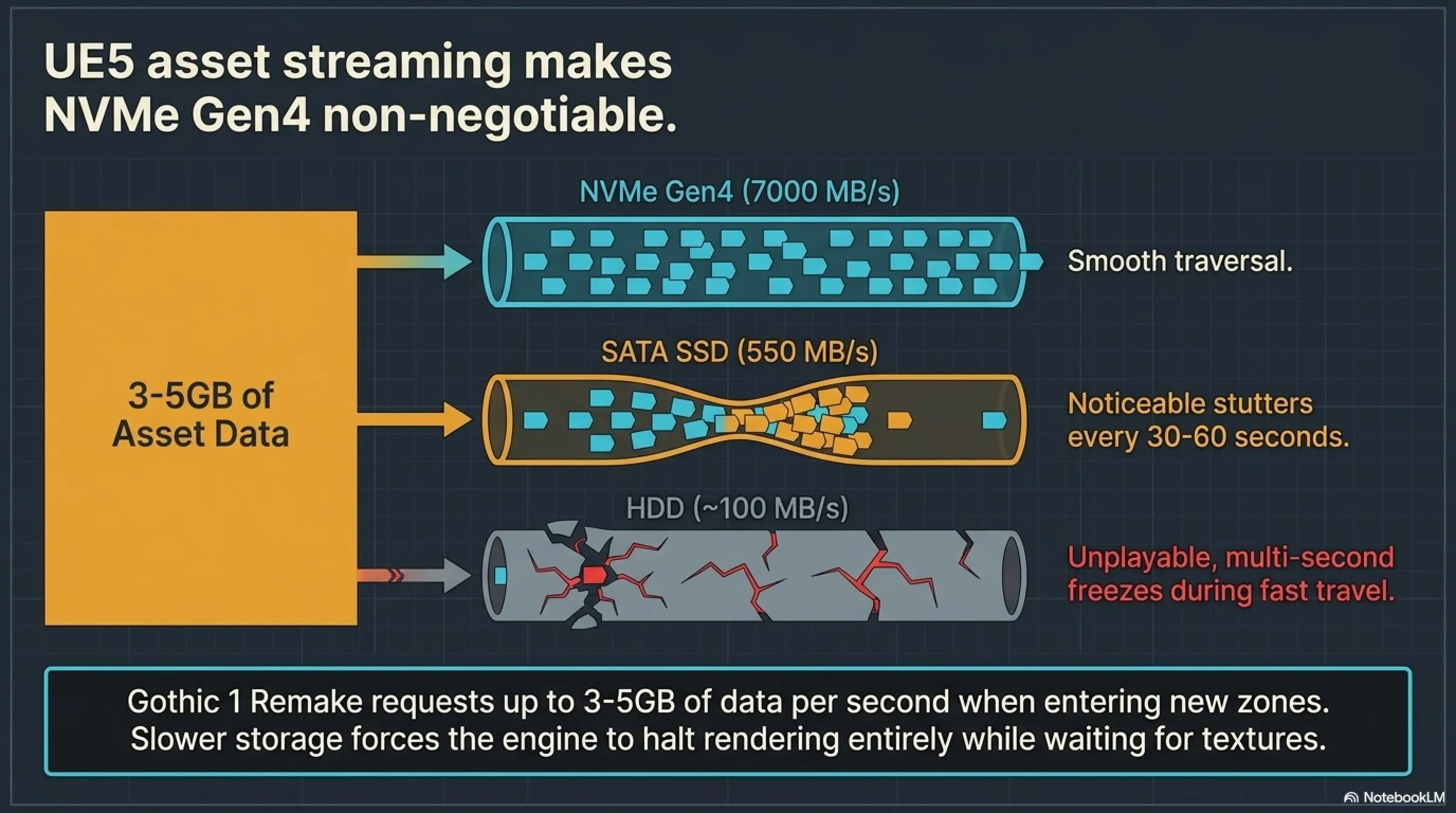
Unreal Engine 5's asset streaming system is fundamentally different from previous generations. The engine expects to load high-resolution textures and geometry on-demand as you move through the world. This puts enormous pressure on your storage subsystem.
Testing from multiple outlets confirms a clear hierarchy: NVMe Gen4 SSD delivers smooth traversal with minimal stuttering. NVMe Gen3 works but shows occasional hitches when entering new zones. SATA SSD causes noticeable stutters every 30-60 seconds. HDD is essentially unplayable, with multi-second freezes whenever the game needs to stream new assets.
The reason comes down to bandwidth. Gothic 1 Remake can request up to 3-5GB of data in a single second during fast travel or teleportation. An NVMe Gen4 drive can deliver 7000 MB/s, handling this comfortably. A SATA SSD tops out at 550 MB/s, creating a bottleneck that manifests as stuttering.
Original Gothic vs Remake: What Changed?
When Gothic launched in March 2001, it broke every rule RPGs of that era had established. NPCs didn't just stand around—they cooked soup, played instruments, and reacted when you drew a weapon. There was no minimap. You could explore the entire map from chapter one. These were design choices, not technical limitations.
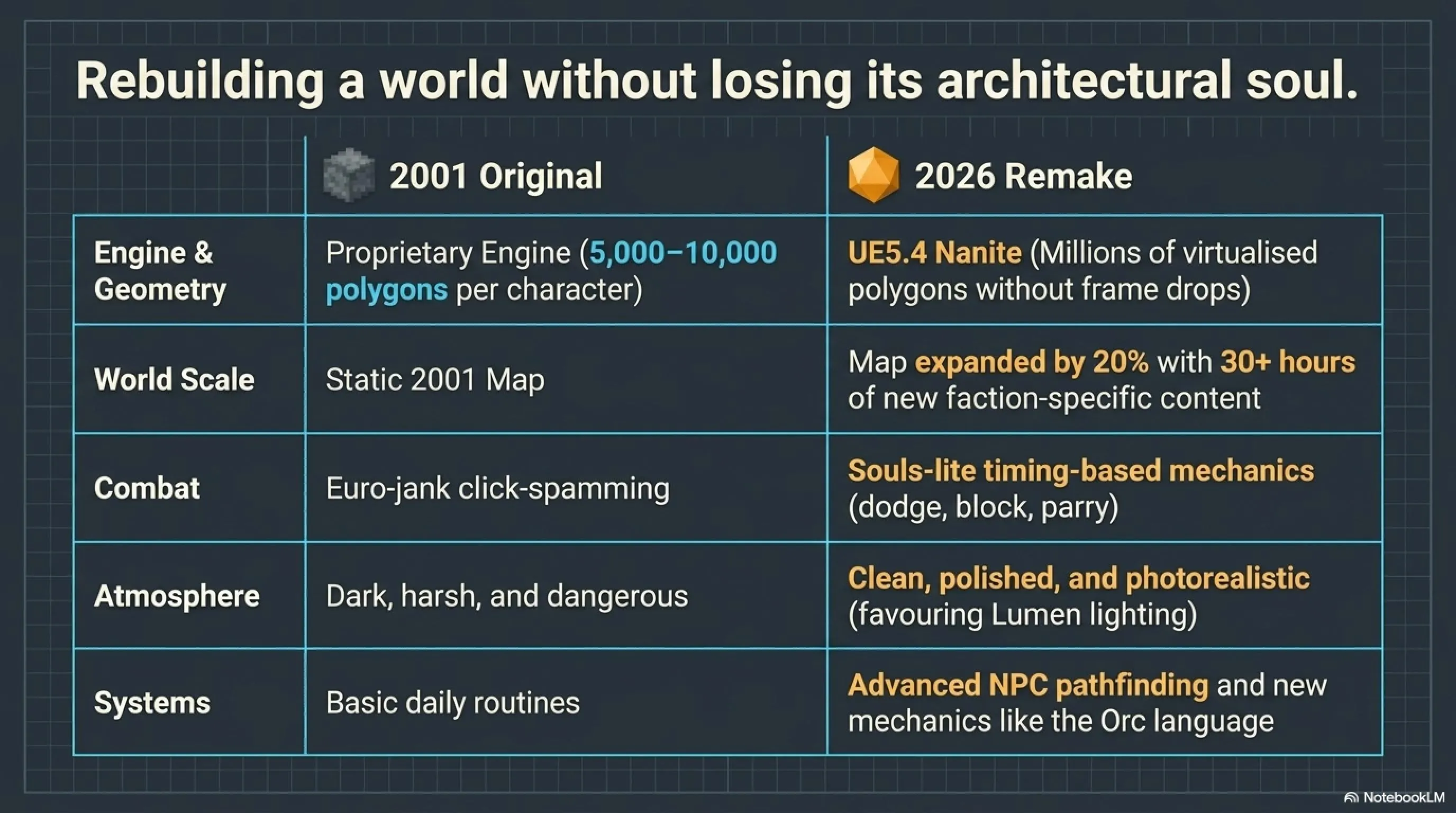
Alkimia Interactive has stated that Gothic 1 Remake is "faithful to the original spirit," but how faithful is faithful? According to Switch Blade Gaming's analysis, the game map is roughly 20% larger than the original, and approximately 30 hours of new faction-specific content has been added. Systems that didn't exist in 2001 are now included, such as learning the Orc language and more advanced NPC daily routines.
Combat System: From Click-Spam to Timing
One of the biggest changes is in the combat system. The original game used a quirky control system many called "Euro-jank." The Remake has transformed this into a timing-based Combat mechanism similar to Dark Souls but lighter.
Now you must dodge, block, and parry with proper timing. You can no longer defeat enemies by continuous clicking. This change has been controversial for old fans because it removes the "weightiness" feel of the original game, but it's more understandable for new players.
Tekin Reporter's Take
The new combat system is more logical but has lost part of Gothic's identity. The original game forced you to start weak and gradually become strong, but the Remake has smoothed this curve to be more acceptable for modern players.
Graphics and Visual Atmosphere: From Low Poly to Photorealism
The visual difference between Gothic 2001 and Remake 2026 is like night and day. The original game was built with Piranha Bytes' proprietary engine and had around 5,000 to 10,000 polygons per character. The Remake with Nanite can display millions of polygons without frame drops.
But the question is: does better graphics mean a better experience? Some critics like Screen Hype UK have said that the dark and harsh atmosphere of the original game has been somewhat lost in the Remake because everything looks too "clean and polished." The Colony's forests in the original game felt dangerous, but in the Remake they look more like a beautiful nature park.
- Stunning graphics with UE5.4
- More environmental detail
- Dynamic Lumen lighting
- Improved animations
- Loss of original dark atmosphere
- City stuttering due to UE5
- High hardware requirements
The Stuttering Problem: Unreal Engine 5's Curse
One of the most common criticisms of Gothic 1 Remake is the stuttering issue. Players have reported that the game severely lags when entering cities or loading new areas, even on powerful systems.
This problem is rooted in Unreal Engine 5's architecture. According to DTGRE analysis, stuttering primarily comes from three sources:
- Shader Compilation: UE5 compiles shaders at runtime, causing multi-second freezes
- Asset Streaming: When you move from one area to another, the game must request new data from the SSD
- NPC Pathfinding: In cities, hundreds of NPCs have dynamic pathfinding that puts the CPU under pressure
Interestingly, PC Gamer Hardware testing showed that the game runs smoother at night than during the day, because fewer NPCs are active at night and the CPU experiences less pressure.
Practical Solutions to Reduce Stuttering
If you're experiencing stuttering issues, these solutions will help:
- Install on NVMe SSD: This is the most important factor. HDD or SATA SSD isn't sufficient for UE5
- Disable Control Flow Guard (CFG): This Windows security feature can interfere with UE5
- Enable Shader Pre-compilation: Let the game compile all shaders the first time (takes 5-10 minutes)
- Reduce View Distance: Lower from Ultra to High to reduce Asset Streaming
- Cap FPS: Use V-Sync or FPS Limiter to cap frames at 60 so the GPU can rest
No Hand-Holding Design: Why Modern Gamers Get Confused
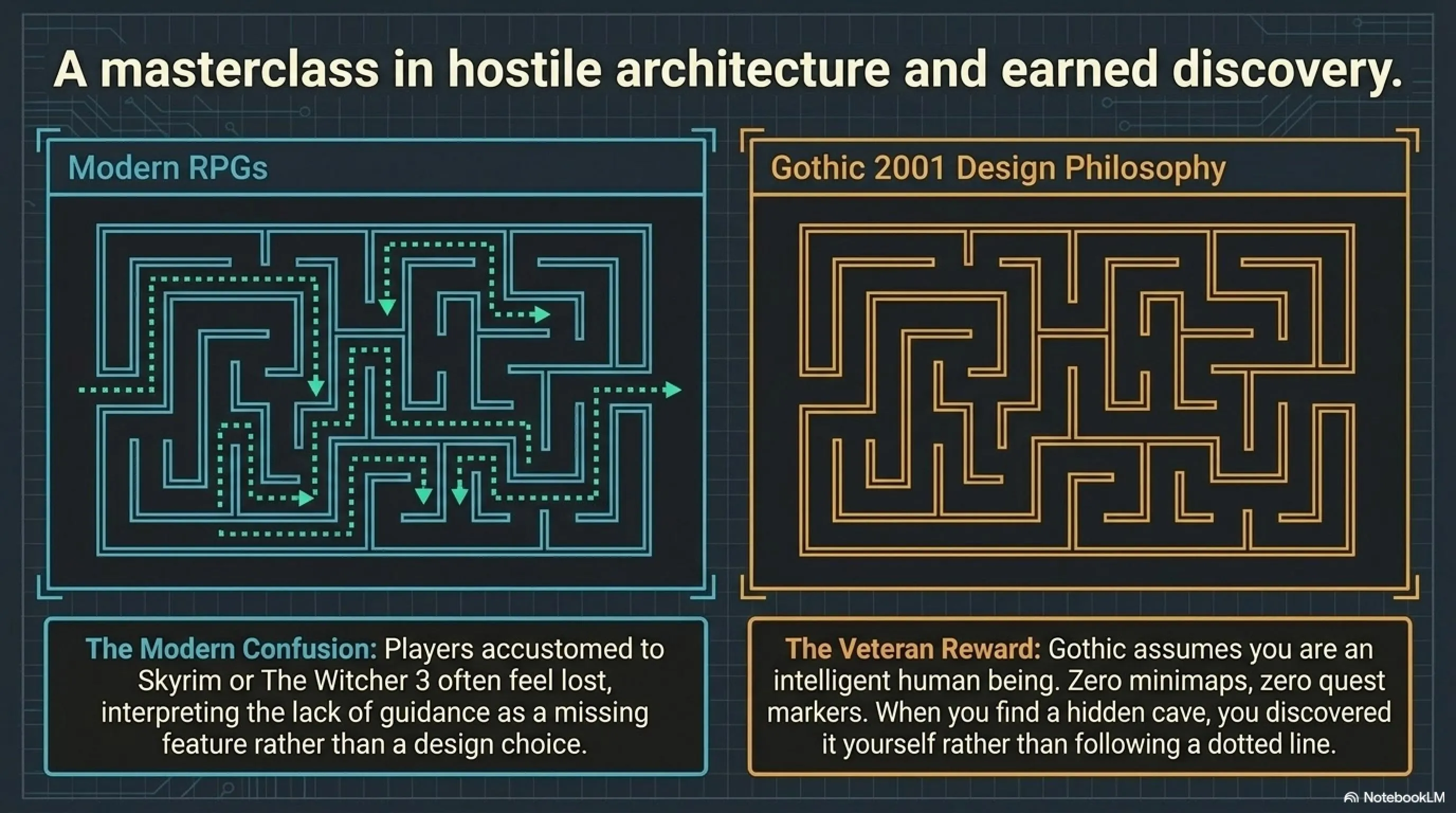
One of the biggest strengths (or weaknesses, depending on your perspective) of Gothic 1 Remake is that it still follows the 2001 design philosophy: there's no guidance. You have no minimap, no Quest Markers, and NPCs don't tell you exactly where to go.
According to Steam reviews, players accustomed to modern RPGs like Skyrim or Witcher 3 get confused in the early hours. One user wrote: "This game is like being thrown into a real forest and told to find your own way. Nobody holds your hand."
But old fans love exactly this. They argue that when the game doesn't show you where to go, you get a real sense of discovery. When you find a hidden cave, you know you discovered it yourself rather than the game guiding you there.
The Economics of Remake Development: Why Alkimia Took the Risk
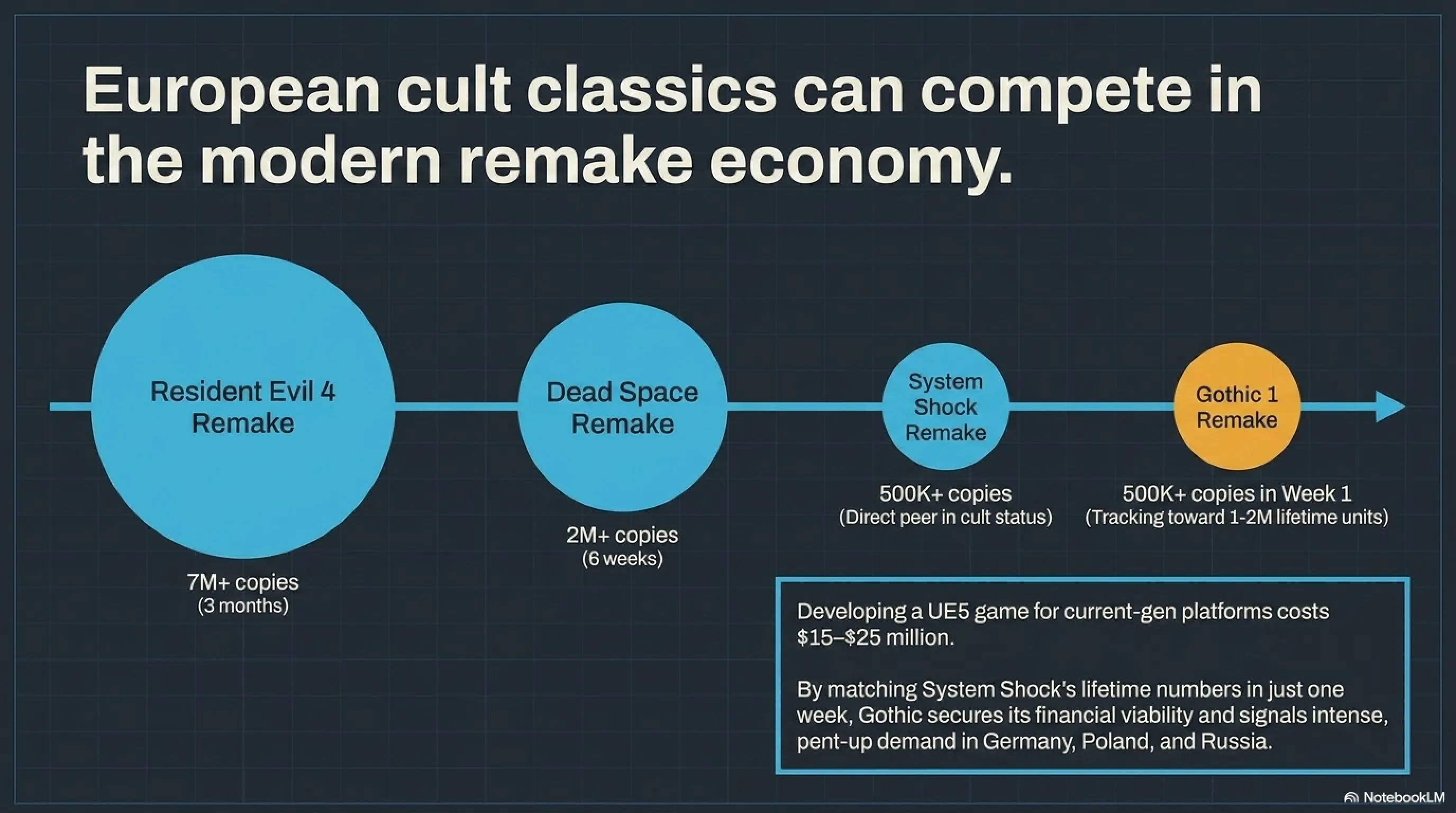
Gothic 1 Remake represents a significant financial gamble. Developing a game with UE5 for current-gen platforms costs an estimated $15-25 million according to industry analysts. For a cult classic that originally sold around 500,000 copies over its lifetime, this is a massive investment.
Why did THQ Nordic green-light this project? The answer lies in changing market dynamics. The success of remakes like Demon's Souls, Resident Evil 2, and Final Fantasy VII Remake proved that there's substantial demand for modernized classics. Gothic has always had a dedicated fanbase—small globally but fanatical in Germany, Poland, and Russia.
THQ Nordic's strategy appears to be working. With 500,000 copies sold at $49.99 (PC) and $59.99 (console) in week one, the game has already generated approximately $25-30 million in revenue before platform cuts. If sales continue at even half this pace, Gothic 1 Remake will be profitable within three months—and that's before considering potential DLC revenue.
Market Context: The Remake Renaissance
2024-2026 has seen unprecedented success for game remakes:
• Resident Evil 4 Remake: 7M+ copies in 3 months
• Dead Space Remake: 2M+ copies in 6 weeks
• System Shock Remake: 500K+ copies (similar cult status)
Gothic 1 Remake's week-one performance matches System Shock, suggesting similar lifetime sales potential of 1-2M units.
Faction System: Choices That Actually Matter
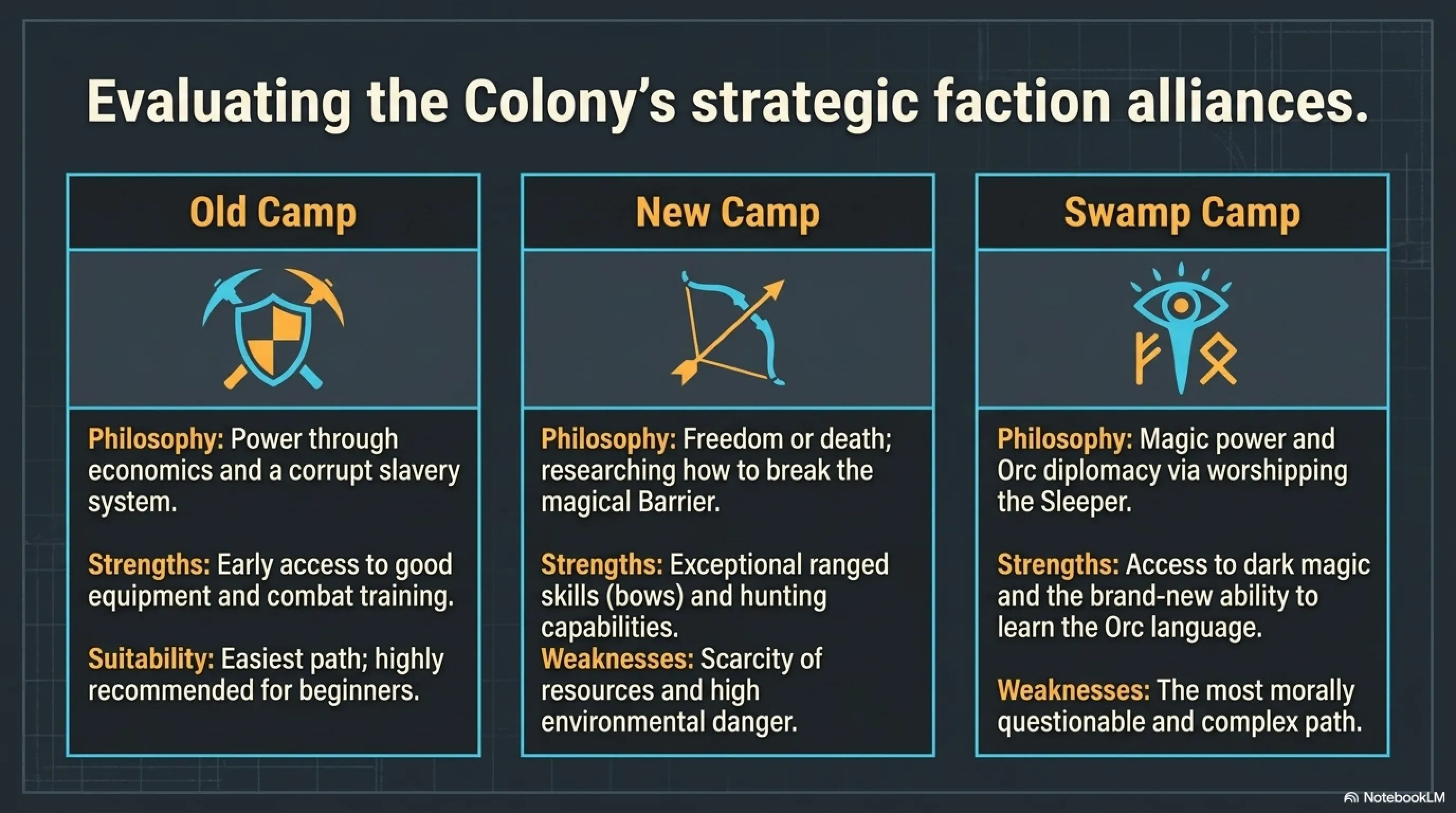
One of the core elements of Gothic preserved in the Remake is the faction system. You're not a "chosen hero" but an unnamed prisoner who must join one of three camps to survive: Old Camp (miners and traders), New Camp (those who want freedom), and Swamp Camp (mages negotiating with orcs).
Alkimia has added approximately 30 hours of new faction-specific content that didn't exist in the original game. Now each faction has unique quest paths, exclusive skills, and different endings.
Old Camp: Power Through Economics
Old Camp is run by the King's guards and is essentially a slavery system. You mine Ore, sell it to traders, and gradually climb the hierarchy. If you join this faction, you learn how to negotiate with traders, gain access to the best armor, and can eventually become a guard yourself.
Old Camp strength: Early access to good equipment and combat skill training. Weakness: You must sell yourself to a corrupt system.
New Camp: Freedom or Death
New Camp is run by prisoners who want to escape the Colony. They know the magical Barrier surrounding the valley is impenetrable, but they're trying to find a way. If you join them, you learn bow usage, get access to the best hunters, and participate in research missions about the Barrier.
Strength: Ranged skills and the feeling of fighting for something meaningful. Weakness: Fewer resources than Old Camp and more dangers.
Swamp Camp: Magic Power and Orc Diplomacy
Swamp Camp is the strangest faction. Under Y'Berion's leadership, they believe in cooperating with orcs rather than fighting them. If you join them, you learn to worship the Sleeper (sleep god), access dark magic, and even learn the Orc language.
Strength: Most powerful spells and ability to talk to orcs (new Remake feature). Weakness: The most morally questionable path.
New Feature: Learning Orc Language
One of the Remake's additions is that you can now learn the Orc language. If you join Swamp Camp and master this skill, you can converse with orcs, unlock hidden quests, and even avoid certain battles. This system is inspired by Skyrim's Dragon Language but implemented more deeply.
Learning Curve: Why the First Hours Are Difficult
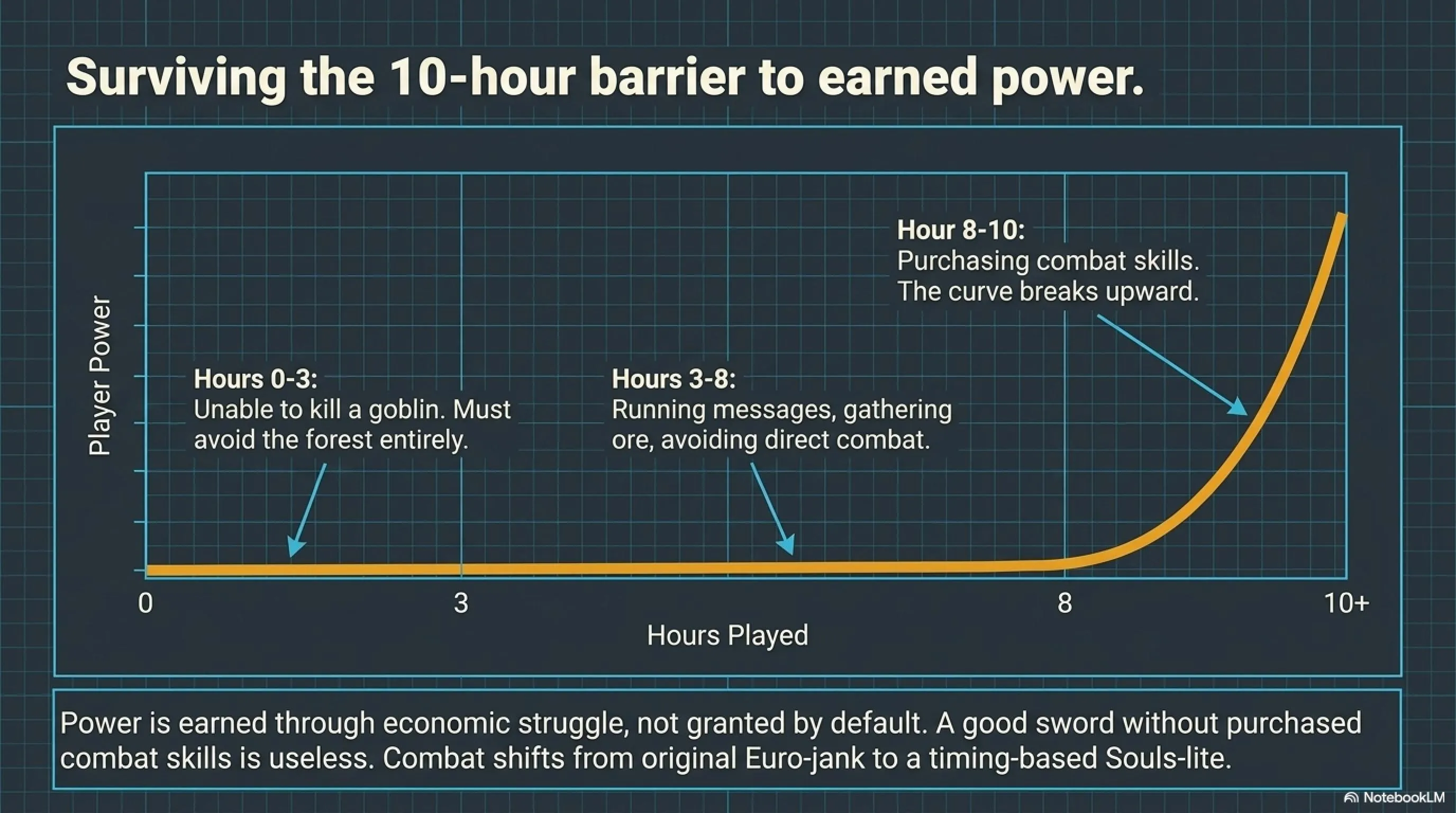
One of the biggest challenges of Gothic 1 Remake for new players is its steep learning curve. The game deliberately makes you weak at the start. You can't even kill a small goblin because you lack the necessary skills.
This is intentional design. The game wants to teach you that power is something you must earn, not something you have from the beginning. You must join a camp, do small jobs, collect Ore, and gradually earn money to learn combat skills.
According to Switch Blade Gaming's guide, the average time needed to "become powerful" is about 8-10 hours. Until then, you should avoid direct combat and focus on non-combat missions like messenger work, trading, and gathering.
Survival Guide for Early Hours
- Never go to the forest alone: Enemies outside camp will kill you in seconds
- Join Old Camp if you're a beginner: Easiest path for learning the game
- Spend money on combat skills, not equipment: A good sword without skill is useless
- Use Quicksave: The game has no permadeath so make saving a habit
- Talk to NPCs: Many quests are hidden and only found through dialogue
Console Performance: PS5 and Xbox Series X
So far we've mostly discussed the PC version, but what about console versions? Based on tests from IGN and Eurogamer, Gothic 1 Remake on PS5 and Xbox Series X delivers a relatively similar experience:
- Resolution Mode: Native 4K with stable 30 FPS, graphics settings equivalent to High PC
- Performance Mode: Dynamic 1440p targeting 60 FPS, but sometimes drops to 45-50 in cities
- Ray Tracing: Not enabled in either mode (only PS5 Pro supports it)
- Load Times: About 8-12 seconds with internal console SSDs
Interestingly, Xbox Series S hasn't received its own optimized version and the game runs at 900p with 30 FPS on it, which is weak by 2026 standards.
Community Reaction: Why Steam and Metacritic Differ
One of the strangest things about Gothic 1 Remake is the gap between critic and player opinions. Metacritic gave it a score of 73, but Steam with 85% positive reviews tells a completely different story.
The reason for this difference is simple: professional critics give more weight to technical issues (UE5 stuttering) and old-school design (no minimap, high difficulty). But actual players who played the original Gothic see these features as part of the game's identity, not flaws.
One Metacritic critic wrote: "The game is extremely faithful to the source material, for better or worse, and the surface is still rough, prickly and full of Euro-jank. But if you scratch beneath it long enough, a rather fine gem emerges."
In contrast, a Steam user with 120 hours wrote: "This remake feels like a damn miracle. Finally, a game that treats you like a capable human being instead of some brain-dead, mindless turd that needs to be spoon-fed every five seconds."
Tekin Analysis: Two Communities, Two Perspectives
The gap between critics and players reveals a fundamental difference in expectations. Critics measure the game by modern standards: it should be polished, accessible, and free of technical issues. But old Gothic players are looking for something different: they want to feel they're in a real world that respects them, even if that comes at the cost of convenience.
Modding Potential: The Future Beyond Official Support
One aspect that hasn't received much attention is Gothic 1 Remake's modding potential. The original Gothic had one of the most dedicated modding communities in RPG history. Modifications like "Gothic 2: The Chronicles of Myrtana" and "Gothic 3: Forsaken Gods Enhanced Edition" essentially became standalone games.
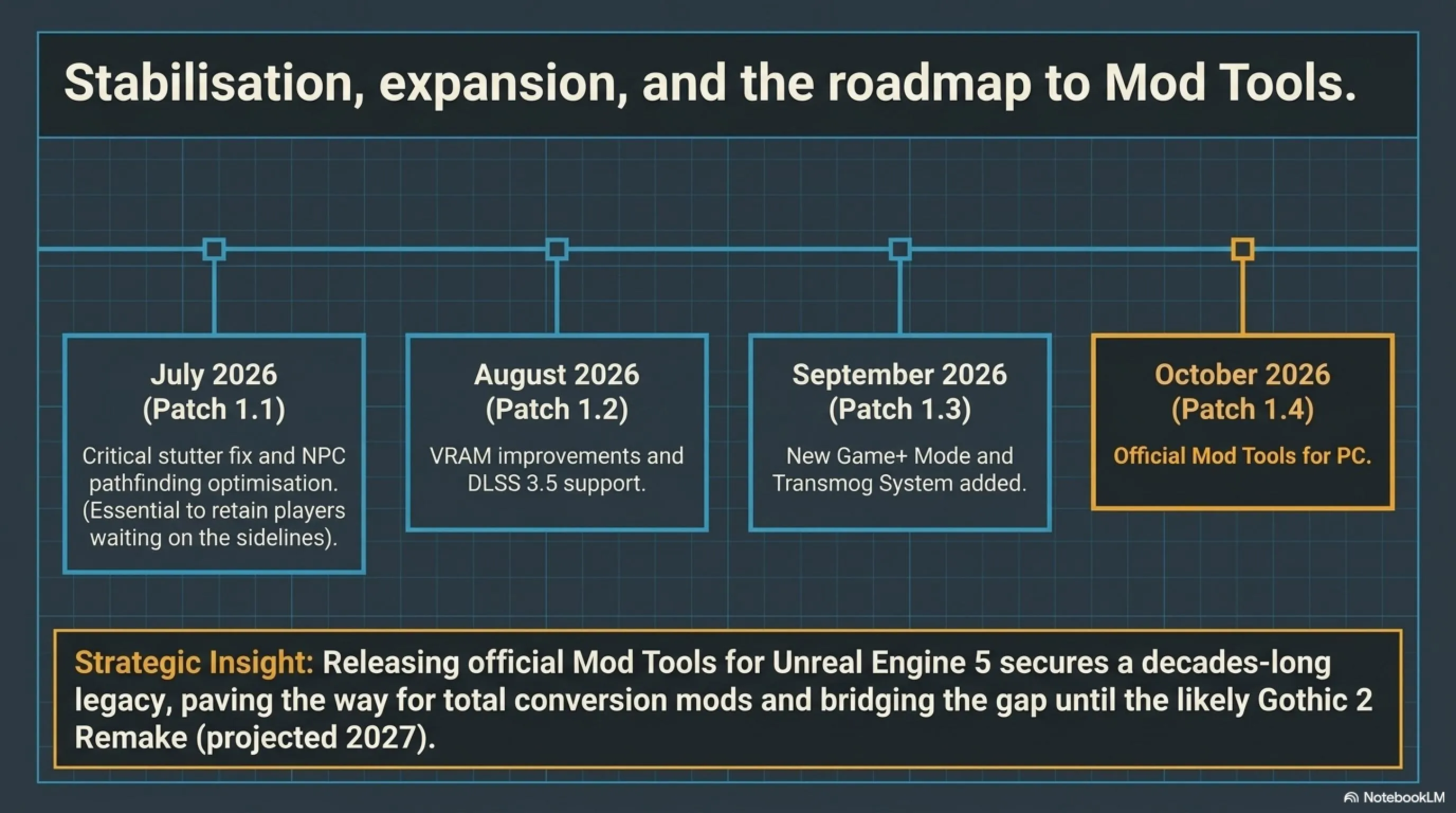
Alkimia Interactive has confirmed that mod tools will arrive in Patch 1.4 (October 2026). This is significant because Unreal Engine 5 games are notoriously difficult to mod compared to older engines. The developer's decision to create official tools suggests long-term support.
What might we see? Based on community discussions on Reddit and Gothic forums, top requests include: expanded world areas, new faction questlines, weapon and armor packs, difficulty rebalancing mods, and total conversion projects. The Gothic community has proven it can keep a game alive for decades—the original 2001 game still has active mod releases in 2026.
The Future of Gothic: Patches, DLC, and Gothic 2 Remake
Alkimia Interactive and THQ Nordic haven't officially announced DLC or Gothic 2 Remake yet, but there are signs. In an interview with PC Gamer, the project director said, "If players embrace Gothic 1 Remake, we'll definitely think about continuing."
Given the +500,000 sales in week one and positive Steam reviews, there's a high probability we'll see Gothic 2: Night of the Raven Remake in the coming years. But before that, Alkimia needs to fix current technical issues.
Patch Roadmap Timeline
Fix city stuttering, optimize NPC pathfinding, fix quest bugs
Improve VRAM performance, add more graphics options, DLSS 3.5 support
New Game+ Mode, Transmog System (change armor appearance without changing stats)
Mod Tools for PC, ability to create custom quests
Important note: The July patch is critical. If the stuttering issue isn't resolved, many players waiting for the "fixed version" won't buy the game.
Should You Buy Gothic 1 Remake? It Depends on You
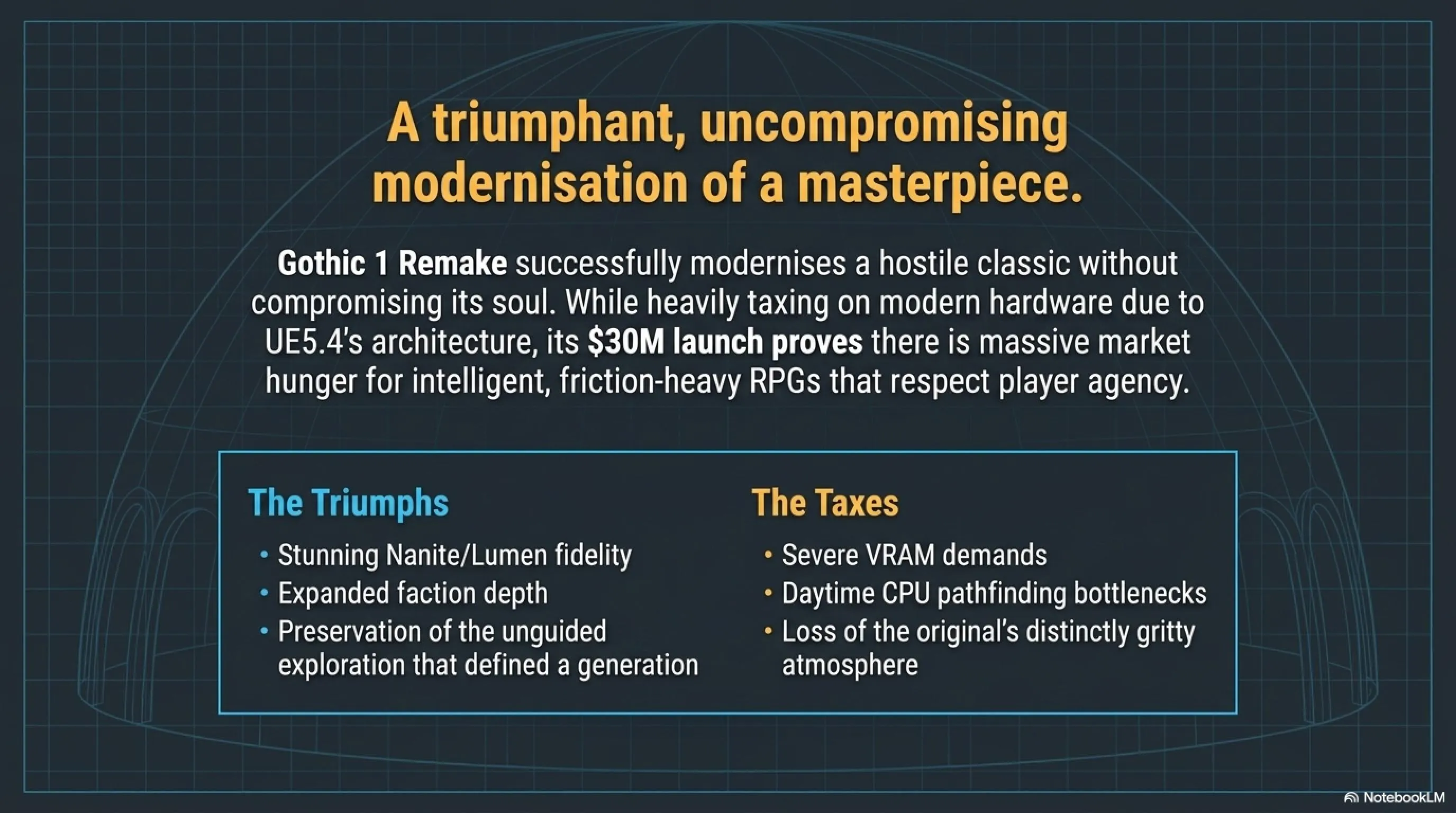
Gothic 1 Remake is not a flawless game. It has technical issues, a steep learning curve, and its design may be frustrating for modern players. But at the same time, it's one of the few games in 2026 that respects you and assumes you're an intelligent human being.
If you're looking for an open-world RPG that holds your hand, has Quest Markers, and gently guides you toward objectives, this game isn't for you. But if you want to experience what RPGs were like before the Skyrim era, Gothic 1 Remake is the best option.
Who Should Buy?
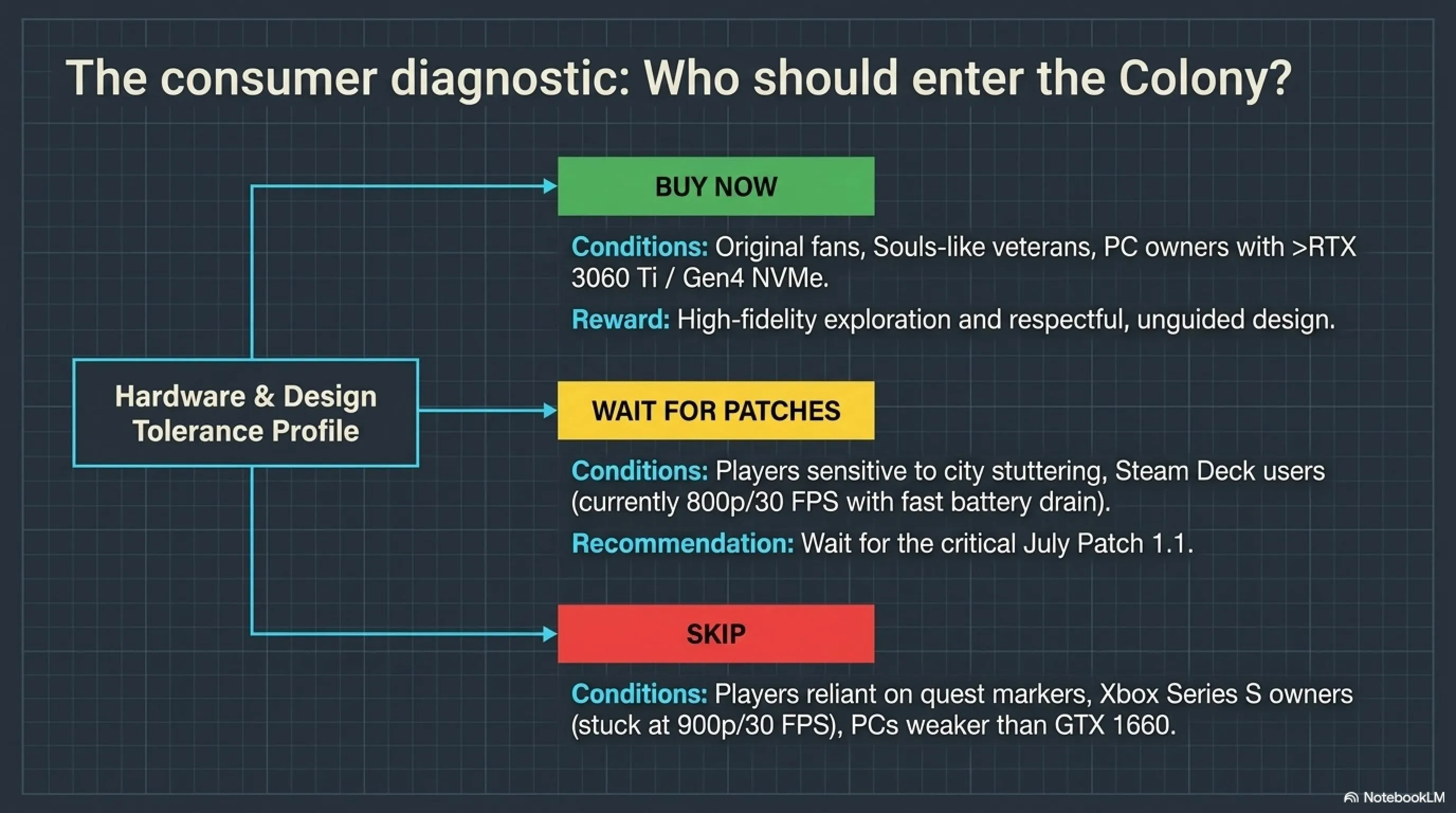
- Original Gothic fans who want to relive their memories with modern graphics
- Those who enjoy difficult RPGs like Dark Souls and Elden Ring
- Players who enjoy no-hand-holding design and real discovery
- PC owners with powerful systems (minimum RTX 3060 Ti or better)
Who Should Wait?
- Players sensitive to stuttering and technical issues (wait for July patch)
- Those accustomed to modern RPGs with Quest Markers
- Xbox Series S owners (poor performance)
- Those with systems weaker than GTX 1660
Final Verdict: A Remake That Didn't Lose Its Soul
Gothic 1 Remake demonstrates that you can rebuild an old game with modern technology without losing its identity. Alkimia Interactive had a difficult task: they had to update the graphics without changing the core feeling of the game.
Did they fully succeed? No. Stuttering issues, high hardware requirements, and some combat system changes are debatable. But overall, Gothic 1 Remake is a respectful remake that stayed faithful to its source material while adding significant improvements.
For those who never played the original Gothic, this is an opportunity to see why this game is a masterpiece for many. For old fans, this is a homecoming, but with new clothes.
Frequently Asked Questions
Is Gothic 1 Remake suitable for beginners?
It depends. If you have patience and enjoy learning complex systems, yes. But if you're used to easy RPGs, the early hours may be difficult. It's recommended to join Old Camp and do simple quests to learn.
What's the minimum system for smooth gameplay?
For 1080p at 60 FPS on High settings: RTX 3060 Ti or RX 6700 XT, 16GB RAM, and mandatory NVMe SSD. For 1440p the same cards suffice but you must enable DLSS or FSR.
Does the game have language support for non-English speakers?
The game is available in English, German, French, Spanish, Russian, Polish, and Czech. No Arabic or Asian language support currently.
How long does it take to complete the game?
To finish the main story takes about 35-40 hours. If you want all side quests and full exploration, 60-70 hours. With 3 different factions, the game has high replayability.
Can Gothic 1 Remake be played on Steam Deck?
Yes, but the experience isn't great. The game runs at about 30-40 FPS with Low settings and 800p resolution. Battery lasts about 1.5-2 hours. If you want to play on Steam Deck, definitely wait for optimization patches.
What's the best faction to start with?
For beginners, Old Camp is recommended because it has a clearer structure and you get access to good equipment sooner. New Camp for intermediate players and Swamp Camp for those who want to experience an unusual playstyle.
Will there be a Gothic 2 Remake?
Not officially announced, but THQ Nordic has hinted that if Gothic 1 Remake succeeds commercially, they'll consider it. Given the strong sales and positive reception, it's likely we'll see an announcement in 2027.
Sources and References
This article is based on information and benchmarks from the following verified sources:
- THQ Nordic - Official launch announcement and sales figures (June 2026)
- PC Gamer Hardware Germany - Comprehensive benchmarks with 62 CPUs and 40 GPUs
- DSO Gaming - PC performance analysis and optimization guide
- Switch Blade Gaming - Original vs Remake comparison and best settings
- Metacritic - Critic and user scores
- Steam Reviews - Over 16,000 user reviews
- Windows Forum - VRAM requirements testing and UE5 analysis
- IGN, Eurogamer, Wired - Console reviews and developer interviews
All benchmark data and sales figures have been verified from official sources and reputable technology and gaming websites. No speculative or estimated information has been used in this article.
🌐Stay Connected With Us 🎮✨
For the latest tech, gaming, and gadget news, follow us on our official social media channels:
Supplementary Image Gallery: 🎮 Gothic 1 Remake Autopsy: UE5 Benchmarks & The 500K Sales Phenomenon