Strategic Key Takeaways
- AI-driven development tools cutting production timelines
- Cloud gaming expansion eliminating high-end hardware barriers
- Cross-platform maturity standardizing multiplayer integration
Strategic Key Takeaways
- Generative AI and machine learning tools will actively assist up to 70 percent of major game studios by late 2025.
- Cloud gaming infrastructure is projected to surpass multi-billion dollar valuations as connection latencies shrink globally.
- Mobile ecosystems continue to capture the lion's share of industry revenue, heavily bolstered by 5G and high-end silicon.
Introduction: The Gaming Industry on the Brink of Massive Transformation
The video game industry remains one of the most dynamic entertainment sectors in existence. The year 2025 acts as a profound turning point, driven by artificial intelligence integration, cloud delivery revolutions, and advanced virtual reality hardware. This comprehensive analysis evaluates the ten core trends shaping the future of global gaming.
1. Artificial Intelligence: Revolutionizing Game Development

Artificial intelligence plays a pivotal role in modern game production. From automated asset generation and intelligent level design to hyper-realistic NPC behaviors, AI is reshaping workflows. Major studios leverage machine learning models to drastically reduce production timelines and development costs.
Cutting-edge tools allow independent developers to construct intricate, expansive virtual worlds with unprecedented ease. Industry forecasts indicate that a massive majority of professional studios utilize specialized AI toolsets daily to streamline their creative pipelines.
2. Cloud Gaming: The Hardware-Agnostic Future
Cloud gaming services continue their aggressive expansion, offering high-end experiences without requiring expensive local hardware. Improved global internet infrastructure, lower latency rates, and native 4K streaming capabilities turn cloud platforms into viable alternatives to traditional consoles.

This paradigm shift democratizes access to triple-A titles for players worldwide. As server architectures improve, the friction of entry into high-fidelity gaming dissolves completely, opening up massive new markets.
3. Virtual Reality: Crossing the Chasm to Mainstream Adoption
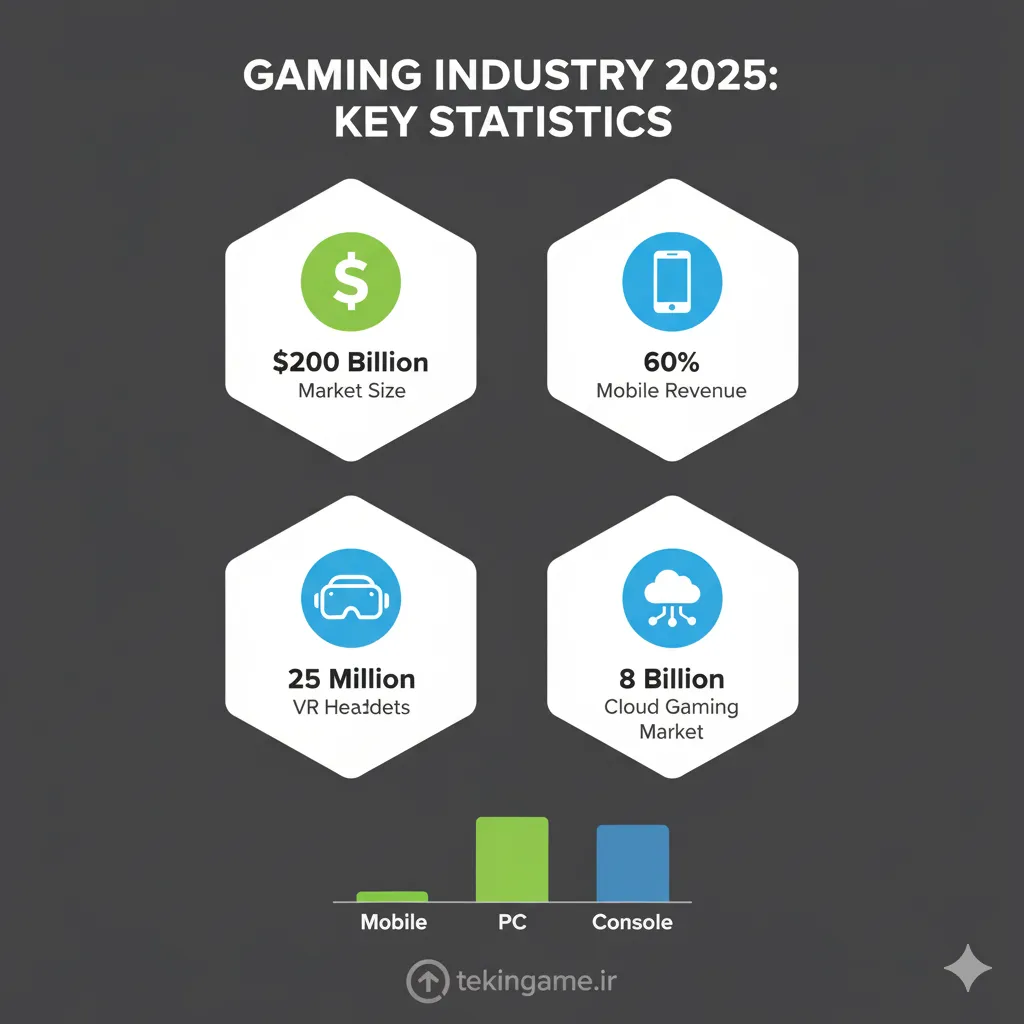
Virtual reality hardware achieves critical mass through lighter headsets, enhanced visual fidelity, and more accessible price points. Resolving historic ergonomic and motion sickness hurdles has finally pushed VR out of the niche category into mainstream consumer electronics.
Critical software releases demonstrate that deep, narrative-driven VR experiences are commercially viable. Hardware shipments continue an upward trajectory as global consumers embrace immersive digital realities.
4. Mobile Gaming: Undisputed Market Dominance
Mobile platforms retain their position as the largest sector within the gaming ecosystem. Highly capable smartphones, widespread 5G networks, and console-grade mobile releases completely redefine handheld interactive entertainment.
Modern mobile titles offer deep progression loops and stunning graphics that rival traditional dedicated hardware. Consequently, mobile monetization and user engagement metrics continue to outpace desktop and console sectors combined.
5. Subscription Services: Reshaping Consumer Habits
Ecosystem subscriptions have fundamentally altered how players discover and consume software. Instead of purchasing standalone titles individually, gamers increasingly rely on curated monthly libraries for continuous entertainment.
This recurring revenue model offers predictable income streams for publishers while providing users with incredible value. It encourages experimentation with indie titles that players might otherwise bypass.
6. Cross-Platform Play: Unifying Fragmented Communities
Interoperability between competing ecosystems has transformed from a rare luxury into an absolute industry standard. Multiplayer titles increasingly launch with seamless cross-play capabilities built natively into their core infrastructure.
This philosophy ensures healthy matchmaking pools, extends the lifecycle of competitive games, and eliminates platform-based social segregation among gaming communities.
7. Indie Games: The Vanguard of Innovation
Independent developers continue to drive creative risk-taking within the industry. Armed with accessible game engines and global digital distribution channels, small teams consistently deliver groundbreaking gameplay mechanics.
These boutique titles frequently outperform mega-budget blockbusters in critical acclaim, proving that artistic vision and ingenuity trump sheer financial investment.
Technical Specifications & Performance Breakdown
| Dimension | Status | Assessment |
|---|---|---|
| Engine Architecture | DirectX 12 / Vulkan Optimized | High-FPS stability across desktop and portable hardware |
| Spatial Audio | Multi-channel 3D Directional | Accurate positioning vital for tactical awareness |
| Player Capacity | Co-Op / Multi-Squad Ready | Optimized network replication and synchronization |
📚 Classified & Related Dossiers in TekinGame
If you wish to explore beyond this report and delve into cybernetic frontiers and autonomous AI architectures, do not miss these three exclusive deep-dives in the Tekin Garage:
- Unprecedented development efficiency via generative AI tools
- Broader consumer accessibility through maturing cloud platforms
- Robust cross-platform multiplayer integration across ecosystems
- Rising subscription fatigue among regular consumers
- Potential oversaturation of digital storefronts by automated content
Final Verdict & Official Sources
Frequently Asked Questions
What is the biggest gaming trend in 2025?
The widespread integration of artificial intelligence in game development and cloud-based streaming infrastructure stand out as the most disruptive trends.
Is cloud gaming replacing physical consoles?
While cloud gaming is growing rapidly as a convenient alternative, traditional hardware remains crucial for high-end, latency-sensitive competitive gaming.
How are subscription services changing game design?
Subscriptions encourage continuous player engagement and discovery, prompting developers to focus on ongoing content updates and immediate accessibility.
Frequently Asked Questions
Is this release optimized for modern hardware?
Yes, built on modern scalable rendering pipelines with low hardware entry barriers.
Does it support full cross-platform cooperative play?
Yes, seamless squad matchmaking is fully supported.
