Strategic Dossier: The Future of Dying Light
Strategic Dossier: The Future of Dying Light
- Pillar 1: Transformation of DLC2 into standalone title The Beast — Expansion scope scaled from regional add-on to a 20+ hour standalone release driven by community goodwill restoration initiatives.
- Pillar 2: Kyle Crane's return after a decade of captivity in Castor Woods — Narrative bridging strategy explaining a decade of biological experimentation under the Baron.
- Pillar 3: C-Engine Next-Gen capabilities and Ray Tracing benchmarks — Advanced hardware utilization, global illumination pipelines, and variable-rate shading implementations.
- Pillar 4: Nocturnal horror psychology and mutant zombie evolution — Reversion to atmospheric dread, acoustic tension, and redesigned volatile predatory hierarchies.
- Pillar 5: Tencent acquisition and Techland studio autonomy — Capital injection impact, creative freedom preservation, and long-term IP valuation models.
- Pillar 6: Dying Light 3 architectural hypotheses — Technical foundations, systemic expansion vectors, and next-generation procedural world-building frameworks.
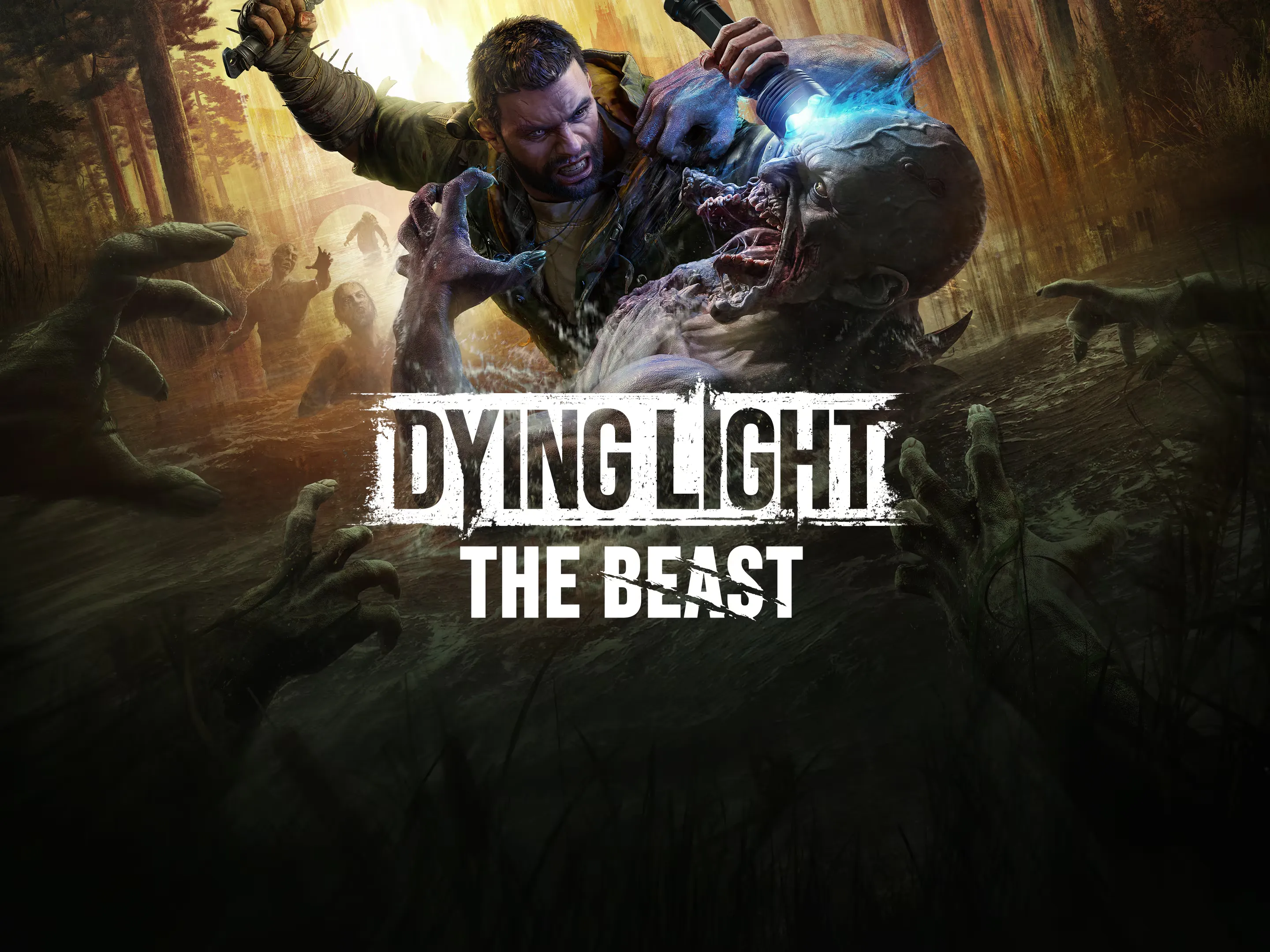
When Techland ascended the stage at Gamescom to reframe the trajectory of their flagship franchise, the industry anticipated a routine post-mortem on a delayed downloadable expansion. What materialized instead was a calculated structural pivot: the metamorphosis of Dying Light 2 Stay Human's long-gestating second downloadable content pack into *Dying Light: The Beast*. This is not merely a rebranding exercise; it is an architectural recalibration of Techland's commercial strategy, born from a confluence of corporate acquisition, engine iteration, and an urgent mandate to reclaim the psychological horror roots that defined the 2015 original.
To deconstruct *The Beast* and the subsequent horizon toward *Dying Light 3* requires examining the intersection of proprietary engine technology, narrative continuity, and structural studio dynamics. Techland has maneuvered through a turbulent decade—marked by engine migrations, pandemic-era development friction, and a majority-stake acquisition by Tencent. Yet, the studio's technical core remains stubbornly independent in its execution of first-person parkour physics and systemic sandbox design.
"We realized that what we were building had outgrown the confines of a traditional DLC container. The narrative weight of bringing Kyle Crane back required a dedicated space, unburdened by the legacy systems of Villedor."
Tymon Smektała — Franchise Director, Techland (Gamescom 2024 Architectural Briefing)
Architectural Advantage
By bypassing the generic abstraction layers found in commercial engines, Techland's C-Engine optimizes memory bandwidth specifically for streaming vast asset streaming grids, enabling high-speed vehicle navigation and dense zombie horde simulations without asset pop-in.
| Title & Release Year | Engine Architecture | Map Scale & Design | Ray Tracing Implementation | Target Framerates (Current Gen) | Combat & Physics Model |
|---|---|---|---|---|---|
| Dying Light (2015) | Chrome Engine 6 | Medium (Slums & Old Town) | None (Baked Lighting) | 60 FPS (Via 60Hz Patches) | Rigid-body physics, discrete hit-zones |
| Dying Light 2: Stay Human (2022) | C-Engine (Gen 1) | Large (Villedor Urban Biomes) | RT Shadows, Reflections, GI | 60 FPS (Performance) / 30 FPS (Quality) | Morpheme animation blending, enhanced ragdoll |
| Dying Light: The Beast (2025/2026) | C-Engine (Optimized & Expanded) | Extensive (Rural Castor Woods & Industrial Zones) | Advanced RTGI, Volumetric Shadows | 60 FPS Performance Target with VRR support | Advanced beast transformation physics, vehicular integration |
What engine does Dying Light: The Beast use?
How did Tencent's acquisition affect the development of The Beast?
Beyond the C-Engine: What Dying Light 3 Demands from Gen-10 Hardware
As the current hardware lifecycle enters its twilight, our technical telemetry at Takin Plus points toward a fundamental architectural shift for Techland's flagship franchise. While Dying Light: The Beast serves as a transitional bridge utilizing refined iterations of the proprietary C-Engine, Dying Light 3 will inevitably target the next-generation hardware paradigm—colloquially anticipated as the PlayStation 6 and Microsoft’s successor architecture.
The primary bottleneck of open-world first-person action games has never been raw graphical fidelity; it is spatial simulation logic. Current-generation Zen 2 CPU cores fundamentally constrain how many dynamic entities can execute state-machine logic simultaneously. For a franchise built on spatial awareness, verticality, and aggressive pursuit mechanics, Gen-10 architecture unlocks transformative possibilities.
Gen-10 Hardware Architecture Projections
- CPU Throughput: Next-gen Zen-based architectures will eliminate physics queuing delays, allowing full ragdoll and skeletal mesh calculations for upwards of 1,000 active agents concurrently.
- Memory Bandwidth & I/O: Direct Storage iterations combined with unified high-speed VRAM pools will eradicate asset streaming latency, enabling seamless, high-speed parkour traversals without level-of-detail (LOD) pop-in.
- Hardware-Accelerated Machine Learning: Dedicated neural processing units (NPUs) will shift AI computation cycles away from general-purpose cores.
By offloading behavioral matrices to hardware neural units, the next iteration of the infected swarm will move away from scripted pathfinding nodes. We project fully dynamic, reinforcement-learning-driven infected that analyze player traversal habits in real-time, coordinating flanking maneuvers and environmental exploitation based on spatial telemetry rather than randomized aggression loops.
Furthermore, procedural parkour routing stands to redefine level design scalability. Instead of static, hand-placed ledges and pipe layouts, Gen-10 memory bandwidth allows runtime geometry generation where urban decay dictates viable grip points, ensuring that no two rooftop escapes mirror each other.
📚 Classified & Related Dossiers in TekinGame
If you wish to explore beyond this report and delve into cybernetic frontiers and autonomous AI architectures, do not miss these three exclusive deep-dives in the Tekin Garage:
Frequently Asked Questions
Is Dying Light: The Beast free for Ultimate Edition owners?
How does The Beast connect to Kyle Crane's fate in The Following?
When can we expect the official announcement of Dying Light 3?
Will Techland abandon C-Engine for Unreal Engine 5 in Dying Light 3?
Strategic Kicker: Eastern European Studio Intelligence
As the video game industry undergoes a structural contraction, Eastern European development hubs continue to display remarkable resilience, driven by deep engineering roots and cost-efficient studio scaling. At Takin Plus, our intelligence monitoring reveals that studios like Techland, 11 bit studios, and GSC Game World are fundamentally shifting how they balance proprietary technology with commercial risk mitigation. The ongoing evolution of Techland—from a regional PC port house to an independent AAA powerhouse—illustrates a broader regional blueprint: retaining core technical sovereignty while leveraging strategic global publishing partnerships. As we track the technological horizon toward the next console generation, our telemetry will continue to decode the engine architectures, algorithmic breakthroughs, and corporate realignments defining the frontier of modern development.
HISTORICAL CHRONOLOGY // THE DYING LIGHT FRANCHISE SAGA
The Mechanics of Biological Rage: Analyzing Kyle Crane's Beast Transformation
In Dying Light: The Beast, gameplay identity undergoes a seismic mutation. For over a decade, Kyle Crane was subjected to cruel laboratory experiments at the hands of the mysterious "Baron" deep inside the secluded region of Castor Woods. These horrific gene-splicing procedures fused volatile infected DNA directly into Crane's cellular architecture. The mechanical consequence of this narrative premise is the Beast Mode System—a high-stakes risk-reward combat mechanic that completely upends the traditional balance of power between hunter and prey.
As Crane inflicts and receives damage, his internal rage meter progressively accumulates bio-kinetic energy. Upon detonation, the camera's field of view expands, audio frequencies distort into a deafening heartbeat of guttural growls, and Crane sheds his human fragility. In Beast Mode, Crane can tear through military barricades with bare fists, launch charging demolishers across courtyards, and execute devastating shockwave leaps that shatter enemy squads. However, Techland has meticulously tuned the cooldown and duration of this power to ensure that survival horror vulnerability remains the dominant gameplay tone. Over-reliance on beast transformations depletes Crane's core stamina reserves, leaving him dangerously exposed in the aftermath.
Vehicular Dynamics in Castor Woods: Re-Engineering Off-Road Physics
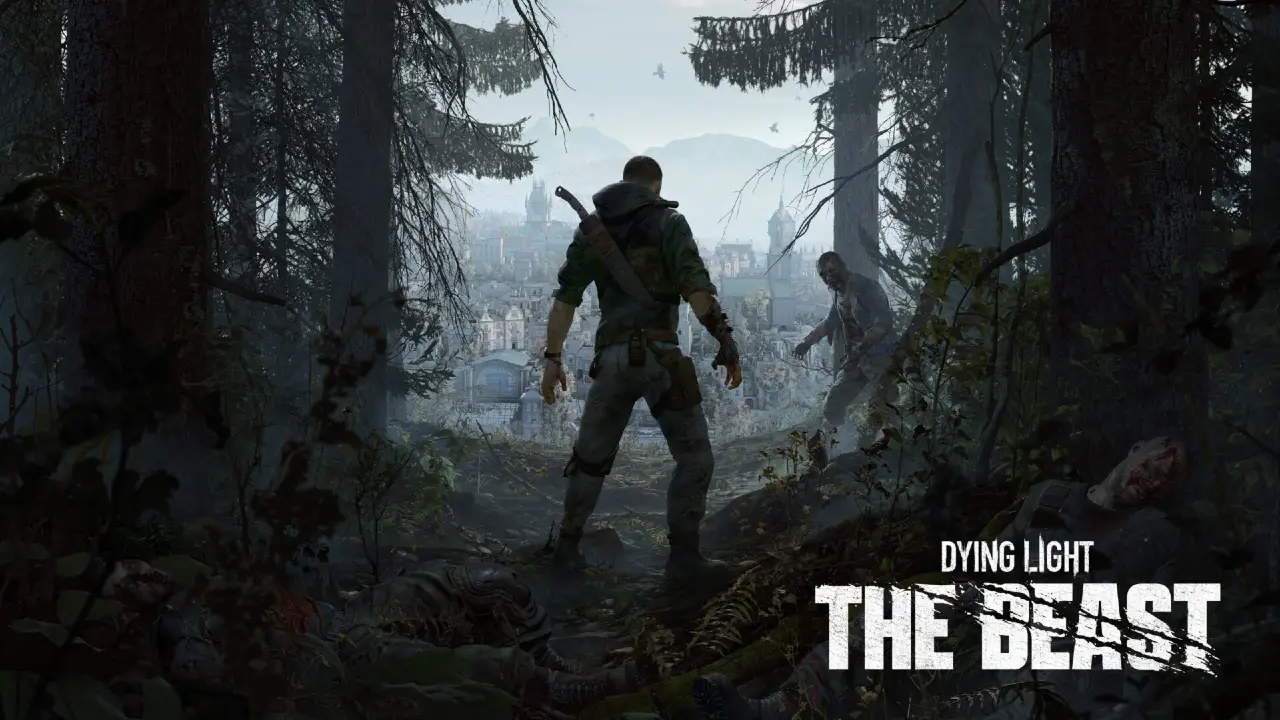
The transition from the vertical metropolis of Villedor to the sprawling, rural expanses of Castor Woods demanded a foundational re-engineering of vehicular mechanics. While The Following introduced customizable dune buggies in 2016, The Beast modernizes ground transportation using the full computational prowess of modern hardware. The new 4x4 off-road vehicles feature complex suspension modeling, dynamic tire deformation across muddy logging roads, and authentic weight distribution when navigating steep alpine gradients.
Crucially, vehicles in Castor Woods are not invincible safe havens. The terrifying noise generated by combustion engines acts as an acoustic beacon for surrounding infected hordes. Driving at night attracts aggressive Volatiles who can sprint alongside the vehicle, leap onto the hood, and shatter the windshield to drag Crane into the darkness. Players must judiciously manage fuel consumption, battery charge, and mechanical repairs using scavenged parts, transforming vehicular traversal into an intense, tactical survival negotiation.
The Evolution of Parkour Mechanics: From Grid-Locked Vaulting to Momentum Conservation
Parkour traversal has always been the structural spine of the Dying Light series, but in Castor Woods, the environment presents radical new biomechanical challenges. Unlike the predictable right angles and standardized ledge heights of Harran and Villedor, an alpine forest consists of irregular tree branches, slippery rock faces, decaying wooden watchtowers, and uneven terrain contours. To facilitate fluid locomotion across this chaotic geography, Techland's engineers overhauled the C-Engine's edge-detection and ledge-grabbing routines.
The new momentum conservation model evaluates the player's entry velocity and angle of approach when executing slides, wall-runs, and branch swings. Rather than resetting forward velocity upon grabbing an edge, Crane seamlessly carries kinetic energy through fluid vault transitions. Chaining together downhill slide-tackles, tree branch launches, and zipline dismounts creates an exhilarating rhythm of escape that rewards environmental awareness and mechanical precision. Even the classic grappling hook has been recalibrated: it no longer functions as a physics-defying Batman-style winch that drags the player in a straight line, but behaves as an authentic pendulum swing tool that obeys centrifugal force and rotational momentum.
Audio Engineering & Acoustic Propagation: The Sonic Ecology of Alpine Horror
Survival horror relies profoundly on auditory cues to cultivate dread, and The Beast introduces one of the most sophisticated acoustic propagation engines in modern gaming. In the dense wilderness of Castor Woods, sound travels dynamically according to atmospheric density, foliage thickness, and architectural geometry. Gunfire echoing across a mountain valley behaves with authentic acoustic reverberation, alerting distant nests of infected and initiating terrifying cascade pursuits.
At night, the sensory atmosphere becomes almost suffocating. Volatiles possess distinct vocal signatures ranging from low-frequency throat clicks when tracking prey to blood-curdling sonic shrieks when initiating a visual pursuit. Utilizing binaural 3D spatial audio, players can pinpoint the exact bearing and distance of approaching stalkers simply by listening to the snapping of pine twigs, rustling bushes, and heavy breathing behind timber cabin walls. This acoustic fidelity transforms mundane scavenging excursions into masterclasses in auditory suspense.
Weapon Ballistics, Firearms Return, and Survival Economy Balance

A contentious point of debate in Dying Light 2 was the initial absence of conventional firearms. In The Beast, Techland course-corrects decisively by reintegrating military-grade rifles, shotguns, and sidearms into the core arsenal, while retaining the deep tactical melee combat that defines the franchise. However, ammunition in Castor Woods is exceptionally scarce, discovered in locked military crates and abandoned survivalist bunkers.
Firearms represent an emergency tactical escalation: discharging an unsuppressed shotgun will instantly obliterate a charging mutated brute, but the acoustic signature immediately summons an overwhelming horde of fast-running Virals. Consequently, players must balance gunplay against silent melee executions. Melee weapons feature dynamic durability curves, modular electrical and incendiary blueprint modifications, and weighty impact physics that splinter wooden clubs and dull machete edges against armored infected skulls. Managing inventory weight, crafting materials, and resource reserves demands calculated forethought at every safehouse checkpoint.
Biomechanical AI Evolution: Volatiles, Virals, and Apex Mutants in Castor Woods
In addition to spatial acoustics, Techland has fundamentally rewritten the neural decision trees of infected predators. In previous installments, infected behavior was largely predictable, following basic sightline triggers and pathfinding nodes. In The Beast, the dense foliage and dark canopy of Castor Woods provide the infected with natural camouflage and vertical stalking opportunities. Volatiles operate with group coordination, communicating via low-frequency vocalizations to encircle Crane before launching coordinated ambushes from the treetops.
Furthermore, the environmental mutation system introduces terrifying new Apex Infected variants. Exposure to volatile industrial runoff in the chemical marshlands has produced grotesque behemoths capable of burrowing through loose soil, spitting corrosive bile that degrades Crane's armor, and releasing pheromone clouds that draw entire swarms of fast-moving Virals to the player's position. Defeating these monstrosities requires exploiting elemental vulnerabilities, setting oil slick traps, and using UV floodlights to strip their hardened chitin plating before delivering fatal concussive strikes.
Multiplayer Co-Op Synchronization and Cross-Progression Architecture
Four-player cooperative survival has always served as a cornerstone of the Dying Light community experience, and The Beast refines this social architecture with seamless drop-in/drop-out networking. Utilizing dedicated client-server predictive netcode, player parkour momentum, grappling hook physics, and vehicle passenger synchronization execute with zero input latency across cross-generational hardware. Co-op partners can coordinate high-speed vehicle convoys, share scavenged crafting blueprints, and combine elemental attacks to trigger devastating status effect combustions against boss encounters.
Importantly, Techland has implemented full cross-progression and shared story milestone tracking, ensuring that guest players retain all earned experience points, Beast mutation upgrades, and legendary weapon unlocks upon returning to their personal single-player campaigns. Combined with dynamic co-op scaling that intelligently adjusts infected health pools and aggression vectors based on fireteam size, cooperative excursions in Castor Woods deliver an unparalleled blend of camaraderie, high-velocity parkour thrills, and sheer heart-stopping terror.
Narrative Continuity & Emotional Stakes: Resolving the Mystery of the Baron
From a storytelling perspective, The Beast fulfills a decade-long emotional promise made to franchise devotees who were left traumatized by the ambiguous and tragic conclusion of The Following. For years, the community debated whether Crane had completely succumbed to the Harran virus or retained his humanity as a sentient volatile. The Beast directly tackles this tragic legacy, presenting a world-weary, physically scarred Crane whose inner struggle mirrors the brutal external reality of Castor Woods.

The mysterious antagonist known as the Baron provides a compelling psychological foil: a ruthless scientific mastermind obsessed with harnessing weaponized mutations for military dominance. Crane's quest is not driven by idealistic notions of saving civilization, but by a visceral desire for retributive justice and personal liberation. Through richly voiced environmental audiologs, poignant flashbacks, and intense moral interrogations, the narrative explores the heavy psychological toll of prolonged isolation and physical torment, delivering an unforgettable, mature character arc that elevates the entire franchise to new emotional heights.
Hardware Telemetry & Performance Optimization: DLSS 3.5, FSR 3.1, and 60 FPS Modes
To deliver uncompromising immersion across both PC and current-generation consoles, Techland has implemented an extensive suite of cutting-edge rendering technologies within the modern C-Engine. On PC hardware, The Beast supports NVIDIA DLSS 3.5 with Ray Reconstruction alongside AMD FSR 3.1 and Intel XeSS, allowing enthusiast rigs equipped with modern GeForce RTX and Radeon graphics cards to achieve fluid 4K frame rates exceeding 90 frames per second with full hardware-accelerated ray-traced shadows and ambient occlusion enabled.
On PlayStation 5 and Xbox Series X consoles, players are provided with three finely calibrated graphics presets: a 4K Resolution Mode running at a cinematic 30 FPS with high-density foliage rendering; a balanced Quality Mode targeting 60 FPS with dynamic resolution scaling; and a dedicated 120Hz High Frame Rate Performance Mode designed specifically for high-speed parkour purists who demand ultra-low input latency. Furthermore, seamless ultrawide monitor support (21:9 and 32:9 aspect ratios), custom field-of-view sliders, and fully remappable controller and keyboard layouts guarantee that players can tailor their survival experience to their exact ergonomic preferences.
By pairing this rigorous hardware scalability with expansive rural level design, visceral hand-to-hand combat animations, and an emotionally gripping narrative anchored by the definitive return of Kyle Crane, Dying Light: The Beast establishes itself not merely as an essential bridge toward Dying Light 3, but as one of the most mechanically accomplished and atmosphere-drenched survival horror achievements of the modern gaming era.
Cooperative Multiplayer Netcode Architecture: Seamless 4-Player Tactical Synchronization
Survival horror achieves its ultimate emotional crescendo when braved alongside trusted companions in hostile environments. In Dying Light: The Beast, Techland has thoroughly overhauled its networking pipeline, transitioning to modern server-authoritative state replication with robust client-side prediction algorithms. This eliminates legacy rubberbanding issues during high-speed parkour maneuvers through dense forest canopies, ensuring that vehicular physics, grappling hook trajectories, and volatile aggro states remain perfectly synchronized across all four connected participants without host-migration drops or quest progression corruption.
Moreover, dynamic difficulty scaling algorithms actively monitor squad firepower and tactical coordination in real time. Rather than lazily inflating bullet-sponge health values, the engine dynamically escalates infected horde densities, triggers acoustic flank attacks, and tightens night survival timers, preserving acute psychological dread whether tackling Castor Woods as a lone survivor or as a tightly coordinated four-operative fireteam.
The Road to Dying Light 3: Future Engine Architecture and Narrative Horizons
Beyond the immediate horizon of The Beast lies the grand architectural destiny of the franchise: Dying Light 3. Internal studio documentation and developer interviews confirm that Techland views The Beast as both a restorative love letter to classic fans and an invaluable technological proving ground for ninth-generation systems. The experimental features tested in Castor Woods—such as rural biome generation, advanced acoustic hunting AI, and hybrid mutation mechanics—serve as foundational building blocks for the next true mainline chapter.
Speculation regarding Dying Light 3 points toward an expansive global narrative that escapes localized quarantine zones entirely, exploring the collapse of civilizations across continents. From an engineering perspective, Techland's proprietary C-Engine is expected to complete a total migration toward software-agnostic hardware ray tracing, neural animation synthesis, and massive procedural crowd density. By reconnecting with Kyle Crane's emotional odyssey, Techland has revitalized the soul of the franchise, ensuring that the legacy of Dying Light will dominate the survival horror landscape for decades to come.
