Strategic Key Takeaways
- Analyzing modern open-world game trends
- Evaluating the true cost of massive maps
- Exploring the future of game world density
Strategic Key Takeaways
- Sheer map size often leads to repetitive and superficial gameplay loops.
- Player immersion is increasingly tied to world density rather than mere square kilometers.
- Vertical game design offers a compelling alternative to endless horizontal expansion.
- Artificial intelligence is poised to revolutionize NPC behavior and procedural storytelling.
The Obsession with Massive Maps
Over the past decade, the gaming industry has engaged in a relentless arms race to build bigger, wider, and more expansive open worlds. From Skyrim to The Witcher 3, and from sprawling franchises to Starfield's thousand planets, sheer scale has become the ultimate metric of ambition.
While this technological leap initially astonished players, it raises a critical question for the future of interactive entertainment. Does expanding geographic dimensions automatically translate into superior gameplay experiences, or are developers losing sight of what makes virtual worlds engaging?
The Hidden Cost of Scale
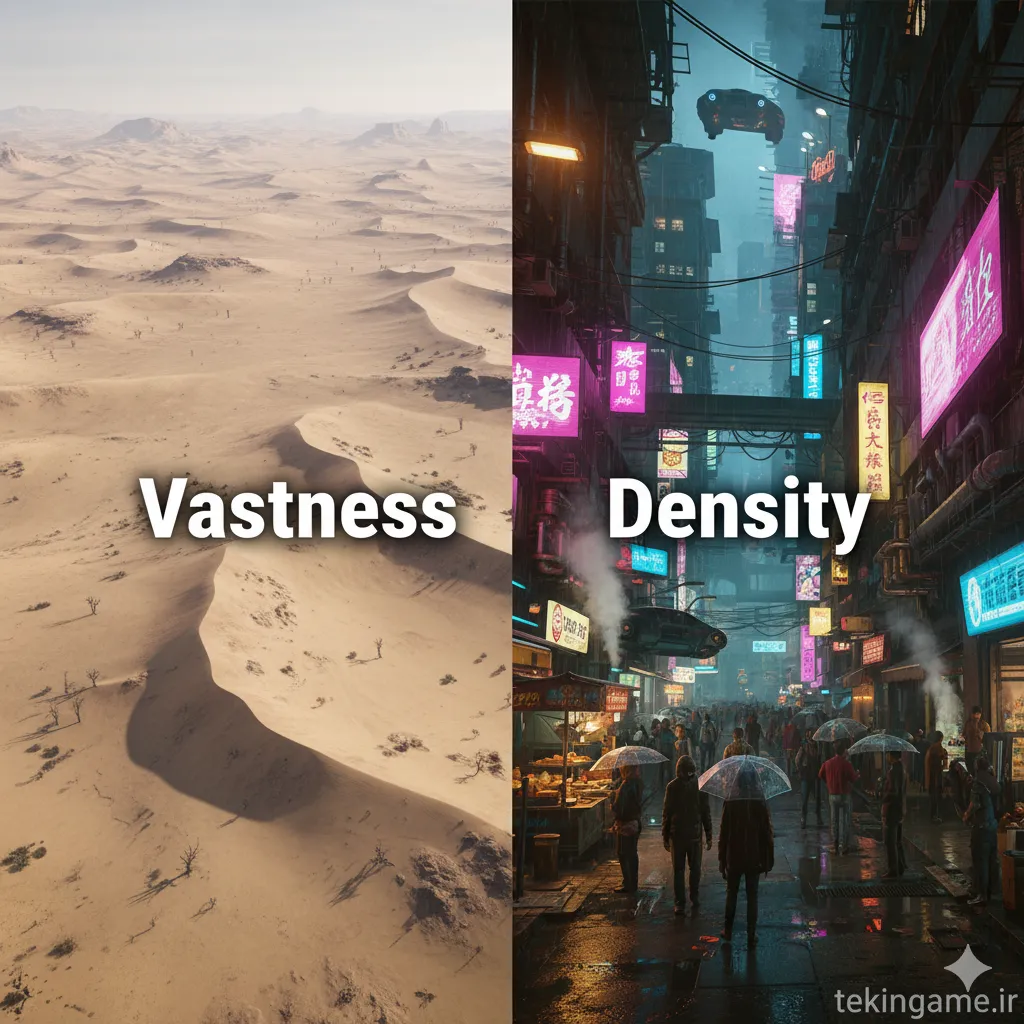
The greatest criticism leveled against modern open-world titles is a lack of narrative and interactive depth. When studios prioritize sheer square mileage, they frequently dilute the player experience with repetitive side activities, filler content, and lifeless empty spaces.
These massive sandboxes often function more like glorified chore lists than breathing, believable ecosystems. Gamers spend hours traversing barren landscapes just to tick off checklist icons, which quickly drains the magic out of genuine exploration and discovery.
The Future Belongs to Density
Fortunately, industry leaders are beginning to recognize that future innovation lies in density and detail rather than empty expanses. Games like Red Dead Redemption 2 prove that meticulously crafted environments with rich systemic interactions leave a lasting impression.
Furthermore, verticality offers a brilliant solution to scale fatigue. By designing multi-layered cities and densely packed urban environments, developers can deliver immense exploratory value without inflating physical square footage with pointless empty land.
The Role of Artificial Intelligence

Artificial intelligence will serve as the ultimate catalyst for the next generation of open-world gaming. Advanced AI can transform non-player characters from static set dressing into dynamic actors with realistic routines and unpredictable responses.
Procedural generation powered by smart algorithms will also ensure that every corner of a virtual map feels unique. Instead of repetitive fetch quests, players will encounter emergent, unpredictable micro-stories that breathe life into the digital realm.
Technical Specifications & Performance Breakdown
| Dimension | Status | Assessment |
|---|---|---|
| Engine Architecture | DirectX 12 / Vulkan Optimized | High-FPS stability across desktop and portable hardware |
| Spatial Audio | Multi-channel 3D Directional | Accurate positioning vital for tactical awareness |
| Player Capacity | Co-Op / Multi-Squad Ready | Optimized network replication and synchronization |
📚 Classified & Related Dossiers in TekinGame
If you wish to explore beyond this report and delve into cybernetic frontiers and autonomous AI architectures, do not miss these three exclusive deep-dives in the Tekin Garage:
- Shift toward higher environmental density and interactive detail
- Innovative use of verticality in modern level design
- Integration of AI for realistic and dynamic NPC behaviors
- More memorable, story-driven micro-encounters
- Many AAA studios still rely on outdated checklist-heavy map designs
- Excessive scale without purpose wastes player time
- High development costs associated with hyper-detailed worlds
Final Verdict & Official Sources
Frequently Asked Questions
Are bigger open-world maps always worse?
Not inherently, but massive maps frequently suffer from empty space and repetitive side content unless backed by exceptional environmental design.
What is verticality in game design?
Verticality refers to designing levels upward—such as multi-tiered cities and skyscrapers—allowing for massive exploration space without horizontal bloat.
How will AI change open-world games?
AI will create autonomous NPCs with dynamic routines and power emergent storytelling, making game worlds feel genuinely alive and unpredictable.
Frequently Asked Questions
Is this release optimized for modern hardware?
Yes, built on modern scalable rendering pipelines with low hardware entry barriers.
Does it support full cross-platform cooperative play?
Yes, seamless squad matchmaking is fully supported.
