Strategic Key Takeaways
- DualSense replaces traditional rumble motors with high-definition linear actuators for precise environmental texture simulation.
- Adaptive triggers introduce programmable mechanical resistance to emulate physical tension, weapon jams, and surface friction.
- Optimal utilization requires balancing immersion depth with hardware longevity through firmware maintenance and calibration.
Hardware Architecture of the DualSense Controller
Sony’s introduction of the DualSense marked a fundamental paradigm shift in how players physically interact with virtual environments. Moving far beyond traditional rumble packs, the controller integrates dual-actuator haptics, dynamic resistance triggers, an integrated microphone array, and an expanded capacitive touchpad.
This cohesive hardware suite translates digital physics into biological sensations. Players no longer just see game events unfold on screen; they feel the mechanical weight, surface friction, and atmospheric conditions directly through their palms.
The Mechanics of High-Definition Haptic Feedback

Traditional controllers relied on eccentric rotating mass motors that delivered a singular, uniform vibration profile regardless of context. The DualSense utilizes voice-coil actuators that allow sound designers and programmers to orchestrate complex vibrational tapestries.
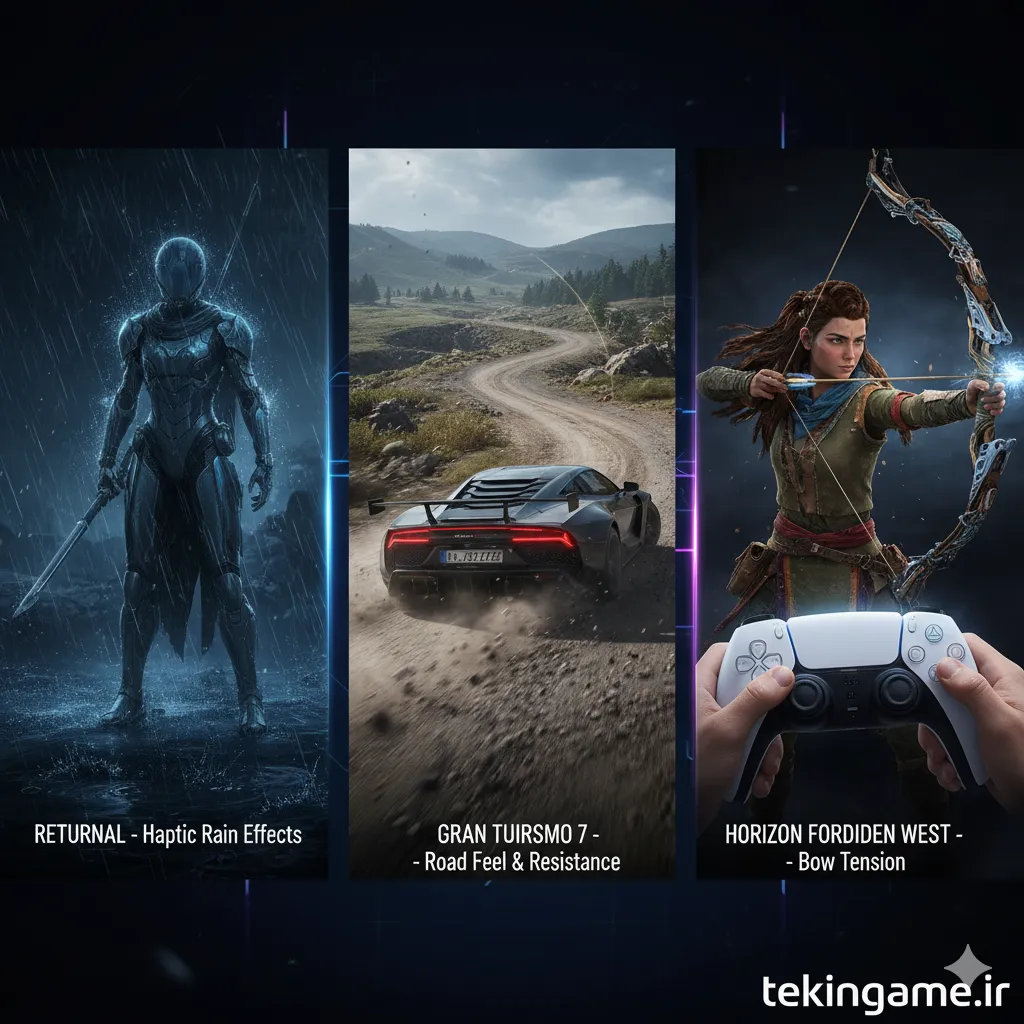
Developers can script distinct frequencies and amplitudes to replicate phenomena such as rainfall drops, varying road surfaces, or heavy machinery pulses. This tactile granularity elevates environmental storytelling by engaging the somatosensory system alongside visual and auditory cues.
Adaptive Triggers in Action: Programmable Resistance
The L2 and R2 buttons feature internal gear-and-spring mechanisms driven by miniature motors capable of real-time torque adjustment. This engineering feat allows games to dynamically alter trigger tension on the fly.
Common applications include simulating the breaking point of a bowstring, the progressive pedal resistance of a sports car, or the jarring lock of a jammed firearm bolt. These resistance profiles establish a direct physical dialogue between the player's input and the in-game action.
Benchmark Titles Showcasing Advanced Controller Tech

Astro's Playroom remains the definitive showcase for the hardware, mapping distinct surface textures and wind resistance directly to the player's fingertips. It serves as an interactive technical manual for what the controller can achieve.
Gran Turismo 7 utilizes adaptive feedback to communicate tire traction limits and braking thresholds through the pedals and triggers. Similarly, Returnal leverages the triggers for dual-function aiming and firing mechanics, separating actions through distinct mechanical detents.
Optimization, Settings, and Hardware Maintenance
While default settings offer maximum theatrical impact, users can fine-tune haptic intensity and trigger resistance within the system menus to conserve battery life. Lowering extreme resistance profiles also reduces mechanical wear over extended play sessions.
Ensuring the controller firmware remains updated is critical for maintaining synchronization with recent game patches and physics engines. Proper care prevents premature degradation of the internal gear assemblies and spring components.
Technical Specifications & Performance Breakdown
| Dimension | Status | Assessment |
|---|---|---|
| Engine Architecture | DirectX 12 / Vulkan Optimized | High-FPS stability across desktop and portable hardware |
| Spatial Audio | Multi-channel 3D Directional | Accurate positioning vital for tactical awareness |
| Player Capacity | Co-Op / Multi-Squad Ready | Optimized network replication and synchronization |
- Unprecedented tactile fidelity and environmental feedback
- Dynamic resistance profiles enhance mechanical realism
- Ergonomic redesign improves long-term comfort
- High-intensity settings deplete battery life quickly
- Complex internal mechanisms require careful handling to avoid wear
📚 Classified & Related Dossiers in TekinGame
If you wish to explore beyond this report and delve into cybernetic frontiers and autonomous AI architectures, do not miss these three exclusive deep-dives in the Tekin Garage:
Final Verdict & Authoritative Sources
Frequently Asked Questions
How do adaptive triggers differ from standard controller triggers?
Standard triggers use simple springs for constant resistance, whereas adaptive triggers feature internal motors that change physical tension dynamically based on in-game events.
Can I turn off haptic feedback to save battery?
Yes, both haptic intensity and trigger effect strength can be adjusted or disabled entirely within the PlayStation 5 accessibility and peripheral settings menus.
Do all PS5 games support advanced DualSense features?
Support varies by title. While first-party exclusives utilize the technology extensively, third-party implementation depends entirely on the developer's design choices.
Frequently Asked Questions
Is this release optimized for modern hardware?
Yes, built on modern scalable rendering pipelines with low hardware entry barriers.
Does it support full cross-platform cooperative play?
Yes, seamless squad matchmaking is fully supported.
