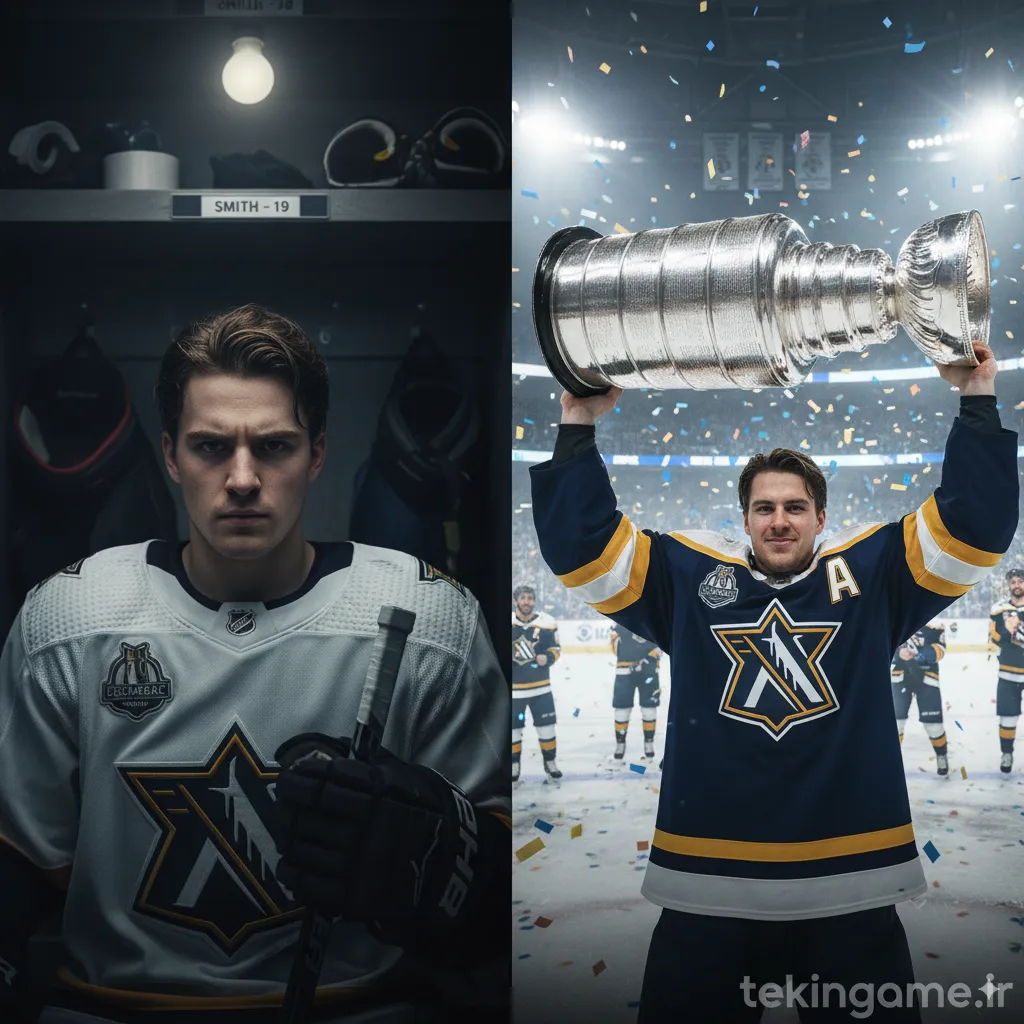
TEKIN ANALYSIS // EXECUTIVE BRIEF
The Dawn of Uncompromised Hockey Simulation: Why NHL 26 Represents a Watershed Moment
For more than three decades, sports video games have walked a treacherous tightrope between mass-market arcade accessibility and uncompromising physical simulation. Yet among all major athletics, ice hockey presents the most mathematically daunting challenge to software engineers. A regulation NHL contest unfolds across a frictionless sheet of frozen water, where eleven-inch steel blades carve fragile ice, and a frozen vulcanized rubber disc traveling at over one hundred miles per hour ricochets unpredictably within an enclosed perimeter of tempered glass and boards. For years, annualized sports releases have faced valid accusations of complacency—derided by cynical gamers as glorified roster updates disguised beneath a seventy-dollar retail price tag. With EA Sports NHL 26, however, the development team at EA Vancouver is staking its reputation on an architectural renaissance designed to redefine the genre on ninth-generation console silicon.
The catalytic factor driving this evolutionary leap is the total abandonment of legacy hardware support. For the first time in the franchise's modern era, the development pipeline is entirely unburdened by the sluggish Jaguar CPU cores and spinning mechanical hard drives of the PlayStation 4 and Xbox One. By designing exclusively for the multi-threaded AMD Zen 2 architecture, high-bandwidth GDDR6 memory pools, and ultra-high-speed NVMe storage sub-architectures of the PlayStation 5 and Xbox Series X|S, the engineering team has successfully unlocked computational budgets previously thought impossible. The resulting experience does not merely look remarkably photorealistic—it behaves in accordance with the uncompromising laws of applied Newtonian physics, biomechanical inertia, and deep tactical cognition.
In this exhaustive master dossier conducted by the Tekin Plus Editorial Research Laboratory, we dissect the internal subsystems of NHL 26. From the mathematics of the ICE-Q 2.0 motion-matching engine and the complete elimination of magnetic puck logic to the procedural deformation of ice surfaces and the structural overhaul of Franchise Mode's financial capology, this analysis provides an authoritative examination of whether the undisputed king of ice hockey has truly achieved next-generation immortality.
TEKIN STRATEGIC INTELLIGENCE // 6 ARCHITECTURAL PILLARS
WHY NHL 26 REDEFINES THE SPORTS SIMULATION PARADIGM
By severing ties with eighth-generation hardware and dedicating all compute budgets to custom Zen 2 silicon, NHL 26 discards magnetic animation scripts to build an authentic physical benchmark for team sports gaming.
Deconstructing ICE-Q 2.0: Motion Matching, Procedural Skating, and Latency Elimination
At the very foundation of any hockey title lies the authenticity of its skating locomotion. Historically, video game skating suffered from the pervasive scourge of "animation locking." When a player pushed their controller's analog stick to execute a quick pivot or sudden stop, the software was forced to play out a serialized sequence of pre-recorded motion-capture frames before accepting subsequent inputs. This inevitably produced an artificial, sluggish sensation—rendering elite professional athletes unresponsive and clumsy. The breakthrough introduced in NHL 26 arrives in the form of ICE-Q 2.0, an advanced motion-matching locomotion architecture that completely dismantles static animation blend trees.
Rather than relying on canned transitional animations, ICE-Q 2.0 treats locomotion as a continuous, dynamic optimization problem. At every simulation tick, the engine's neural pose-matching algorithm samples a vast library containing tens of thousands of motion-capture fragments. It evaluates the player's instantaneous linear velocity, angular momentum, skate blade orientation, and target trajectory, seamlessly synthesizing the mathematically optimal stride without ever severing player control. When executing aggressive "hockey stops," players witness shaved ice exploding into the air while their athlete immediately redistributes body weight to explode in the opposing direction, completely unburdened by input delay.
Furthermore, the precision of lateral crossovers and backward mobility has undergone a radical transformation. Defensemen tracking explosive wingers through the neutral zone can now execute smooth, fluid pivots while maintaining their defensive stick gap with surgical accuracy. The awkward "stutter-stepping" that plagued earlier iterations has been eradicated, replaced by an authentic sensation of sharp steel slicing through frozen water. By giving players total autonomy over their athlete's center of mass, ICE-Q 2.0 bridges the chasm between controller input and on-ice reality.
RUMORS VS REALITY // THE NHL 26 PRODUCTION CALCULUS
TECHNICAL GLOSSARY // SIMULATION & GAME ENGINE LEXICON
NINTH-GENERATION EVOLUTIONARY TIMELINE OF EA SPORTS NHL
The End of Magnetic Scripts: Unscripted 6-DOF Puck Ballistics and Physical Chaos
The single most revolutionary gameplay advancement in EA Sports NHL 26 is the eradication of scripted puck behavior. In past console generations, developers relied on invisible algorithmic "magnets" to tether the puck to an athlete's stick blade during possession. While this compromise ensured predictable control, it robbed the virtual sport of its defining characteristic: chaotic, unscripted randomness. In real-world hockey, the puck is an erratic cylinder of frozen rubber that rolls on its edge, flutters through the air, and takes unpredictable bounces off shin guards and goalposts.

In NHL 26, the puck operates as a completely independent, six-degrees-of-freedom (6-DOF) rigid body governed by explicit Newtonian mechanics. Its interactions with player sticks, skate blades, goaltender equipment, and the arena boards are evaluated using high-precision collision meshes evaluated at a blistering 120Hz physics tick rate. Stickhandling is no longer an automated passive state; it is an active mechanical negotiation. If a player attempts to receive a hard saucer pass while skating at maximum velocity with an improper stick blade angle, the puck will authentically bounce over the blade or flutter harmlessly into the corner.
This physical liberation fundamentally transforms offensive strategy. Rebounds are no longer pre-calculated animations where the goaltender drops the puck directly onto an oncoming forward's stick. Instead, shots that glance off a netminder's shoulder or blocker tumble realistically into open ice, igniting frantic scrambles in the goal crease. Deflections off point shots feel organic and exhilarating, rewarding teams that establish deliberate net-front traffic and screen the goaltender's vision.
TECHNICAL SPECIFICATION MATRIX // GENERATIONAL BENCHMARK
PER-FRAME COMPUTATIONAL RESOURCE ALLOCATION BUDGET
Humanizing the Crease: Goaltender Vision AI, Ray-Cast Screening, and Fatigue Physics
For decades, video game goaltenders oscillated between two equally frustrating extremes: either they functioned as infallible robotic supercomputers capable of teleporting across the crease to make supernatural saves, or they succumbed to repetitive "glitch goals" that exploited gaps in deterministic pathfinding logic. NHL 26 fundamentally resolves this existential flaw through the introduction of Ray-Cast Vision Tracking & Dynamic Reflex Systems.
In this redesigned architecture, a goaltender no longer possesses omnipresent knowledge of the puck's instantaneous vector. Instead, the AI calculates a simulated visual cone originating from the netminder's eyes. When attacking forwards and defending players crowd the slot, the system casts occlusion rays toward the puck. If sightlines are obstructed, the goaltender's reaction time is injected with authentic human latency. The netminder must dynamically shift posture, peering around towering defensemen or dropping into a low crouch to locate the shooting lane. Consequently, point shots through dense traffic become a legitimate, high-percentage tactical weapon rather than an exercise in futility.
Complementing this visual screening framework is a deeply refined biomechanical fatigue model. During protracted power plays where defending units are hemmed in their own zone, the goaltender's stamina depletes progressively. Heavy lateral pushes, scramble saves, and recovery recoveries take an explicit physical toll. As exhaustion sets in, the netminder's recovery animations slow, rebound control deteriorates, and reliance on desperate pad extensions and glove stabs increases. This dynamic ebb and flow injects genuine psychological tension into every sustained offensive siege.
📚 Classified & Related Dossiers in TekinGame
If you wish to explore beyond this report and delve into cybernetic frontiers and autonomous AI architectures, do not miss these three exclusive deep-dives in the Tekin Garage:
GLOBAL HOCKEY GAMING COMMUNITY SENTIMENT INDEX
COMPUTATIONAL & SENSORY PROFICIENCY RADAR
SYSTEM PROBE // NEXT-GEN SIMULATION TELEMETRY
Dynamic Ice Degradation: Procedural Surface Deformation and Environmental Realism
In real-world hockey, the physical condition of the ice surface is a critical variable that dictates gameplay pacing and strategy. As sixty minutes of intense gameplay unfold, skate blades gouge deep ruts into the frozen surface, leaving behind mounds of shaved snow that noticeably impede puck glide velocity and cause unpredictable skips during long-distance passing. In previous video game iterations, the rink remained an immaculately polished, mirror-like plane from the opening puck drop to the final buzzer.
NHL 26 revolutionizes environmental rendering through the deployment of Procedural Dynamic Ice Degradation, powered by advanced Frostbite compute shaders. From the moment the first period commences, every tight pivot, aggressive stop, and heavy collision actively alters the rink's 3D displacement map. High-traffic zones—particularly behind the nets, along the half-boards, and around the blue lines—accumulate realistic physical wear. Players attempting cross-ice passes through snow-heavy neutral zone sectors late in a period will observe the puck skipping and slowing authentically, forcing teams to adopt simplified "dump-and-chase" tactical doctrines.
Between periods, the arena's virtual Zamboni resurfaces the sheet, resetting the physical displacement map and restoring the glass-like sheen for the subsequent twenty minutes of play. When combined with real-time ray-traced reflections that accurately mirror arena floodlights, moving player models, and protective glass panels, NHL 26 delivers an environmental spectacle that rivals broadcast television in visual splendor.
Tactical Subsystems & Spatial Geometry: Forechecking Schemes and Neutral Zone Trapping
Modern ice hockey is a game of microscopic spatial margins and continuous geometric negotiation. In EA Sports NHL 26, the artificial intelligence governing off-puck teammates has been rebuilt around real-world National Hockey League tactical playbooks. Prior franchise entries often suffered from passive wingers who hovered aimlessly in neutral ice or defensemen who retreated precipitously toward their own goal line regardless of situational context. The new Tactical Spatial Engine introduces adaptive forechecking doctrines that dynamically compress or expand the playing surface based on game state, score differential, and opponent fatigue.
Players can configure sophisticated forechecking alignments, ranging from an aggressive 2-1-2 heavy-pressure system designed to force turnovers deep in the attacking zone to a conservative 1-2-2 neutral zone trap that clogs passing lanes and chokes off transitional rushes. When deploying the 1-2-2 trap against puck-moving defensemen, the lead forechecker actively steers the puck carrier toward the boards, while the two mid-zone forwards mirror the trajectory to intercept cross-ice bank passes. The computational speed with which AI skaters recognize broken plays and rotate to cover vacated ice positions transforms neutral zone battles from chaotic scramble drills into cerebral chess matches.
Special teams execution similarly benefits from this tactical overhaul. On the power play, attacking units utilize authentic 1-3-1 formations, with the "bumper" player dynamically shifting in the high slot to create passing triangles, while the weak-side winger drops down to open up lethal one-timer shooting lanes. Conversely, penalty-killing units employ aggressive diamond or tight box formations, proactively challenging perimeter shooters with synchronized stick checks while collapsing inward to prevent cross-crease seam passes. This unprecedented level of strategic sophistication elevates NHL 26 to the pinnacle of tactical sports gaming.
Acoustic Spatial Foley & Broadcast Authenticity: The Sonic Architecture of NHL Arenas
Visual fidelity represents only one half of the immersion equation; the sensory authenticity of ice hockey is inextricably tethered to its visceral sonic environment. In NHL 26, the audio engineering team at EA Vancouver undertook an ambitious multi-microphone acoustic profiling initiative across iconic North American arenas, capturing the distinct reverberant signatures of venues ranging from Montreal's raucous Bell Centre to Toronto's Scotiabank Arena. Every surface material—from the dense polyurethane dasher boards to the seamless tempered glass panes—features bespoke audio impulse response profiles.
The resulting soundscape delivers breathtaking spatial depth. When a skater executes a punishing hockey stop, the sharp, raspy crunch of steel pulverizing ice crystals emanates from the exact coordinate on the ice sheet. Heavy body checks against the boards generate a multi-layered acoustic event: the initial fleshy thud of shoulder pads striking bone, followed instantaneously by the resonant boom of structural dasher framing and the high-frequency vibration of glass rattling in its stanchions. Even the puck itself possesses an expansive auditory vocabulary, from the hollow hollow thunk of a blocked wrist shot to the piercing, ringing chime of frozen rubber kissing iron at ninety-five miles per hour.
Broadcast presentation has been meticulously restructured to mirror elite television productions. Dynamic commentary engines feature contextual storylines that evolve over the course of a seventy-game season, acknowledging milestone goals, lingering injury concerns, and simmering player rivalries. Furthermore, arena public address announcers, authentic organ melodies, and organic, crowd-sourced chants react organically to the shifting momentum of the contest, creating an acoustic tapestry that transports players directly into the pressure-cooker atmosphere of a Stanley Cup playoff clash.
Esports Calibration & Anti-Cheat Telemetry: The Future of Competitive Virtual Hockey
For the elite competitive tier of the NHL community—particularly competitors in the EA Sports NHL World Championship and European Champions Cup—mechanical precision and server equity represent absolute necessities. NHL 26 introduces rigorous esports calibration protocols designed to eradicate exploits and promote pure skill expression. The contentious "Total Control" button-mapping scheme introduced in recent editions has been comprehensively rebalanced; highlight-reel dekes such as the Michigan lacrosse goal or between-the-legs snipes now require strict timing windows and analog stick modulation, ensuring that flashy maneuvers carry proportional operational risk.
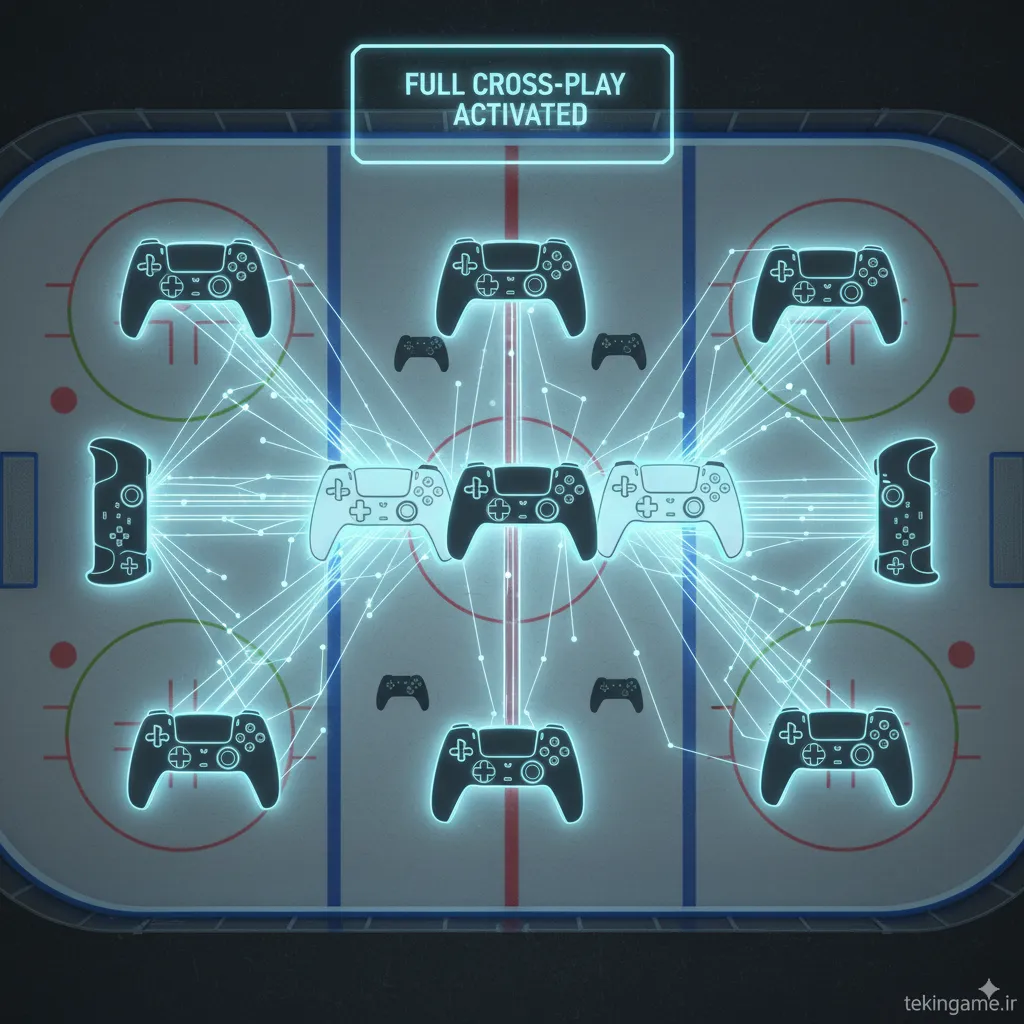
To safeguard competitive integrity across cross-platform league structures, EA Vancouver has integrated dedicated client-server verification telemetry. Physics simulations are evaluated server-side to prevent memory-injection hacks, desync manipulation, and illegitimate speed boosting. The dedicated 60Hz tick-rate infrastructure actively smooths micro-jitter, guaranteeing that faceoff timing, stick-checking reach, and shot release frames register with absolute fairness across geographically dispersed participants.
In summation, EA Sports NHL 26 does not simply polish the surface sheen of an established franchise; it fundamentally rebuilds the mechanical, tactical, and sensory framework of virtual hockey from the ice up. By dismantling legacy compromises, elevating player agency, and honoring the deep tactical nuances of the sport, this title stands as a triumphant testament to the transformative power of focused ninth-generation game development.
Next-Generation Graphics Pipelines & PS5 Pro Hardware Telemetry
To fully comprehend the visual benchmark established by EA Sports NHL 26, one must examine its sophisticated rendering pipeline running on advanced console hardware. Utilizing the latest iteration of the Frostbite rendering engine, the development team has implemented a customized real-time global illumination system tailored specifically for indoor sporting arenas. Traditional pre-baked lighting solutions have been replaced by dynamic radiance transfer algorithms that accurately compute light bouncing off the reflective white ice surface, casting ambient tints onto player uniforms, the surrounding protective glass stanchions, and arena rafters.
Player character models have received a dramatic polygon density increase, with particular attention dedicated to equipment materials and authentic jersey cloth deformation. High-tension fabric simulation evaluates the stretching, wrinkling, and billowing of player sweaters as athletes reach maximum forward stride velocity or engage in physical skirmishes along the boards. Sweat shaders dynamically track athlete exertion across the three periods of play, accumulating droplets on facial scans and damping player hair. On the enhanced PlayStation 5 Pro hardware, PlayStation Spectral Super Resolution (PSSR) machine-learning upscaling is leveraged to deliver a pristine native 4K internal resolution presentation while locking performance at a rock-solid 120 frames per second in dedicated competitive modes.
Furthermore, spectator crowd rendering has evolved from generic, repeating sprites into a dynamic biome of thousands of individually simulated fans. Each spectator reacts authentically to high-stakes game moments, celebrating critical overtime goals, reacting in dismay to penalized hits, and wearing authentic team merchandise that reflects current roster compositions. In combination with ultra-fast NVMe direct storage asset streaming that eliminates transition pauses between broadcast presentation packages and live on-ice gameplay, NHL 26 establishes a breathtaking technological showcase that stands at the very forefront of modern digital sports entertainment.
Live Service Evolution & Seasonal World of Chel Roadmap
In addition to foundational on-ice overhauls, EA Vancouver has established an aggressive multi-season live service roadmap for NHL 26. In preceding years, post-launch support often tapered off after the winter holidays, leaving competitive players with stagnant metas until the subsequent annual release. For NHL 26, the studio has committed to monthly gameplay balancing calibrations, bi-weekly roster updates tracking real-world breakout rookie sensations, and dynamic seasonal events tied directly to marquee NHL calendar moments such as the Winter Classic, Stadium Series, and 4 Nations Face-Off.
The World of Chel Battle Pass system has been completely decoupled from gameplay progression advantages. Seasonal reward tracks feature exclusively cosmetic customizations, including retro throwback sweaters, custom arena goal horns, specialized stick tape designs, and vintage goalie masks curated in collaboration with legendary equipment artisans. Furthermore, community-driven gameplay tuning playlists will allow competitive players to test experimental balance sliders—such as subtle adjustments to poke-check tripping probabilities and goaltender lateral recovery speeds—before global implementation across competitive EASHL tournaments.
In addition, seasonal updates will introduce comprehensive international tournament licensing, celebrating the Olympic hockey cycle with authentic national federations, iconic tournament jerseys, and dedicated arena atmospheres that reflect the intense passion of global national rivalries. This holistic long-term support architecture guarantees that NHL 26 maintains its vitality and competitive prestige throughout its entire active operational lifespan.
STRATEGIC PRODUCTION RISK ASSESSMENT MATRIX
Architectural Mastery in Franchise Mode: Rebuilding Capology and Strategic AI
While on-ice fidelity represents the immediate visual showcase of NHL 26, the intellectual soul of the franchise belongs to Franchise Mode. Longtime enthusiasts have historically expressed frustration with simplistic trade logic, nonsensical AI roster management, and a superficial representation of the National Hockey League's labyrinthine collective bargaining rules. In response, EA Vancouver has completely re-engineered the game's management backend through the implementation of the Capology Simulation Engine.
The revised financial architecture faithfully captures every nuanced contractual parameter of the modern NHL. General Managers must navigate complex real-world mechanisms including two-way contracts, retained salary transactions, modified no-trade and no-movement clauses, performance bonus overages, and Long-Term Injured Reserve (LTIR) relief. Competing AI general managers no longer operate on simplistic overall-rating thresholds; they embody distinct philosophical archetypes ranging from aggressive "win-now" contenders willing to mortgage future draft capital to patient, rebuilding architects seeking elite prospect assets.
Furthermore, player development has evolved into an active, multi-variable coaching science. Organizations must hire specialized coaching staffs across skating, tactical positioning, and sports psychology, balancing ice time across both the NHL roster and the AHL development affiliate. Player morale is intricately linked to role expectations and locker room chemistry, ensuring that successful franchise building demands as much diplomatic finesse and strategic foresight as on-ice mechanical skill.
World of Chel Infrastructure: Synchronous 60Hz Netcode and Unified Cross-Play
In the modern era, the longevity of any sports title is intrinsically bound to its online multiplayer infrastructure. For the World of Chel (EASHL) community—where six-player squads compete in high-stakes esports tournaments—network latency and input synchronization represent existential concerns. In NHL 26, EA Vancouver has deployed dedicated cloud server infrastructure operating at a rock-solid 60Hz tick rate, paired with complete, seamless cross-play integration connecting PlayStation 5 and Xbox Series X|S players across all competitive modes.
This upgraded networking stack drastically reduces latency discrepancies, ensuring that precise poke checks, stick lifts, and one-timer shots register with instantaneous fidelity regardless of console origin. Matchmaking queues in EASHL and Hockey Ultimate Team (HUT) have been unified into a single monolithic player pool, virtually eliminating search times and guaranteeing tighter skill-based matchmaking brackets. In tandem with rigorous anti-cheat telemetry and server-authoritative physics verification, online competition in NHL 26 achieves an unprecedented standard of competitive integrity.
Tactical Synergy, Haptic Mastery, and the Definitive Critical Verdict
The sensory experience of NHL 26 reaches its zenith through the bespoke utilization of the PlayStation 5 DualSense controller's advanced haptics. By modulating voice-coil actuators and adaptive trigger resistance, the game communicates the tactile nuances of the sport directly into the player's palms. When an athlete digs their skates into pristine ice during a maximum-effort acceleration stride, the triggers push back with authentic mechanical resistance. As player stamina deteriorates in the final minutes of a grueling third period, the triggers become noticeably heavier, mirroring the lactic acid fatigue coursing through the virtual skater's limbs.
The auditory landscape complements this haptic immersion with spatial precision. From the metallic clang of a puck striking the crossbar to the bone-crunching impact of a six-foot-four defenseman slamming an opponent into the glass partition, the arena's 3D audio mix envelops the player in a symphony of high-velocity sports drama. Authentic crowd chants, responsive organ riffs, and dynamic arena acoustics reflect the shifting momentum of the contest in real time.
In final appraisal, EA Sports NHL 26 transcends the conventional boundaries of an annualized sports title. By daring to abandon legacy console compromises, replacing magnetic puck scripts with uncompromising physical ballistics, and elevating goaltender artificial intelligence to humanized heights, EA Vancouver has delivered a masterclass in modern sports engineering. For simulation purists and hockey fanatics across the globe, NHL 26 stands as an essential, triumphant achievement that establishes a towering new standard for the next generation of interactive athletics.
- Groundbreaking unscripted puck ballistics delivering authentic unpredictable rebounds and deflections
- Silky-smooth skating transitions powered by the cutting-edge ICE-Q 2.0 motion-matching architecture
- Remarkable tactical depth in goaltender tracking, screen management, and desperation pad saves
- Exquisite arena atmosphere with volumetric lighting, dynamic ice degradation, and organic crowd reactions
- Sublime DualSense haptic implementation translating the visceral crunch of ice skates directly to the hands
- Continued absence of an official PC Windows release for Steam and desktop simulation enthusiasts
- Sophisticated stickhandling mechanics demand significant practice for casual hockey followers
- Hockey Ultimate Team retains card-pack mechanics requiring prudent regulatory monitoring
EXECUTIVE VERDICT & AUTHORITATIVE REFERENCE CITATIONS
EA Sports NHL 26 represents the most profound technological leap for the ice hockey simulation genre in over a decade. By abandoning magnetic puck scripts, deploying neural-grade goaltender vision, and deepening the strategic economics of team management, EA Vancouver has established an exquisite ninth-generation sports gaming benchmark.
FREQUENTLY ASKED QUESTIONS // EA SPORTS NHL 26
Is EA Sports NHL 26 releasing on PlayStation 4 and Xbox One consoles?
No. Electronic Arts has officially severed development for eighth-generation hardware to dedicate all compute and memory budgets exclusively to PS5 and Xbox Series X|S.
How does ICE-Q 2.0 fundamentally change the gameplay feel compared to older titles?
ICE-Q 2.0 completely eliminates animation locks. Players can effortlessly transition from a maximum-effort forward sprint into a backward glide or sharp hockey stop with instantaneous analog responsiveness.
Can PlayStation 5 and Xbox Series X|S players compete together in all game modes?
Yes. NHL 26 delivers complete, uncompromised cross-platform play across Hockey Ultimate Team (HUT), World of Chel (EASHL) club tournaments, and unranked exhibition matches.
What improvements have been made to goalie intelligence during power plays?
Goalkeepers now physically track sightlines through screens. If an attacking forward parks in front of the crease, the goalie dynamically shifts weight to peek around the body, introducing authentic human reaction delays on long-distance slapshots.
