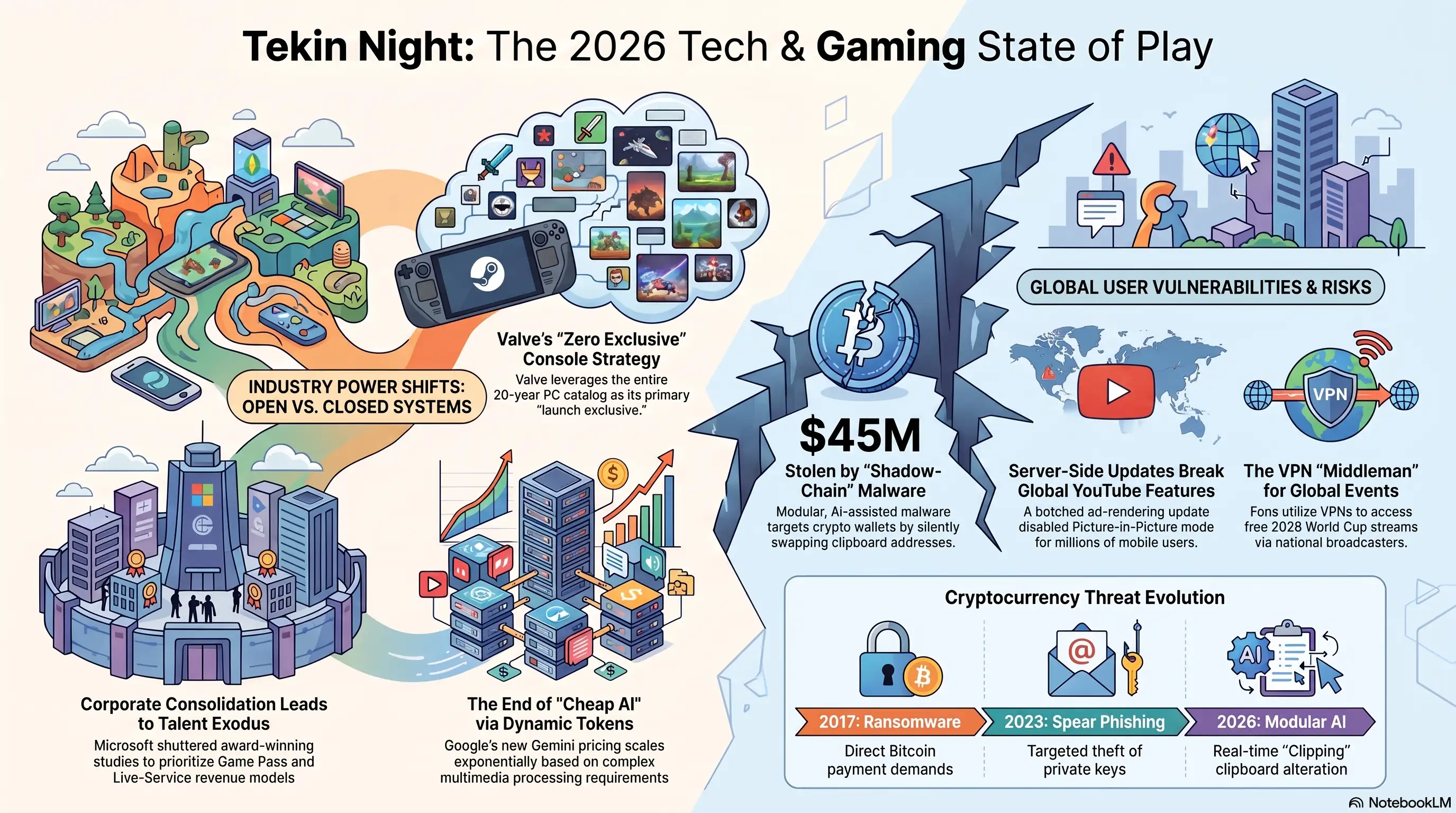
Tekin Night: The July 19, 2026 Hot Recap
- 🎮Valve's Strategy- Why the Steam Machine has no exclusives
- 🎧Global YouTube Bug- PiP breaks on mobile devices worldwide
- 🚀Crypto Threat- New malware discovered by Kaspersky
- 🗡️Gemini Rates- Google's new AI pricing structure
- 📰World Cup Final- How to watch Spain vs Argentina for free
- ⚔️Xbox Layoffs- A bitter end for influential game creators
Good evening, Tekin readers! We are spending the final hours of Sunday, July 19, 2026, observing a technology and gaming industry filled with contradictions and controversial decisions. While some companies are relentlessly pursuing monopolistic practices, giants like Valve have chosen an entirely different path. Simultaneously, the cybersecurity world faces severe new threats targeting cryptocurrency investors, and millions of YouTube users worldwide are wrestling with a highly frustrating playback bug.
At Tekin Night, our mission is not merely to recount the daily news but to dissect its hidden layers. Tonight, we explore how executive decisions in massive tech corporations can fundamentally transform the everyday user experience. From deconstructing the console market to the devastating aftermath of mass layoffs in game development studios, every news item is a piece of a much larger puzzle dictating the future of our digital lives.
Alongside specialized tech and gaming news, given the intense excitement surrounding the World Cup Final between Spain and Argentina, we have prepared a comprehensive guide on how to watch this historic event completely free of charge. Join us as we conclude the day with deep analysis and a unique perspective on the events shaping our world.
Tonight's Developments at a Glance
- Valve officially announced that the Steam Machine will have zero exclusive games, declaring the entire PC catalog as its launch exclusive.
- YouTube's Picture-in-Picture (PiP) feature completely broke down on millions of iOS and Android devices.
- Kaspersky issued a severe security warning regarding advanced malware explicitly targeting decentralized crypto wallets.
- Google restructured its pricing model for commercial use of the Gemini AI model, shocking many developers.
Valve's Massive Gamble: The Steam Machine Needs No Exclusives
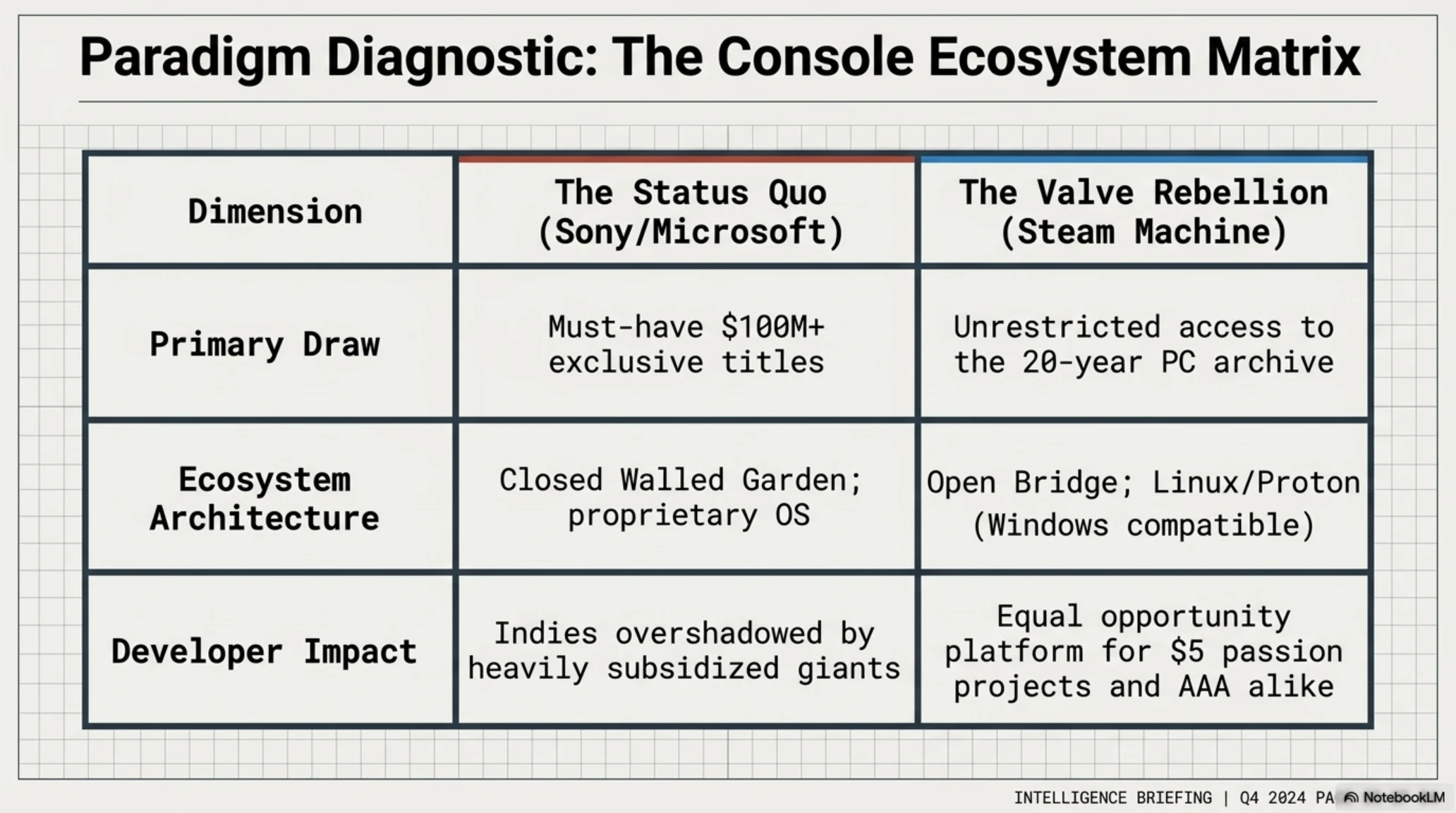
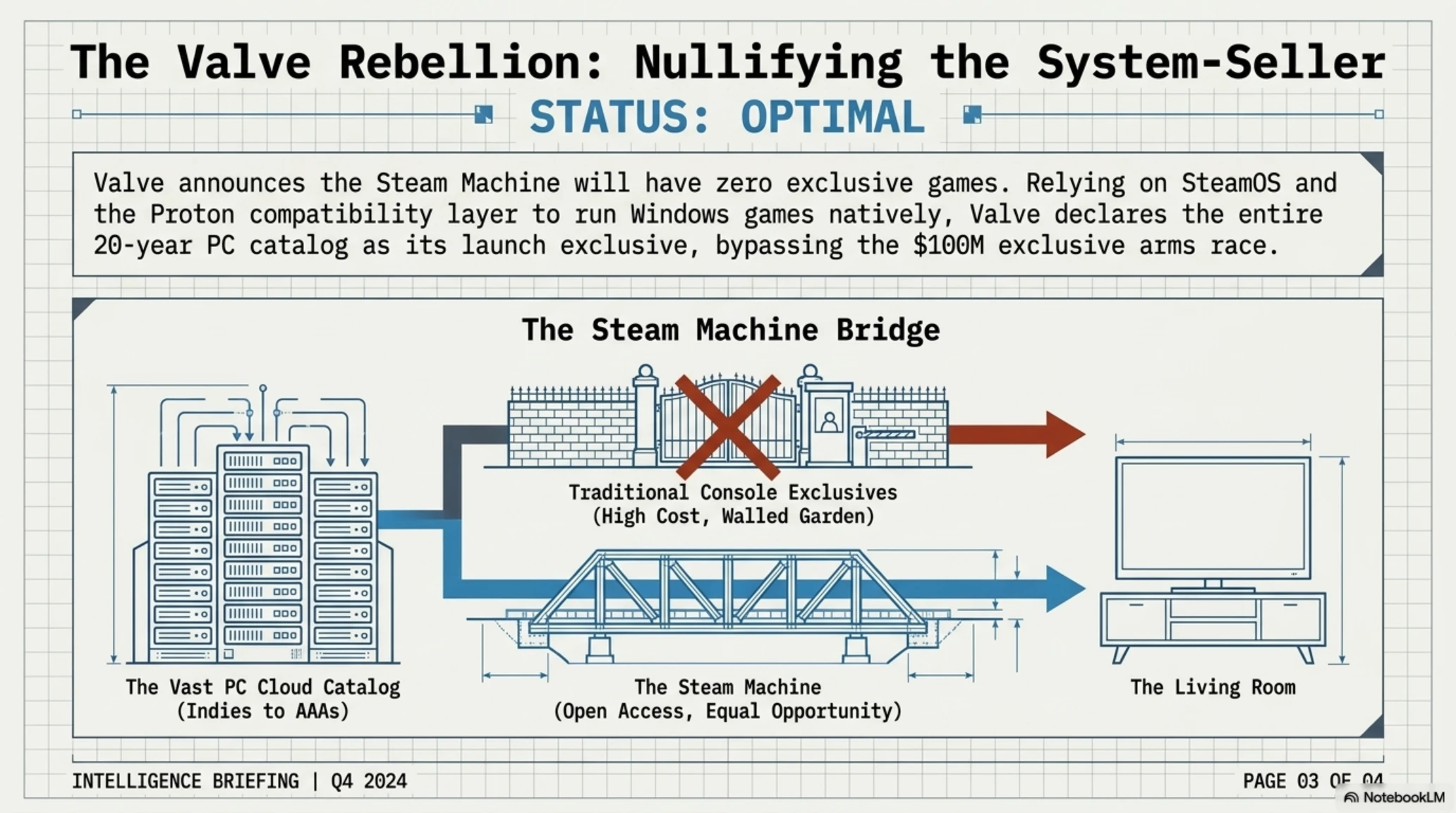
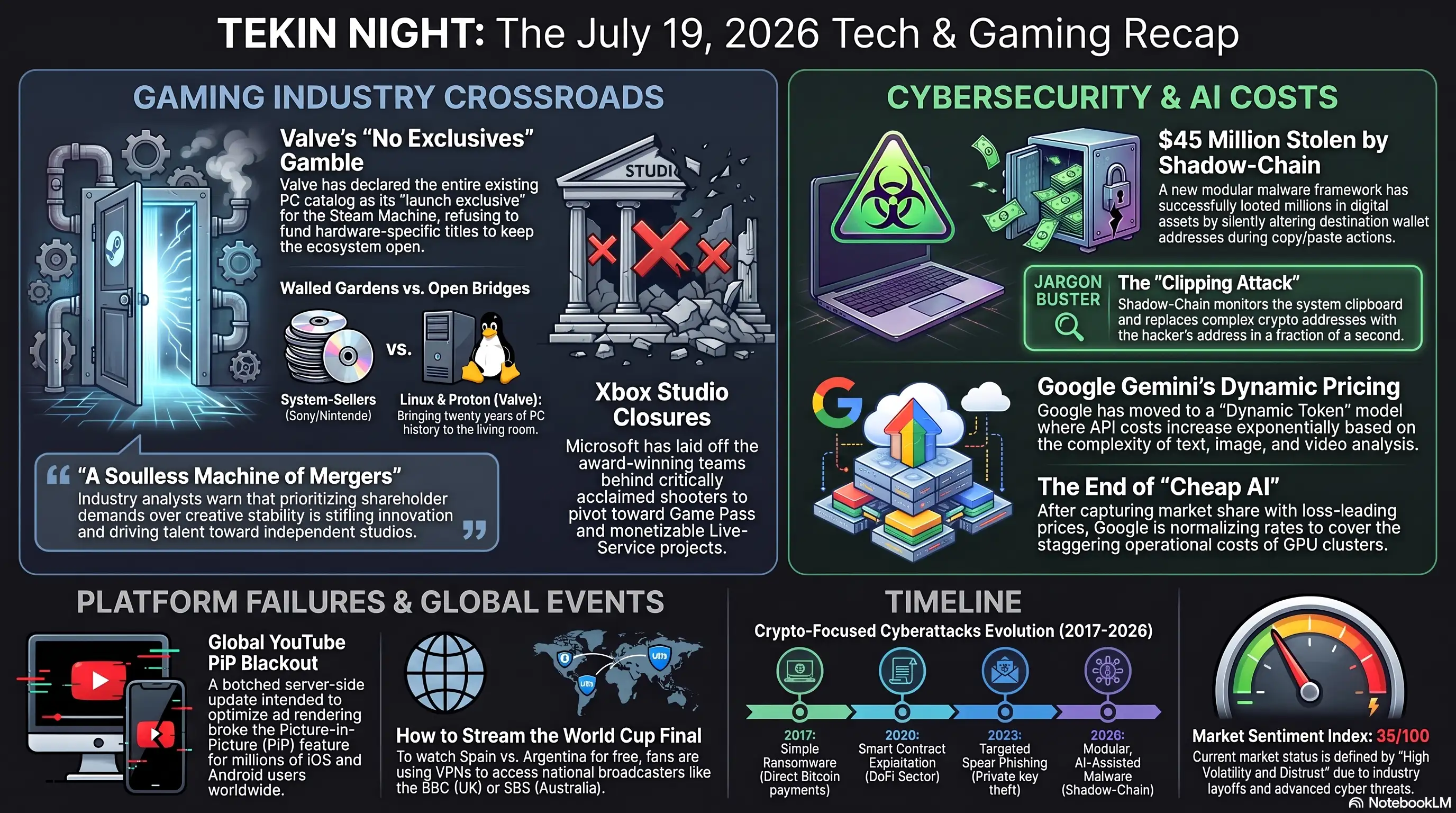
If you examine the history of video game consoles, the formula for success has always been identical: powerful hardware combined with must-have exclusive games. Nintendo thrives on Mario, and Sony dominates with God of War. However, a new report from Rock Paper Shotgun reveals that Valve intends to completely obliterate this unwritten rule with their upcoming Steam Machine console. Company executives have officially stated that no studio will receive funding to develop exclusive titles for the hardware.
Valve's reasoning might seem insane at first glance, but upon closer inspection, it reveals a brilliantly executed strategy. They firmly believe that "the entire, massive catalog of the PC platform is our launch exclusive." When a player has unrestricted access to tens of thousands of indie titles, beloved classics, and massive AAA blockbusters that cannot run with such freedom on any other platform, why spend hundreds of millions of dollars producing a single new exclusive? This approach is the exact antithesis of the strategies employed by Sony and Microsoft.
The Steam Machine is fundamentally a bridge, not a walled garden. Valve doesn't just want to sell a new console; they want to drag the open PC ecosystem straight into the living room and onto massive television screens. Building on the phenomenal success of the Steam Deck, the company has proven beyond a shadow of a doubt that Linux and the Proton compatibility layer can run Windows games with unparalleled quality. Eliminating the massive production costs of exclusive games allows Valve to sell the hardware at a much more aggressive, consumer-friendly price point.
Of course, this strategy is not without significant risks. Traditional console buyers are conditioned to expect flashy, highly marketed titles on launch day. The absence of a defined "System-Seller" might negatively impact sales during the crucial early months. However, Valve is not a publicly traded company; they do not need to generate quarterly financial reports to appease impatient shareholders. They possess the rare luxury of playing the long game.
Ultimately, this decision represents a massive victory for independent developers. They are no longer forced to compete against heavily subsidized exclusive giants for visibility. The Steam Machine is poised to be a platform where all games, from $100 million cinematic masterpieces to $5 pixel-art passion projects, hold equal value and opportunity to shine.
Global YouTube Blackout: When Picture-in-Picture Breaks
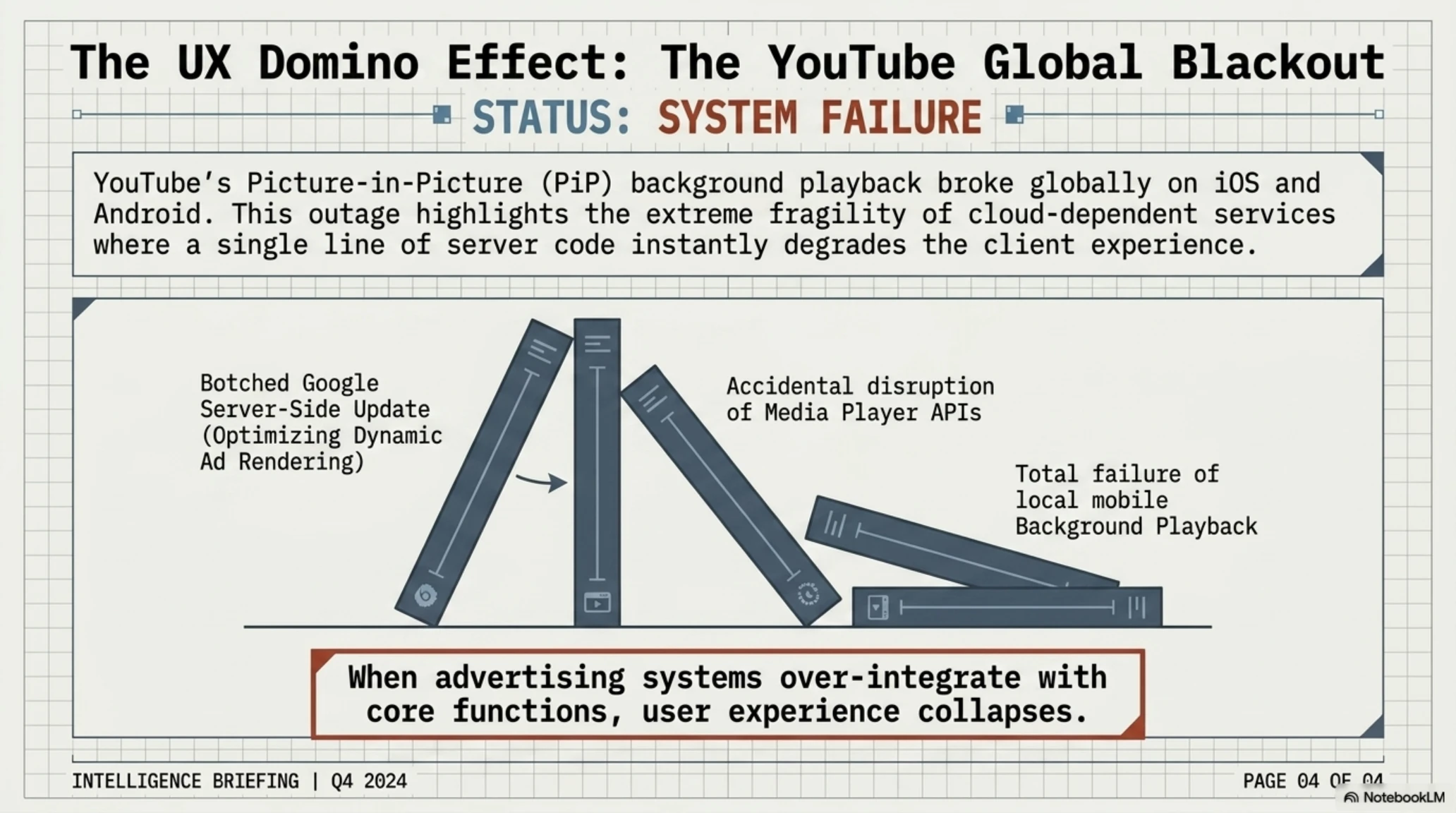
One of the features that has become an inseparable part of the modern smartphone user experience in recent years is Picture-in-Picture (PiP) mode. However, since the early hours of this morning, numerous reports have surfaced on 9to5Mac and Reddit indicating that this critical feature has completely stopped working on the mobile version of YouTube, affecting both iOS and Android users globally.
Users who were accustomed to texting or browsing other apps while watching podcasts or educational videos suddenly found that exiting the YouTube app caused video playback to halt entirely—even for Premium subscribers. This bizarre bug has infuriated not only free users but also those who pay a hefty monthly subscription, as background playback is considered one of the primary selling points of YouTube Premium.
Initial investigations by independent developers suggest that the issue stems from a botched server-side update. In an attempt to optimize the code responsible for dynamic ad rendering, Google inadvertently disrupted the API associated with background playback on mobile operating systems. This incident vividly demonstrates how the over-integration of advertising systems with the core media player can lead to an absolute user experience disaster.
The YouTube support team confirmed via the X platform that they are aware of the issue and are actively working on an emergency patch. Nevertheless, the prolonged nature of this outage has driven a significant number of users to seek out alternatives, such as modified versions of the app or open-source clients that bypass official restrictions.
This event serves as a bitter reminder for tech corporations: when you break a paid feature, user loyalty evaporates at an unimaginable speed. YouTube must deploy a fix immediately, before more users migrate to ad-blockers and unofficial third-party clients, causing long-term damage to their ecosystem.
Alarm Bells for Traders: Uncovering a Dreadful Crypto Malware Network
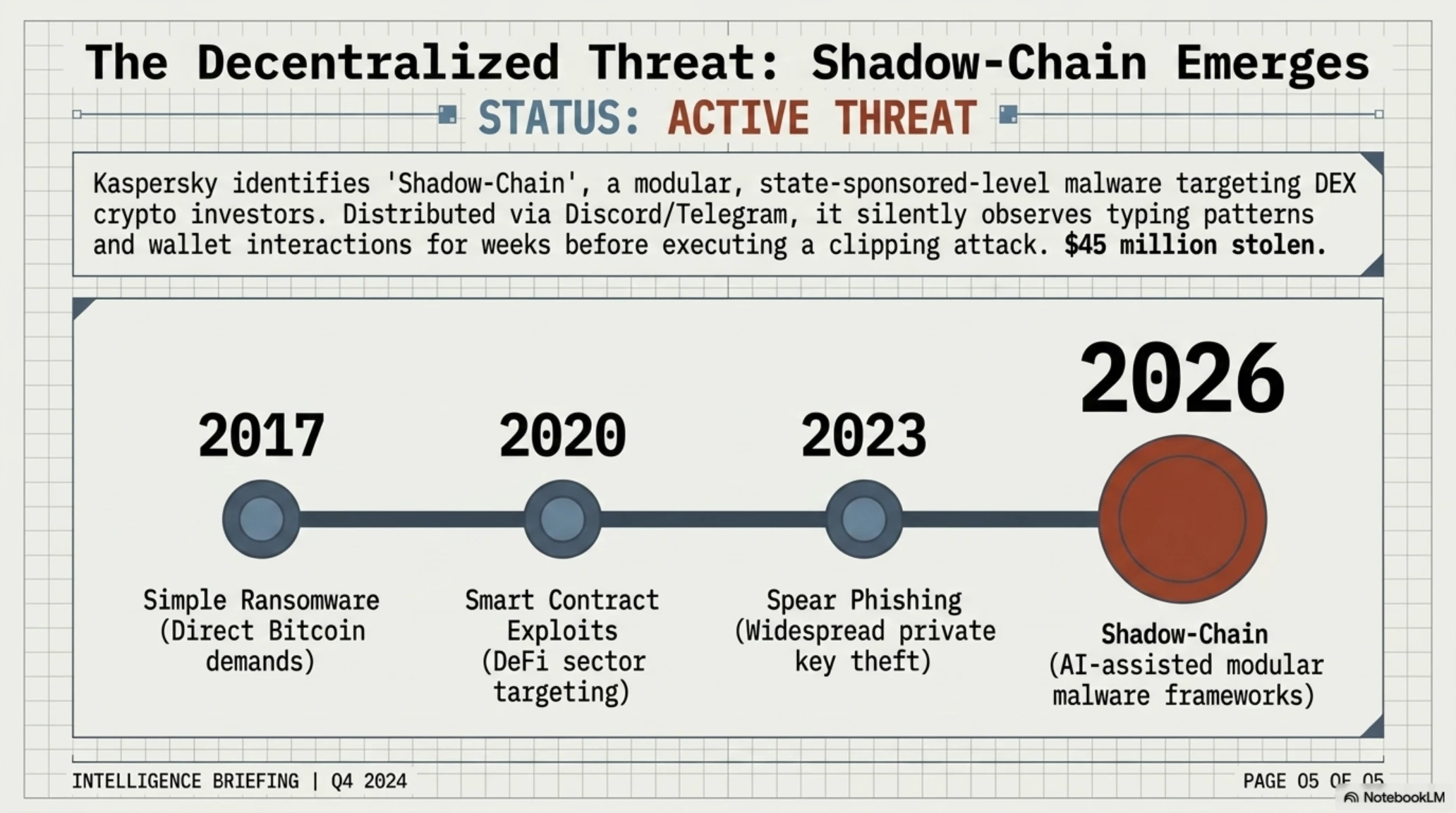
In the world of cryptocurrency, security has always been a vital concern, but a new report from the security firm Kaspersky, published in CoinTelegraph, has revealed the terrifying dimensions of a highly organized threat. The security firm's research team has discovered a sophisticated malware framework specifically designed to target crypto investors and users of decentralized exchanges (DEXs).
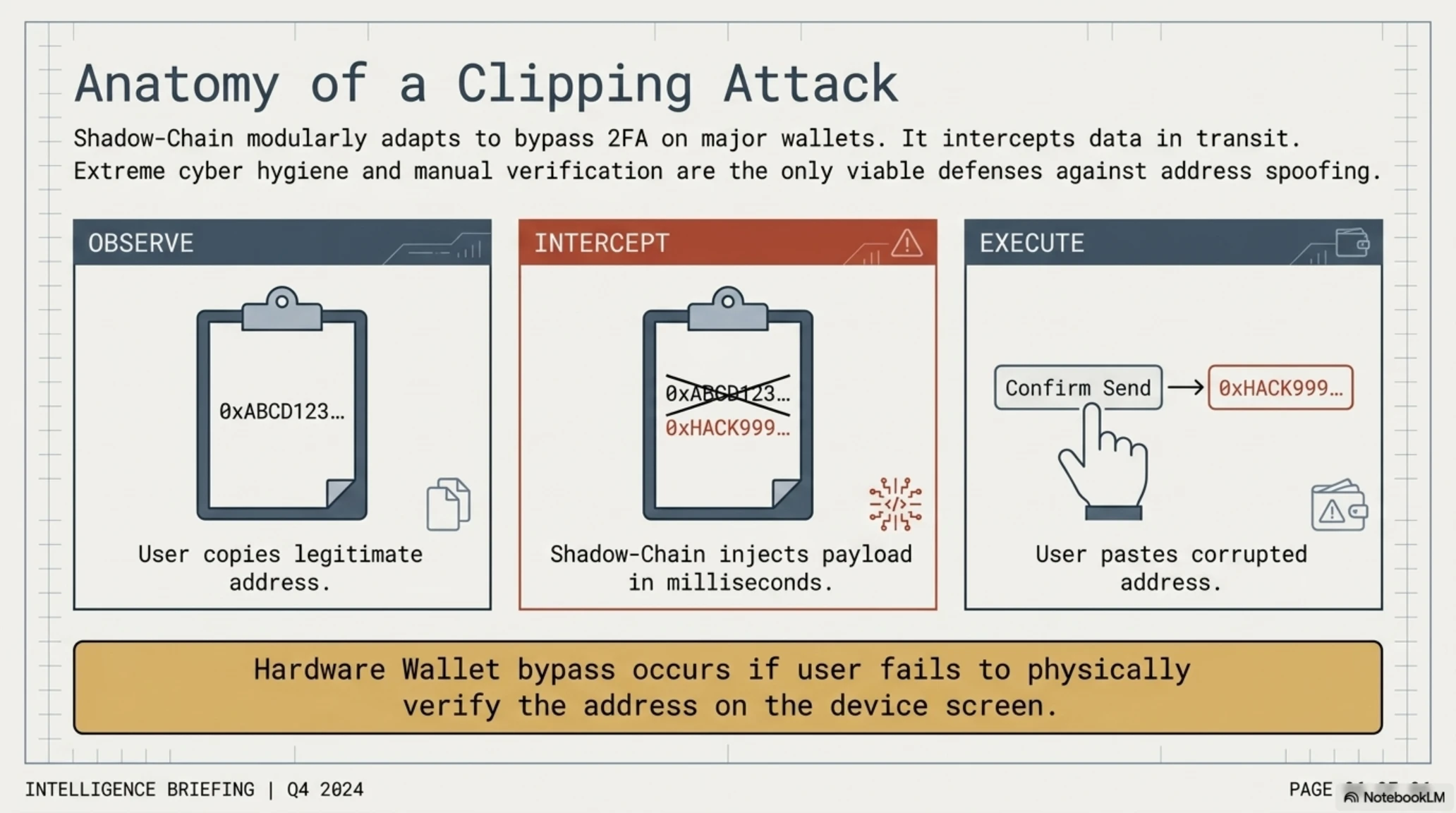
This malware, temporarily dubbed 'Shadow-Chain', is primarily distributed through fraudulent browser extensions and highly targeted phishing links on social media platforms, particularly Discord and Telegram. Its methodology is devilishly clever; unlike older malware that immediately locked a system or demanded ransom, this tool remains entirely silent on the victim's system for weeks. It monitors typing patterns, observes wallet interactions, and waits for the perfect moment to alter the destination wallet address during a routine copy/paste action.
Even more terrifying is that this framework is designed in a highly modular fashion. This means the hackers can activate specific payload extensions depending on the type of wallet the victim uses (such as MetaMask, Trust Wallet, or even connected hardware wallets) to attempt to bypass Two-Factor Authentication (2FA). This level of sophistication strongly suggests that we are dealing with a state-sponsored hacking team or a heavily funded cyber cartel rather than lone wolves.
Jargon Buster: Clipping Attack
According to Kaspersky analysts, over $45 million in digital assets have already been stolen through this network, with the traces subsequently erased using sophisticated cryptocurrency mixing services. For everyday users, the only effective countermeasure is practicing extreme cyber hygiene: refusing to install unknown extensions, ignoring links for 'free airdrops', and meticulously verifying the first and last five characters of a wallet address before physically confirming any transaction.
These events have reignited the fierce debate surrounding regulation and the creation of decentralized insurance solutions within the DeFi space. As long as the entire burden of security rests on the shoulders of the end-user, hackers using advanced social engineering and AI-driven malware will always remain one step ahead. Exchanges and wallet providers must implement much stronger, foolproof warning mechanisms directly into their user interfaces.
Timeline: The Evolution of Crypto Cyberattacks
- 2017: Simple ransomware attacks demanding direct Bitcoin payments.
- 2020: Sophisticated exploitation of Smart Contracts in the booming DeFi sector.
- 2023: Widespread theft of private keys via highly targeted Spear Phishing campaigns.
- 2026: Deployment of modular, AI-assisted malware frameworks like Shadow-Chain.
Google's New AI Pricing: The Hidden Costs of Gemini
As artificial intelligence tools become an indispensable part of the workflow for developers and corporations worldwide, tech giants are aggressively altering their monetization models. According to a comprehensive report by Wired, Google has recently announced new pricing tiers for utilizing the Gemini Language Model API (specifically the Pro and Ultra versions), sending shockwaves and a wave of anxiety through the startup community.
Google's new pricing system operates on a 'Dynamic Token' model. This means the cost of processing inputs and outputs is no longer a flat rate; instead, it increases exponentially depending on the complexity of the processing required (for example, simultaneously analyzing text, high-resolution imagery, and video). Startups whose entire business models were built on the assumption of free or cheap Google APIs are now facing devastating, multi-thousand-dollar server bills at the end of the month.
One of the most significant challenges for developers is the sheer lack of transparency in how multimedia tokens are calculated. When a developer feeds a ten-minute video into Gemini for analysis, Google calculates the cost based on the number of frames extracted and processed—a metric that is incredibly difficult for the end-user to track or predict accurately. This opacity has forced many companies to scramble for third-party monitoring dashboards just to avoid bankruptcy.
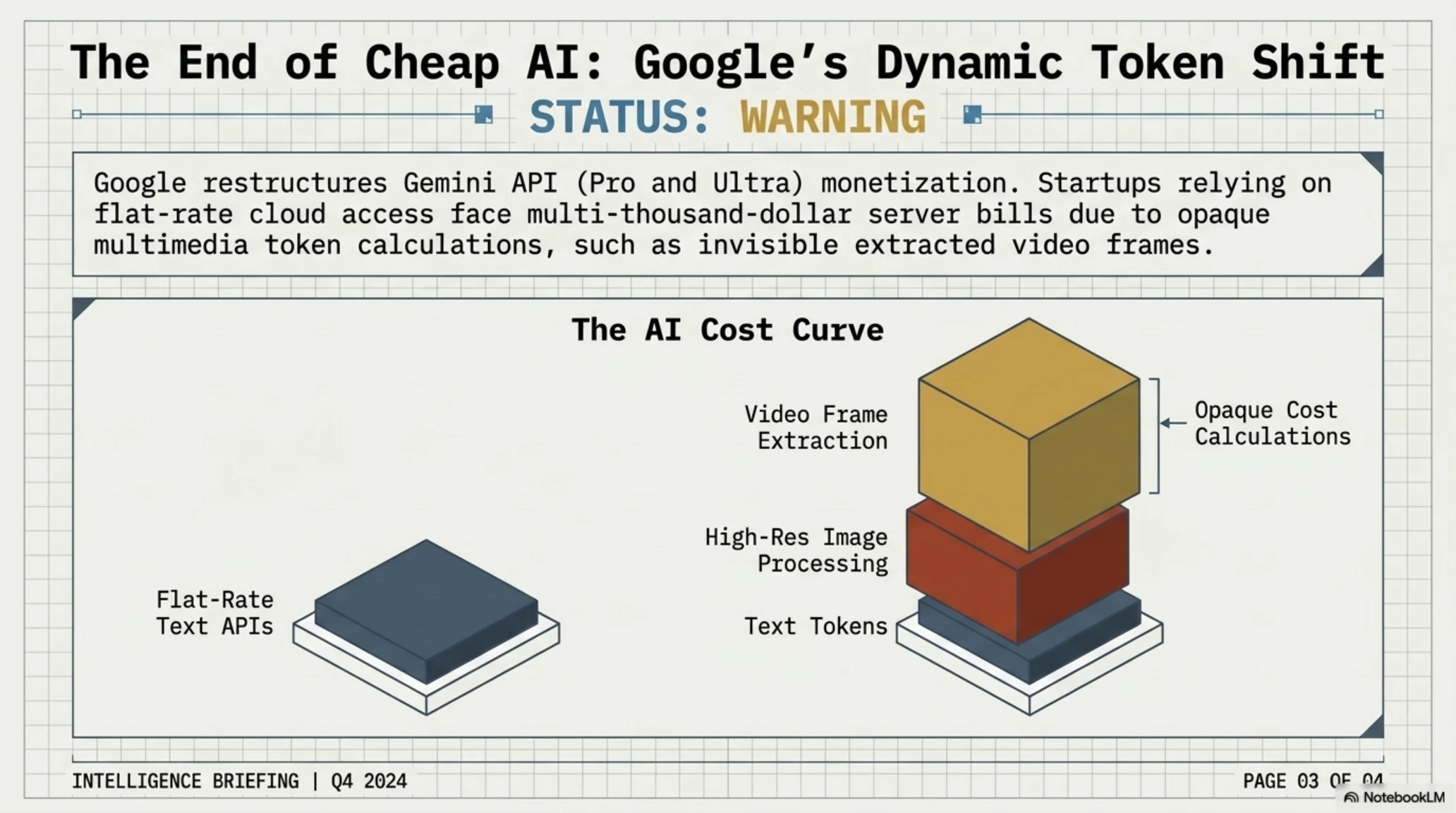
In response to the mounting criticism, Google has hastily introduced new tools within the Google Cloud Console dashboard to track costs in real-time. With these tools, users can set strict daily spending limits to automatically sever access if usage exceeds a certain threshold, preventing astronomical bills. However, this solution is widely viewed as a temporary band-aid for a much deeper structural problem regarding predictable cloud pricing.
These dramatic changes clearly signal the end of the golden era of 'cheap AI'. Following a classic Silicon Valley playbook, Google initially applied immense pressure on competitors like OpenAI through hyper-aggressive, loss-leading pricing. Now that they have captured a significant market share, they are aggressively normalizing prices to cover the staggering operational costs of their massive server farms and GPU clusters. Developers have no choice but to adapt their revenue models to this harsh new reality.
The Green Pitch Fever: A Guide to Watching the World Cup Final for Free
We are merely hours away from the kickoff of the most significant sporting event of the year. The Spanish national team, boasting a formidable mix of young prodigies and seasoned veterans, is set to face off against the reigning champions, Argentina, in the highly anticipated 2026 World Cup Final. According to a trending report on Mashable, millions of fans across the globe are frantically searching for the best, most reliable, and cheapest methods to stream this historic match, leading to an intense viewership war among streaming platforms.
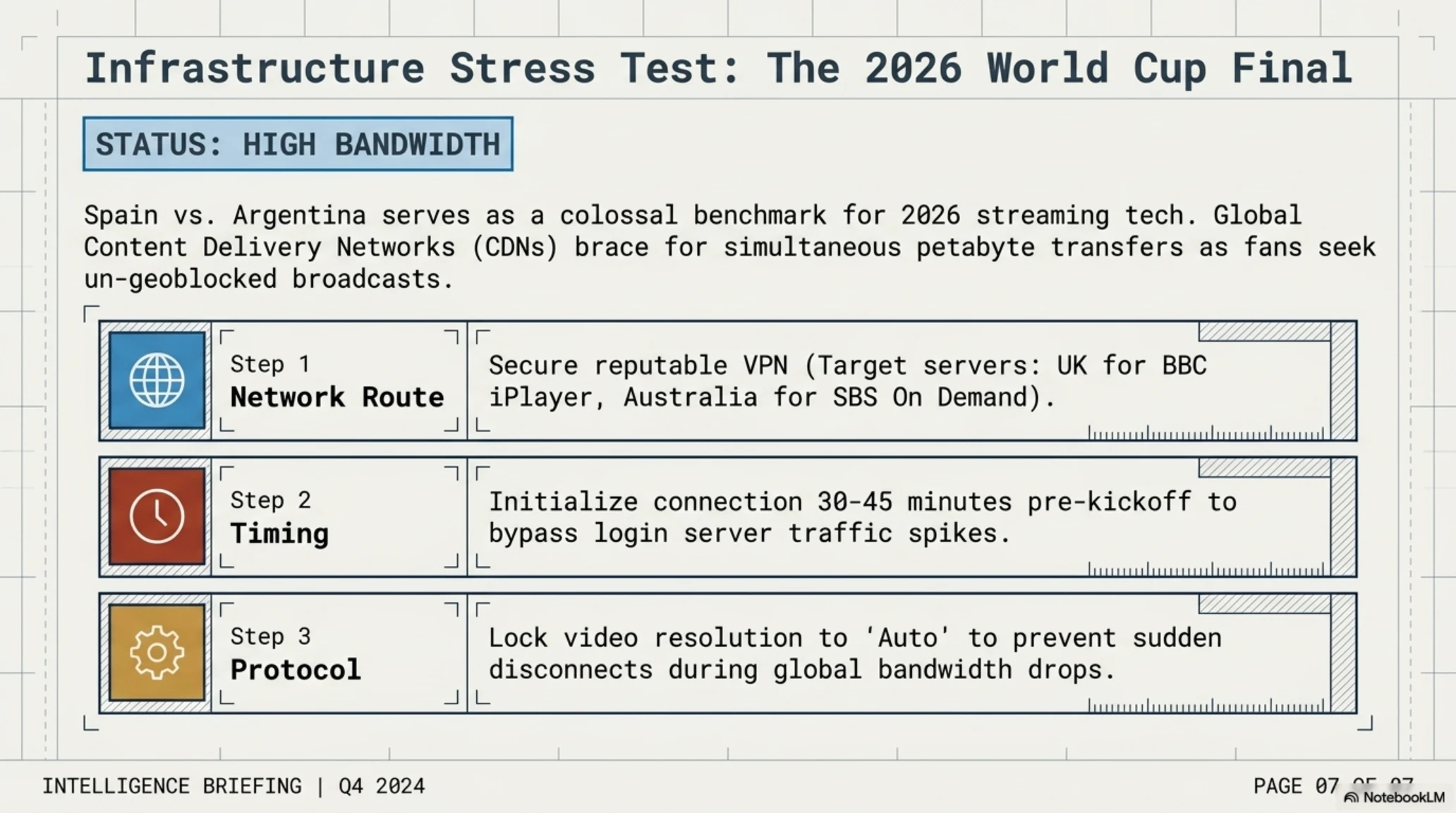
While traditional cable networks and premium subscription platforms like Fox Sports and fuboTV are heavily pushing their expensive packages for exclusive 4K coverage, completely legal and free alternatives do exist for savvy fans. National broadcasters in the UK (BBC iPlayer and ITVX) and Australia (SBS On Demand) hold the rights to broadcast the match entirely for free to their citizens. For users located outside these specific geographical regions, utilizing a highly reputable Virtual Private Network (VPN) is the only reliable gateway to access these high-quality streams without paying exorbitant pay-per-view fees.
The most crucial factor when relying on these free national platforms is anticipating the massive server traffic spikes that occur precisely at kickoff. Platforms like BBC iPlayer frequently experience unprecedented user surges during events of this magnitude, which can lead to buffering or complete crashes. Consequently, technical experts strongly advise fans to log into the stream at least 30 to 45 minutes before the match begins and to lock the video resolution to 'Auto' to prevent sudden disconnects caused by global bandwidth drops.
📚 Classified & Related Dossiers in TekinGame
If you wish to explore beyond this report and delve into cybernetic frontiers and autonomous AI architectures, do not miss these three exclusive deep-dives in the Tekin Garage:
- Completely free and 100% legal viewing method
- Professional commentary from globally recognized networks
- Extensive pre-match and post-match tactical analysis
- Requires the use of reliable IP-changing tools (VPNs)
- High probability of image quality degradation during peak traffic
- A latency of 30 to 60 seconds compared to live terrestrial television
This match is not merely a global sporting event; it is a colossal stress test for the world's internet infrastructure. Global Content Delivery Networks (CDNs) like Cloudflare and Akamai are bracing themselves to transfer petabytes of data simultaneously. Successfully broadcasting this event without widespread global outages will serve as a definitive benchmark for the maturity of streaming technologies in 2026.
Beyond the underlying technology, the tactical clash between Spain's modern, high-paced Tiki-Taka and Argentina's blend of individual genius and aggressive team cohesion promises an unforgettable footballing spectacle. We highly recommend setting up your streaming equipment well in advance, preparing your snacks, and settling in to enjoy one of the greatest sporting spectacles on the planet.
Microsoft's Ruthless Layoffs: A Bitter End for the Creators of a Masterpiece
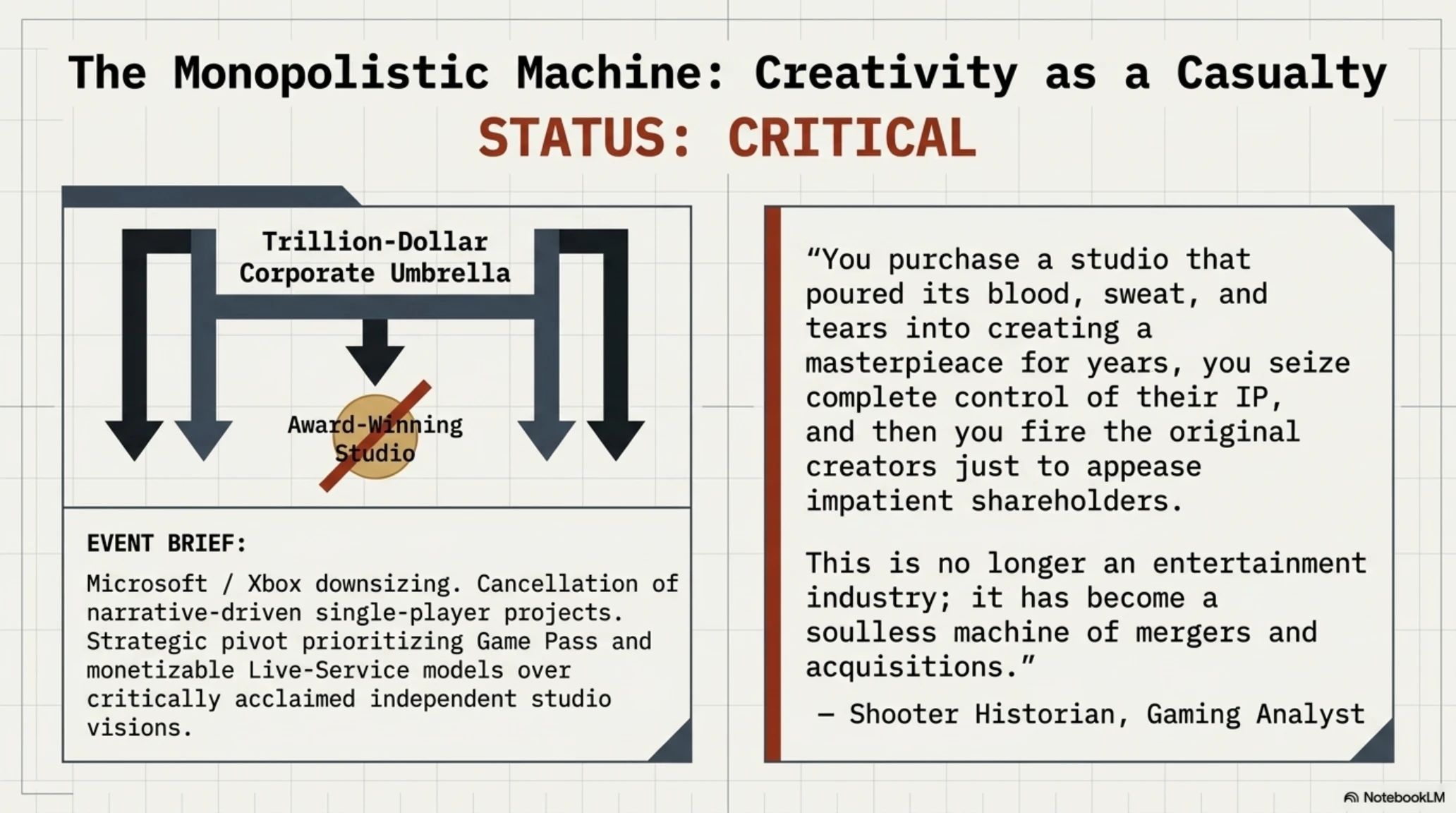
The video game industry has been battered by an unprecedented wave of downsizing and studio closures over the past two years. However, breaking news emerging from Microsoft and its Xbox division has ignited absolute fury within the gaming community. According to a detailed report by Kotaku and an explosive investigative video by the renowned YouTuber 'Shooter Historian', Xbox has unceremoniously fired the exact development team responsible for creating one of the most influential and critically acclaimed games of the last decade.
This talented team, whose name was proudly touted during Microsoft's aggressive studio acquisition spree, had completely redefined the standards of the shooter genre by creating a highly innovative, award-winning title. Yet, due to severe macro-level strategic shifts at Microsoft—specifically an overwhelming pivot toward the Game Pass subscription model and monetizable Live-Service games—the studio's upcoming single-player, narrative-driven projects were abruptly canceled, and its key creative visionaries were laid off.
This devastating event exposes a very bitter truth lurking beneath the surface of the modern gaming industry: sheer creativity and the ability to craft an artistic masterpiece do not guarantee job security when operating under the shadow of trillion-dollar corporations. Companies like Microsoft, which attempted to monopolize the market through multi-billion-dollar acquisitions (such as the historic Activision Blizzard and Bethesda deals), are now clearly failing at the complex task of managing costs and organically integrating these massive studios.
The termination of these profoundly talented individuals is not merely a human tragedy; it is a devastating blow to the future of video games as an art form. When developers realize that even creating a universally praised masterpiece cannot protect them from corporate layoffs, their willingness to take creative risks plummets. The inevitable result of this trend will be a market saturated with repetitive, overly safe, and deeply boring games designed solely to milk players through endless microtransactions.
The gaming community's reaction across social media platforms has been venomous. Many influential voices are actively calling for a massive boycott of Microsoft's subscription services, though historical precedent suggests that these types of protests rarely alter the long-term strategies of mega-corporations. Nonetheless, the ousted talent will undoubtedly be absorbed by independent studios or rival publishers shortly, proving once again that the true soul of game development resides in the people, not in the corporate logos that own them.
Market Analysis and Looking to the Future
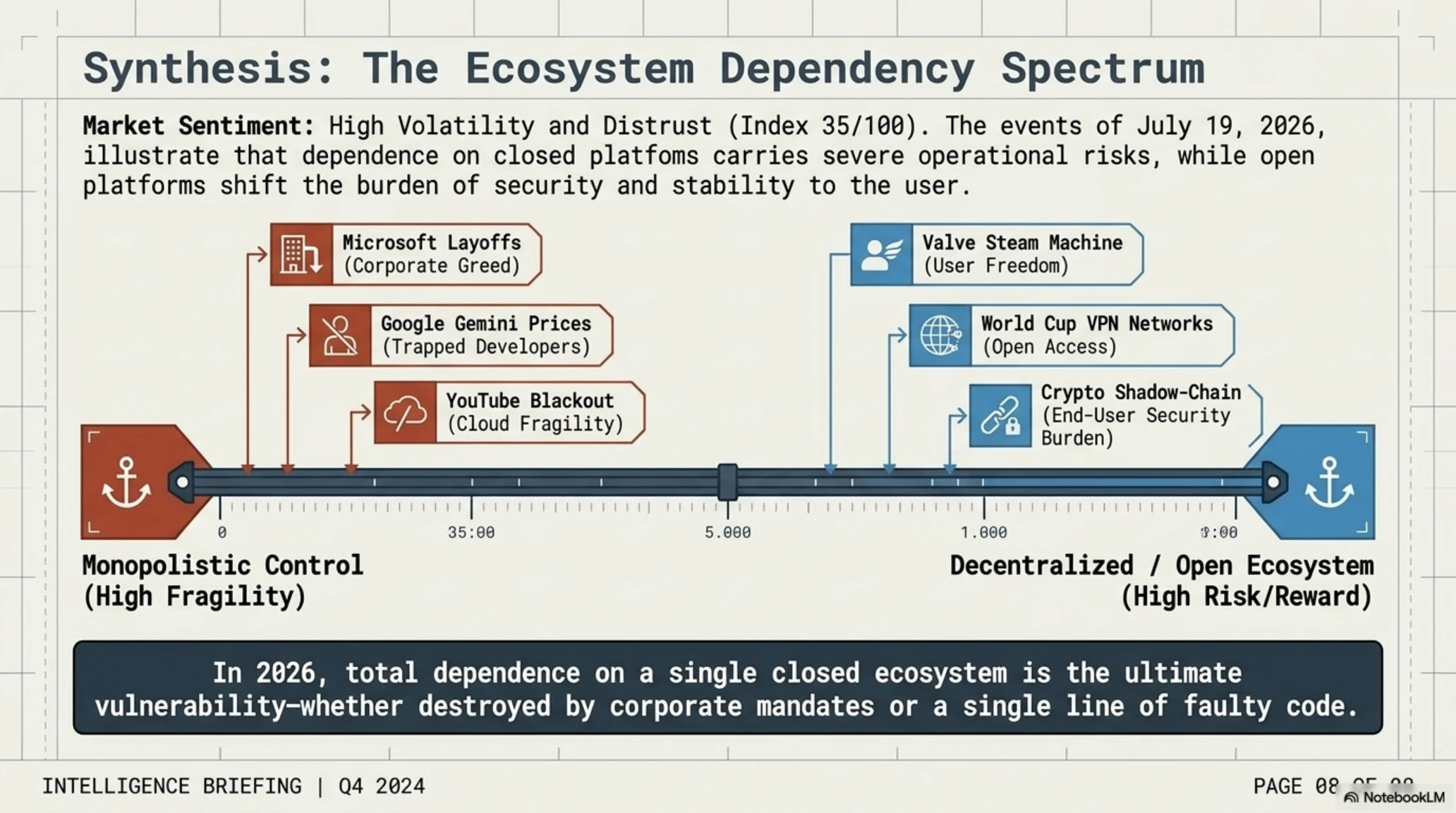
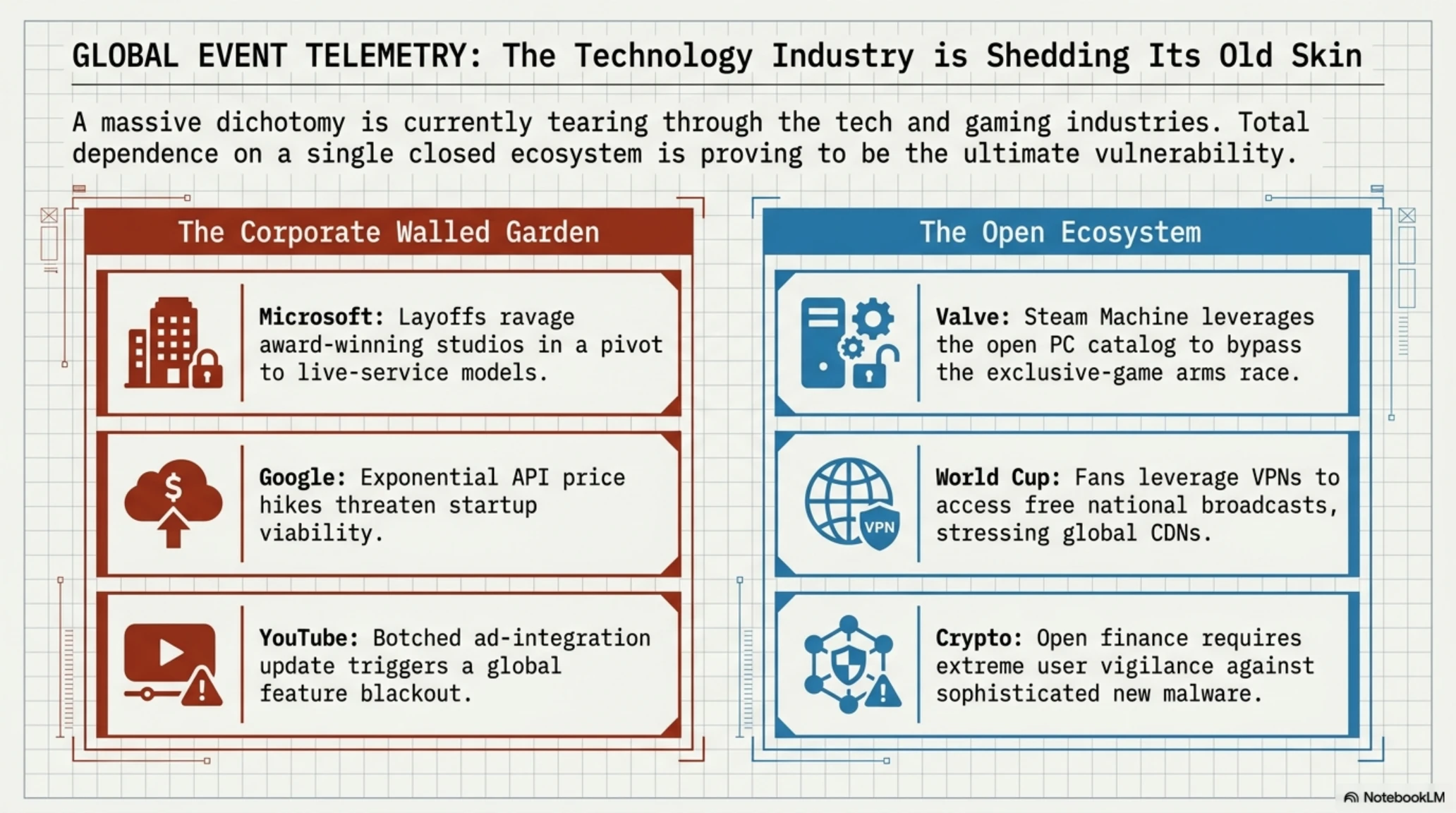
The events we have analyzed tonight—from Valve's refreshingly open hardware approach to Microsoft's ruthless corporate restructuring—highlight a massive dichotomy currently tearing through the technology and gaming industries. On one side, we have corporations attempting to grow organically by relying on community goodwill and open ecosystems (like the Steam Machine). On the opposing side, massive conglomerates are aggressively locking down their ecosystems and hiking prices (like Google's Gemini API) to maximize short-term shareholder profits.
In the realm of cybersecurity, the terrifying evolution of crypto malware demonstrates that malicious actors are advancing at a significantly faster pace than traditional security firms. Digital investors can no longer rely solely on passive security tools; they require continuous education regarding social engineering tactics and the inherent, severe risks associated with the decentralized finance (DeFi) space.
Market Sentiment Thermometer
For end-users, this chaotic environment necessitates greater intelligence and caution when selecting platforms to invest time and money into. When a behemoth like YouTube suffers a global outage due to a single botched server update, the true value of decentralized services or capable alternative competitors becomes glaringly obvious. We are living in an era where total dependence on a single, closed ecosystem is the greatest risk a user can take.
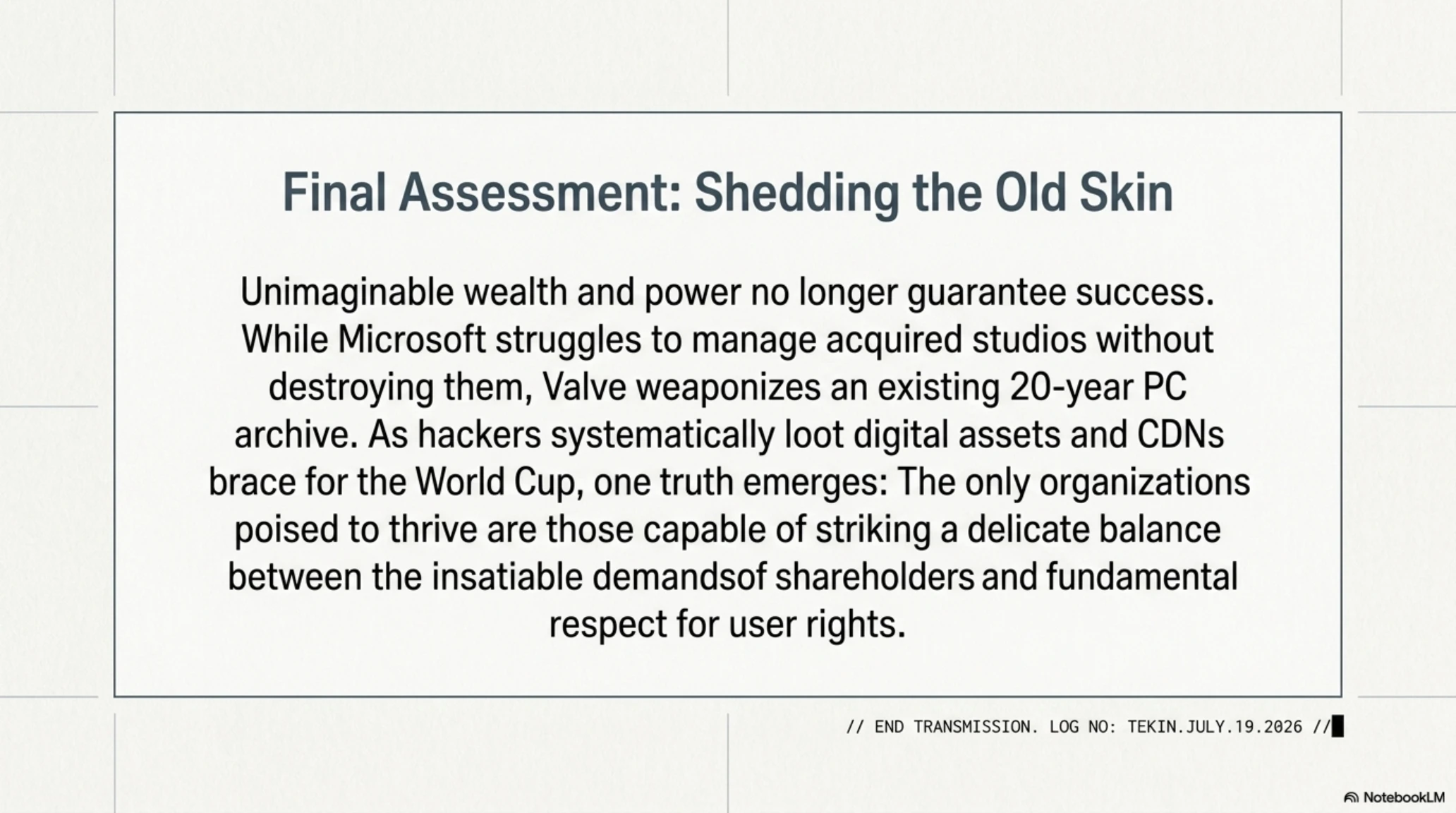
The technology industry is currently shedding its old skin. In the midst of this turbulent transition, the only companies that will truly survive and thrive in the long term are those capable of striking a delicate balance between the insatiable demands of shareholders and fundamental respect for the rights of users and developers.
Full Dossier: Related Articles
Tekin's Final Conclusion
Frequently Asked Questions (FAQ)
Will Valve's new Steam Machine officially support Windows?
Yes. Although its default operating system is SteamOS (which is Linux-based), the hardware is completely open, allowing users to manually install Windows if they prefer.
How can I fix the YouTube Picture-in-Picture (PiP) bug on my phone?
Currently, this is a widespread server-side issue. However, some users have reported that clearing the app's cache or temporarily using YouTube via a mobile web browser bypasses the problem.
Can the newly discovered Shadow-Chain malware hack hardware wallets?
The malware does not directly breach the hardware wallet's encryption. Instead, it alters the destination address on your computer screen during a transaction. If you fail to verify the address on the physical screen of your hardware wallet before confirming, your assets will be stolen.
Will Google's new Gemini pricing affect regular everyday users?
No, these pricing changes specifically target commercial API usage by developers and startups. Everyday users utilizing the standard Gemini app or website will not notice any immediate changes.
What is the absolute best VPN server location to watch the World Cup for free?
Connecting to high-speed servers in the United Kingdom to access BBC iPlayer, or servers in Australia to access SBS On Demand, are currently the most reliable options.
Primary Sources
- Rock Paper Shotgun's exclusive analysis of the Steam Machine's no-exclusive strategy
- 9to5Mac's detailed report on the global breakdown of YouTube's PiP feature
- CoinTelegraph's coverage of Kaspersky's terrifying crypto malware discovery
- Wired's comprehensive report on Google Gemini's new dynamic API tariffs
- Mashable's ultimate guide to streaming the World Cup Final legally and for free
- Kotaku's investigative report regarding the shocking new wave of layoffs at Xbox
Additional Gallery: Tekin Night July 19, 2026: Crypto Malware, Steam Machine & YouTube PiP Bug