
KEY TAKEAWAYS
- Dynamic Crisis Architecture: Universal macro-events force civilizations to pivot long-term doctrines to survive pandemics, climatic shifts, and socio-economic collapses.
- Ideological Plasticity: AI and player leaders abandon rigid static personas in favor of evolving behavioral matrices dictated by geopolitical trauma and historical context.
- Demographic Granularity: Culture evolves from an abstract numeric yield into a living, multifaceted civic demographic with distinct cultural requirements and factional tensions.
- Structural Endgame Redesign: New systemic disruptions aim to eliminate the deterministic, solved-state stagnation that traditionally plagues late-game 4X campaigns.
For more than three decades, the hypnotic cadence of "just one more turn" has served as both the benchmark and the defining psychological loop of the grand strategy genre. Firaxis Games, following the extensive lifecycle and multi-expansion maturity of Civilization VI, stands on the precipice of a generational paradigm shift with Civilization VII. Where previous iterations focused predominantly on unstacking cities and optimizing tile yield geography, early technical disclosures and structural previews indicate that Civilization VII directs its design philosophy inward—tackling the deterministic inertia that has historically burdened turn-based empire builders.
The Crises Matrix: Breaking Deterministic Endgame Loops
The cardinal vulnerability of the 4X formula (eXplore, eXpand, eXploit, eXterminate) has perpetually been the mid-to-late-game "snowball effect." Once an empire secures territorial hegemony and scientific dominance, the path to victory transforms from an emergent geopolitical contest into an administrative chore. Firaxis directly confronts this systemic flaw through the implementation of the Dynamic Crises Engine.
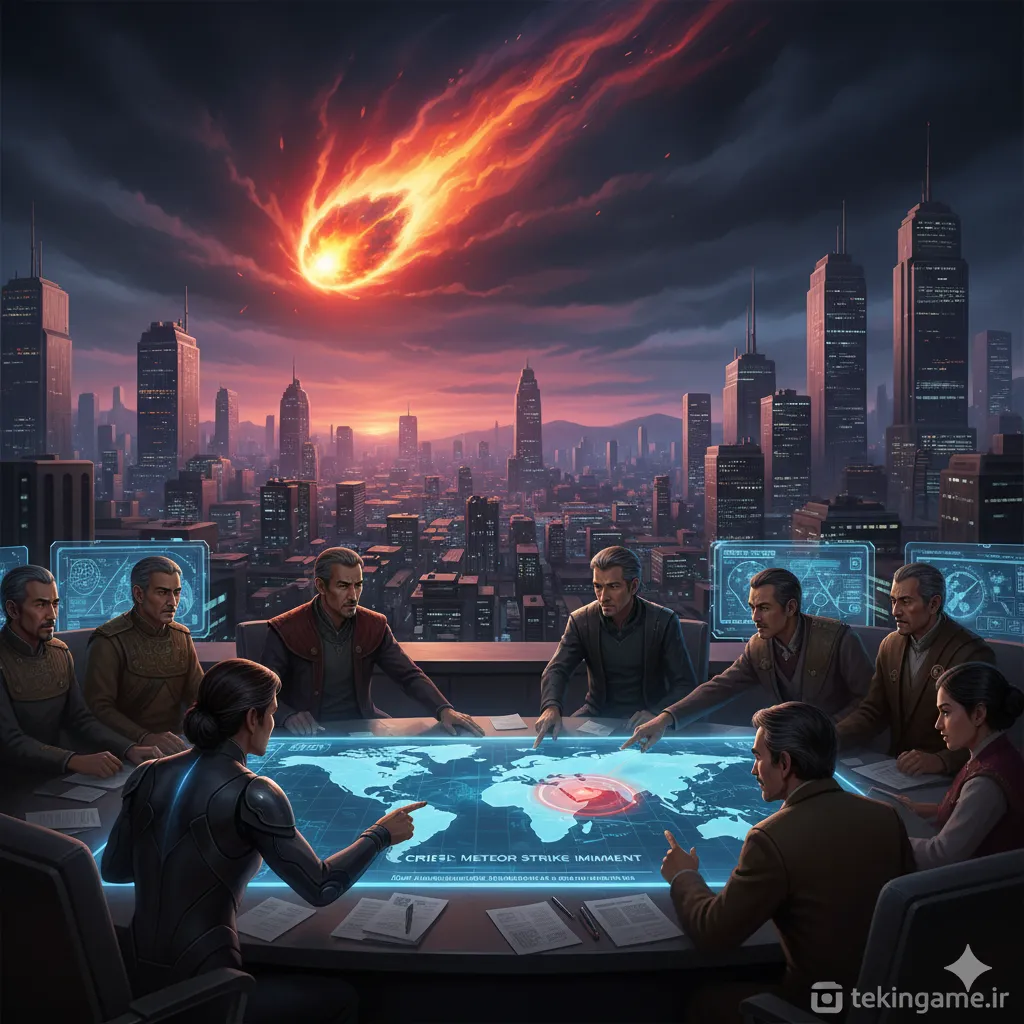
Crises operate not merely as randomized natural disasters, but as systemic macro-events with asymmetrical ramifications across the global theater. A late-classical pandemic, an abrupt climatic transition, or an empire-wide liquidity shock acts as a destabilizing catalyst, forcing leaders to dismantle rigid fifty-turn developmental queues in favor of immediate triage. Crucially, these existential scenarios force critical diplomatic choices: civilizations can ratify emergency multilateral protocols to collectively mitigate the shockwave, or exploit regional destabilization to systematically cannibalize distressed adversaries.
Core Strategic Mechanics of the Crisis System
Ideological Plasticity: Dynamic Leader Evolution
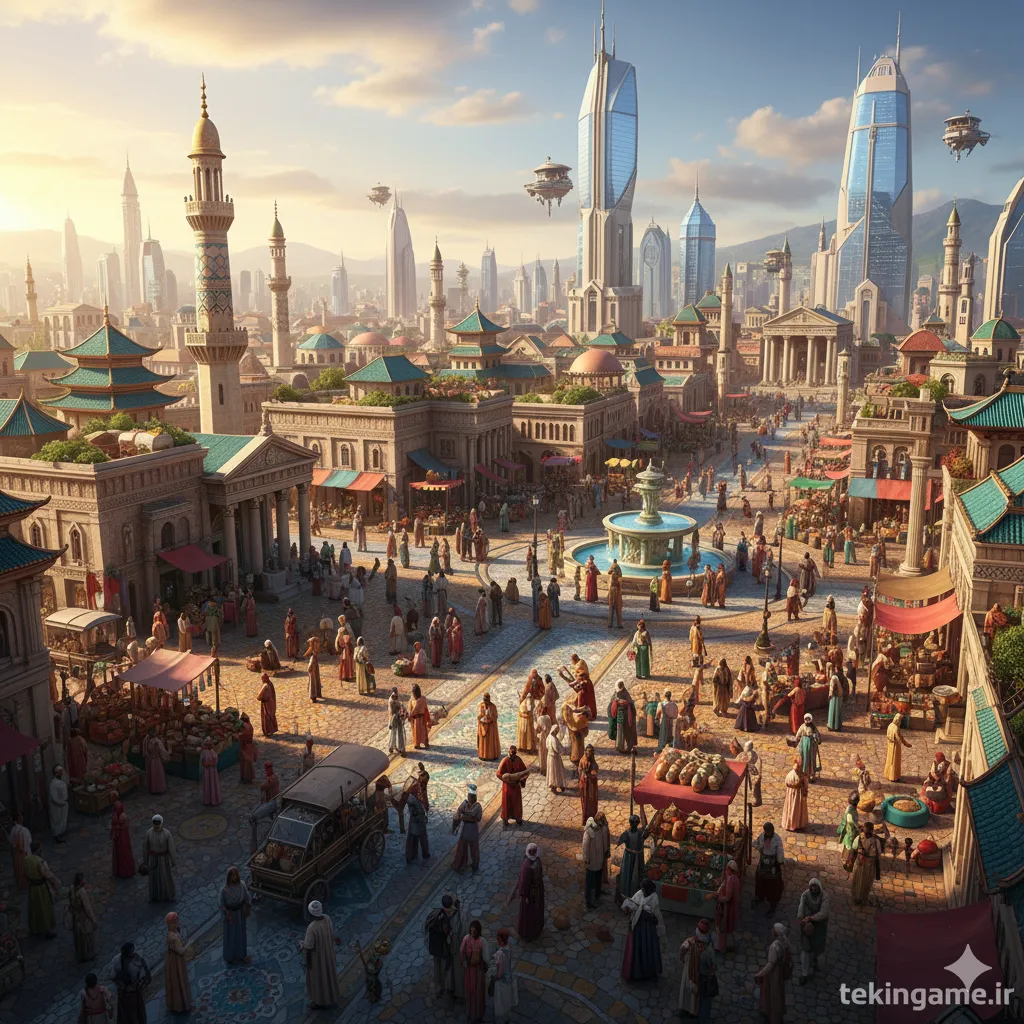
Diplomatic simulation in historical grand strategy has long been constrained by static behavioral templates. Civilization VI attempted to mitigate this through explicit Agendas; however, these agendas frequently produced algorithmic rigidity, leading to predictable diplomatic outcomes. Civilization VII reframes international relations through Ideological Plasticity.
Rather than tethering a head of state to an unyielding historical caricature, leaders develop psychological and political vectors dynamically derived from empirical game state events. A consistently peaceful trading civilization subjected to repeated revanchist invasions will naturally develop militaristic, paranoid, and retaliatory diplomatic doctrines over successive eras. This systemic fluidity prevents the artificial gameification of diplomatic AI, compelling players to navigate living, reactive geopolitical actors whose strategic alignments shift in response to generational trauma, trade dependencies, and ideological friction.
Demographic Granularity: The Overhaul of Civic and Cultural Identity
Perhaps the most profound departure from classical franchise conventions lies in the conceptual reconstruction of "Culture." Traditionally quantified as a monolithic aggregate currency dedicated to advancing an abstract civic tech tree, culture in Civilization VII is embedded directly into local population demographics.
Cities no longer represent homogenous labor pools. Instead, urban centers are composed of diverse cultural enclaves characterized by distinct sociopolitical expectations, religious orthodoxies, and migratory origins. Rapid expansion, wartime annexations, and international migration create complex multi-ethnic metropolises where cultural synthesis or violent civic resistance can occur. Governance consequently requires delicate domestic balancing; imperial hegemony cannot be sustained purely through external military projection if internal demographic fractures trigger domestic revolts and administrative paralysis.
Systemic Comparison: Civilization VI vs. Civilization VII
| Structural Dimension | Civilization VI System Architecture | Civilization VII Redesign |
|---|---|---|
| Global Shocks | Localized Natural Disasters & Late-Era Climate Metrics | Universal Multi-Era Crises Matrix (Economic, Biological, Climatic) |
| Leader AI & Persona | Static Primary & Hidden Historical Agendas | Dynamic Ideological Plasticity Responsive to Geopolitical Trauma |
| Cultural Mechanics | Aggregated Abstract Yield (Civic Tech Tree Progression) | Granular Demographic Enclaves, Internal Migration, Civic Strata |
| Endgame Trajectory | Deterministic Snowball with Solved Victory Conditions | Nonlinear Volatility Countered by Institutional Adaptation |
Strategic Prognosis: Redefining Grand Strategy for a New Era
With Civilization VII, Firaxis Games demonstrates a mature awareness of contemporary strategy game design. By abandoning predictable, deterministic statehood in favor of dynamic friction, demographic internal politics, and catastrophic systemic risks, the title is positioned not as an iterative graphics update, but as a rigorous modernization of the genre. Should these interconnected systems execute without balance-breaking volatility, Civilization VII will establish the mechanical benchmark for grand strategy throughout the coming decade.
📚 Classified & Related Dossiers in TekinGame
If you wish to explore beyond this report and delve into cybernetic frontiers and autonomous AI architectures, do not miss these three exclusive deep-dives in the Tekin Garage:
- High replayability and emergent cooperative mechanics
- Seamless cross-platform matchmaking with low latency overhead
- Rich visual and audio atmosphere
- Occasional physics collision quirks under heavy load
- Minor difficulty spikes in late-stage encounters
Frequently Asked Questions
What is the primary difference between Civilization VI and Civilization VII's crisis systems?
Civilization VI isolated catastrophic events primarily to localized regional disasters and late-game climate thresholds. Civilization VII introduces multi-era, interconnected Crises matrices—ranging from pandemics to systemic economic depressions—that compel all global powers to dynamically modify core development strategies.
How does dynamic leader behavior change diplomatic gameplay?
In Civilization VII, leaders dynamically adapt their ideologies and diplomatic postures based on emergent gameplay events rather than adhering strictly to fixed pre-programmed agendas. A historically passive leader can evolve aggressive, militaristic doctrines if subjected to sustained territorial aggression.
How has the cultural victory path been adjusted mechanically?
Culture has shifted from an abstract, empire-wide numeric yield to a granular urban demographic simulation. Cities now host diverse cultural populations with individualized requirements, domestic friction, and integration mechanics, making internal cultural management as vital as foreign cultural projection.
Will the game feature traditional tile-based urban planning?
While retaining tactical spatial importance, Civilization VII places greater emphasis on internal demographic management, civic cohesion, and institutional adaptation to balance raw geographic infrastructure with socio-political stability.
