
🧠 Biohacking Intimacy: The Digital Romance Masterclass
Welcome to the frontier. In this strategic masterclass, we move far beyond basic gadget reviews to penetrate the core of neuroscience and psychology in modern relationships. You will discover how biometric data and cutting-edge wearables can act as profound tools for decoding your partner's mind and optimizing the brain's dopamine receptors.
⚡ Key Executive Briefs:
🧬 Decoding Dopamine Resistance in modern texting
⌚ Biohacking: Leveraging smartwatch HRV to map emotional states
💔 The clinical anatomy of the "Micro-Cheating" epidemic
🌐 Overcoming physical distance with advanced Haptic Technology
⚠️ Advisory: This masterclass contains deep psychological analysis. Proceed with an open mind prepared for actionable behavioral shifts.
The Neuroscience of Digital Seduction & Dopamine Resistance
Have you ever wondered why a text message from your partner caused a massive spike in heart rate during the honeymoon phase, but after three years, the exact same notification barely registers an emotional blip? The answer doesn't lie in the technology itself, nor does it inherently signal a death of romance. It lies in a well-documented neurological phenomenon known as Dopamine Resistance. When a neurological reward (receiving a message) becomes entirely routine and highly predictable, the brain's baseline dopamine release recalibrates, requiring significantly higher stimulus to achieve the same feeling of excitement.
Smart digital seduction isn't about bombarding your partner with hundreds of empty texts throughout the day. Science has proven that the "anticipation" of a reward is far more powerful than the reward itself. Sending teasing or ambiguous messages during peak work hours—when their mind is occupied—and delaying the resolution until evening, is the golden strategy for sustaining long-term attraction.
🤖 The Hidden Competitor: AI Companions
In the context of dopamine management, we cannot ignore the dangerous trend of 2026: Replacing partners with Artificial Intelligence. Apps like Replika or Character.ai are currently supplying "cheap, unconditional dopamine" to millions. When individuals turn to virtual partners to escape the complexities, conflicts, and natural challenges of human relationships, their dopamine resistance skyrockets. Consequently, they lose the capacity to tolerate the nuances of a real relationship. This is arguably the greatest threat to human intimacy in this decade.
📊 The Stark Reality: Tech's Impact on Relationships (2026)
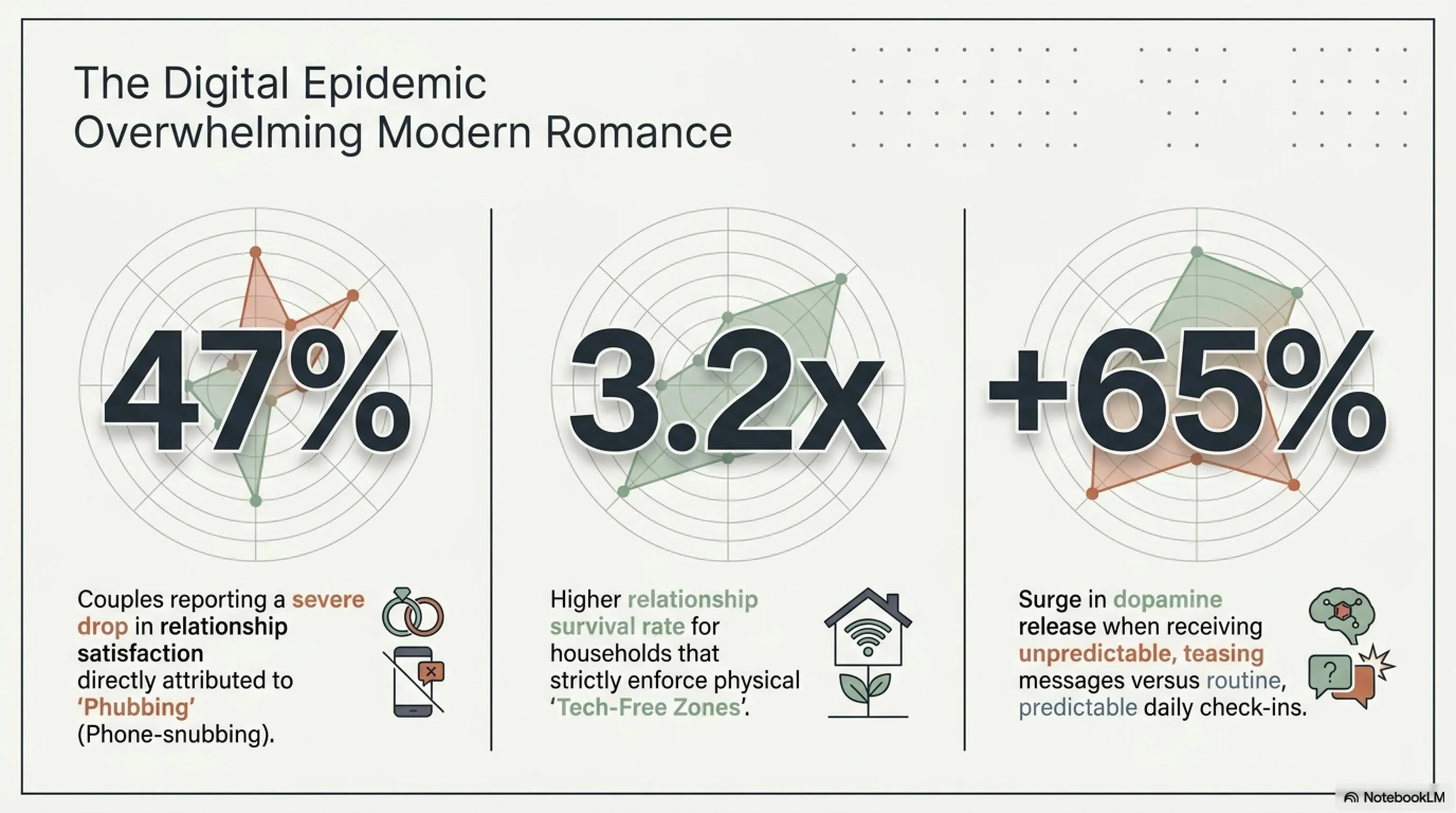
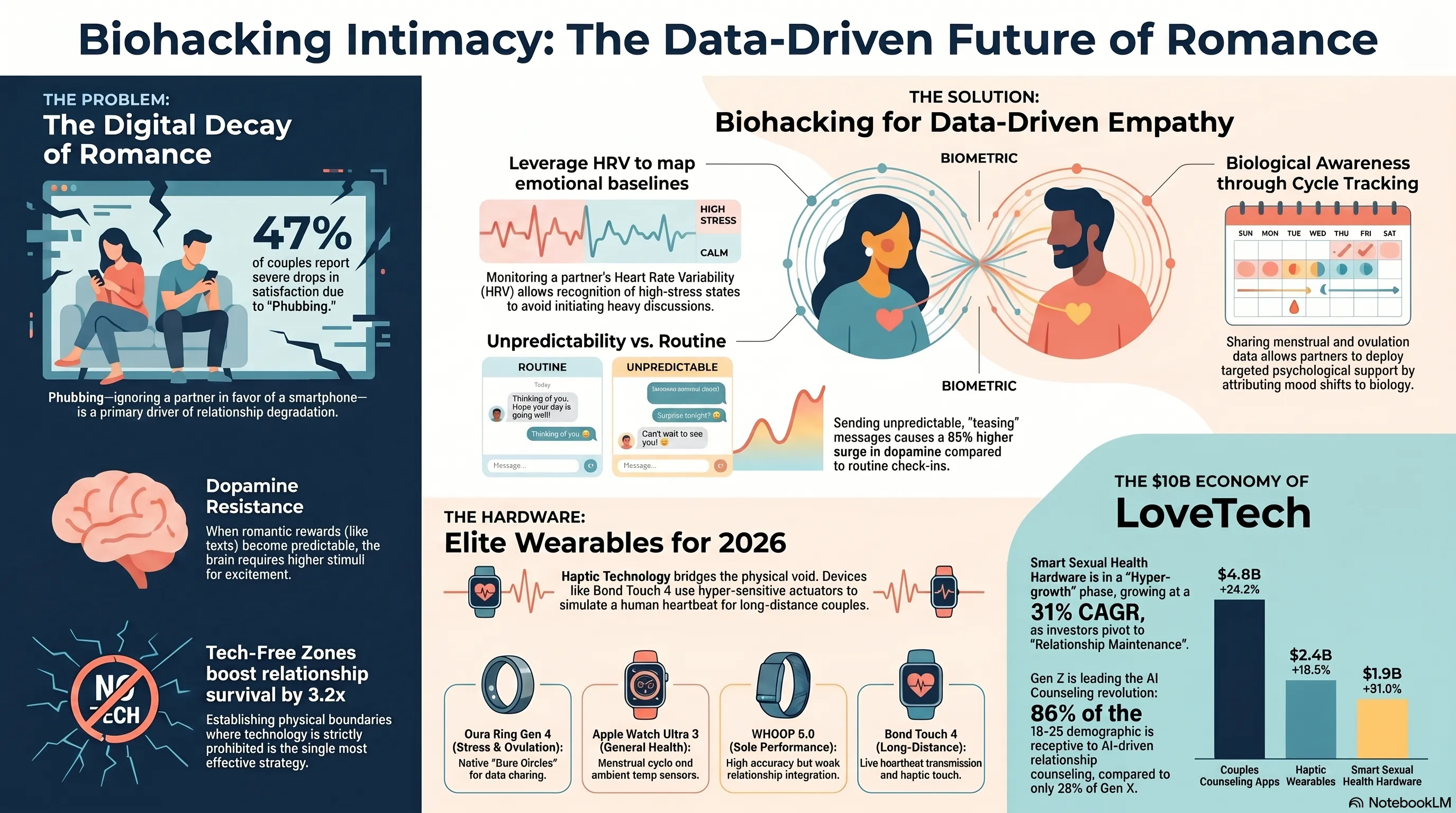
Of couples report a severe drop in relationship satisfaction directly attributed to "Phubbing" (Phone-snubbing).
Surge in dopamine release when receiving unpredictable, teasing messages versus routine daily check-ins.
Higher survival rate for relationships that strictly enforce "Tech-Free Zones" in the household.
The Evolution Timeline of Digital Romance
| Era | Technological Paradigm | Psychological Impact on Relationships |
|---|---|---|
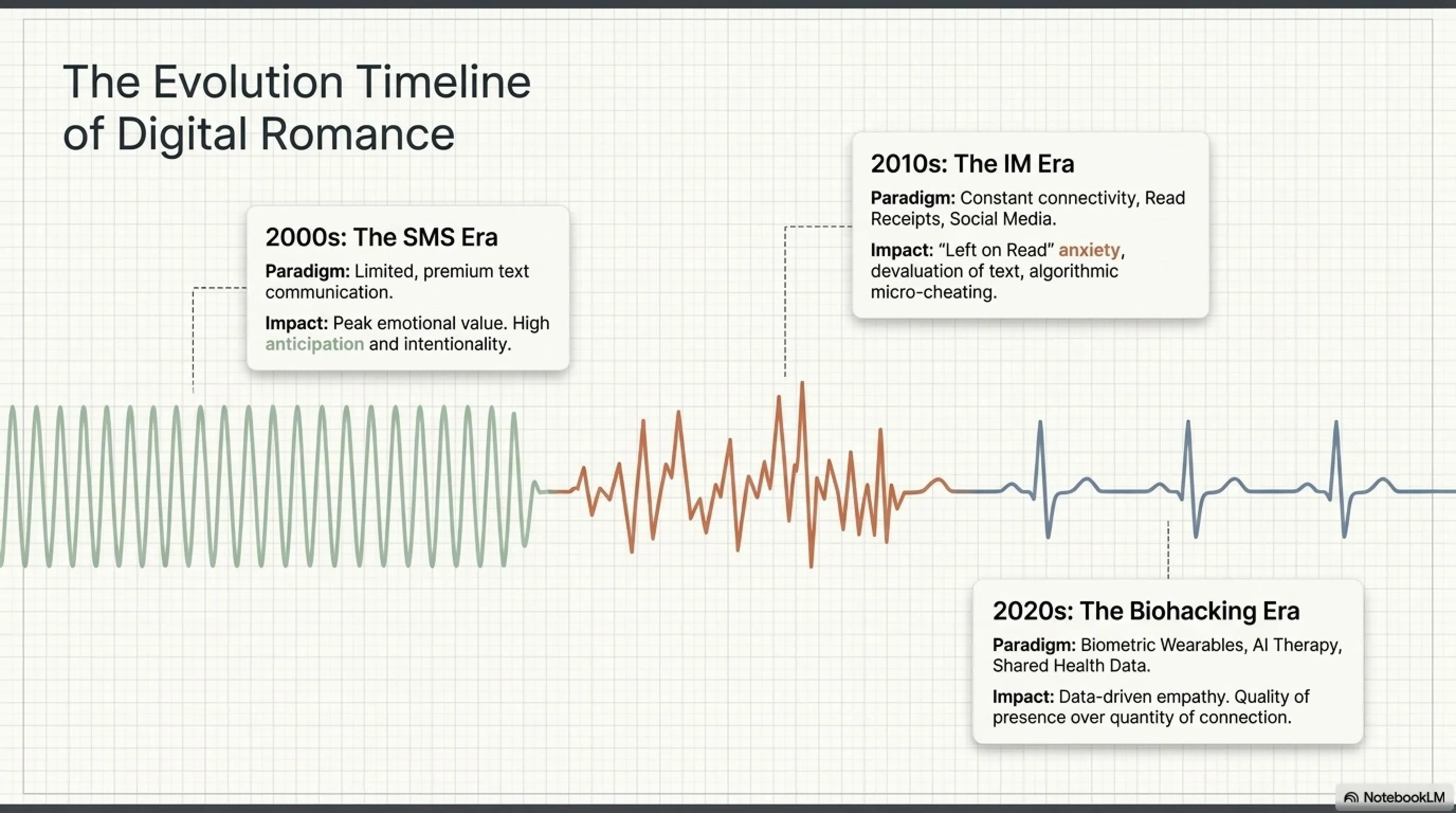
| 2000s (The SMS Era) | Limited, premium-cost text communication | Peak emotional value. Every message was an 'event', fostering high anticipation and intentionality. |
| 2010s (The Instant Messenger Era) | Constant connectivity, Read Receipts, Social Media | The rise of "Left on Read" anxiety. Extreme devaluation of textual content; birth of algorithmic Micro-cheating. |
| 2020s (The Biohacking Era) | Biometric Wearables, AI Therapy, Shared Health Data | Leveraging physiological data to generate profound empathy. A paradigm shift from 'quantity of connection' to 'quality of presence'. |
Biohacking Love: Reading Minds with Biometric Data
We have progressed lightyears beyond the era of Bluetooth-connected teddy bears. We are now navigating the epicenter of the "Biohacking Intimacy" movement. Imagine a scenario where your partner's smartwatch or health ring seamlessly transmits data indicating they only achieved three hours of deep sleep and their Heart Rate Variability (HRV)—a primary indicator of stress—is deeply in the red zone. Armed with this telemetry, instead of interpreting their post-work lethargy as emotional withdrawal or lack of interest, you possess the clinical data to understand their physiological state. You know definitively that tonight is not the night to initiate a heavy relationship discussion. It is not the technology that loves; it is the data-driven empathy that preempts destructive misunderstandings.
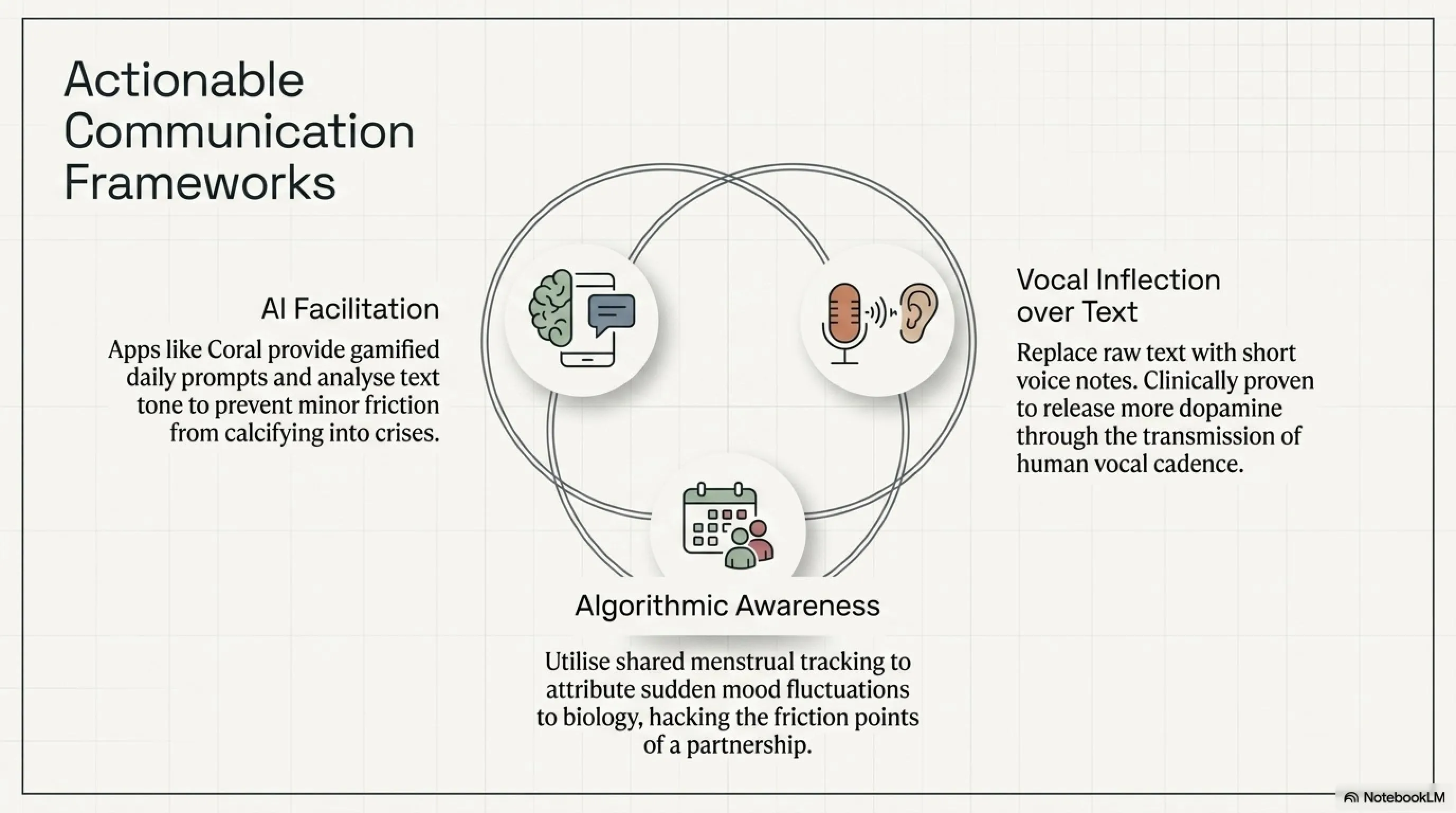
Another profound application of relationship tech involves the synchronization of menstrual and ovulation tracking via shared applications. A male partner who is algorithmically aware that his significant other is entering the PMS phase can attribute sudden mood fluctuations to biology rather than relationship decay, allowing him to deploy targeted psychological support. This level of biological awareness equates to directly hacking the friction points of a partnership.
Elite Wearable Comparison for Couples (2026)
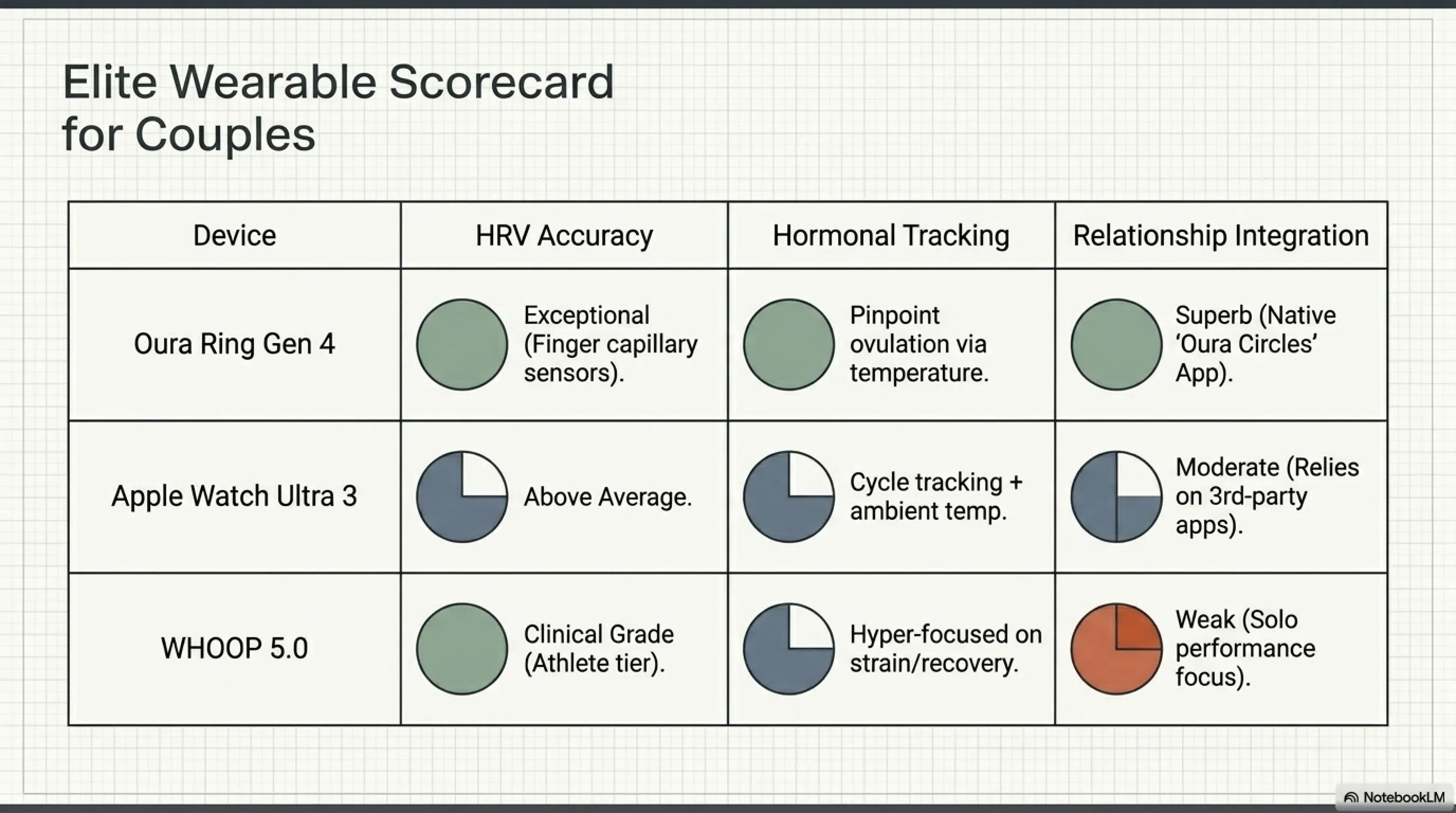
| Wearable Device | HRV Sensor Accuracy (Stress) | Hormonal & Sleep Tracking | Relationship Integration (Sharing) |
|---|---|---|---|
| Oura Ring Gen 4 | Exceptional (Finger capillary sensors) | Pinpoint ovulation prediction via temperature shifts | Superb (Native 'Oura Circles' App) |
| Apple Watch Ultra 3 | Above Average | Menstrual cycle tracking + ambient temp sensor | Moderate (Relies heavily on Third-Party Apps) |
| WHOOP 5.0 | Clinical Grade (Elite Athlete tier) | Hyper-focused on Strain metrics and Sleep Recovery | Weak (Designed primarily for isolated solo performance) |
🟢 The Strategic Advantages
- Profound analytical understanding of a partner's psychological baseline.
- Simulated physical proximity crucial for long-distance survival rates.
- Gamification of intimacy injects novelty into stagnating relationships.
- Voice notes and media mitigate the tone-deaf nature of raw text.
🔴 The Critical Vulnerabilities
- Severe degradation of physical presence (The Phubbing epidemic).
- Paranoia induced by over-tracking (e.g., obsessive location checking).
- Farming "cheap dopamine" from algorithmic feeds rather than the partner.
- Providing a covert, encrypted infrastructure for 'Micro-cheating'.
🔞 +18 Practical Solutions for Sexual Variety & Couples' Games (Click to Expand)
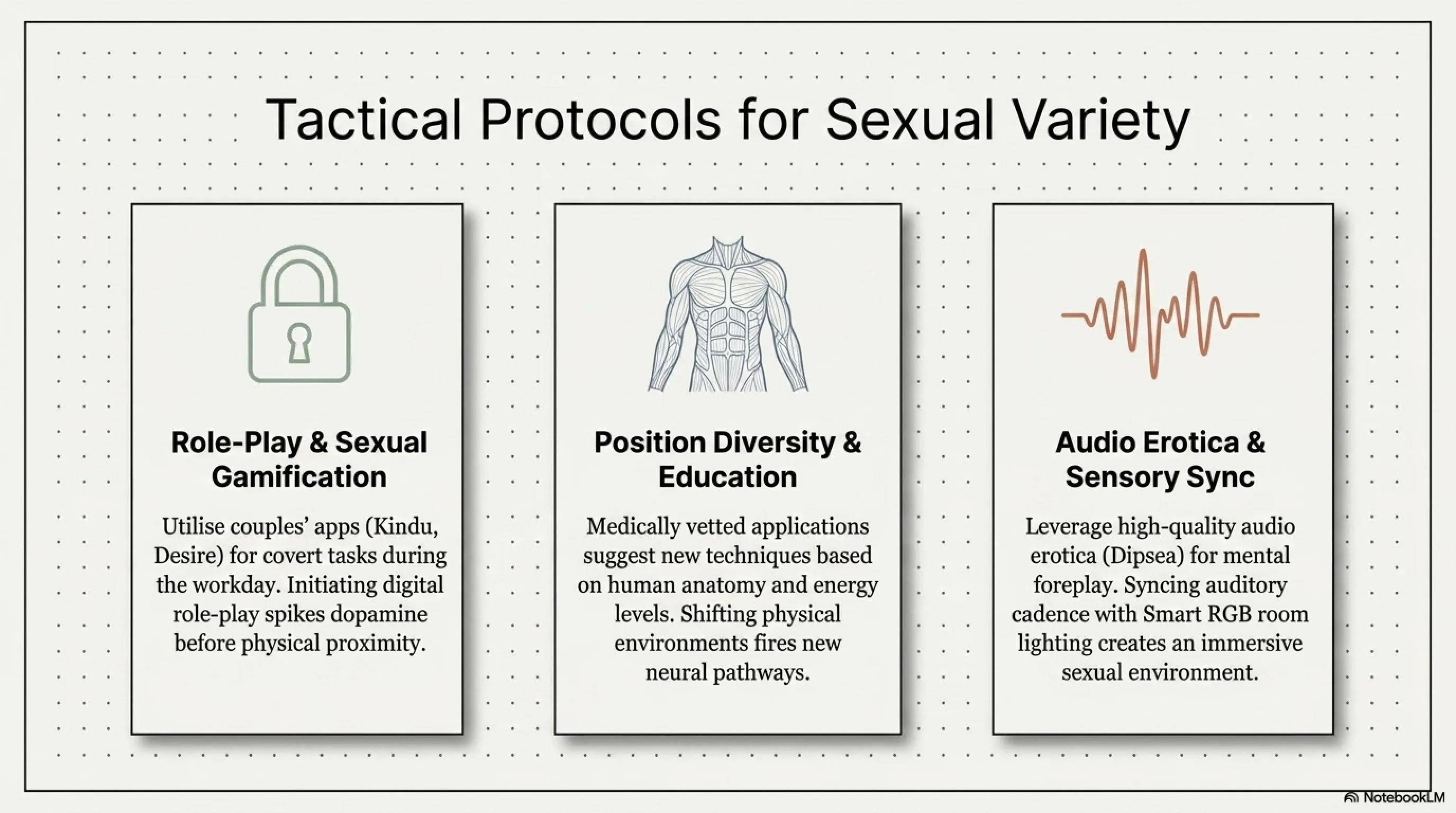
🎲 Role-Play & Sexual Gamification
Technology isn't just for tracking metrics. Utilize dedicated couples' apps (such as Kindu or Desire) to send covert tasks, dares, and challenges. Initiating digital role-play scenarios via messenger apps during the workday creates anticipation, significantly spiking dopamine levels long before you arrive home.
🧘♀️ Position Diversity & Educational Apps
One of the primary killers of long-term intimacy is falling into a physical rut. There are medically vetted applications that scientifically suggest new positions and techniques based on human anatomy and current energy levels. Simply shifting the physical environment—moving away from the primary bedroom—can fire entirely new neural pathways in the brain.
🎧 Audio Erotica & Sensory Stimulation
Leveraging platforms that provide high-quality Audio Erotica (such as Dipsea) serves as an exceptional tool for mental foreplay. Syncing these auditory experiences with smart room lighting (Smart RGB Lights) that shifts hues with the audio cadence creates an immersive, cinematic sexual environment.
🎯 Tactical Midpoint: The Delicate Balance of Data and Emotion
Thus far, we have established that technology can serve as the ultimate prosthetic for empathy. However, there is a razor-thin boundary between 'leveraging data to support' and 'weaponizing data to control'. Biohacking within a relationship requires immense emotional maturity; your partner's REM sleep data should never be used as ammunition in an argument, but rather as a navigational compass for deploying affection at the optimal moment.
The $10B Economy of LoveTech & SexTech
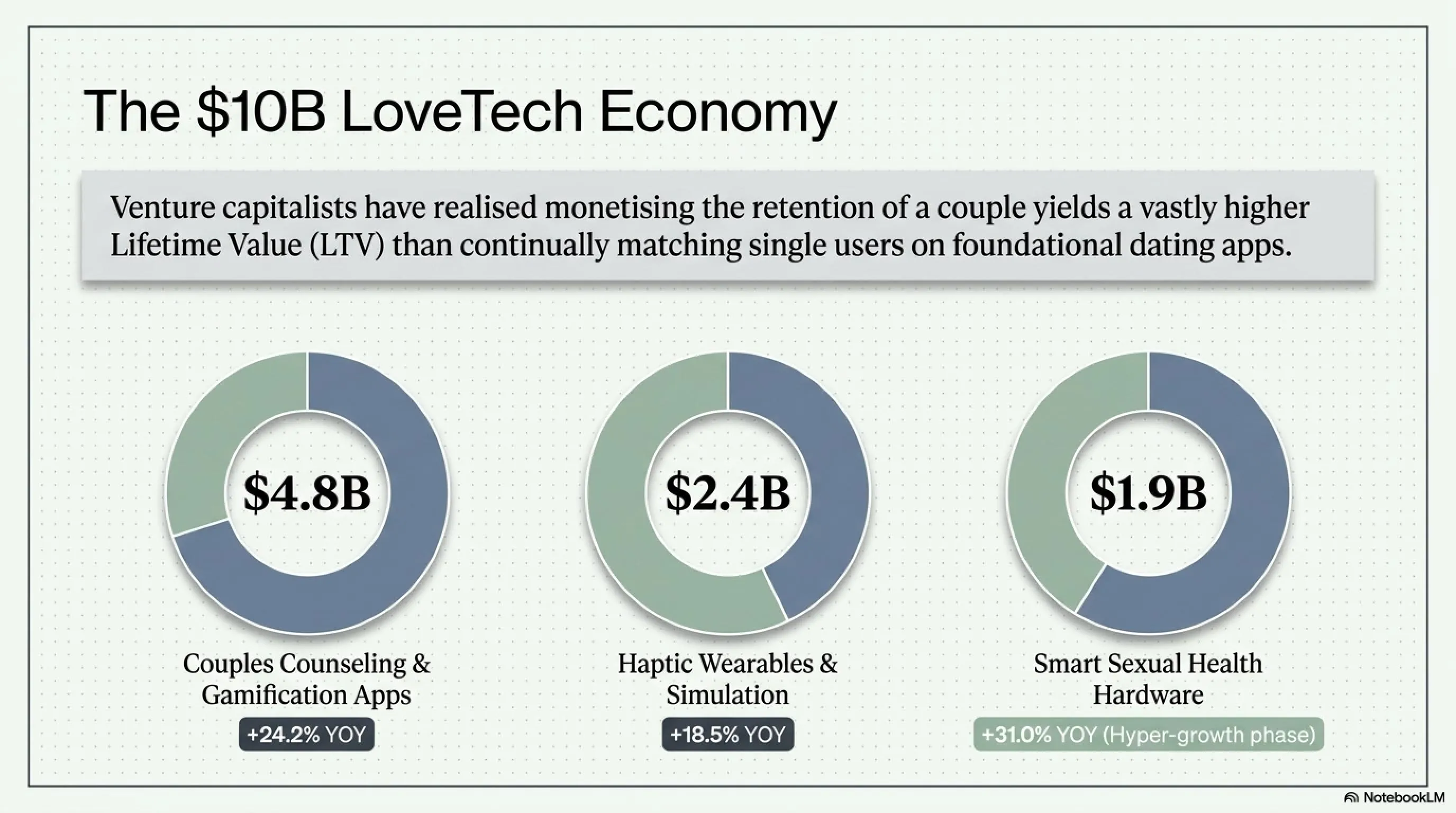
When we analyze the market trajectory of couples' applications, biometric wearables, and AI-driven counseling platforms, we are dissecting a multi-billion dollar economy. This sector has violently outgrown the foundational Dating Apps (Match Group, Bumble) and has pivoted aggressively into the Relationship Maintenance sphere. Silicon Valley venture capitalists have realized a profound truth: monetizing the retention of a couple is vastly more lucrative—and yields higher Lifetime Value (LTV)—than continually matching single users.
💰 Financial Trajectory: Relationship Tech Market (2024-2026)
| Market Segment | Estimated Valuation (Billions) | YOY Growth (CAGR) |
|---|---|---|
| Haptic Wearables & Simulation | $2.4B | +18.5% |
| Couples Counseling & Gamification Apps | $4.8B | +24.2% |
| Smart Sexual Health Hardware | $1.9B | +31.0% (Hyper-growth phase) |
Market Sentiment: Data Privacy vs. Intimacy
Following several high-profile data leaks involving sensitive reproductive health tracking apps, institutional sentiment is deeply fractured.
⚠️ The Critical Threat: Biometric Data Security (Cybersecurity)
Given TekinGame's strategic focus on cybersecurity, we must address a glaring vulnerability. These applications and gadgets store individuals' most sensitive data—sleep patterns, stress levels, and hormonal cycles—on cloud servers. In the event of a data breach or hack (similar to past disasters with health apps), hackers gain access to a terrifying and unprecedented blackmail tool. Without stringent End-to-End Encryption protocols, your intimacy data can swiftly become your greatest privacy threat.
📈 Global Demographic Distribution of LoveTech Adoption (2026)
| Age Cohort | Male Engagement with Cycle Trackers | Daily Usage: Gamification Apps | Approval of AI Relationship Counseling |
|---|---|---|---|
| Gen Z (18-25) | 22% | 74% | 86% (Highly receptive) |
| Millennials (26-35) | 58% | 41% | 79% |
| Gen X (36-45) | 31% | 18% | 28% (Prefer human therapists) |
🌍 Cultural Context in the Middle East
The statistics above reveal a profound dichotomy. The adoption of LoveTech in the traditional Middle East faces significant friction. On one hand, the younger generation (Gen Z) strongly gravitates towards relationship gamification. On the other hand, the use of trackers or intimacy apps among older generations is sometimes perceived as an "invasion of traditional family privacy" or "machine interference in emotions." The success of these technologies in this region demands meticulous localization and a deep respect for cultural boundaries.
📂 Tekin Smart History: The Evolution of Romantic Tech
To fully contextualize the trajectory of intimacy technology and the foundational shifts in Valentine's Day consumer behavior, we highly recommend reviewing our previous deep-dives. These articles set the theoretical groundwork for this masterclass:
- Strategic Analysis Digital Valentine 2026: The Future of Romantic Gifts & Tech →
- Hardware Review The Ultimate Guide to Relationship Gadgets & Wearables →
Frequently Asked Questions (FAQ): Intimacy Biohacking
Doesn't sharing health data via devices like the Oura Ring destroy privacy within a relationship?
This is entirely dependent on the emotional maturity of the couple. The objective of data sharing is not 'surveillance' or control, but rather the augmentation of empathy. Modern applications (like Oura Circles) allow granular control, meaning you can share generalized readiness scores without exposing your exact heart rate minute-by-minute.
How do we overcome 'Dopamine Resistance' caused by constant texting?
By deploying strategic unpredictability. Instead of maintaining a monotonous, 24/7 text dialogue, establish periods of digital silence. Utilize short voice notes, which have been clinically proven to release significantly more dopamine than raw text due to the transmission of vocal inflection. Most importantly, enforce strict Tech-Free Zones in your physical space.
What is the premier Haptic wearable for long-distance relationships in 2026?
The 4th generation Bond Touch bracelets and the HB Smart Rings currently dominate the premium tier. These devices have evolved beyond simple vibrations, now utilizing hyper-sensitive actuators to simulate the exact pressure and cadence of a human heartbeat or a physical squeeze in real-time.
Is Artificial Intelligence actually effective for couples counseling?
AI is not positioned to replace clinical human therapists for deep-rooted trauma. However, apps like Coral or Paired excel as "communication facilitators." By providing gamified daily prompts, analyzing text tone, and lowering the barrier to entry for difficult conversations, AI prevents minor friction points from calcifying into major relationship crises.
💡 The Tekin Verdict
We stand at a critical inflection point in human history where technology possesses the dual capability to be both the assassin of intimacy and its ultimate savior. Smartphones and algorithmic feeds are clinically designed to hijack our dopamine pathways, stealing our cognitive presence from the person sitting across from us. The solution, however, is not a Luddite retreat to the Stone Age. The solution is Intelligent Biohacking. Leveraging biometric data to generate empathy, utilizing haptics to bridge physical voids, and erecting impenetrable digital boundaries within the home are the golden keys to sustaining profound passion in 2026. Love in the digital era requires active, tactical cyber-maintenance.
📚 Analytical References & Citations:
- The Kinsey Institute Annual Report on Social Media's Impact on Marital Satisfaction (2026)
- Wired Magazine Market Projections for the Global SexTech and Wearables Sector
- Aggregated anonymized telemetry from Oura Health regarding HRV and Relationship Stress markers
- TekinGame Original Research Archives: Consumer adoption rates of romantic technology
🗣️ Join the Discussion
Have you ever felt that technology was driving a wedge between you and your partner, rather than bringing you closer? How do you view the concept of sharing raw sleep and stress data with your significant other—is it a dystopian invasion of privacy, or the ultimate tool for empathy? Share your experiences and debate with the elite Tekin community in the comments below!
🌐 Stay Connected With Us 🎮✨
For the latest tech, gaming, and gadget news, follow us on our official social media channels: