TEKIN ANALYSIS // EXECUTIVE BRIEF
Strategic Narrative Pillars & Critical Bereavement Takeaways
Why Character Mortality in Gaming Resonates Deeper Than Cinema
Analyzing how tactile control, neuro-haptic engagement, and dozens of gameplay hours elevate virtual loss into profound human grief.
Fact-Checking Resurrection Myths vs. Hardcoded Narrative Inevitability
Introduction: The Phenomenology of Interactive Bereavement
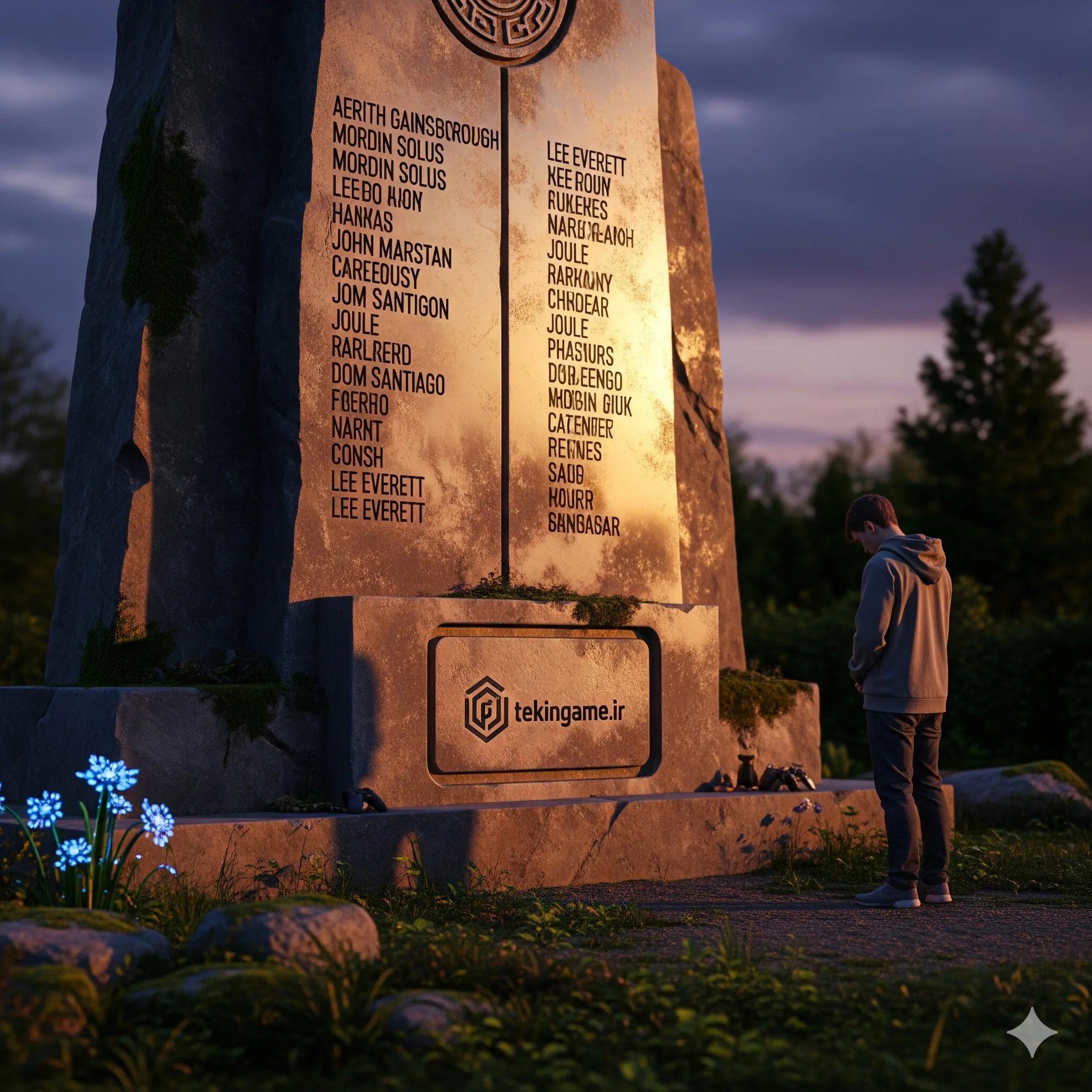
In classical literature and cinema, the audience occupies the position of a passive observer. We sit in darkened theaters, watching larger-than-life figures perish on silver screens. We grieve, yet our hands remain stationary in our laps. In interactive entertainment, this psychological contract is fundamentally shattered. When a player navigates a virtual world, their biological nervous system is directly coupled to the avatar via controller haptics, muscle memory, and thousands of real-time decisions. For dozens, sometimes hundreds of hours, we have nurtured their skill trees, scavenged their survival supplies, managed their wounds, and steered them through harrowing conflicts. Consequently, when a game narrative strips away that character—not through a temporary failure state and a repeatable 'Game Over' screen, but through irrevocable, canon mortality—the resulting psychological impact is not mere aesthetic sadness. It is authentic, visceral bereavement. In this definitive retrospective at Takin Plus, we systematically dissect the seven most shocking, industry-defining character deaths in video game history, examining the narrative architecture, emotional psychology, and game design mechanics that immortalized them.
Case 1: Sarah & Joel Miller (The Last of Us Part I & Part II) — Shattering the Myth of Heroic Sanctuary
Naughty Dog’s 2013 magnum opus, directed by Neil Druckmann and Bruce Straley, opens not with heroic bluster, but with domestic intimacy. The player is handed the controller not as Joel—the hardened, grizzled survivalist—but as his twelve-year-old daughter, Sarah. Exploring their Austin home, discovering a wristwatch birthday present, and observing television broadcasts detailing chaotic fungal outbreaks grounds the player in innocent domestic warmth. When the Cordyceps crisis erupts, Joel’s desperate scramble through burning streets carrying Sarah reaches a terrifying fever pitch. Yet the fatal bullet arrives not from the slavering jaws of an infected Runner, but from the assault rifle of a regular military soldier executing bureaucratic containment orders. Troy Baker’s devastating voice acting, capturing the ragged gasps of a father realizing his child’s life is slipping away, alongside Gustavo Santaolalla’s melancholic acoustic chords, created an untouchable standard for emotional storytelling in the medium. It definitively established that in this ruined reality, innocence affords zero plot armor.
Seven years later, in The Last of Us Part II, Naughty Dog delivered an even more audacious subversion by terminating Joel Miller himself within the game's opening hours. Ambushed by Abby Anderson and her former Firefly militia in a snowbound Jackson lodge, Joel is methodically bludgeoned to death with a golf club while a pinned, hysterical Ellie screams for mercy. By executing the beloved patriarchal icon through the perspective of his traumatized surrogate daughter, Naughty Dog rejected conventional sequel fan service. Joel’s brutal execution was the direct moral consequence of his catastrophic choice at the Salt Lake City hospital in the original game. It weaponized the player’s grief, transforming profound love into an intoxicating, self-destructive spiral of vengeance that interrogated the moral bankruptcy of cyclical hatred.
Case 2: Aerith Gainsborough (Final Fantasy VII) — The Masamune Descent & The Birth of 3D Grief
When Square released Final Fantasy VII on the PlayStation in 1997, it marked the watershed transition of role-playing games into the three-dimensional cinematic era. Yet its most culturally seismic achievement occurred at the conclusion of Disc 1. Within the shimmering, subterranean cathedral of the Forgotten Capital, Aerith kneels in silent prayer, attempting to commune with the Lifestream and summon the protective spell Holy. Without warning, Sephiroth drops silently from the vaulted ceiling, impaling her through the torso with his six-foot Masamune blade. The white Materia slips from her hair ribbon, bouncing rhythmically down the marble stairs into crystalline waters with an echoing acoustic chime, while Nobuo Uematsu’s 'Aerith's Theme' swells into an unforgettable crescendo of tragedy.
What solidified Aerith’s death as an architectural milestone in game design was Square's uncompromising refusal to accommodate gameplay convenience. In traditional JRPGs, the designated heroine is rescued at the eleventh hour, or revived through sacred phoenix down items. In FF7, Aerith was the player's primary White Magic healer; players had dedicated dozens of hours to leveling her Limit Breaks and optimizing her spell loadouts. When Cloud Strife carries her lifeless body into the lake, Square permanently excised her character data from the active roster. The permanent empty slot in the party management screen served as an unyielding mechanical reminder of mortality, proving to an entire generation of gamers that loss in art, as in life, is final and irreversible.
Case 3: Ghost & Roach (Call of Duty: Modern Warfare 2) — Shepherd’s Treason at the Extraction LZ
Infinity Ward’s 2009 blockbuster Call of Duty: Modern Warfare 2 transformed modern military shooters into high-octane cinematic spectacles. The campaign climax in the mission 'Loose Ends' represents the absolute zenith of operational tension. As Gary 'Roach' Sanderson alongside the fan-favorite, balaclava-clad Simon 'Ghost' Riley, the player endures an excruciating siege at Vladimir Makarov's Georgian safehouse to extract the vital DSM data drive. Scurrying down a mortar-blasted hillside through tree lines while carrying critical intelligence, Roach is wounded by an explosion, and Ghost heroically drags his bleeding body toward the approaching Pave Low helicopter commanded by Lieutenant General Shepherd.
The sudden betrayal strikes with catastrophic precision. Shepherd asks, 'Do you have the DSM?', receives confirmation, and instantly draws his .44 Magnum, shooting Roach through the chest before putting a bullet through Ghost's forehead. Thrown callously into an open dirt trench, the player watches through Roach’s fading, blood-splattered vision as Shepherd’s Shadow Company PMC operatives douse their bodies in jerry cans of gasoline. Shepherd delivers his fatal, cynical monologue, tosses his lit cigar into the pit, and ignites the flames as Hans Zimmer's somber score plays over the radio chatter. It was a profound subversion of military camaraderie, exposing the corrupt machinery of institutional warmongering and generating an inferno of player rage that propelled the final act of the game.
Case 4: Lee Everett (The Walking Dead: Season 1) — Clementine's Crucible in the Savannah Jewelry Store
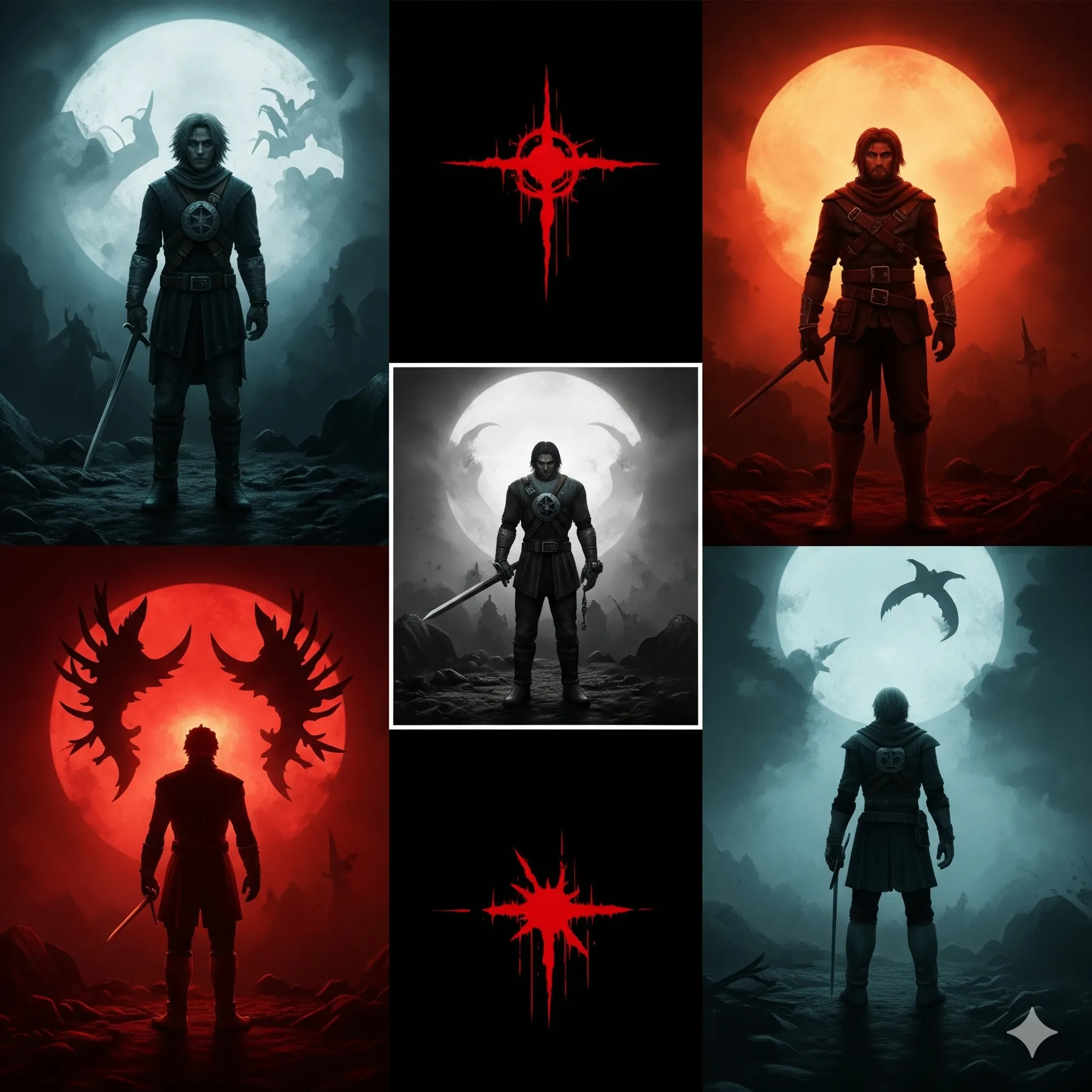
Telltale Games’ episodic narrative adventure in 2012 proved that mechanical simplicity could produce unparalleled emotional depth. At its core lay the relationship between Lee Everett—a convicted felon granted an unexpected second chance amidst the zombie apocalypse—and Clementine, a vulnerable eight-year-old orphan he vows to protect. Across five grueling episodes, the player’s dialogue choices and ethical actions serve not merely to navigate survival hurdles, but to cultivate Clementine’s moral compass.
The finale in a dilapidated Savannah jewelry store strips away every illusion of heroic invulnerability. Bitten by a walker and weakened beyond salvation despite the optional amputation of his left arm, Lee collapses against a cold radiator. Handcuffed to prevent reanimation, he uses his final breaths to impart essential lessons on marksmanship, survival, and moral decency. The player is confronted with the most agonizing dilemma in episodic gaming: instruct Clementine to fire a bullet into his brain to spare him the agony of turning, or command her to walk away and preserve her innocence from the act of patricide. As Clementine raises the trembling pistol through streaming tears, players experienced the transcendent power of interactive empathy—a passing of the torch that forged one of gaming’s most resilient heroines.
Case 5: Arthur Morgan (Red Dead Redemption 2) — Existential Mortality and the High Honor Sunrise
In Red Dead Redemption 2, Rockstar Games crafted what is widely regarded as the crowning achievement of narrative character arcs in modern video games. Arthur Morgan is introduced as a ruthless, hardened enforcer for Dutch van der Linde's nomadic outlaw syndicate. However, rather than concluding his story with a sudden gunfight, Rockstar chose an agonizing, slow-burning physical affliction: terminal tuberculosis, contracted during an mundane debt collection mission in Chapter 2 and officially diagnosed in Saint Denis midway through the narrative.
The diagnosis alters the entire metaphysical fabric of the open world. As Arthur’s physical stamina drains, his coughs become bloody, and his cheeks hollow, the player confronts the unavoidable finitude of his existence. Forced into moral clarity, Arthur recognizes Dutch’s descent into paranoid narcissism and dedicates his remaining days to securing the escape of John Marston, Abigail, and young Jack. In the High Honor finale on the rocky mountain ridge of Beaver Hollow, after fighting off Micah Bell with his dying strength, Arthur collapses onto a stone ledge. As the golden morning sun pierces through the morning mist, accompanied by D'Angelo’s haunting vocal performance of 'May I Stand Unshaken', Arthur draws his final peaceful breath. It represents the pinnacle of classical tragedy: a flawed man who, in the shadow of imminent death, conquered his inner demons and attained genuine spiritual redemption.
Case 6: John Marston (Red Dead Redemption 1) — The Barn Doors and the Death of the American Frontier
Eight years prior to Arthur’s journey, Rockstar had already stunned the world with the climax of the original 2010 Red Dead Redemption. For dozens of hours, players guided John Marston across New Austin and Nuevo Paraiso, fulfilling the blackmailed demands of federal agent Edgar Ross by hunting down his former outlaw brothers Bill Williamson, Javier Escuella, and Dutch van der Linde. Having paid his debt in blood, John returns to his ranch at Beecher’s Hope, where the game shifts into pastoral domesticity—herding cattle, breaking wild horses, and reconnecting with his son Jack.
Yet modern civilization brooks no compromises with the ghosts of the frontier. When Ross surrounds the ranch with a mechanized detachment of US Army soldiers and federal agents, John rushes Abigail and Jack to safety on a single horse. Retiring to the barn, he cocks his revolver, takes a deep breath, and pushes open the wooden doors. Facing a firing squad of twenty heavily armed men, the Dead Eye meter activates one last time. The player can empty every chamber, but mathematics makes survival impossible. The synchronized volley tears through Marston's chest in a brutal spray of red. As Edgar Ross triumphantly lights a cigar over his corpse, the myth of the noble outlaw is formally buried beneath the unforgiving march of twentieth-century industrial bureaucracy.
Case 7: Vesemir (The Witcher 3: Wild Hunt) — The Fall of the Wolf Mentor at Kaer Morhen
In CD Projekt Red’s fantasy masterpiece The Witcher 3: Wild Hunt, Vesemir is not merely an elder monster hunter; he is the venerable father figure of the School of the Wolf, the mentor who raised Geralt, Eskel, and Lambert, and the wise grandfather who trained young Ciri. During the colossal siege of Kaer Morhen, when the supernatural army of the Wild Hunt breaches the ancient courtyard and freezes the defenders in glacial rime, Ciri is captured by the sadistic Aen Elle general, Imlerith.
Refusing to let his surrogate daughter be dragged into another dimension, the elderly Witcher engages Imlerith in desperate close-quarters combat. When Imlerith pins Vesemir by the throat and threatens Ciri with torture, Vesemir makes the ultimate sacrifice: he plunges his hidden silver dagger into the general's armored abdomen to provoke him. With a sickening acoustic crunch, Imlerith snaps Vesemir's neck. The profound silence that follows is immediately obliterated by Ciri’s unhinged scream of cosmic agony—an explosion of raw, untamed Elder Blood power that nearly tears the mountain fortress apart. Vesemir’s funeral pyre on the ramparts of Kaer Morhen marked the definitive close of the golden Witcher era, demonstrating the absolute protective love of a parent facing insurmountable darkness.
The Ludonarrative Mechanics of Permanent Loss: How Game Engines Manipulate Systems to Enforce Grief
In game design theory, Ludonarrative Resonance defines the sacred harmonic balance between interactive rulesets and narrative storytelling. When a character perishes, the true genius of an interactive director lies in translating that loss from the cinematic realm into the player's tactile interaction with the controller. In titles like Final Fantasy VII, the persistent vacancy in party formation menus, the stranded exclusive Limit Break Materia, and the permanent absence of high-tier restorative spells convert abstract grief into concrete operational friction.
Similarly, in Red Dead Redemption 2, Arthur's physical deterioration is systematically mapped to core game mechanics. His core drain rates increase exponentially, dead eye duration shortens, heavy food items cause coughing spells rather than health regeneration, and the camera lens subtly distorts during coughing fits. By weaponizing the game's simulation parameters, Rockstar prevented players from treating illness as an artistic trope; instead, the player feels the physical weight of biological failure through every trigger pull and horseback ride.
The Kübler-Ross Model in Interactive Systems: The Five Stages of Player Bereavement
Swiss-American psychiatrist Elisabeth Kübler-Ross famously articulated the five stages of grief: Denial, Anger, Bargaining, Depression, and Acceptance. What is extraordinary is how faithfully global player communities traverse these exact psychological stages following landmark character deaths:
- Denial: Following Aerith's death in 1997, hundreds of thousands of early internet users circulated elaborate myths regarding secret underwater Materia and hidden Disc 2 dialogue branches capable of reviving her. The collective subconscious simply refused to accept finality.
- Anger: When Shepherd murdered Ghost in MW2 or Abby bludgeoned Joel in TLOU2, social media platforms erupted in incandescent rage directed at the writing teams, with players expressing acute betrayal and vindictive fury.
- Bargaining: The proliferation of fan-fiction continuations, PC modding projects designed to eliminate Arthur Morgan's tuberculosis, and desperate searches through decompiled game scripts for unreleased alternate endings.
- Depression: The profound emotional apathy that causes players to put down their controllers for days or weeks, unable to muster enthusiasm for continuing a campaign robbed of its emotional center.
- Acceptance & Catharsis: Re-engaging with the work, recognizing that the character's death was essential to the artistic integrity of the overarching thematic statement, and honoring their legacy as a timeless achievement in interactive narrative art.
The Performance Capture & Digital Voice Acting Revolution
The primary reason modern video game deaths resonate with such devastating intimacy compared to retro eras is the quantum leap in Performance Capture technology. In 1997, Aerith was constructed from low-polygon geometric primitives, and Nobuo Uematsu's orchestral score carried the emotional weight. In contrast, modern masterpieces capture full facial muscular micro-movements and vocal subtleties simultaneously.
Roger Clark's performance as Arthur Morgan required hundreds of hours in motion capture bodysuits, capturing the minute tremor of Arthur's lips as he whispers his final words to his dying horse: 'Thank you.' Troy Baker's shuddering sobs over Sarah's body in The Last of Us, and Ashley Johnson's ragged hyperventilation as Ellie watches Joel die, brought unprecedented psychological authenticity to digital avatars. These are not merely animated computer models; they are high-art theatrical performances that bridge the chasm between artificial silicon and raw human truth.
The Narrative Architect's Codex: 6 Structural Laws for Designing High-Impact Mortality
For video game narrative designers and creative directors, killing a primary character is the ultimate double-edged sword. Executed poorly, it alienates the audience, breeds cynicism, and ruins mechanical pacing. Executed with mastery, it elevates the game into cultural immortality. The six immutable laws for engineering authentic interactive mortality are:
- Law 1: Absolute Thematic Earnedness: The character's death must be deeply rooted in the foundational thematic architecture of the game, not an arbitrary shock tactic cooked up to boost social media engagement.
- Law 2: Irreversible Catalytic Impact: Mortality must radically alter the developmental trajectory of surviving characters, forcing them into profound psychological evolution or catastrophic transformation.
- Law 3: Philosophical Justification for Stripping Agency: If a game empowers the player to make life-or-death decisions throughout the campaign, revoking that agency for a character's death requires rock-solid narrative justification that resonates on an existential level.
- Law 4: Acoustic Reverence & Silence: The sound design must know when to withhold music. The quiet rustle of wind over a mountain ridge or the stark silence following a gunshot often conveys a thousand times more grief than an overbearing orchestral score.
- Law 5: Systemic Memory Retention: The game world must remember the dead. In-game dialogues, environmental changes, and NPC behaviors must reflect the ongoing vacuum created by their absence.
- Law 6: Achieving True Dramatic Catharsis: The ultimate goal is not to leave the player in nihilistic despair, but to deliver catharsis—an emotional purification that transforms sorrow into enduring appreciation for the fragile beauty of life.
Interactive Narrative Architecture & Mortality Lexicon
Chronological Odyssey of Landmark Character Demises in Interactive Art
Comparative Impact Matrix // Four Defining Tragedies Across Gaming Eras
Psychological Decomposition of Player Grief Vectors Upon Character Loss
Historic Grief Retention & Cathartic Resonance Index
📚 Classified & Related Dossiers in TekinGame
If you wish to explore beyond this report and delve into cybernetic frontiers and autonomous AI architectures, do not miss these three exclusive deep-dives in the Tekin Garage:
Takin Radar Evaluation // Dramatic Structural Metrics of Interactive Loss
Digital Narrative Forensics Console // Character Mortality Verification
Narrative Design Risk Governance: Unearned Shock vs. Authentic Catharsis
- Elevated video game storytelling to the highest pantheon of classical literature and cinema
- Subverted conventional invulnerability tropes to induce authentic, transformative catharsis
- Brilliantly unified inventory mechanics, controller ergonomics, and HUD systems with loss
- Pioneered performance capture milestones that established new benchmarks for digital human emotion
- Severe risk of player alienation if mortality is unearned or deployed as cheap shock value
- Potential disengagement or temporary campaign abandonment following the loss of a beloved lead
Editorial Verdict & Authoritative Retrospective Reference Archives
Frequently Asked Questions on Character Mortality and Game Design Theory
Was there any official secret method to resurrect Aerith in Final Fantasy VII?
No. Square Enix leadership officially confirmed that Aerith's death was hardcoded to confront players with the irreversible finality of grief; no hidden Materia or cheat codes could revive her.
Why did Rockstar choose tuberculosis for Arthur Morgan rather than a heroic shootout?
To provide Arthur with existential mortality awareness, transforming his final months from hollow vengeance into deliberate, selfless redemption aimed at securing others' freedom.
Why did Joel's death in The Last of Us Part II provoke such fierce community debate?
Because players had developed intense parental affection for Joel over seven years; his sudden, unceremonious execution challenged traditional hero worship and forced players directly into a harrowing meditation on vengeance.
What does Ludonarrative Resonance mean in the context of character mortality?
It describes the harmonious alignment of gameplay mechanics and story, such as disabling a fallen hero's menu slot or degrading physical attributes to reflect bodily decay.
Why was Clementine's decision regarding Lee Everett so psychologically potent?
Because players spent the entire season acting as her moral compass; making her choose whether to euthanize her surrogate father or walk away marked the ultimate bittersweet transition into adulthood.
