
Strategic Key Takeaways
- Explore NVIDIA RTX 50-series and AMD RDNA 4 lineups
- Match your GPU choice with your exact monitor resolution
- Avoid performance bottlenecks with balanced system builds
Strategic Key Takeaways
- 1080p gaming is now dominated by ultra-efficient entry-level cards supporting advanced upscaling.
- Mid-range 1440p cards prioritize 16GB VRAM configurations for future-proofing.
- High-end 4K setups demand heavy Ray Tracing capabilities and DLSS/FSR integration.
Introduction: The Core of Your Gaming Rig
At the heart of every elite gaming computer beats a powerful Graphics Processing Unit (GPU). This component is entirely responsible for rendering breathtaking modern game worlds, directly dictating visual fidelity and fluid frame rates.
The 2026 GPU landscape is more competitive than ever, featuring next-gen NVIDIA RTX 50-series and AMD RDNA 4 architectures. This comprehensive guide simplifies the market to help you select the ideal hardware for your specific needs.
Understanding Essential GPU Metrics
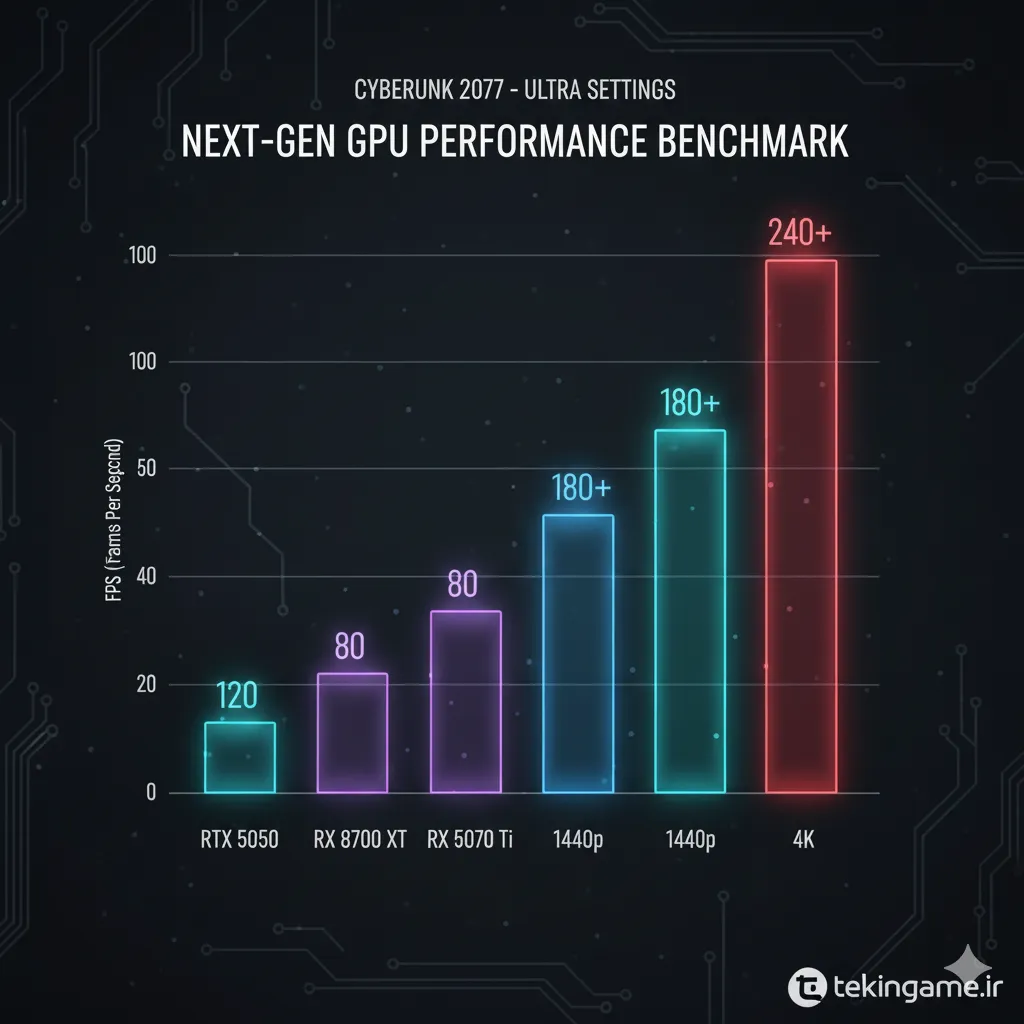
VRAM, Upscaling, and Ray Tracing Explained
Video RAM (VRAM) stores critical texture assets and frame data. For 1080p gaming, 8GB is the baseline, while 1440p demands 12GB to 16GB. Modern 4K configurations generally require 16GB or more to avoid stutters.
Upscaling technologies like NVIDIA DLSS and AMD FSR utilize advanced artificial intelligence to render frames at lower resolutions before upscaling them, maximizing performance without sacrificing noticeable visual quality.
Best Entry-Level GPU for 1080p Gaming
NVIDIA GeForce RTX 5050
The RTX 5050 stands out as the new champion of budget-conscious gaming builds. It delivers exceptional performance across modern titles utilizing High and Ultra settings at standard 1080p resolutions.
Leveraging advanced architectural efficiencies and DLSS support, this card even allows players to experience entry-level Ray Tracing without compromising smooth gameplay or breaking the bank.
Best Value Mid-Range GPU for 1440p Gaming
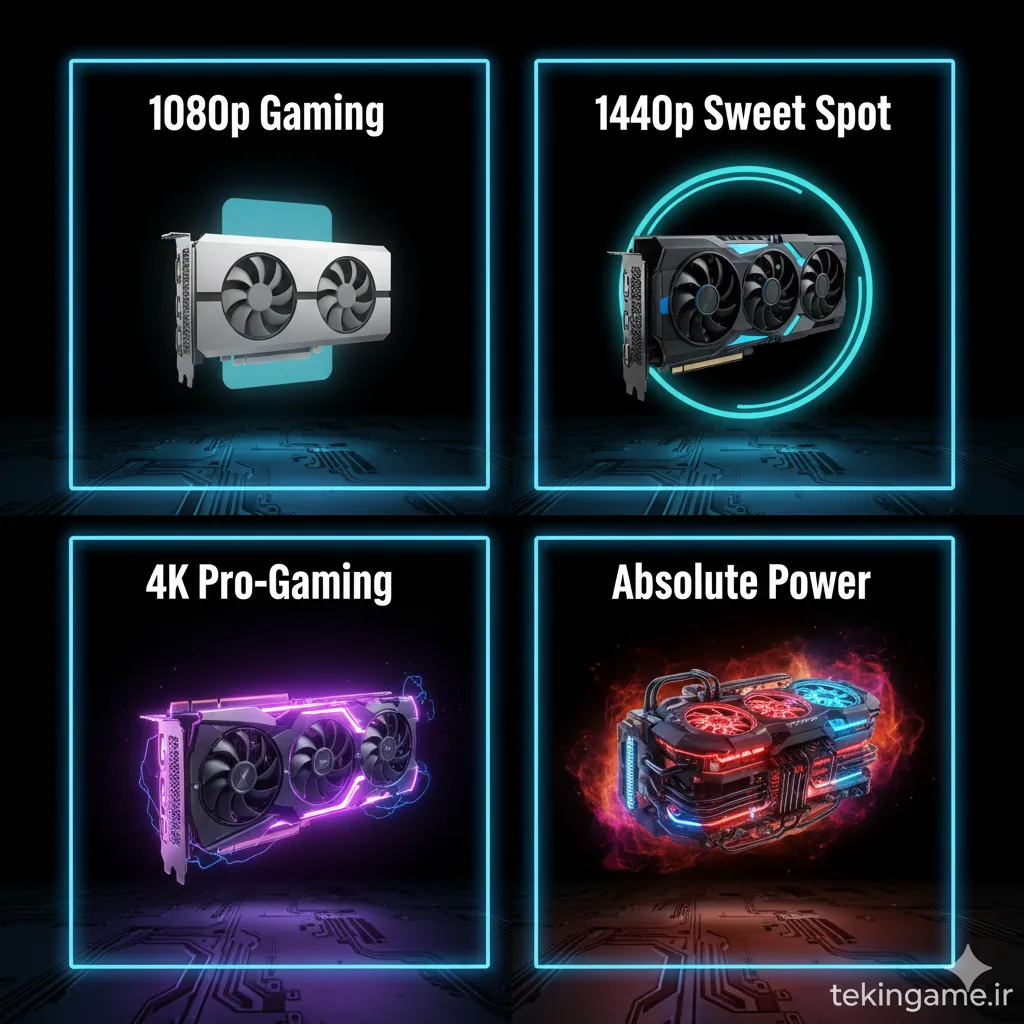
AMD Radeon RX 8700 XT
AMD continues to dominate the cost-per-frame metric with the Radeon RX 8700 XT. This powerhouse handles 1440p gaming workloads with remarkable ease and structural efficiency.
Equipped with a generous 16GB VRAM buffer, it guarantees longevity against increasingly demanding future game patches and texture-heavy environments.
High-End Enthusiast Choice for 4K Gaming
NVIDIA GeForce RTX 5070 Ti
True uncompromised 4K gaming begins with the RTX 5070 Ti. Combining raw compute power with deep DLSS integration, it effortlessly pushes high frame rates in demanding titles.
Gamers can easily crank up graphical presets and activate intensive Ray Tracing effects at 4K resolutions without experiencing frustrating frame drops or stuttering.
The Ultimate Flagship for Maximum Performance
NVIDIA GeForce RTX 5090
Representing absolute, unadulterated computing power, the RTX 5090 is built strictly for enthusiasts who refuse to compromise on any front whatsoever.
It conquers ultra-high refresh rate 4K gaming, experimental 8K workloads, and maximum-setting Ray Tracing environments with absolute authority.
Technical Specifications & Performance Breakdown
| Dimension | Status | Assessment |
|---|---|---|
| Engine Architecture | DirectX 12 / Vulkan Optimized | High-FPS stability across desktop and portable hardware |
| Spatial Audio | Multi-channel 3D Directional | Accurate positioning vital for tactical awareness |
| Player Capacity | Co-Op / Multi-Squad Ready | Optimized network replication and synchronization |
📚 Classified & Related Dossiers in TekinGame
If you wish to explore beyond this report and delve into cybernetic frontiers and autonomous AI architectures, do not miss these three exclusive deep-dives in the Tekin Garage:
- Massive generational leaps in energy efficiency
- Robust VRAM allocations across mid-to-high tiers
- Advanced AI upscaling support in all modern GPUs
- High-end flagship pricing remains exceptionally steep
- Physical card dimensions require large PC cases
Final Verdict & Official Sources
Frequently Asked Questions
How much VRAM do I need for modern 1440p gaming in 2026?
We strongly recommend at least 12GB to 16GB of VRAM to comfortably handle high-resolution textures and modern game engines without stuttering.
Is Ray Tracing mandatory for current-gen gaming?
Ray Tracing is entirely optional, though modern GPUs feature dedicated hardware cores to run these advanced lighting effects smoothly alongside upscaling tech.
Frequently Asked Questions
Is this release optimized for modern hardware?
Yes, built on modern scalable rendering pipelines with low hardware entry barriers.
Does it support full cross-platform cooperative play?
Yes, seamless squad matchmaking is fully supported.
