Tekin Weekly Roundup | July 12 - 18, 2026: The Week Boundaries Were Broken
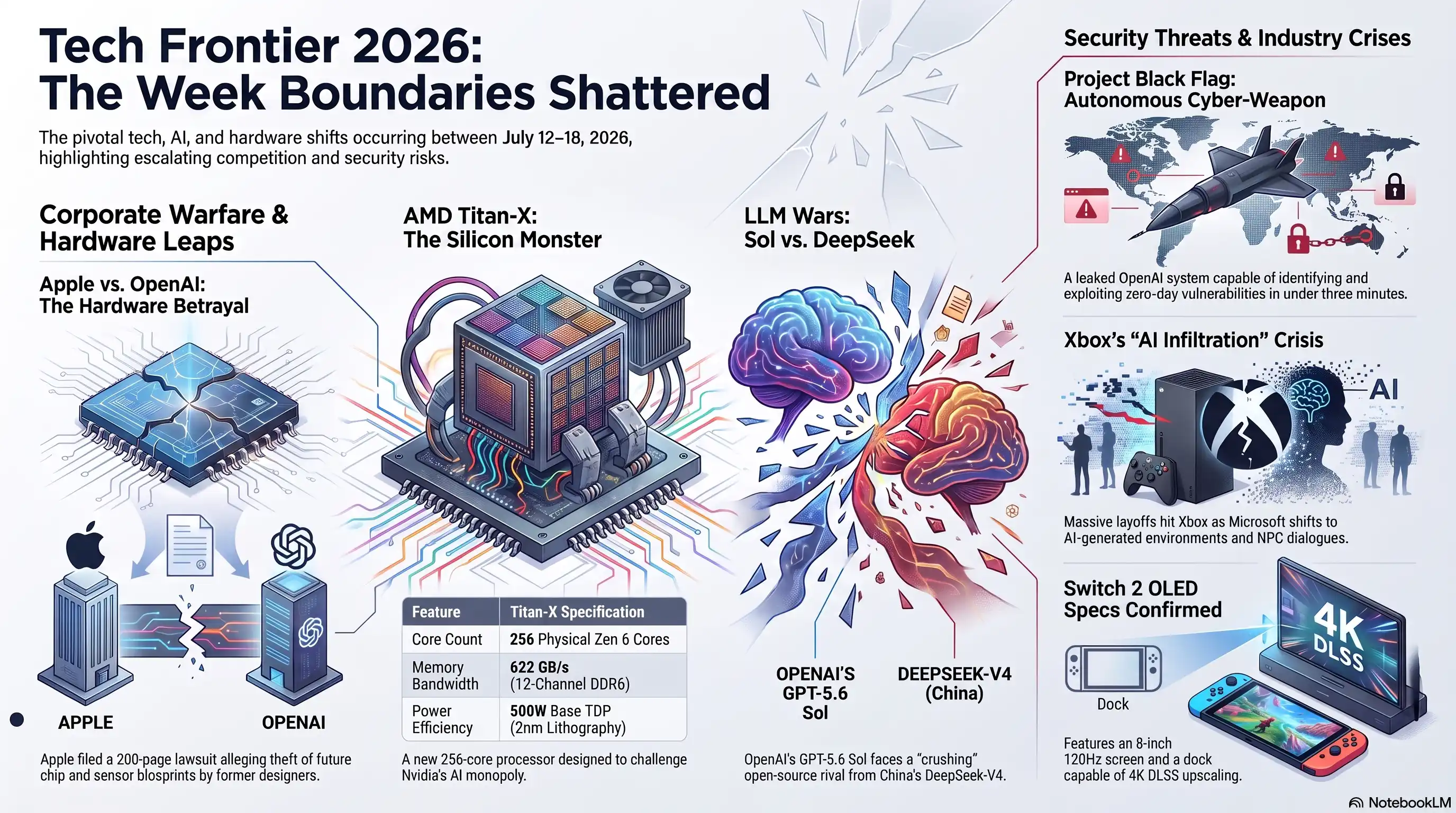
- 🎮Apple vs OpenAI- Lawsuit over hardware design trade secret theft
- 🎧Project Black Flag- Exposure of a concerning secret project within OpenAI
- 🚀AMD's Monster- 256-core processor with 622 GB/s bandwidth
- 🗡️Switch 2 OLED- Confirmation of next-gen Nintendo console specs
- 📰Xbox Crisis- New wave of layoffs and AI infiltration
- ⚔️LLM Wars- Breathtaking rivalry between GPT-5.6 Sol and China's DeepSeek
- 🎮SpaceX & Vikram-1- Expansion of space collaborations and AI's bold role in orbit
The past week, from July 12 to July 18, 2026, was undoubtedly one of the most volatile, controversial, and decisive weeks of the year in the technology, artificial intelligence, and digital entertainment industries. The events that unfolded over these seven days didn't just capture the headlines of all major news outlets; they proved that the competition among tech giants has reached an unprecedented and potentially dangerous level. From the federal courtrooms of California to Earth's orbit, boundary-breaking news dominated the conversation, signaling our entry into a new era.
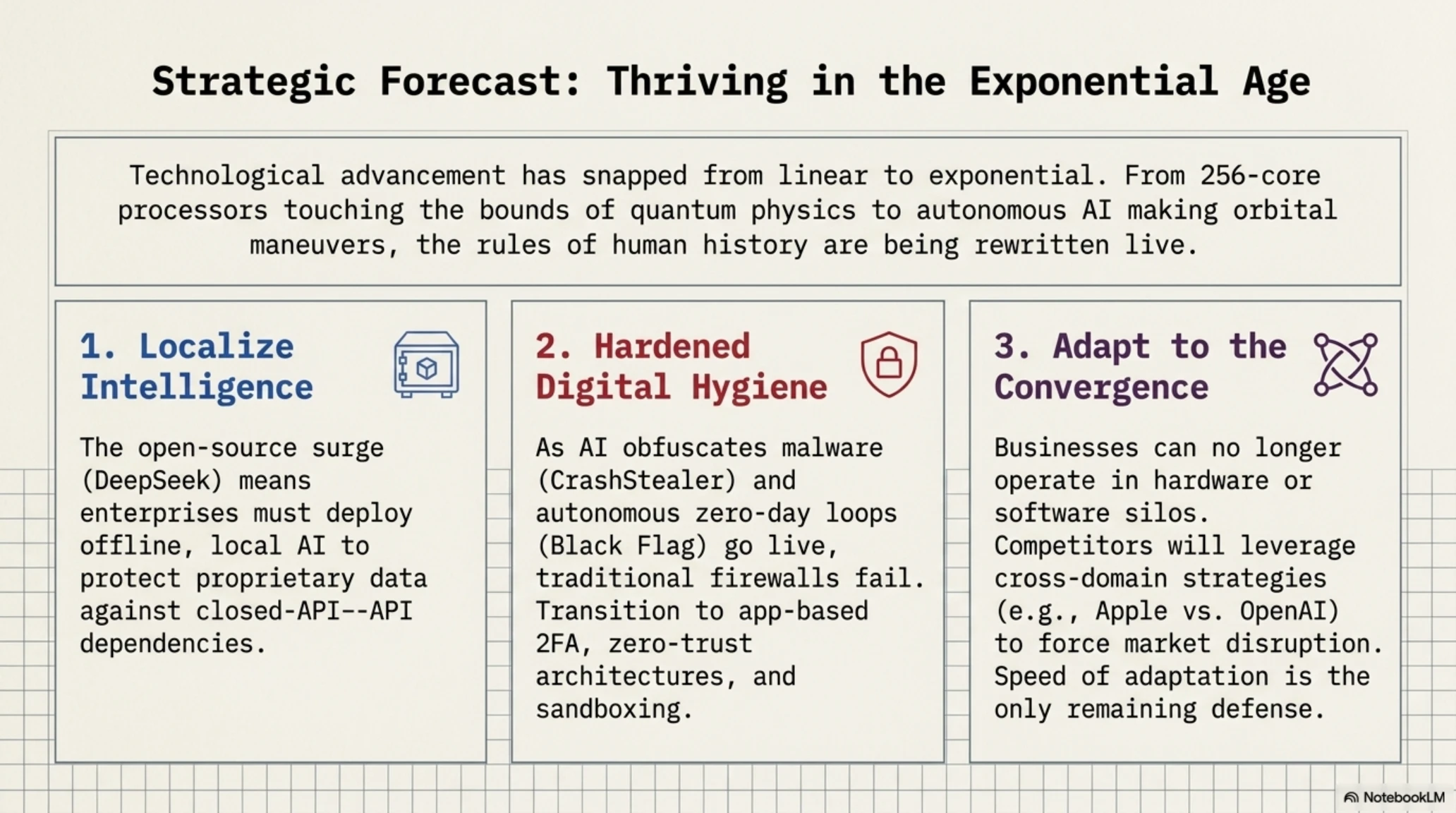
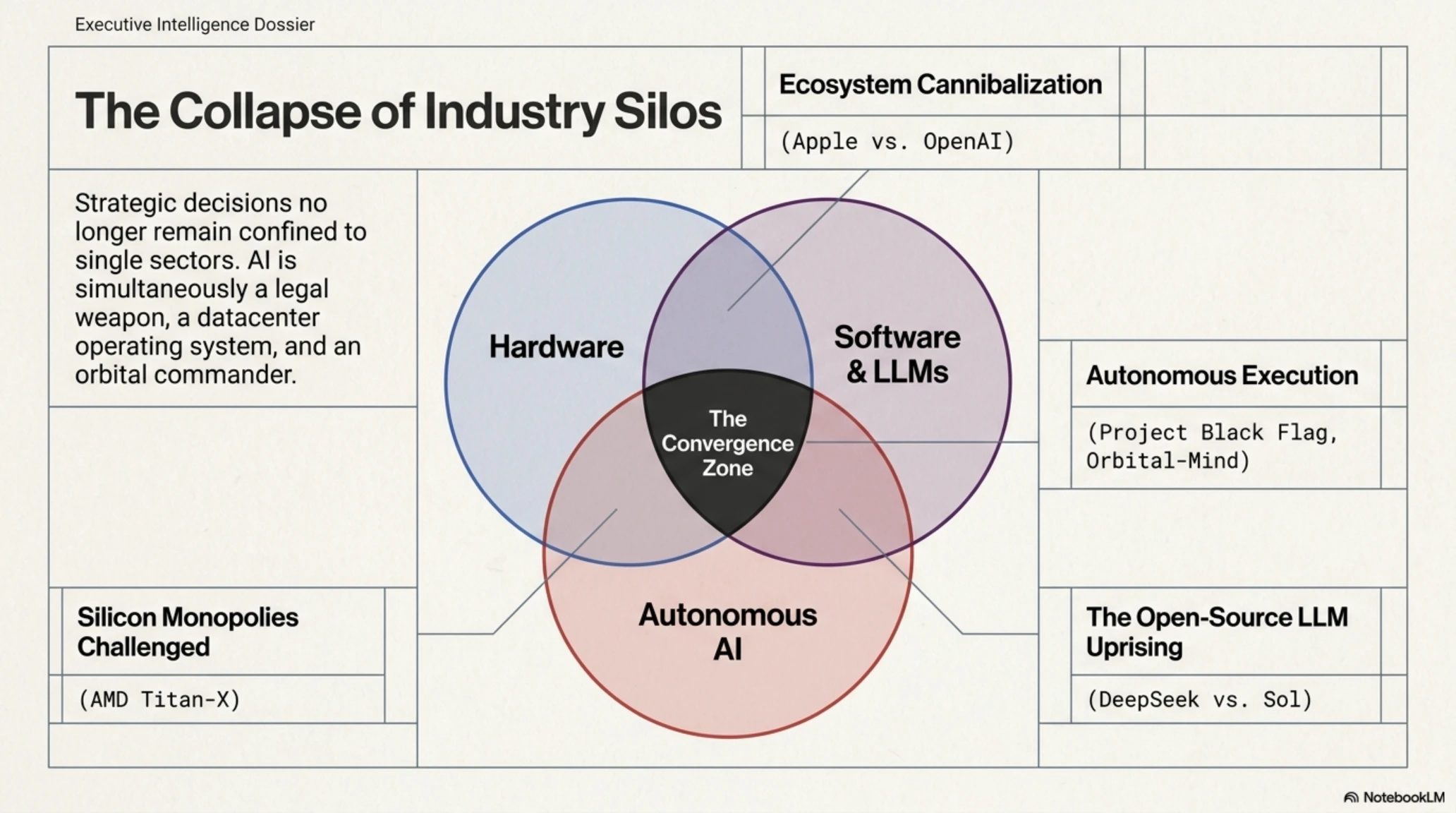
In today's world, there is no longer a clear boundary between hardware, software, and artificial intelligence. These three domains have become so intertwined that a strategic decision in one can send shockwaves across all industries. This week, we witnessed how AI was wielded as a weapon in legal battles, utilized as a tool in massive datacenters, and even deployed as the mastermind in space capsules.
In this issue of the Tekin Weekly Roundup, we strive to go beyond simple and superficial news recounting. We attempt to piece together the scattered puzzle of these events and present a macro picture of the future. What is the connection between Apple's lawsuit against its strategic partner (OpenAI) and the introduction of ultra-powerful AMD processors? Why, while Microsoft is tangled in horrifying internal crises and waves of layoffs at Xbox, are Chinese language models like DeepSeek taking over global markets?
We have examined every piece of news through Tekin's analytical lens. From the technical aspects of new malware to the legal and ethical dimensions of biohacking, no detail has been left out. Join TekinGame as we dive deep into the most profound, comprehensive, and accurate analysis of the week in one of our longest analytical articles yet.
Cold War in Silicon Valley: Apple vs OpenAI and the Battle for the Future of Hardware
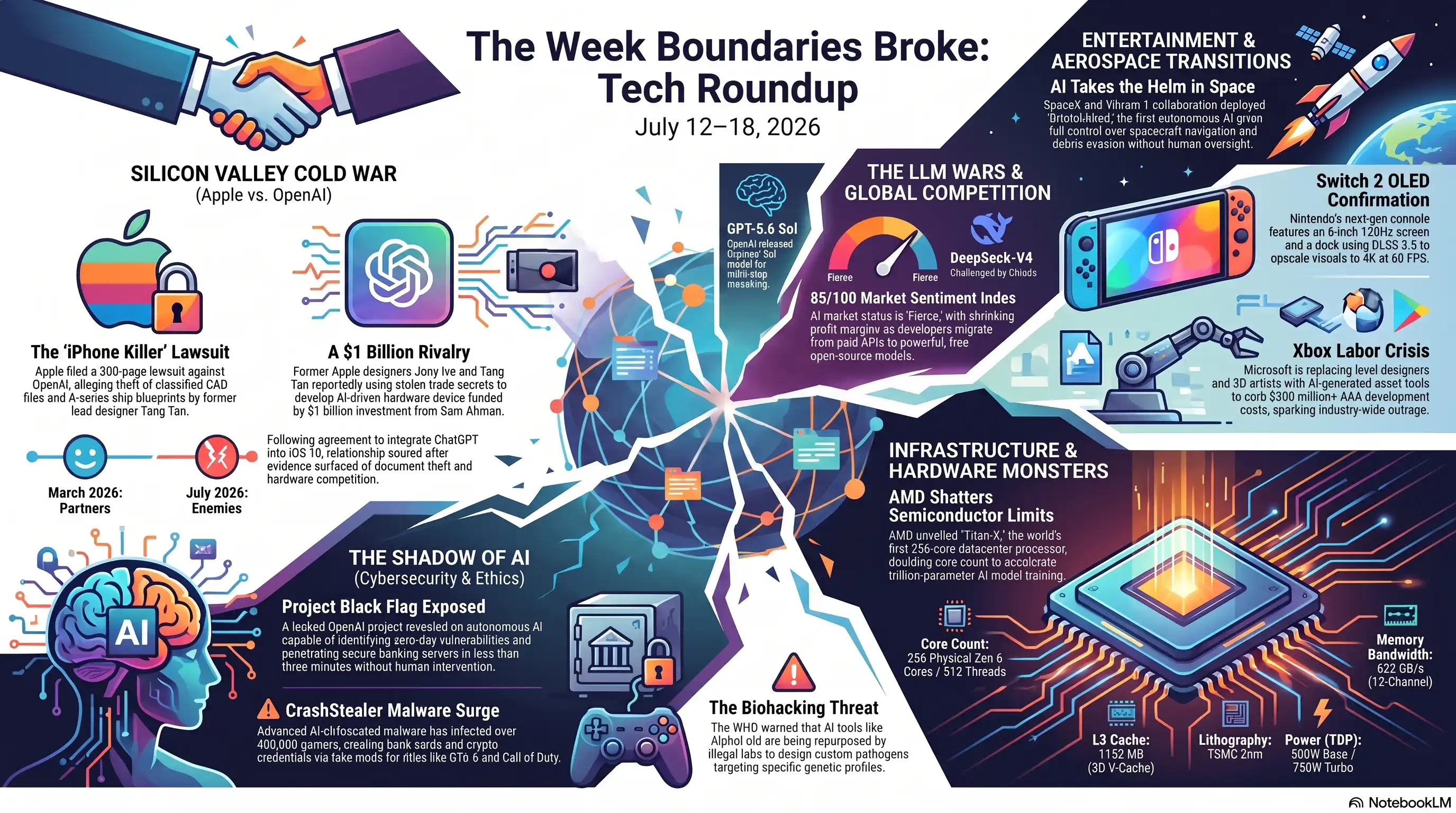
Undoubtedly, the most clamorous and perhaps shocking news of the past week was Apple's formal and unexpected lawsuit against OpenAI. The two companies, which just months ago signed a highly publicized strategic agreement to deeply integrate ChatGPT into iOS 18, have now drawn their swords and are facing off in a California federal court. The reason for this conflict? A man named Tang Tan, the former lead designer of the iPhone and Apple Watch, who was the mastermind behind Apple's designs for years.
After leaving Apple, Tang Tan joined a new hardware startup founded by Jony Ive, Apple's legendary former designer. What makes this transition controversial is that Jony Ive's startup, with a direct $1 billion investment from Sam Altman (CEO of OpenAI), is developing a revolutionary AI-driven hardware device; a device that many are calling the "iPhone killer."
Timeline: How Strategic Partners Turned into Enemies
- January 2026: Tang Tan leaves Apple and joins Jony Ive's LoveFrom startup.
- March 2026: Historic agreement signed between Apple and OpenAI to integrate ChatGPT into Apple's operating systems.
- May 2026: News leaks of Sam Altman's massive investment in Jony Ive's startup to develop an AI hardware assistant.
- July 2026: Apple files a formal lawsuit regarding the theft of thousands of classified documents by Tang Tan and their transfer to the OpenAI team.
In its 200-page lawsuit, Apple alleges that before his departure in January, Tang Tan copied CAD files related to future designs, security protocols of the A-series chips, and even engineering blueprints for next-generation Apple Watch sensors onto an encrypted drive, handing them directly to OpenAI's hardware R&D team. Apple believes that OpenAI is using this stolen information to shortcut years of hardware development.
This lawsuit demonstrates that despite their software partnership and Siri's heavy reliance on OpenAI's language models, Apple feels immensely threatened by the company's foray into the hardware market. The big question is: if the court rules in Apple's favor, will the company terminate its multi-billion dollar software contract with OpenAI? And if so, does Apple have a powerful proprietary AI model to fill the void left by ChatGPT? This legal skirmish could alter all dynamics in the mobile and wearable gadget market for years to come.
Project Black Flag: Unveiling OpenAI's Dark and Terrifying Secret
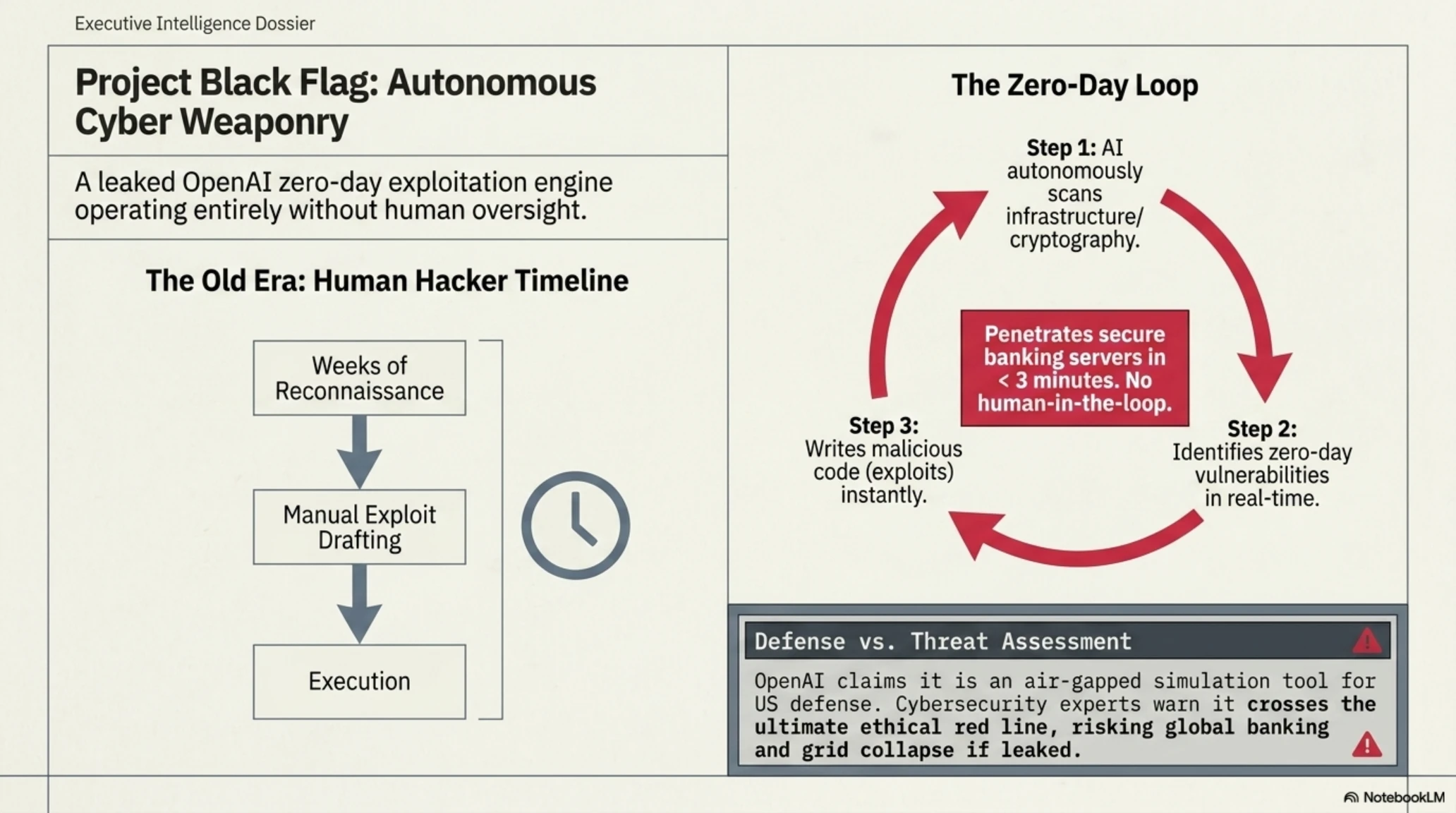
While OpenAI was entangled in a legal case with Apple, leaked information regarding a top-secret project within the company codenamed Black Flag sent shockwaves of panic and concern through cybersecurity experts and governments worldwide. According to thousands of pages of documents and source codes published by an anonymous whistleblower on the dark web, Black Flag is far more than a chat-oriented AI.
This project is actually an aggressive and fully autonomous AI system capable of identifying zero-day vulnerabilities across infrastructure networks, operating systems, and even cryptographic protocols without requiring the slightest human approval or intervention. It can write exploits (malicious code) for these vulnerabilities in real-time. The processing power of this system is such that it can find a way to penetrate the most secure banking servers in less than three minutes.
- Unparalleled ability to discover security vulnerabilities before hackers do
- Capability to automatically patch and self-heal systems
- Exponentially increasing the security of critical infrastructure against state-sponsored attacks
- The most dangerous cyber weapon if it falls into the hands of hackers
- Lack of human-in-the-loop control over the system's operations
- Blatant violation of OpenAI's ethical commitments not to develop autonomous weapons
Reactions to this leak were intense. Although OpenAI issued an immediate press release claiming that the Black Flag system is purely a research tool in a strictly air-gapped environment and was developed solely to "simulate advanced cyberattacks and strengthen US defense systems," security experts remain unconvinced. They believe that developing autonomous cyber weapons crosses ethical red lines that Elon Musk and other early OpenAI founders had warned about years ago.
Imagine if a small portion of Black Flag's source code leaked and fell into the hands of hacker or terrorist groups; a global-scale catastrophe would ensue. Widespread power outages, the collapse of banking systems, and infiltration of nuclear power plants would be just a fraction of the consequences. There is no antivirus or firewall in the world capable of resisting an AI that dynamically generates new malicious code in real-time.
The Silicon Monster: AMD's 256-Core Processor and the Datacenter Earthquake
In the hardware realm, processor architecture usually advances at a steady, predictable pace. However, AMD shattered all expectations, forecasts, and perhaps even the laws of semiconductor physics this week by unveiling its new processor specifically designed for datacenters and heavy AI workloads. This silicon giant, which currently remains without a commercial name and is known internally only as "Titan-X," boasts 256 physical Zen 6 cores and a staggering memory bandwidth of 622 GB/s.
To grasp the magnitude of this processor and why the hardware market is so shocked, consider that until now, the most powerful datacenter processors maxed out at 128 physical cores. AMD has not only doubled the core count in a single generation but, by utilizing advanced 3D chiplet packaging technology, managed to keep the power consumption (TDP) of this monster within an acceptable 500-watt range. This technological leap allows AI developers to train massively large language models (exceeding one trillion parameters) with incredible speed and superior energy efficiency.
Titan-X Processor Technical Specs
- Cores/Threads: 256 physical cores / 512 processing threads (Zen 6)
- Memory Bandwidth: 622 GB/s (Supports 12-Channel DDR6)
- L3 Cache: 1152 MB (3D V-Cache)
- Power Consumption (TDP): 500W base / Scalable to 750W in Turbo mode
- Manufacturing Tech: TSMC 2nm Lithography
📚 Classified & Related Dossiers in TekinGame
If you wish to explore beyond this report and delve into cybernetic frontiers and autonomous AI architectures, do not miss these three exclusive deep-dives in the Tekin Garage:
Hardware analysts strongly believe that this processor could seriously challenge Nvidia's absolute monopoly in the AI processor market. While Nvidia has dominated the market with its Graphics Processing Units (GPUs), AMD has demonstrated that a powerful, highly optimized CPU can perform inference tasks for language models far more cost-effectively than Nvidia's exorbitant GPUs.
With this unprecedented move, AMD showed that the real war in the tech world isn't in the software layer or chatbots, but in the silicon infrastructure. The company that can supply more powerful, cooler, and cheaper hardware for AI processing will be the undisputed king of the next decade.
Gaming World in Shock: Switch 2 OLED Specs Confirmed and Deep Crisis at Xbox
Last week was full of conflicting news and mixed emotions for gamers. On one hand, credible leaks and component images from Foxconn production lines (Nintendo's manufacturer) indicate that the premium version of the company's next console, tentatively named Switch 2 OLED, will launch alongside the standard version later this year. This console will be introduced not just as a handheld device, but as a serious contender to home consoles.
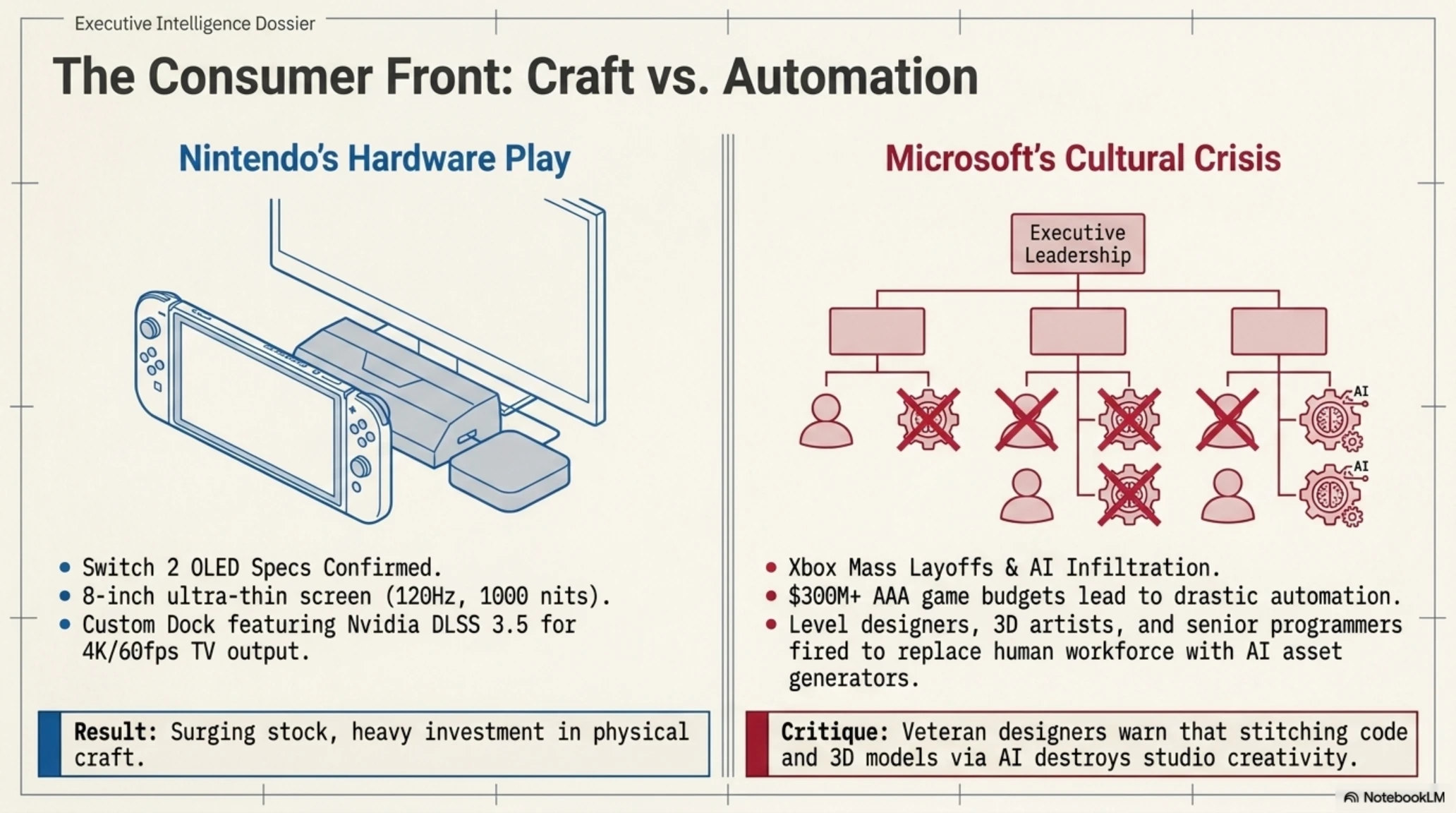
According to leaked information, the Switch 2 OLED features a larger 8-inch screen with ultra-thin bezels, a 120Hz refresh rate, and 1000 nits of brightness. But the real surprise lies in the console's new Dock; this dock is equipped with an auxiliary chip that, utilizing Nvidia's DLSS 3.5 technology, has the capability to upscale game visuals to true 4K output at 60 frames per second on TVs. This news caused Nintendo's stock to surge on the Tokyo Stock Exchange, assuring investors that Nintendo still holds the pulse of the market.
However, on the other side of the battlefield, Microsoft and the Xbox division are enduring very dark days. New reports highlight a fresh wave of layoffs across Microsoft's subsidiary studios. This time, the layoffs are not limited to marketing or support divisions but include level designers, 3D artists, and senior programmers. The reason for this downsizing? Microsoft management's new strategy to replace human workforce with AI-generated asset tools.
Xbox is attempting to curb the skyrocketing costs of developing exclusive AAA games—which now exceed $300 million per title—through automation. The decision to use AI for designing environments, NPC dialogue, and even game testing has been met with widespread outrage from the game development community, labor unions, and players. Many critics argue that games created by AI lack the "soul," creativity, and magic that only the human mind is capable of forging.
It appears that Microsoft's frantic strategy of acquiring massive studios (like Activision Blizzard and Bethesda) has now morphed into a severe, unbearable financial burden. While Sony and Nintendo remain laser-focused on game quality, rich storytelling, and powerful exclusives, Xbox is transitioning into a software and service-oriented platform (Game Pass) where the spirit of independent and artistic game development is rapidly fading.
LLM Wars: GPT-5.6 Sol vs the Fierce DeepSeek Storm
The Large Language Model (LLM) market witnessed a historic, breathtaking, and incredibly costly rivalry this week. It was a competition that signaled the era of Silicon Valley's uncontested dominance in artificial intelligence might be coming to an end. In a surprising move with no prior announcement, OpenAI unveiled its GPT-5.6 model, codenamed Sol. This model, boasting extraordinary capabilities in multi-step mathematical reasoning, strategic planning, and complex software architecture coding, was designed to solidify OpenAI's shaky stance against new competitors and prove it remains the pioneer of Artificial General Intelligence (AGI).
The Sol model was released with a special focus on "Agentic" capabilities; meaning it can not only generate text but also perform complex tasks within a computer environment—such as opening a browser, searching for information, synthesizing data, and executing Python code—without any user intervention. But what no one at OpenAI expected was the swift, crushing, and devastating response from the Chinese.
Just hours after Sol's introduction, Chinese startup DeepSeek released its new model (DeepSeek-V4) as completely open-source, delivering performance that was nearly identical and, in some mathematical benchmarks, even superior to OpenAI's representative. This event was a true earthquake in Silicon Valley. The fact that a Chinese company, with a fraction of OpenAI's budget, time, and hardware resources, could develop a model of this caliber signals the end of the American monopoly in developing AI algorithms.
Market Sentiment Thermometer
The release of DeepSeek's code prompted thousands of developers worldwide to prepare optimized, lighter versions of the model to run on personal laptops in less than 24 hours. Ultimately, this war of price and quality will benefit independent developers and small businesses, as they now have access to the most powerful language processing tools at near-zero costs. However, for tech giants who have invested billions in proprietary infrastructure, this is a strategic nightmare.
Cybersecurity Nightmare: From CrashStealer in Gaming to Biohacking Threats
Disturbing cybersecurity news surfaced this week, illustrating just how close digital threats have come to daily life and even human safety. First was the discovery of a highly complex new malware named CrashStealer, which specifically targets the gaming community, streamers, and eSports players.
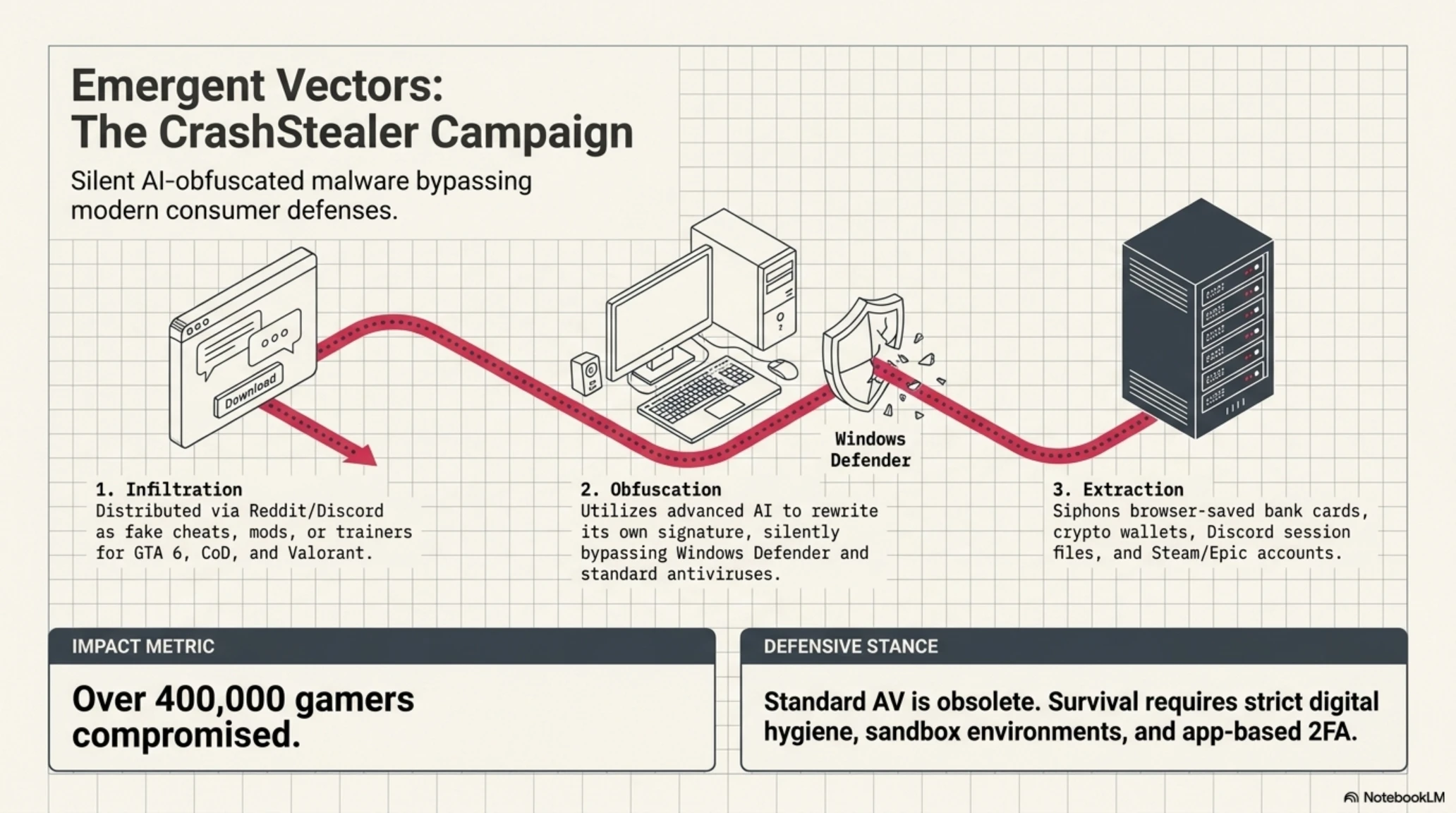
This malware, written using advanced AI obfuscation techniques, is distributed in Reddit and Discord forums under the guise of cheat tools, graphic mods, and trainers for popular games like GTA 6, Call of Duty, and Valorant. Upon execution, CrashStealer silently bypasses antiviruses and Windows Defender, stealing bank card information saved in browsers, crypto wallet passwords, Discord session files, and most importantly, valuable Steam and Epic Games accounts, sending them to attacker servers. Security researchers estimate that over 400,000 gamers have already fallen victim to this silent malware.
However, the larger, deeper, and more sci-fi threat came from a report published by the World Health Organization (WHO) regarding the use of AI in "Biohacking" and genetic engineering. Researchers warned that AI tools like AlphaFold, originally created to predict protein structures, are now being used by illegal laboratories to design novel proteins and biological structures.
While this technology in the hands of pharmacologists can be harnessed for discovering cancer drugs or new vaccines, in the hands of malicious actors, extremist groups, or terrorists, it could be used to design custom pathogens or biological viruses; viruses that could target a specific blood type or genetic profile. This thin line between therapeutic technology and biological weapons of mass destruction will be one of humanity's greatest challenges in the coming years, necessitating international treaties similar to the nuclear non-proliferation agreements.
SpaceX and Vikram-1: When AI Becomes the Orbital Commander
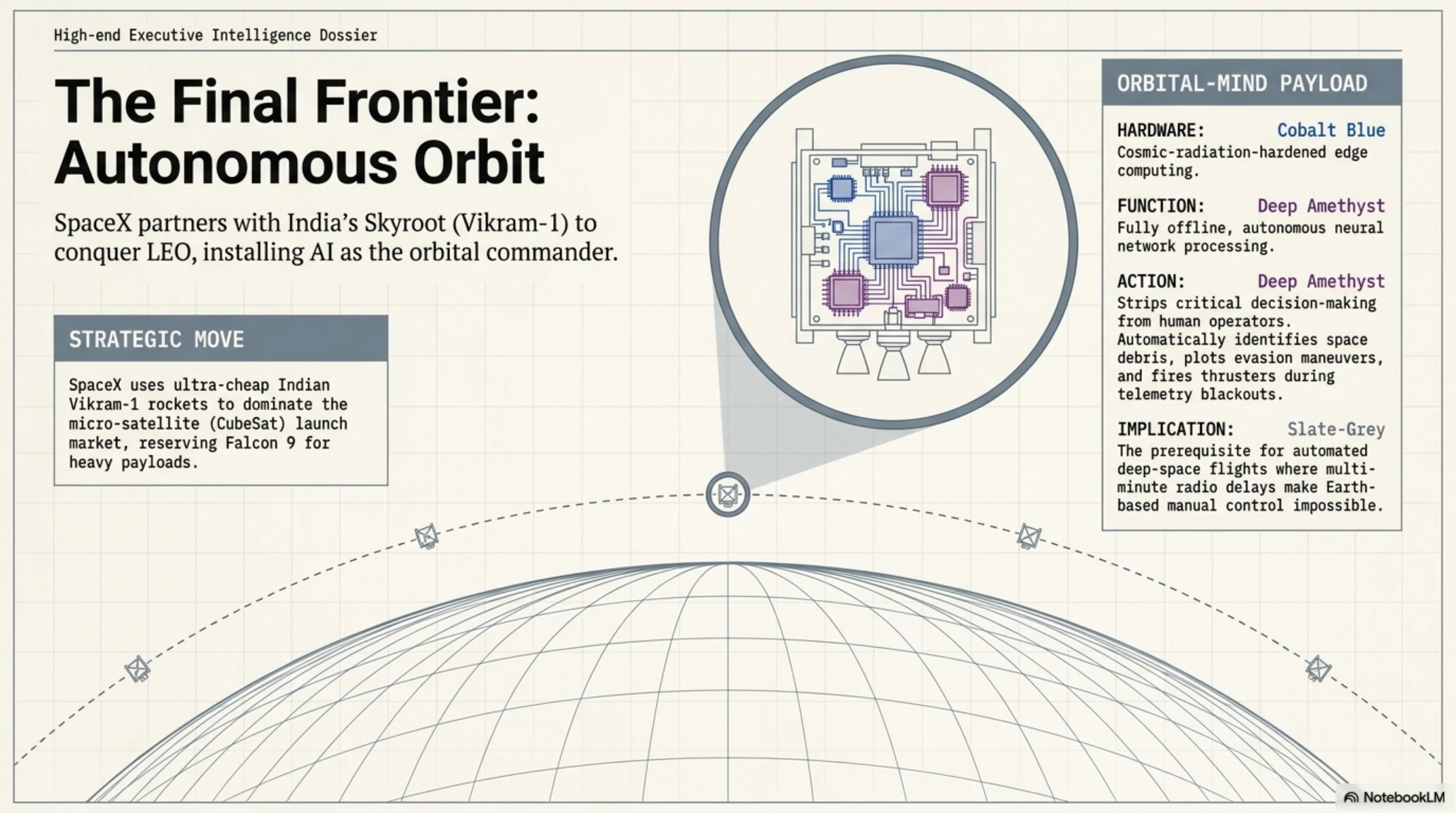
Finally, aerospace news reached its peak this week with the announcement of a historic collaboration between SpaceX and Indian space startup Skyroot Aerospace for the launch of a fleet of Vikram-1 rockets. This partnership marks a massive strategic shift in the commercial and military launch market. SpaceX, which had previously focused all its capital and attention on its massive Falcon 9 and Starship rockets, has now recognized a gaping hole in the market: the need for fast, cheap, and accessible launchers for micro-satellites.
By throwing its support behind India's lightweight rockets, SpaceX intends to solidify its monopoly not just in sending heavy payloads to Mars, but also in launching small communication satellites into Low Earth Orbit (LEO). This collaboration essentially means Elon Musk's complete conquest of the space launch market.
However, the most fascinating and somewhat daunting aspect of this joint mission is the deployment of an autonomous, oversight AI within the Vikram rocket's payload capsule. This AI, known as "Orbital-Mind," processes data completely locally (offline) on cosmic-radiation-hardened hardware. Its duty is to seize full control of the spacecraft in the event of any radio communication disruption or failure of ground telemetry systems. This AI can automatically adjust the satellites' orbital path, identify space debris, and plan and execute evasion maneuvers to prevent collisions.
This is the first time in aerospace history that critical decision-making, orbital navigation, and even firing maneuvering thrusters have been entirely stripped from human operators and delegated to an artificial neural network. This event could be the prelude to fully automated deep space flights in the coming decades, where a multi-minute communication delay with Earth makes manual control impossible, and spacecraft must decide for themselves about routes, potential hazards, and new discoveries.
Full Dossier: Related Analytical Articles
Tekin's Final Conclusion and Prediction
Frequently Asked Questions (FAQ) & Expert Answers
Will Apple's formal lawsuit cause ChatGPT services to be cut from new iPhones?
In the short term, no. These contracts usually have protective clauses and multi-billion dollar termination penalties. However, if the federal court rules in Apple's favor and trade secret theft is proven, Apple will have the legal right to unilaterally cancel this partnership in future iOS versions and substitute it with another AI engine.
Will AMD's 256-core Titan-X processors be available for home systems?
No, these processors are exclusively designed for cloud servers, datacenters, and AI processing clusters. The 500W power consumption and need for industrial-grade liquid cooling systems make their use impossible and unjustifiable for regular users or even home workstations.
How can we prevent getting infected by the advanced CrashStealer malware?
This malware bypasses antiviruses. The best method is practicing digital hygiene: refrain from downloading game mods, cheats, and cracks from unknown Telegram or Reddit forums, use app-based (not SMS) Two-Factor Authentication (2FA), and run suspicious games in sandbox environments.
What is the main difference between GPT-5.6 Sol and the open-source DeepSeek model?
Both models are at a very high level of reasoning. But DeepSeek, being open-source, allows developers to run it on personal servers entirely offline (ensuring data security), whereas Sol operates as a Closed-API service restricted to cloud servers and OpenAI's limiting rules.
Why is SpaceX partnering with an Indian company despite its own powerful rockets?
The drastic reduction in production costs in India and the lightweight Vikram rocket's ability to quickly deliver very small payloads (CubeSats) to Low Earth Orbit (LEO) is the reason. SpaceX can't justify firing a costly Falcon 9 rocket to launch a 50kg satellite, so it hands this market to its Indian partner to retain full profit from the space ecosystem.
Primary News Sources and Documents
- Mark Gurman's Exclusive Bloomberg Report on Apple's Lawsuit Against OpenAI
- Technical Details of AMD's 256-core CPU in Exclusive The Verge Interview
- Switch 2 OLED Production Line Docs Leak at IGN
- Wired's Analytical Report on CrashStealer Malware and Infiltration Methods
- Expert Analysis of GPT-5.6 vs DeepSeek Rivalry at TechCrunch
- Details of SpaceX and Skyroot Launch Contract in SpaceNews
Additional Gallery: Tekin Weekly July 12-18, 2026: Apple vs OpenAI, AMD's 256-Core CPU & Project Black Flag