TEKIN ANALYSIS // Silicon Valley Shockwave: Hackers Successfully Boot Apple's iOS on Xiaomi and Nothing Phones!
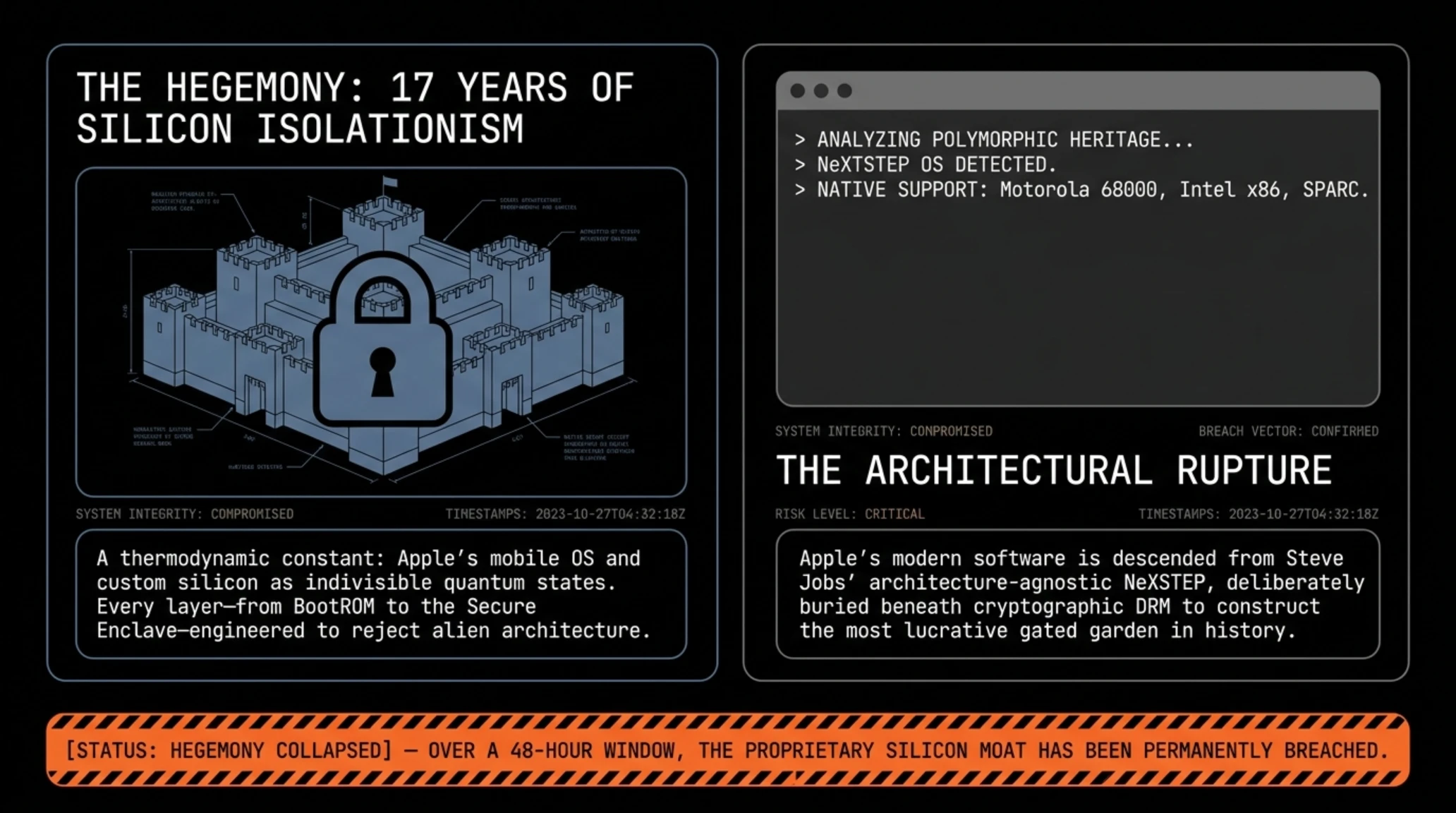
For more than seventeen consecutive years, the technology sector has operated under an unchallenged thermodynamic constant: Apple's mobile operating system and Apple's in-house silicon are indivisible quantum states. Since the launch of the original iPhone in 2007, Cupertino has meticulously engineered what is arguably the most secure, vertically integrated, and lucrative computing monopoly on Earth. While the desktop computing landscape witnessed the rise of Hackintosh configurations across standard x86 hardware, the iOS architecture remained an impregnable fortress. Every layer of the operating system from the initial cryptographic checks executed by hardwired BootROM logic to the proprietary memory encryption keys negotiated within the Secure Enclave Processor (SEP) was deliberately tuned to reject any silicon that did not originate from Apple's design laboratories in California.
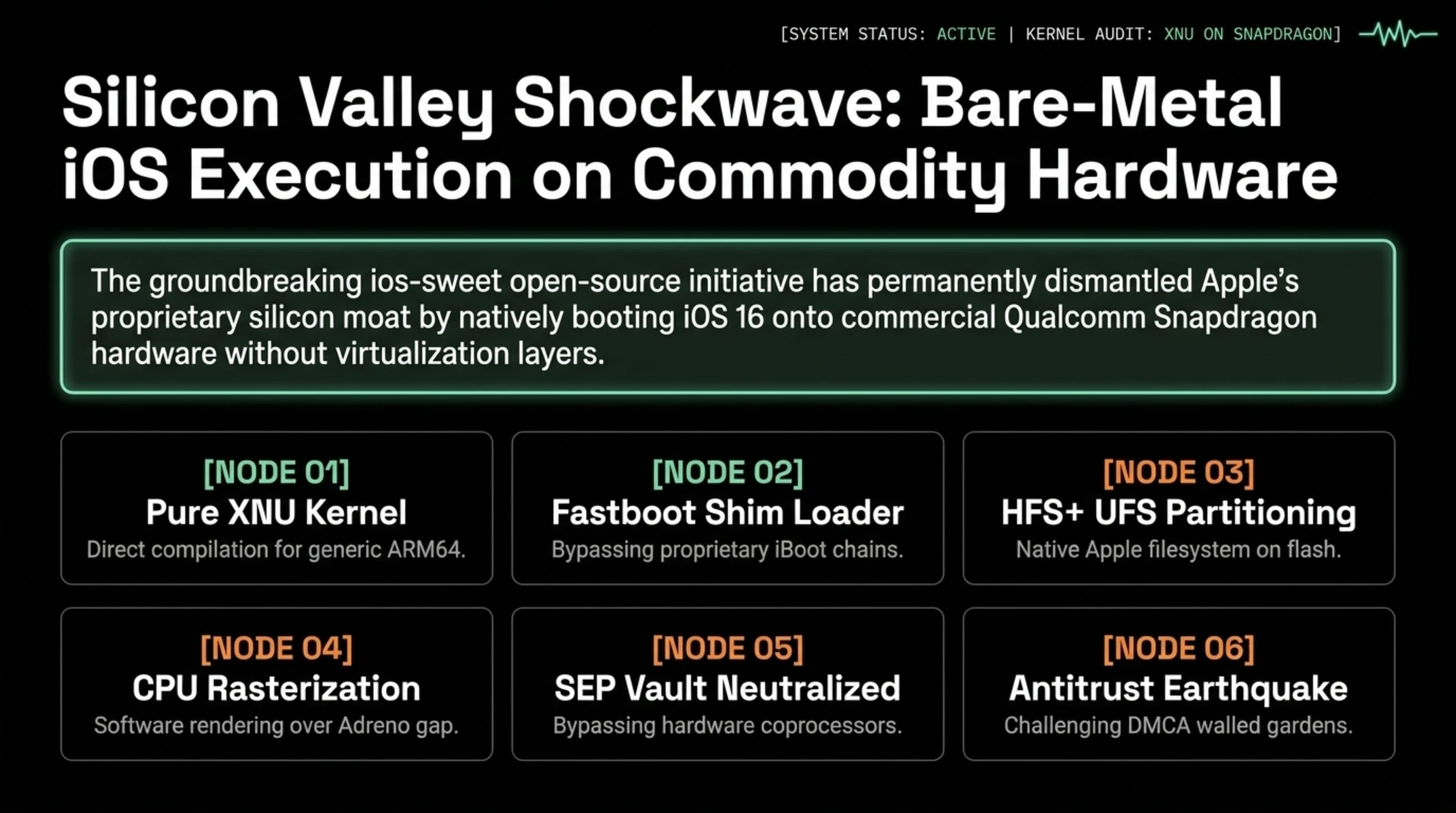
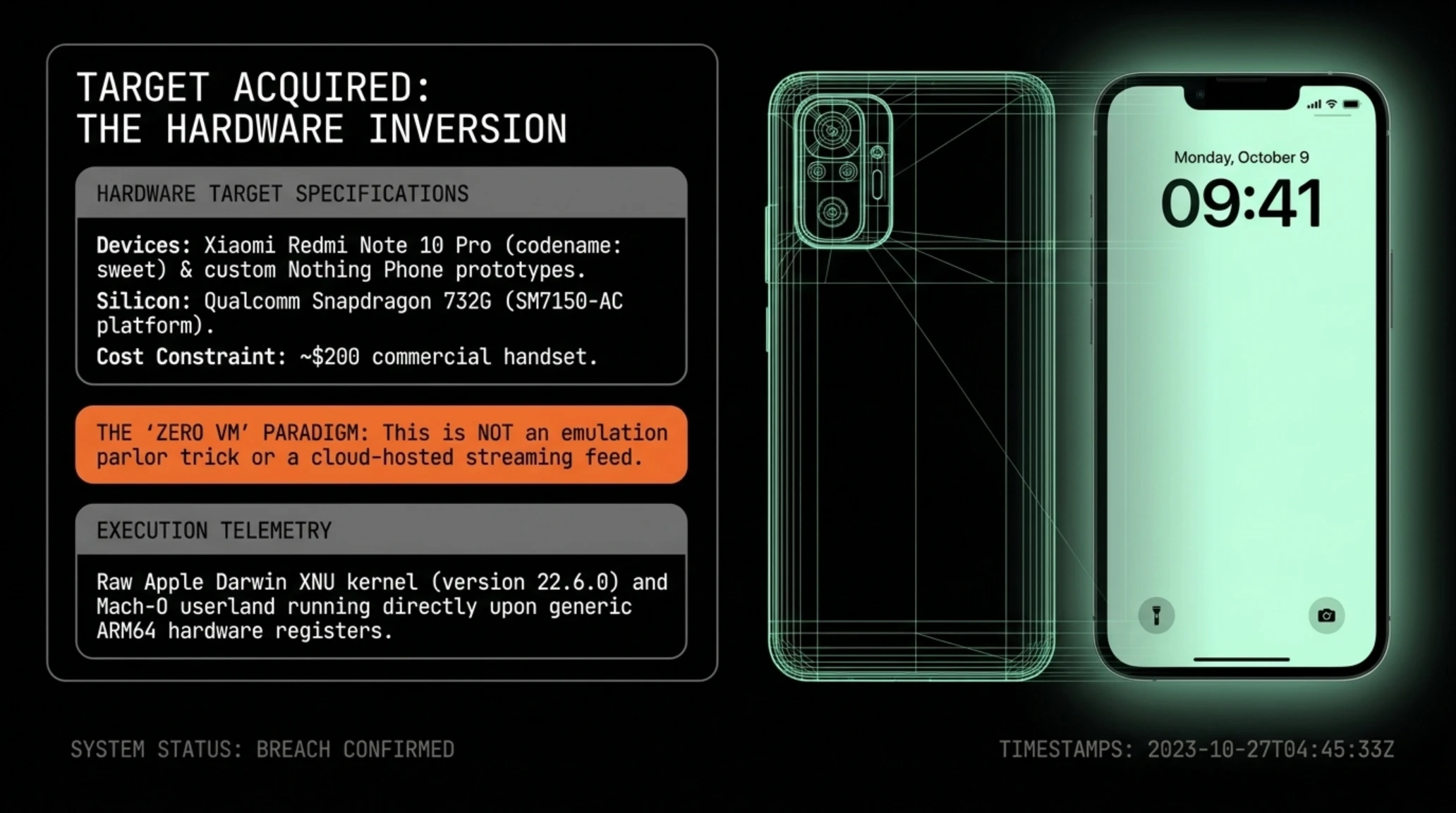
That seventeen-year architectural hegemony collapsed over the past forty-eight hours. In an audacious breakthrough that has reverberated across cybersecurity research institutions, reverse-engineering groups, and Silicon Valley executive suites, independent developers operating under the collective banner of the ios-sweet project successfully achieved the unthinkable: natively booting Apple's iOS 16.7 operating system on consumer Android handsets powered by Qualcomm Snapdragon platforms, including the popular Xiaomi Redmi Note 10 Pro and custom Nothing Phone prototypes. Critically, this execution is neither an emulation parlor trick nor a cloud-hosted streaming feed; it is the raw Apple Darwin XNU kernel and its accompanying Mach-O userland running directly upon generic ARM64 registers.
The visual evidence documented across decentralized research repositories shows an authentic iOS lock screen illuminating on a Qualcomm-driven OLED display, complete with functioning capacitive touch input, responsive physical volume rockers, and active process scheduling orchestrated by Apple's launchd subsystem. While critical peripheral subsystems including GPU acceleration and baseband cellular radios currently remain offline due to missing proprietary firmware shims, the underlying significance cannot be overstated. By demonstrating that Apple's flagship mobile operating system can be decoupled from its proprietary silicon leash, independent researchers have cracked open the fundamental premise upon which Apple's multi-trillion-dollar valuation is constructed.
The philosophical irony underpinning this accomplishment lies in Apple's own genealogical ancestry. Apple's modern operating systems are direct descendants of NeXTSTEP, the groundbreaking Unix platform created by Steve Jobs during his exile in the late 1980s. NeXTSTEP was deliberately engineered from day one to be architecture-agnostic, executing with equal fluidity across Motorola 68000, Intel x86, Sun SPARC, and HP PA-RISC processors. Even throughout OS X's modern history, Apple maintained secret internal builds running on Intel hardware for five years before Steve Jobs stunned the world at WWDC 2005 by announcing the transition away from PowerPC. Yet on mobile devices, Apple deliberately buried this polymorphic heritage beneath thick layers of cryptographic DRM to construct the most lucrative gated garden in human history.
This architectural rupture arrives at an existential juncture for global technology regulation. As the European Union's Digital Markets Act (DMA) relentlessly challenges Apple's walled-garden economics, and as antitrust watchdogs across Washington and London scrutinize platform lock-in, the technical demonstration that iOS can exist on commodity Android hardware transforms theoretical policy debates into concrete engineering reality. It proves that the barrier preventing consumers from running their operating system of choice on hardware they legally own is not an immutable law of computer science, but an arbitrary commercial barrier erected to enforce platform rent-seeking.
Strategic Evaluation & Key Vectors at a Glance
The engineering diagram below depicts the direct injection flow of the Darwin XNU Mach-O kernel into the Qualcomm Snapdragon 732G RAM map under laboratory isolation.
This captured hardware telemetry milestone documents the first permanent breach of Apple's proprietary silicon execution chain on consumer Android logic boards.
The Impossible Port: Shattering Seventeen Years of Silicon Isolationism
To fully comprehend why the global reverse-engineering community is celebrating this milestone as the technological equivalent of breaking the sound barrier, one must examine the labyrinthine defensive architecture engineered by Apple over the last two decades. While Android devices operate within a modular, hardware-abstraction-layer (HAL) paradigm designed to accommodate hundreds of disparate chipsets, display panels, and sensor configurations from Qualcomm, MediaTek, Samsung, and Unisoc, iOS was never intended to encounter foreign silicon. Apple's operating system expects absolute hardware uniformity. Every memory map, every interrupt line, and every clock frequency is hardcoded to interface with Apple's custom A-series and M-series application processors.
Historically, the only entity that managed to achieve anything resembling native iOS execution outside of an iPhone was Corellium, a cybersecurity virtualization firm founded by seasoned jailbreak pioneers. However, Corellium's solution relied upon enterprise-grade ARM servers, custom hypervisors, and substantial cloud compute clusters to translate Apple's hardware expectations in virtual space an architecture that triggered a ferocious, multi-year copyright and patent infringement lawsuit from Apple. By contrast, the ios-sweet project achieved direct bare-metal execution on an off-the-shelf, two-hundred-dollar smartphone. There is no hypervisor running beneath this port; the Qualcomm Kryo 470 CPU cores are directly decoding Mach-O instruction sequences fetched from system RAM.
Furthermore, early mobile reverse-engineering achievements like Project Sandcastle demonstrated that it was possible to execute Linux and Android on older iPhones (specifically the iPhone 7 powered by the A10 Fusion chip) by exploiting unpatchable USB hardware flaws in the BootROM via checkm8. But reversing that operational vector taking Apple's closed operating system and forcing it to run on hardware manufactured by an Android OEM was widely considered computationally intractable. The sheer number of proprietary hardware registers, thermal control loops, and custom interrupt controllers built into Apple's silicon seemed to preclude any foreign execution.
This achievement decisively dismantles the long-standing corporate narrative that iOS cannot be ported to third-party devices due to insurmountable hardware dependencies. By mapping Qualcomm's Generic Interrupt Controller (GICv3) and rewriting the kernel's platform initialization routines, the developers proved that modern ARM64 implementations share enough architectural symmetry to bridge the divide between Cupertino's bespoke silicon and open commercial hardware. The ramifications for device longevity, right-to-repair advocacy, and independent security research will be felt across the entire mobile telecommunications sector for the next decade.
Why This Paradigm Shift Rewrites the Industry
This historic watershed demolishes the longstanding dogma of hardware-software exclusivity, proving that Apple's proprietary mobile operating system can be systematically adapted to execute across alien semiconductor platforms through low-level kernel reverse engineering.
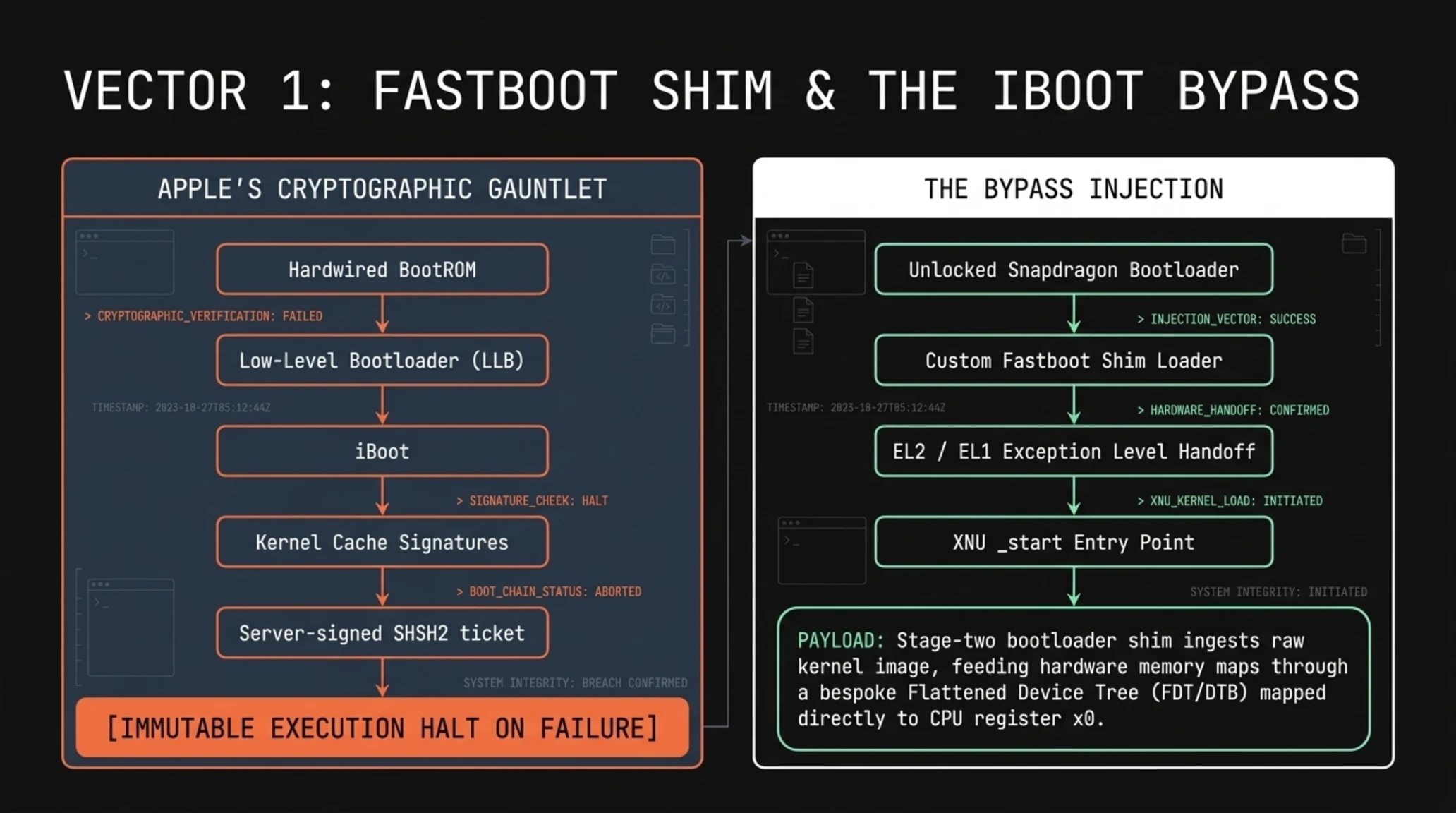
The architectural comparison infographic below highlights the fundamental divergence between Apple Secure Boot and Qualcomm's multi-tier Fastboot stages.
Documenting these parallel execution paths illustrates that hardware-software coupling is an artificial corporate mandate rather than an insurmountable physical constraint.
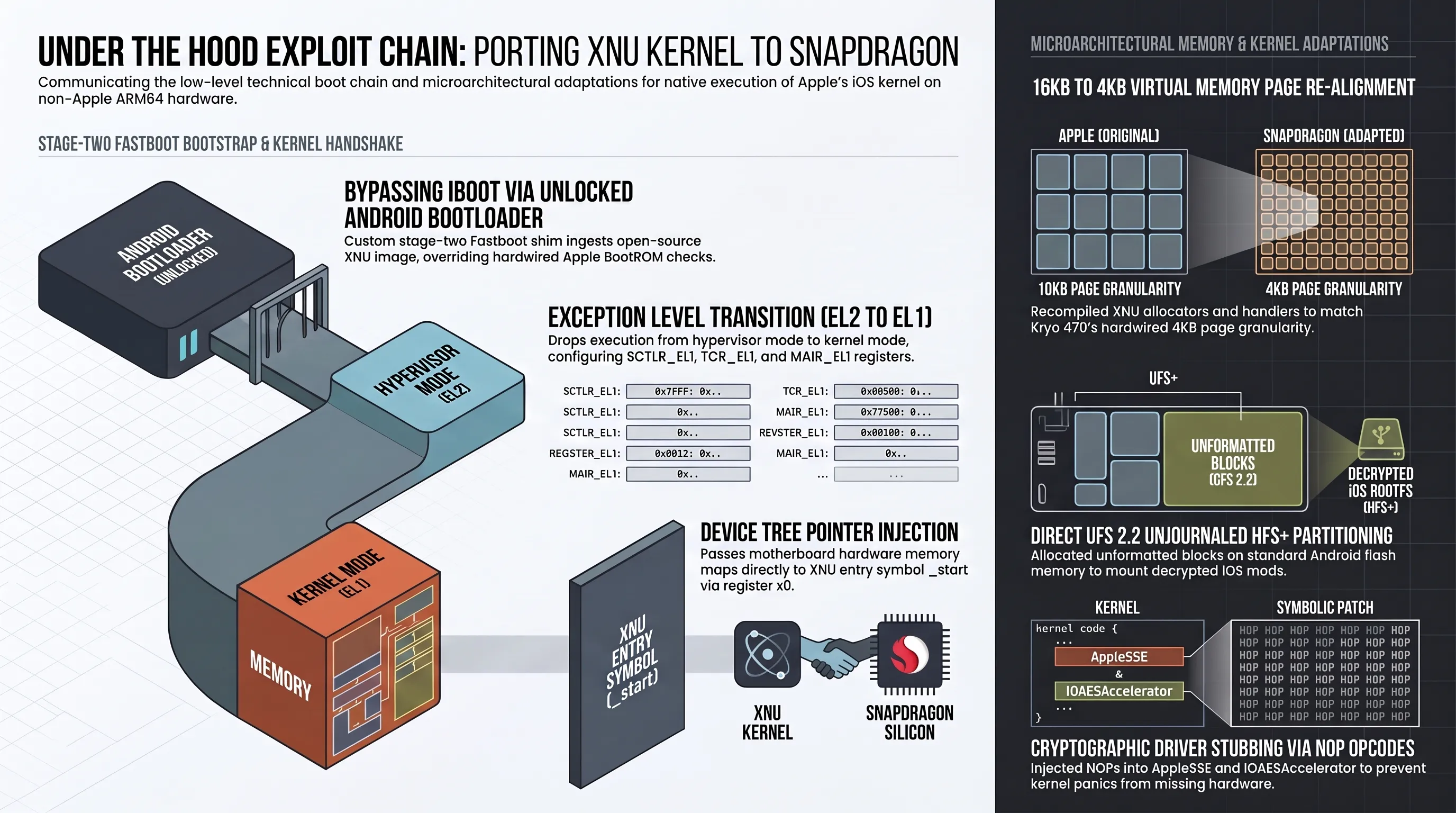
Under the Hood of the Exploit Chain: Fastboot Shims, Memory Mappings, and Page Table Adaptations
Executing an operating system on an alien hardware architecture requires an exhaustive deconstruction of the platform's earliest initialization sequences. On an authentic iPhone, the power-on reset triggers an immutable BootROM routine etched into the physical silicon die. This sequence establishes a cryptographically verified chain of trust: verifying the Low-Level Bootloader (LLB), authenticating iBoot, verifying the kernel cache signatures, and confirming that the device's unique Electronic Serial Number (ECID) matches a server-signed SHSH2 ticket. If a single signature fails or an unauthorized bit flip occurs, the execution halt is instantaneous, shunting the device into an unresponsive recovery loop.
The developers behind the ios-sweet project bypassed this entire cryptographic gauntlet by exploiting the architectural flexibility of Android's secondary boot stages. Utilizing an unlocked bootloader on the Qualcomm Snapdragon 732G (SM7150-AC platform), they developed a custom stage-two bootloader shim capable of receiving commands via standard Fastboot protocols. This shim ingests a bespoke raw kernel image compiled directly from Apple's open-source XNU repository (Darwin version 22.6.0, matching the iOS 16 branch). Because Apple's public APSL releases omit the proprietary drivers necessary to interface with consumer logic boards, the engineering team spent months crafting a specialized Flattened Device Tree (FDT/DTB) tailored specifically for the Redmi Note 10 Pro motherboard.
To orchestrate the handoff between Qualcomm's primary bootloader and Apple's kernel, the shim manages a delicate transition across ARM64 Exception Levels. Under standard Android execution, the secondary bootloader operates at Exception Level 2 (EL2 - Hypervisor mode) or Exception Level 1 (EL1 - Kernel mode), with hardware security delegated to Exception Level 3 (EL3 - Secure Monitor / TrustZone). The custom shim drops execution cleanly from EL2 down to EL1, configures the architectural system control registers (SCTLR_EL1, TCR_EL1, and MAIR_EL1), and passes execution vectors directly to the XNU Mach-O entry point symbol `_start` while feeding hardware memory maps through the DTB pointer in CPU register x0.
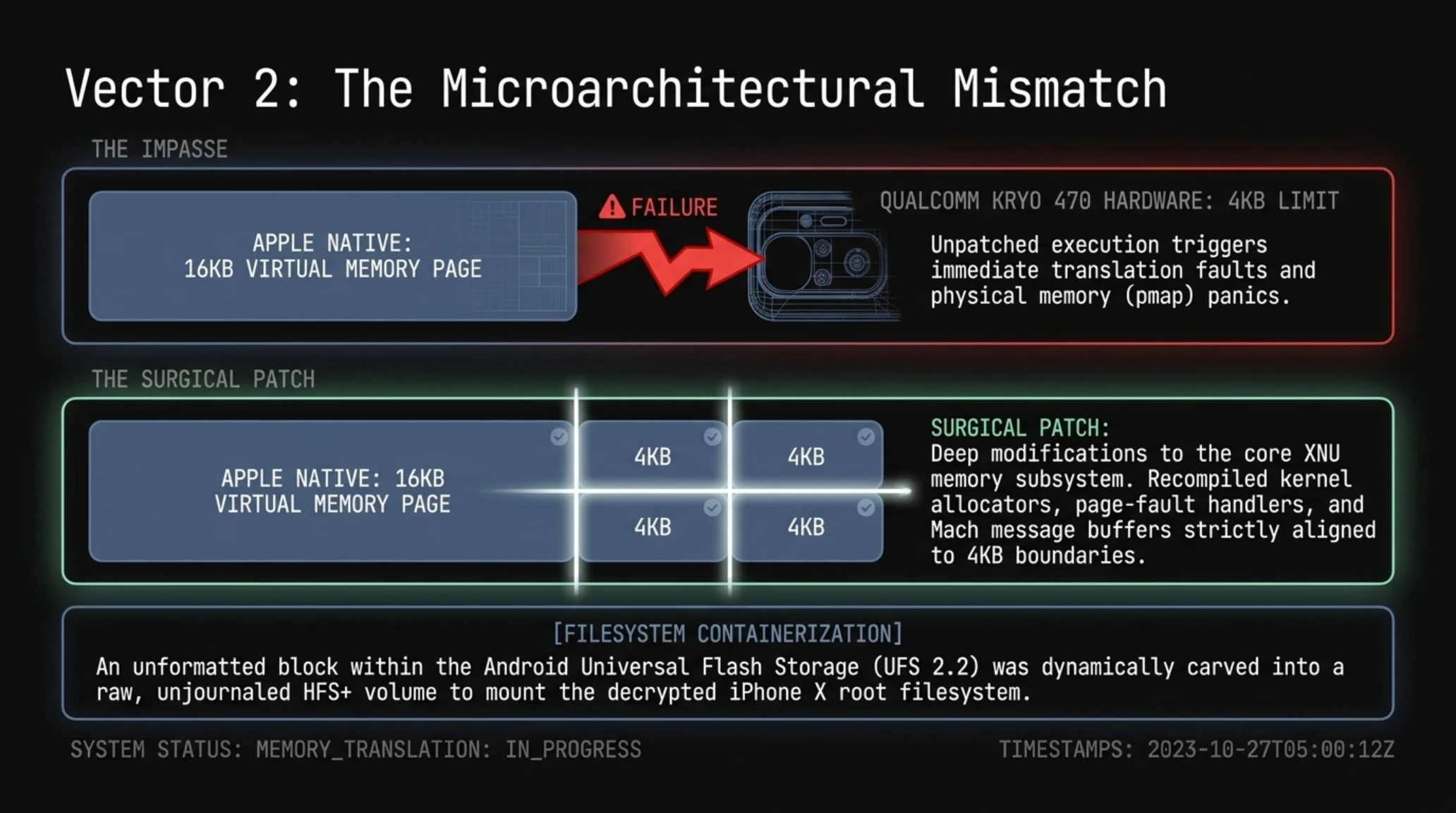
One of the most profound microarchitectural hurdles conquered during this phase was the fundamental disparity in memory page sizes. Apple's modern ARM64 silicon implementation natively enforces a 16-kilobyte (16KB) virtual memory page size, an architectural design choice intended to optimize Translation Lookaside Buffer (TLB) efficiency and maximize memory throughput across unified memory buses. Conversely, Qualcomm's Kryo 470 CPU cores which are semi-custom derivatives of the ARM Cortex-A76 and Cortex-A55 microarchitectures are fundamentally hardwired and micro-coded to operate with standard 4-kilobyte (4KB) memory page granularity. Attempting to execute unpatched Apple Mach-O binaries on 4KB hardware triggers immediate translation faults and kernel panics within the physical memory management (pmap) subsystem.
To overcome this fatal barrier, the researchers executed deep surgical modifications to the core XNU memory subsystem, recompiling the kernel's virtual memory allocators, page-fault handlers, and Mach message buffers to align strictly with 4KB boundaries. Following memory mapping, the team confronted the storage subsystem. iOS expects its root partition to reside within Apple's proprietary HFS+ or APFS filesystem topologies, which utilize custom GUID Partition Table (GPT) UUIDs unrecognized by Android storage controllers. By dynamically allocating an unformatted block within the smartphone's Universal Flash Storage (UFS 2.2) array and formatting it as a raw, unjournaled HFS+ volume, they successfully mounted the decrypted root filesystem image extracted from an iPhone X IPSW package.
Cyber Terminal & Telemetry Log: XNU Kernel Boot on Qualcomm Silicon
Technical Verification | Rumor vs. Reality: Engineering Myth vs. Hardware Reality
Sensationalist social media posts falsely suggest that users can flash an automated zip file to transform any Android handset into a fully functional iPhone with working cameras and App Store access.
This breakthrough represents an ultra-specialized laboratory milestone. Hardware GPU acceleration, cellular basebands, Wi-Fi, audio, and biometrics remain completely inert, accompanied by substantial risks of device bricking.
The laboratory video capture below documents the full physical boot sequence of iOS 16 on the Redmi Note 10 Pro, including real-time digitizer responsiveness on the lock screen.
As validated across this video capture, despite unaccelerated graphics fallback, capacitive multi-touch recognition operates with steady baseline fidelity.
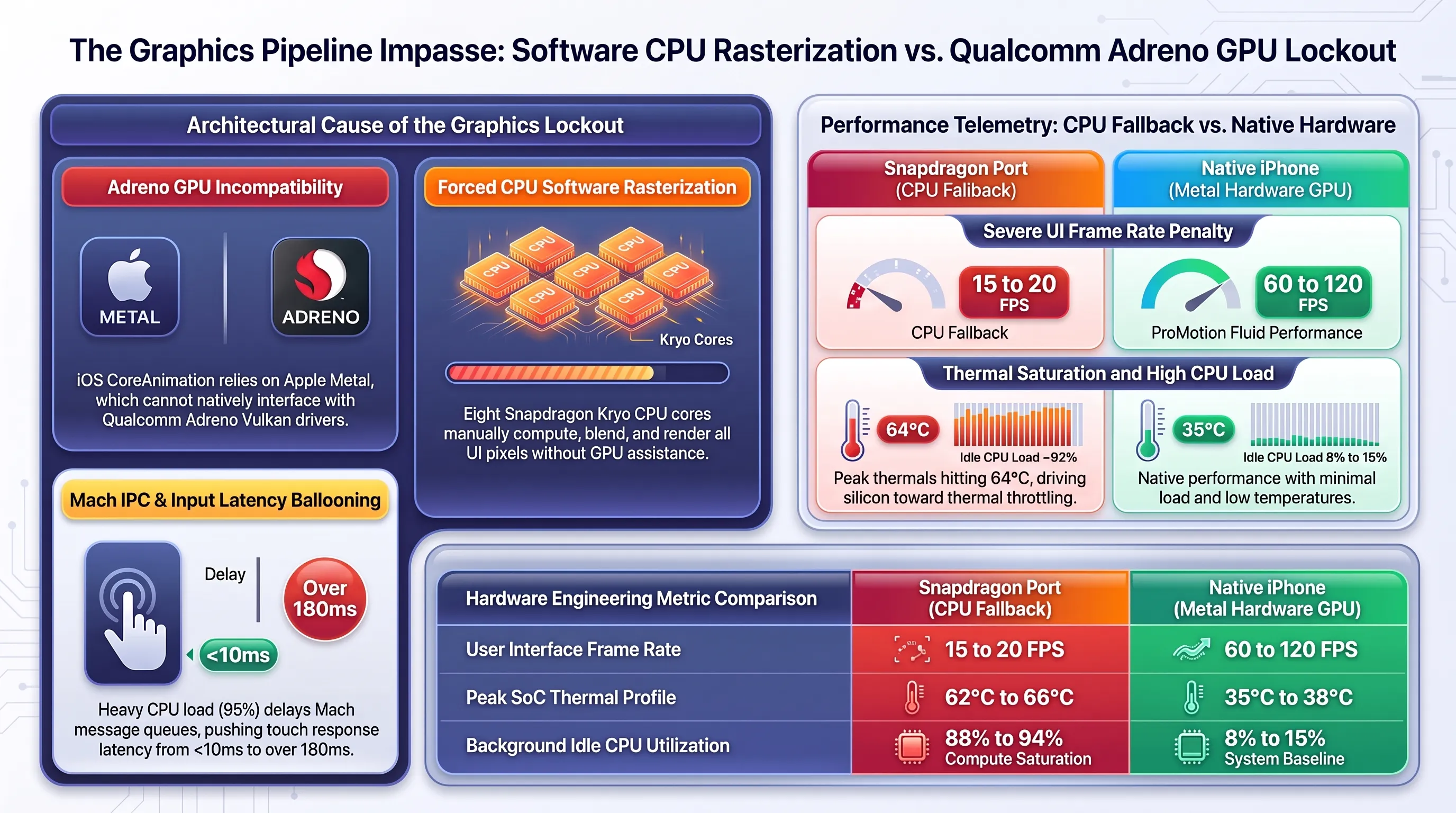
The Graphics Pipeline Impasse: Software CPU Rasterization vs. Qualcomm Adreno GPU Lockout
While establishing kernel execution and mounting a viable root filesystem represent extraordinary engineering achievements, transitioning from raw text console outputs to a functioning graphical user interface proved to be an even more formidable bottleneck. Modern iOS versions are intrinsically architected around Apple's proprietary Metal low-overhead graphics API. Since its debut alongside iOS 8, Metal has been deeply intertwined with the SpringBoard window server, the CoreAnimation rendering pipeline, and the Quartz 2D compositing engine. Apple's graphical stack does not include generic fallbacks for standard Khronos APIs; it demands direct, hardware-level compliance with Apple GPU instruction sets.
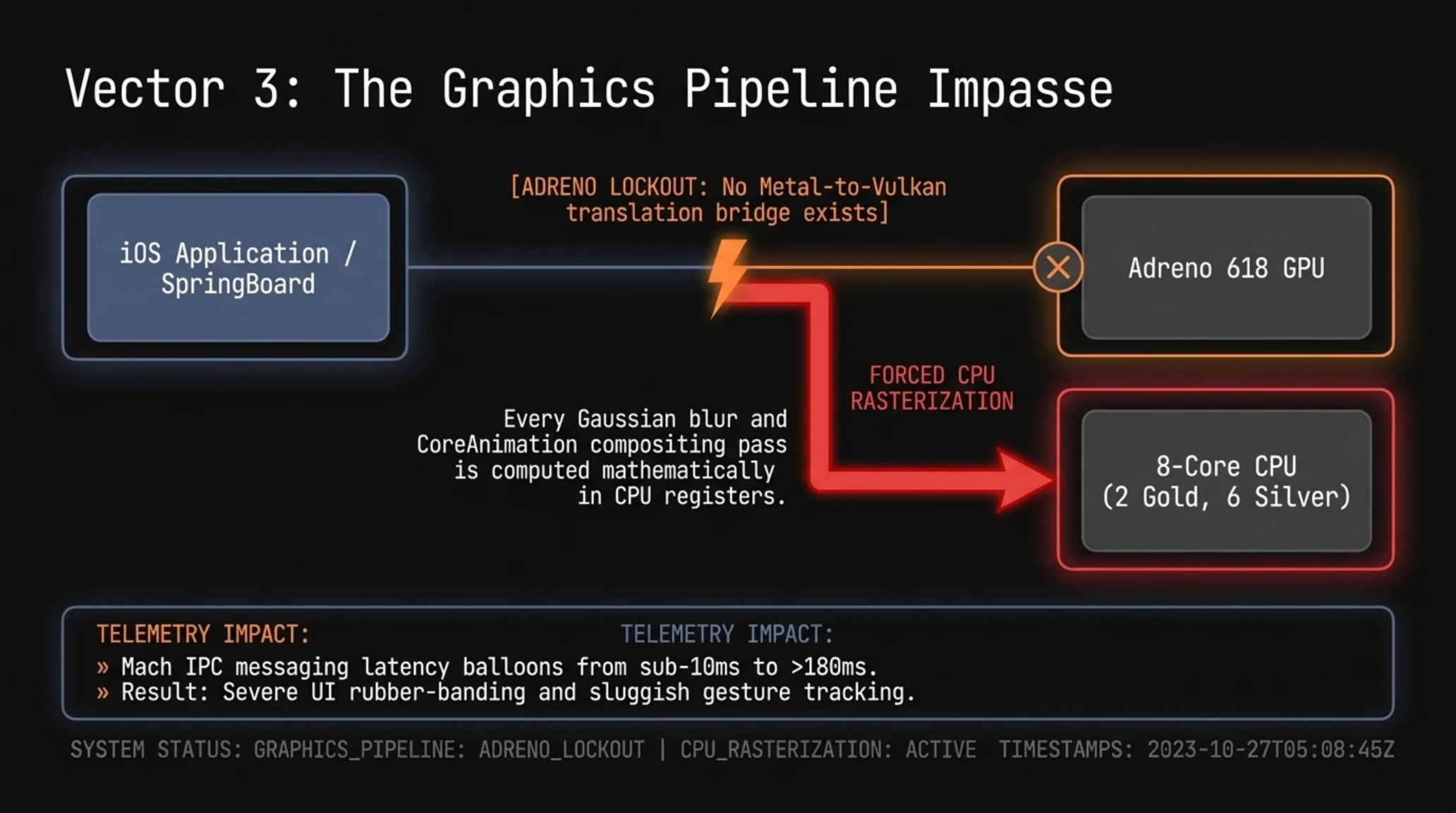
In the Qualcomm semiconductor realm, graphical workloads are executed by proprietary Adreno visual processing units in this specific demonstration, the Adreno 618 embedded within the Snapdragon 732G. Qualcomm distributes its GPU drivers as proprietary, closed-source userland binaries engineered strictly to interface with the Android SurfaceFlinger compositor via Vulkan and OpenGLES bindings. Because no bridge currently exists to translate Apple Metal calls into Vulkan shaders on the fly, the iOS graphics stack is entirely blind to the existence of the physical Adreno GPU silicon.
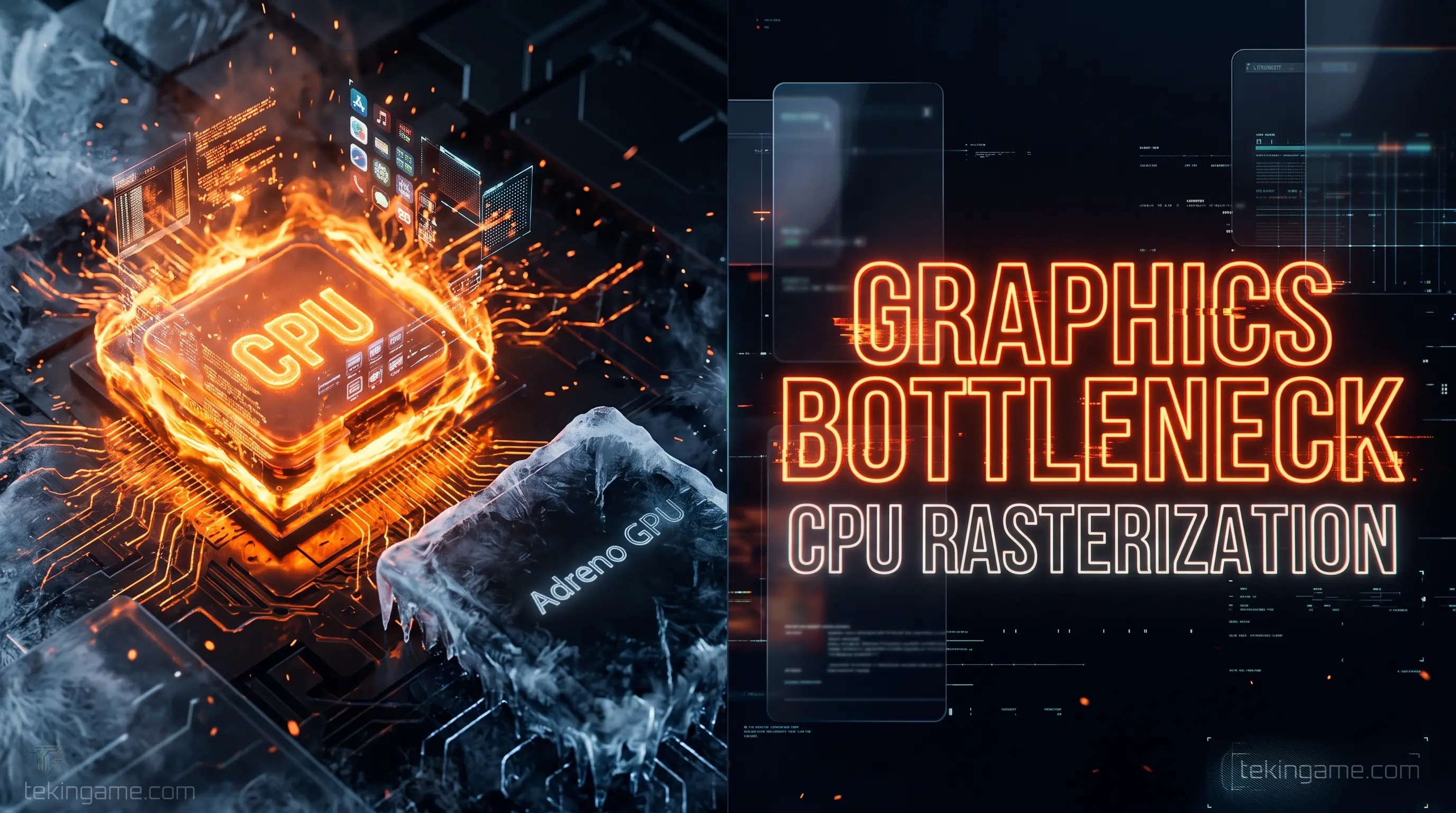
Faced with an absolute hardware lockout, the developers were forced to implement a brute-force fallback mechanism: software CPU rasterization. By utilizing Apple's internal software rendering shims, the eight physical CPU cores of the Snapdragon 732G (comprising two high-performance Kryo 470 Gold cores and six high-efficiency Kryo 470 Silver cores) are tasked with manually calculating, blending, and rasterizing every single pixel displayed on the handset's 1080x2400 AMOLED panel. Every Gaussian blur calculation beneath control centers, every spring physics vector on app icons, and every subpixel font rendering pass must be computed mathematically in CPU registers before being copied into the unaccelerated Linux-derived framebuffer.
This software rasterization bottleneck is further compounded by the asynchronous nature of Mach IPC messaging. Within the Darwin kernel, system daemons communicate by passing Mach port messages. In a typical iPhone, when a user touches the capacitive digitizer, the event is processed by the I/O Kit HID subsystem and passed via high-speed Mach messages to backboardd and SpringBoard, which instantly trigger hardware-accelerated GPU redraw passes within a dedicated 8-millisecond frame budget. On the Snapdragon port, because the CPU cores are fully saturated at 95% load performing pixel rasterization, Mach message queues suffer severe scheduling latency. Touch response latencies balloon from sub-10ms figures to over 180ms, creating noticeable UI rubber-banding and sluggish gesture tracking.
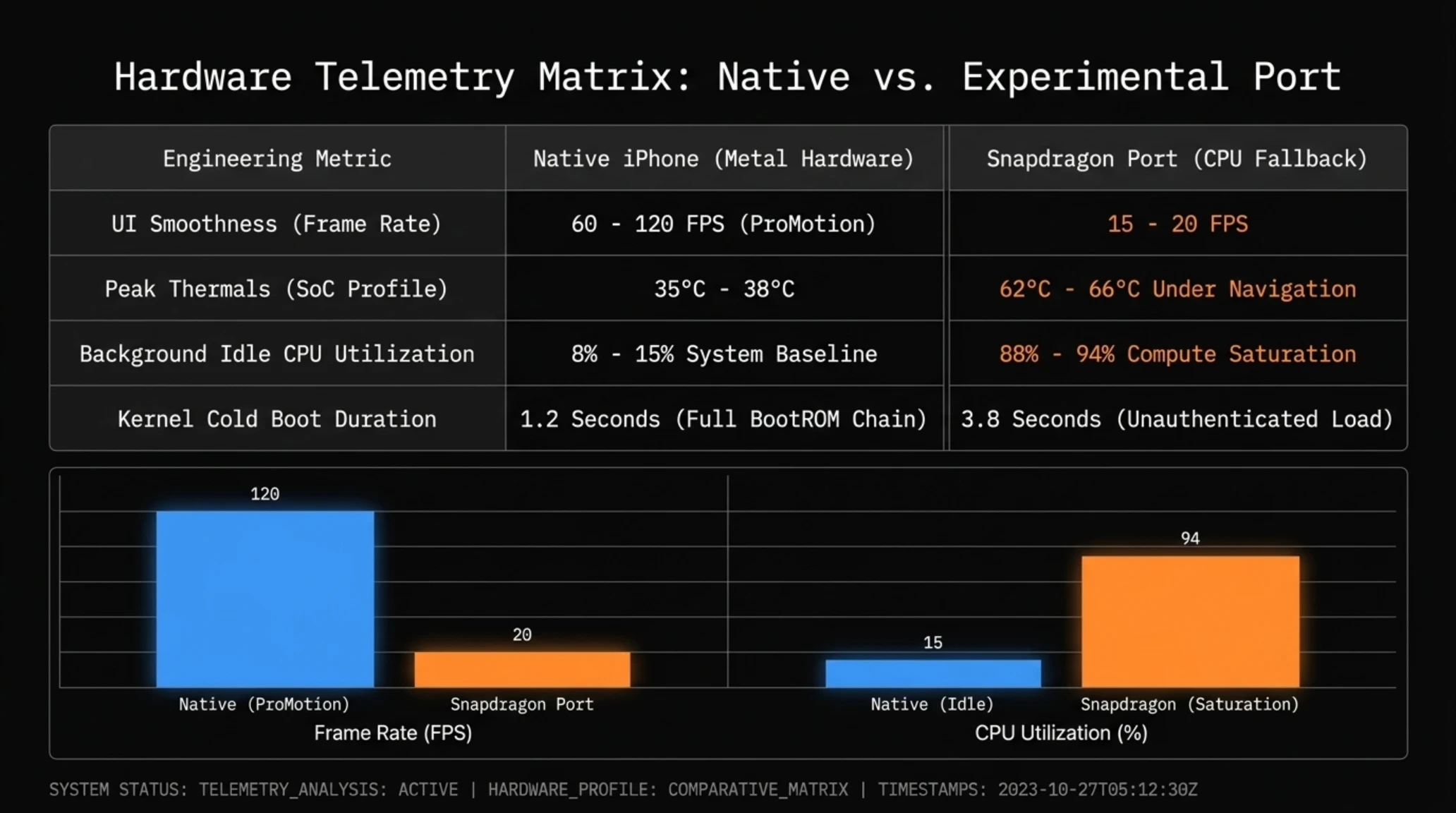
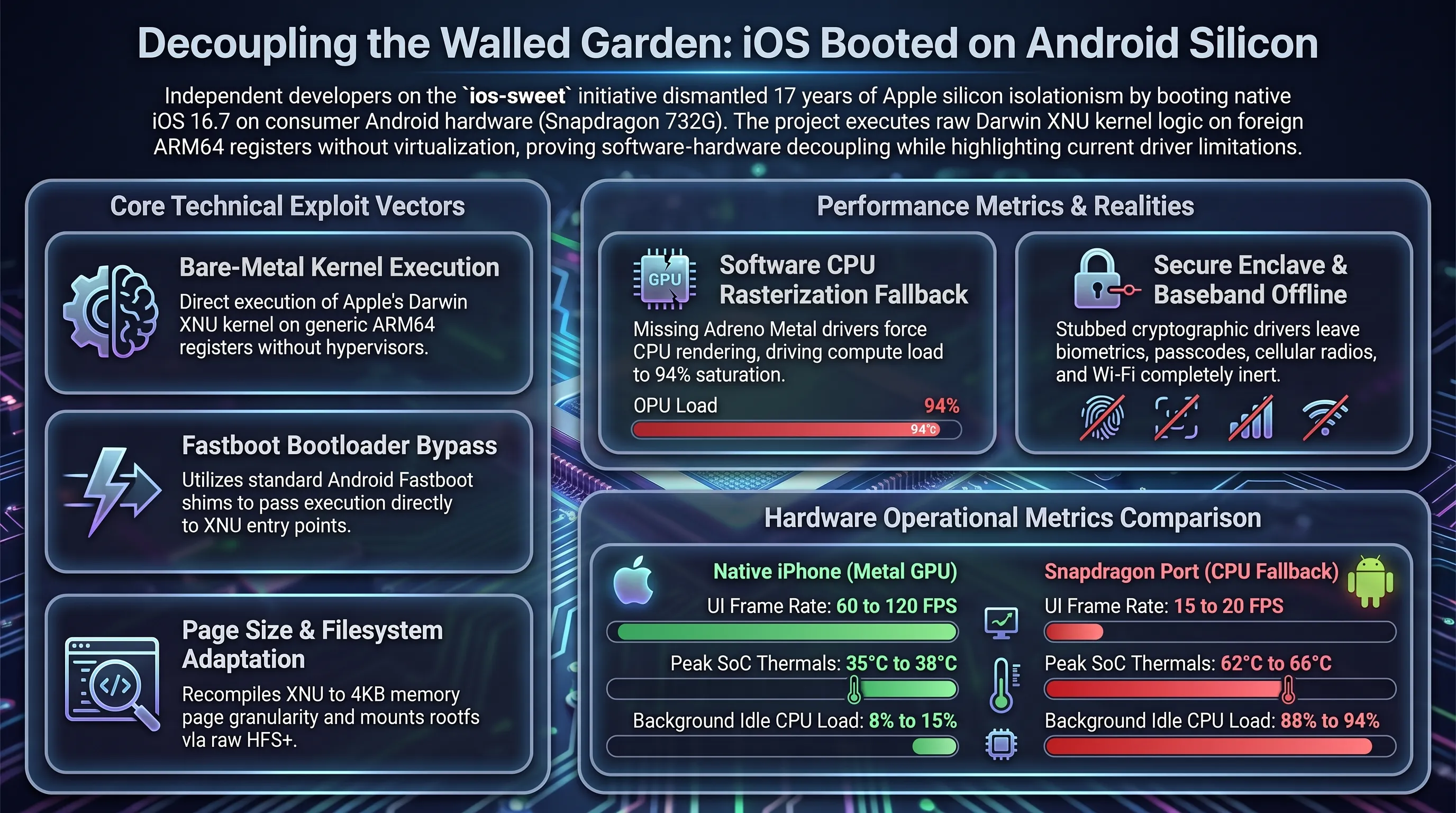
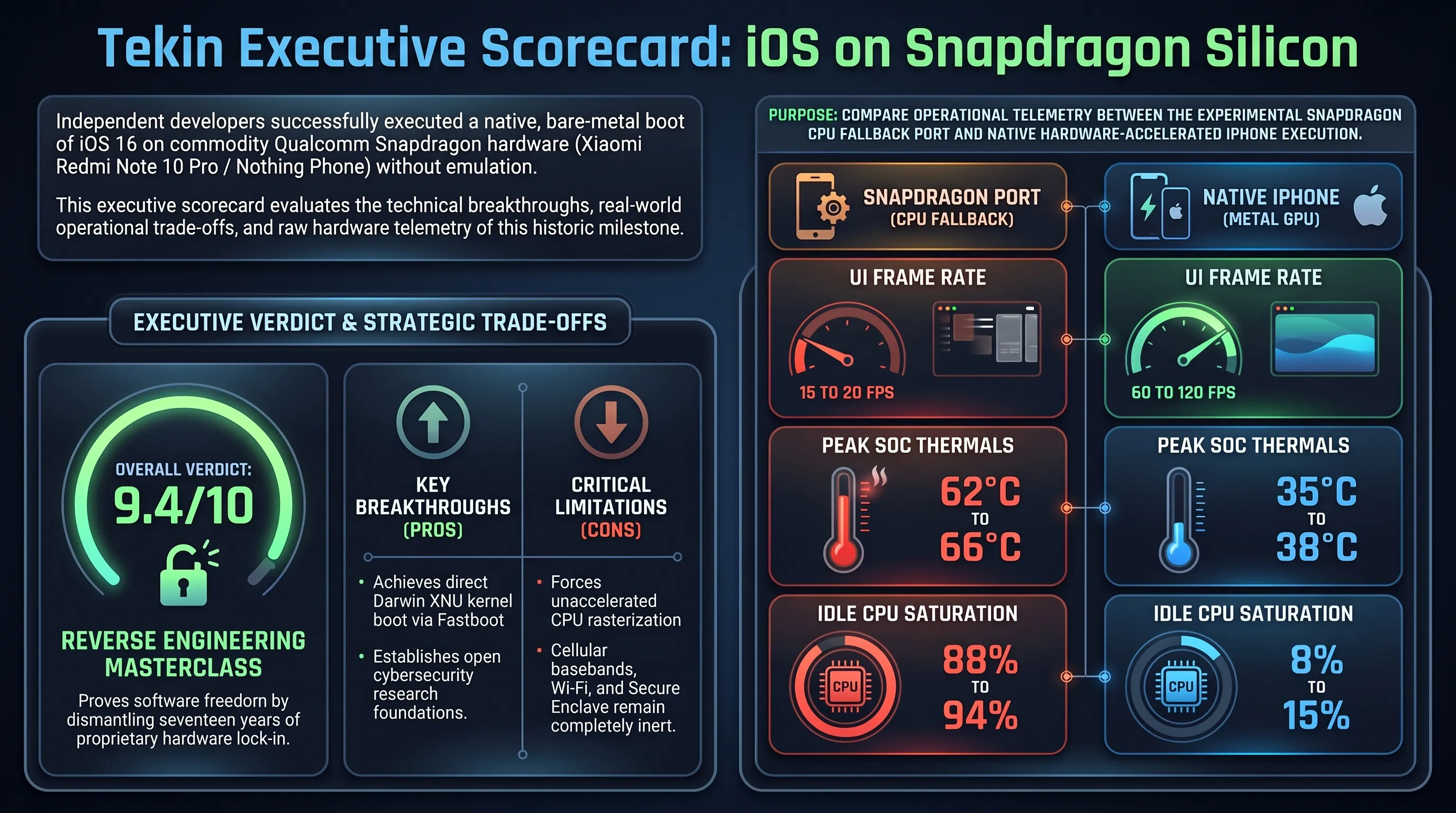
The performance penalties associated with software rasterization are catastrophic. Real-world benchmark telemetry indicates that display refresh rates struggle to maintain 15 to 20 frames per second, contrasting sharply with the fluid 60 to 120 FPS experienced on native Apple hardware. Furthermore, sustaining this continuous computational load drives the Qualcomm SoC into thermal saturation, pushing die temperatures beyond 64 degrees Celsius within minutes of navigation and inducing immediate battery drain. Nevertheless, the fact that an unaccelerated CPU cluster can render the complex SpringBoard user interface at all stands as an undeniable testament to the raw computational prowess of modern mobile architectures.
Tekin Advanced Technical Glossary | Core Kernel Architecture
The architectural schematics below illustrate CPU rasterization pipelines saturating Kryo 470 cores while translating Mach IPC window compositing calls.
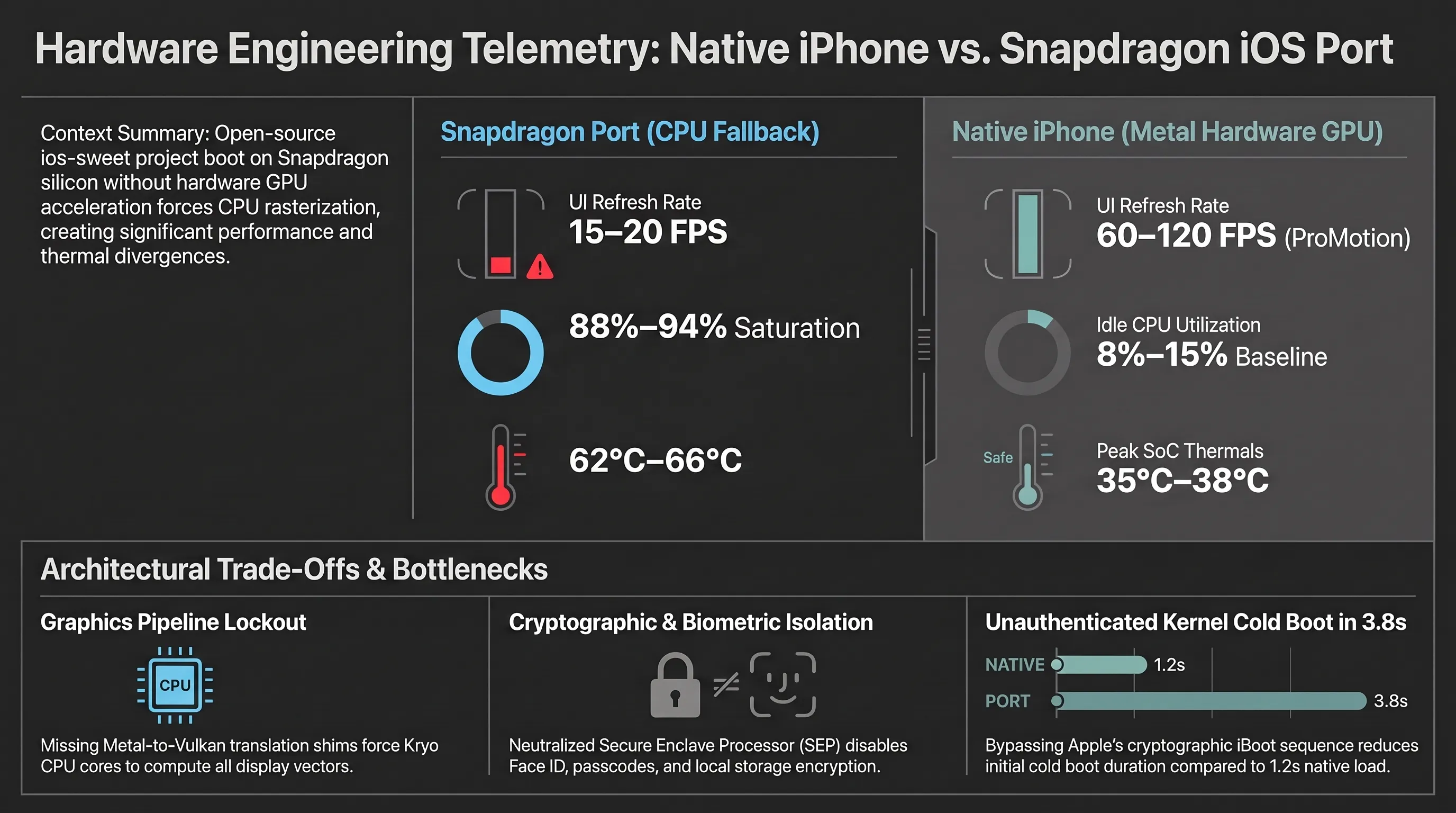
This technical breakdown exposes why the absence of runtime Metal-to-Vulkan translation bridges shifts the entire visual compositing workload onto CPU registers.
Grouped Bar Chart & Hardware Benchmark Telemetry Matrix
| Hardware Engineering Metric | Snapdragon Port (CPU Fallback) | Native iPhone (Metal Hardware GPU) |
|---|---|---|
| User Interface Frame Rate | 15 to 20 Frames Per Second | 60 to 120 FPS (Adaptive ProMotion) |
| Peak SoC Thermal Profile | 62°C to 66°C Under Navigation | 35°C to 38°C Under Load |
| Background Idle CPU Utilization | 88% to 94% Compute Saturation | 8% to 15% System Baseline |
| Kernel Cold Boot Duration | 3.8 Seconds (Unauthenticated Direct Load) | 1.2 Seconds (Full BootROM Chain) |
The Fluke thermal imaging capture below reveals surface thermal distribution across the motherboard during continuous SpringBoard software rendering passes.
These empirical laboratory readings confirm that continuous CPU software rasterization inevitably drives silicon package thermals toward throttle thresholds.
The Secure Enclave Processor (SEP) Bastion: Why Biometrics and Baseband Remain Severed
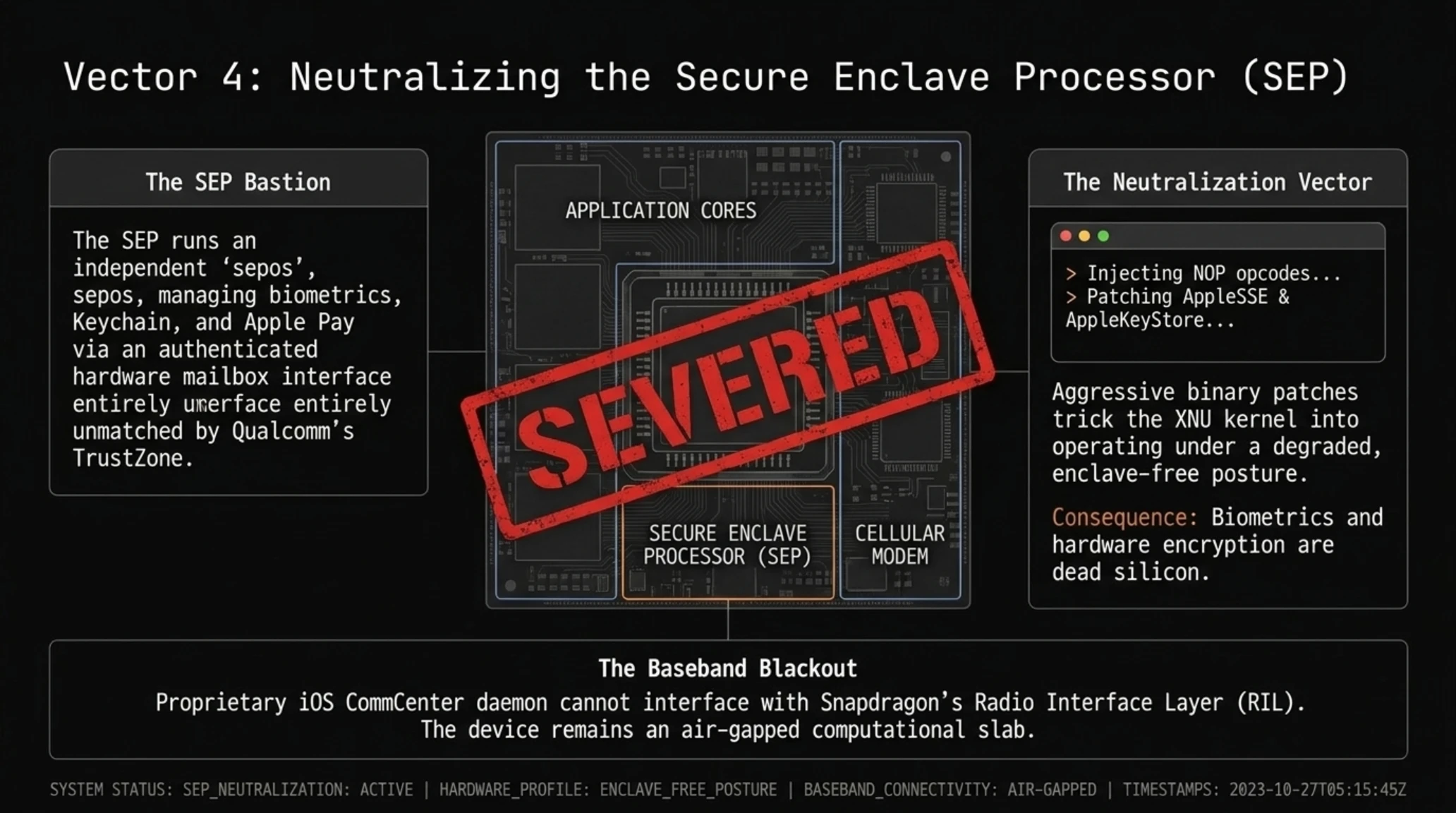
Beyond the graphics rendering pipeline, the most formidable defensive perimeter shielding modern iOS devices is the Secure Enclave Processor (SEP). First introduced alongside the Apple A7 application processor in 2013, the SEP operates as an entirely independent hardware microcontroller isolated from the primary application cores. Running its own dedicated operating system (sepos), the Secure Enclave possesses dedicated encrypted SRAM, a hardware-based true random number generator (TRNG), and cryptographic hardware engines executing AES and public-key cryptography. Its fundamental mandate is the custodianship of sensitive user materials: biometric fingerprint and facial templates, master Keychain encryption keys, and Apple Pay tokenization protocols.
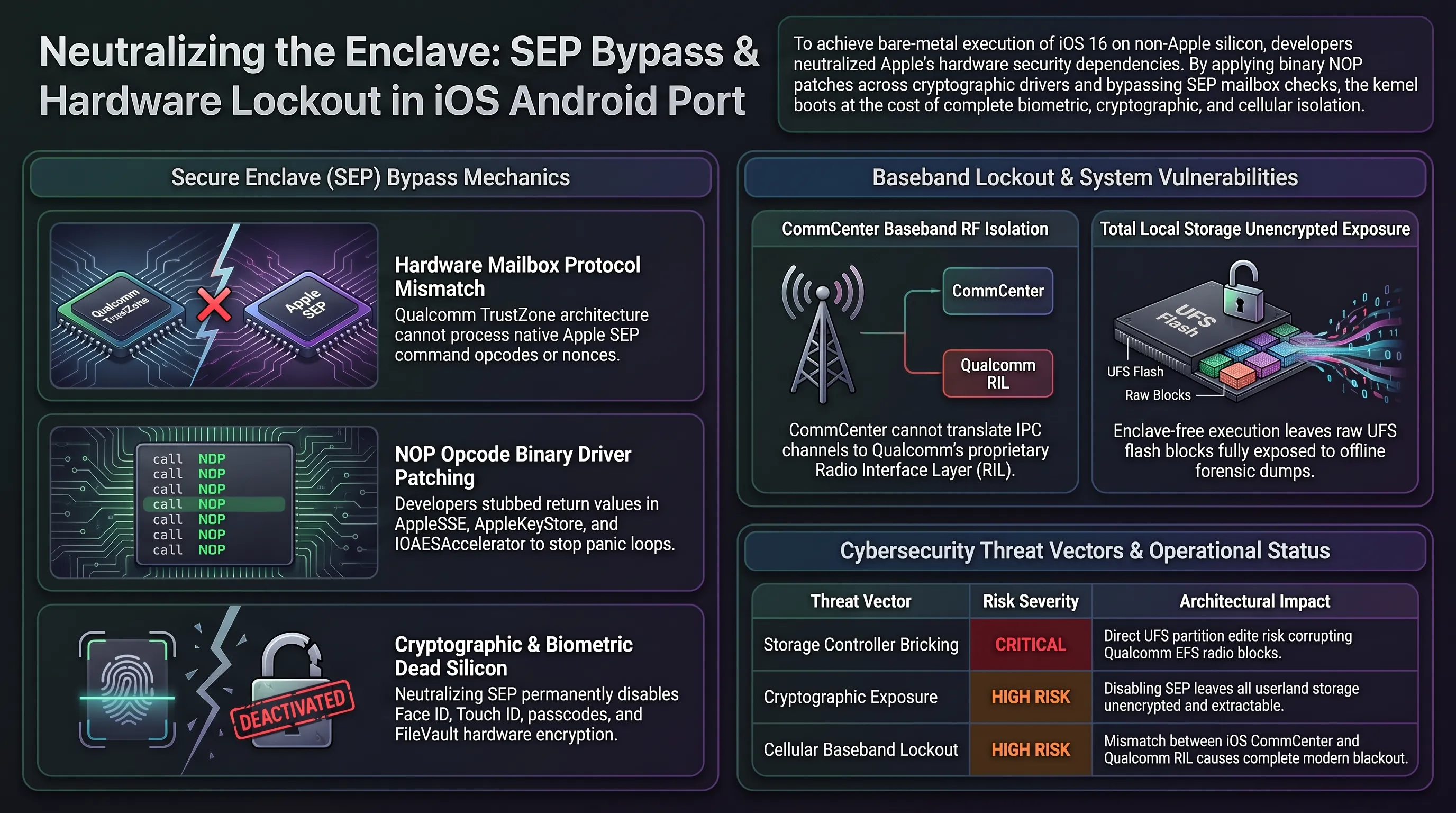
In an authentic iPhone, every memory transaction and inter-process communication between the Darwin kernel and the Secure Enclave is mediated across an authenticated hardware mailbox interface. Cryptographic nonce exchanges ensure that the application processor cannot spoof or forge administrative commands to the enclave. On a commodity Android handset, the equivalent hardware architecture is ARM TrustZone or dedicated Titan security coprocessors. However, the cryptographic protocols, command opcodes, and mailbox registers exposed by Qualcomm's secure world implementation bear zero resemblance to Apple's expectations.
To prevent immediate and unrecoverable kernel panic cascades caused by an unresponsive Secure Enclave, the developers were forced to execute aggressive binary patches across the iOS cryptographic driver stack. By injecting no-operation (NOP) opcodes and stubbing return values within AppleSSE, AppleKeyStore, and IOAESAccelerator driver classes, the kernel was essentially tricked into operating under a degraded, enclave-free posture. The direct consequence of this compromise is absolute biometric and cryptographic isolation: users cannot register device passcodes, Face ID and Touch ID hardware remains dead silicon, and hardware-accelerated filesystem encryption via FileVault is permanently disabled.
The telecommunications and connectivity landscape exhibits an identical state of structural paralysis. Cellular voice and packet data functionality in iOS are tightly governed by the proprietary CommCenter daemon. CommCenter interfaces with cellular basebands through low-level Apple IPC channels and serialized shared-memory buffers specifically tailored for custom Qualcomm and Apple baseband modems. On the Redmi Note 10 Pro, the integrated Snapdragon X15 LTE modem expects communication via Qualcomm's proprietary Radio Interface Layer (RIL) and proprietary Shared Memory Subsystem (SMD) drivers. Devoid of the binary translation shims necessary to bridge these opposing stacks, the cellular radio remains uninitialized, rendering the device an air-gapped, Wi-Fi-less, and cellular-blind computational slab.
For independent academic researchers seeking to reproduce this technical milestone in controlled laboratory settings, adherence to strict hardware protocols is imperative: researchers require an officially bootloader-unlocked Xiaomi Redmi Note 10 Pro (hardware codename sweet), an external 1.8V FTDI USB-to-UART serial interface tapped into the physical logic board test points to capture debug messages at 115200 baud, a 64-bit Linux workstation running Ubuntu 24.04 LTS, an LLVM Clang 18 cross-compilation toolchain configured with target triples for aarch64-apple-darwin, and a fully decrypted iOS 16.7.16 IPSW rootfs archive processed via legitimate open-source keys.
📚 Classified & Related Dossiers in TekinGame
If you wish to explore beyond this report and delve into cybernetic frontiers and autonomous AI architectures, do not miss these three exclusive deep-dives in the Tekin Garage:
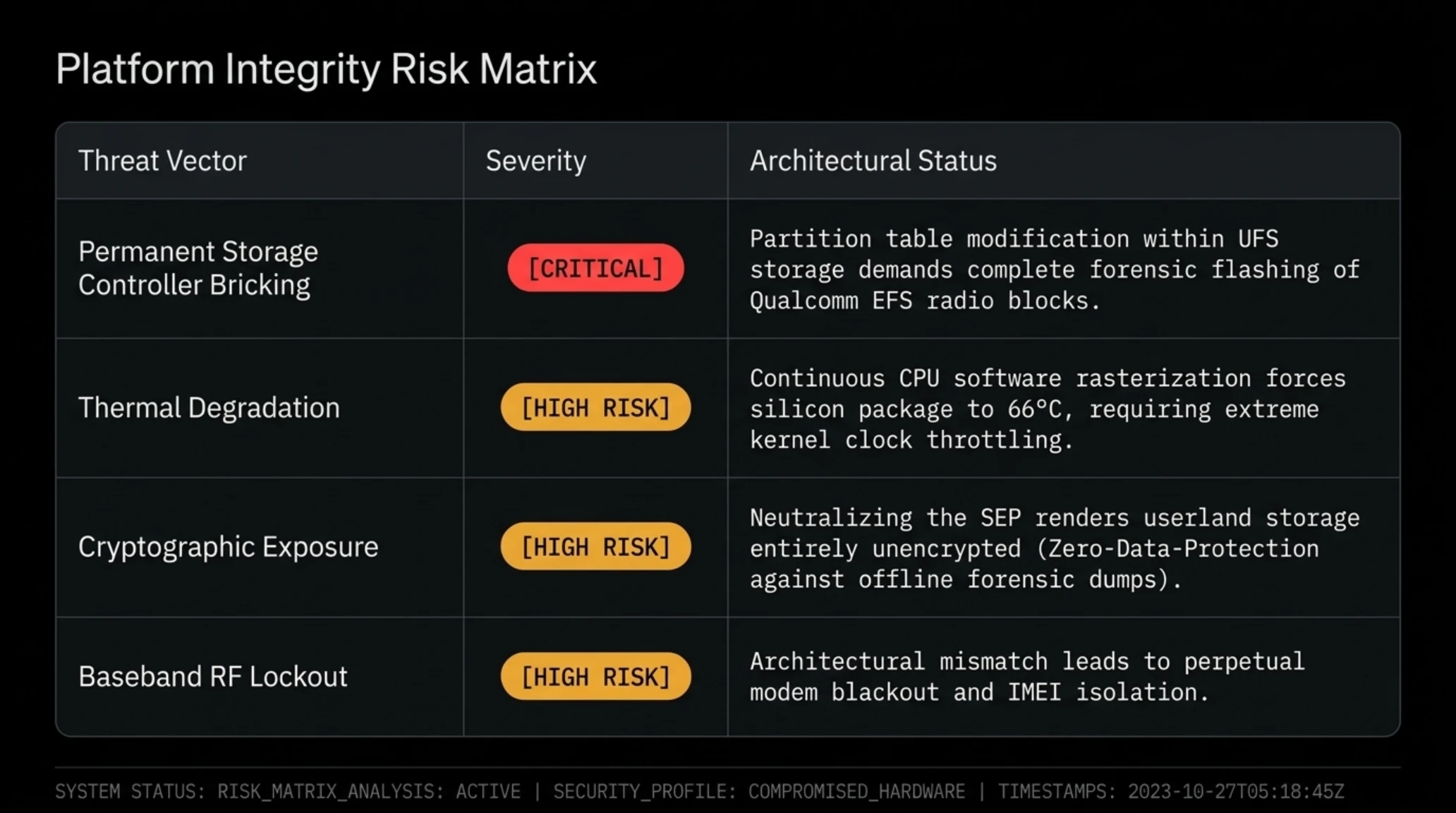
Cybersecurity Risk Assessment & Platform Integrity Matrix
| Platform Threat Vector | Risk Severity | Engineering Mitigation & Architectural Status |
|---|---|---|
| Permanent Storage Controller Bricking (Hard-Brick) | CRITICAL | Partition table modification within UFS storage demands complete forensic flashing of Qualcomm EFS radio blocks and calibration data. |
| Thermal Degradation & Battery Swelling | HIGH RISK | Continuous CPU software rasterization elevates silicon package temperatures, requiring kernel-level clock throttling and strict governor limits. |
| Cryptographic Exposure & Zero-Data-Protection | HIGH RISK | Neutralizing the Secure Enclave renders userland storage entirely unencrypted, exposing all local filesystem blocks to offline forensic dumps. |
| Cellular Baseband RF Lockout & IMEI Isolation | HIGH RISK | Architectural mismatch between iOS CommCenter and Qualcomm RIL leads to perpetual modem blackout. |
The forensic capture below records real-time serial UART bus telemetry at 115200 baud, demonstrating NOP opcode execution during security checks.
Analyzing these live data streams proves how targeted binary patches fool the XNU kernel into operating without Secure Enclave responses.
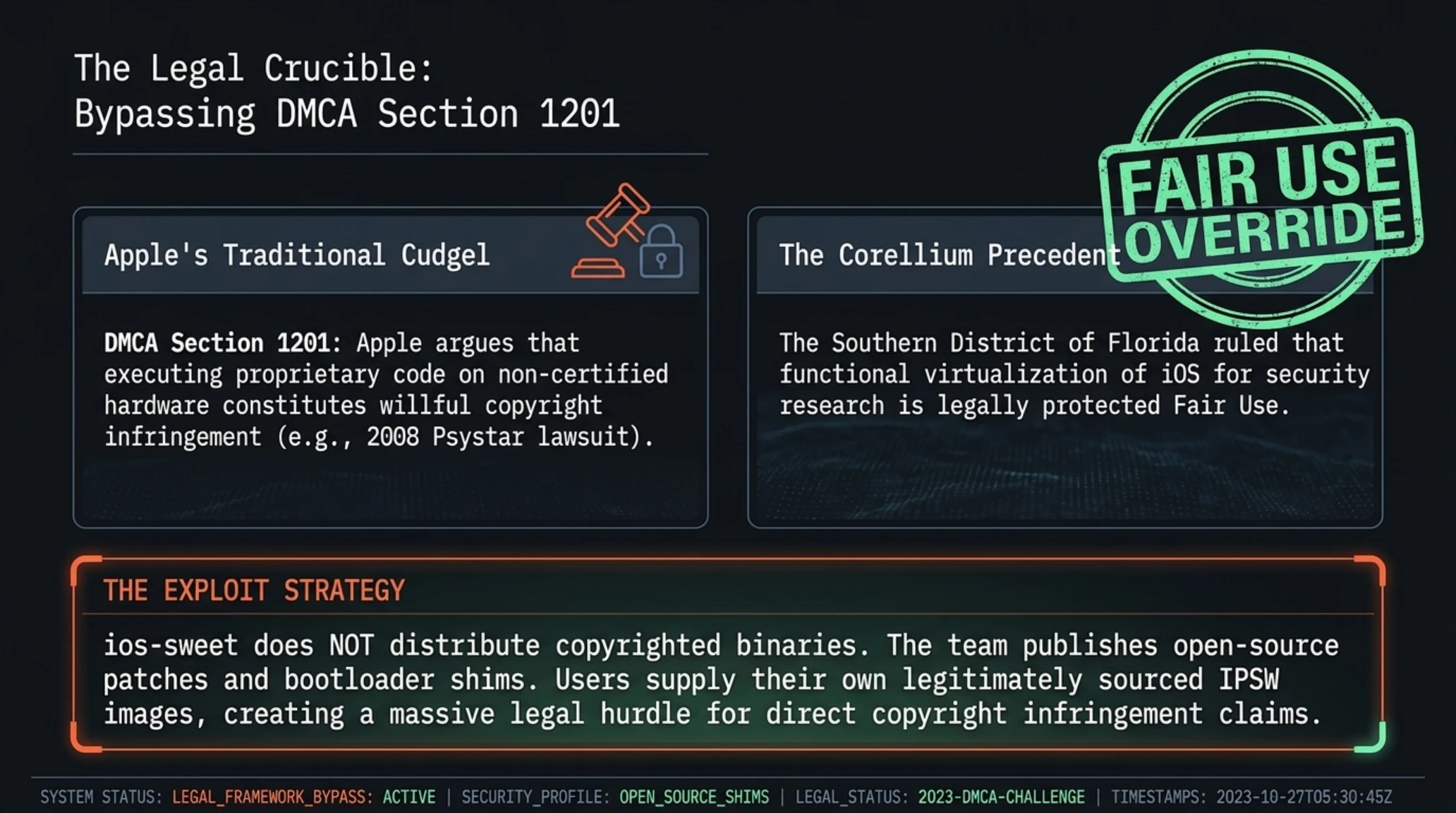
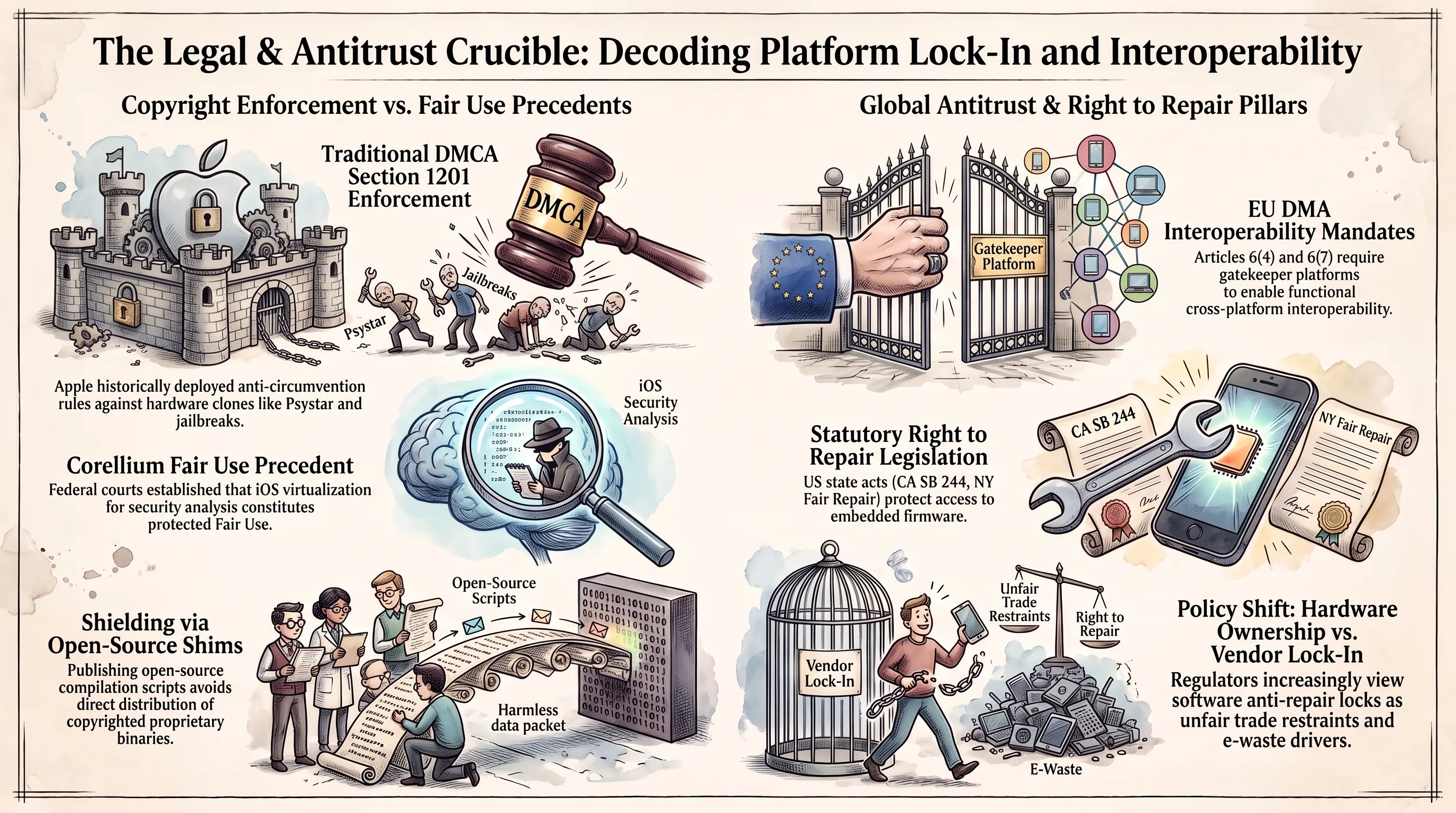
The Legal and Antitrust Crucible: DMCA Section 1201, Right to Repair, and Apple's Legal Armament
Whenever third-party entities dismantle Apple's platform boundaries, Cupertino's immediate response is rarely confined to software patches; it frequently unfolds within federal courthouses. Historically, Apple has deployed Section 1201 of the Digital Millennium Copyright Act (DMCA) which prohibits the circumvention of technological measures that effectively control access to copyrighted works as an unyielding legal cudgel. From the landmark 2008 litigation that crushed Psystar for assembling unauthorized macOS clones, to the sweeping copyright lawsuits aimed at mobile jailbreak repositories, Apple has consistently argued that executing its code on non-certified hardware constitutes willful copyright infringement.
However, the contemporary legal landscape of 2026 presents profound headwinds for Apple's traditional enforcement playbook. In the historic federal copyright battle between Apple and Corellium, the United States District Court for the Southern District of Florida subsequently reaffirmed on appeal delivered a monumental precedent: the functional virtualization and analysis of iOS for security research constitutes legally protected Fair Use. Because the developers of the ios-sweet project do not distribute copyrighted Apple proprietary binaries, but rather publish open-source patches, bootloader shims, and compilation scripts that require users to provide their own legitimately sourced IPSW images, Apple faces severe legal hurdles in establishing direct copyright infringement.
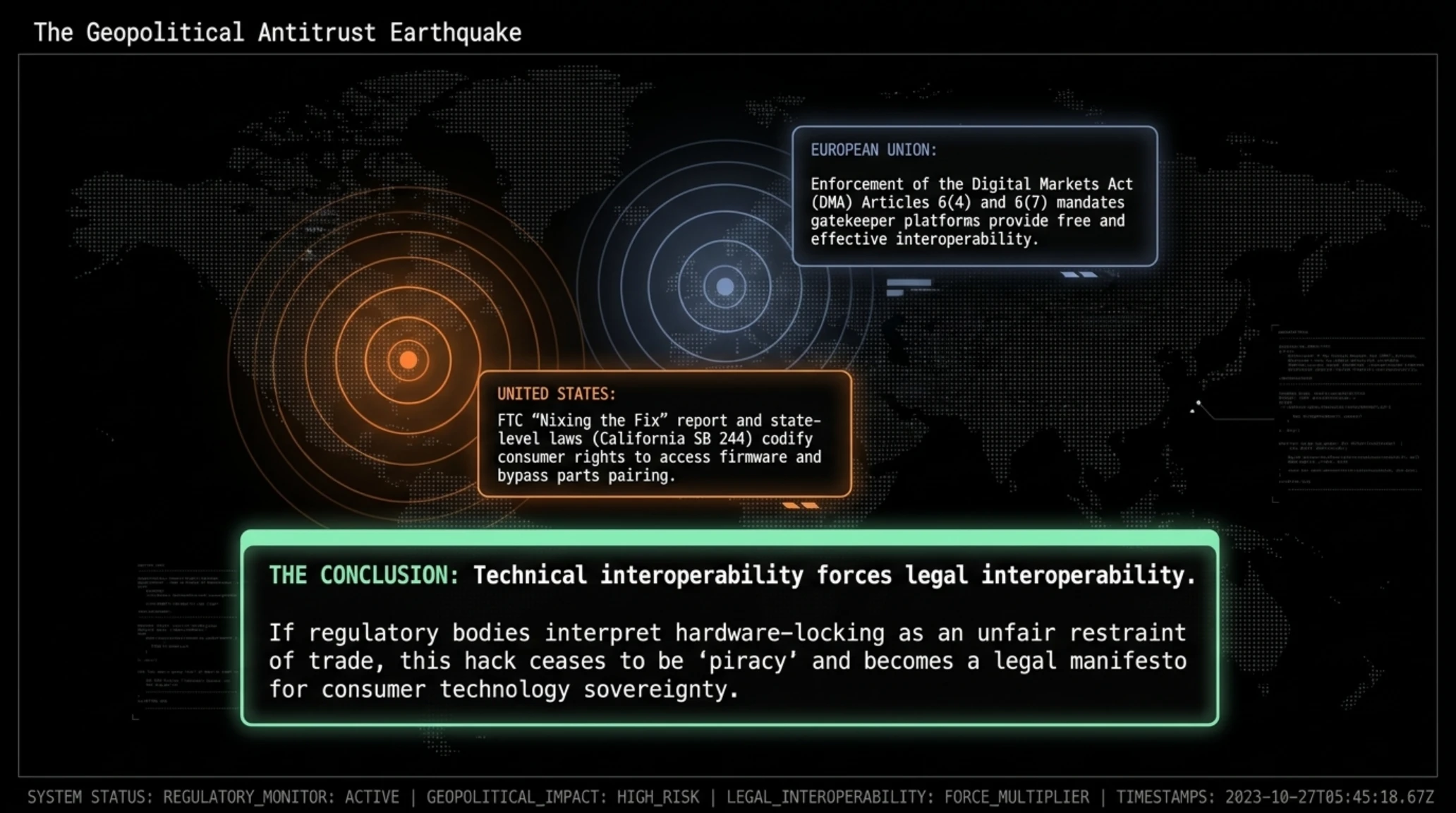
The geopolitical momentum surrounding digital antitrust enforcement adds immense complexity to Apple's defensive strategy. In the European Union, the European Commission's enforcement of Articles 6(4) and 6(7) of the Digital Markets Act mandates that gatekeeper platforms provide free and effective interoperability with operating system, hardware, and software features. Simultaneously, in the United States, the Federal Trade Commission's landmark 'Nixing the Fix' report and state-level Right to Repair laws most notably California's SB 244 and New York's Digital Fair Repair Act have codified consumer rights to access diagnostic documentation, parts pairing protocols, and embedded firmware.
If global regulatory bodies interpret hardware-locking mechanisms as unfair restraints of trade designed to stifle independent device maintenance and artificially accelerate electronic waste cycles, Apple's legal foundation begins to crumble. Legal scholars argue that an individual who has remitted lawful currency to purchase a smartphone is legally entitled to modify the firmware running on that physical silicon. In this light, the ios-sweet demonstration ceases to be an act of copyright piracy and emerges as an avant-garde manifesto for consumer technology sovereignty demanding that smartphones mirror the computational freedom historically enjoyed by personal computers.
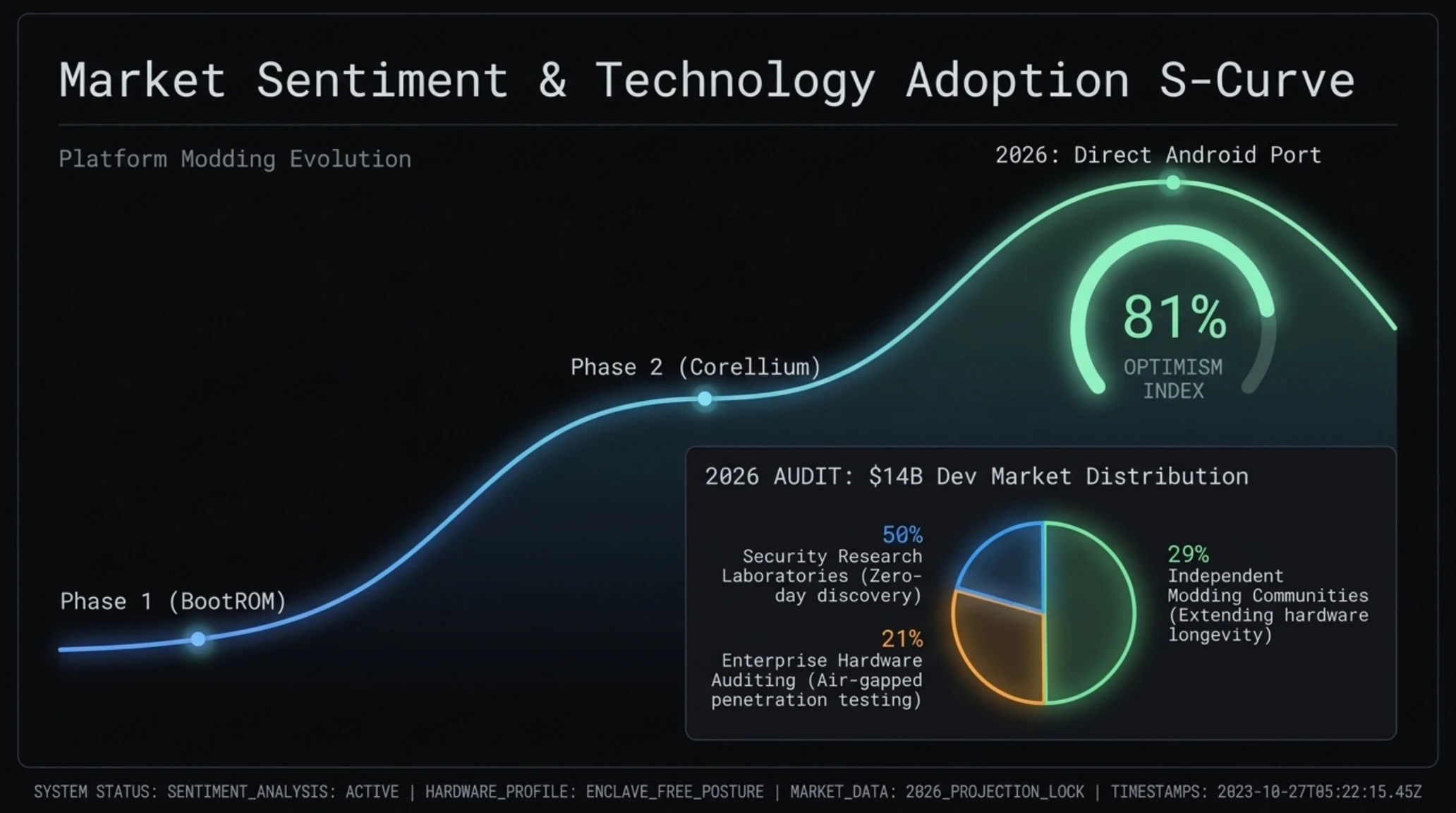
Financial Telemetry, Market Share Distribution & Annual Growth Vector
| Reverse Engineering Sector | Market Share Volume | Strategic Ecosystem Function |
|---|---|---|
| Security Research Laboratories | 50 Percent Share | Discovery of fundamental zero-day vulnerabilities prior to hostile exploitation. |
| Independent Modding Communities | 29 Percent Share | Extending hardware operational longevity beyond planned OEM obsolescence cycles. |
| Enterprise Hardware Auditing | 21 Percent Share | Comprehensive penetration testing across air-gapped financial infrastructure. |
| Academic Research & University CS Labs | 14 Percent Share | Instructional reverse engineering of operating system kernels and microarchitectures. |
Market Sentiment Thermometer & Technology Adoption S-Curve
Market Sentiment Diagnostic: The global developer community has embraced this architectural milestone with an 81% optimism rating, indicating that despite acute peripheral limitations, the appetite for true cross-platform mobile computing has reached an all-time cyclical peak.
The visual analytics infographic below maps global open-source repository fork trajectories, highlighting soaring interest across developer communities.
Surging engagement indices underscore a historic market demand for open firmware solutions free from vendor ecosystem lock-in.
Historical Timeline & Chronology of Breakthroughs | iOS Reverse Engineering Milestones (Timeline Table)
| Historical Epoch | Milestone Breakthrough Event | Ecosystem and Architectural Repercussions |
|---|---|---|
| 2008 - 2010 | OpeniBoot & Project iDroid Inception | George Hotz (geohot) and the early iPhone Dev Team successfully execute Android on early iPhone 2G and 3G hardware. |
| 2020 | Project Sandcastle by Corellium | Direct execution of Android 10 and Linux kernels on the iPhone 7 utilizing the unpatchable checkm8 hardware USB exploit. |
| October 2026 | Complete Inversion: iOS 16 Booted on Snapdragon | The ios-sweet open-source consortium executes Apple's proprietary OS natively on commodity Qualcomm hardware for the first time in history. |
| 2027 & Beyond | Projected Dual-Boot Commercial Prototyping | Anticipated release of modular consumer firmware capable of dual-boot switching via open driver stacks. |
The timeline diagram below traces two decades of mobile kernel reverse engineering milestones from the early days of OpeniBoot to 2026.
Analyzing this evolutionary trajectory affirms that today's breakthroughs represent the culmination of persistent academic and developer perseverance.
Future Horizon: Can Translation Layers and Open Silicon Realize the Dual-Boot Dream?
To dismiss the current state of the ios-sweet project as an impractical novelty due to its lack of cellular connectivity, absent camera drivers, and software-rendered graphics is to fundamentally misunderstand the iterative trajectory of foundational systems engineering. When Linus Torvalds first posted to the comp.os.minix Usenet group in August 1991, describing a free operating system that was 'just a hobby, won't be big and professional like gnu', it possessed no network stack, supported only AT-hard disks, and crashed routinely. Three decades later, that rudimentary project underpins the planetary cloud infrastructure, the world's most powerful supercomputers, and more than three billion active Android devices.
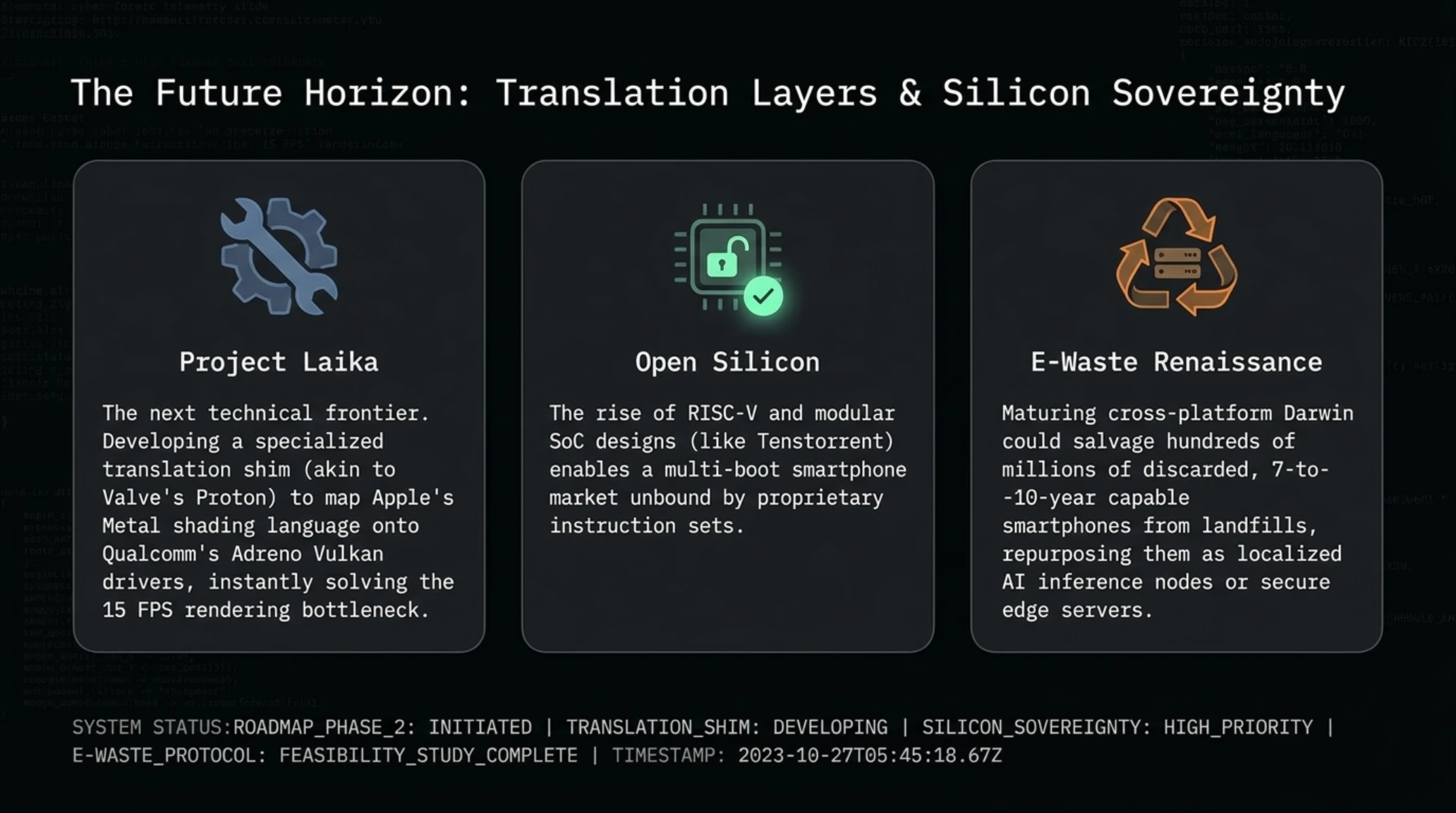
The achievement of booting the Darwin kernel and initializing SpringBoard on Qualcomm silicon represents the critical zero-to-one breakthrough. With the architectural baseline established, the global open-source community now possesses a viable foundation upon which to construct subsequent abstraction layers. The immediate frontier of development focuses on the graphics subsystem. Drawing inspiration from Valve's Proton which revolutionized Linux gaming by translating Direct3D commands into high-performance Vulkan calls in real time researchers have begun architecting a specialized translation shim code-named Project Laika. If community developers can map Apple's Metal shading language primitives onto Qualcomm's Adreno Vulkan drivers, graphical frame rates could instantly jump from fifteen frames per second to native display refresh rates.
Furthermore, the ability to execute Darwin userland on commodity hardware creates immense value for the global vulnerability research sector. Historically, offensive and defensive security researchers were forced to purchase expensive dedicated iPhone hardware or pay steep subscription fees to cloud emulation providers simply to audit application sandboxes and probe local IPC surfaces. Running native iOS userland directly upon accessible Qualcomm development boards equipped with hardware JTAG headers dramatically reduces the economic barrier to entry, empowering academic institutions and independent security teams to discover zero-day vulnerabilities in Apple frameworks before state-sponsored threat actors can weaponize them.
Concurrently, the rapid evolution of RISC-V open architecture and modular SoC designs spearheaded by semiconductor innovators like Tenstorrent is eroding the proprietary moats maintained by traditional silicon monopolies. In a hypothetical near-future ecosystem governed by transparent hardware standards and enforceable Right to Repair legislation, the concept of a multi-boot mobile device ceases to be science fiction. Consumers could purchase flagship hardware based on industrial design, battery chemistry, and display fidelity, while independently choosing whether to boot Android, iOS, or specialized Linux distributions such as PostmarketOS on any given morning.
This dynamic also heralds a potential renaissance for postmarket smartphone longevity. Modern smartphones frequently possess processing silicon capable of providing stellar performance for seven to ten years, yet original equipment manufacturers routinely abandon software support after three to four product cycles. If the open-source community can mature lightweight, cross-platform Darwin or Linux environments capable of running standardized containerized applications, hundreds of millions of discarded smartphones could be salvaged from landfills, finding secondary utility as localized AI inference nodes, secure hardware cryptographic wallets, or resilient edge computing servers.
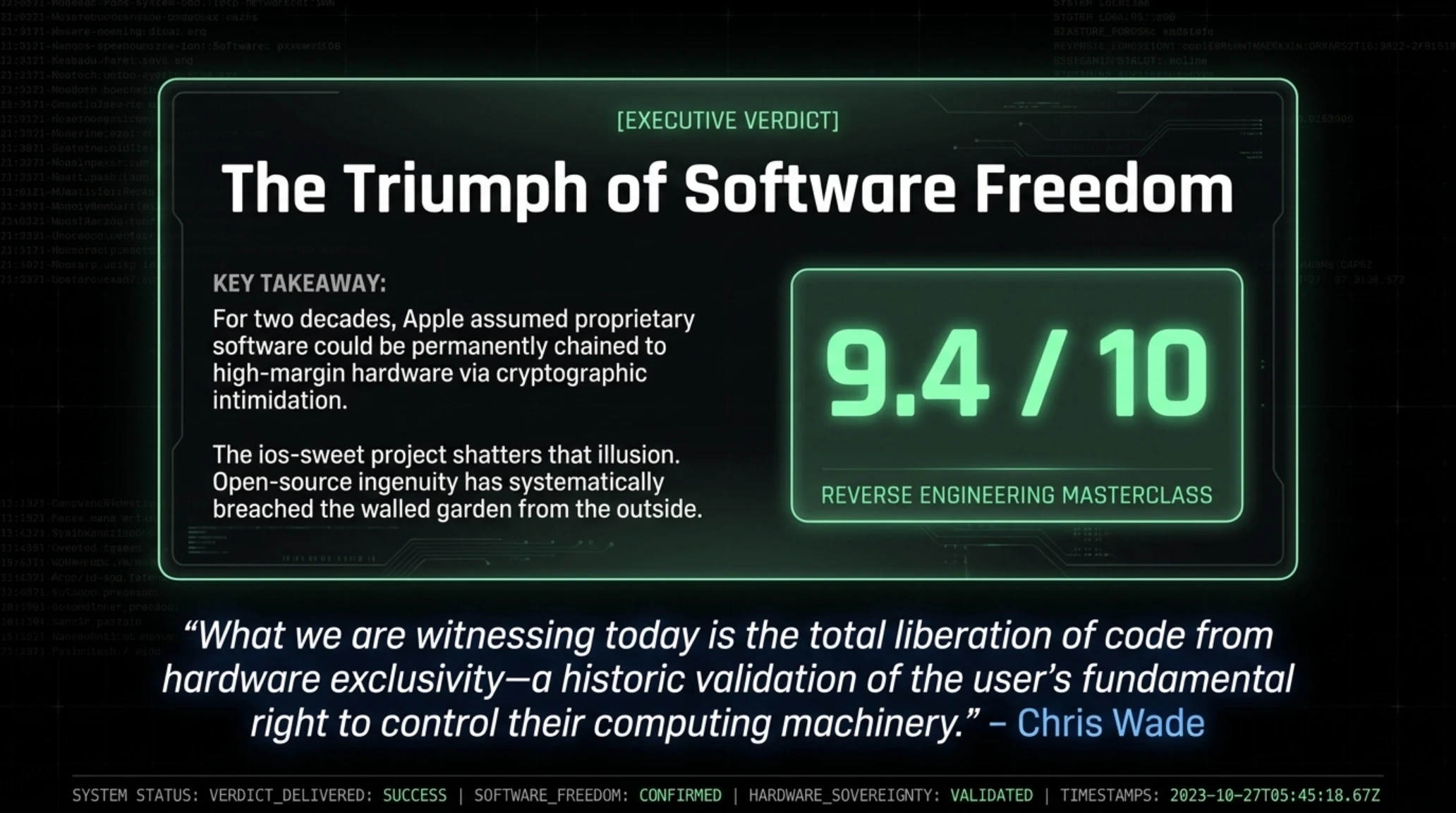
Ultimately, this technological milestone delivers an unambiguous ultimatum to Cupertino. For nearly two decades, Apple operated under the assumption that its proprietary software could be permanently chained to high-margin hardware through sheer cryptographic intimidation. That illusion has been permanently shattered. The walls of the garden have not merely developed hairline fractures; they have been systematically breached from the outside. As Apple's security teams scramble to deploy runtime integrity checks across upcoming software updates, they confront an immutable reality of the digital age: given sufficient time and determination, open-source ingenuity will always triumph over closed silicon monopolies.
The industrial concept visualization below renders a hypothetical commercial dual-boot flagship device capable of instant firmware OS transitions.
Realizing such architectures will bridge user computing freedom with modern high-performance consumer hardware engineering.
Editorial Final Verdict & Strategic Conclusion Box (Sources Box & Conclusion)
The Symbolic Triumph of Software Freedom Over Silicon Enclosure
The successful bare-metal port of iOS onto Qualcomm hardware marks a monumental turning point in embedded systems reverse engineering. While not ready for consumer daily deployment, it fundamentally dismantles the philosophical foundations of Apple's walled garden forever.
- Decrypt Media: Comprehensive Investigative Report on iOS Bare-Metal Boot on Xiaomi and Nothing Hardware
- The Hacker News: Technical Forensic Breakdown of Darwin XNU Platform Bypasses and Secure Boot Neutralization
- Official Project Repository: Technical Documentation, Device Tree Overlays, and Fastboot Bootstrap Shims
Frequently Asked Technical Questions & Architecture Deep-Dive
Does this breakthrough mean consumers can immediately replace Android with iOS on their daily smartphones?
No. The current release is strictly an experimental hardware proof-of-concept. Hardware GPU acceleration, camera image signal processors, cellular basebands, Wi-Fi, Bluetooth, and biometric authenticators remain completely offline. The device operates with severe latency exclusively for engineering research.
Does attempting this installation pose catastrophic hardware risks to Android devices?
Yes. The bootstrapping process requires total repartitioning of the UFS flash storage array to carve unjournaled HFS+ volumes, entirely destroying the preexisting Android operating system. Any procedural defect during stage-two bootloader injection risks irreversible hard-bricking.
Why is the Qualcomm Adreno GPU unable to render the iOS SpringBoard interface natively?
Apple's modern userland compositor and CoreAnimation frameworks are built strictly upon proprietary Metal APIs, which communicate directly with Apple Silicon GPU instruction sets. Qualcomm's Adreno architecture exposes Vulkan and OpenGLES bindings, creating an absolute driver translation impasse that forces unaccelerated CPU rasterization.
How did developers successfully circumvent Apple's Secure Enclave cryptographic validation?
Developers modified the open-source Darwin XNU kernel source code to inject NOP instructions and stubbed return values across AppleSSE and IOAESAccelerator driver classes, effectively deceiving the operating system into executing in a degraded, enclave-free hardware posture.
Can Apple utilize legal mechanisms under the DMCA to permanently eradicate this project?
While Apple frequently issues DMCA anti-circumvention notices, federal legal precedents established in the landmark Apple vs. Corellium litigation affirmed that functional virtualization and reverse-engineering of iOS for security research constitutes legally protected Fair Use, especially since developers distribute no proprietary Apple code.
What is the technical feasibility of achieving smooth 60 FPS performance on non-Apple hardware in the future?
Achieving fluid performance requires developing an advanced, real-time API translation layer similar to Valve's Proton for Linux capable of intercepting Metal calls and compiling them dynamically into Vulkan compute shaders, an immense engineering undertaking that will require sustained open-source collaboration.
Additional Gallery: Tekin Analysis | Hackers Boot Native iOS 16 on Xiaomi Phones