Apple's Surprise and Shine Event: The Foldable iPhone Nobody Saw Coming
- 🎮iPhone Duo at $2,000- Apple's first foldable iPhone without Face ID
- 🎧Touch ID Returns- Fingerprint sensor embedded in the power button
- 🚀Pro Models Price Hike- iPhone 18 Pro and Pro Max jump by $100
- 🗡️Next-Gen Apple Watches- Series 12 and Ultra 4 with advanced sensors
- 📰Siri AI Revolution- Massive overhaul with cross-app integration
The Day Apple Abandoned Face ID in a Flagship Device
When Tim Cook now Executive Chairman and newly appointed CEO John Ternus took the stage last night, thousands of tech enthusiasts worldwide were expecting Apple to unveil a foldable iPhone that would redefine the category. Instead, what they got was something far more unexpected: a foldable iPhone without Face ID.
This wasn't just a technical compromise. Apple essentially admitted that the TrueDepth Camera system the very technology that became synonymous with iPhone innovation since the iPhone X in 2017 doesn't belong in a foldable form factor. Touch ID, embedded in the power button, has made its return. The same authentication method Apple abandoned in flagship iPhones seven years ago.
But the absence of Face ID wasn't the only shock of the Surprise and Shine event. The $100 price hike on iPhone 18 Pro models, the delayed October launch window for iPhone Duo, and the conspicuous absence of a base iPhone 18 reveal a company undergoing a fundamental strategic shift.
After years of cautious perfectionism, Apple is finally showing it's willing to compromise and that might be the most significant announcement of the night.
At a Glance: Event Highlights
- iPhone Duo at $2,000: Apple's first foldable iPhone featuring a 7.8-inch display.
- Face ID Dropped: The iconic TrueDepth camera is replaced by Touch ID in the power button.
- Pro Models Get Pricier: iPhone 18 Pro and Pro Max jump by roughly $100 in starting price.
- Siri AI Revolution: A massive overhaul bringing cross-app integration and true contextual awareness.
- Next-Gen Apple Watches: Series 12 and Ultra 4 introduced with new Audio Intelligence features.
iPhone Duo: Breaking Every Rule Apple Wrote About Foldables
For years, industry insiders speculated that when Apple finally entered the foldable market, it would solve every problem plaguing Samsung's Galaxy Fold line: eliminate the crease entirely, integrate full Face ID, deliver pro-grade triple cameras, and maintain an impossibly thin profile. The result? None of that happened.
Real Specs, Real Compromises
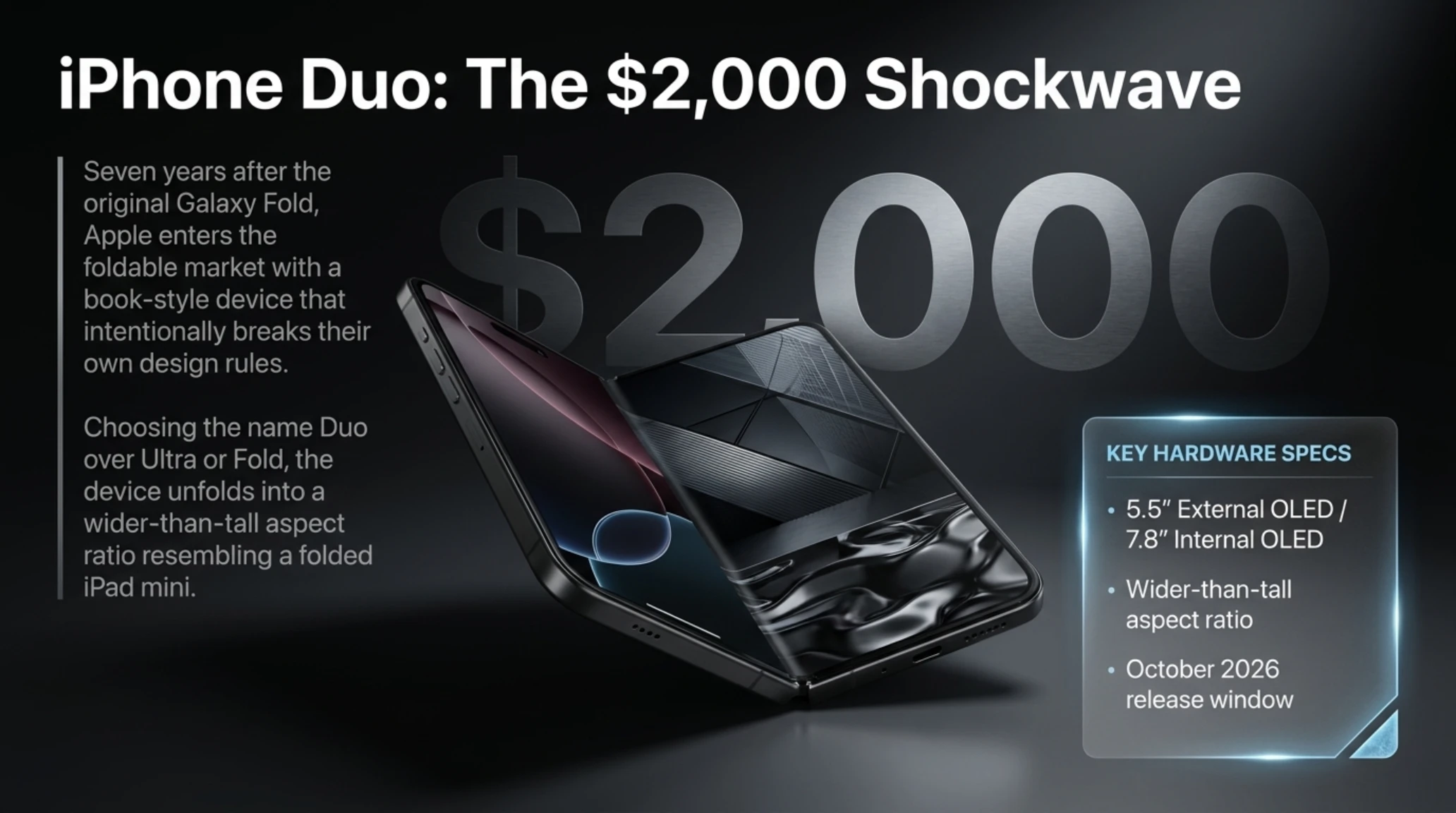
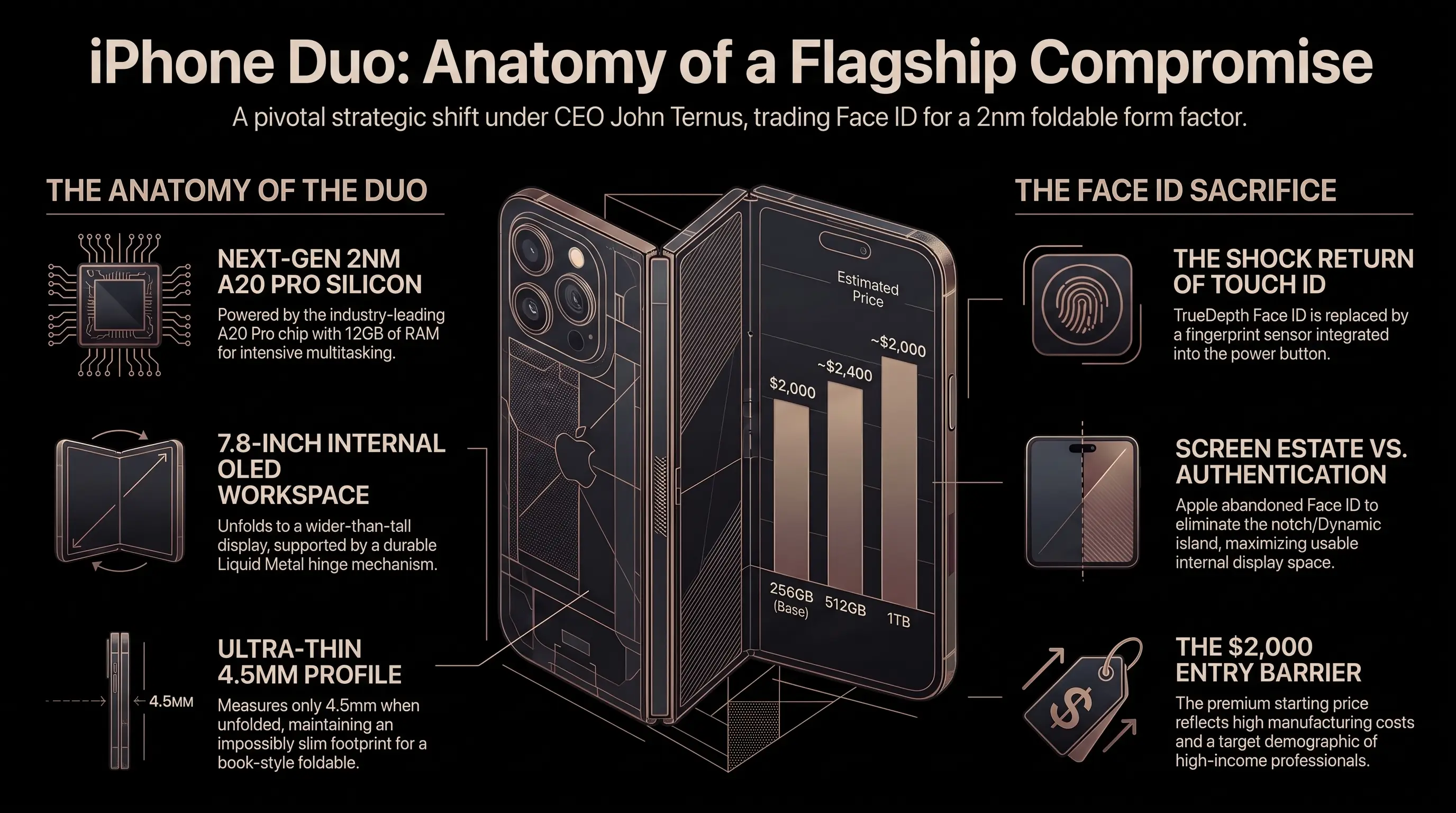
iPhone Duo Apple chose that name deliberately, avoiding "Ultra" or "Fold" is a book-style foldable featuring a 5.5-inch external display and a 7.8-inch internal screen. When unfolded, it takes on a wider-than-tall aspect ratio, resembling a folded iPad mini rather than a stretched smartphone.
iPhone Duo Technical Specifications
| External Display | 5.5-inch OLED |
| Internal Display | 7.8-inch OLED (Minimal Crease) |
| Hardware | A20 Pro (2nm) / 12GB RAM |
| Storage Options | 256GB / 512GB / 1TB |
| Cameras | Dual Rear / Single Front |
| Security | Touch ID in power button (No Face ID) |
| Dimensions | 4.5mm (unfolded) / 9mm (folded) |
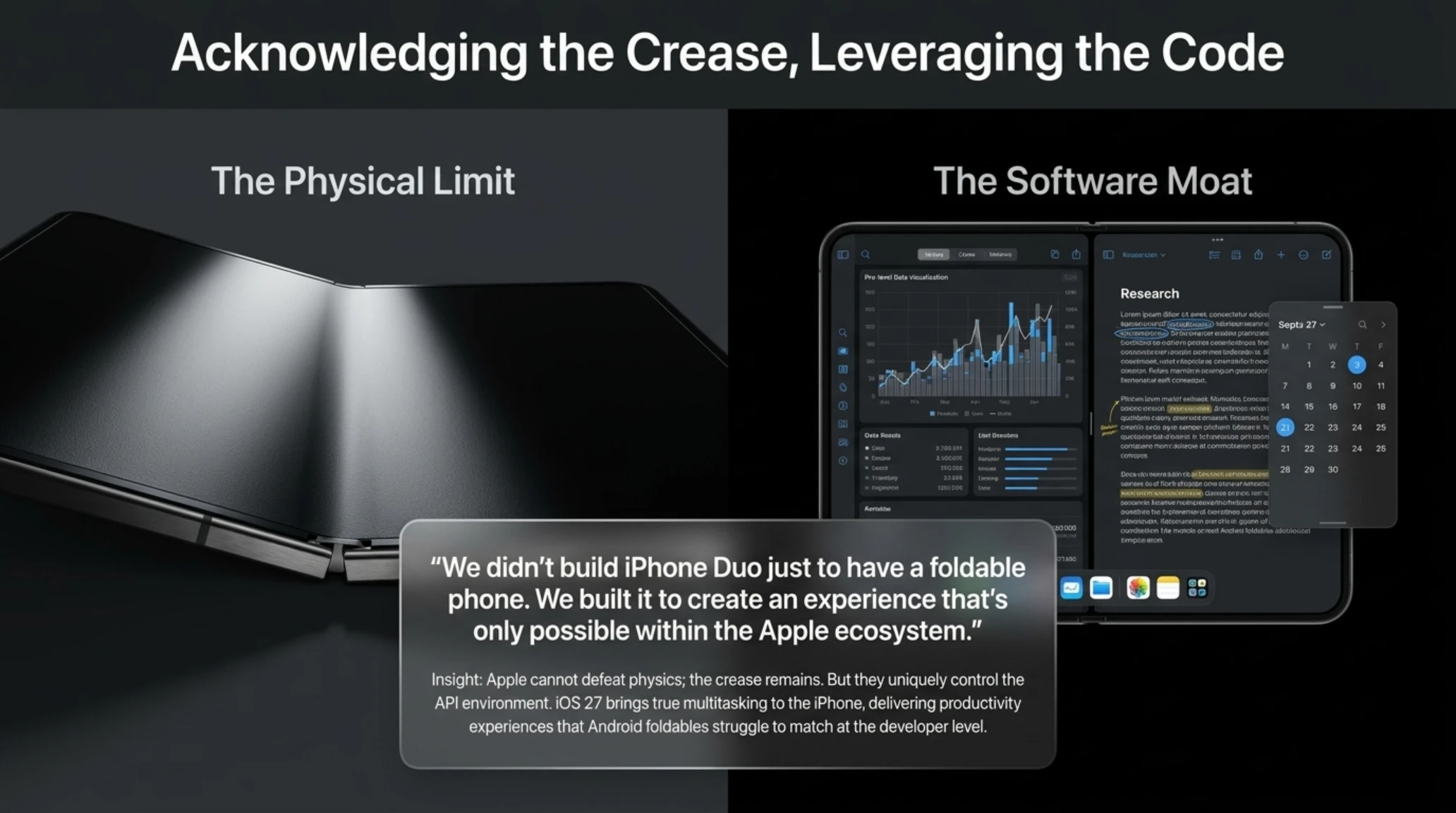
Here's the critical detail: Apple confirmed the crease is "minimal" but didn't claim to have eliminated it. This means even Apple with its legendary engineering prowess couldn't fully solve the inherent crease problem that has plagued every foldable on the market. The difference is Apple's being more transparent about it.
Why Touch ID Instead of Face ID?
This is the question dominating tech forums worldwide: Why would Apple, after spending years promoting Face ID as the most secure and convenient authentication method, revert to Touch ID in its foldable flagship?
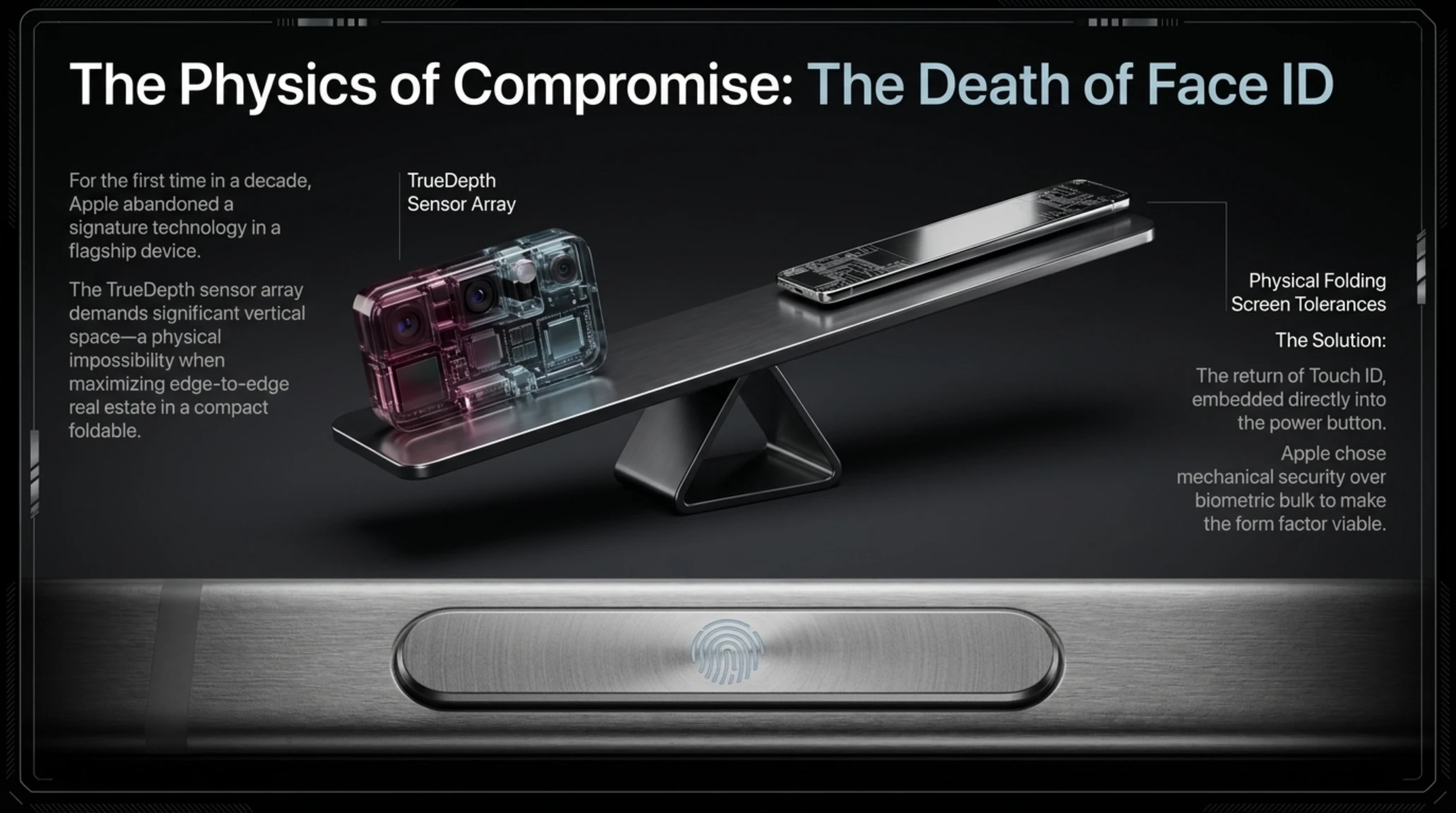
The answer comes down to physics. The TrueDepth Camera array required for Face ID demands significant space at the top of the display. In a foldable device where maximizing screen real estate in a compact closed form is paramount, adding a large notch or Dynamic Island cutout would defeat the entire purpose.
But this decision carries deeper implications. For the first time in a decade, Apple is willing to abandon one of its signature technologies Face ID to make a new form factor viable. It signals that even Apple must make trade-offs in the face of engineering realities.
Seven Years Late: How Does iPhone Duo Stack Up?
Samsung launched the original Galaxy Fold in 2019 and is now on its eighth generation. Huawei, Xiaomi, Motorola, and Honor all have established foldable lineups. Apple is arriving roughly seven years late to a market it typically defines. The question isn't just whether iPhone Duo is good it's whether being late actually worked in Apple's favor.
iPhone Duo vs Galaxy Z Fold 8: The Comparison Nobody Wanted to Make
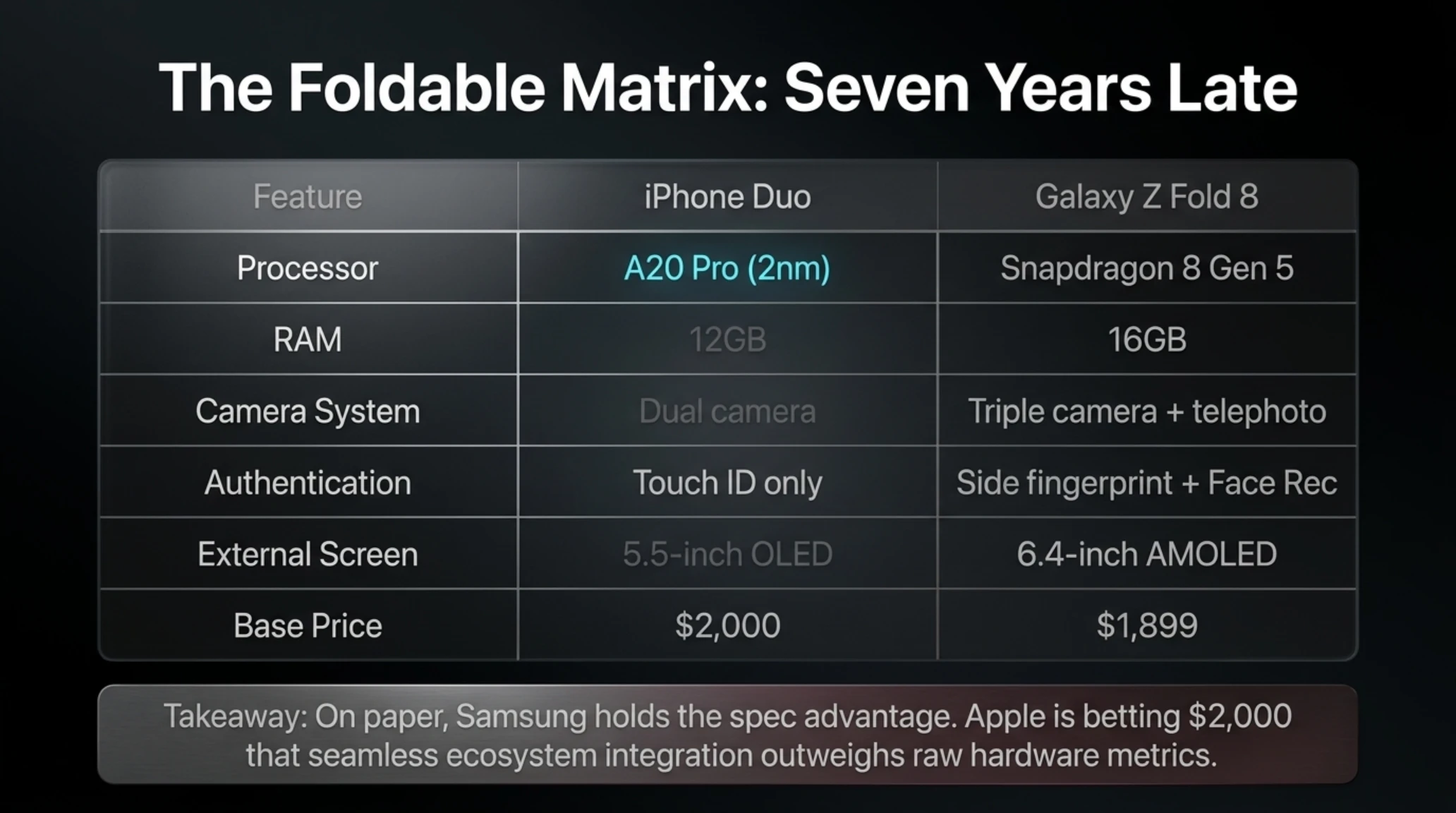
Let's examine how Apple's first-generation foldable measures up against Samsung's most refined iteration:
| Feature | iPhone Duo | Galaxy Z Fold 8 |
|---|---|---|
| External Display | 5.5-inch OLED | 6.4-inch AMOLED |
| Internal Display | 7.8-inch OLED | 7.6-inch AMOLED |
| Processor | A20 Pro (2nm) | Snapdragon 8 Gen 5 |
| RAM | 12GB | 16GB |
| Camera System | Dual camera | Triple camera + telephoto |
| Authentication | Touch ID only | Side fingerprint + Face recognition |
| Starting Price | $2,000 | $1,899 |
| Weight | TBA | 239 grams |
| Refresh Rate | TBA (likely 120Hz) | 120Hz adaptive |
On paper, iPhone Duo appears to lag behind the Galaxy Z Fold 8 in several key areas: inferior camera setup, less RAM, smaller external display, and critically a higher price tag. But Apple is betting on something Samsung hasn't fully cracked: ecosystem integration.

iOS 27: The Software Advantage Nobody Else Has
One of iPhone Duo's strongest differentiators is iOS 27. For the first time in iOS history, Apple has brought iPadOS-style multitasking capabilities to iPhone but exclusively for iPhone Duo.
This includes true split-screen multitasking, slide-over windows, and a Stage Manager-like interface that enables users to work with multiple apps simultaneously. While Android has offered similar features on foldables for years, Apple's deeply integrated and optimized experience could represent a meaningful advantage.
The real test will be whether third-party app developers embrace these new multitasking APIs. If they do, iPhone Duo could deliver productivity experiences that feel genuinely different from anything available on competing foldables.
iPhone 18 Pro: Incremental Upgrades, Non-Incremental Price Jump
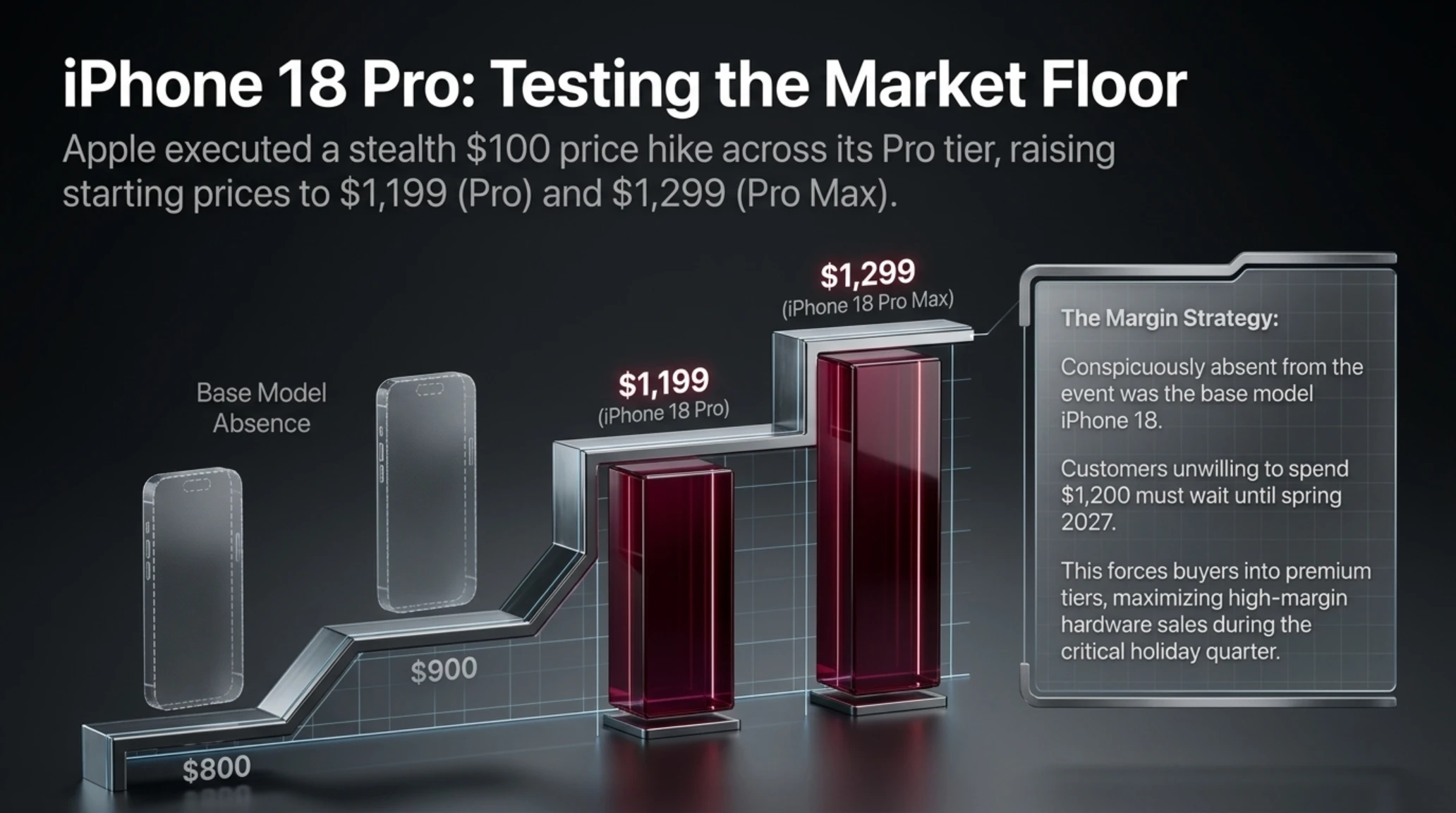
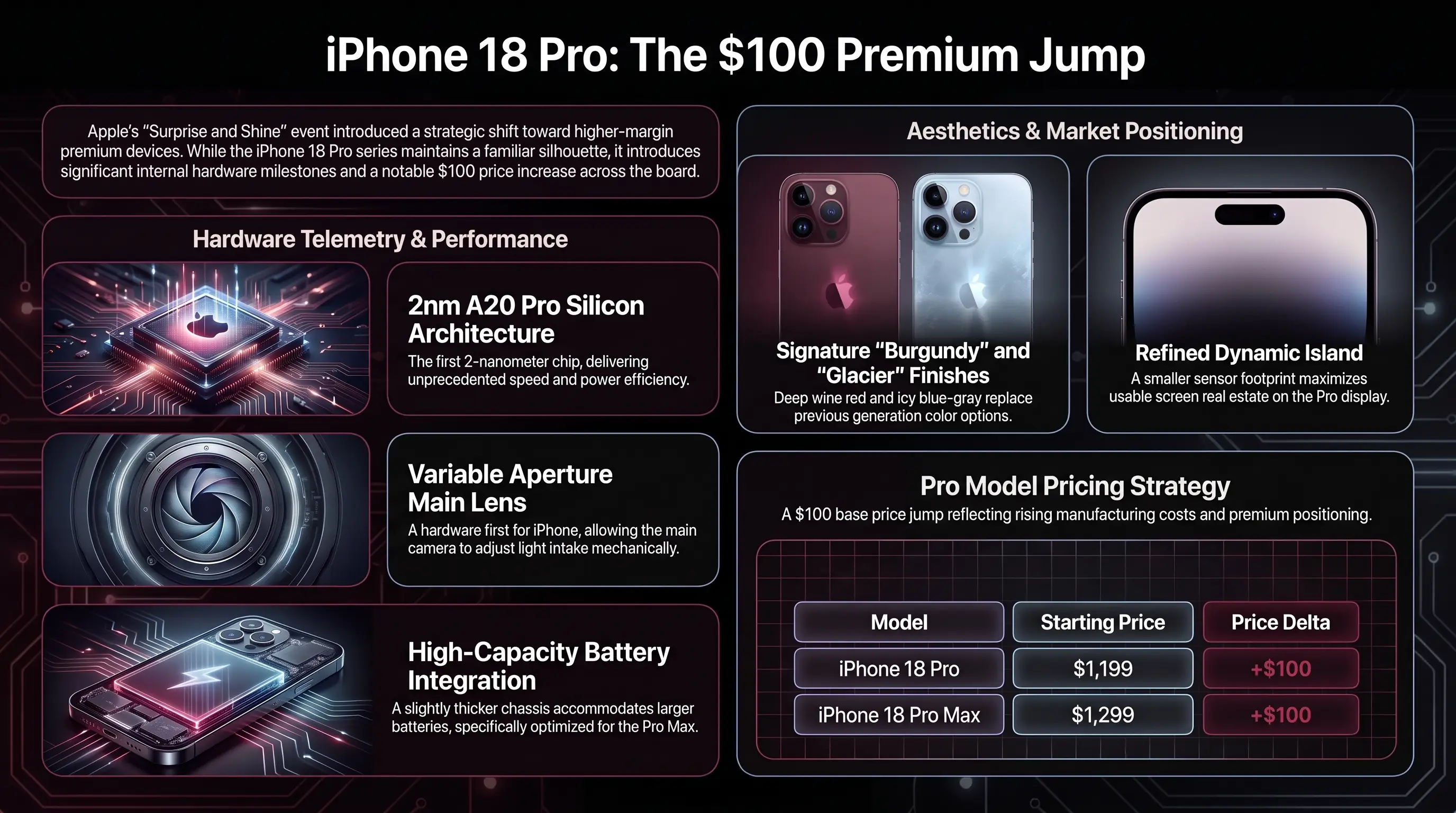
While iPhone Duo dominated headlines, Apple quietly made another significant move: raising iPhone 18 Pro and Pro Max prices to $1,199 and $1,299 respectively roughly $100 more than their predecessors.
What That Extra $100 Gets You
Apple's pitch is that iPhone 18 Pro represents meaningful innovation, but the reality is most improvements are internal rather than immediately visible:
- A20 Pro Chip: Built on a 2-nanometer process smaller, faster, and more power-efficient than previous generations
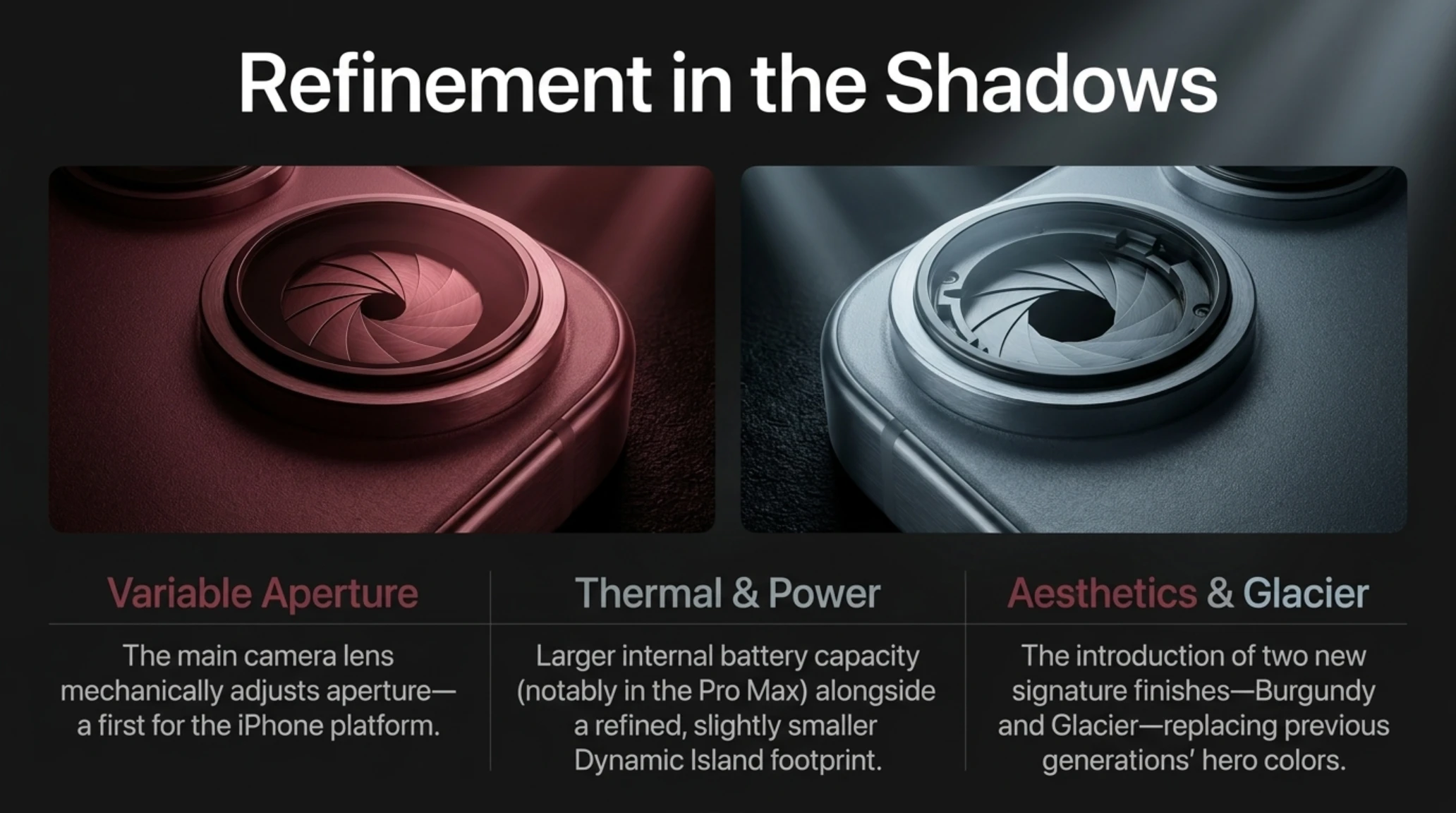
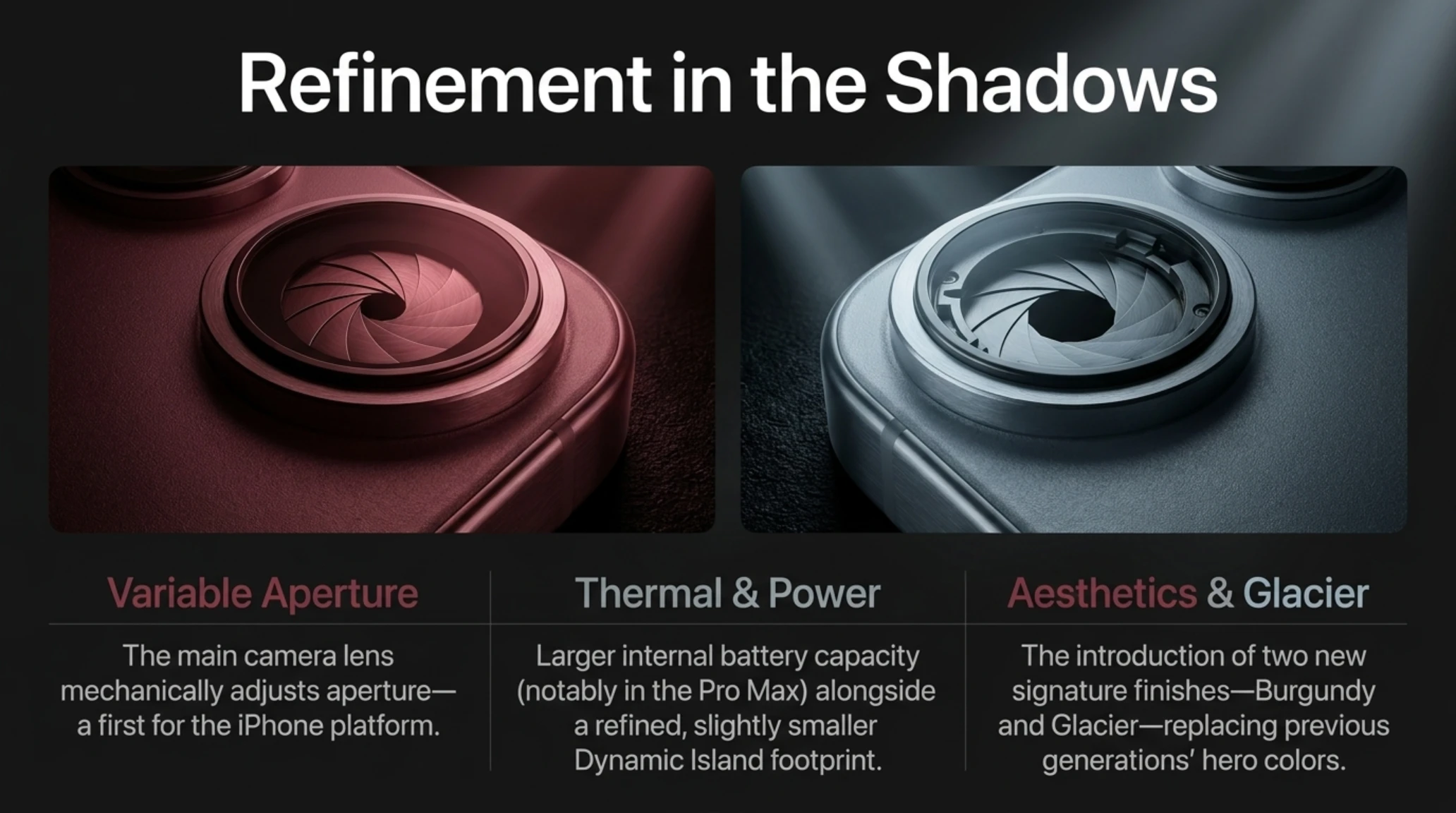
- Variable Aperture Camera: The main camera can now adjust its aperture a first for iPhone
- Larger Battery Capacity: Especially noticeable in Pro Max, which is slightly thicker to accommodate the upgrade
- Refined Dynamic Island: Slightly smaller footprint provides more usable screen space
The external design remains virtually identical to iPhone 17 Pro. Apple added two new finishes: Burgundy (a deep wine red) and Glacier (an icy blue-gray), both of which look stunning in early hands-on reports.
iPhone 18 Pro Color Lineup
- Black: Classic matte finish returns
- Burgundy: Deep wine red this year's signature color
- Glacier: Icy blue-gray replacing last year's Sierra Blue
- Silver: Standard titanium finish
Market Testing: How High Will Consumers Go?
The $100 price increase raises an obvious question: Are incremental camera and chip improvements worth paying substantially more?
Apple appears to be conducting a market test. Samsung successfully raised Galaxy S25 Ultra pricing earlier this year without significant sales impact. Now Apple wants to see if its customers will follow suit.
One critical factor: Apple didn't announce the base iPhone 18 at this event. Customers unwilling to spend $1,200 on a smartphone will need to wait until spring 2027. This strategy could drive more consumers toward Pro models even at elevated prices simply because no affordable alternative exists.
Apple Watch Series 12 and Ultra 4: Health Tech Gets Serious
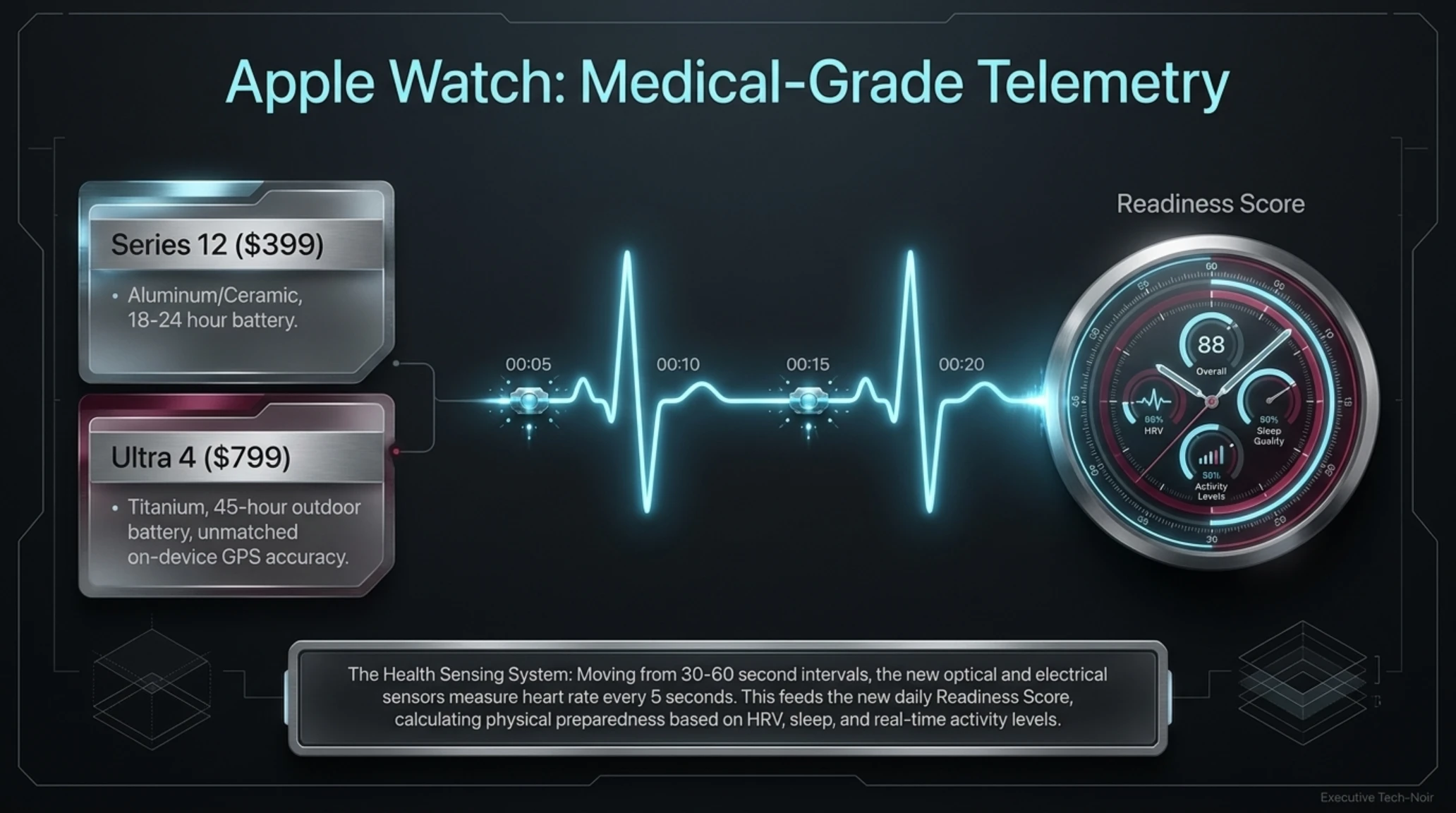
Beyond iPhones, Apple introduced two new Apple Watch models: Series 12 and Ultra 4. Both feature a new Health Sensing System that brings heart rate monitoring accuracy to levels previously only achievable with medical-grade equipment.
Health Sensing System: What Actually Changed
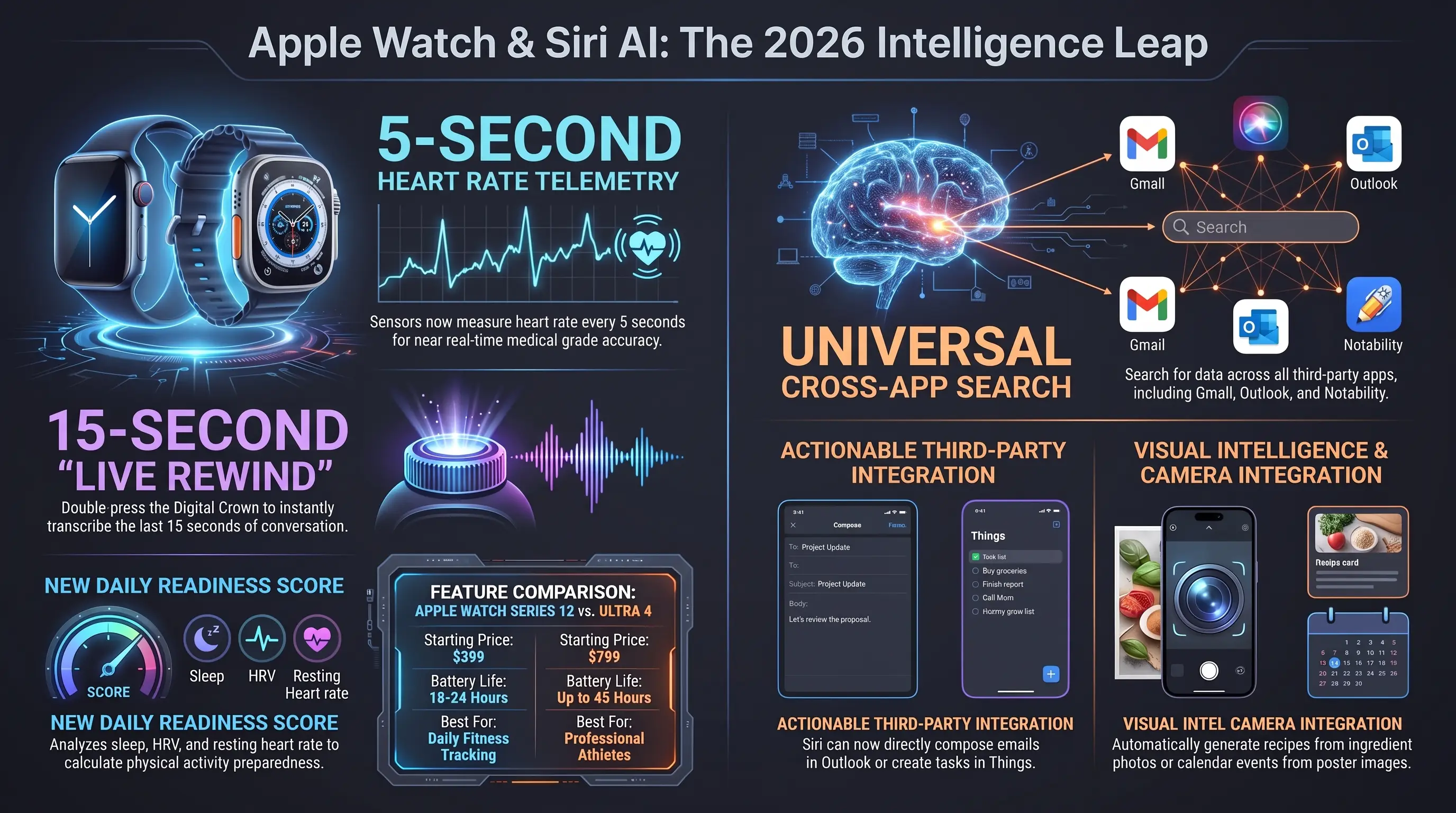
Previous Apple Watch models measured heart rate every 30 to 60 seconds. The new optical and electrical sensors enable measurements every 5 seconds. That translates to more granular data, faster anomaly detection, and better understanding of real-time health status.
Apple also introduced Readiness Score a daily metric that tells you how prepared your body is for physical activity. The score incorporates sleep quality, heart rate variability, resting heart rate, and recent activity levels.
Quick Comparison: Series 12 vs Ultra 4
| Feature | Apple Watch Series 12 | Apple Watch Ultra 4 |
|---|---|---|
| Price | $399 | $799 |
| Case Material | Aluminum / Ceramic | Titanium |
| Battery Life | Standard 18-24 hours | Up to 45 hours |
| Target Audience | Daily wear & fitness | Pro athletes & outdoor |
📚 Classified & Related Dossiers in TekinGame
If you wish to explore beyond this report and delve into cybernetic frontiers and autonomous AI architectures, do not miss these three exclusive deep-dives in the Tekin Garage:
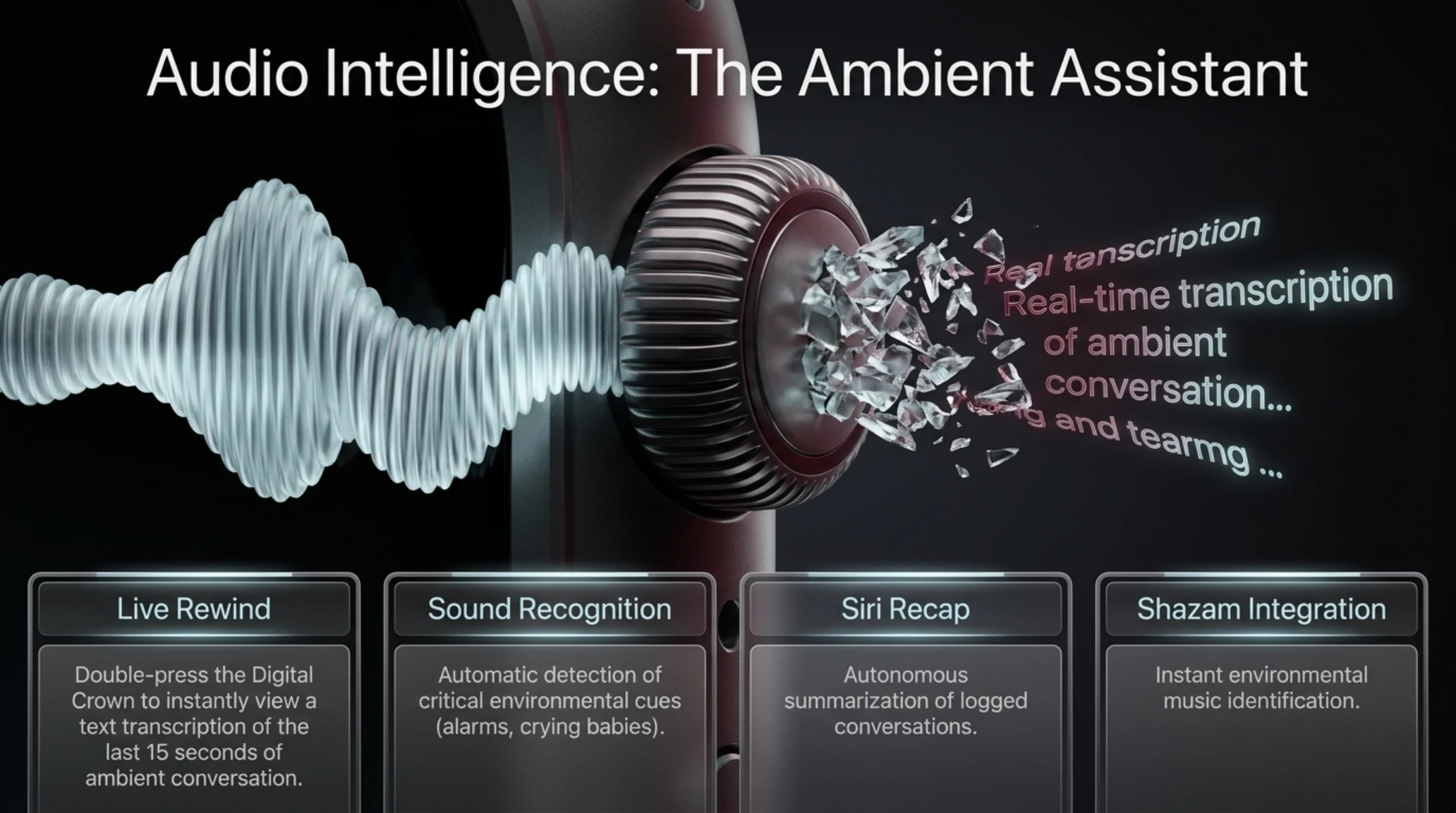
Audio Intelligence: A Completely New Feature Category
One of the event's genuine surprises was Audio Intelligence a suite of smart audio features exclusive to Apple Watch Series 12 and Ultra 4.
The system includes four capabilities:
- Sound Recognition: Automatic detection of important environmental sounds like alarms, doorbells, or crying babies particularly valuable for users who are deaf or hard of hearing
- Live Rewind: Double-press the Digital Crown to see the last 15 seconds of conversation transcribed as text
- Siri Recap: Automatic conversation summarization for later review
- Shazam Integration: Instant music identification without launching the app
These features suggest Apple is transforming Apple Watch from a simple smartwatch into a genuine ambient assistant that helps you stay more present in your environment and conversations.
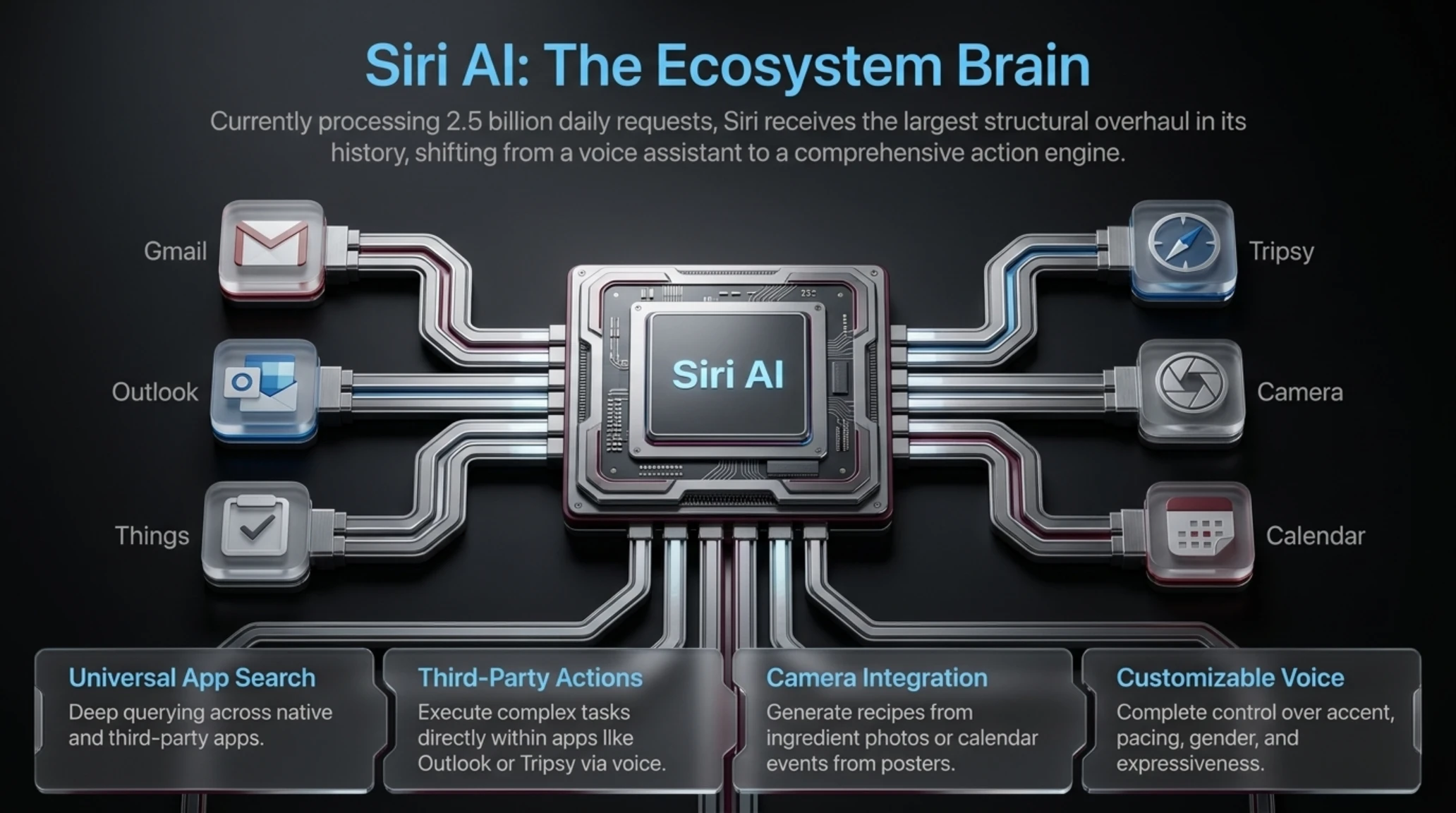
Siri AI: The Biggest Overhaul in Siri's History
If we're being honest, Siri has lagged behind Google Assistant and Alexa for years. With the introduction of Siri AI at last night's event, Apple claims to have finally closed that gap.
What's Actually Different?
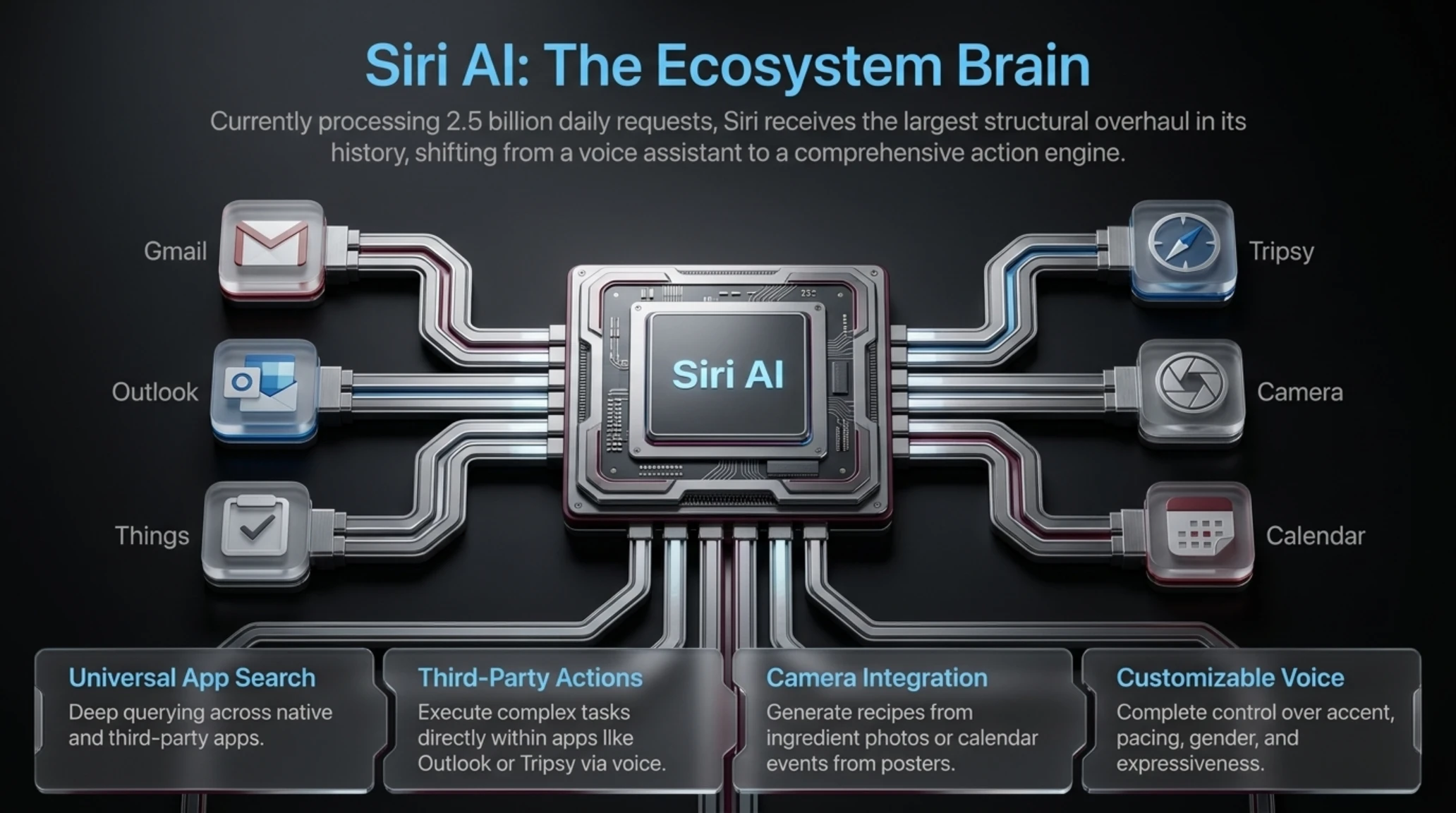
Siri AI introduces capabilities that feel genuinely transformative:
- Universal App Search: Search across all apps not just Apple's native apps, but Gmail, Outlook, Notability, and hundreds of others
- Third-Party Actions: Siri can now take actions within third-party apps compose an email directly in Outlook, add a restaurant to your Tripsy itinerary, or create a task in Things
- Camera Integration: Generate recipes from photos of ingredients, add calendar events from poster images, or extract contact information from business cards
- Customizable Voice: Adjust accent, gender, speaking rate, and even expressiveness to create a voice that feels personally yours
Apple says Siri currently handles 2.5 billion requests daily. If Siri AI delivers on these promises, that number could multiply dramatically.
Can Siri AI Actually Compete With ChatGPT?
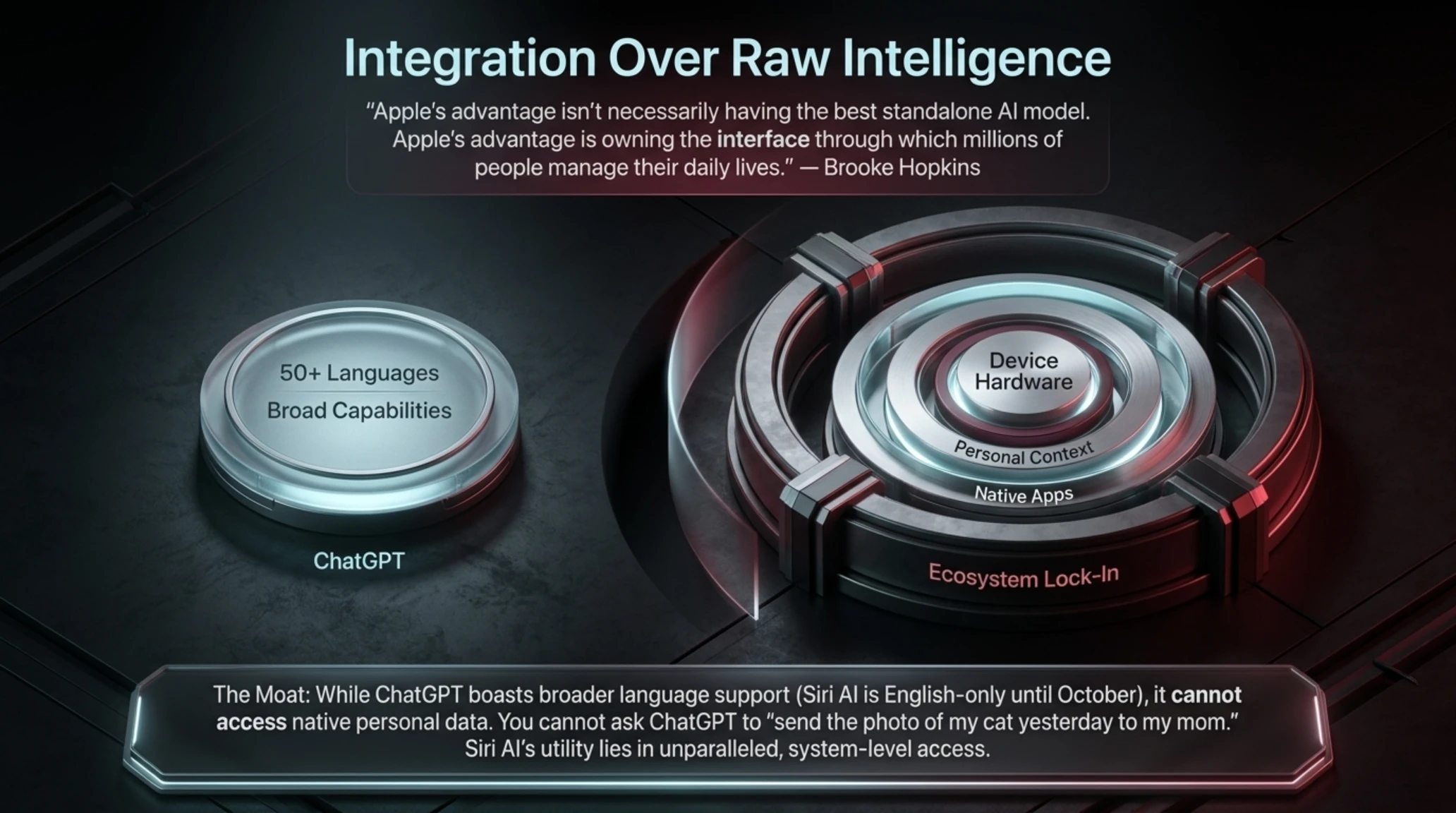
This is the critical question. Siri AI remains in beta and will only support English until October. ChatGPT, by contrast, already supports 50+ languages and offers broader capabilities.
But Siri AI has one massive advantage: deep integration with the Apple ecosystem. You can't ask ChatGPT to "find my boss's last email and summarize it" or "send the photo I took of my cat yesterday to my mom." Siri AI can handle both seamlessly.
The real competition isn't about raw intelligence it's about practical utility in daily life. And that's where Apple's ecosystem lock-in could prove decisive.
AirPods 5: Small Updates, Big Implications
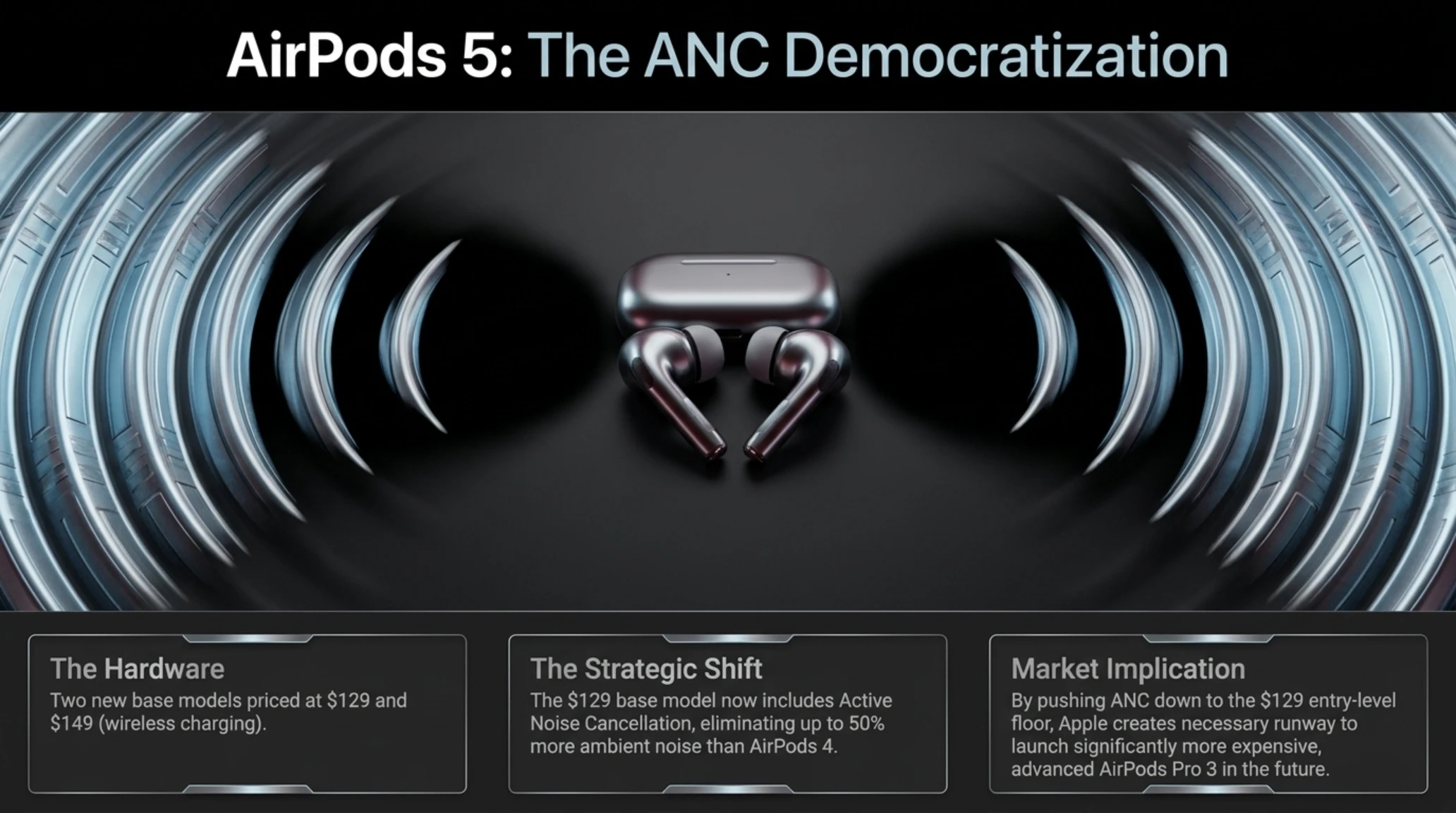
Among all the major announcements, Apple also unveiled AirPods 5 in two models: $129 and $149, with the primary difference being wireless charging case support.
The noteworthy detail: the $129 model now includes Active Noise Cancellation a feature previously exclusive to AirPods Pro. Apple claims the new ANC removes up to 50% more ambient noise compared to AirPods 4.
This is strategic positioning. By bringing ANC to the base model, Apple creates room to sell AirPods Pro 3 at higher prices with more advanced features likely at the next event.
What Apple Didn't Say (And Why It Matters)
Sometimes what companies avoid discussing reveals as much as what they announce. At last night's Surprise and Shine event, several conspicuous silences deserve attention.
Where's the Base iPhone 18?
Apple made zero mention of iPhone 18, iPhone 18e, or iPhone Air 2. Customers unwilling to spend $1,200 on a smartphone must wait until spring 2027.
This absence could stem from multiple factors:
- Rising Manufacturing Costs: The ongoing memory crisis affecting the PC industry has driven component prices higher
- Profit Margin Strategy: Pro models deliver substantially higher margins Apple wants to maximize sales in this segment
- Production Simplification: Focusing on premium products reduces manufacturing complexity
Whatever the reason, Apple's 2027 lineup will consist exclusively of expensive options through the first half of the year.
iPhone Duo Durability: The Elephant in the Room
Apple provided no information about durability testing, fold cycle ratings, or special warranty coverage for the foldable display. This contrasts sharply with Samsung, which offers one year of free screen replacement for Galaxy Fold devices.
This silence is concerning. Foldables are inherently more fragile than traditional smartphones. Without enhanced support programs, early adopters could face expensive repair bills.
Real Pricing With Higher Storage
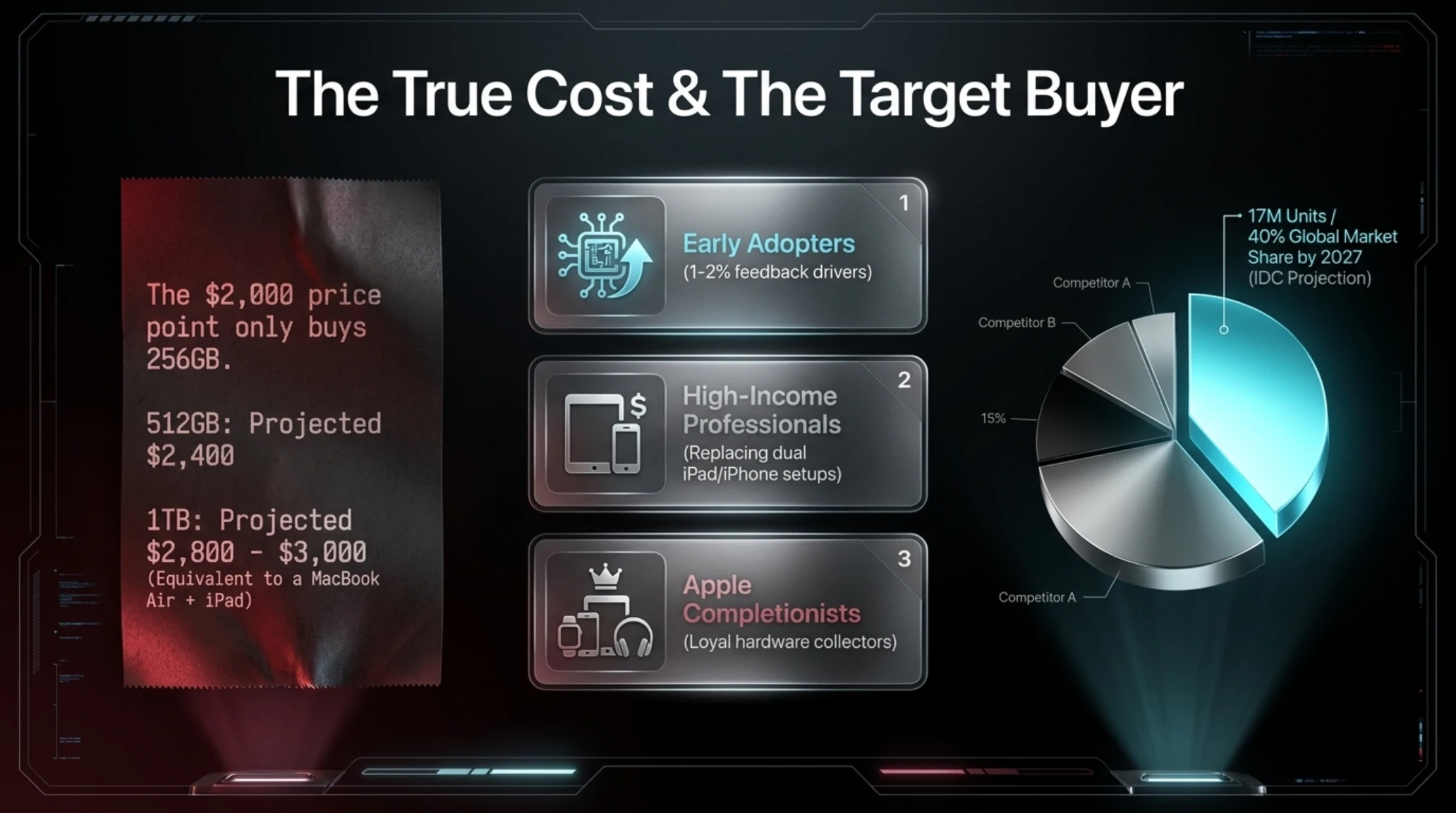
Apple announced $2,000 for the base 256GB iPhone Duo. But what about 512GB and 1TB configurations? Based on historical patterns, expect:
- 512GB: Approximately $2,400
- 1TB: Approximately $2,800-$3,000
That means the top-tier configuration will cost nearly $3,000 enough to buy a MacBook Air and iPad combined.
Market Analysis: Who Actually Buys a $2,000 iPhone?
At $2,000, iPhone Duo clearly isn't targeting mass market consumers. So who represents the actual target demographic?
Three Primary Buyer Segments
1. Early Adopters and Tech Enthusiasts: Individuals who always want the newest technology regardless of price. This segment is typically small perhaps 1-2% of the market but crucial for Apple because they provide feedback and generate buzz.
2. High-Income Professionals: Executives, content creators, and those who can justify true multitasking capabilities in a single device. For these users, iPhone Duo could replace iPad + iPhone potentially resulting in net savings.
3. Apple Completionists: People who purchase every Apple product to maintain comprehensive collections. Small but intensely loyal demographic.
- First foldable with fully integrated Apple ecosystem
- iOS 27 optimized specifically for foldable form factor
- Powerful A20 Pro chip
- Liquid Metal hinge for enhanced durability
- 12GB RAM for intensive multitasking
- Extremely high starting price ($2,000)
- No Face ID—Touch ID only
- Inferior camera system compared to Pro Max
- Screen crease still visible
- Delayed launch until October
Industry Impact: What Happens to the Foldable Market Now?
Apple's entry into foldables will ripple across the entire industry not just for Apple, but for every manufacturer in this space.
Pressure on Samsung
Samsung has dominated the foldable market essentially unopposed. With Apple's arrival, that dominance faces genuine threat. Samsung will need to:
- Adjust Pricing: Remain competitive as Apple sets new pricing expectations
- Accelerate Innovation: Deliver more meaningful improvements in the next Fold generation
- Enhance Software: Optimize One UI more aggressively for foldable experiences
Overall Market Growth
IDC predicts Apple will sell over 17 million iPhone Duo units through 2027 representing 40% of the global foldable market. This projection suggests the overall market will expand significantly, as Apple typically brings mainstream adoption to emerging categories.
Pricing Implications
If iPhone Duo succeeds commercially, expect other manufacturers to increase their pricing accordingly. But if it underperforms, we could see aggressive price reductions across the foldable category.
Final Analysis: Bold New Era or Expensive Experiment?
The Surprise and Shine event represented more than product announcements it was our first real look at Apple's strategy under John Ternus's leadership. What we witnessed suggests Apple is willing to take substantial risks:
- Abandoning Face ID in a flagship product
- Raising prices amid global economic uncertainty
- Entering the foldable market seven years behind competitors
- Delaying affordable models until 2027
These decisions are either remarkably shrewd or remarkably risky. Possibly both.
Key Dates to Remember
| Date | Event Milestone |
|---|---|
| September 9 | Pre-orders open for Watch Series 12, Ultra 4, AirPods 5 |
| September 12 | Pre-orders begin for iPhone 18 Pro/Pro Max |
| September 14 | watchOS 27 and Apple Intelligence launch |
| September 18 | iPhone 18 Pro/Max, Watch, AirPods ship |
| October 2026 | iPhone Duo pre-orders and launch |
| Spring 2027 | Expected announcement of base iPhone 18 |
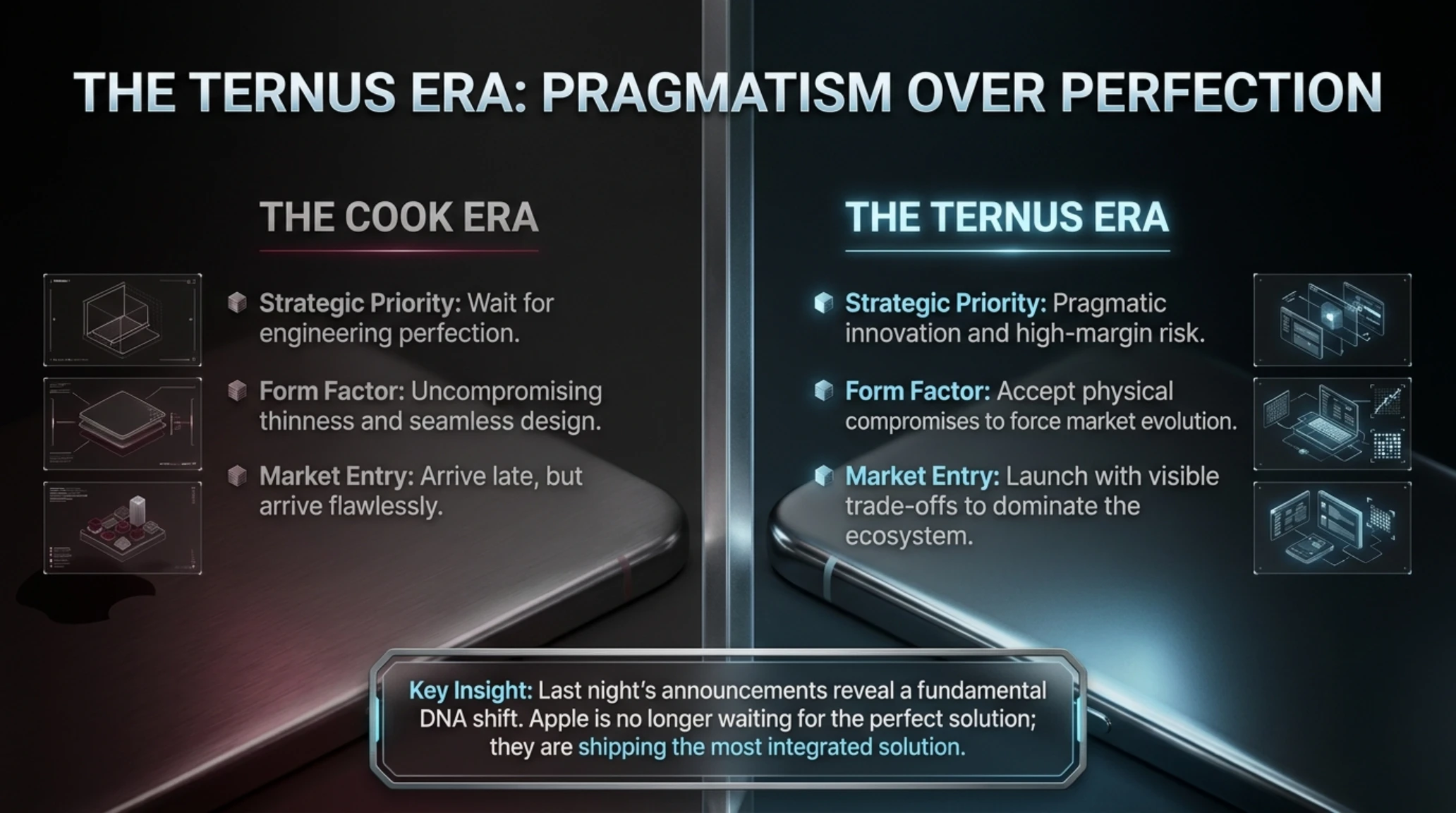
iPhone Duo demonstrates that Apple can no longer or no longer wants to wait years for technologies to reach perfection. A company that once prided itself on launching products only when fully refined is now willing to sell a foldable with a visible crease, without Face ID, at $2,000.
Perhaps this represents maturity accepting that perfectionism sometimes impedes progress. Or perhaps it simply reveals that even Apple must compromise when facing competitive pressure and market expectations.
Only time will reveal whether these gambles pay off. But one certainty exists: the Tim Cook era has ended, and the John Ternus era has begun with unmistakable force.
Related Tech Intelligence on Tekin Game
• 🌙 Tekin Night | Call of Duty, Nintendo & Vision Pro Digest
• 🎭 Tekin Analysis | Apple AI Teardown & July 2026 Digest
• 🌙 Tekin Night | NVIDIA $500B Deal & iPhone 18 Leak
Frequently Asked Questions
When exactly does iPhone Duo launch?
Apple hasn't announced a specific date, stating only an October to December 2026 window. Pre-orders will likely begin in early October based on historical patterns.
Why doesn't iPhone Duo have Face ID?
Space constraints in a foldable form factor. The TrueDepth Camera system required for Face ID needs significant space that would conflict with maximizing screen size. Touch ID in the power button provided a viable alternative.
Does iPhone Duo have a visible crease?
Yes. Apple confirmed the crease exists but claims it's minimal. This means it's visible but less pronounced than competing foldables.
Is the $100 iPhone 18 Pro price increase justified?
That depends on your priorities. If photography matters significantly, the variable aperture camera could justify the premium. For general users, waiting for the base iPhone 18 in 2027 might make more sense.
Which Apple Watch should I buy: Series 12 or Ultra 4?
Series 12 suits most users it has identical health sensors. Ultra 4 makes sense only if you're a serious athlete, frequently engage in outdoor activities, or need substantially longer battery life.
When will Siri AI support additional languages?
English only at launch. French, Japanese, Korean, Portuguese, and Spanish arrive in October. No timeline announced for other languages.
Sources and References
- Apple Newsroom: Official product announcements
- MacRumors: Live event coverage and technical analysis
- The Verge: Comprehensive product reviews
- TechCrunch: Market strategy analysis
Additional Gallery: 🧠 Tekin Analysis | Apple's Foldable iPhone Duo & iPhone 18 Pro Price Hike