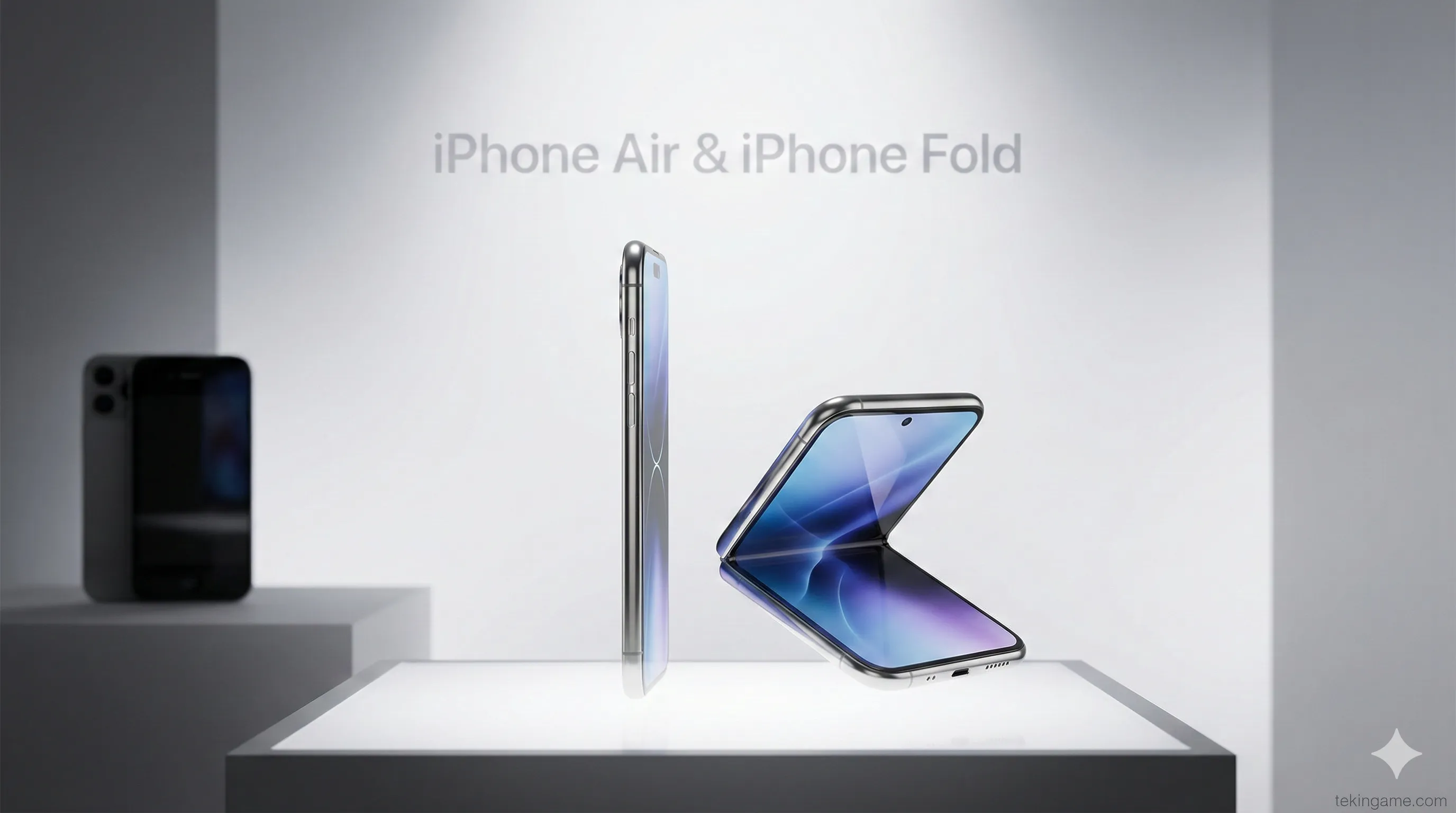
1. The "Sandwich Effect": The Economic Death of the Middle-Class iPhone
In economics, there is a phenomenon known as the "hollowing out of the middle class," and now it has come for the iPhone. Let’s look at the hard data. In 2025, the iPhone 17 Pro Max accounted for nearly 45% of total unit sales. The entry-level iPhone SE 4 captured about 20%. This leaves the "Standard" and "Plus" models fighting for a shrinking 35% slice of the pie.
Why "Good Enough" is No Longer Good Enough
The smartphone market has bifurcated into two distinct poles:
- Utility Buyers: People who just want "a phone" to access iMessage and FaceTime. They buy the $500 SE or older refurbished models.
- Status Buyers: People who treat their phone as jewelry or a professional tool. They buy the $1,200 Pro Max.
2. Project "Slim": Engineering the iPhone Air (Code Name D23)
The first replacement is a device currently tracked under the code name D23, likely to launch as the iPhone Air. The goal here isn't to make the "most powerful" phone, but the "most portable."
The Graphene Thermal Challenge
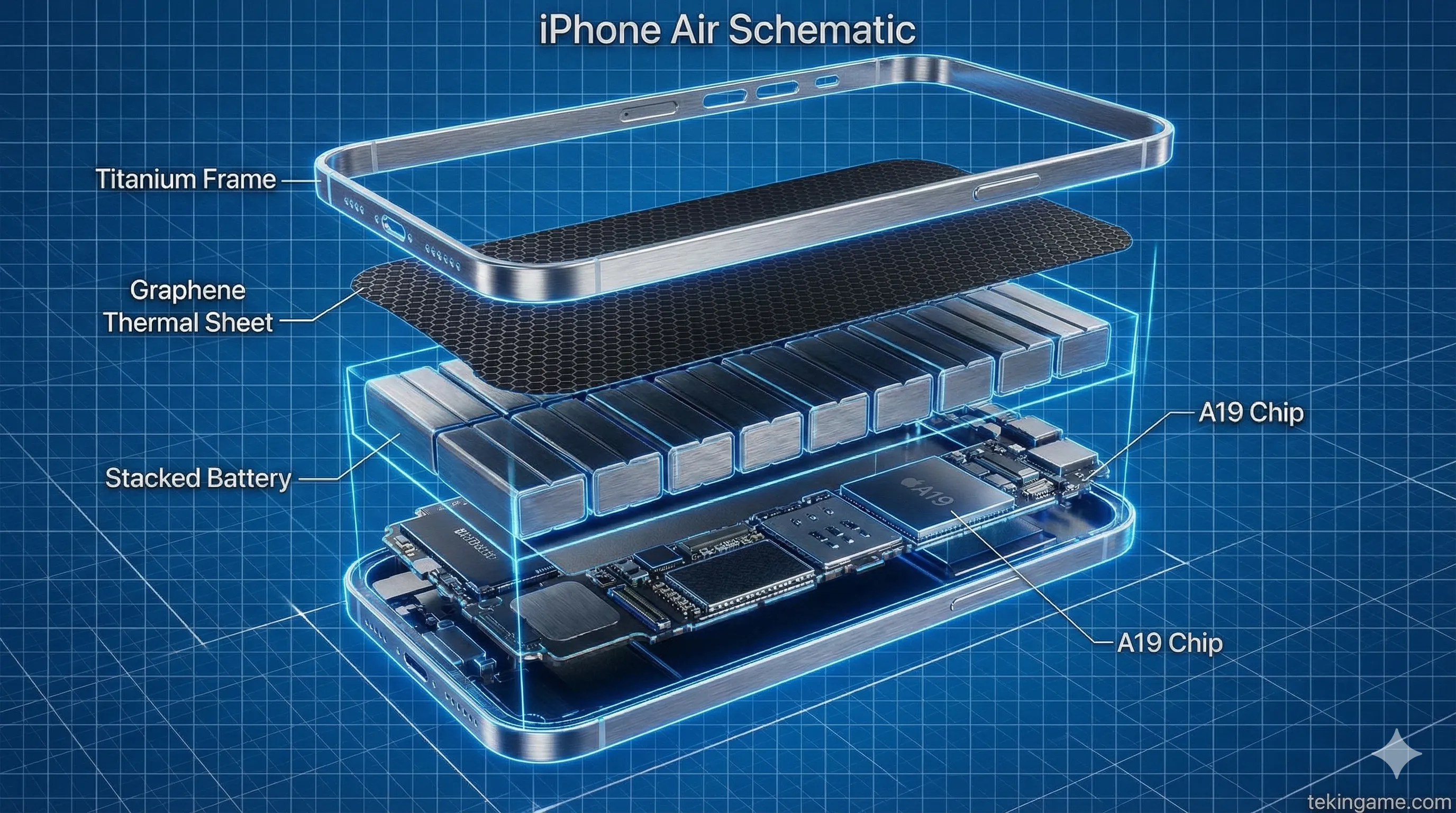
The enemy of thinness is heat. The A19 chip generates significant thermal energy. In a chassis rumored to be just 5mm thick, there is no room for traditional copper vapor chambers.
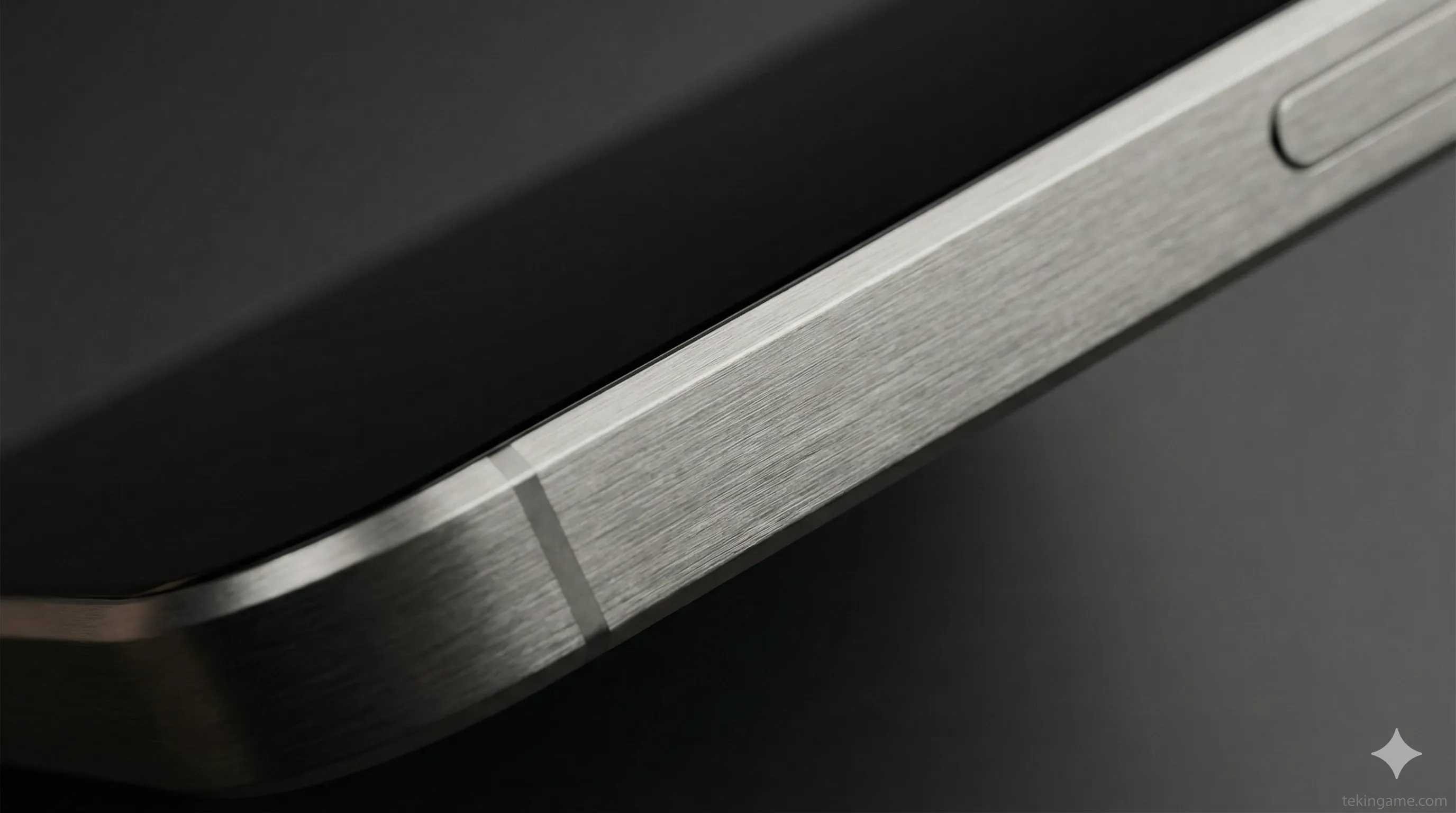
According to recent patent filings, Apple is utilizing a Multi-Layer Graphene Sheet bonded directly to the Titanium chassis. Essentially, the entire back of the phone becomes the heatsink. This allows the device to run cool without bulky internal cooling systems.
Piezoelectric Audio: Killing the Speaker Grill
To shave off millimeters, traditional speaker chambers had to go. Leaks suggest the iPhone Air uses Piezoelectric Actuators beneath the display. These vibrate the screen glass to produce sound (similar to Sony's OLED TVs). This eliminates the need for speaker grills, improving water resistance and structural integrity.
3. Entering the Fold: How "Project Flip" Challenges Samsung
📚 Classified & Related Dossiers in TekinGame
If you wish to explore beyond this report and delve into cybernetic frontiers and autonomous AI architectures, do not miss these three exclusive deep-dives in the Tekin Garage:
Apple waited years for foldable technology to mature. Now, with Project Flip, they are entering the arena. But how does Apple differentiate itself from the Galaxy Z Flip 7?
Hybrid Polymer Glass: Solving the Crease
The fatal flaw of current foldables is the visible "crease" down the center. Apple, in partnership with Corning, has developed a proprietary Hybrid Ceramic-Polymer material.
This material is rigid at room temperature (feeling like glass) but contains micro-additives that become flexible at the specific stress point of the hinge. The result? A screen that lays perfectly flat when open, with zero tactile dip.
The Dust-Proof Titanium Hinge
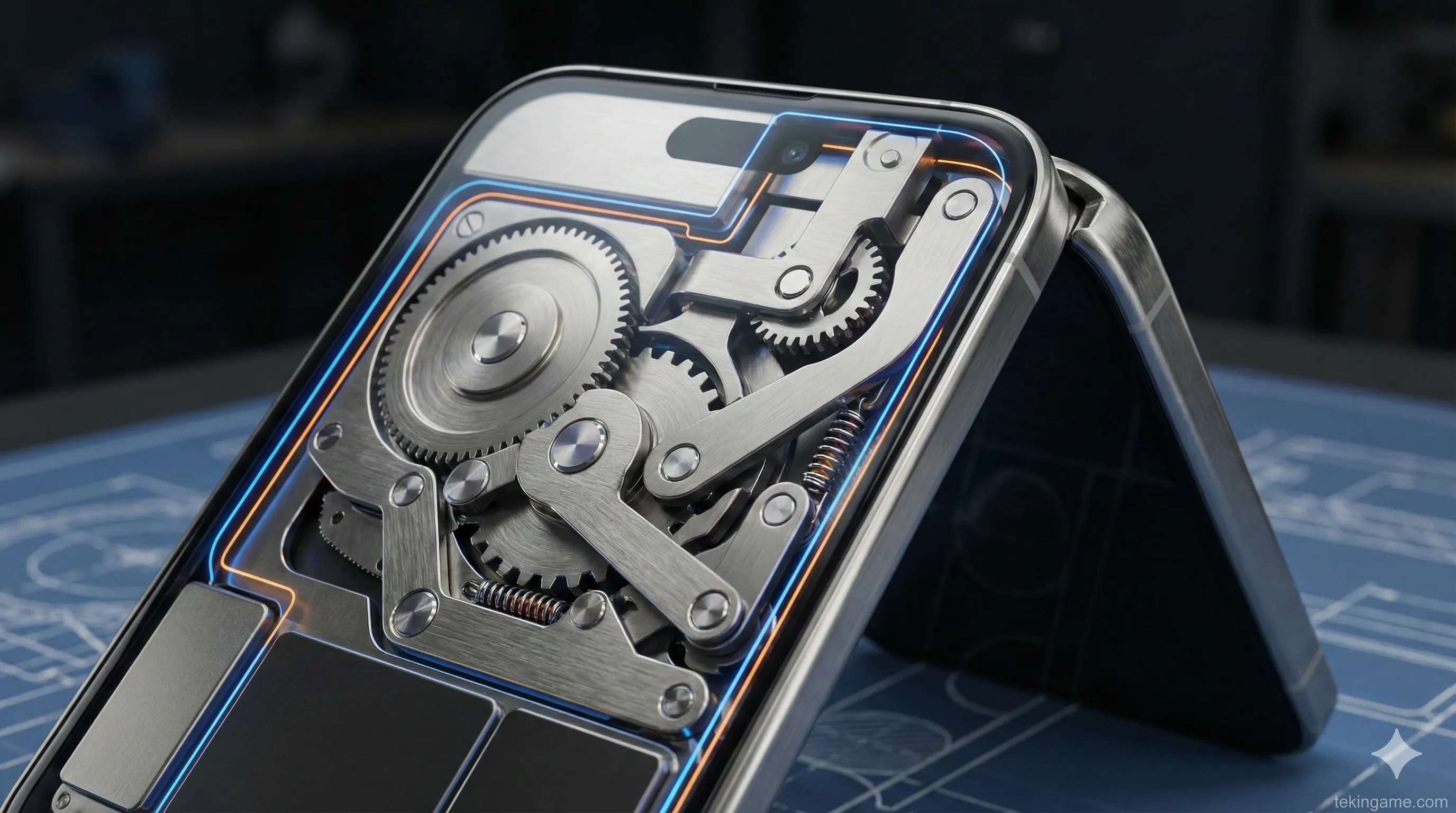
The hinge is the most complex mechanical part of the phone. Apple’s design utilizes over 120 interlocking Titanium Grade 5 components. Unlike competitors that leave small gaps, Apple’s "Zero-Gap" design creates a hermetic seal when closed, allowing the device to finally achieve a true IP68 rating for both water and fine dust resistance.
4. Supply Chain Intelligence: Foxconn and LG Display's Pivot
The strongest evidence for this shift comes from logistics. Analyst reports from Shenzhen indicate that Foxconn is currently retooling its "iPhone Plus" assembly lines. They are installing high-precision robotics specifically designed for flexible display calibration.
Furthermore, LG Display has increased its capital expenditure on Gen-8 OLED lines, specifically for "medium-sized foldable panels." Companies do not spend billions on retooling for "prototypes." This is a mass-production commitment for late 2026.
5. The Psychology of Pricing: The New Ladder
Apple is a master of the "Upsell." By killing the $800 boring phone, they force the consumer to make a choice that usually results in spending more. Let’s look at the projected 2026 lineup:

- The Entry ($499): iPhone SE (Old design, for the budget-conscious).
- The Style ($899+): iPhone Air. It costs more than the old standard model, but offers "Style" and "Portability" as premium features.
- The Tech ($1,199): iPhone Fold. The entry point for the foldable experience.
- The Pro ($1,099 - $1,599): iPhone 18 Pro & Ultra. For the power users.
Notice the shift? The "Default Choice" is gone. This strategy is expected to drive the Average Selling Price (ASP) of the iPhone up by 15%, delighting shareholders.
6. The Portless Reality: Why 2026 is the End of USB-C
This is the controversial part. The iPhone Air is physically too thin to house a robust USB-C port (which requires about 4mm of internal vertical clearance including the shielding).
Strong rumors suggest the Air will be Apple’s first Portless iPhone. It will rely entirely on a new standard: MagSafe Ultra. This new protocol supports 65W fast charging and high-speed data transfer (comparable to USB 3.0) via magnetic induction pins, removing the need for a physical hole in the device.
8. Conclusion: Tim Cook's Billion-Dollar Gamble
Killing the standard iPhone is the biggest risk Tim Cook has taken since the launch of the iPhone X. If the foldables break, or if the Air suffers from "Bendgate 2.0," Apple's legendary reputation for hardware quality could be shattered.
But sticking to the status quo was the greater risk. The smartphone market has become boring. Apple needs to inject "Desire" back into the hardware. The iPhone 18 Standard wouldn't have turned any heads. The iPhone Air and iPhone Fold? They will make the world stop and stare.
The era of the safe rectangle is over. The era of form-factor innovation has begun.
🌐 Stay Connected With Us 🎮✨
For the latest tech, gaming, and gadget news, follow us on our official social media channels:
