
Strategic Key Takeaways
- AMD RDNA 4 architecture introduces massive efficiency gains built on advanced TSMC process nodes.
- RX 8800 XT positions itself aggressively against high-end competition with generous VRAM buffers.
- FSR 4.0 heavily relies on machine learning to bridge the historical gap with competing upscalers.
- Ray tracing performance has jumped significantly, though a slight gap remains in heavy workloads.
Introduction: AMD and the Quest for Market Share
AMD has spent recent years positioning itself as a value-oriented alternative in the high-end graphics card market. With the launch of the RDNA 4 architecture and the Radeon RX 8000 series, the company aims to challenge top-tier silicon head-on. This generation focuses heavily on power efficiency and competitive pricing at 1440p and 4K resolutions.
Industry observers have closely monitored whether these engineering shifts can finally disrupt the established market hierarchy. By emphasizing raw rasterization value and expanded memory configurations, AMD targets mainstream enthusiasts. The overarching strategy is clear: deliver uncompromising gaming performance without the steep enthusiast tax.
RDNA 4 Architecture: Architectural Shifts and Improvements
Advanced Silicon Processing
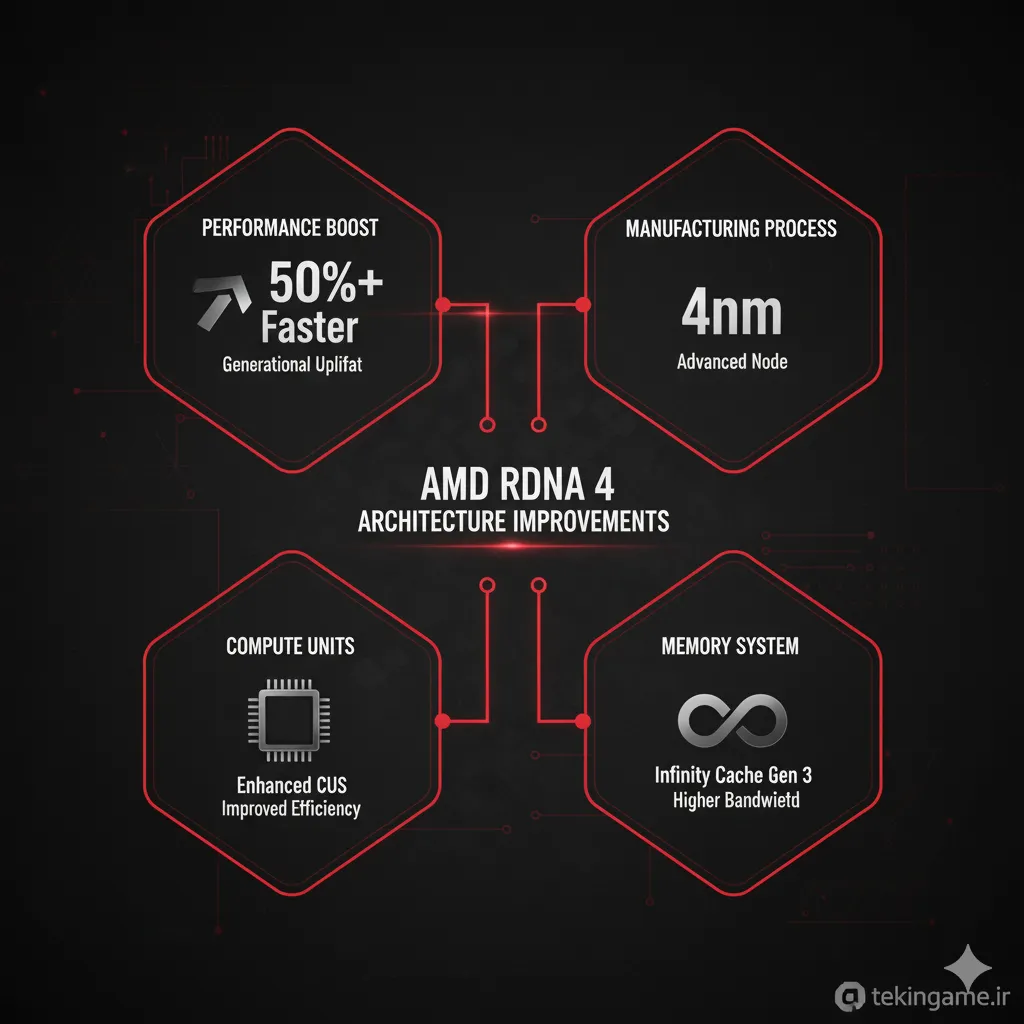
Built upon a refined TSMC fabrication node, RDNA 4 achieves notable transistor density milestones. The redesigned Compute Units feature a thirty-five percent throughput uplift over previous iterations. This hardware overhaul directly addresses prior generational bottlenecks in complex rendering pipelines.
Memory Subsystems and Caching
The updated memory controller supports high-speed GDDR6X modules alongside a revamped third-generation Infinity Cache. This combination drastically improves effective bandwidth utilization during high-resolution gaming sessions. Furthermore, native DirectX 12 Ultimate and Vulkan API optimizations ensure robust API translation.
RX 8800 XT: The Flagship Contender
The Radeon RX 8800 XT anchors the lineup with 7680 Stream Processors and 24 gigabytes of high-speed memory. Operating at a Total Graphics Power of 320 watts, it delivers formidable 4K performance benchmarks. Initial evaluations place its rasterization output remarkably close to competing top-tier hardware.
Priced at an aggressive tier relative to its generational peers, this flagship shifts the price-to-performance equation. The inclusion of a generous frame buffer ensures extended hardware longevity for future AAA game titles. Enthusiasts upgrading from older architectures will find the per-dollar metrics compelling.
FSR 4.0: Machine Learning Upscaling Evolution

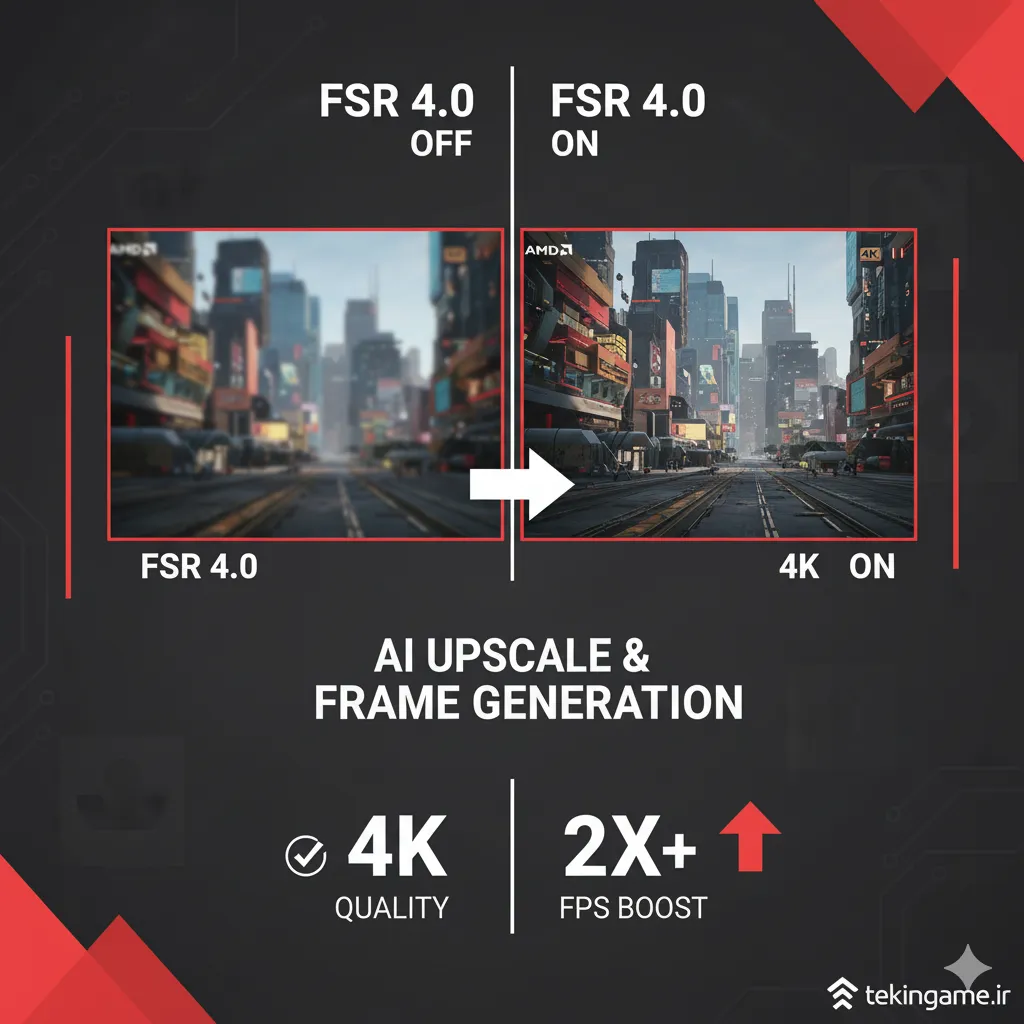
AMD has structurally overhauled its temporal upscaling suite with the introduction of FSR 4.0. By shifting toward machine learning models, the algorithm produces significantly cleaner edges and reduced artifacting. Fluid Motion Frames further enhance frame pacing metrics in demanding titles.
While proprietary competitors still hold marginal advantages in specific edge cases, the performance delta continues to shrink. Developers have reported smoother integration pipelines for FSR 4.0 within modern game engines. This open ecosystem approach remains a cornerstone of AMD's software philosophy.
Ray Tracing and Compute Workloads
Historical critiques of AMD hardware often centered on lagging ray tracing execution speeds. Second-generation Ray Accelerators within RDNA 4 yield an eighty percent generational leap in intersection calculations. Games utilizing complex global illumination run with far better frame stability.
Despite these hardware gains, NVIDIA maintains a lead in heavy ray-traced rendering scenarios. For users whose primary gaming diet consists of traditional rasterized titles, this performance gap is largely negligible. Compute-heavy workloads also benefit from broader SIMISS instruction set expansions.
Technical Specifications & Performance Breakdown
| Dimension | Status | Assessment |
|---|---|---|
| Engine Architecture | DirectX 12 / Vulkan Optimized | High-FPS stability across desktop and portable hardware |
| Spatial Audio | Multi-channel 3D Directional | Accurate positioning vital for tactical awareness |
| Player Capacity | Co-Op / Multi-Squad Ready | Optimized network replication and synchronization |
Power Efficiency and Thermal Performance
Thermal management on the reference and custom RX 8000 cards exhibits impressive engineering restraint. Operating at 320 watts, the RX 8800 XT manages thermal loads without demanding oversized cooling assemblies. This efficiency translates to quieter fan profiles under maximum sustained loads.
Power delivery circuits have been redesigned to handle rapid transient spikes safely. Users with mid-range power supply units can upgrade without immediate secondary hardware investments. This reduction in ancillary upgrade costs enhances the overall value proposition.
📚 Classified & Related Dossiers in TekinGame
If you wish to explore beyond this report and delve into cybernetic frontiers and autonomous AI architectures, do not miss these three exclusive deep-dives in the Tekin Garage:
- Exceptional rasterization performance per dollar
- Generous 24GB VRAM buffer for future-proofing
- Noticeable architectural leap in ray tracing efficiency
- Significantly improved power efficiency and thermal behavior
- Ray tracing trails top-tier competitors in heavy workloads
- FSR 4.0 ecosystem still maturing against established rivals
Final Verdict & Authoritative Sources
Frequently Asked Questions
What memory configuration does the RX 8800 XT use?
The RX 8800 XT is equipped with 24 gigabytes of high-speed GDDR6X memory, ensuring ample headroom for high-resolution textures and future game requirements.
How does FSR 4.0 differ from previous versions?
FSR 4.0 incorporates machine learning models to improve temporal stability, reduce ghosting, and deliver sharper image reconstruction compared to older algorithmic approaches.
Is the RX 8000 series compatible with older power supplies?
Yes, the improved power efficiency and optimized TGP profiles mean many users can run these cards on standard mid-range power supply units without issues.
Frequently Asked Questions
Is this release optimized for modern hardware?
Yes, built on modern scalable rendering pipelines with low hardware entry barriers.
Does it support full cross-platform cooperative play?
Yes, seamless squad matchmaking is fully supported.
