
1. The Great Price War: Google's 50% Slash and the Fight for Ecosystems
Let's start with the news that hits the wallet directly. In a rare and aggressive move, Google has launched a massive discount campaign to end the year.
The 50% Off Strategy
[cite_start]Google is offering a 50% discount on annual subscriptions for Google AI Pro and Google One[cite: 4]. This isn't just a clearance sale; it is a strategic maneuver. The discounted plan includes access to:

-
[cite_start]
- The advanced Gemini 3 Pro models[cite: 4]. [cite_start]
- Deep Research tools for complex data analysis[cite: 4]. [cite_start]
- 2 Terabytes of cloud storage[cite: 4].
According to AndroidHeadlines, this offer is specifically targeted at new users to encourage them to adopt the Pro tier[cite: 6]. Why now? [cite_start]This move indicates that competition in the generative model market has reached a fever pitch, and Google is aiming to lock users into its AI ecosystem before the new year begins[cite: 5]. [cite_start]These discounts are designed for users who want to remove the limitations of free models and access professional-grade tools[cite: 7].
Community & Bundle Discounts
It’s not just big tech. [cite_start]According to reports from SellAItool, we are seeing a surge in "Community Discounts" where users can find flash sales and special bundles via AI community groups[cite: 8]. [cite_start]These deals cover a wide range of utilities, including writing assistants, graphic generation models, and marketing tools[cite: 8].
2. The Hardware Revolution: Alpie Core and Low-Compute AI
While the giants fight in the cloud, the open-source community is winning on local hardware. A new model named Alpie Core has been released, and it is a game-changer for anyone without an H100 server.
[cite_start]According to Complete AI Training, Alpie Core is a 32-billion parameter model (32B) that is surprisingly efficient[cite: 9]. Its key features include:
-
[cite_start]
- 4-bit Quantization: It is designed to run on weaker GPUs, making high-end AI accessible to consumers[cite: 9]. [cite_start]
- Massive Context: It boasts a 65,000 token context window, allowing it to process large documents[cite: 9]. [cite_start]
- Compatibility: It is fully compatible with open-source APIs[cite: 9].
This model represents one of the most significant open-source reasoning models of the year, proving that you don't need a supercomputer to run advanced AI[cite: 9].

3. Beyond Human: Claude Opus 4.5 Beats the Engineers
📚 Classified & Related Dossiers in TekinGame
If you wish to explore beyond this report and delve into cybernetic frontiers and autonomous AI architectures, do not miss these three exclusive deep-dives in the Tekin Garage:
On the frontier of capability, Anthropic continues to push the envelope. Reports from HUMAI indicate that the new Claude Opus 4.5 has achieved something remarkable in internal testing.
[cite_start]The model has managed to outperform all human engineers in specific engineering tests[cite: 12]. [cite_start]Furthermore, it has set a new record in problem-solving capabilities[cite: 12]. [cite_start]This release marks one of the most significant milestones in the AI world at the end of 2025, signaling that models are no longer just "assistants" but are becoming "experts"[cite: 12].
4. Crisis Tech: How CrowdSynthetic is Saving Lives Offline
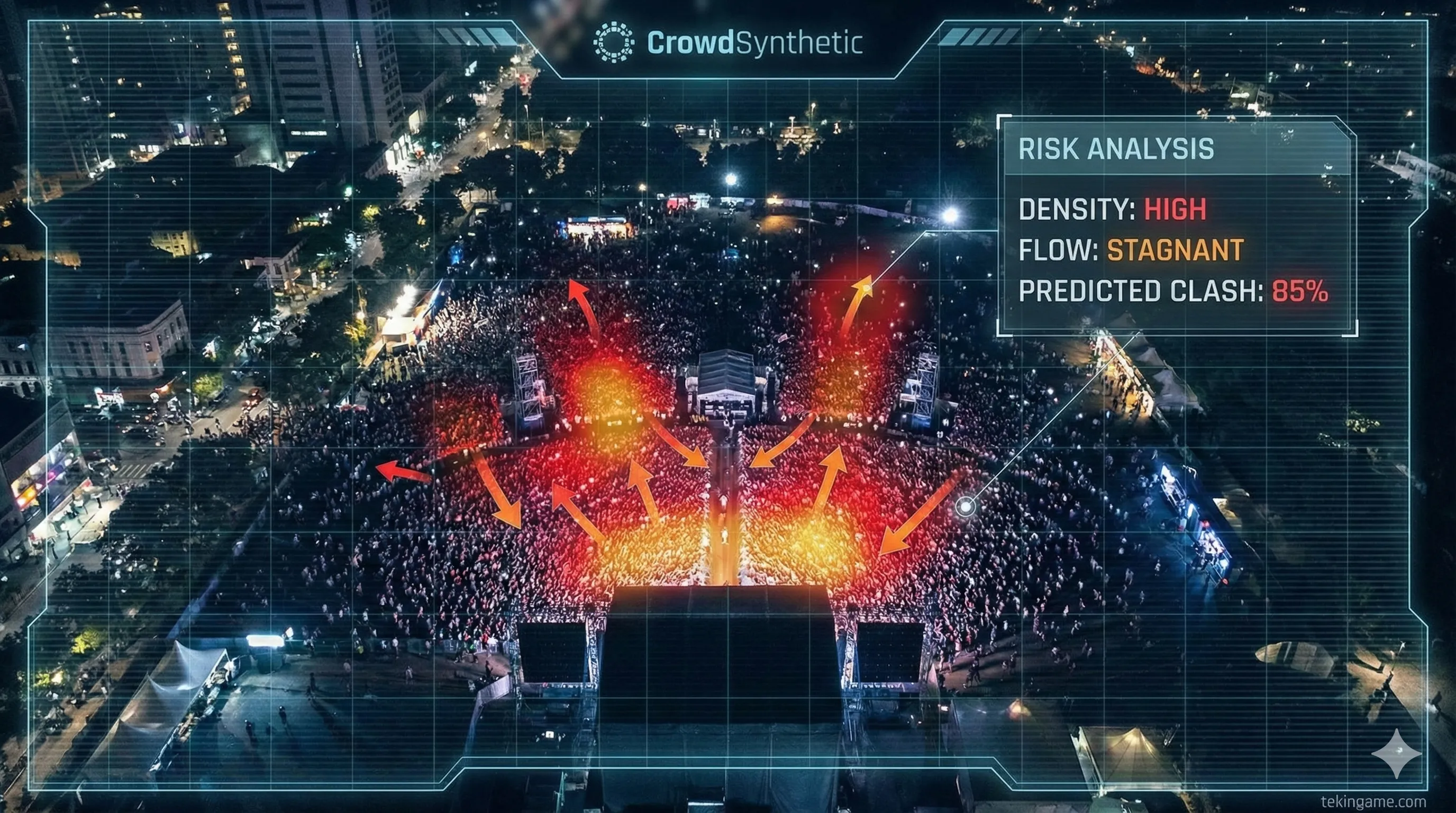
AI is also moving into the physical world of safety and crisis management. A new tool called CrowdSynthetic has been introduced, focusing on public safety.
According to reports, this tool can:
-
[cite_start]
- Predict crowd density in real-time[cite: 9]. [cite_start]
- Generate heatmaps to visualize movement[cite: 9]. [cite_start]
- Analyze risks instantly[cite: 9].
Crucially, CrowdSynthetic runs without the need for the Cloud[cite: 9]. [cite_start]This offline capability makes it vital for crisis management and large events where connectivity might be compromised[cite: 9].
5. Google's Annual Report: The Era of "Agents"
[cite_start]In its official annual report, Google highlighted major advancements made in 2025, specifically in multimodal models, reasoning capabilities, and scientific AI tools[cite: 10].
However, the forecast is even more interesting. [cite_start]The report suggests that the primary focus for the coming year will be on AI Agents and reasoning models[cite: 11]. [cite_start]We are moving away from chatbots that just "talk" to agents that can "act" and "reason" on behalf of the user[cite: 11].

6. 2026 Forecast: 5 Key Trends to Watch
[cite_start]Based on the data and releases from late 2025, here are the key trends that will define 2026[cite: 13]:
- Ubiquitous AI Agents: Agents will be everywhere, automating complex tasks.
- Reasoning Explosion: Models that "think" before they speak will become the standard.
- Low-Compute Growth: Lightweight models will gain popularity, running on everyday devices.
- Intense Price Competition: The discount war between Google, Microsoft, and OpenAI will intensify.
- Crisis Management AI: Tools for security and data analysis will enter a new phase of maturity.
7. Conclusion: The Year AI Becomes Essential
[cite_start]2026 promises to be the year where powerful new models meet mass adoption[cite: 13]. [cite_start]With huge discounts making professional tools accessible [cite: 13] [cite_start]and efficient models like Alpie Core lowering the hardware barrier [cite: 9][cite_start], AI is entering our daily lives, businesses, and critical infrastructure like never before[cite: 13].
The competition is fiercer than ever, and for us—the users—that is the best news possible.
Stay Tekin. 💙
🌐 Stay Connected With Us 🎮✨
For the latest tech, gaming, and gadget news, follow us on our official social media channels:
