Seven Perfect 10.0 Scores: Adobe's Unprecedented Security Crisis
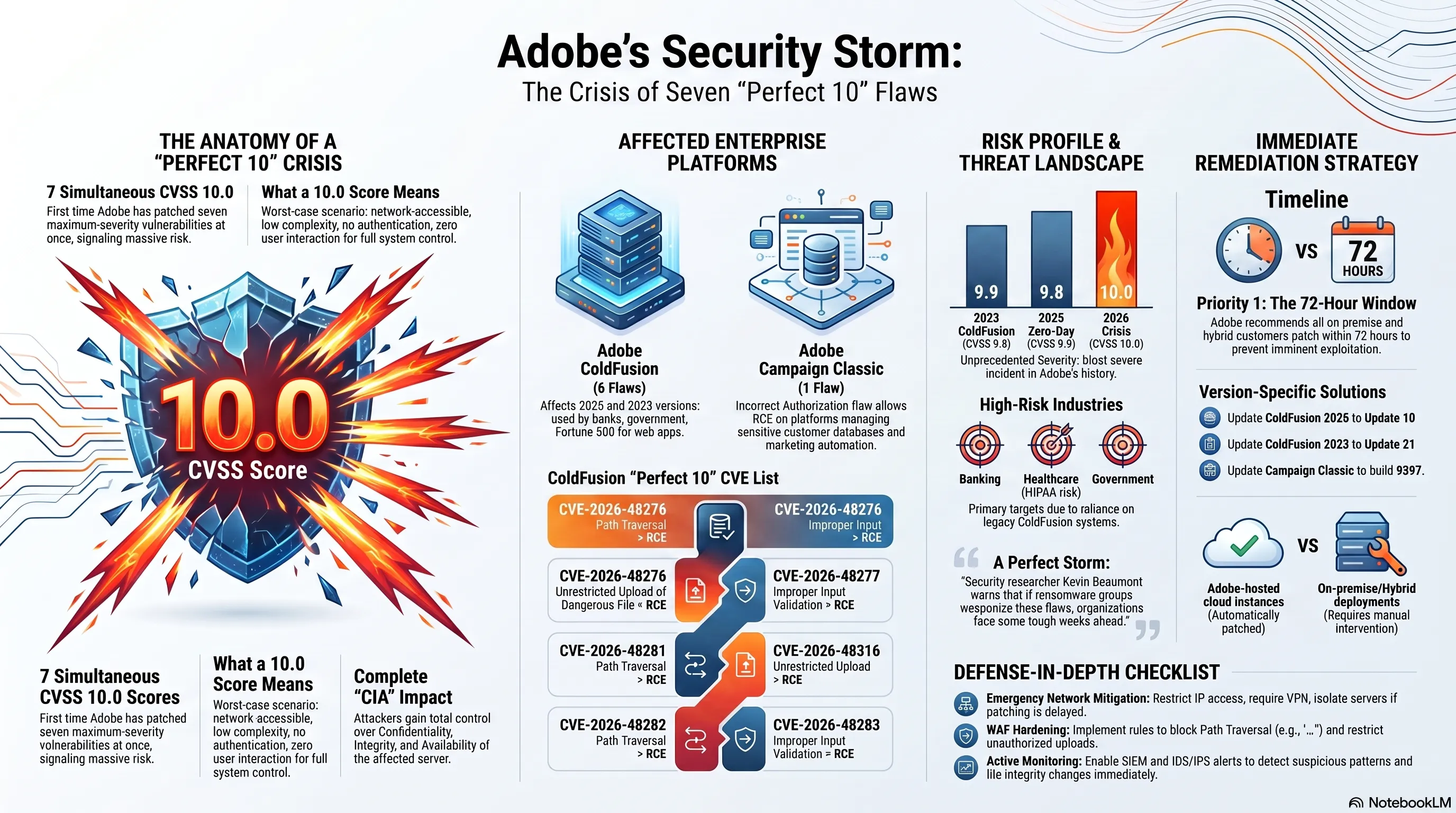
- 🎮7 Perfect Score Vulnerabilities- Adobe patched 7 simultaneous CVSS 10.0 vulnerabilities for the first time
- 🎧Remote Code Execution- All flaws allow unauthenticated remote code execution with zero user interaction
- 🚀ColdFusion & Campaign Classic- Both critical enterprise platforms have been compromised
- 🗡️Priority 1 Patching- Adobe recommends patching within 72 hours
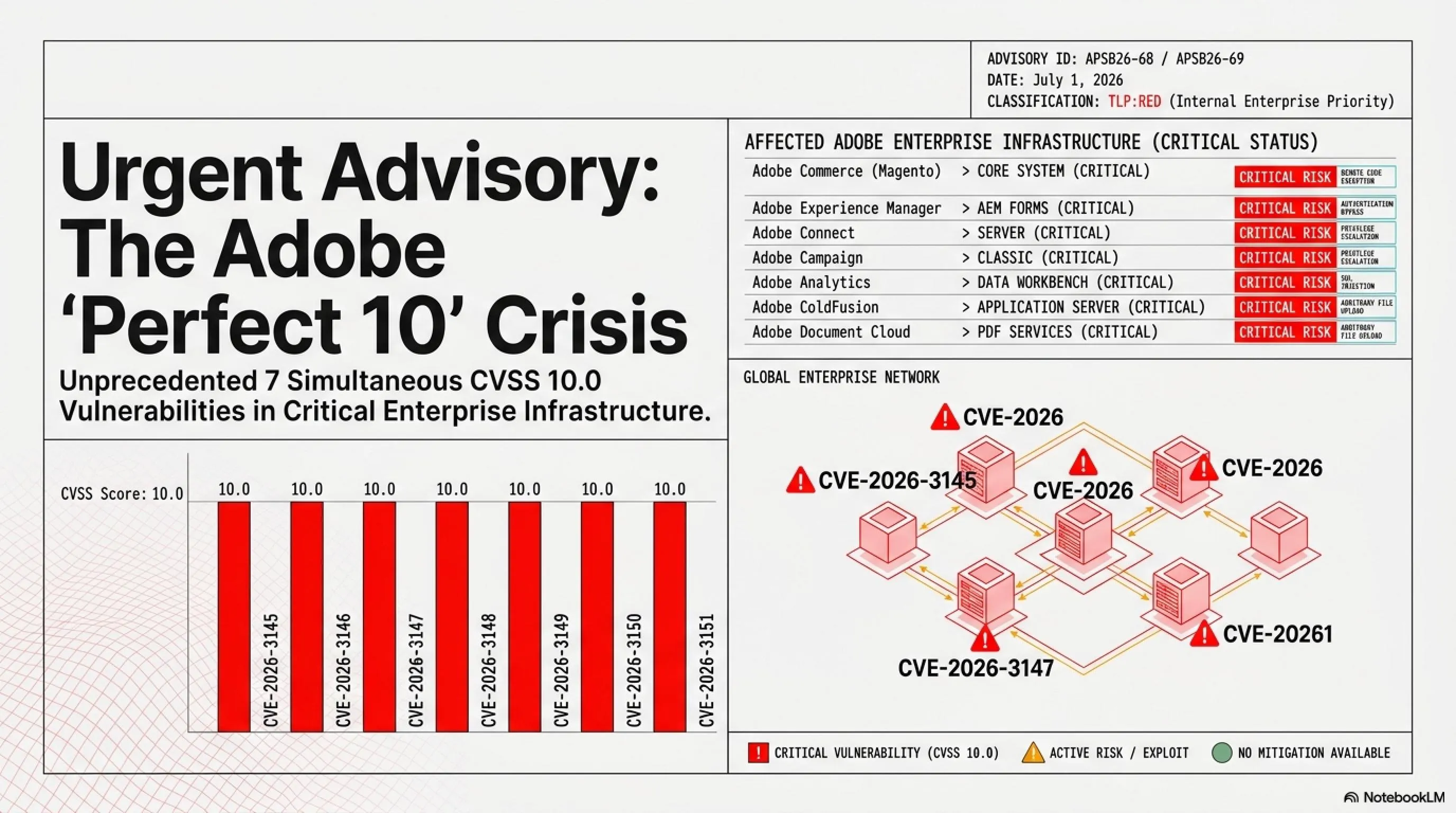
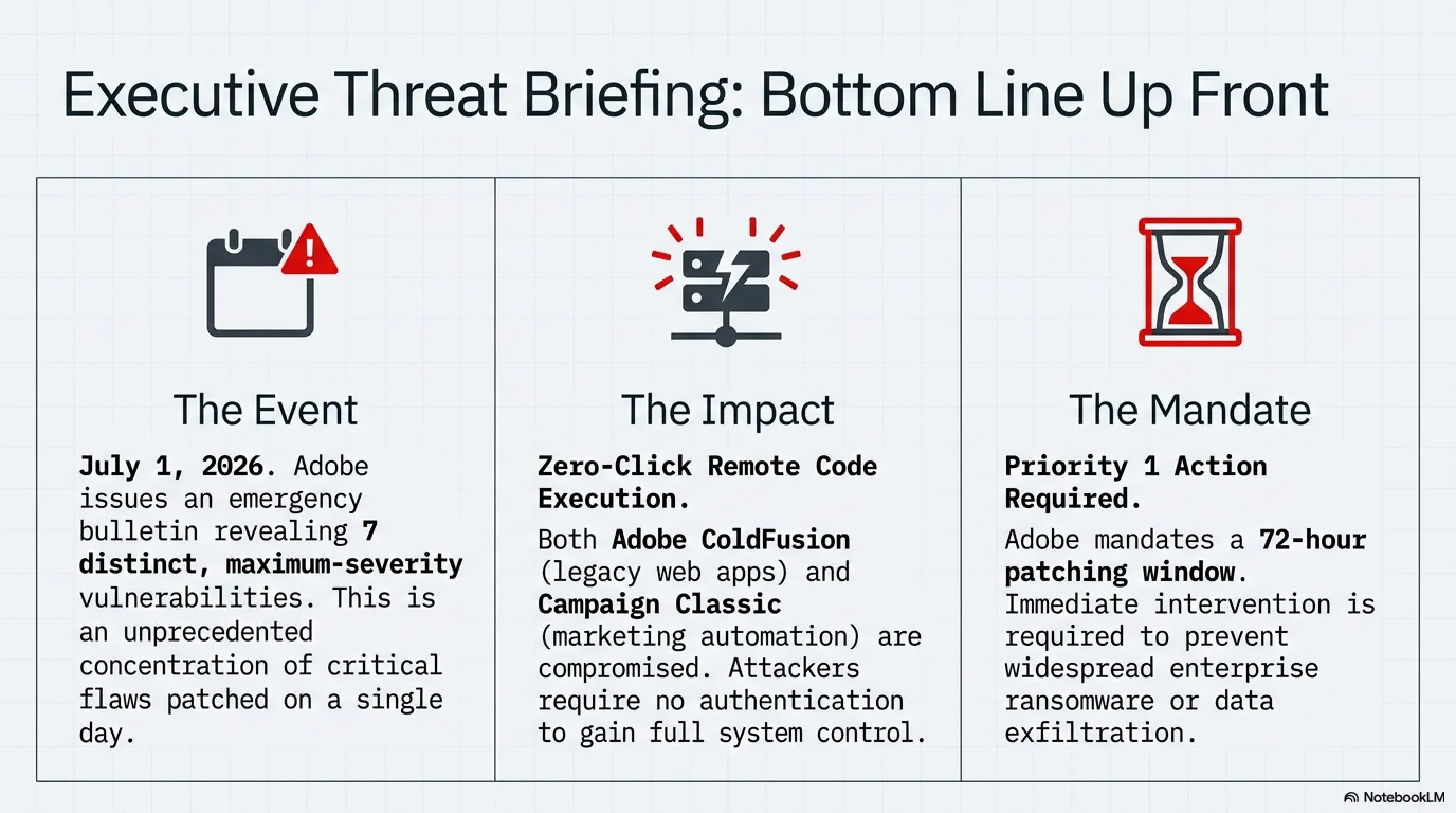
July 1, 2026 will be remembered as a historic day in cybersecurity—not because of a major attack, but because of an extraordinary security advisory that revealed just how vulnerable critical enterprise infrastructure really is. Adobe issued an emergency bulletin announcing that it had identified and patched 7 vulnerabilities with perfect CVSS 10.0 scores in its ColdFusion and Campaign Classic products.
While Adobe has faced security issues before, this marks the first time that 7 maximum-severity vulnerabilities have been discovered and disclosed simultaneously. The fact that all of these flaws enable Remote Code Execution (RCE) without requiring any user interaction multiplies the danger exponentially.
Why This Matters: Understanding CVSS 10.0
If you work in cybersecurity, you know that seeing a CVSS 10.0 vulnerability is a rare event. The CVSS (Common Vulnerability Scoring System) is a global standard for measuring the severity of security vulnerabilities—and a score of 10.0 represents the worst possible scenario.
Now imagine not one, but seven vulnerabilities with this score discovered at the same time. This means:
- The attacker requires no authentication (Unauthenticated)
- No user interaction is necessary (No User Interaction)
- Attack complexity is very low (Low Attack Complexity)
- Access is possible over the network (Network Access Vector)
- Impact on confidentiality, integrity, and availability is complete (Complete CIA Impact)
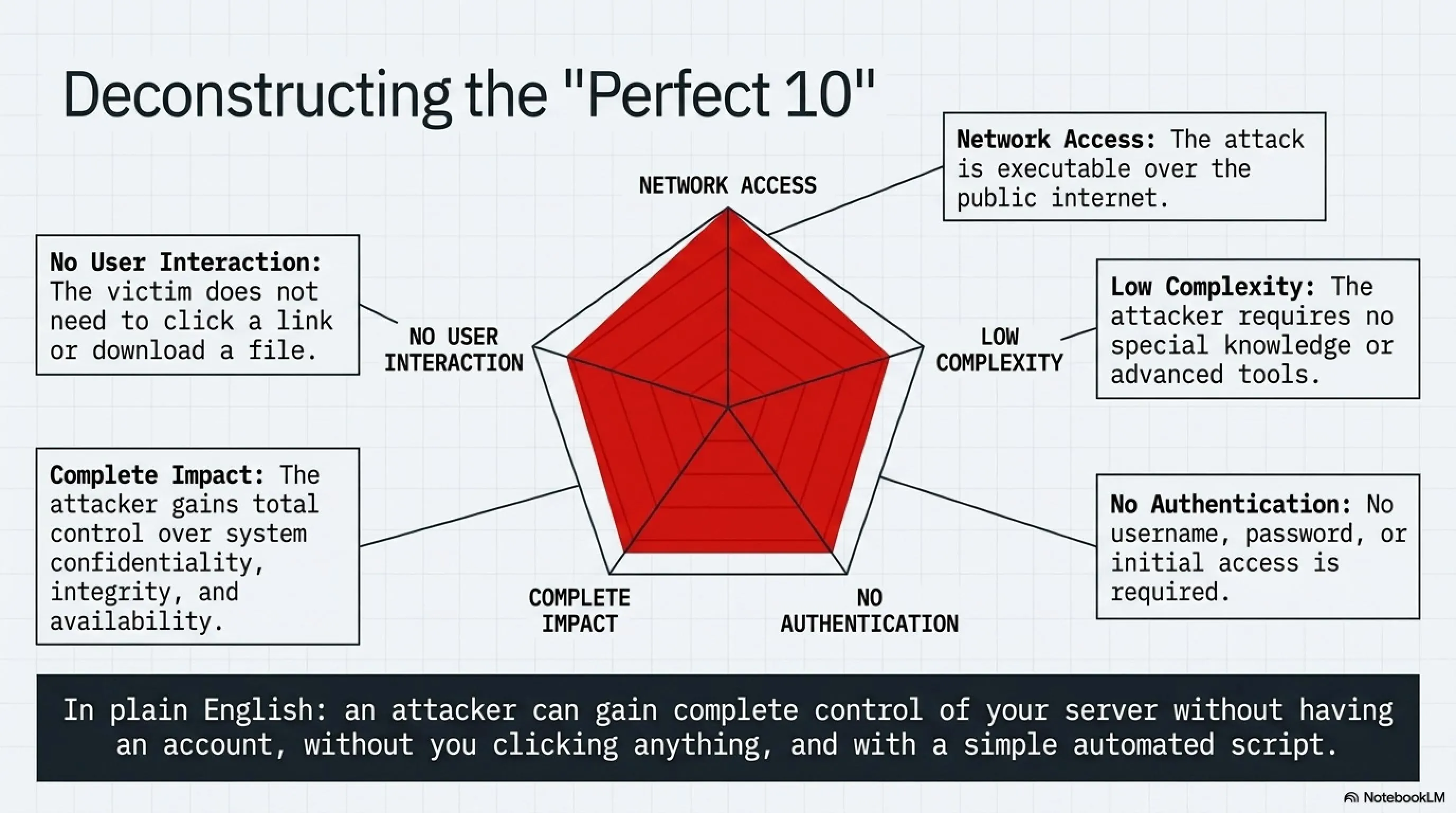
In plain English: an attacker can gain complete control of your server without having a user account, without you clicking anything, and with a simple attack.
What Does CVSS 10.0 Mean?
The CVSS scoring system ranges from 0 to 10. A score of 10.0 means:
- Network Access: Attack is possible over the internet
- Low Complexity: Attacker needs no special knowledge
- No Authentication: No username/password required
- No Interaction: Victim doesn't need to click or take action
- Complete Impact: Attacker gains full system control
- Scope Unchanged: Impact isn't limited to vulnerable component
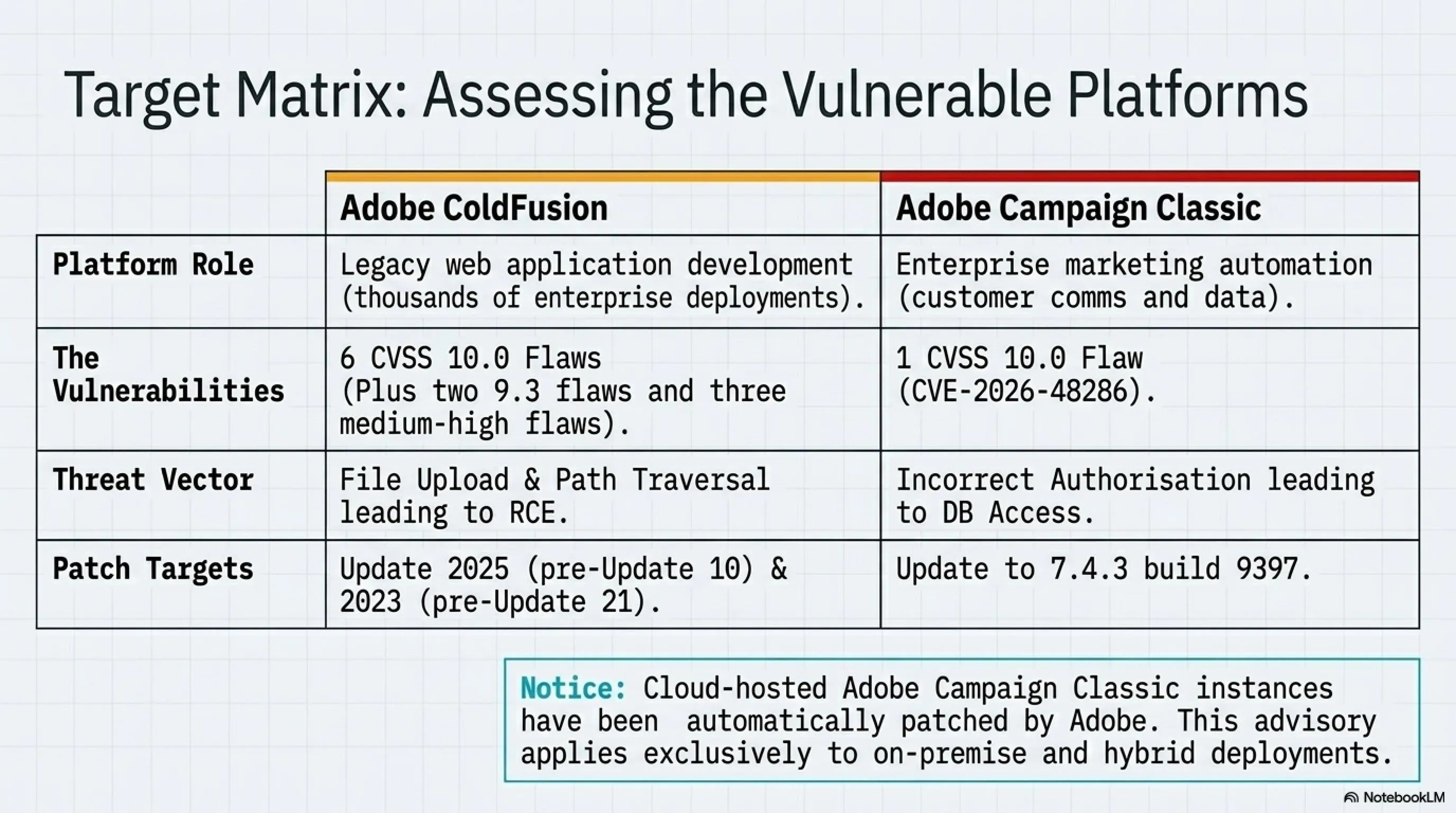
Adobe ColdFusion: 6 Perfect Score Flaws
ColdFusion is a web application development platform created in 1995 by Allaire, later acquired by Macromedia and then Adobe. This platform is still used by thousands of large organizations including banks, insurance companies, government agencies, and Fortune 500 companies.
Adobe announced in security bulletin APSB26-68 that ColdFusion 2025 and 2023 are affected by 11 vulnerabilities, with 6 receiving the perfect 10.0 score.
The Six Critical ColdFusion Vulnerabilities
The flaws that received CVSS 10.0 scores include:
ColdFusion CVEs with CVSS 10.0 Scores
| CVE | Vulnerability Type | Impact | CVSS |
|---|---|---|---|
| CVE-2026-48276 | Unrestricted Upload of Dangerous File | RCE | 10.0 |
| CVE-2026-48277 | Improper Input Validation | RCE | 10.0 |
| CVE-2026-48281 | Path Traversal | RCE | 10.0 |
| CVE-2026-48316 | Unrestricted Upload | RCE | 10.0 |
| CVE-2026-48282 | Path Traversal | RCE | 10.0 |
| CVE-2026-48283 | Improper Input Validation | RCE | 10.0 |
All these flaws fall into three main categories:
- Unrestricted File Upload: Attackers can upload malicious files (like web shells) without restriction
- Path Traversal: Access to files outside the authorized directory
- Improper Input Validation: Lack of proper user input validation leading to code execution
Adobe Campaign Classic: One Flaw, Massive Impact
Adobe Campaign Classic is an enterprise marketing automation platform used by thousands of major companies to manage email campaigns, SMS, push notifications, and other communication channels. This platform typically has access to sensitive customer databases, campaign information, and analytical data.
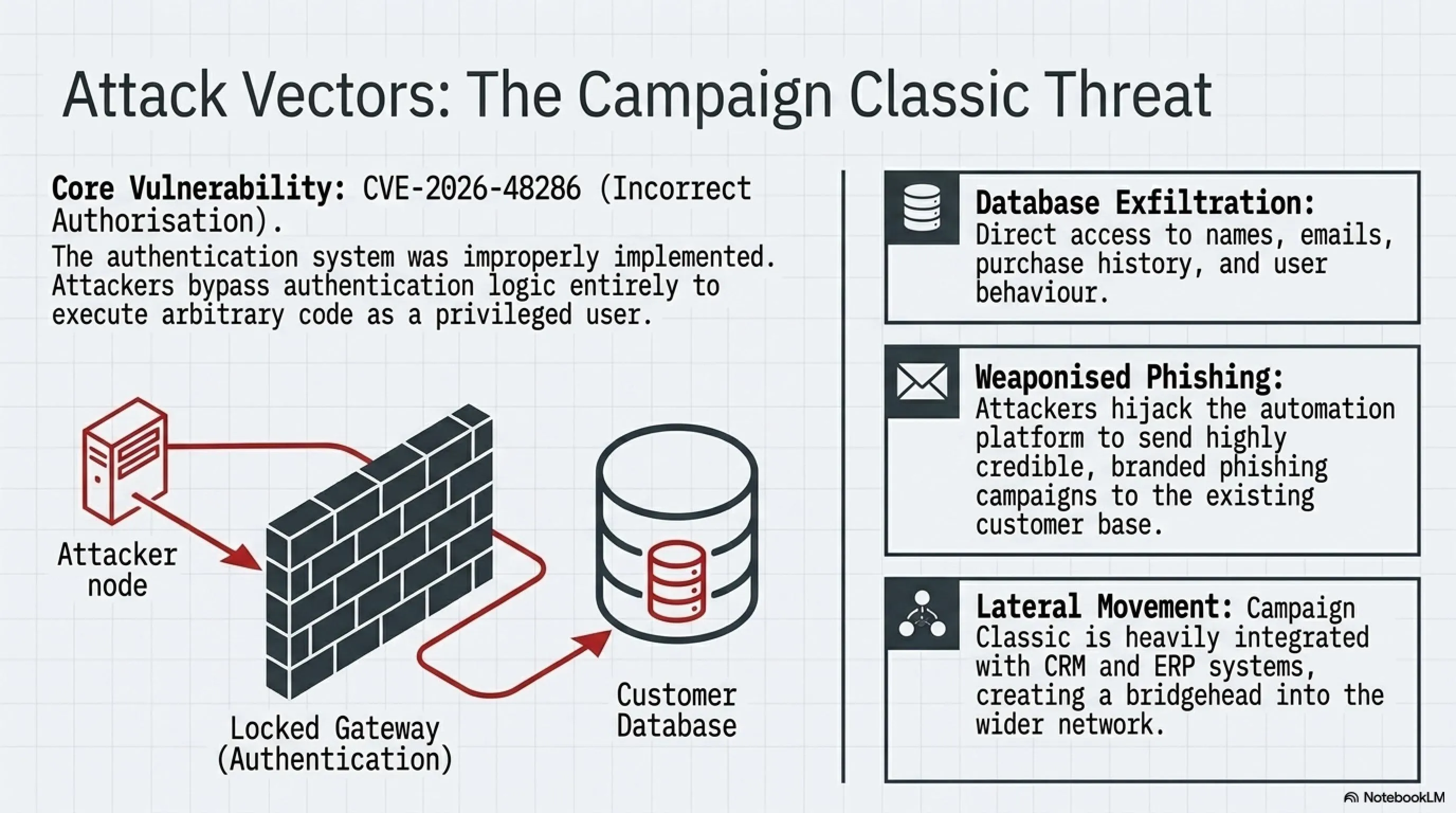
The CVE-2026-48286 flaw with a perfect 10.0 score in Campaign Classic is an Incorrect Authorization vulnerability. This means the authentication system was not properly implemented, and an attacker can execute arbitrary code without authorization.
This vulnerability affects versions 7.4.3 build 9396 and earlier. Adobe has released version 7.4.3 build 9397 for Windows and Linux that addresses this issue.
Why Campaign Classic Is So Sensitive
For the following reasons, compromising a Campaign Classic server can be catastrophic:
- Access to Customer Databases: Including names, emails, phone numbers, purchase history, and user behavior
- Phishing Campaign Capability: Attackers can leverage your brand's credibility for phishing
- Access to Other Systems: Campaign Classic is typically connected to CRM, ERP, and other critical systems
- GDPR/CCPA Violations: Customer data breaches can result in multi-million dollar fines
Timeline: From Discovery to Patch
Although Adobe hasn't disclosed the exact timeline, based on Coordinated Vulnerability Disclosure standards, this process typically takes several months.
Estimated Discovery and Patch Timeline
| Phase | Estimated Time | Description |
|---|---|---|
| Initial Discovery | April - May 2026 | Security researchers or Adobe's internal team discovered the flaws |
| Verification & Analysis | May 2026 | Adobe's security team assessed severity and impact |
| Patch Development | May - June 2026 | Development team implemented and tested fixes |
| Coordinated Disclosure | June 2026 | Large enterprise customers were notified in advance |
| Public Patch Release | July 1, 2026 | Security bulletins and updates were published |
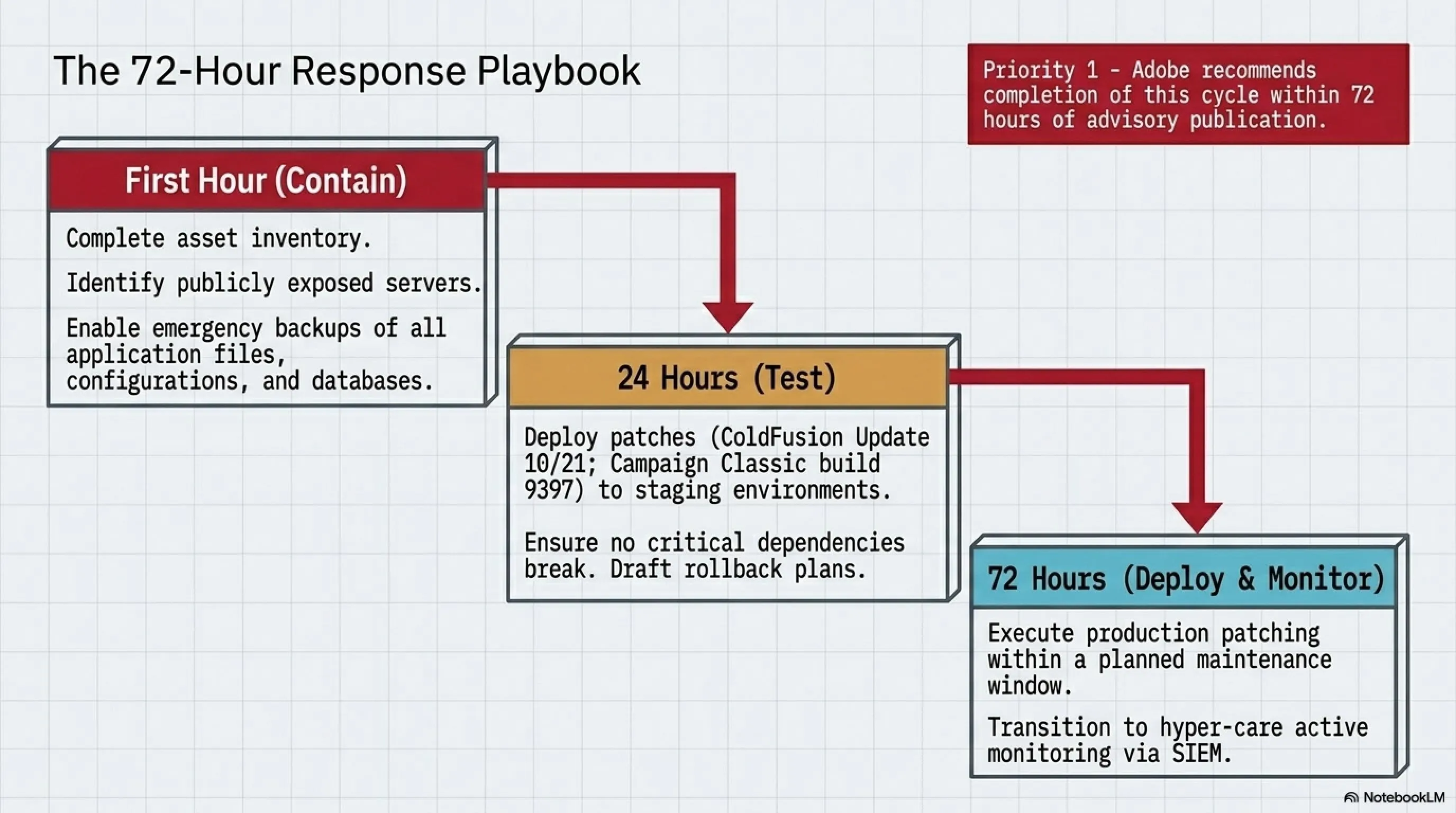
Importantly, Adobe has classified these flaws as Priority 1—the highest priority level—meaning they recommend installing patches within 72 hours. This indicates Adobe views the likelihood of exploitation as high.
Are There Active Attacks?
Fortunately, as of this writing, Adobe has stated it is unaware of any active exploitation in the wild. However, this situation could change very quickly.
Why You Should Be Concerned
- ColdFusion History: This platform has been targeted by extensive attacks before
- CVSS 10.0 Score: Simplest attack with maximum impact
- No Authentication Required: Attackers don't need initial access
- Easy Exploit Development: With these details, writing an exploit isn't a major challenge
- Shodan/Censys Scanning: Thousands of ColdFusion servers are discoverable on the internet
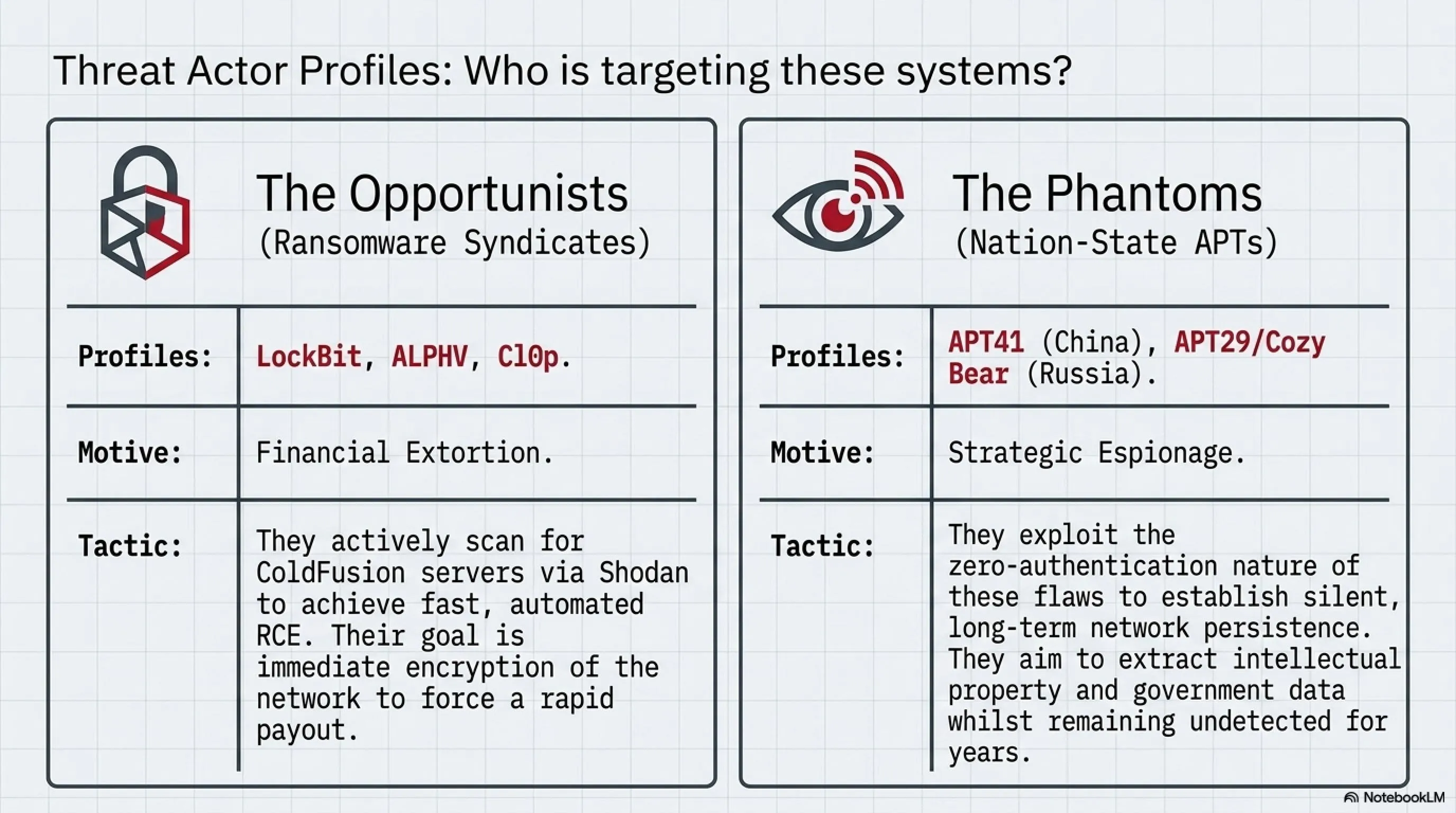
- Ransomware Groups: These groups are always looking for easy RCE opportunities
The Broader Context: Adobe's Vulnerability History
Adobe has faced serious security flaws in recent years, but this time is different. Let's look at a brief history of previous incidents to understand why this event is concerning.
In 2023, ColdFusion was targeted by widespread ransomware attacks. Attackers used Path Traversal flaws to gain server access and then deployed ransomware. Dozens of government and private organizations were victimized.
In 2024, a Zero-Day flaw was discovered in ColdFusion that was used by threat actors before a patch was released. This incident showed that attackers view ColdFusion as a valuable target.
Comparison with Previous Incidents
To better understand the severity of this crisis, let's compare it with Adobe's previous security incidents:
Adobe Critical Vulnerabilities in Recent Years
| Event | Date | CVE Count | Highest CVSS | Exploitation |
|---|---|---|---|---|
| ColdFusion 2023 Attack Wave | March 2023 | 3 | 9.8 | Active |
| Campaign Classic RCE | September 2024 | 1 | 9.8 | Public PoC |
| ColdFusion Zero-Day | January 2025 | 1 | 9.9 | Active (pre-patch) |
| Current July 2026 Crisis | July 2026 | 7 | 10.0 | Not yet |
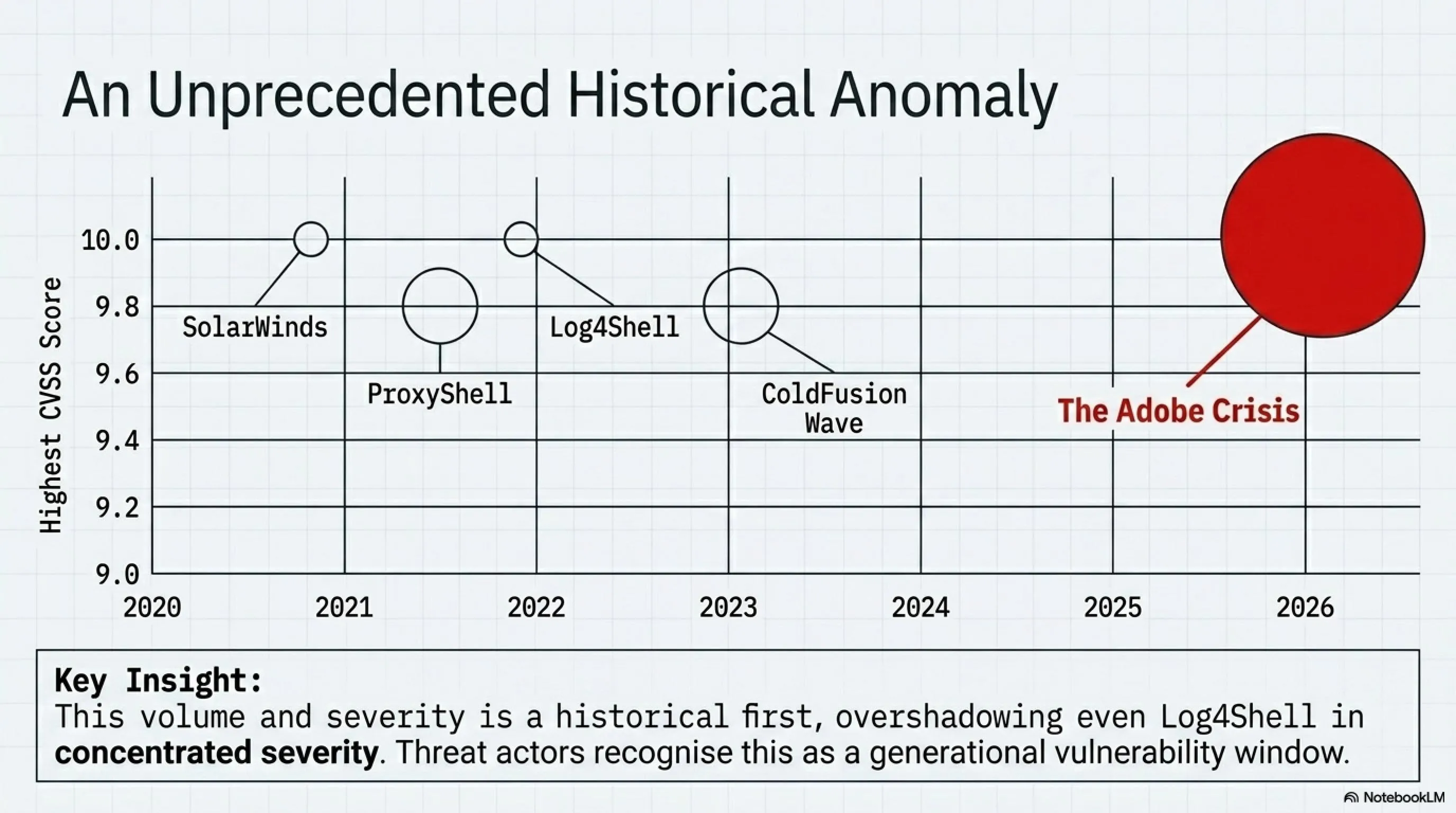
As you can see, this is the first time Adobe has faced 7 perfect-score flaws simultaneously. This volume and severity is unprecedented.
Additional ColdFusion Vulnerabilities: Beyond 10.0
In addition to the 6 perfect-score flaws, ColdFusion has 5 other vulnerabilities that, while not scoring 10.0, are still extremely dangerous.
Two Critical Flaws with 9.3 Scores
CVE-2026-48313 and CVE-2026-48315 have both been identified with CVSS scores of 9.3:
- CVE-2026-48313: Path Traversal leading to Arbitrary File System Read
- CVE-2026-48315: Improper Input Validation leading to Privilege Escalation
These two flaws can be chained in an attack sequence with RCE flaws to gain complete system control.
Three Medium-to-High Severity Flaws
Three additional vulnerabilities were also patched in this update:
- CVE-2026-48307 (CVSS 8.8): Cross-Site Scripting (XSS) leading to RCE
- CVE-2026-48285 (CVSS 8.6): Server-Side Request Forgery (SSRF) leading to Security Feature Bypass
- CVE-2026-48314 (Medium severity): Path Traversal leading to Privilege Escalation
By combining all these flaws, an attacker can design a multi-stage attack that compromises even protected systems.
Affected Versions and Remediation
Adobe has clearly specified which versions are vulnerable and what updates need to be installed.
ColdFusion 2025
- Vulnerable Versions: All versions prior to Update 10
- Solution: Update to ColdFusion 2025 Update 10
- Download Link: Via Adobe Admin Console portal
ColdFusion 2023
- Vulnerable Versions: All versions prior to Update 21
- Solution: Update to ColdFusion 2023 Update 21
- Download Link: Via Adobe Admin Console portal
Campaign Classic
- Vulnerable Versions: 7.4.3 build 9396 and earlier
- Solution: Update to 7.4.3 build 9397
- Platforms: Windows and Linux
Important Note for Cloud Customers
If you're using Adobe Campaign Classic as a cloud-hosted service (Adobe-hosted instance), no action is required. Adobe has automatically patched all cloud instances.
This security bulletin applies only to on-premise deployments and hybrid environments (which have on-premise components).
How to Determine If You're Vulnerable
If you're a system administrator or security professional, you need to quickly assess whether your organization is at risk.
Vulnerability Assessment Checklist
Steps to Check for Vulnerability
- Check ColdFusion version: cfadmin > Server Settings > Settings Summary
- Check Campaign Classic version: Help > About
- Review access logs for suspicious activity
- Coordinate with network team: Is ColdFusion accessible from the internet?
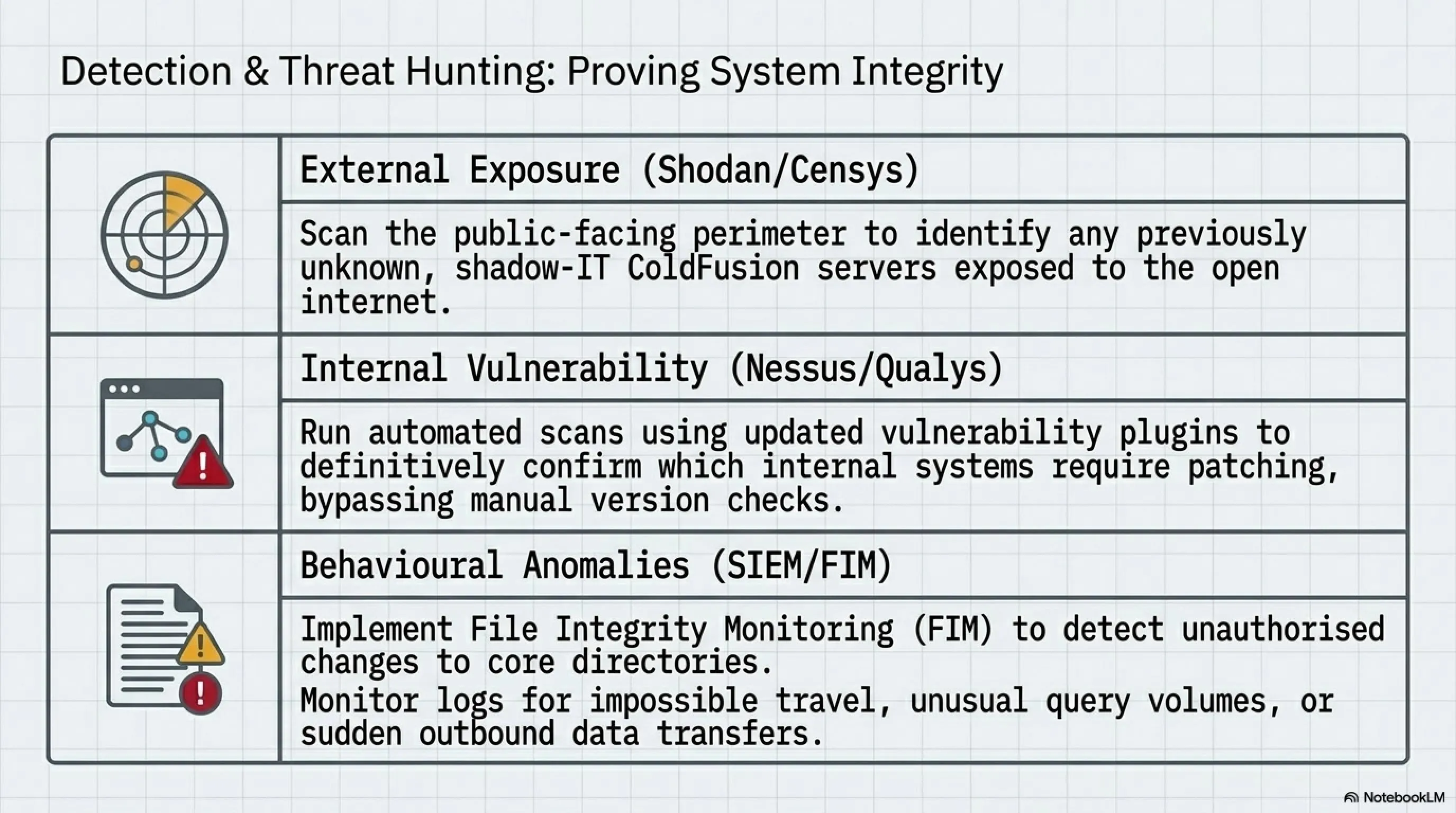
- Run Vulnerability Scanner: Nessus, Qualys, or OpenVAS
- Contact Adobe Support for additional guidance
Detection Tools
Several tools can help you identify vulnerable servers:
- Shodan: For identifying publicly accessible ColdFusion servers
- Nessus: Has dedicated plugins for ColdFusion vulnerabilities
- Qualys VMDR: Automatic identification and prioritization
- Tenable.io: Cloud and on-premise scanning
Cybersecurity Community Response
The simultaneous announcement of 7 perfect-score vulnerabilities has generated varied reactions in the cybersecurity community.
Kevin Beaumont, a renowned security researcher, tweeted: This is like a Perfect Storm. 7 perfect-score flaws in a legacy product used by thousands of major organizations. If ransomware groups see this, we're in for some tough weeks.
CISA (Cybersecurity and Infrastructure Security Agency) in the US hasn't yet added these flaws to its Known Exploited Vulnerabilities list, but likely will in the coming days.
📚 Classified & Related Dossiers in TekinGame
If you wish to explore beyond this report and delve into cybernetic frontiers and autonomous AI architectures, do not miss these three exclusive deep-dives in the Tekin Garage:
Threat Activity Prediction
Security analysts predict we'll see the following in the coming weeks:
- Week One: Release of PoC (Proof of Concept) exploits by security researchers
- Week Two: Weaponization by threat actors and first test attacks
- Weeks Three-Four: Widespread ransomware attacks and data breaches
- Month Two: Addition to CISA KEV list and mandatory patching for government organizations
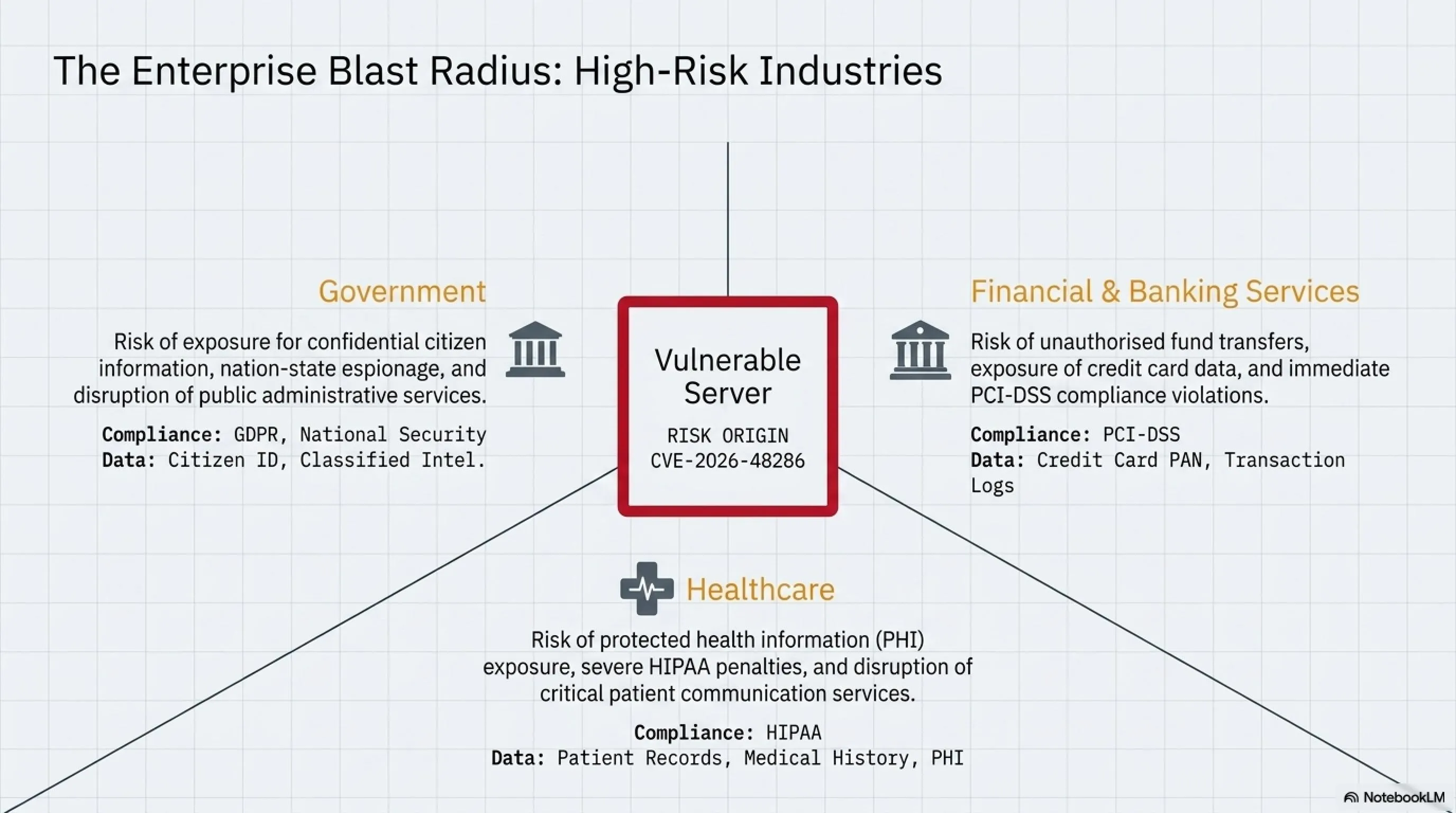
Impact on Different Industries
ColdFusion and Campaign Classic are used across various industries. Let's examine what risk each sector faces.
Financial and Banking Sector
Many banks and financial institutions still use ColdFusion for banking applications and customer portals. Compromising these systems could lead to:
- Access to customer accounts
- Unauthorized fund transfers
- Credit card information leaks
- PCI-DSS violations and heavy fines
Healthcare Sector
Hospitals and clinics using Campaign Classic to communicate with patients are at risk:
- Access to medical records (PHI)
- HIPAA violations
- Phishing opportunities using brand credibility
- Disruption of critical services
Government Organizations
Many government agencies still rely on legacy ColdFusion applications:
- Access to confidential citizen information
- Espionage opportunities for nation-state actors
- Disruption of public services
- National security risks
High-Risk Industries
- Banking & Financial Services: Online transactions, customer portals
- Insurance: Claims processing and customer management systems
- Healthcare: Patient portals and communication systems
- Government: Citizen portals and administrative systems
- Retail: E-commerce and marketing automation systems
- Education: University portals and registration systems
The Global Threat Landscape
This Adobe crisis doesn't exist in isolation. It's part of a broader trend where legacy enterprise systems are becoming prime targets for sophisticated threat actors.
Ransomware Groups Target Enterprise Infrastructure
Modern ransomware operations have evolved from opportunistic attacks to targeted campaigns against specific enterprise infrastructure. ColdFusion, being a legacy platform with known security challenges, represents an ideal target.
Groups like LockBit, ALPHV/BlackCat, and Cl0p have demonstrated sophisticated capabilities in exploiting enterprise vulnerabilities. The perfect CVSS scores make these Adobe flaws extremely attractive for their operations.
Nation-State Interest
Beyond financially motivated criminals, nation-state Advanced Persistent Threat (APT) groups have long targeted enterprise platforms for espionage purposes. Chinese APT groups like APT41 and Russian groups like APT29 (Cozy Bear) have previously exploited ColdFusion vulnerabilities for long-term network access.
The zero-authentication, network-accessible nature of these flaws makes them perfect for initial access operations that could remain undetected for years.
Technical Deep Dive: Understanding the Attack Vectors
Let's examine how attackers could potentially exploit these vulnerabilities in real-world scenarios.
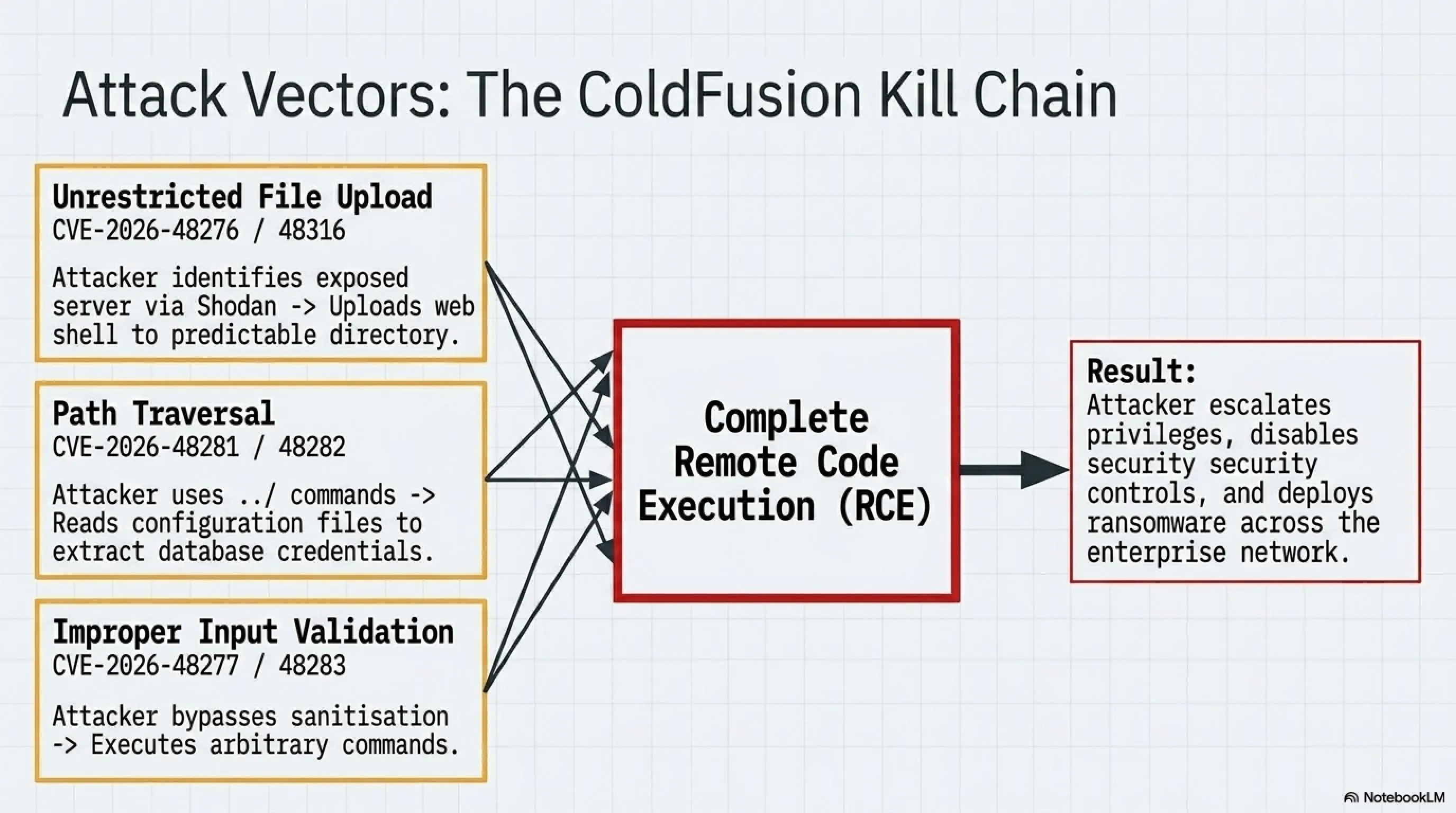
Unrestricted File Upload Chain
CVE-2026-48276 and CVE-2026-48316, both unrestricted file upload vulnerabilities, allow attackers to:
- Step 1: Identify a ColdFusion server exposed to the internet (via Shodan/Censys)
- Step 2: Craft a malicious file upload request with a web shell payload
- Step 3: Upload the web shell to a predictable location on the server
- Step 4: Access the web shell via HTTP request to execute arbitrary commands
- Step 5: Escalate privileges, disable security controls, and deploy ransomware or exfiltration tools
Path Traversal Exploitation
CVE-2026-48281 and CVE-2026-48282 enable path traversal attacks that can:
- Read configuration files containing database credentials
- Access source code to identify additional vulnerabilities
- Extract encryption keys and sensitive data
- Write malicious files to system directories
- Overwrite legitimate application files with backdoors
Campaign Classic Authorization Bypass
CVE-2026-48286's incorrect authorization flaw represents a different attack vector. Instead of exploiting file handling, it targets the authentication and authorization logic itself.
Attackers could potentially:
- Bypass authentication entirely to access admin functions
- Manipulate campaign workflows to send malicious communications
- Extract entire customer databases
- Modify tracking and analytics to hide their activities
- Use the compromised platform as a launchpad for supply chain attacks
Defense Strategies: How to Protect Your Organization
Now that we understand the threat, it's time to learn how to protect our organizations. Defense strategy shouldn't just be about installing patches—we need a defense-in-depth approach.
Immediate Actions (First Hour)
If you're currently using ColdFusion or Campaign Classic, take these actions immediately:
- Complete Inventory: Identify all ColdFusion and Campaign Classic servers
- Version Verification: Confirm which servers are vulnerable
- Network Segmentation: If immediate patching isn't possible, restrict network access
- Active Monitoring: Enable SIEM and IDS/IPS to detect suspicious activity
- Emergency Backup: Back up all critical systems
Mid-Term Actions (24-72 Hours)
After immediate actions, follow these steps for complete protection:
72-Hour Patching Plan
- Test patches in development/staging environment
- Plan maintenance window for production
- Prepare rollback plan in case of issues
- Coordinate with application and database teams
- Notify stakeholders and management
- Execute production patching with close monitoring
WAF Rules: Additional Protection Layer
If you can't patch immediately, a Web Application Firewall (WAF) can provide a temporary protection layer. Add these rules to your WAF:
- File Upload Restrictions: Limit types of uploadable files
- Path Traversal Detection: Block patterns like ../ and ..\\
- Input Validation: Inspect and sanitize all user inputs
- Rate Limiting: Limit number of requests from a single IP
- Geo-blocking: Restrict access to specific countries (if needed)
Tekin Analysis: Strategic Assessment of This Crisis
From the perspective of the Tekin analytical team, this event holds several important lessons for organizations and security professionals.
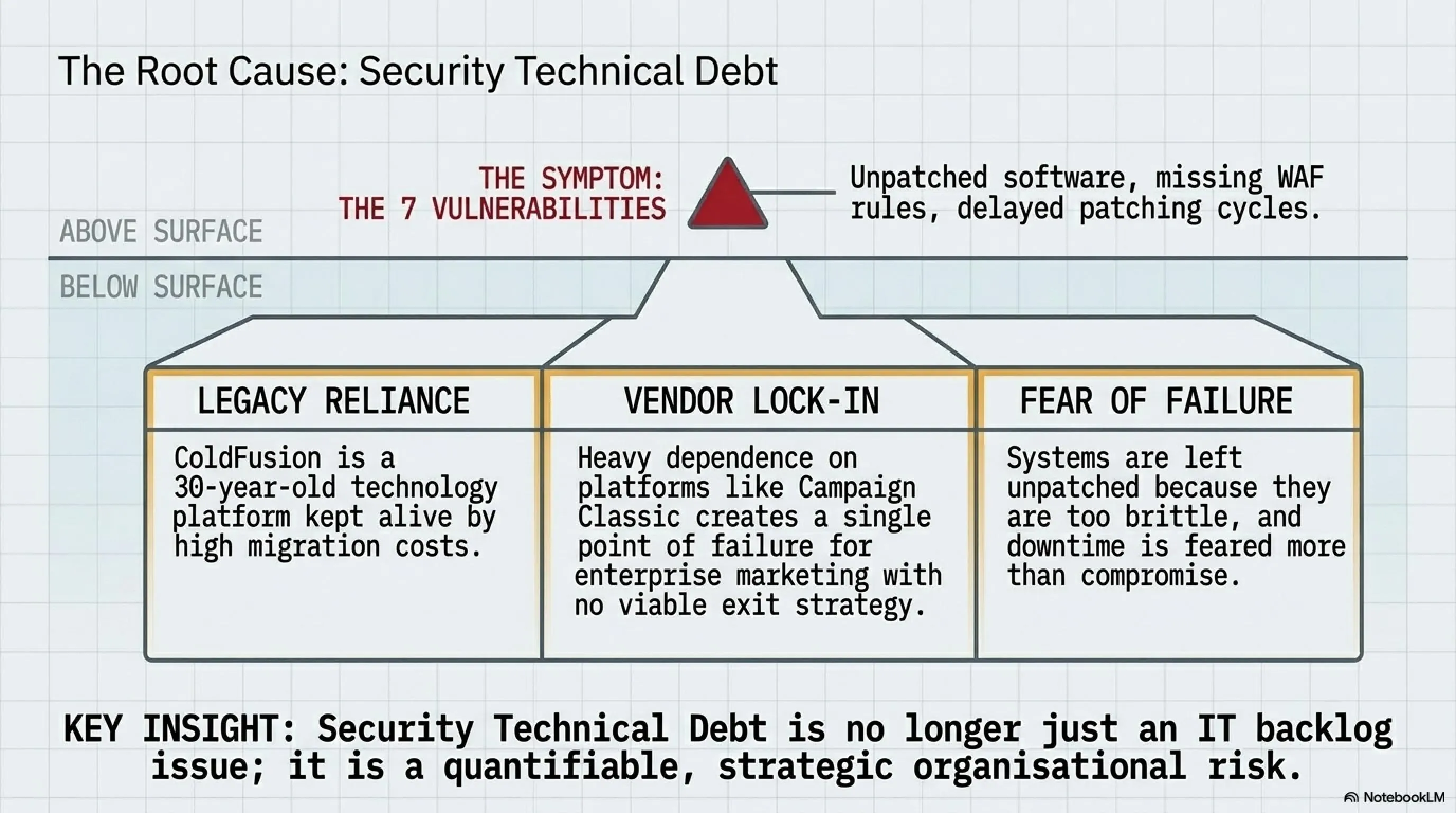
Lesson One: Legacy Systems = Technical Debt
ColdFusion is a 30-year-old technology. Many organizations remain dependent on it due to high migration costs and fear of failure. This crisis shows that Technical Debt isn't just a concept—it's a real security risk.
Lesson Two: Vendor Lock-in Is Dangerous
Organizations that have built their entire marketing automation infrastructure on Campaign Classic are now in a weak position. This is a reminder that you should always have an exit strategy.
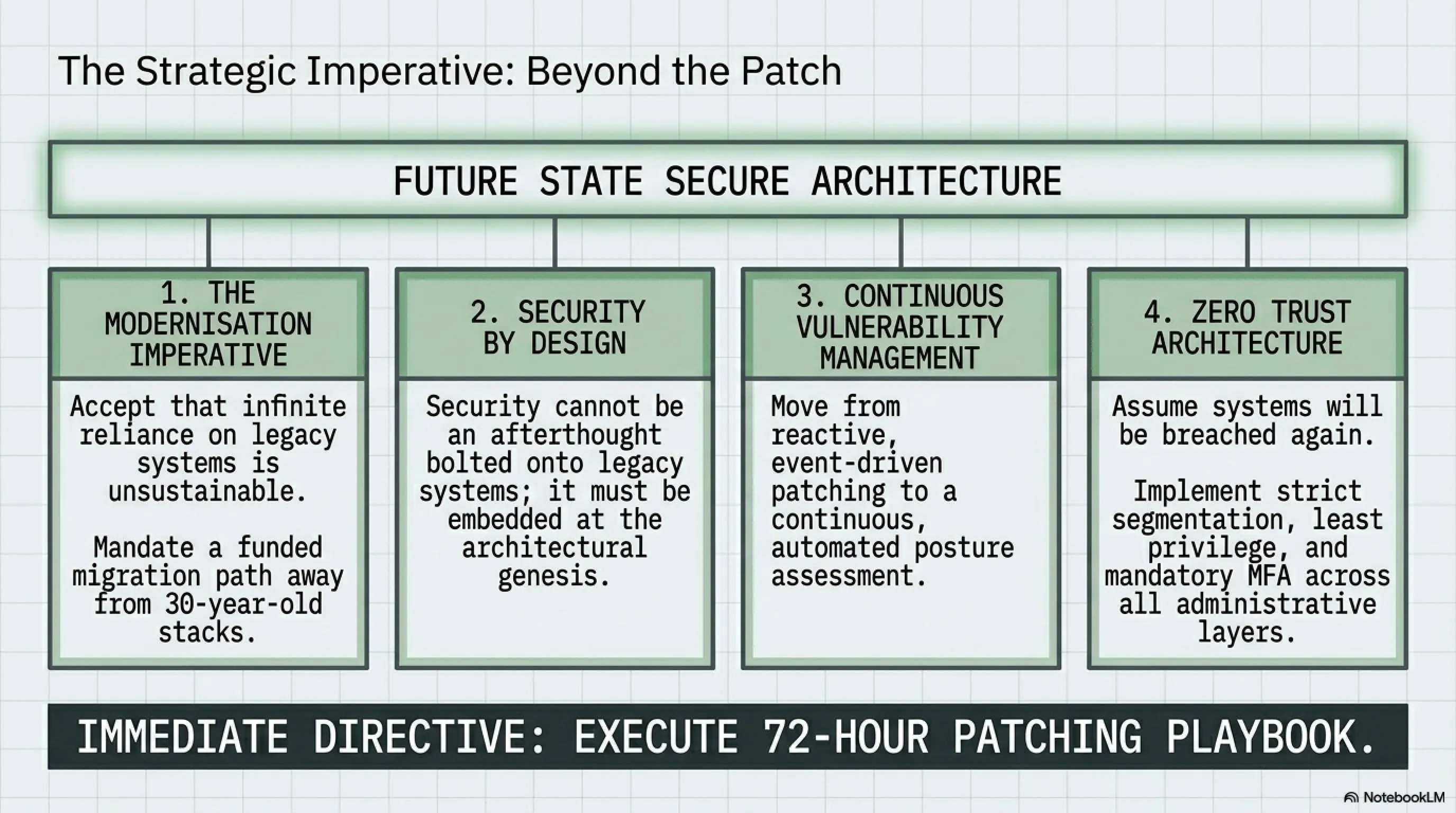
Lesson Three: Zero Trust Begins Now
Even if you patch, you can't guarantee that a new vulnerability won't be discovered. You must assume your systems could always be compromised and plan accordingly:
- Strict Network Segmentation
- Least Privilege Access
- Multi-Factor Authentication everywhere
- Continuous Monitoring and Anomaly Detection
Future Outlook: What to Expect
Based on trend analysis and historical patterns, we can predict what will happen in the coming weeks and months.
Scenario 1: Limited Exploitation
In this optimistic scenario, most organizations patch quickly and only a limited number become victims. Threat actors can't widely exploit these flaws.
Probability: 30% (unlikely given ColdFusion's history)
Scenario 2: Wave of Ransomware Attacks
In this realistic scenario, ransomware groups quickly weaponize the flaws and target organizations that patched late. We'll see dozens of major attacks.
Probability: 60% (most likely scenario)
Scenario 3: APT and Nation-State Exploitation
In this pessimistic scenario, Advanced Persistent Threat (APT) groups use these flaws for espionage and targeted attacks. These attacks remain hidden for years.
Probability: 10% (but very high impact)
Comparison with Similar Historical Crises
This isn't the first time we've faced a major vulnerability wave. Let's compare this crisis with similar past events.
Comparison with Historical Security Crises
| Event | Date | CVE Count | Highest CVSS | Impact |
|---|---|---|---|---|
| Log4Shell | December 2021 | 1 | 10.0 | Millions of vulnerable servers |
| ProxyShell (Exchange) | August 2021 | 3 | 9.8 | Widespread ransomware attacks |
| SolarWinds Supply Chain | December 2020 | 1 | 10.0 | 18,000 compromised organizations |
| Adobe ColdFusion Wave | March 2023 | 3 | 9.8 | Hundreds of government servers |
| Current Adobe Crisis | July 2026 | 7 | 10.0 | Unknown (ongoing) |
As you can see, the number and severity of these flaws exceeds even major past crises.
The Role of Threat Intelligence in Crisis Response
In such situations, Threat Intelligence can play a critical role. Organizations should:
- Track Indicators of Compromise (IoCs): Suspicious files, bad IPs, phishing domains
- Dark Web Monitoring: Check for exploit sales and leaked credentials
- OSINT Collection: Gather information from public sources
- Information Sharing: Collaborate with ISACs and other organizations
Recommendations for Organizations
Based on comprehensive analysis of this crisis, we offer the following recommendations for organizations:
For ColdFusion Users
- Immediate Patching: No excuse is acceptable. Patch now
- Migration Planning: Start planning migration from ColdFusion to more modern stack
- Incident Response Plan: Assume you're compromised and be ready to respond
- Insurance Review: Verify your Cyber Insurance covers these types of attacks
For Campaign Classic Users
- Verify Patch Status: Even if cloud-hosted, confirm you're patched
- Access Review: Review and restrict all Campaign Classic access
- Data Classification: Identify what sensitive data is in Campaign Classic
- Alternative Evaluation: Evaluate alternatives like Salesforce Marketing Cloud or HubSpot
For Security Teams
- Asset Discovery: Use automated tools to discover all Adobe products
- Vulnerability Management: Improve patch management process
- Purple Teaming: Conduct simulated attacks to test readiness
- Tabletop Exercise: Review breach scenarios with management
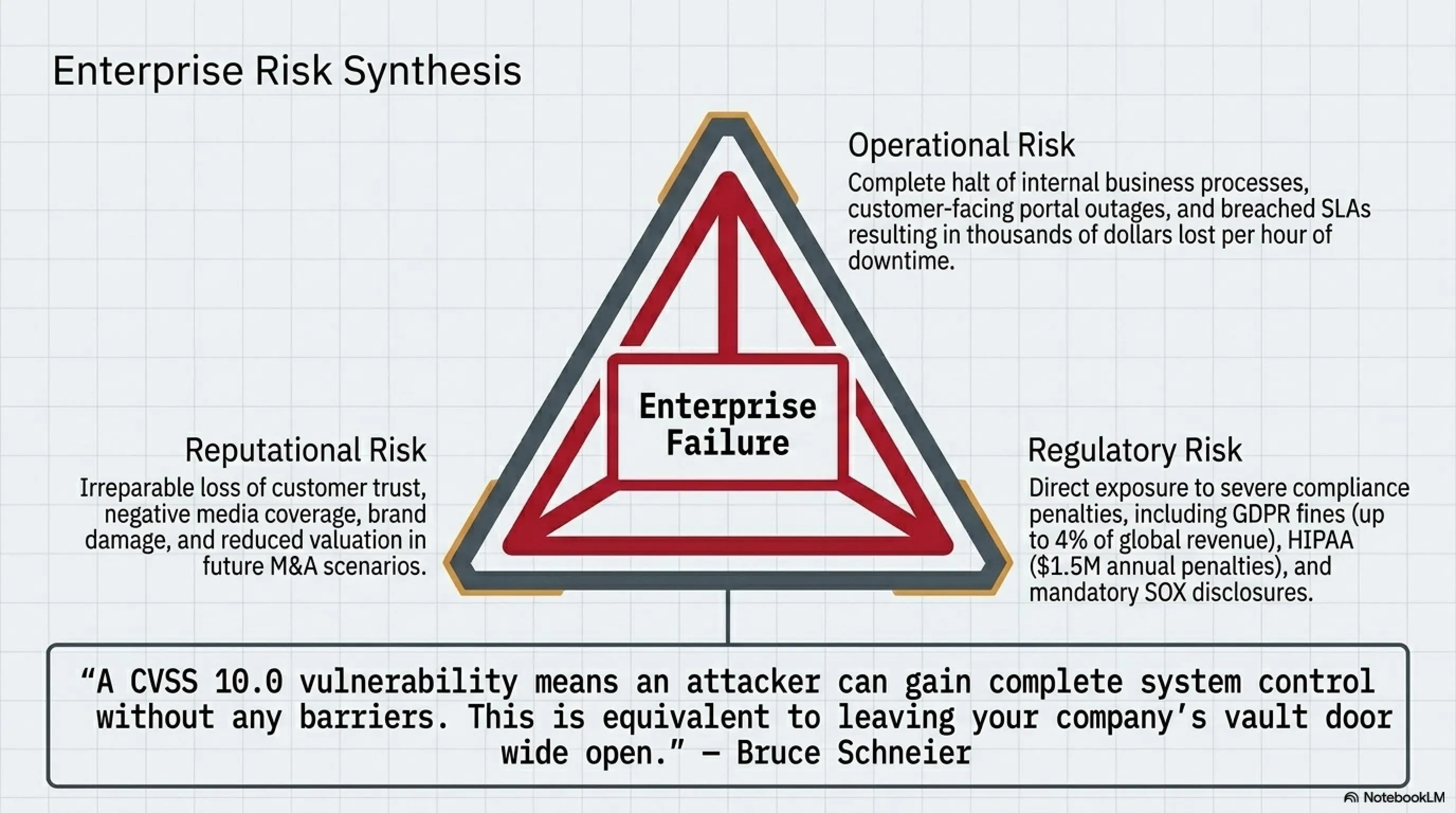
Enterprise Risk Management Perspective
From an enterprise risk management perspective, this Adobe crisis represents a convergence of multiple risk factors that boards and C-suite executives must understand.
Operational Risk
The potential for business disruption extends beyond IT systems. If critical ColdFusion applications go down due to emergency patching or compromise:
- Customer-facing portals become unavailable
- Internal business processes halt
- Revenue-generating activities cease
- Service Level Agreements (SLAs) are breached
Compliance and Legal Risk
Organizations operating in regulated industries face additional complexity:
- GDPR: Data breaches can result in fines up to 4% of annual global revenue
- HIPAA: Healthcare organizations face up to $1.5 million in annual penalties per violation category
- PCI-DSS: Card brands can impose fines and even revoke payment processing privileges
- SOX: Public companies must disclose material cybersecurity incidents
Reputational Risk
Perhaps most difficult to quantify but potentially most damaging:
- Loss of customer trust and confidence
- Negative media coverage and brand damage
- Competitive disadvantage in the marketplace
- Difficulty attracting and retaining talent
- Reduced valuation in M&A scenarios
- Adobe released patches quickly (before widespread exploitation)
- Priority 1 warning given to organizations
- Cloud instances automatically patched
- Complete technical details published for better understanding
- Detection tools readily available
- 7 perfect-score flaws simultaneously (unprecedented)
- Legacy system migration is difficult and expensive
- Exploitation is likely coming (ColdFusion history)
- Many organizations still vulnerable
- APT groups likely already have exploits
- Impact on critical industries is extremely high
Practical Guide: Step-by-Step Patching Process
Now it's time to move from theory to practice. This step-by-step guide will help you safely and efficiently update your systems.
Before You Begin: Preparation
Before you start, prepare these items:
- Complete Backup: All application files, configurations, and databases
- Change Management Ticket: Formal documentation for compliance
- Rollback Plan: Specify what to do if something goes wrong
- Maintenance Window: Choose a time that has less impact on business
- Communication Plan: Notify stakeholders
Step 1: Test in Non-Production Environment
Never patch directly in production. Test in development or staging first:
Pre-Production Test Checklist
- Install patch in staging environment
- Test all dependent applications
- Review performance and resource usage
- Test integration with other systems
- Review log files for errors
- Verify business-critical features work correctly
Step 2: Installing ColdFusion Patch
For ColdFusion, the installation process is relatively straightforward:
- Step 1: Download the appropriate update from Adobe Download Portal
- Step 2: Stop the ColdFusion service
- Step 3: Run the installer with Administrator access
- Step 4: Review release notes for configuration changes
- Step 5: Restart the service
- Step 6: Verify the new version in Admin Console
Step 3: Installing Campaign Classic Patch
For Campaign Classic, the process is slightly more complex:
- Step 1: Download build 9397 from Adobe Support Portal
- Step 2: Stop all Campaign processes (nlserver stop)
- Step 3: Run the upgrade script
- Step 4: Update database schema (if needed)
- Step 5: Restart services
- Step 6: Test sending a test campaign
Step 4: Verification and Monitoring
After installing the patch, be sure to verify these items:
- Review log files for errors or warnings
- End-to-end testing of all business processes
- Monitor performance metrics
- Re-scan with vulnerability scanner to confirm patch
- Document all changes made
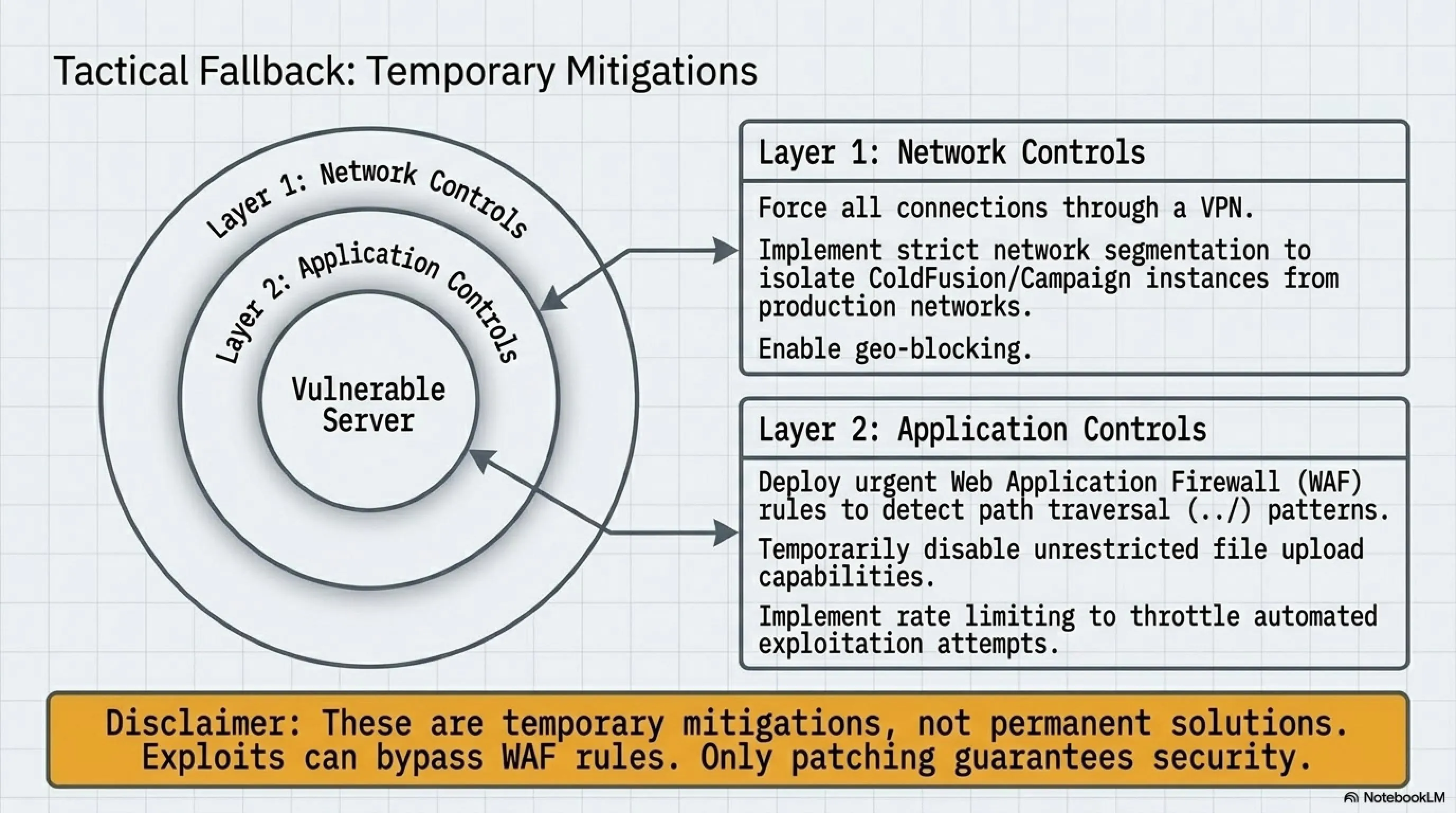
If You Can't Patch Immediately: Temporary Mitigations
If you can't patch immediately for some reason (such as complex application dependencies), implement these temporary measures:
Network-Level Controls
- Firewall Rules: Restrict access to ColdFusion/Campaign to specific IPs
- VPN Requirement: Force connections through VPN
- Network Segmentation: Complete isolation from other production systems
- DDoS Protection: Enable protection to prevent brute force attacks
Application-Level Controls
- WAF Rules: Implement specific rules to block Path Traversal and File Upload
- Input Validation: Add extra validation layer at application layer
- File Upload Disable: Temporarily disable file upload capability if possible
- Authentication Hardening: Enable MFA for all admin accounts
Monitoring and Detection
- SIEM Alerts: Set up alerts for suspicious patterns
- Anomaly Detection: Review unusual behaviors in traffic
- File Integrity Monitoring: Detect unauthorized changes to files
- 24/7 SOC Monitoring: Continuous monitoring of critical systems
Message to Executives: Why This Crisis Demands Your Attention
If you're a CEO, CFO, or board member, you need to understand that this isn't just a technical issue—it's a strategic organizational risk that can have the following impacts:
Financial Impacts
- Regulatory Fines: GDPR violations can cost up to 4% of annual global revenue
- Incident Response Costs: Average major data breach exceeds $4 million
- Lost Revenue: Downtime can cost thousands of dollars per hour
- Legal Costs: Class-action lawsuits from customers
Reputation Impacts
- Loss of customer trust
- Negative media coverage
- Decline in stock value (for public companies)
- Difficulty attracting and retaining talent
Operational Impacts
- Business operations disruption
- Loss of critical data
- Need to rebuild systems from scratch
- Reduced employee productivity
Long-Term Lessons: Beyond This Crisis
Even after resolving this crisis, organizations must learn long-term lessons:
1. The Modernization Imperative
You can no longer depend infinitely on legacy systems. Have a plan for modernization.
2. Security by Design
Security must be embedded in architecture and development process from the beginning, not as an afterthought.
3. Continuous Vulnerability Management
Vulnerability management is a continuous activity, not a one-time project.
4. Incident Response Readiness
Assume you will be compromised and prepare accordingly.
Conclusion: This Is Just the Beginning
The Adobe CVSS 10.0 crisis is a bitter reminder that in the cybersecurity world, no system is completely secure. But this crisis is also an opportunity—an opportunity to revisit security strategies, modernize infrastructure, and build a stronger defense posture.
Organizations that take this crisis seriously and act quickly can prevent serious damage. But those who delay or ignore this warning will likely become victims of attacks in the coming months.
Our message to all organizations is clear: patch right now. The cost of inaction is far greater than the cost of patching. And if you can't patch, at least implement temporary mitigation measures and have a rapid plan for updating.
Ultimately, this crisis should be a turning point. We can no longer depend on dangerous legacy systems. We can no longer postpone vulnerability management. We can no longer assume "we're not a target."
Cybersecurity is no longer just the responsibility of the IT team—it's the responsibility of the entire organization, from C-level to frontline employees. The Adobe CVSS 10.0 crisis is an opportunity to accept this reality and act on it.
Frequently Asked Questions
How do I know if my organization is vulnerable?
First, identify all ColdFusion and Campaign Classic instances. For ColdFusion, go to Admin Console and check the version. For Campaign Classic, go to Help > About. If you have ColdFusion 2025 before Update 10 or ColdFusion 2023 before Update 21, or Campaign Classic 7.4.3 build 9396 and lower, you're vulnerable.
How much time is needed to install the patch?
For ColdFusion, typically 1-2 hours per server (including downtime). For Campaign Classic, 2-4 hours depending on deployment complexity. But be sure to test in staging environment first.
Can I just protect with WAF without patching?
WAF is a temporary protection layer, not a permanent solution. WAF can block some attacks but can't give 100% guarantee. Patching is the only definitive way to fix the vulnerability.
What if I use cloud-hosted Campaign Classic?
If your instance is hosted by Adobe, you don't need to take action. Adobe has automatically patched all cloud instances. This bulletin is only for on-premise and hybrid deployments.
Why did Adobe announce all these vulnerabilities simultaneously?
Adobe follows Coordinated Vulnerability Disclosure. When multiple vulnerabilities are discovered and fixed in a similar timeframe, they're typically announced simultaneously so organizations can respond at once.
Are active attacks occurring?
At the time of writing (July 2, 2026), Adobe has not reported active exploitation. But given ColdFusion's history and the severity of these vulnerabilities, the likelihood of attacks in the coming weeks is very high.
Who in the organization should I notify?
This should be treated as a high-level incident. CTO, CISO, CEO, and risk management team should be notified. If your organization is regulated (finance, healthcare, government), you may also need to report to regulatory bodies.
What happens if I can't patch within 72 hours?
If you can't patch immediately, you must: 1) restrict network access, 2) implement WAF rules, 3) intensify monitoring, 4) have a clear plan for patching at the earliest opportunity. But the longer you delay, the greater the risk.
Sources
- Adobe Security Bulletin APSB26-68 - ColdFusion
- Adobe Security Bulletin APSB26-69 - Campaign Classic
- SecurityWeek - Adobe Patches Critical Vulnerabilities
- BleepingComputer - Adobe Patches Seven Max Severity Flaws
- The Hacker News - Adobe Patches 7 CVSS 10.0 Flaws
- CIS Security Advisory - Multiple Vulnerabilities in Adobe Products
- Security Affairs - Adobe Fixed Multiple Maximum-Severity Flaws
- NIST NVD - CVE-2026-48286 Details
Additional Gallery: 🚨 Adobe's Security Crisis: Seven Perfect-Score (CVSS 10.0) Flaws