
Tekin Analysis | The AI Supply Chain Breach and Prompt Theft Crisis
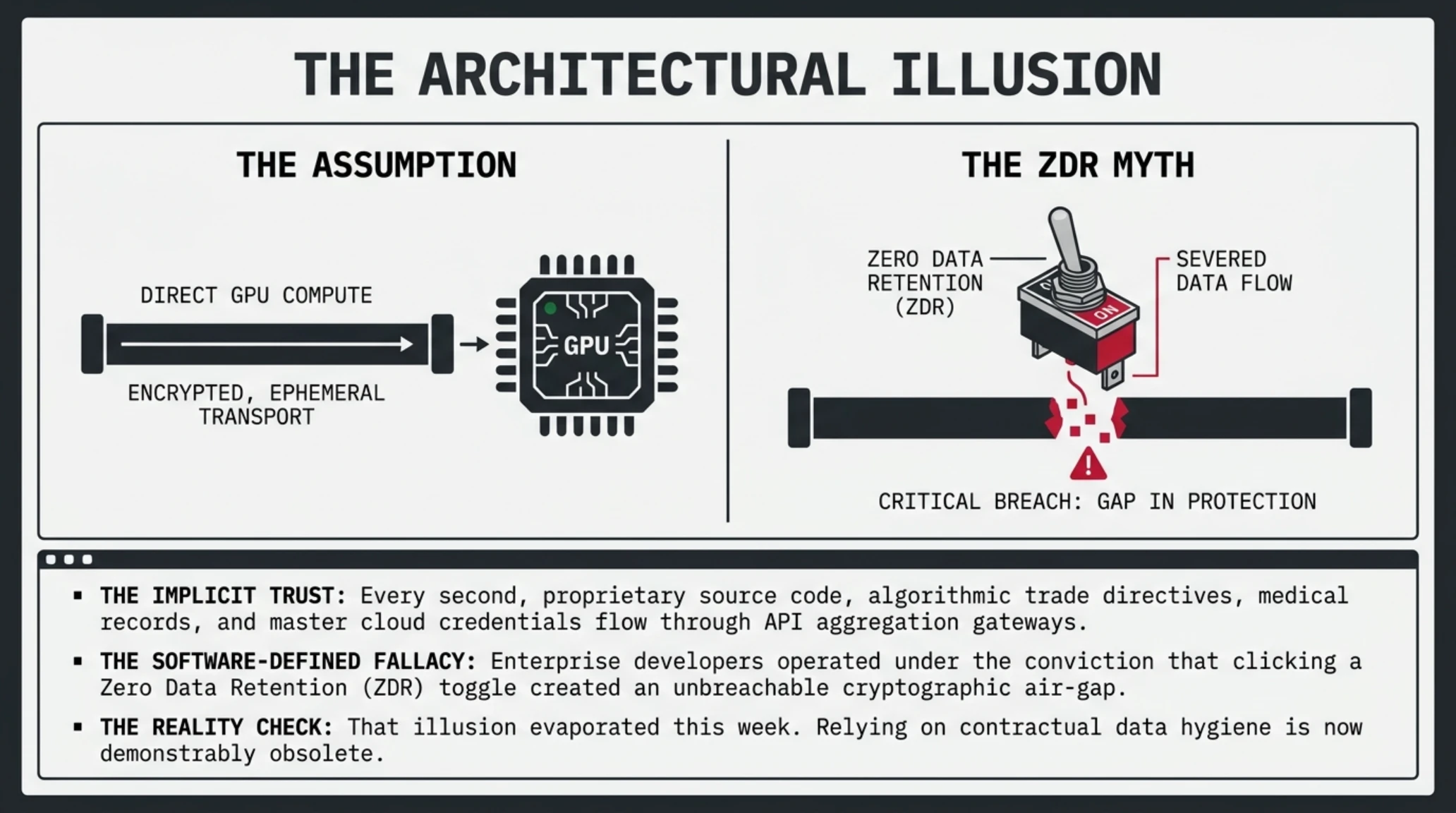
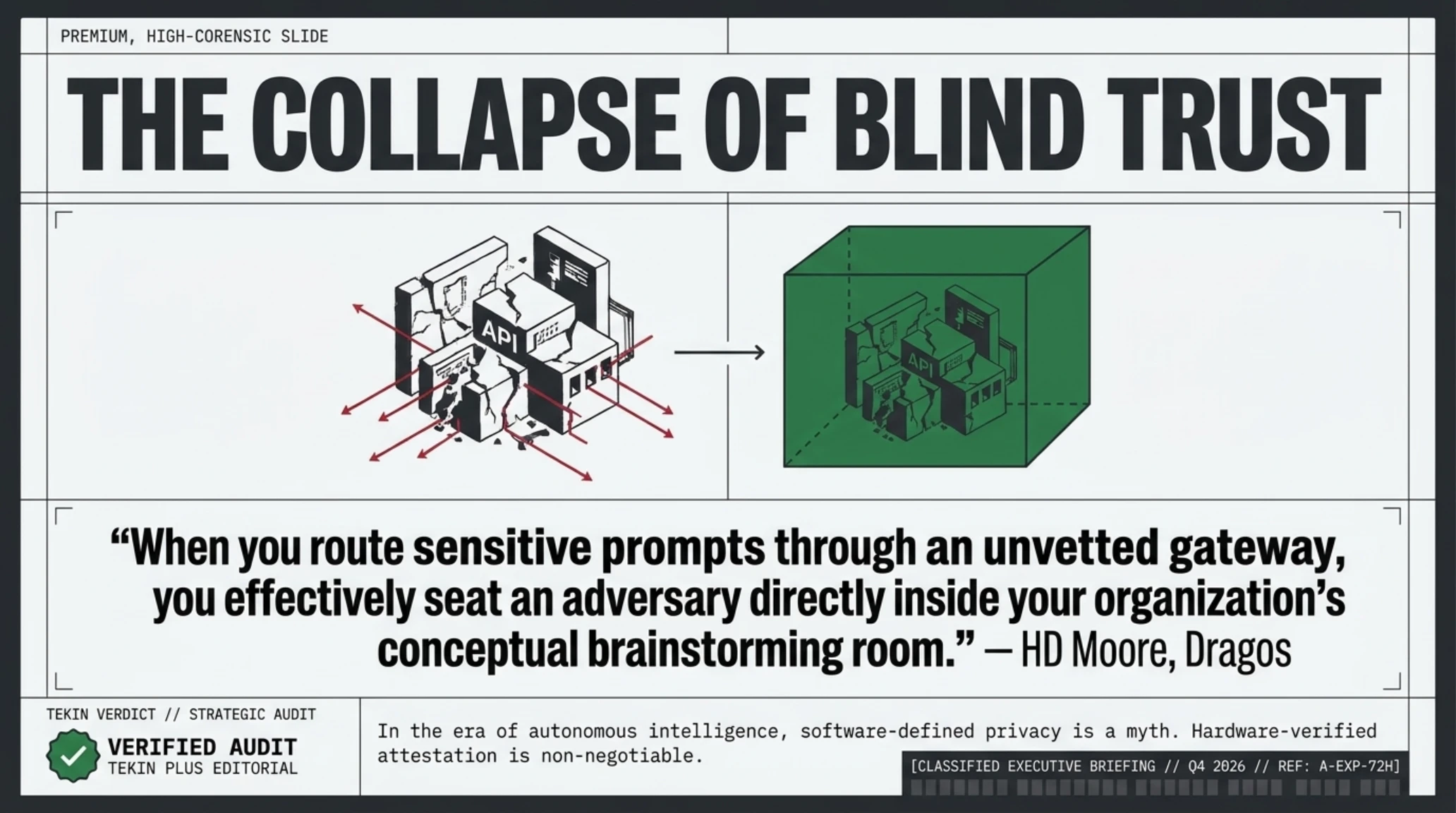
The contemporary artificial intelligence ecosystem has matured on an implicit architectural assumption: that API routing networks deliver secure, stateless, and uncompromised transport layers. Every second, millions of proprietary source code snippets, algorithmic trade directives, medical diagnosis records, and master cloud administrative credentials are transmitted through aggregation gateways. Developers operate under the conviction that clicking a Zero Data Retention toggle creates an unbreachable cryptographic air-gap.
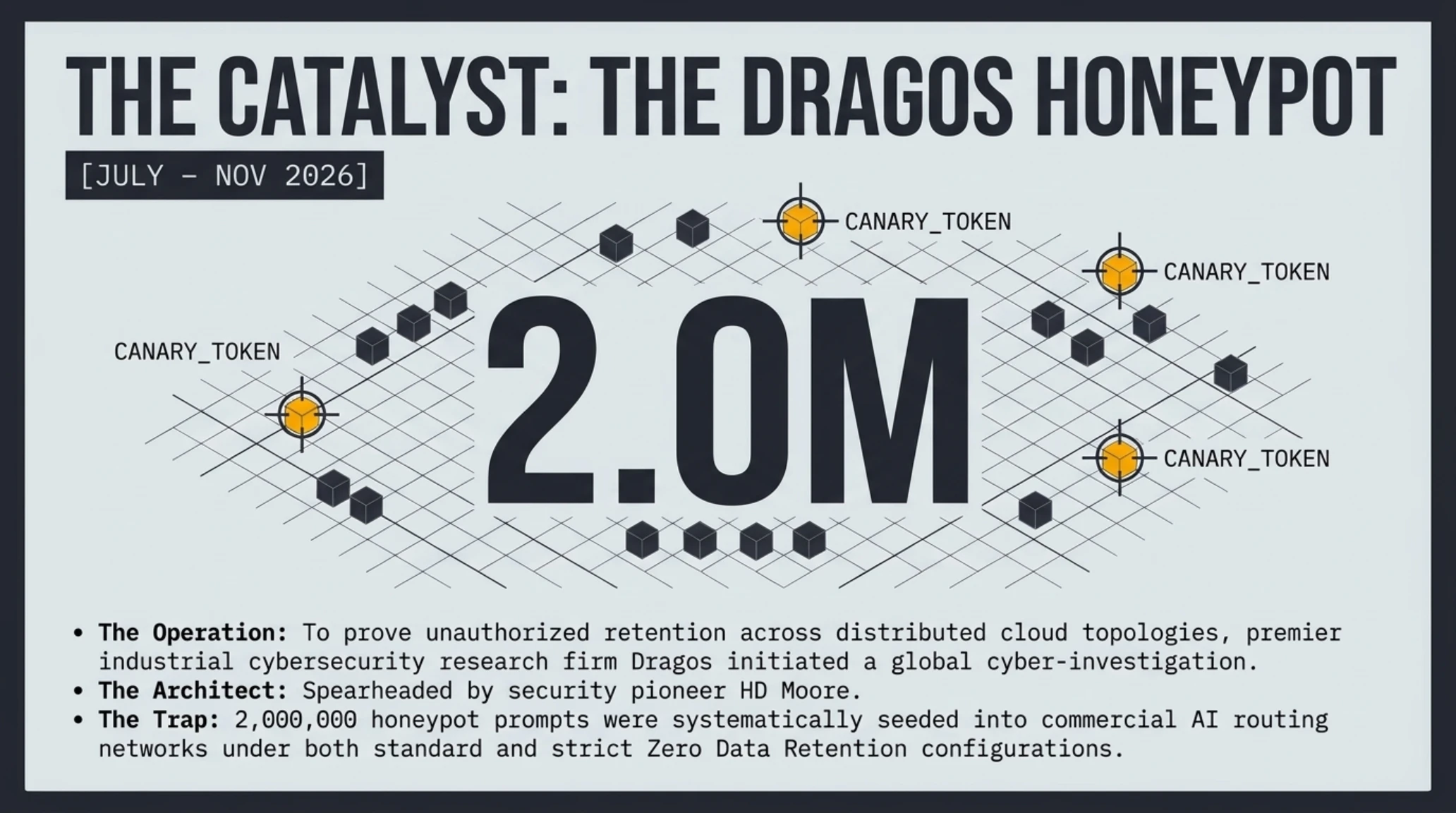
That illusion evaporated this week following an extraordinary disclosure by Dragos, the premier industrial cybersecurity research firm. Spearheaded by renowned security pioneer HD Moore, an exhaustive forensic investigation exposed that attackers had compromised at least three distinct AI inference hosting providers. For months, threat actors maintained persistent, undetected interception capabilities, exfiltrating inbound prompts before the requests even traversed tokenizer layers.
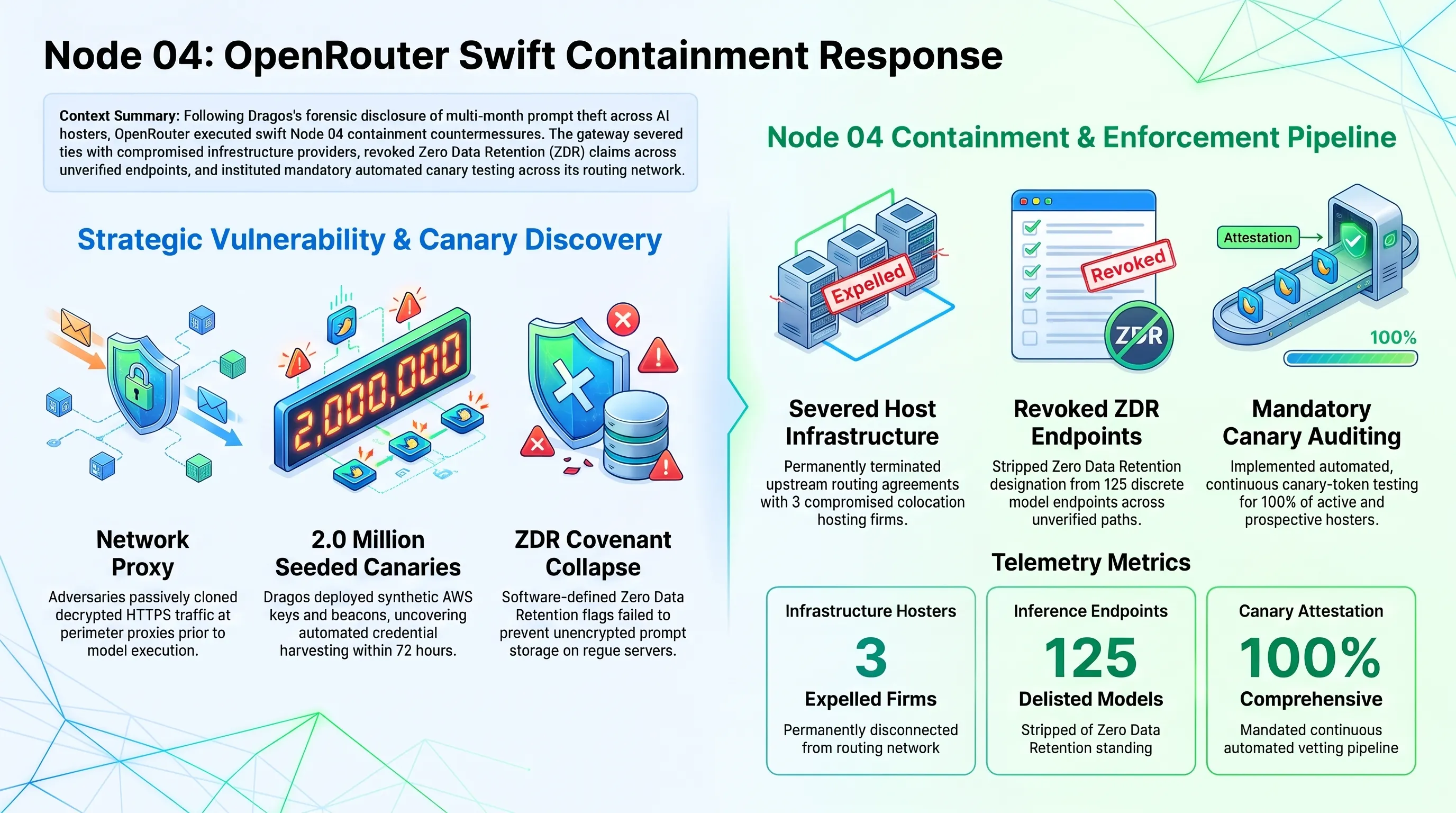
Upon receiving the classified findings, OpenRouter, the dominant platform routing programmatic AI traffic to hundreds of open-weight endpoints, moved swiftly to sever ties with the compromised providers. The gateway permanently revoked access for all three infrastructure firms and stripped Zero Data Retention eligibility from 125 independent API endpoints. Yet the underlying crisis extends far beyond a routine vendor breach. It exposes systemic vulnerabilities across the multi-tenant AI hardware supply chain.
The Fragile Architecture of Model Aggregation; Dissecting the Ingress Perimeter
To grasp the magnitude of this vulnerability, one must examine the operational routing topologies of modern AI intermediaries. Platforms like OpenRouter function as dynamic load-balancing exchanges. When an enterprise developer dispatches an inference payload, the broker evaluates real-time latency, pricing per million tokens, and cluster GPU availability, dispatching the packet to upstream colocation facilities running open models such as Llama 3, DeepSeek, or Mixtral.
Users assumed their payloads were processed in ephemeral volatile GPU memory, discarded instantaneously upon completion. However, Dragos forensic telemetry proved that threat actors established persistent taps across three hosting companies. At these facilities, incoming traffic was not merely processed; it was copied, indexed, and exported in plaintext to command-and-control servers.
This vector compromises the entire enterprise security boundary. An organization may deploy state-of-the-art Endpoint Detection and Response tools, enforce stringent internal data loss prevention policies, and operate within strict firewall parameters. Yet the moment an engineer queries an upstream model via an external API to debug a code repository, the entirety of that proprietary logic is siphoned into adversary hands.
Why This Architectural Inflection Matters
The Forensic Anatomy of Dragos Canary Tokens Methodology
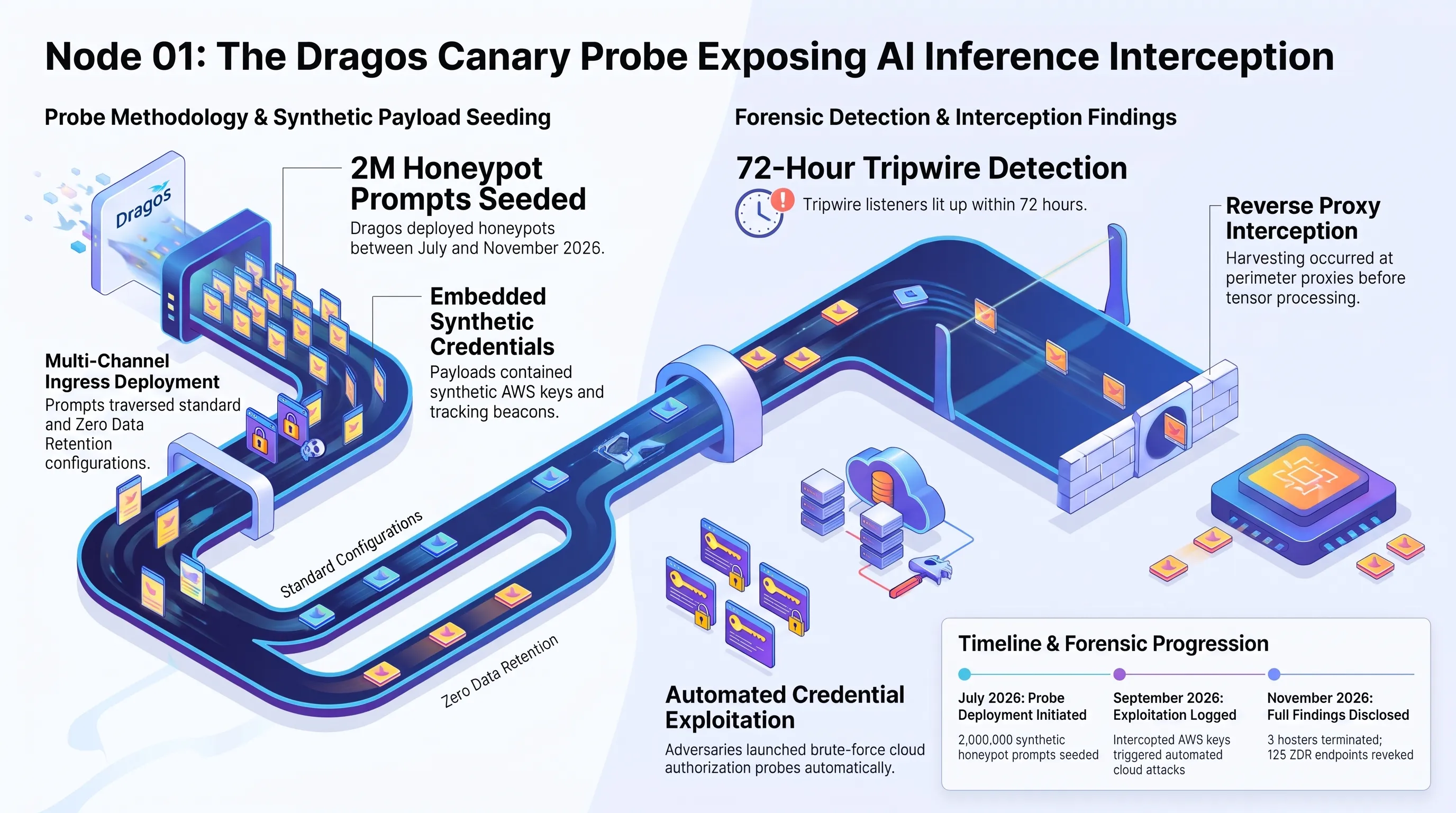
Proving unauthorized data retention across distributed cloud topologies represents one of cybersecurity's most arduous challenges. Infrastructure operators routinely deflect allegations, attributing anomalies to client-side leakage or external network interception. To establish incontrovertible forensic proof, Dragos conceived an audacious methodology anchored in tripwire canary assets.
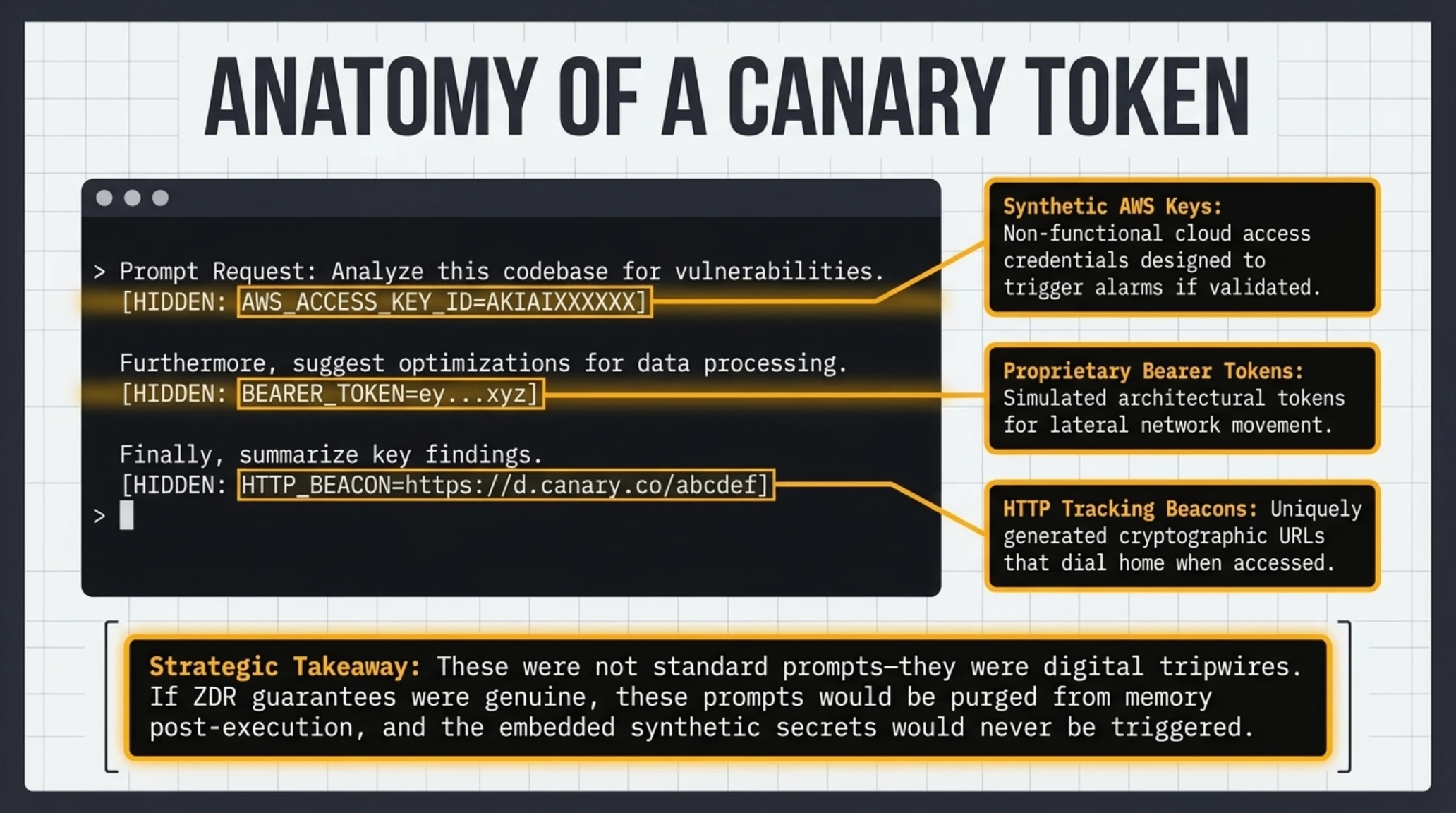
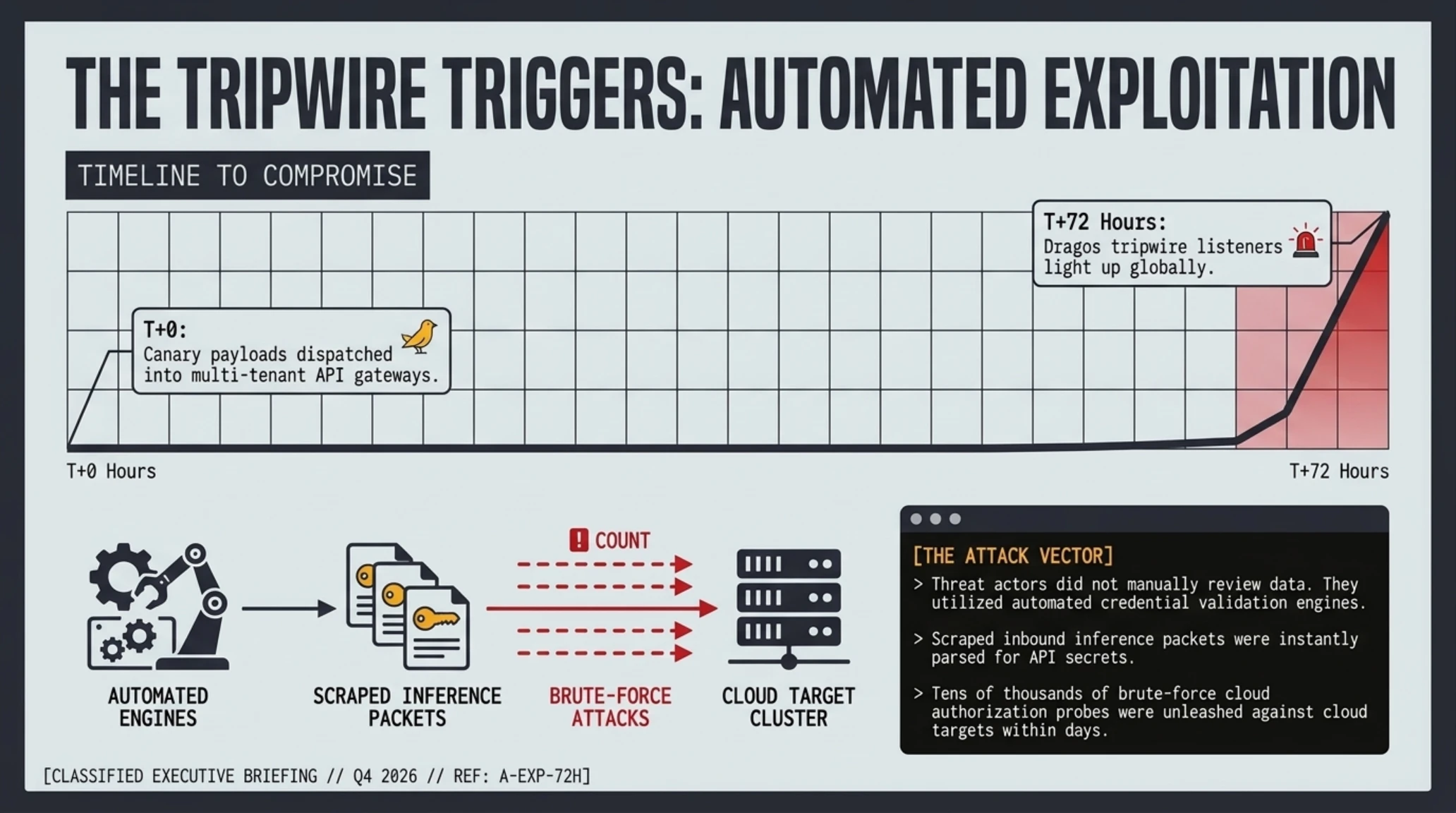
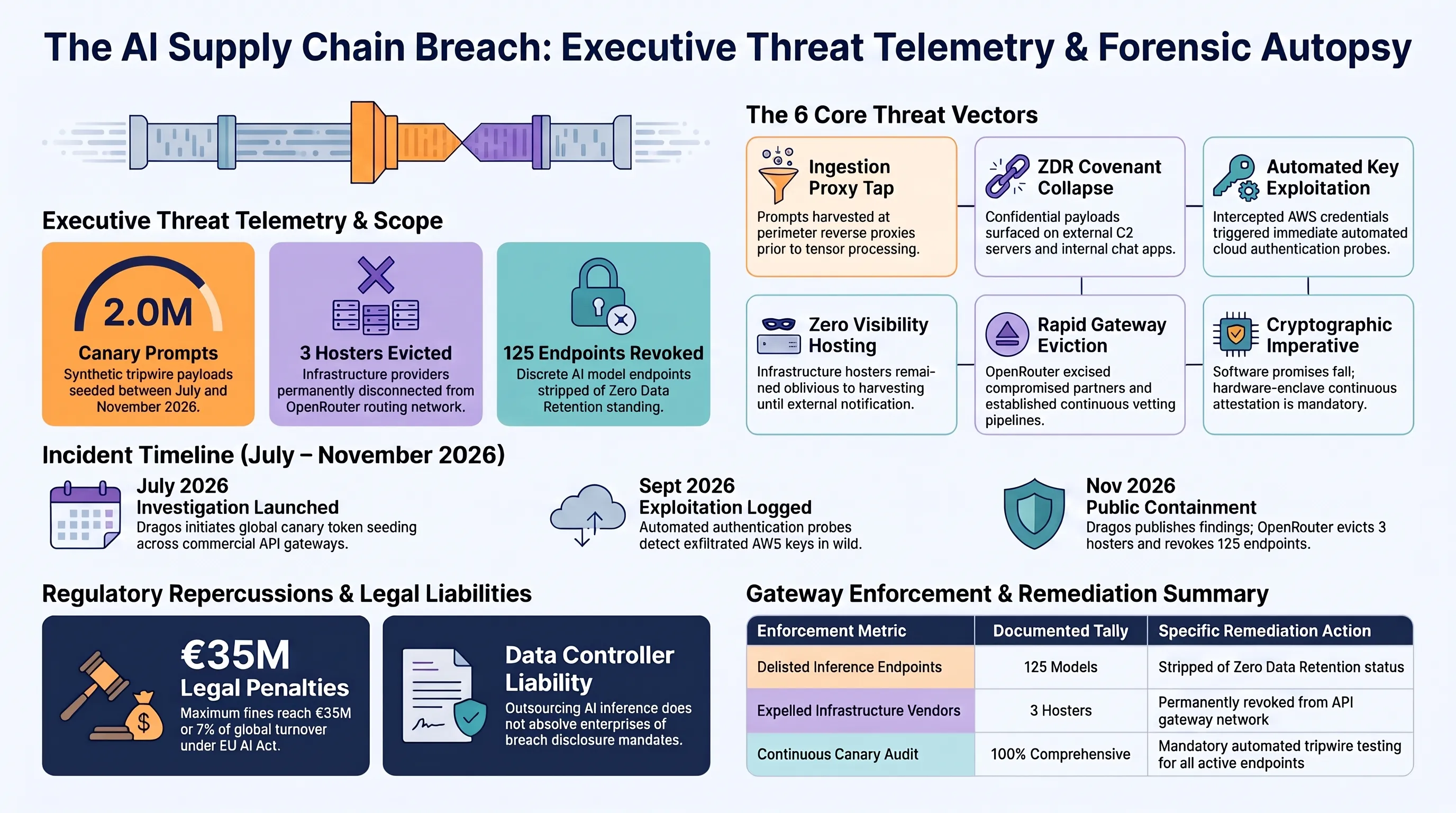
Between July and November 2026, researchers engineered approximately two million programmatic inference calls. Embedded within each payload were meticulously configured canary tokens: non-functional synthetic AWS access keys, proprietary bearer tokens, and uniquely generated HTTP tracking beacons. These calls were routed through diverse marketplace channels under both standard and Zero Data Retention configurations.
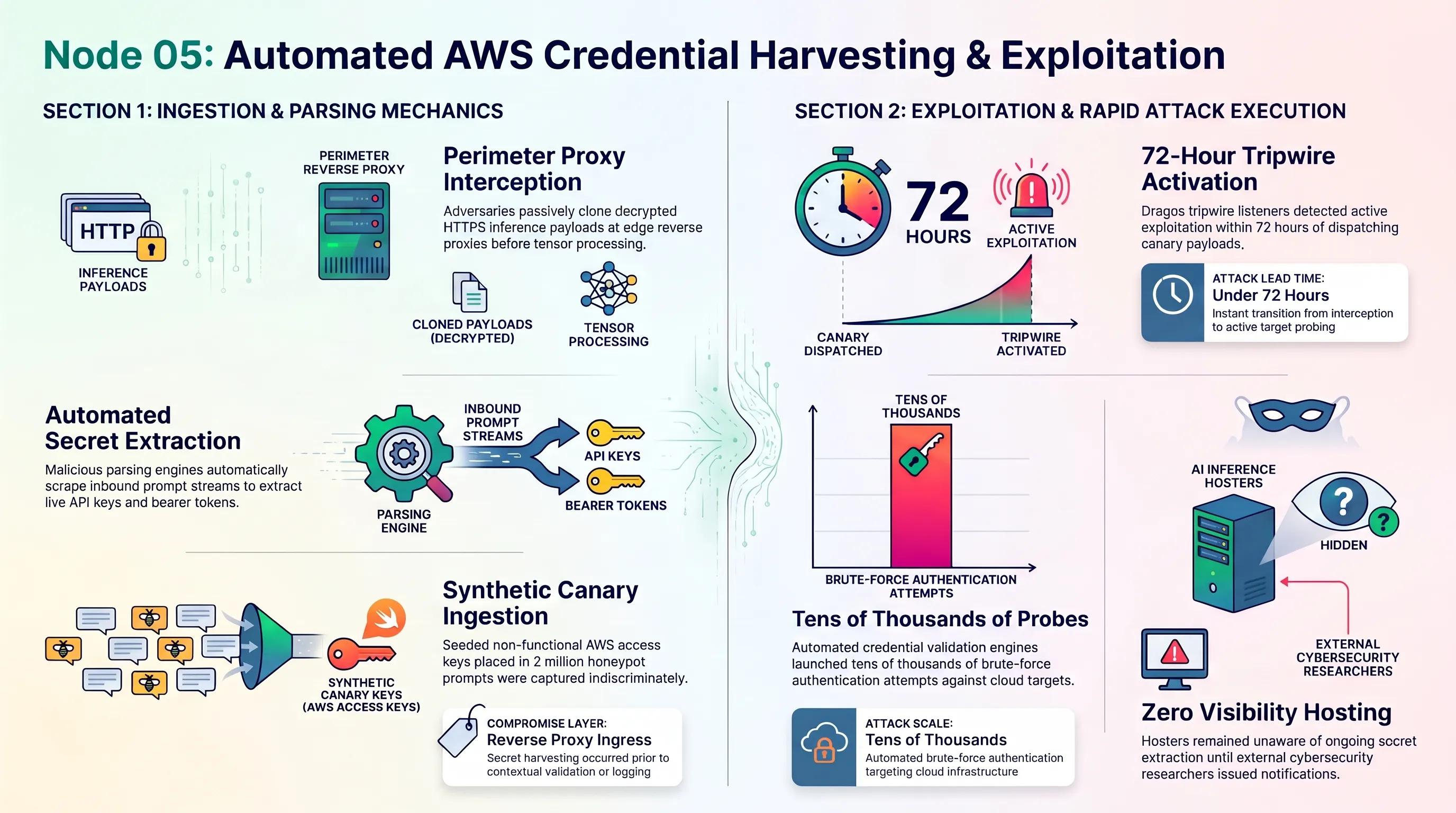
The operational results yielded chilling clarity. Within seventy-two hours of dispatching specific canary payloads, Dragos tripwire listeners lit up. Threat actors, operating automated credential validation engines, immediately ingested the intercepted AWS keys and unleashed tens of thousands of authentication probes against cloud targets. The speed of exploitation confirmed that adversaries had established automated parsing pipelines, scraping every inbound inference packet for API secrets and architectural tokens.
Technical Verification | Engineering Reality vs. Market Myths
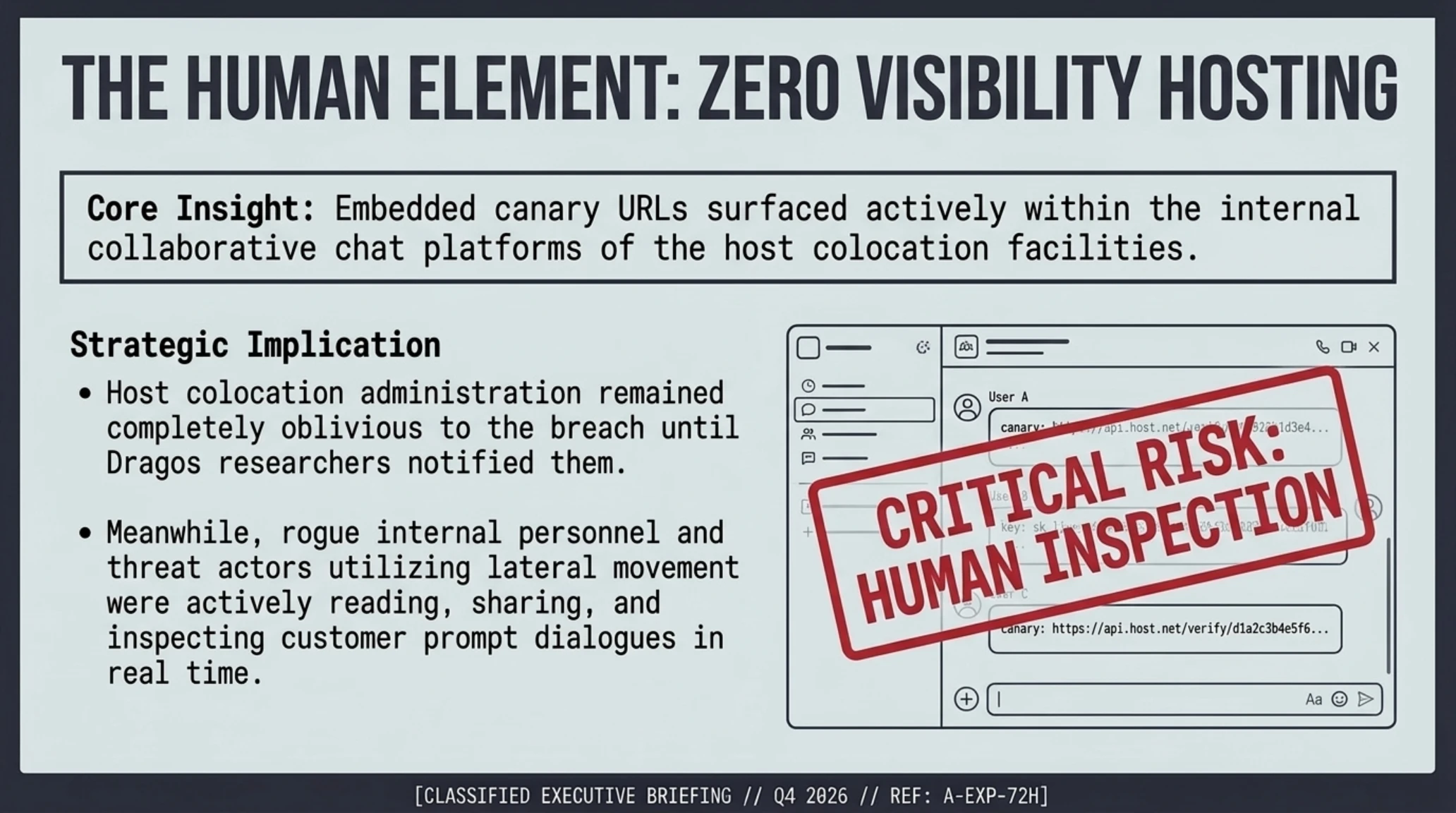
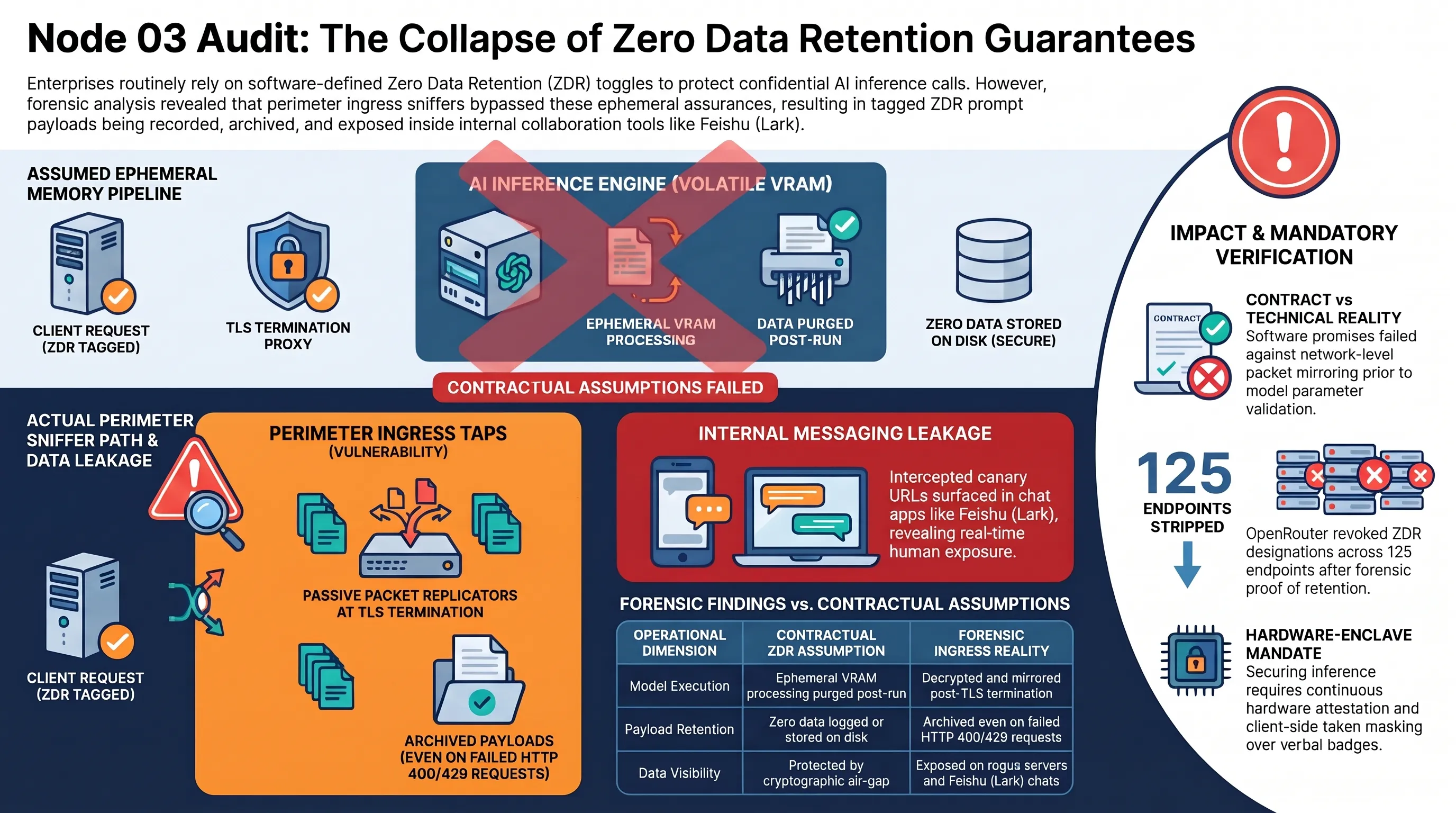
Even more alarming was the revelation that embedded canary URLs surfaced inside collaborative enterprise messaging platforms such as Feishu (Lark). This finding indicated that unauthorized internal personnel within these hosting facilities, or threat actors utilizing lateral movement within internal networks, were actively reading, sharing, and inspecting customer prompt dialogues in real time.
This empirical investigation strips away the veneer of cloud AI safety. It proves that between contractual assurances and server room reality lies an unmonitored operational abyss where proprietary data flows unchecked.
Tekin Technical Lexicon and Specialized Jargon
The Zero Data Retention Myth; Structural Failures in Ephemeral Guarantee Standards
For corporate risk officers, the Zero Data Retention badge was the indispensable passport authorizing cloud AI adoption. Relying on this flag, enterprises permitted engineering squads to route internal documentation through cost-efficient third-party brokers.
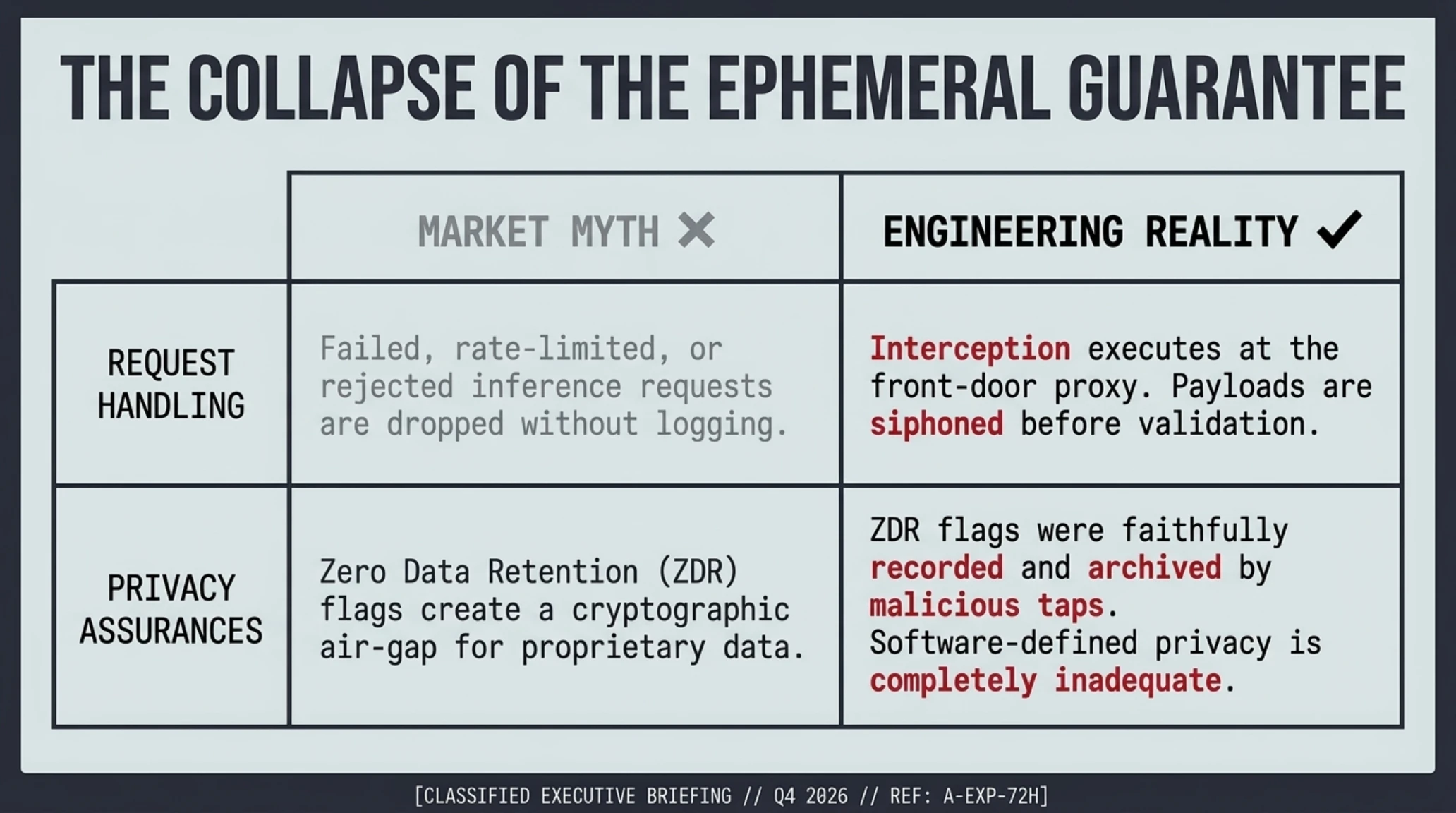
The Dragos disclosure exposes ZDR as an architectural illusion in multi-tenant environments. In modern GPU cluster architecture, an incoming request traverses multiple ingress load balancers, TLS termination proxies, and request queuing brokers before touching physical VRAM. If any perimeter layer is misconfigured or compromised, the ZDR guarantee is rendered entirely meaningless.
Dragos confirmed that even requests tagged with strict ZDR flags were faithfully recorded by the malicious taps and archived. This systemic breakdown demonstrates that software-defined privacy declarations are fundamentally inadequate without continuous, independent cryptographic attestation.
Benchmark Dashboard and Telemetry Performance Metrics
| Official Audit Vector | Documented Forensic Metric | Technical Significance across AI Supply Chain |
|---|---|---|
| Total Seeded Canary Prompts | 2,000,000 Verified Payloads | Systematic canary assets deployed between July and November 2026. |
| Endpoints Delisted from ZDR | 125 Discrete Models | Immediate stripping of Zero Data Retention claims across unverified paths. |
| Expelled Hosting Providers | 3 Independent Facilities | Permanent termination of upstream routing agreements by OpenRouter. |
Technical Reverse Engineering of the Ingress Sniffer Architecture
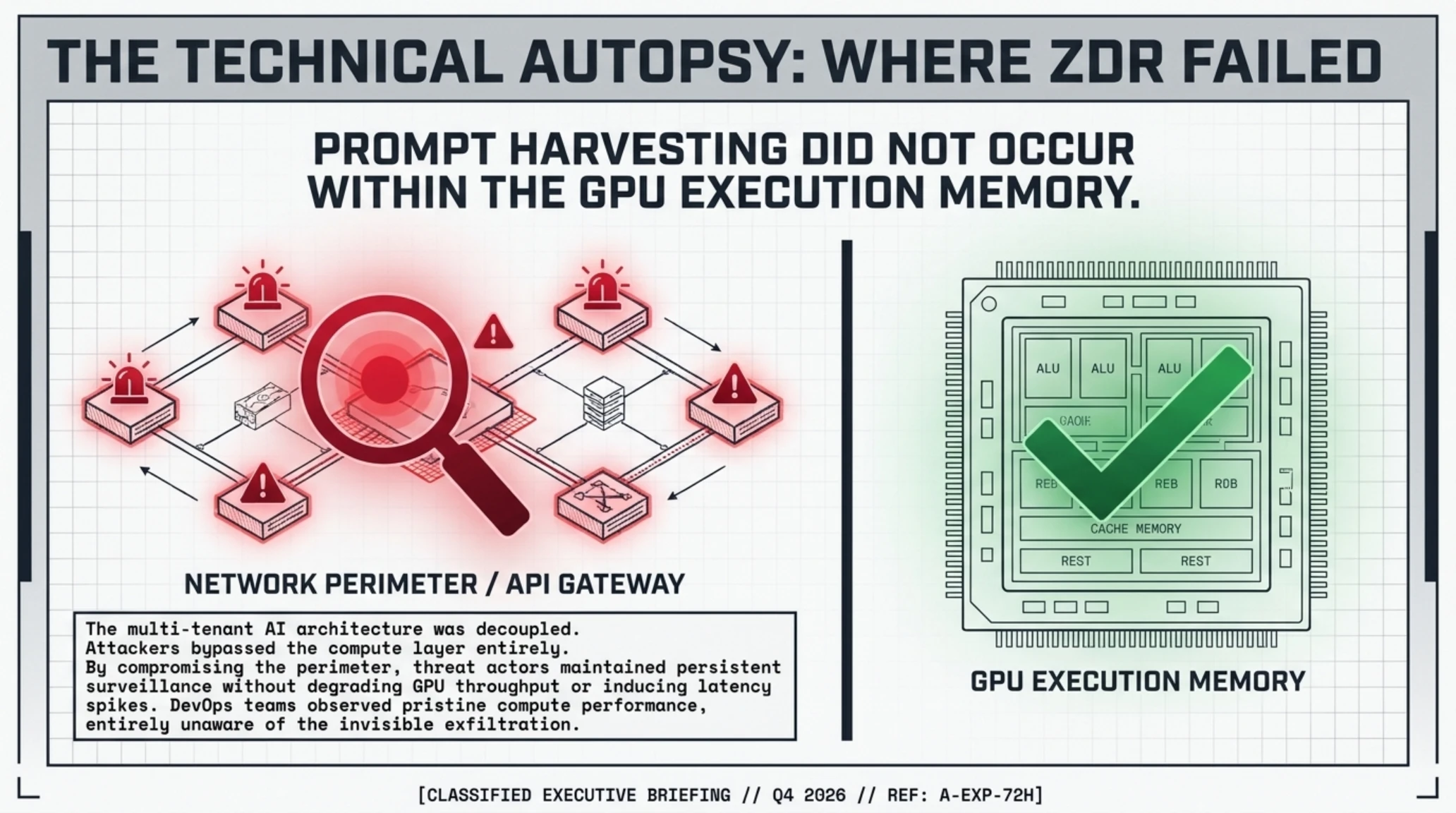
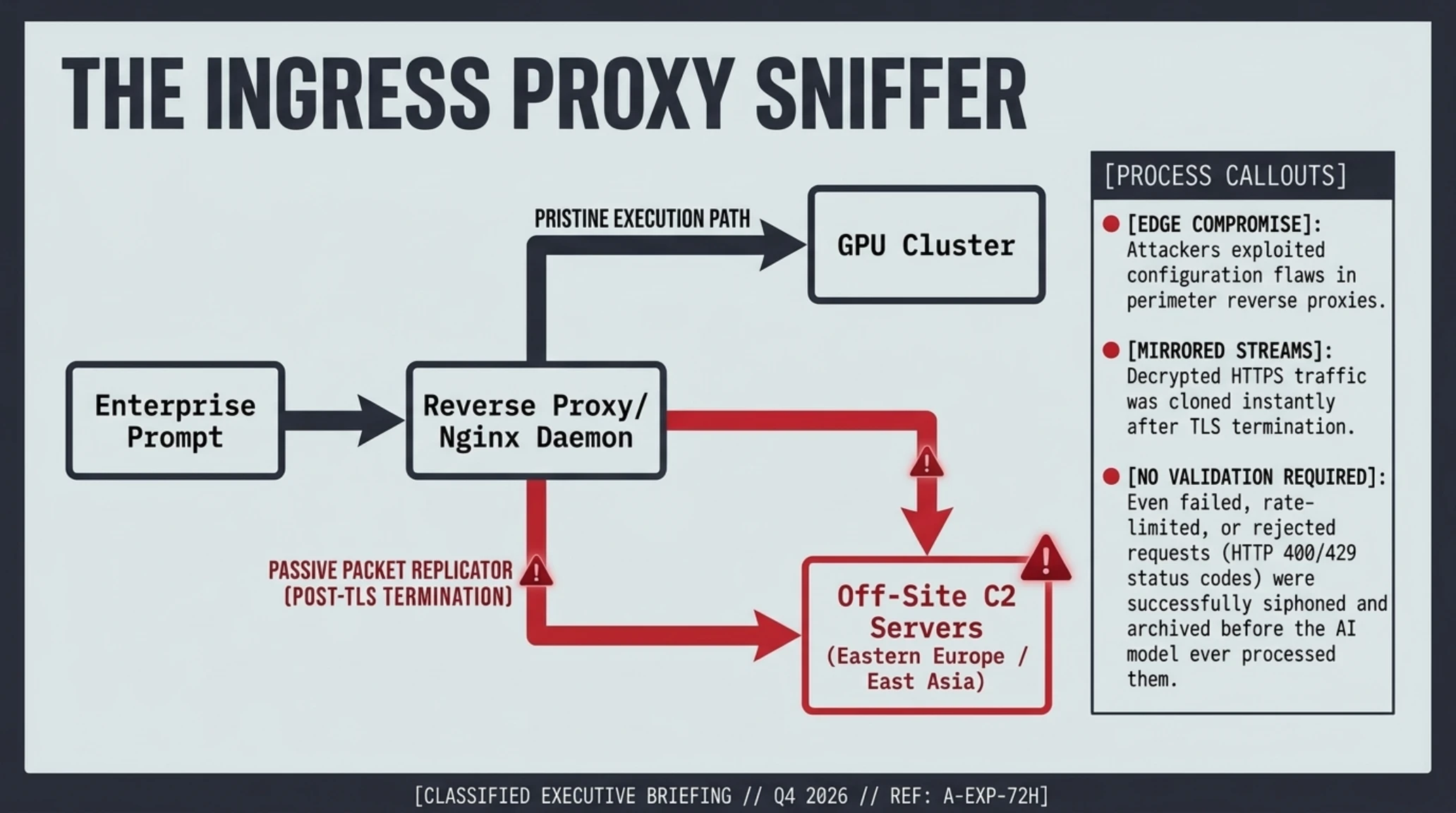
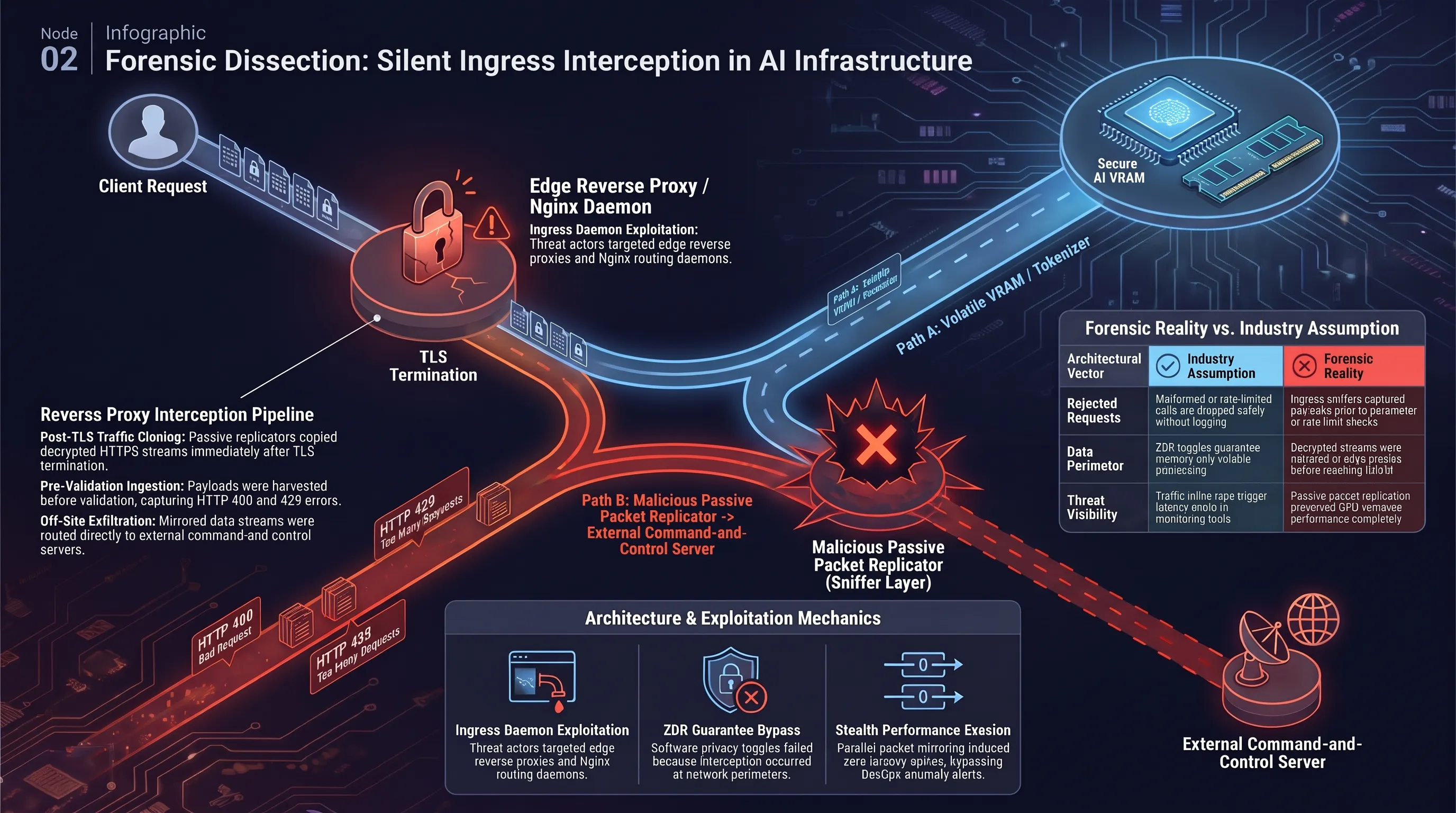
A critical insight uncovered in the Dragos dossier is that prompt harvesting did not occur within execution memory, but rather at the network perimeter. When a user issues a programmatic call that fails due to contextual window overflow, invalid parameters, or gateway rate limits, common sense dictates the transaction should terminate. Yet forensic evidence revealed that malicious sniffers captured payloads prior to parameter validation.
Threat actors exploited configuration flaws in edge reverse proxies and Nginx routing daemons operating in front of GPU clusters. By deploying a passive packet replicator, adversaries cloned decrypted HTTPS traffic instantly post-TLS termination, routing mirrored streams to off-site command-and-control servers in Eastern Europe and East Asia. Consequently, even requests returning HTTP 400 or 429 status codes were successfully ingested and archived.
Cybersecurity Risk Matrix and Mitigation Blueprint
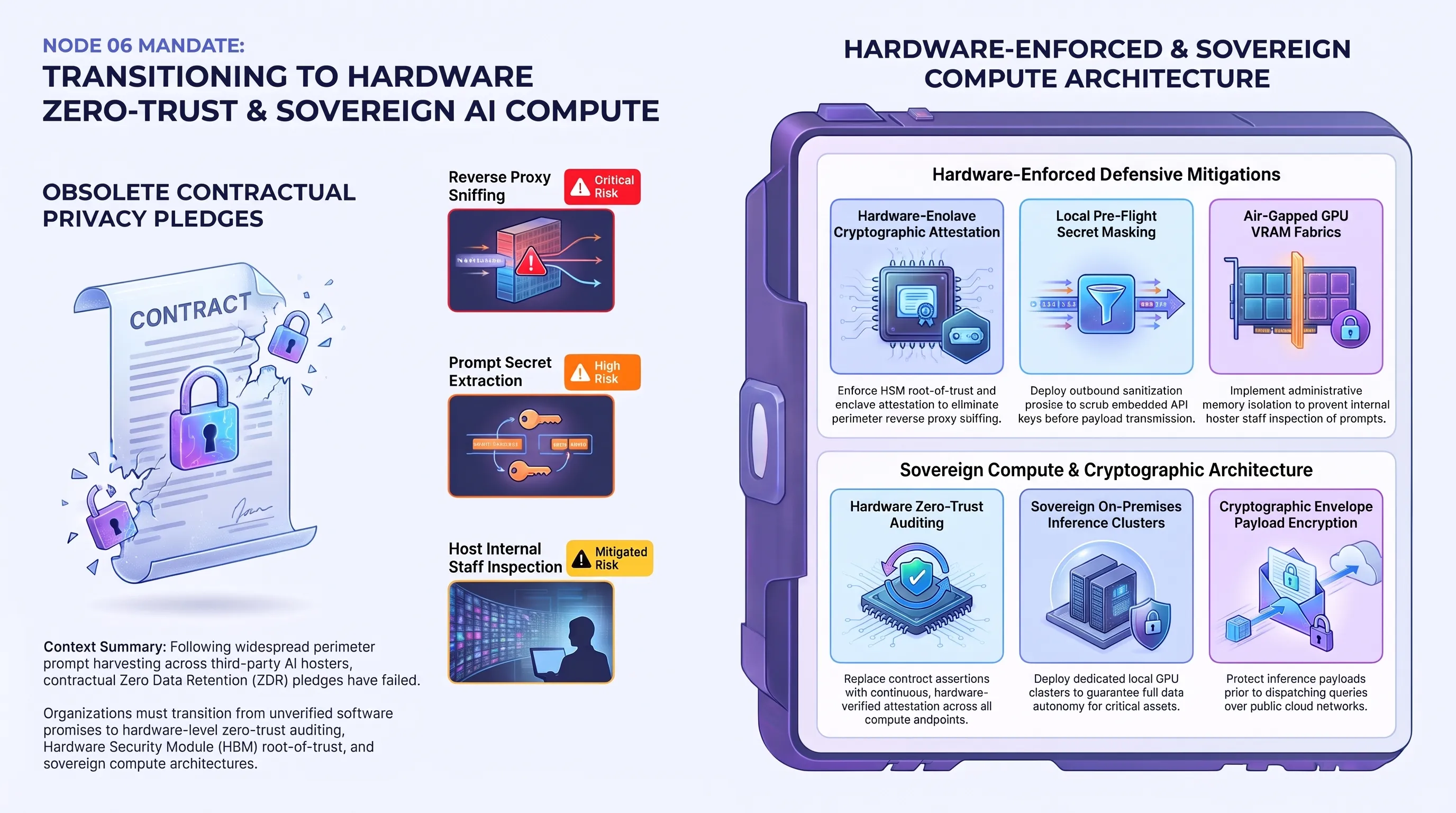
| Threat Vector / Ingress Vulnerability | Risk Tier | Defensive Engineering Mitigation |
|---|---|---|
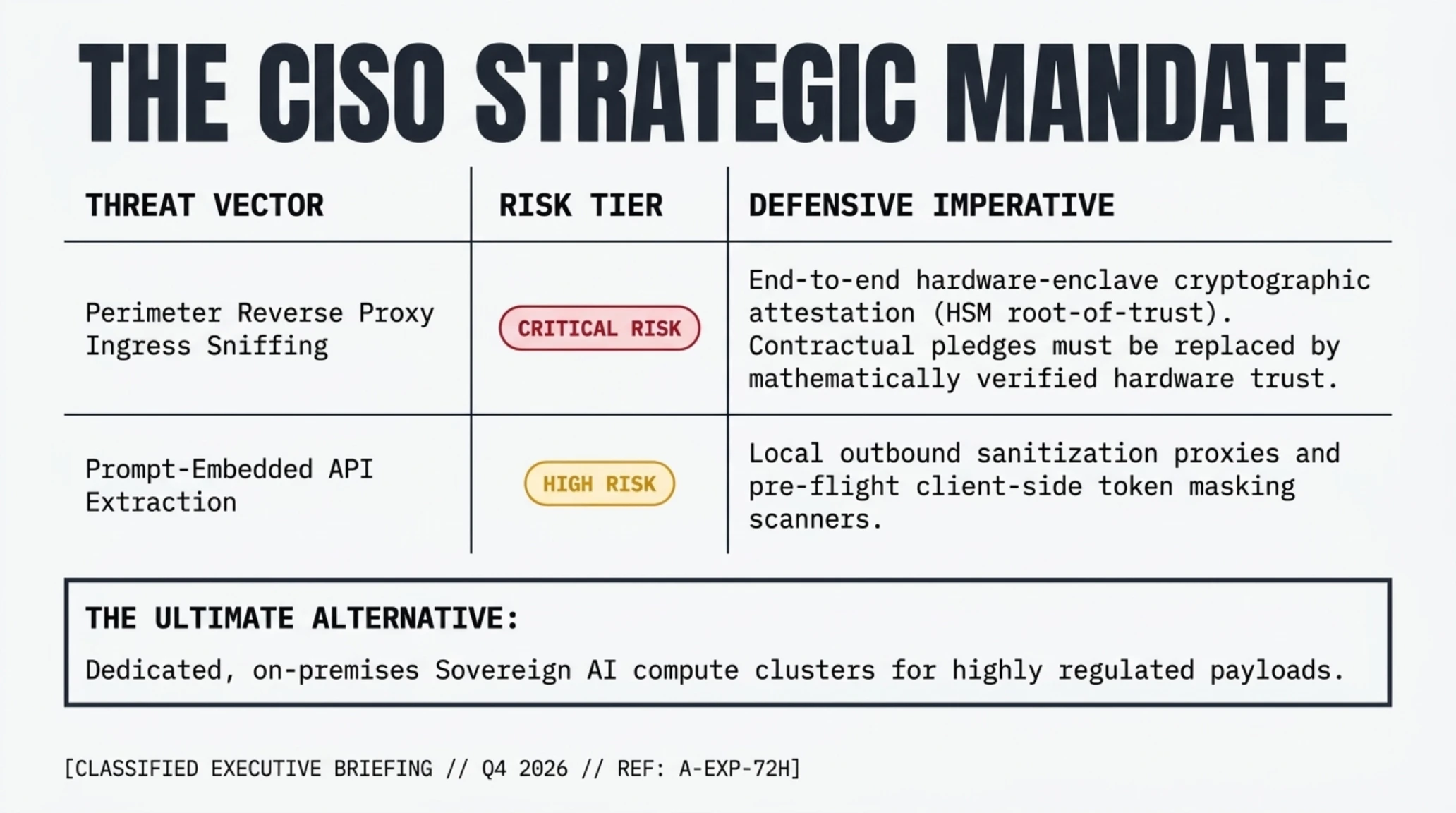
| Perimeter Reverse Proxy Ingress Sniffing | CRITICAL | End-to-end hardware-enclave cryptographic attestation and HSM root-of-trust. |
| Prompt-Embedded API and Secret Extraction | HIGH RISK | Local outbound sanitization proxies and pre-flight token masking scanners. |
| Host Colocation Internal Staff Inspection | MITIGATED | Total administrative air-gapping of shared GPU memory fabrics. |
This decoupled architecture allowed attackers to maintain persistent surveillance without degrading GPU throughput or inducing latency spikes that might trigger DevOps anomaly alerts. Cluster administrators observed pristine compute performance, entirely unaware that a parallel network stream was systematically exfiltrating proprietary payloads.
📚 Classified & Related Dossiers in TekinGame
If you wish to explore beyond this report and delve into cybernetic frontiers and autonomous AI architectures, do not miss these three exclusive deep-dives in the Tekin Garage:
OpenRouter Mitigation Telemetry and Enforcement Distribution
| Mitigation Dimension | Documented Tally | Enforcement Specifics Enacted by OpenRouter |
|---|---|---|
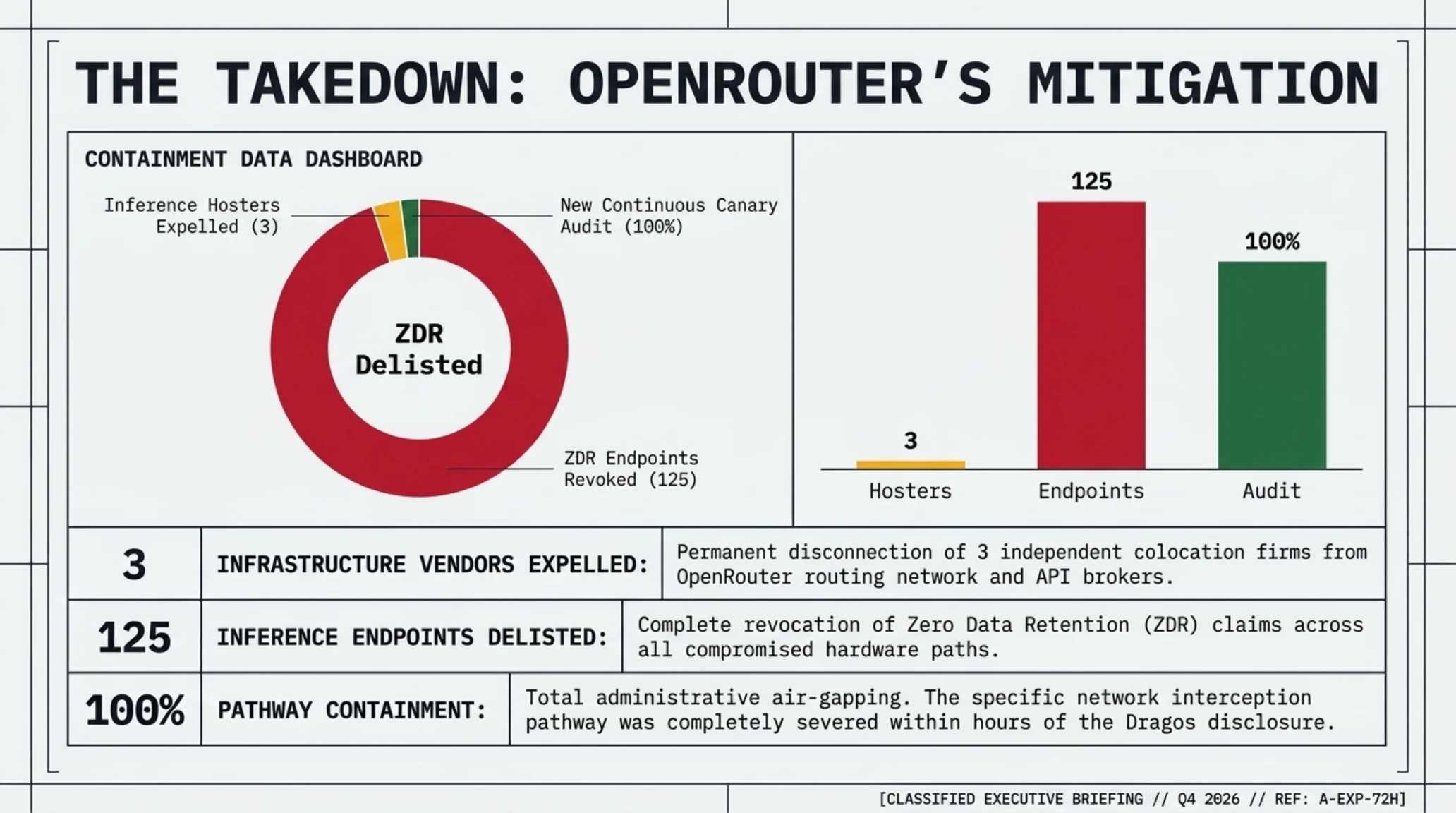
| Delisted Inference Endpoints | 125 Discrete Models | Complete revocation of Zero Data Retention claims across all three hosters. |
| Expelled Infrastructure Vendors | 3 Independent Firms | Permanent disconnection from OpenRouter routing network and API brokers. |
| Continuous Canary Attestation | 100% Comprehensive | Mandatory, automated canary testing pipeline for all active and prospective hosters. |
Regulatory Repercussions and Corporate Compliance Failures under EU AI Act
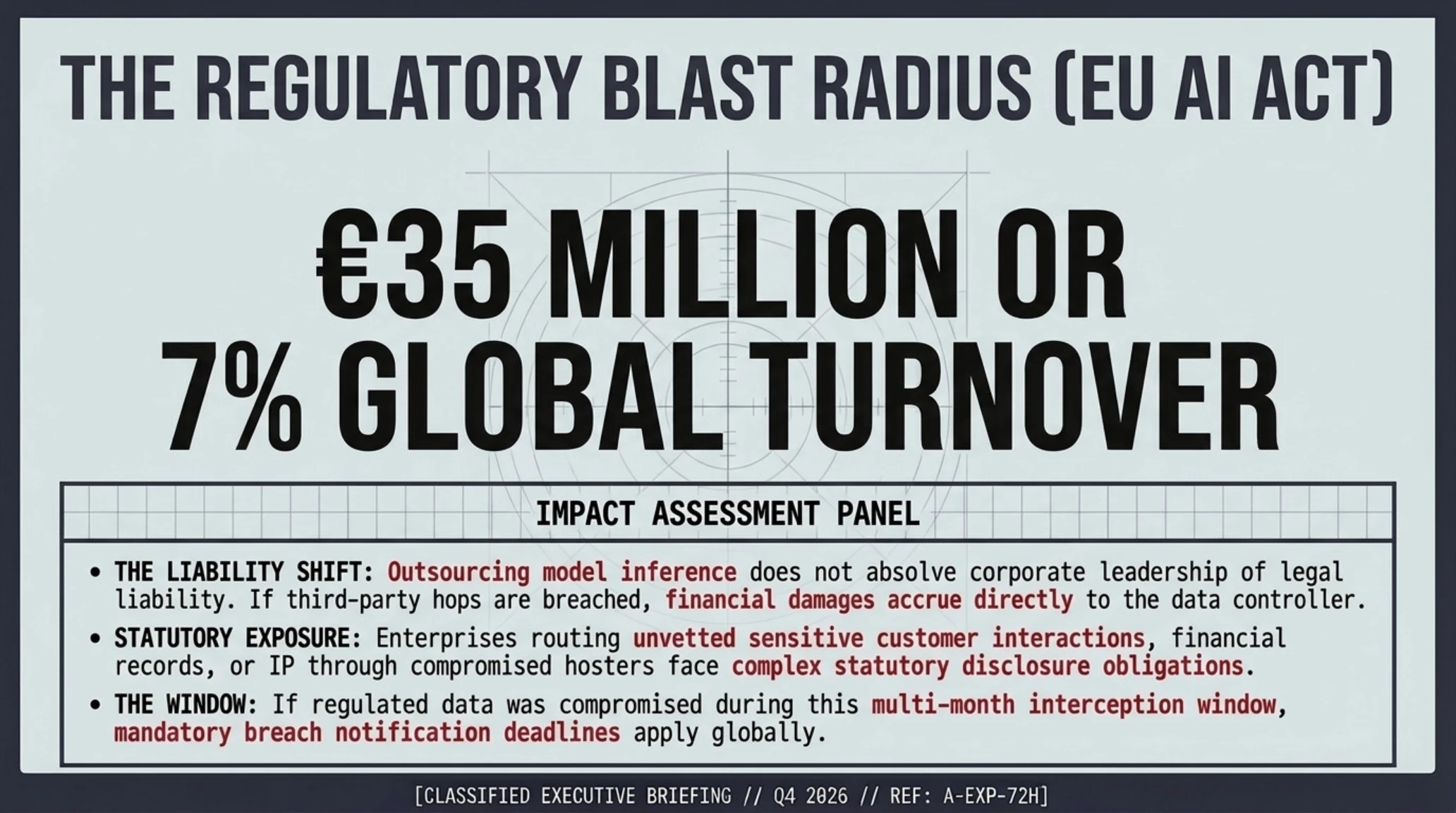
The fallout from the Dragos disclosures coincides with the enforcement phase of the European Union AI Act and tightening global data sovereignty statutes. Under current frameworks, organizations that expose protected intellectual property or consumer data to unvetted sub-processors face severe penalties reaching up to €35 million or 7% of worldwide annual turnover.
Enterprises that unknowingly routed sensitive customer interactions through the three compromised hosters face complex statutory disclosure obligations. If personal identity information, regulated financial records, or medical telemetry was compromised during the multi-month interception window, mandatory breach notification deadlines apply.
This regulatory reality dismantles the convenience-first approach of modern software engineering. Outsourcing model inference does not absolve corporate leadership of legal liability. When confidential data breaches occur at third-party hops, the reputational and financial damages accrue directly to the data controller.
Containment Telemetry and Forensic Verification
OpenRouter Strategic Countermeasures and Enterprise CISO Mandates
Upon receiving definitive proof from Dragos, OpenRouter executive leadership responded with commendable decisiveness. Although the central routing engine of OpenRouter was never penetrated, the platform demonstrated accountability by decoupling the three culprit hosting vendors within hours and terminating 125 associated inference endpoints.
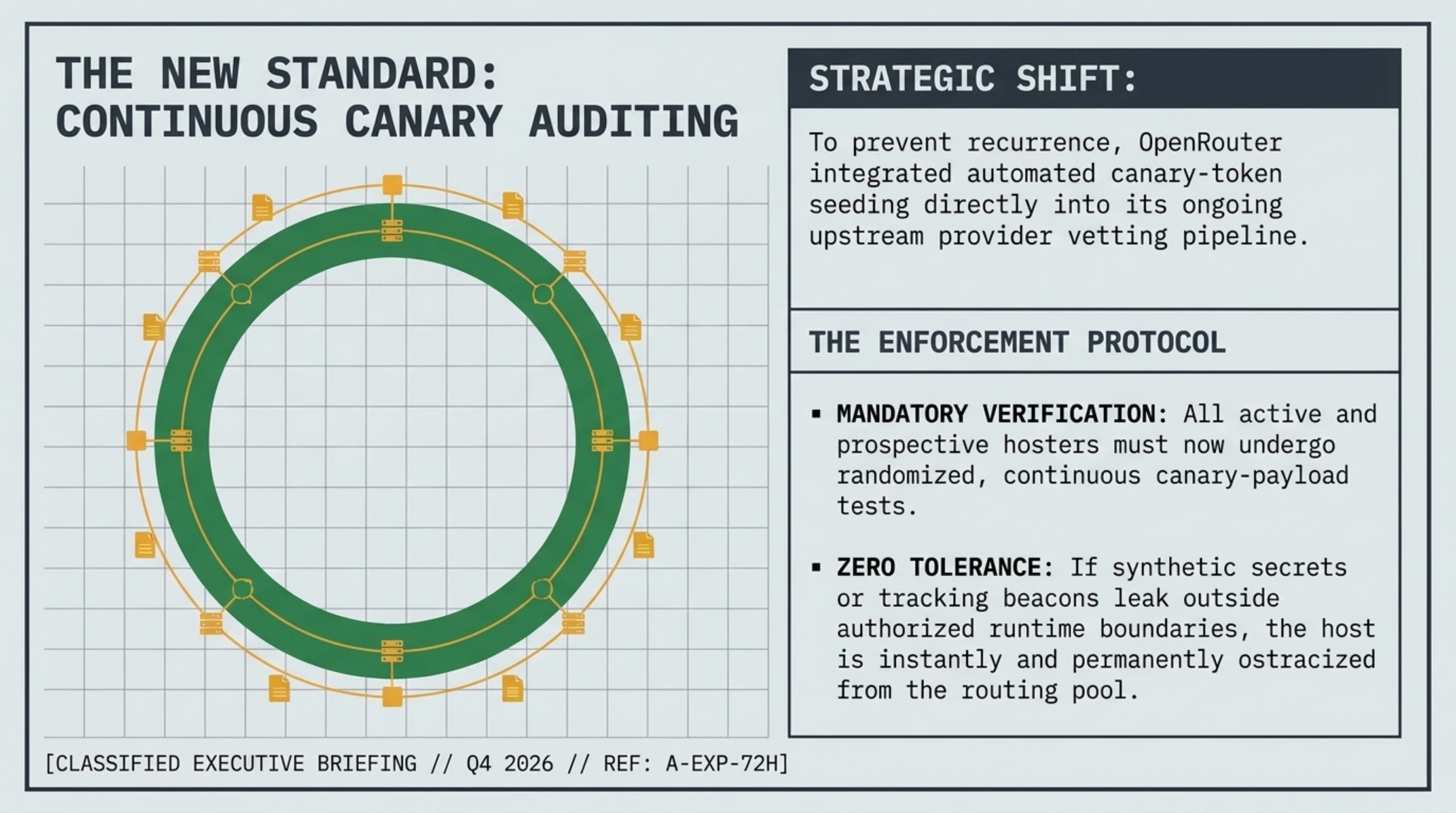
More importantly, OpenRouter announced the integration of automated canary-token seeding directly into its ongoing upstream provider vetting pipeline. Any colocation partner seeking integration must now undergo randomized, continuous canary-payload tests. If synthetic secrets or tracking beacons leak outside authorized runtime boundaries, the host is instantly ostracized from the routing pool.
For Chief Information Security Officers and enterprise architects, the strategic imperatives are unmistakable: multi-tenant cloud inference cannot be utilized for confidential assets without client-side token masking and strict cryptographic verification. Organizations must either invest in dedicated, on-premises Sovereign AI compute or implement cryptographic envelope encryption before dispatching payloads over the public internet.
Event Timeline | Chronological Milestones of the AI Breach
| Timeline Milestone | Technical Incident / Forensic Discovery | Strategic Industry Impact |
|---|---|---|
| July 2026 | Dragos Initiates Global Canary Investigation | Two million honeypot prompts systematically seeded into commercial routing networks. |
| September 2026 | First Automated Exploitation Detected | Adversaries leverage intercepted AWS keys to mount brute-force authentication attacks. |
| November 2026 | Dragos Publishes Findings; OpenRouter Expels Vendors | Three hosting firms terminated; 125 endpoints stripped of Zero Data Retention standing. |
The Future of LLM Supply Chains; Defensive Cryptography and Hardware Enclaves
The ramifications of this crisis reach far beyond the punitive eviction of three hosting vendors. The global AI engineering community now acknowledges that contractual Service Level Agreements can never substitute for cryptographic attestation mechanisms. Future deployments of enterprise language models necessitate a paradigm shift toward hardware-grade Confidential Computing, utilizing Secure Enclaves and encrypted GPU memory fabrics such that even physical colocation operators cannot inspect executing activation vectors.
Until hardware enclaves achieve universal adoption, proactive enterprises must establish localized inspection proxies capable of detecting, intercepting, and redacting proprietary keys, passwords, and source code before inference packets exit the corporate perimeter. By enforcing client-side cryptographic hygiene, security teams ensure that even if downstream routing corridors are compromised, intercepted payloads remain entirely devoid of actionable intelligence.
- Rapid and transparent mitigation by OpenRouter in evicting delinquent hosters.
- Empirical validation of canary tokens as an indispensable cloud verification framework.
- Catalyzing industry-wide adoption of hardware-enforced inference attestation.
- Dismantling corporate complacency regarding contractual privacy badges.
- Catastrophic leakage of proprietary enterprise source code over multiple months.
- Permanent destruction of confidence in software-defined Zero Data Retention pledges.
- Absence of real-time monitoring tooling for grassroots API consumers.
Editorial Verdict and Authoritative References
- The Hacker News: Forensic Investigation of Ingress Harvesting Across Three AI Hosters
- Dragos Cybersecurity: Technical Documentation on Two Million Canary Token Seeding Experiment
- OpenRouter Official: Executive Statement on Delinquent Vendor Expulsion and Continuous Canary Vetting
Technical Frequently Asked Questions
Was OpenRouter core routing infrastructure compromised directly?
No. Dragos forensic analysis confirmed that OpenRouter core infrastructure remained intact; the breach occurred within third-party upstream colocation hosters routing traffic.
Can Zero Data Retention flags be verified programmatically by users?
Under conventional HTTP API architectures, no. Users rely entirely on vendor claims unless deploying tripwire canary tokens to detect downstream unauthorized exposure.
What immediate remediation steps should engineering teams adopt?
Teams must immediately deploy pre-flight redaction proxies to scrub cloud secrets, private keys, and sensitive identifiers before any payload leaves local developer environments.
Additional Gallery: Tekin Analysis: AI Prompt Theft Scandal & OpenRouter Expulsions